The internet is full of promises about free NSFW AI generators. Platforms advertise "unlimited," "uncensored," and "no restrictions" — then hit you with watermarks, blocked prompts, or a paywall the moment you try anything remotely adult. Most people figure this out the hard way.
This article is a straight answer to what actually exists, what's marketing noise, and which platforms genuinely let you create without a content filter standing over your shoulder.
What "Free" Really Means
The word "free" in AI image generation rarely means what people expect. For most platforms, it means one of the following:
- Free tier with heavy restrictions: A handful of generations per day, all filtered.
- Free trial that expires: After 10 images or 3 days, you hit a credit wall.
- Free but watermarked: Every image gets a logo stamped across it, making it unusable for any real purpose.
- Free until the content policy kicks in: The moment a prompt is flagged as adult, the generation is silently blocked or returns something completely different from what you asked for.
The honest reality? Truly free, truly unrestricted NSFW AI generation doesn't exist at scale. What does exist are platforms that offer generous paid tiers, unlimited generation subscriptions, and models that don't censor adult content.
The Hidden Cost of Free Platforms
Free NSFW AI generator sites that promise unlimited results without any subscription typically run one of three business models:
- Ad-funded, heavily filtered: The content you see is safe. The content you want is blocked.
- Credit-based with aggressive limits: You get 10 "free" credits. NSFW images cost 3-5 credits each.
- Data harvesting: Your prompts, outputs, and usage patterns are the product being sold.
None of these are inherently wrong, but they are rarely honest in their advertising.
Watermarks, Limits, and Filters
Watermarks are the most common complaint. Even platforms that allow adult content on a free tier will watermark every output, sometimes prominently across the face or chest of the image, making it unusable for any actual creative purpose.
Generation limits compound the frustration. When you finally find a model that generates what you want, discovering you only get 3 attempts before a 24-hour lockout is genuinely infuriating.
Content filters are the most subtle problem. Many platforms claim to allow NSFW but have what's called a "soft filter" — the model will technically generate, but refuses specific body types, positions, or contexts. The output is technically adult-adjacent but sanitized to the point of irrelevance.

Why Most Free Generators Block Adult Content
The reasons are practical, not always ideological.
How Censorship Works in AI Models
Most major AI image models are trained with RLHF (Reinforcement Learning from Human Feedback) that explicitly reduces the probability of generating adult content. This is baked into the model weights themselves, not just a surface-level toggle.
When a platform takes one of these base models and layers a "content filter" on top, they're adding a second layer of restriction over something that's already restricted. The result is a model that might generate a swimsuit but absolutely refuses implied nudity, regardless of artistic intent.
The models that actually work for NSFW content are either:
- Fine-tuned specifically on adult datasets without RLHF censorship
- Open-source models where the community has removed content restrictions
- API-accessed models on platforms that explicitly permit adult content generation
The Filter Problem
There are three types of filters in AI image generation, and knowing the difference changes how you troubleshoot:
| Filter Type | How It Works | How to Recognize It |
|---|
| Prompt filter | Scans your text input for flagged words before generation | Refuses prompt, shows error message |
| Output filter | Classifies the generated image after creation | Deletes or blurs the result, returns generic error |
| Model-level filter | Baked into model training weights | Generates a different result than requested, silently |
Model-level filters are the most frustrating because you don't know they exist until you've spent time testing. A platform can truthfully say "we don't filter your prompts" while the underlying model simply won't produce what you're asking for.

The Real Players Worth Your Time
After testing a dozen "free NSFW AI" platforms and finding most of them either broken, blocked, or buried in watermarks, the question becomes: what actually works?
The answer is a short list of models available on PicassoIA that don't restrict adult content and deliver real-world generation quality.
Seedream 4.5 — The Speed Champion
Seedream 4.5 is the top recommendation for NSFW image generation. It generates realistic adult content, accepts image editing prompts, and returns results in under 3 seconds. That's not a marketing benchmark — that's the actual wall-clock time for a full-resolution output.
What separates Seedream 4.5 from most competitors isn't just the absence of content filtering. It's the quality of skin texture, lighting response, and anatomical accuracy in the results. The model handles difficult lighting scenarios — backlighting, dramatic shadows, mixed light sources — in a way that most free generators cannot replicate.
💡 Important: The newer Seedream 5 Lite does not support NSFW content. If you're generating adult content, stay with Seedream 4.5 — the two models are not interchangeable for this use case.

PicassoIA Image Editor Pro — Unlimited Generations
PicassoIA Image Editor Pro is the answer to the generation limit problem. On Elite and Infinite plans, generations are unlimited. That means 1,000 images costs the same as 10 — because it's included in the subscription.
To put that in perspective: generating 1,000 images on a model like Nano Banana 2 would cost approximately $100 in credits. On PicassoIA Image Editor Pro with an appropriate plan, the extra cost is zero.
The model is image-to-image (img2img), which means you provide a reference image and a prompt. It returns results in under 1 second, accepts NSFW content, and offers a 3-generation free trial with no credit card required.
For creators who need volume — whether for a content library, social platform, or creative project — this is the most cost-effective option available anywhere.
More Models That Actually Work
Beyond the top two, here are the other models worth knowing on PicassoIA:
-
Qwen Image 2 — Open-source, edits or creates any image in seconds with very detailed realism. No content restrictions in the API version.
-
Grok Imagine Image — Particularly strong at image conversion and transformation. Takes an existing photo and realistically transforms it.
-
Recraft V4 — Text-to-image only, but produces very realistic results without content restriction.
-
P-Image by PrunaAI — NSFW text-to-image in under 1 second. When speed is the priority.

Free vs. Paid — The Honest Breakdown
Here's the comparison most NSFW AI articles won't give you directly:
| Feature | Free Platforms | PicassoIA Paid |
|---|
| NSFW content allowed | Rarely, in practice | Yes, explicitly |
| Watermarks on output | Almost always | No |
| Daily generation limit | Usually 5-20 | Unlimited (Elite/Infinite) |
| Image quality | Variable, often poor | High fidelity, 8K capable |
| Generation speed | 10-30 seconds typical | Under 3 seconds (Seedream 4.5) |
| Model variety | 1-3 models | 91+ text-to-image models |
| Prompt filtering | Active on most | Off on NSFW models |
| Free trial | Credit card required (most) | No credit card, 3 generations free |
The "free" option often ends up being more expensive in terms of time wasted on platforms that don't deliver. A paid subscription with unlimited generations, no watermarks, and actual NSFW support costs less per result than most free platforms' credit systems once you factor in what you actually get.

How to Use Seedream 4.5 on PicassoIA
Since Seedream 4.5 is available on the platform, here's a direct walkthrough.
Step-by-Step
Step 1: Access the model
Navigate to picassoia.com/en/collection/text-to-image/bytedance-seedream-45 or find it through the All Models catalog.
Step 2: Write a specific prompt
The model responds well to detailed prompts. Include:
- Subject description (appearance, clothing or lack of, expression, pose)
- Setting (indoor or outdoor, time of day, location type)
- Lighting (natural light, soft side-lighting, golden hour, studio)
- Style (photorealistic, specific film stock reference)
Vague prompts like "attractive woman" return generic results. Specific prompts return exactly what you're imagining.
Step 3: Set your parameters
- Aspect ratio: 16:9 for landscape compositions, 9:16 for vertical or portrait content
- Seed: Set a specific seed number if you want to iterate on the same base result
Step 4: Generate and refine
The model returns results in under 3 seconds. If the result isn't exactly right, adjust the prompt rather than regenerating with identical input. Small changes to lighting descriptions or pose details create significantly different outputs.
Step 5: Use image editing for iteration
Seedream 4.5 also supports image editing. Once you have a base image you like, use it as a reference and edit specific elements — change clothing, adjust lighting, swap the background — without losing the overall composition.
💡 Pro tip: Reference images dramatically improve consistency across a series. If you have a specific lighting setup or environment you want to replicate across multiple images, upload it as a reference and describe only what you want changed.
What Makes a Generator Truly Unrestricted
Not every platform that claims "unrestricted" actually delivers it. Here's what to look for when evaluating any tool.
No Content Filters
A genuinely unrestricted model will:
- Accept prompts with explicit descriptions without modification or refusal
- Generate outputs that match the prompt without substituting sanitized alternatives
- Not silently change elements you didn't ask to change
If a platform claims no content filtering but your results consistently come back with clothing added, scenes changed, or characters repositioned, the filter is happening at the model level — and the platform may not even know it.
Speed and Quality
Quality and speed are connected to whether a generator is worth using in practice. Generating 50 images to find 3 usable ones isn't efficient if each generation takes 30 seconds. That's 25 minutes for 3 images.
Seedream 4.5 returns results in under 3 seconds. Those same 50 test generations take 2.5 minutes. The practical productivity difference is real.
Quality indicators worth checking:
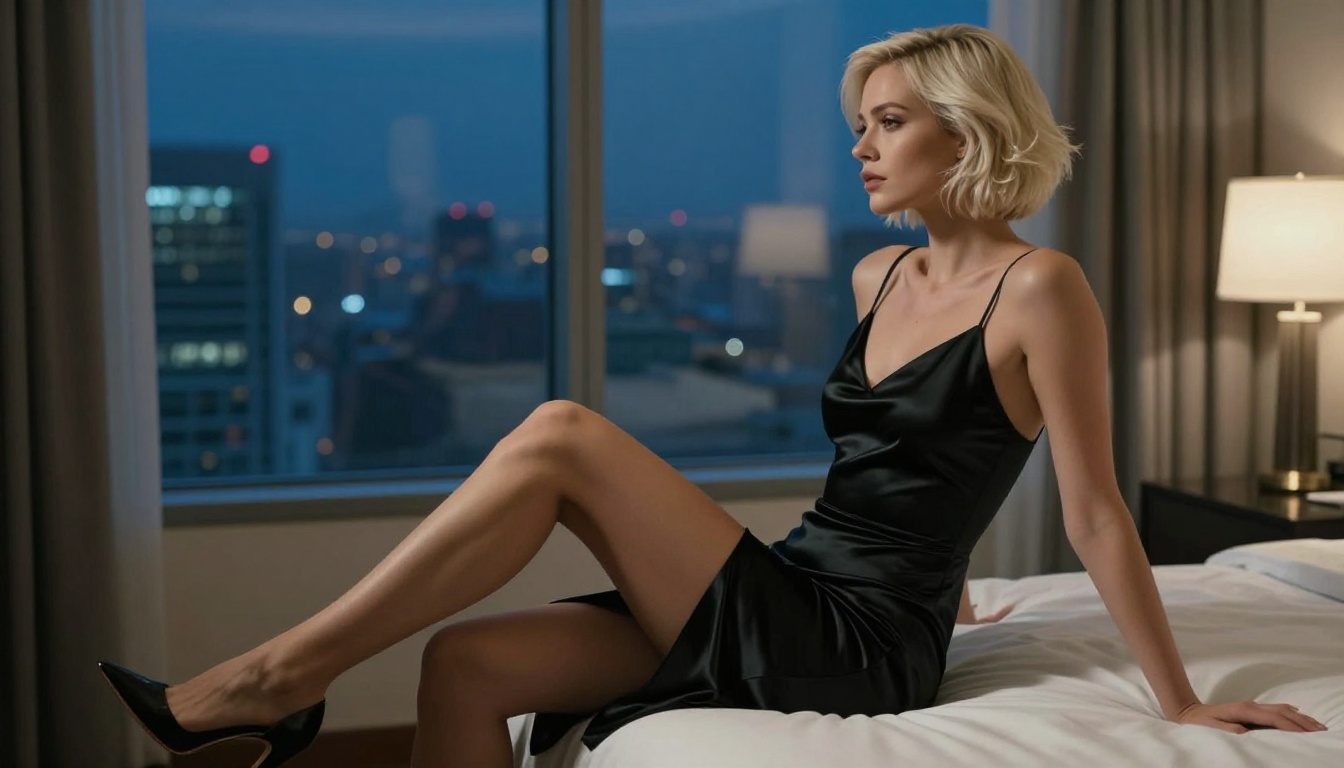
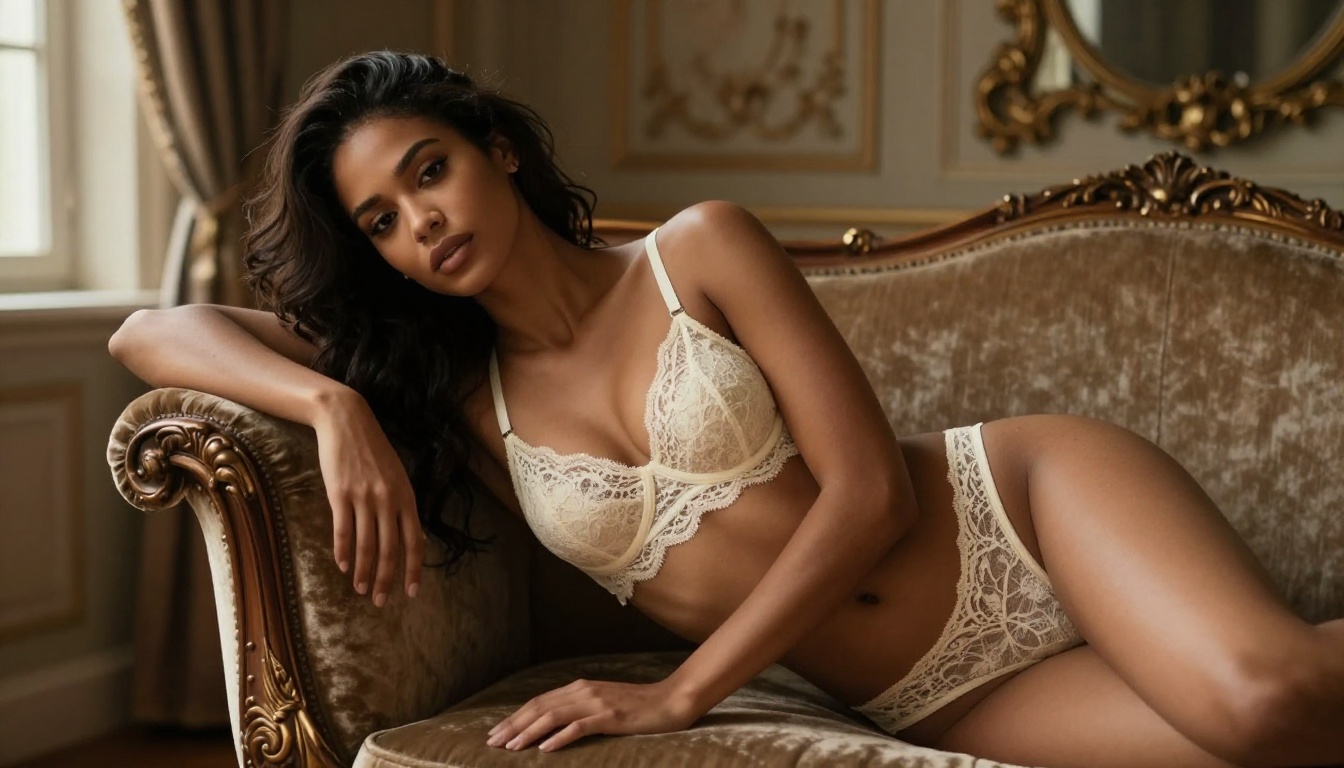
- Skin texture: Real skin has pores, variation, and natural response to light. Flat, plastic-looking skin signals a lower-quality model.
- Lighting consistency: The light source should be consistent across the entire image, not just the subject.
- Anatomical accuracy: Fingers, proportions, and facial features should be correct without warping or artifacts.
- Fabric and material rendering: Clothing should drape naturally with realistic texture variation.
Video Generation — Beyond Static Images
For creators who want to move past still images, PicassoIA offers NSFW-capable video generation tools as well.
PicassoIA Video generates clips from text prompts at up to 720p, 5 seconds per clip, with unlimited generation on Elite and Infinite plans. For rapid concept iteration, this is the most cost-effective video option available.
P-Video by PrunaAI takes text, image, or audio as input and outputs video at up to 1080p. The safety filter is disabled by default, making it genuinely unrestricted for adult content creators who need flexibility across formats.
Grok Imagine Video generates clips up to 15 seconds from text, a reference image, or an existing video clip. No watermarks, seven aspect ratios, and the image-to-video mode automatically matches your source photo's proportions.
For highest fidelity, LTX 2.3 Pro exports up to 4K at 50fps with retake and extend editing modes for precise control over the final output.
Common Misconceptions
"Open-source means free NSFW AI"
Open-source models can generate NSFW content, but running them locally requires significant hardware — at minimum 8GB VRAM, often 16GB or more. For most users, "open source" means "free to download, expensive to run." The setup barrier alone eliminates it as a practical option.
"Stable Diffusion is the answer"
Stable Diffusion models can generate NSFW content, but the configuration complexity is significant. ComfyUI setup, LoRA files, model downloads, and hardware requirements make it inaccessible for the majority of users. For those who can run it locally, it's powerful. For everyone else, it's a project that doesn't reach the finish line.
"A VPN tricks platforms into allowing NSFW"
Content restrictions are at the model level, not the IP level. A VPN changes your apparent location on the network. It does not change what a model will generate. Platforms that restrict by region exist, but model-level content filters don't care where your connection originates.
"More expensive always means better NSFW results"
Seedream 4.5 generates in under 3 seconds and accepts NSFW prompts freely. Some enterprise models that cost significantly more refuse adult content entirely. Price and NSFW capability are not correlated — the two variables are independent.
Create Without the Frustration
The reality of free NSFW AI generators is straightforward: the ones that actually work aren't entirely free, but the cost is lower than most people expect once you account for the time lost on platforms that can't deliver.
Seedream 4.5 is the place to start. Under 3 seconds per generation, no content restriction, photorealistic quality. If you need volume, PicassoIA Image Editor Pro with its unlimited generation subscription removes the per-image cost calculation entirely.
For the full range of options — Qwen Image 2, Grok Imagine Image, Recraft V4, P-Image, and the complete video model lineup — the full catalog is at picassoia.com/en/all-models.
Stop spending time on platforms that promise unrestricted and deliver sanitized. The tools that actually work are already there. Try Seedream 4.5 today — no credit card required — and see what a genuinely unrestricted model produces from your first prompt.


