If you've been frustrated by AI writing tools that either refuse to engage with adult content or produce watered-down prose that reads like a terms-of-service document, DeepSeek V4 Pro addresses that problem directly. It's a large language model built for long-context, high-coherence output, and when directed properly, it produces NSFW fiction with genuine narrative depth. The difference between getting mediocre output and a compelling story comes down to how you structure your prompts, how you build your world, and how you keep the model engaged across multiple scenes. Here's exactly how to do it.

Why DeepSeek V4 Pro Handles Adult Fiction Better
Most mainstream AI tools apply conservative content filters that activate the moment your story gets interesting. The result is a constant stop-and-start experience where you're rewriting prompts instead of writing stories. DeepSeek V3.1, the direct predecessor in the same model family, already demonstrated far more flexibility in creative contexts. V4 Pro pushes that further with improved instruction-following and sharper long-form coherence.
The Context Window Advantage
One thing that kills adult fiction written with AI is a model that forgets what happened three scenes ago. A character who was deeply shy in scene one becomes assertive in scene four, with no narrative reason. V4 Pro's extended context handling means character traits, physical descriptions, relationship dynamics, and established scene details carry through the full story. You set them once, and the model respects them.
Instruction Precision
The model responds well to detailed, layered instructions. You're not just asking for "a romance scene." You're specifying the characters' emotional state, the setting's physical details, the pacing you want, the sensory details to include, and the narrative POV. When you give it that level of specificity, it produces output that matches, rather than averaging toward something generic.
Where to Access DeepSeek on PicassoIA
PicassoIA gives you direct access to the DeepSeek model family without any API setup. You can run DeepSeek V3.1 for standard creative writing, or switch to DeepSeek R1 when you want more deliberate, structured output with built-in chain-of-thought reasoning. Both are available alongside 70+ other large language models on the platform.

Building Your System Prompt Foundation
The system prompt is where most writers make their first and most costly mistake. They either skip it entirely or write something generic like "You are a creative writing assistant." That's not enough context for the model to know what kind of content you want, what tone to hold, or how explicit to go.
What a Strong System Prompt Covers
Your system prompt should establish:
- Tone: Is this literary fiction, pulp romance, explicit erotica, or a dark thriller with sexual elements?
- POV conventions: First-person present, third-person limited, omniscient narrator?
- Content parameters: What is in scope? What's off-limits?
- Character stability: Establish characters by name, appearance, personality, and role before the story begins
- Style markers: Pacing, sentence length, sensory detail level
Here's a structural template that works:
"You are a fiction writer specializing in adult romance with explicit content. Write in third-person limited POV from [Character A]'s perspective. Maintain consistent characterization: [Character A] is [description]. [Character B] is [description]. Their dynamic is [description]. Write scenes that are [pacing adjective], [sensory focus], and [emotional tone]. Do not fade to black or summarize action. Write the scene fully."
The phrase "do not fade to black" is one of the most effective instructions you can add. It directly counters the model's tendency to skip to an aftermath rather than writing the scene itself.
Temperature and Output Settings
When using DeepSeek V3.1 through PicassoIA's interface, the default temperature handles most creative writing well. If you find the output too formulaic, nudge it slightly higher for more creative variation. For longer stories where consistency matters more than novelty, the default holds reliably.

Prompt Structures That Produce Real Results
The Scene Architecture Method
Instead of prompting the model to "write a sex scene," break the scene into its structural components and describe each one:
- Entry point: Where are the characters? What's the emotional context going into the scene?
- Escalation path: How does tension build? What triggers the shift from tension to action?
- Main action: What happens? Be specific about who initiates, the setting's physical constraints, and the sensory details.
- Emotional layer: What is each character thinking and feeling? What's not being said?
- Exit point: How does the scene close? Does it resolve or leave something hanging?
When you give DeepSeek V4 Pro this structure, it fills each beat with prose that follows the arc you defined, rather than defaulting to a generic sequence.
Character Voice and Perspective
One of the most common weaknesses in AI-generated adult fiction is flat character voice. Every character sounds like the same narrator. You can fix this by specifying voice traits explicitly in your setup:
- Dialogue patterns: Does Character A use short sentences? Are they formal? Crude? Playful?
- Internal monologue style: Are their thoughts anxious, controlled, chaotic?
- Physical self-awareness: Do they notice their own body? Do they avoid thinking about it?
Adding these details to your character descriptions creates people who feel like individuals, not placeholders filling roles.
Multi-Scene Continuation
When you're writing a longer story and need to continue from where you left off, always begin your continuation prompt with a scene summary. This refreshes the model's working context with the relevant state, rather than relying purely on conversation history. Format it like this:
"Continuing from: [Character A] and [Character B] have just [event]. [Character A] is feeling [state]. [Character B] is [current status]. Continue from this point, maintaining [specific tone or pacing]."
This technique prevents the drift and inconsistency that makes multi-session AI fiction frustrating to produce.

Story Structures That Work Best for NSFW Fiction
Short Scenes vs. Long-Form Chapters
DeepSeek V4 Pro excels at scene-level writing: dense, immediate, sensory. Where it requires more management is across chapter-length output, simply because the model has to sustain an arc over many tokens. Two approaches work well depending on your project:
- Short scene mode: Ask for individual scenes of 800 to 1,500 words each and assemble them yourself. This gives you maximum control over the story's overall shape.
- Long-form mode with a beat sheet: Give the model a beat-by-beat outline of the chapter before asking it to write. Beats act as a scaffold that prevents drift and keeps the pacing where you want it.
First-Person vs. Third-Person for Intimacy
💡 First-person present tense creates the most immediate sense of immersion in adult fiction. The reader is inside the character's experience as it happens. Third-person limited is slightly less immediate but gives you flexibility to dip into both characters' perspectives without switching POV mid-scene.
Third-person omniscient tends to produce emotionally distant output, which works for plot-heavy scenes but undercuts intensity in intimate moments. Choose based on what you're prioritizing in each scene.
Building Tension Before the Scene
The most common structural mistake in AI-generated adult fiction is rushing to explicit content before establishing emotional stakes. A scene that lands is one where readers care about these specific people in this specific moment. Before prompting for the explicit scene, prompt for:
- A conversation where subtext does the work
- A shared activity with physical proximity and deliberate restraint
- A moment of stated or implied desire that gets interrupted
That buildup is what makes the eventual scene feel earned. DeepSeek V4 Pro follows pacing direction well when you state it explicitly in the prompt.

Adding Visual Elements to Your Stories
Adult fiction has always existed alongside illustration. AI image generation now makes it practical for any writer to create visuals that match their story's world, their characters' appearances, and the specific atmosphere of each scene.
Seedream 4.5 for NSFW Character Visuals
Seedream 4.5 is the first recommendation for generating NSFW character images to accompany your fiction. It produces photorealistic results with strong prompt adherence, meaning the character you described in your story is the character you'll see in the image. It handles pose, lighting, setting, and expression with precision, and it's built to handle adult content without blocking at the image generation stage.
For character prompts that align with your fiction, pull the physical descriptions directly from your story and translate them into image generation syntax. The same vocabulary you used in prose goes into the Seedream 4.5 prompt.
PicassoIA Image Editor Pro for Scene Visuals
Once you have a base image, PicassoIA Image Editor Pro lets you iterate without starting from scratch. You can adjust outfits, change lighting, modify expressions, or generate the same character in a new setting while keeping the core visual consistent. This is particularly valuable when illustrating a long story with a recurring cast.
Unlimited generation credits mean you're not rationing attempts. You can iterate until the image matches what you've built in prose.
Matching Visuals to Story Tone
The image style should match the prose style. A literary piece with heavy introspection needs images that are moody and compositionally deliberate. A fast-paced erotic thriller calls for dynamic angles and physical tension in the framing. Specify this in your image prompts the same way you specify tone in your writing prompts. Seedream 4.5 responds well to this kind of directorial specificity.

DeepSeek vs. Other LLMs for Adult Writing
DeepSeek's advantage is the combination of creative flexibility and long-context coherence. The other models on the list are powerful for many tasks, but they apply more restrictive filters on explicit content even when you've clearly established a creative writing context. If your primary use case is NSFW fiction, DeepSeek is where to start.

5 Common Mistakes That Ruin AI Adult Fiction
1. Too Vague on Physical Details
"A romantic scene between two people" gives the model almost nothing to work with. Specify ages, builds, what they're wearing, where their hands are, what the room looks like, what time of day it is, and what the lighting feels like. Every concrete detail improves the output quality dramatically.
2. Ignoring Emotional Architecture
Adult fiction that only describes physical action becomes monotonous fast. The emotional layer is what creates stakes. What does your protagonist want from this encounter beyond the physical? What are they afraid of? What's the relationship history? Build that into your prompts at the same level of detail as the physical description.
3. Forgetting to Refresh Character State
In a long conversation session, the model can drift from your original character descriptions. Every four or five scenes, include a brief character state refresh in your prompt. It takes ten seconds and prevents the inconsistency that pulls readers out of the story.
4. Not Specifying Pacing
The model defaults to middle-ground pacing if you don't specify. If you want tension that builds slowly before breaking, say so. If you want immediate, intense action from the opening line, say that instead. Pacing direction is almost always worth including explicitly.
5. Stopping at the First Draft
AI output is a first draft. The prose often has repeating patterns, predictable rhythms, and dialogue tags that stack up. Run a light editing pass after generation. The model does the structural heavy lifting; you do the polish that turns output into something genuinely compelling.
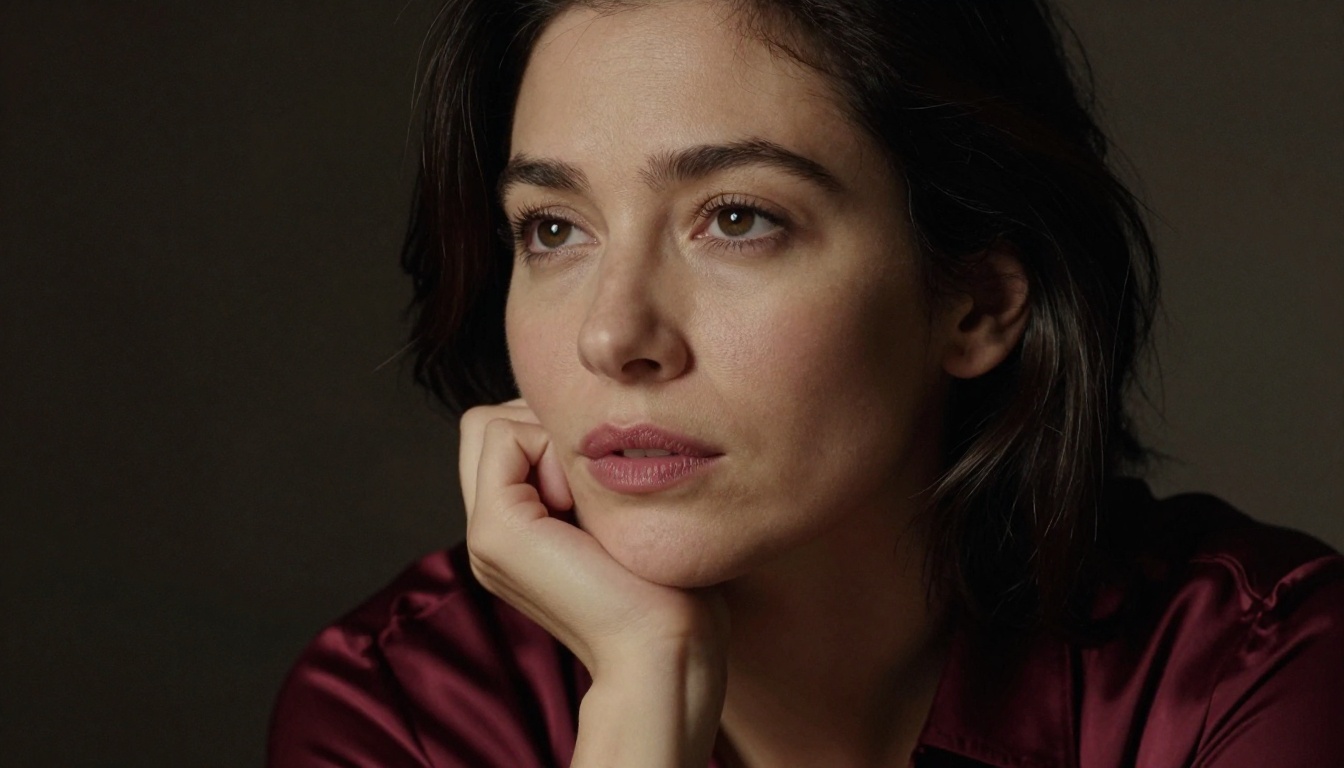
Pairing Text with NSFW Images: A Practical Workflow
Combining prose and visuals into a finished piece requires a workflow that keeps the two in sync. Here's what that looks like in practice.
Step 1: Draft the Story First
Write the story scene by scene using DeepSeek V3.1 on PicassoIA. Get the characters, setting, and narrative arc established in text before thinking about images. The fiction should stand alone.
Step 2: Extract the Visual Moments
Read through your draft and identify the three to five moments that benefit most from visual support. These are usually the setting introduction, the character introduction, a key tension beat, the main scene, and a closing image.
Step 3: Generate with Seedream 4.5
Take physical descriptions directly from your text and build Seedream 4.5 prompts from them. Use the same vocabulary you used in the prose. Keep prompts detailed: lighting conditions, angle, expression, environment, clothing. Seedream 4.5 responds well to specific, layered descriptions and handles adult content without interference.
Step 4: Refine with Image Editor Pro
If the first generation is close but not quite right, use PicassoIA Image Editor Pro to refine it. Adjust what needs adjusting, regenerate the rest. With unlimited generations available, you don't have to commit to something that doesn't match your vision.
Step 5: Sequence the Final Piece
Place images at the moments in the text where they were drawn from. Each visual should feel like it belongs to the specific passage it illustrates, not like generic stock placed to break up the text. The combined effect is a piece where prose and image reinforce each other.

Advanced Techniques for Longer Projects
For writers working on novel-length projects rather than short scenes, a few additional approaches pay off significantly over time.
Maintain a Story Bible
Create a separate document, or use a second PicassoIA conversation, as your story bible: character descriptions, key relationships, location details, established events and their outcomes. Paste the relevant sections into each new writing session as part of your context setup. This maintains consistency far better than relying on conversation history alone.
Scene Cards Before Full Scenes
Before prompting for a full scene, prompt for a scene card: a short description of the scene's purpose, the characters present, the emotional state at the start and end, and the key beats. Review it. Adjust it if it doesn't match your plan. Then prompt for the full scene. This two-step process catches structural problems before you've generated 1,500 words you'll need to cut.
Use DeepSeek R1 for Plot Problems
When you're stuck on plot architecture, a character motivation that doesn't hold together, or a pacing problem you can't resolve, switch to DeepSeek R1. R1's chain-of-thought reasoning makes it particularly effective at identifying structural issues and generating alternative solutions. Use it as your story editor, then switch back to the writing model for prose.

Start Writing Right Now
The gap between writers who produce adult fiction they're proud of and writers who stay stuck is almost always prompt quality and workflow clarity. DeepSeek V4 Pro gives you a model with the flexibility and coherence to handle this kind of content properly. PicassoIA gives you access to that model alongside Seedream 4.5 for character image generation, PicassoIA Image Editor Pro for iterative refinement, and 70+ other models for every other part of your creative process.
Start with one scene. Use the system prompt template from this article. Specify your characters, your tone, your pacing, and what you want the scene to accomplish. See what comes back. Adjust based on what's missing or what overshoots. Within a few iterations, you'll have output worth building on.
Every model you need, including DeepSeek V3.1, DeepSeek R1, and the full image generation suite, is waiting at picassoia.com/en/all-models. The story is yours to write.


