The question comes up constantly in AI art communities: does Seedance 2.0 have an adult mode, and if so, how do you turn it on? The frustration behind it is real. You have seen what modern AI image generators can produce, and you are wondering whether ByteDance's video-focused model has a secret setting tucked away for mature content. The short answer is no. But the full story is more interesting than that, and by the end you will know exactly where to go instead.

What Seedance 2.0 Actually Does
Before getting into content policies, it helps to know what Seedance 2.0 is actually built for. This is a text-to-video and image-to-video model developed by ByteDance, the company behind TikTok. Its strength lies in generating smooth, cinematic short video clips from text prompts or reference images. Think of it as a creative motion tool, not a still-image generator built with adult content workflows in mind.
Its output quality for video is genuinely impressive. Motion coherence, lighting transitions, and subject consistency across frames put it in the same conversation as Kling and Runway. What it is not is a platform designed for mature content of any kind.
Built for Video, Not NSFW
Seedance 2.0 was built with commercial content production as its north star: marketing videos, product demos, social media clips, creative storytelling. The model architecture and the API infrastructure wrapped around it reflect this. Content filtering is baked in at the inference layer, not bolted on as an afterthought.
This matters because many users conflate "powerful AI model" with "no restrictions." The two are completely unrelated. A model can be extraordinarily capable and simultaneously have hard content limits that cannot be bypassed by any prompt engineering, clever phrasing, or third-party wrapper.
The Content Policy Wall
ByteDance's API terms for Seedance are explicit. Adult content, explicit nudity, and sexually suggestive imagery that crosses defined thresholds are filtered out before output is returned to the user. This filtering happens server-side. It does not matter what interface you access the model through, whether directly via API, through a third-party platform, or any other wrapper. The filter is applied at the source, on ByteDance's infrastructure.
💡 Worth knowing: Content policies on closed commercial AI models are enforced at the inference infrastructure level, not the prompt level. No jailbreak prompt changes what happens on ByteDance's servers.
Is There a Hidden Adult Mode?
People asking this question are often hoping for something like what some open-source models offer: a toggle, a parameter flag, a permission tier you unlock by verifying your age. Seedance 2.0 does not have any such mechanism.
The Short Answer
There is no adult mode in Seedance 2.0. There is no hidden parameter in the API. There is no age-verification gate that opens restricted content tiers. The model was not built with this capability, and ByteDance has not announced any plans to add one. What you see in the public offering is what the tool is.
Why No Workaround Exists
Some users try prompt workarounds that work on locally-run models: embedding requests in fictional framing, using coded language, constructing multi-step prompts. None of these work on Seedance 2.0 because the filtering is not language-based interpretation by the model itself. It is a hard output filter running on the generation pipeline.
Think of it this way: even if your prompt produced an intermediate generation containing flagged content, the system would either block the output entirely or return a sanitized alternative. The model never independently "decides" to allow something. The infrastructure decides, every time, at the server level, before output reaches you.
Attempts to route around this through prompt injection or chained calls also fail for the same reason. The filter is not reading your prompt. It is scanning the output. There is nothing to trick.
To understand why Seedance 2.0 has these limits, it helps to look at how the broader AI landscape handles mature content. The approaches are dramatically different depending on the model's ownership model and business context.
The Open-Source vs Closed Ecosystem Split
The AI image and video generation space divides cleanly into two camps, with a third curated middle ground that most people do not immediately consider:
| Model Type | Examples | NSFW Capability |
|---|
| Closed commercial API | Seedance 2.0, Sora, Gemini | None or minimal, server-enforced filtering |
| Open-source, locally run | Stable Diffusion, FLUX.1 dev | Unrestricted if hardware is available |
| Curated adult-friendly platforms | Select AI art platforms | Permissive within defined platform rules |
Closed commercial models from large corporations like ByteDance, OpenAI, and Google almost universally enforce strict content filtering. Their business model depends on enterprise adoption, app store compliance, and regulatory safety across multiple jurisdictions. Allowing adult content would conflict with all three simultaneously.
Open-source models run locally have no such constraints. But running them requires meaningful technical setup: GPU hardware often costing thousands of dollars, model downloads exceeding 10GB, dependency management, and ongoing maintenance as models update. That is a real barrier for most users.
The third option, curated platforms that support suggestive and mature content within defined limits, sits between these extremes and is where most people should start.
What "Adult Mode" Really Means
When people search for an "adult mode" in AI tools, they are usually looking for one of three things:
- Suggestive content - bikinis, lingerie, glamour photography with tasteful sensuality
- Artistic nudity - non-explicit, fine-art or editorial-style body work
- Explicit content - fully pornographic output
These are very different categories with very different platform support. The first two are accessible on multiple curated AI platforms without requiring any special unlock. The third is restricted to dedicated adult platforms with proper age verification infrastructure.
Most users searching for "adult mode" actually want the first or second category, and those are entirely achievable with the right tools right now.
If Seedance 2.0 is not the right tool for mature creative content, what is?
The Alternatives That Work
Several AI image generation platforms support suggestive and glamour content with powerful photorealistic models. The critical distinction is that these platforms use models specifically chosen or fine-tuned for realistic human subjects, with content policies that permit adult-themed creative work within defined parameters.
On PicassoIA, you can access models like Flux 1.1 Pro Ultra and Realistic Vision v5.1, both of which excel at photorealistic human subjects with natural skin rendering, accurate anatomy, and lighting that reads like actual photography. These are not cartoon or anime generators. They produce work that sits comfortably in editorial fashion and glamour photography territory.
The SDXL base architecture has been the backbone of adult-friendly AI art generation for over two years. Its understanding of human anatomy and ability to render fabric, skin texture, and lighting makes it a reliable workhorse. Stable Diffusion 3.5 Large builds on that lineage with significantly improved compositional accuracy and subject rendering.
What to Look For in an NSFW AI Tool
Not all adult-friendly AI platforms are equal. When evaluating whether a platform fits your needs, check for:
- Human subject quality: Does it render faces, hands, and skin with photorealistic texture?
- Prompt responsiveness: Does it accurately follow detailed lighting, styling, and composition instructions?
- Output resolution: Can it generate at 4K or higher without visible artifacts?
- Clean output: No forced watermarks or logo overlays on results?
- Speed: Can you iterate quickly without five-minute waits per image?
PicassoIA checks all of these, and the model selection covers the full range from speed-optimized to maximum quality outputs.
How to Create Stunning NSFW-Style AI Art
Once you have the right platform, the difference between mediocre and outstanding results comes down entirely to how you prompt. The models are capable of extraordinary things. Most people do not know how to ask for them.
Models Worth Using on PicassoIA
For glamour and suggestive content specifically, these models consistently deliver the results that push into photorealistic territory:
Flux 1.1 Pro Ultra is the current benchmark for photorealistic human subjects. Its skin rendering, especially with detailed lighting prompts, is nearly indistinguishable from photography. It handles complex poses and fabric physics better than almost any other text-to-image model currently available.
Realistic Vision v5.1 is a fine-tuned model specifically optimized for photorealistic human subjects. Where the base SDXL can produce generic-looking results, Realistic Vision v5.1 adds the specific texture understanding that makes skin, hair, and fabric look tactile and dimensional.
Flux 2 Pro offers significantly higher prompt adherence than earlier models. Your specific composition requests, camera angles, and lighting descriptions translate far more accurately into the output. This matters enormously for consistent art direction across a shoot.
Stable Diffusion 3.5 Large brings a different aesthetic, leaning toward painterly photorealism that many users prefer for artistic and boudoir-adjacent work.
SDXL remains one of the most versatile base models. Its depth of training and broad stylistic range make it adaptable across editorial, glamour, and fine-art body photography aesthetics.
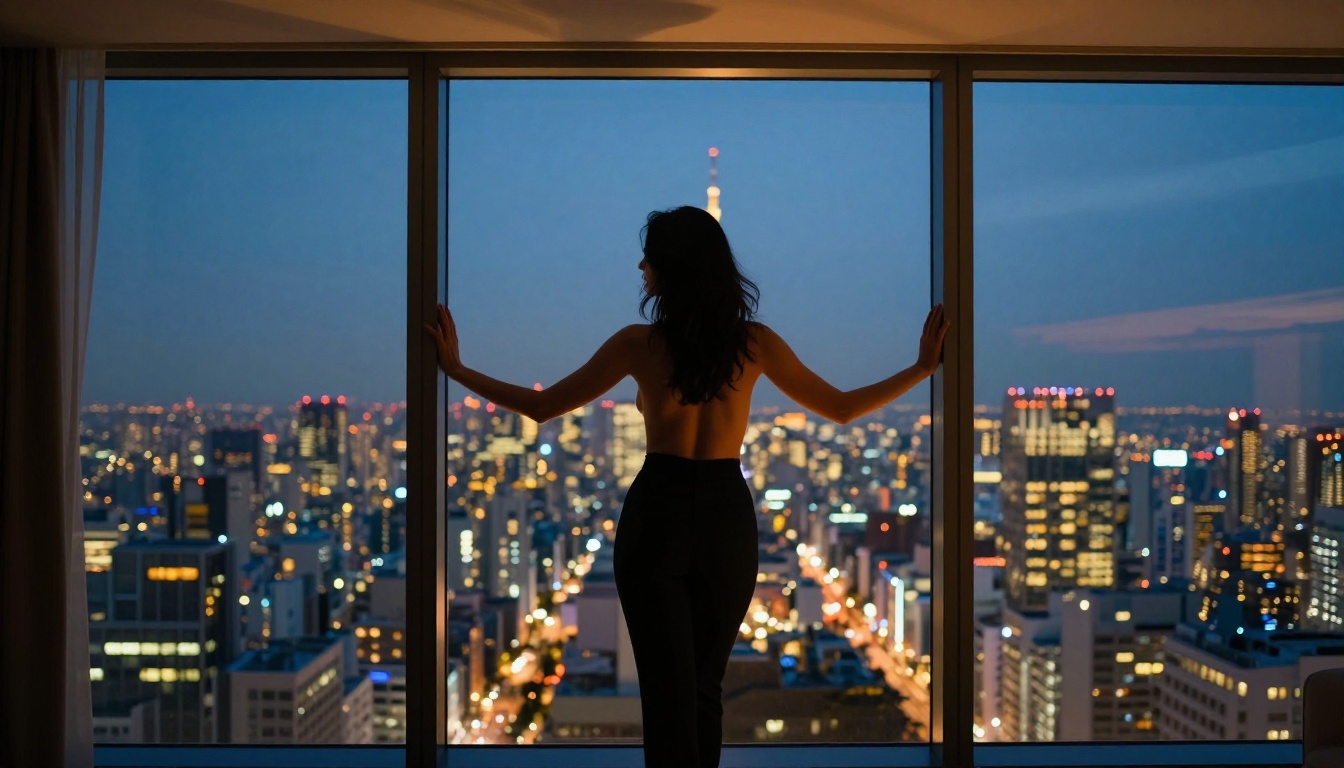
Flux Dev is the model to reach for when you want maximum creative latitude with strong photorealism. It handles environments and subjects together more convincingly than models optimized purely for portrait work.
Prompt Crafting for Glamour Content
The single biggest factor in output quality is prompt specificity. Vague prompts produce vague results. A repeatable framework that works consistently:
Structure every prompt in this order:
- Subject description (ethnicity, age range, hair, expression, pose)
- Wardrobe or styling (specific fabric type, fit, color, details)
- Environment (room type, outdoor setting, specific props)
- Lighting (direction, quality, color temperature, shadow behavior)
- Camera (focal length, aperture, shooting angle)
- Film and texture modifiers (grain type, color grade, RAW specification)
What actually changes results:
| Weak Prompt | Strong Prompt |
|---|
| "beautiful woman" | "woman, early 30s, olive skin, high cheekbones, wavy dark hair" |
| "good lighting" | "volumetric morning light from left window, soft fill from right" |
| "photorealistic" | "Canon EOS R5, 85mm f/1.4, Kodak Portra 400 grain, RAW 8K" |
| "nice background" | "minimal Scandinavian bedroom, white linen, floor lamp warm glow" |
💡 Pro tip: Describe skin texture explicitly. Adding "natural pores visible, subsurface scattering, fine surface hair detail" pushes results past the "too smooth" digital look that breaks photorealism on most AI outputs.
3 Common Mistakes
1. Specifying the pose without the camera angle. If you say "dramatic pose" but do not specify a camera angle or lens, the model defaults to a flat, straight-on view that kills any sense of drama. Always say "low-angle shot, 35mm, looking up at subject" or similar.
2. Forgetting lighting direction. "Good lighting" carries zero information. "Side light from the left at 45 degrees, harsh mid-afternoon sun creating sharp shadow across collarbone" gives the model actual visual instructions to work from.
3. Using style words without visual anchors. "Cinematic" is vague. "Shot on ARRI Alexa, 2.39:1 aspect ratio, anamorphic lens flare, grain matching a 2000s fashion editorial" is not. Specificity is everything.
What You Can Actually Do on PicassoIA
The range of mature creative content achievable on the platform goes further than most users expect when they first arrive after being turned away from closed platforms like Seedance 2.0.
Real Results Without Restrictions
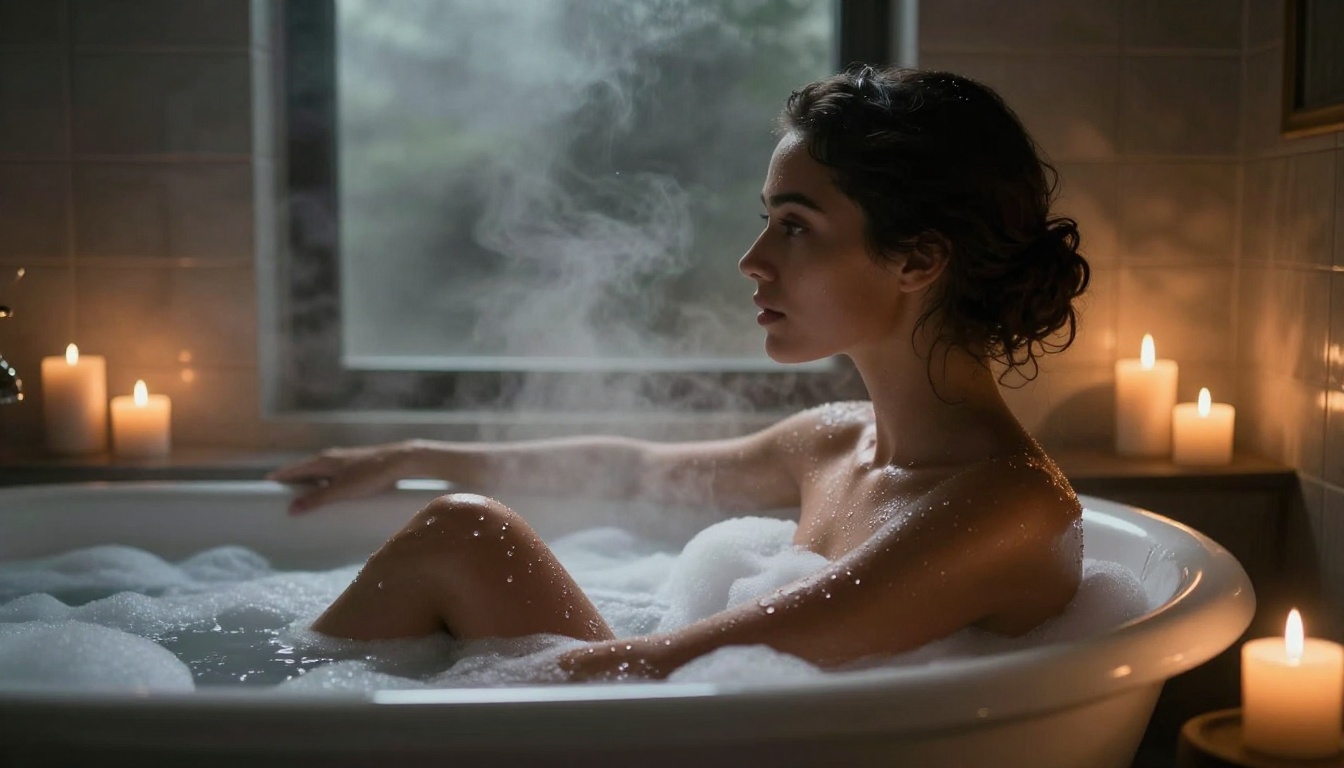
Fashion editorial work, glamour photography, artistic implied nudity, swimwear and lingerie shoots, boudoir aesthetics, and fine-art body studies are all within reach. The models handle these categories with a level of nuance that would have been technically impossible even 18 months ago.
The Flux Dev model renders natural anatomy with an accuracy that makes poses feel physically plausible, not stiff or awkwardly generated. Combined with detailed environment prompts, results land far closer to editorial photography than anything that reads as AI-generated.
GPT Image 1.5 brings particular strength to composed scenes where multiple elements need to coexist coherently, such as a subject in a specific room, with specific props, under specific lighting conditions, all rendered with consistent internal logic.
For users who want to iterate fast without sacrificing quality, Flux 2 Pro and Ideogram V3 Quality offer a strong combination of speed and output fidelity that makes rapid creative exploration practical.
Tips for Photorealistic Results
Getting results that read as real photography requires attention to a few details that make the difference:
- Aspect ratio: Use 16:9 for environmental and lifestyle shots, 4:3 for portraits. Model training data is biased toward these ratios and results improve noticeably.
- Reference real photographers: Prompts that reference specific photographers' aesthetics carry genuine visual meaning for these models. "Helmut Newton aesthetic" or "Peter Lindbergh-style lighting" produce distinctly different outputs.
- Control depth of field: "f/1.4 background bokeh" versus "f/8 everything in focus" produces dramatically different images. Be explicit about what is and is not in sharp focus.
- Film grain is not optional: Adding grain to prompts removes the telltale "AI smooth" look that immediately signals digital origin.
💡 Quick win: Add "shot on film, slight motion blur in background, natural vignette, slightly imperfect focus" to any portrait prompt. These photographic imperfections are exactly what makes AI images read as real.
Start Creating Without Looking for Workarounds
The search for a Seedance 2.0 adult mode ends in a dead end, but it points you toward something genuinely useful: a clear picture of which tools are actually built for the creative work you want to do.
For video generation with mainstream content, Seedance 2.0 delivers real results. For glamour photography, artistic NSFW imagery, editorial fashion, and suggestive creative work, the right tools are the photorealistic text-to-image models on platforms built specifically for that kind of creative latitude.
PicassoIA puts Flux 1.1 Pro Ultra, Flux 2 Pro, Realistic Vision v5.1, SDXL, Stable Diffusion 3.5 Large, and dozens of other models directly in your hands, with no GPU required, no local install, and no technical knowledge needed. You write the prompt. The model handles the rest.
Stop spending time on workarounds that do not exist. The platform you are actually looking for is already here, and the models on it produce results that genuinely rival professional photography when you put the right prompts together. Go try it.


