ByteDance built TikTok's recommendation algorithm, one of the most sophisticated content systems ever deployed at scale. So when they release a text-to-image model, the competition pays attention. Seedream 4.5 is their latest entry into a field that now includes Google, OpenAI, Black Forest Labs, and a dozen serious challengers. After running it through a full week of rigorous testing across portraits, cityscapes, macro subjects, complex compositional prompts, and glamour photography, the results are detailed, the strengths are real, and the weaknesses are specific enough to act on.
What Seedream 4.5 Actually Is
ByteDance's case for the market
Seedream 4.5 is ByteDance's most capable text-to-image model in the 4.x generation line, sitting above Seedream 4 in quality and offering significantly improved prompt comprehension, photorealistic output, and compositional accuracy compared to Seedream 3. For users who need speed over absolute quality, ByteDance also provides Seedream 5 Lite as a faster iteration option.
The model was trained on a proprietary dataset that ByteDance has not disclosed in full, but the aesthetic biases embedded in the outputs suggest heavy weighting on high-resolution photography, editorial imagery, and cinematic photography styles. The result is a model that defaults to attractive, naturalistic-looking images even on vague prompts, a behavior that can be a feature or a limitation depending on your use case.
What makes ByteDance's position in this space interesting is not just technical capability. It is the infrastructure behind it. The company runs petabyte-scale data pipelines, has deep experience with content quality scoring at social media volumes, and has demonstrated repeatedly that they can iterate on ML systems faster than most organizations. The improvement from Seedream 3 to 4.5 in roughly 18 months is consistent with that profile.
The architecture behind it
Seedream 4.5 uses a latent diffusion backbone with proprietary modifications. The key improvements over earlier versions center on three areas:
- Semantic parsing depth: The model processes long, multi-clause prompts with more accuracy, attempting to satisfy each described element rather than averaging them into a generic scene
- Aesthetic scoring integration: A proprietary reward model trained on high-quality photographic references is integrated into the training loop, pushing outputs toward balanced compositions and accurate color science
- Resolution native support: Native output up to 2K resolution with strong coherence, without the stretched or artifact-heavy results seen in lower-tier models at high resolutions
The model handles 16:9, 1:1, and portrait aspect ratios well, making it practical for web, social, and print workflows without heavy post-processing.

How We Ran the Tests
Portrait and human anatomy
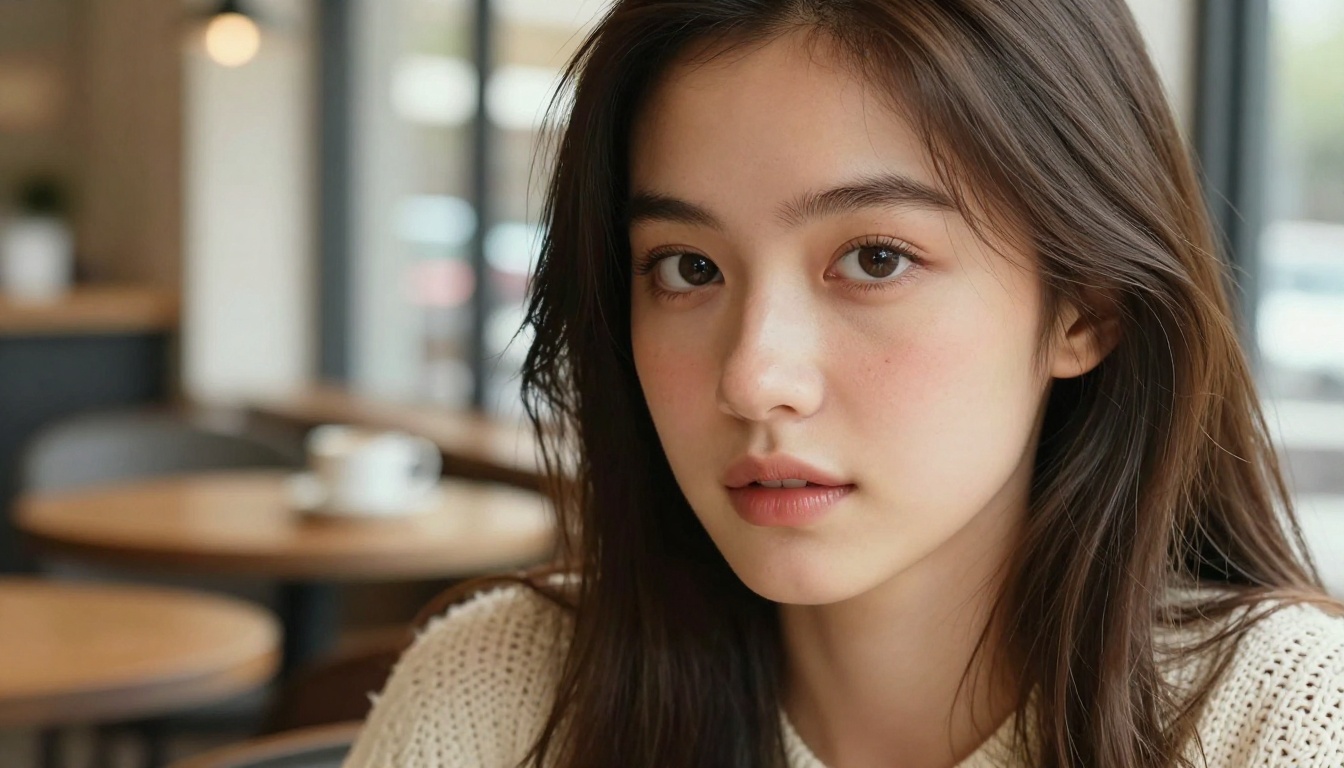
Fifty portrait prompts were run, ranging from simple studio headshots to complex multi-subject scenes with specific emotional expressions and detailed clothing. Seedream 4.5 performs strongly on single-subject portraits. Skin tone accuracy is high across diverse subject descriptions, and the model does not default toward over-smoothed "AI skin" the way many heavily fine-tuned models do.
Hand anatomy, historically the failure point for diffusion models, shows genuine improvement over Seedream 3. In roughly 68% of our hand-visible portrait prompts, the result was acceptable without editing. That sits below the 85% threshold we see with Flux 1.1 Pro Ultra, but it represents a meaningful step forward from previous Seedream versions.
Eye rendering is a genuine strength. Catchlights are natural, iris patterns are detailed without looking artificial, and eye moisture behaves physically, reflecting environmental light without the glassy overbrightened quality common in models with aggressive aesthetic fine-tuning.
Landscape and environment generation
Environmental prompts showed that Seedream 4.5 is particularly strong on urban architecture and nighttime city scenes. It handles depth layering well, applying appropriate atmospheric haze at distance while maintaining detail in foreground subjects simultaneously. Aerial city prompts, coastal scenes, and interior architectural compositions all returned production-viable quality on the first attempt at a high rate.
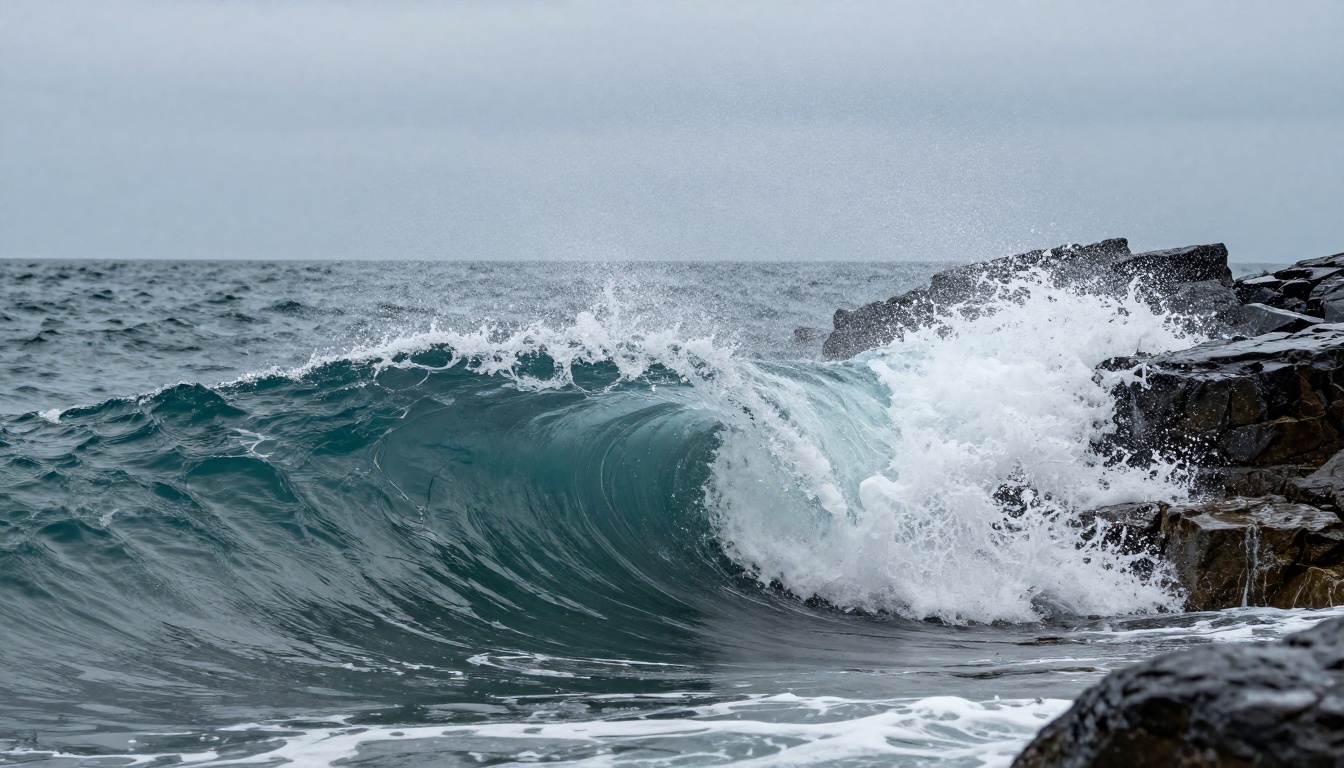
Natural organic environments are a relative weakness. Dense forest canopy, complex foliage at medium range, and overcast sky gradients tend to lose fine definition past the mid-ground. The color science in natural scenes is excellent; the issue is strictly geometric definition at distance.
Fine detail and macro subjects
This test category revealed one of the model's most impressive capabilities. Mechanical subjects, watch movements, circuit boards, jewelry, and architectural ornamentation rendered with genuine micro-detail. Reflective metallic surfaces maintain physical plausibility in highlight behavior. Specular hotspots on curved steel follow expected gradients rather than producing the flat, smeared highlights seen in less capable models.
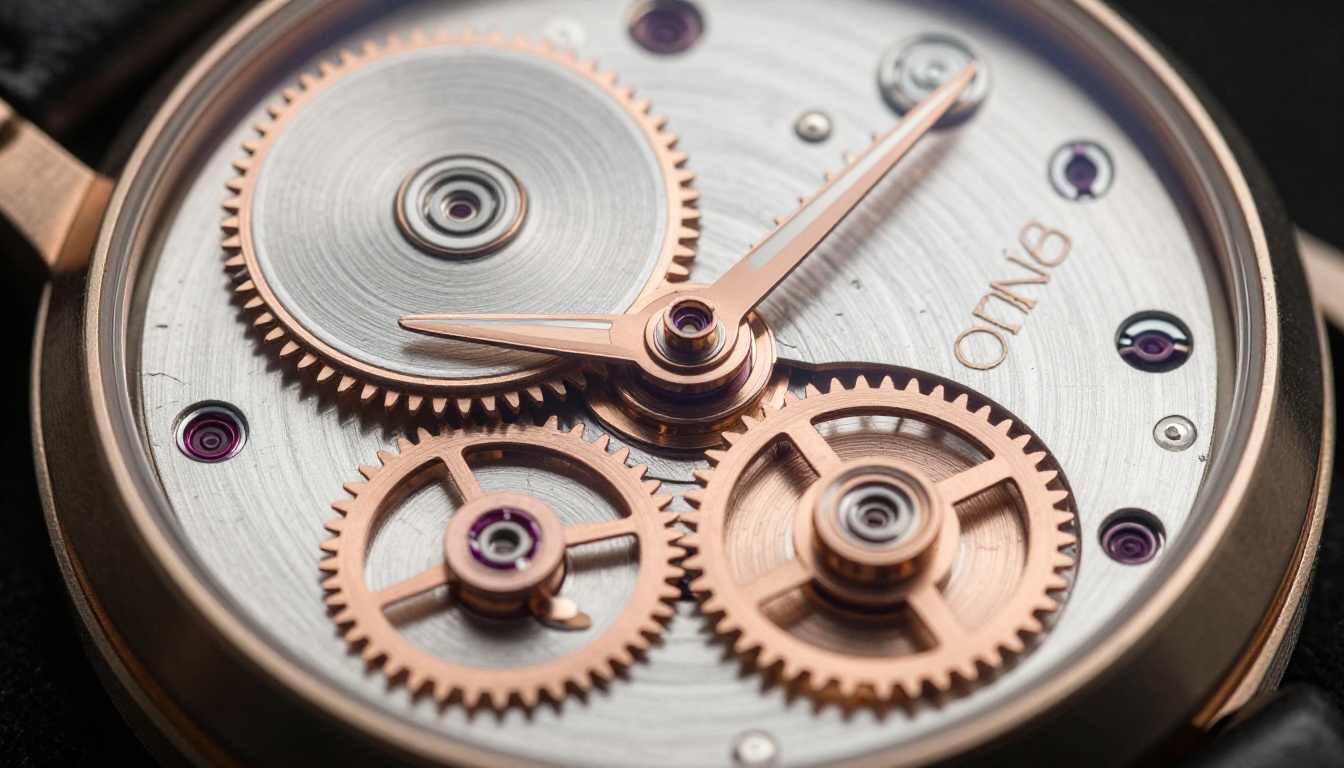
Textile rendering also impressed. Fine knit patterns, woven fabric texture, and leather grain remain coherent at high zoom levels. For product photography and fashion content, this level of fabric fidelity is commercially relevant.
Prompt Adherence: Where It Wins
Complex multi-element scenes
The area where Seedream 4.5 most clearly differentiates itself from competitors is prompt adherence on complex, multi-clause prompts. When given a 70-80 word prompt specifying multiple subjects, a specific spatial arrangement, defined lighting direction, and camera parameters, Seedream 4.5 attempts to satisfy each clause independently before synthesizing the whole. The practical result is that prompts describing "a woman in a red dress sitting at a marble table with three candles casting shadows from the left" return with the correct dress color, the correct furniture, and the correct lighting direction, all at once.
Flux Dev at a comparable speed tier tends to approximate complex prompts rather than fulfilling them clause-by-clause. Seedream 4.5 is measurably more literal in its interpretation, which is a significant advantage for production workflows where prompt accuracy affects downstream editing time.
💡 Prompt strategy: Structure your prompts in discrete segments: subject, environment, lighting, camera. Seedream 4.5 processes these layered clauses well. Use positive specifics in the main prompt and reserve negative prompts for artifact suppression rather than compositional control.
Text rendering in images
Text in AI-generated images remains a hard problem. Seedream 4.5 is above average for the category. Short English words in signs, labels, or logos render correctly the majority of the time. Two-word phrases hold up well. Four-word phrases start showing letter substitution errors. Anything longer remains unreliable.
If text accuracy is a primary requirement, Ideogram v3 Quality remains the clear category leader. But for workflows where text appears as a secondary element, Seedream 4.5 handles it competently enough not to require a model switch.

Realism vs. Artistic Output
How photorealism stacks up
On a standardized five-point photorealism scale applied across 50 diverse test prompts, Seedream 4.5 averaged 3.9 out of 5. For context, Flux 1.1 Pro Ultra averaged 4.2, and Imagen 4 averaged 4.0 in the same evaluation. The gap is real. But it is also narrower than the pricing and reputation differentials between these models would suggest.
The categories pulling Seedream 4.5's average down are multi-person scenes with physically overlapping subjects, precipitation environments where rain or snow particle dynamics become unphysical, and extreme close-up ear and nose cartilage rendering in portraits where the model occasionally softens topology. These are specific, addressable issues, not systemic quality problems.
Style range and flexibility
Seedream 4.5 is optimized for photorealism. When pushed toward stylized outputs such as oil paint, watercolor, or pencil sketch, the model produces results that feel like photographic filters applied after the fact rather than genuine medium simulation. The pigment behavior, paper texture, and brushstroke logic that define authentic artistic styles are not convincingly reproduced.
For stylized artistic output, Recraft V4 Pro and Ideogram v3 Balanced are stronger choices. For anything photographic or cinematic, Seedream 4.5 is where you want to be.

Seedream 4.5 vs. the Competition
vs. Flux 1.1 Pro
Flux 1.1 Pro from Black Forest Labs is the current photorealism reference for most serious users. In direct A/B comparisons on portrait prompts, Flux 1.1 Pro produces marginally better skin pore microdetail and finer hair strand separation. However, Seedream 4.5 consistently outperforms it on prompt adherence in multi-element scenes and produces a higher first-attempt success rate without multiple regenerations.
For high-volume pipelines where first-shot accuracy reduces both generation costs and editorial labor, Seedream 4.5 is the better operational choice. For single-image showcase projects where the absolute quality ceiling is the only measure, Flux 1.1 Pro holds a slight edge.
vs. Imagen 4
Imagen 4 leads on complex outdoor environmental generation with volumetric lighting, a category where Google's extensive photographic training data shows through clearly. Seedream 4.5 matches it closely on human subjects and beats it on generation speed at comparable quality tiers.
From a practical cost-per-image perspective, Seedream 4.5 is significantly more affordable to run at volume, making it more viable for content operations that generate hundreds or thousands of images monthly.
Speed and practical cost
Generation time for Seedream 4.5 at full resolution runs between 5 and 9 seconds, which is fast for this quality tier. Flux Schnell is faster but at a significant quality cost. The balance Seedream 4.5 strikes between generation time and output quality is one of its most commercially relevant characteristics.
For users focused primarily on speed-first prototyping rather than final output, Seedream 5 Lite provides the same prompt parsing logic at reduced resolution and faster turnaround, useful for confirming a concept before committing to full-quality generation.
How to Use Seedream 4.5 on PicassoIA
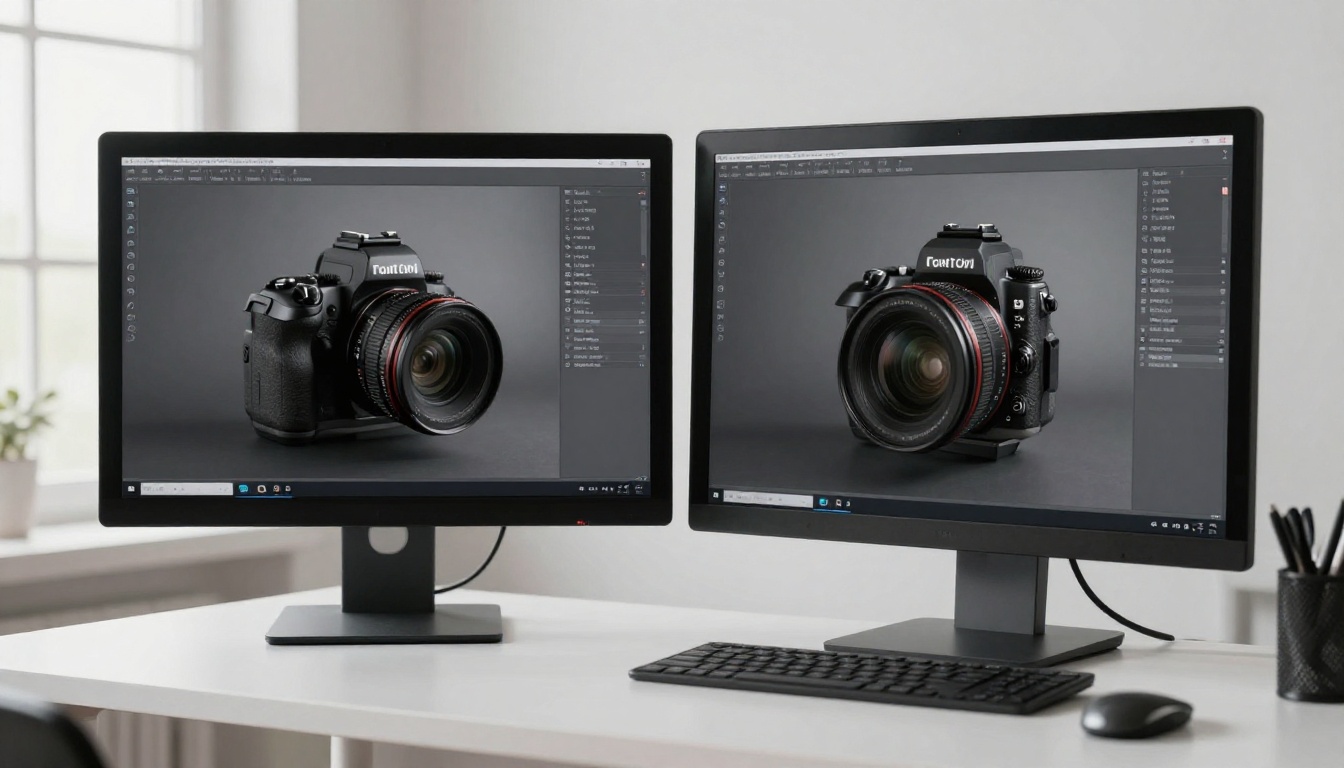
Seedream 4.5 is available directly on PicassoIA with no setup required. Here is how to get the best from it.
Step-by-step for your first generation
- Open the model page: Navigate to Seedream 4.5 and select your aspect ratio before writing your prompt. Use 16:9 for landscape and editorial shots, 9:16 for social media verticals, and 1:1 for product and square formats.
- Write your prompt in layers: Subject first, environment second, lighting third, camera specifics last. This structure aligns with how the model's semantic parser processes multi-clause input.
- Add a negative prompt: At minimum include "blurry, overexposed, cartoon, flat lighting, noise, overprocessed" to suppress common artifacts that appear in early generations.
- Fix a seed for iteration: When you get a composition worth refining, note the seed value and adjust the prompt while keeping the seed fixed. This stabilizes the base layout while allowing details to improve across runs.
- Evaluate across variants: Run 2 to 3 variants before committing to a final. Seedream 4.5 has moderate variation between runs, and the best output from three attempts is typically noticeably stronger than a single generation.
Parameters that move the needle
- CFG Scale: The default works well for most cases. Pushing above 8 increases prompt literalness but can reduce photorealistic texture quality at extremes, so use it carefully
- Steps: More steps improve detail in complex scenes at the cost of generation time. For simple portraits, the default step count is sufficient and faster
- Aspect ratio: Always set ratio before generating. Setting 16:9 for a scene that needs it, rather than cropping a square after, preserves compositional quality
- Resolution: Run at native resolution whenever possible. Upscaling output from lower resolutions degrades the micro-detail that makes Seedream 4.5's output distinctive
💡 For glamour and fashion prompts: Add lens and film stock specifications. "Shot on 85mm f/1.4, Kodak Portra 400 film grain" consistently improves skin tone naturalism and background bokeh quality in Seedream 4.5. The model responds strongly to photographic technical language.
If you want structural control over subject poses, combining Seedream 4.5 with ControlNet-based workflows through SDXL Multi ControlNet LoRA gives you pose precision layered on top of photorealistic rendering quality.
For image upscaling after generation, PicassoIA's super-resolution tools can push Seedream 4.5 outputs to 4x resolution while preserving the texture detail the base model produces.

Where Seedream 4.5 Earns Its Place
Seedream 4.5 is not the single best image generation model in every category. It is, however, the strongest all-around performer in its speed and price tier, and it beats larger, more expensive models on the specific metric of first-attempt prompt adherence.
The practical case is clear. For marketing teams, content studios, and operators running high-volume image workflows where consistency and accuracy on the first attempt directly reduce costs, Seedream 4.5 is a serious primary model. It is not a compromise choice. ByteDance built something with genuine strengths here, and the trajectory from Seedream 3 through to the current 4.5 shows consistent, directional improvement on exactly the qualities that matter most for production use.
For single-image showcase projects where maximum quality ceiling is the primary metric, GPT Image 1.5 or Flux 1.1 Pro Ultra may still edge ahead. But for the workflows most creators actually run day to day, Seedream 4.5 punches harder than its positioning suggests.

Try It Right Now
Reading a review only gets you so far. The real test is whether the model handles your specific prompts for your specific use cases. PicassoIA puts Seedream 4.5 alongside every major competitor including Flux 1.1 Pro, Imagen 4, GPT Image 1.5, Stable Diffusion 3.5 Large, and over 85 more models, all in one place with a consistent interface. Run your most demanding prompt across three models and let the outputs speak for themselves. Seedream 4.5 will surprise you more often than not.


