Most people searching for NSFW AI tools waste hours clicking through platforms that look promising but either censor output at the last step, require expensive subscriptions for basic features, or quietly log every prompt and generated image you create. The honest information about how these tools actually work, which models are genuinely uncensored, and what the real privacy risks look like almost never appears in the same place. That changes here.
The Censorship Wall Everyone Ignores
The single biggest complaint about NSFW AI image generators is not quality. It is inconsistency. A prompt that works perfectly on Monday gets blocked on Tuesday after a platform updates its safety filters. Most users experience this and assume they did something wrong. They did not.
Why Platforms Block What They Block
Content moderation in AI image generation is not static. Platforms adjust their filters based on payment processor pressure, hosting provider terms, app store requirements, and advertiser relationships. A tool built on Replicate, Stability AI, or Hugging Face infrastructure often inherits the content policies of those underlying providers, even if the surface-level tool appears to offer freedom.
The critical distinction is between model-level filtering and platform-level filtering:
- Model-level filtering: The AI weights themselves are fine-tuned to refuse certain outputs. This is baked into the model and cannot be overridden without running a different version.
- Platform-level filtering: A wrapper around an otherwise capable model that blocks prompts before they reach the model, or reviews outputs before returning them.
Understanding this difference lets you find tools where the model itself is capable and the platform does not layer additional restrictions on top.
The Platforms That Actually Work
Not every platform running uncensored models promotes that fact openly. The ones worth your time are those that have built their infrastructure specifically for adult content, with appropriate age verification, terms of service that explicitly permit NSFW output, and payment processing that supports that content category.
💡 A platform that allows NSFW content in its terms but uses payment processors that prohibit it will eventually pull the feature. Always check the payment and hosting stack, not just the terms of service.
Output Quality: What Really Separates Good from Bad
Most NSFW AI content reviews focus on whether something generates at all. Almost none discuss why quality varies so dramatically between tools generating the same type of content.
The Photorealism Problem
NSFW content requires a higher bar for photorealism than most other image categories. Anatomy errors, skin texture that looks plastic, lighting that flattens depth, and unnatural poses are all magnified when the subject is a human figure close to the camera. Models trained primarily on stock photography or general internet datasets often struggle specifically with the anatomical accuracy that realistic human figure photography requires.
The best models for photorealistic NSFW output share several characteristics:
| Feature | What to Look For |
|---|
| Training data | Large curated human figure datasets |
| Base architecture | SDXL or Flux-based for superior detail |
| LoRA support | Allows style fine-tuning |
| Native resolution | 1024px minimum output |
| Sampler | DPM++ or Euler ancestral for skin detail |
Resolution and Detail That Counts
Raw output resolution is only part of the quality equation. A 1024x1024 output from a model with strong fine-tuning will outperform a 2048x2048 output from a model that does not handle human figures well. What you actually want is sharpness in the areas that matter: facial features, skin texture, fabric weight, and lighting transitions.
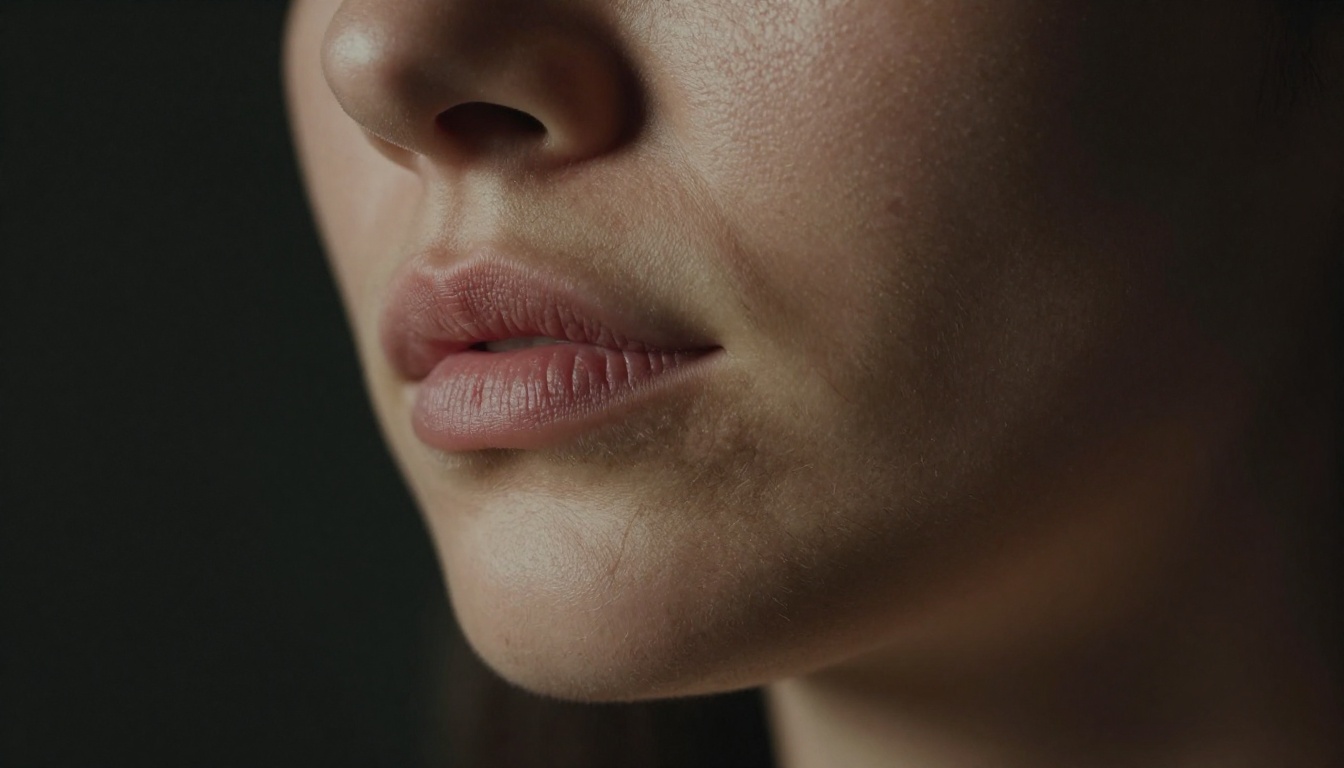
💡 Prompt for specific camera lenses and lighting setups. "85mm f/1.4 portrait lens, Rembrandt lighting" tells the model how to distribute light and depth of field in ways that generic prompts cannot.
Privacy Risks Nobody Mentions
The privacy situation in NSFW AI generation is genuinely worse than most users realize, and the tools that address it honestly are rare.
Who Reads Your Prompts?
Nearly every cloud-based AI image generator logs prompts. This is not hidden, but it is also not prominently advertised. Those logs can be:
- Used for model training (often stated in the terms of service)
- Reviewed by human moderators for policy compliance
- Stored indefinitely or until account deletion
- Subject to legal discovery in jurisdictions with broad surveillance authority
For NSFW content specifically, prompt logging creates a record of your creative preferences that exists on a third-party server. Most users never think about this until a platform is acquired, breached, or required to disclose data.
What Happens to Your Generated Images?
Generated images are typically stored server-side for a period ranging from 24 hours to indefinitely, depending on the platform. Free tier users are almost always more exposed than paying subscribers: free-tier images may be visible to platform staff for moderation, used in marketing materials (check the terms), or retained longer than paid-tier images.
The safest approach for sensitive NSFW generation is a platform that:
- Offers server-side deletion within minutes of generation
- Does not use generated images for training without explicit opt-in
- Has a clear, specific data retention and deletion policy
- Is not affiliated with companies that have advertising businesses
The Best Uncensored Models Available Now
With the technical context covered, here is where the actual quality and freedom to create without artificial limits actually lives.
Seedream 4.5: The Current Leader
Seedream 4.5 is the strongest choice for NSFW image generation right now. It produces 4K output with exceptional skin texture, handles anatomy accurately even in complex poses, and responds well to detailed photographic prompts. Its base training includes a wide range of human figure photography that gives it a natural, unartificial quality that earlier versions like Seedream 4 could not match.
What makes Seedream 4.5 specifically useful for adult content:
- Skin rendering: Natural texture at the pore level without the plastic sheen that affects many competing models
- Lighting response: Accurately simulates complex lighting setups when prompted with specific lighting language
- Anatomy consistency: Significantly fewer anatomical errors than SDXL-based models at default settings
- Prompt following: High fidelity to detailed, specific prompts rather than averaging toward a generic result
PicassoIA Image Editor Pro: Unlimited Generations
PicassoIA Image Editor Pro addresses the single most frustrating limit in NSFW generation: daily caps. Most platforms restrict free and even paid users to a finite number of generations per day. When you are iterating on prompts to get the exact output you want, hitting a wall at generation 20 or 50 destroys the creative workflow.
PicassoIA Image Editor Pro offers unlimited generations with no daily cap, making it the practical choice for anyone doing serious creative work in this space. The combination of no limits and access to top-tier models means you can iterate freely without rationing your attempts.
SDXL, Flux Dev, and Realistic Vision Compared
Beyond the top two recommendations, several other models on the platform are worth knowing for specific use cases.
SDXL remains relevant because its extensive LoRA ecosystem means there are fine-tuned variants for almost any photographic style. The base model is no longer state-of-the-art for photorealism, but with the right LoRA applied, results improve significantly.
Flux Dev offers some of the best prompt adherence in the current model landscape. Where Seedream 4.5 wins on natural skin quality, Flux Dev wins on following complex compositional instructions precisely. For creative setups with specific staging, it often outperforms.
Realistic Vision v5.1 and RealVisXL v3.0 Turbo are specifically trained for photorealistic human figure output and show it. Both handle skin tones, varied lighting, and body proportions better than general-purpose models. RealVisXL adds speed through turbo architecture while maintaining most of the quality.
Dreamshaper XL Turbo is worth knowing for more stylized, artistic NSFW output. It sits between photorealistic and stylized in a way that suits editorial or fantasy-adjacent creative directions.
How to Use Seedream 4.5 for NSFW Images
This section walks through the complete process of getting high-quality NSFW output from Seedream 4.5 on PicassoIA.
Step-by-Step Process
Step 1: Go to Seedream 4.5 on PicassoIA and create an account if you have not already. Age verification is required for NSFW content access.
Step 2: Set your aspect ratio before writing your prompt. For portrait work, 9:16 is optimal. For scene-based compositions, 16:9 gives cinematic framing.
Step 3: Write your prompt using the photography-first structure: Subject, Clothing or State, Environment, Lighting, Camera Specs, Film or Texture.
Step 4: Use the negative prompt field to exclude common failure modes: "plastic skin, airbrushed, oversaturated, incorrect anatomy, extra limbs, blurry, watermark"
Step 5: Start with a lower step count (20-25) to quickly check composition, then increase to 35-40 for the final output.
Best Prompt Structure for NSFW Output
The difference between a generic result and a specific, high-quality output almost always comes down to how detailed the prompt is. A weak NSFW prompt says "a beautiful woman." A strong NSFW prompt gives the model everything it needs:
"A woman in her late twenties in a sheer ivory slip dress, reclining on a sun-warmed stone terrace overlooking the Amalfi Coast, late afternoon light from the left casting warm shadows across her figure, shot with an 85mm f/1.4 lens at f/2.0, shallow depth of field, Kodak Portra 400 film grain, natural skin texture, authentic documentary photography"
The specificity here: age, garment, setting, lighting direction, camera lens, film stock. Each element narrows the output space and raises quality.
Parameters That Change Everything
- CFG Scale: Keep it between 5-7 for natural results. Above 9 creates over-processed, artificial outputs.
- Sampler: DPM++ 2M Karras for clean skin detail. Euler a for more variation between generations.
- Seed: Once you find a strong result, note the seed and iterate from it.
- Steps: 30-35 is the sweet spot for Seedream 4.5. Beyond 40, gains are minimal.
Speed, Cost, and Daily Limits
Free Tiers and What They Actually Allow
Most NSFW AI platforms use tiered pricing where free users can access the feature in theory but the daily generation cap makes serious use impractical. A cap of 10-20 generations per day works fine for casual use but breaks down completely when you are iterating on prompts to find exactly the right result.
The hidden costs in free-tier use are not always in the subscription price. They appear in:
- Per-generation credits that run out without warning
- Lower quality settings locked behind paid tiers
- Watermarks on free-tier output that cannot be removed
- Slower generation queues that stretch a 10-second process into two minutes
Truly Unlimited Platforms
PicassoIA Image Editor Pro is the clear answer here. Unlimited generations mean the creative workflow is not interrupted by artificial scarcity. When you are iterating through 50 prompt variations to find the perfect result, the absence of a daily cap changes the entire experience.
💡 If you are serious about NSFW AI image creation, the daily generation cap matters more than almost any other feature. Calculate how many attempts it typically takes you to reach the result you want, then choose a plan that covers that number without friction.
The Artistic Line vs. Explicit Content
Where the Boundary Actually Sits
The practical distinction that matters for most users is between suggestive and explicit:
- Suggestive: Lingerie, swimwear, implied nudity, artistic figure photography, boudoir aesthetics. Widely supported on most NSFW-permissive platforms.
- Explicit: Graphic nudity, sexual acts. Requires platforms specifically built and licensed for this content category.
Most of the tools described here operate in the suggestive and artistic nudity category. This is not a limitation in practice for the majority of creative use cases, including professional photography reference, character design, fashion work, and creative writing illustration.
Why Some Models Self-Censor
Stable Diffusion base models include a NSFW safety checker in the default pipeline that can be disabled at the platform level. Many platform implementations leave it enabled. This is a platform decision, not a model capability issue. The same base weights without the safety checker produce very different outputs.
Flux 1.1 Pro and similar commercial models built for broad distribution are almost always run with safety filters in their standard API versions. Using them through PicassoIA, which has negotiated appropriate access for adult creative work, changes what is achievable from the same underlying model.
💡 When a model you know is capable produces bland, over-covered results, the issue is almost always the platform layer, not the model itself. Switching platforms while keeping the same model often dramatically changes output quality and freedom.
What Happens When You Push Too Far
Account Bans and Platform Risk
Every platform has enforcement mechanisms, and NSFW-permissive platforms still draw hard lines. The most common ban triggers are:
- Attempting to generate content involving minors (automatic, permanent ban with no appeal)
- Attempting to generate non-consensual scenarios with realistic likenesses
- Circumventing content filters through obfuscated language or coded prompts
- Violating specific platform terms that restrict certain content categories even within NSFW
The platforms worth using enforce these rules because it protects the platform's ability to operate. A permissive platform that does not enforce hard limits gets shut down. The ones that have survived built real enforcement infrastructure.
How to Stay on the Right Side
- Read the actual terms of service for your chosen platform, not summaries or community wikis
- Use the platform's intended content categories rather than attempts to push past them
- If a prompt gets blocked, treat it as information about that platform's specific limits
- Keep a local backup of generated images you want to keep, since server-side retention varies
Start Creating Now
The information above closes most of the gap between what NSFW AI tool marketing shows you and what the tools actually do. The platforms that work, the models worth using, the privacy considerations, the quality factors, and the real content limits are all documented here.
The practical starting point is Seedream 4.5 for the best output quality available right now, and PicassoIA Image Editor Pro for unlimited generations without daily caps interrupting your creative flow. Both are available on PicassoIA, which also gives you access to the full model lineup including Flux Dev, Realistic Vision v5.1, RealVisXL v3.0 Turbo, P Image, and more.
If you want to see everything available in one place, the full model library is at picassoia.com/en/all-models. Over 91 text-to-image models, filtered by category, speed, and output type, ready to use without long waitlists or complicated setup.
Pick a model, write a specific prompt, and start iterating. The quality difference between a generic prompt and a detailed photographic brief is significant, and most people discover this within the first five attempts.