80s AI Photo Prompt for Couples, Families, Men and Women: 9 Scenes That Look Real
Ready-to-paste 80s AI photo prompts for couples, families, men and women, each built on real 1980s wardrobe, film grain, flash and studio backdrops. Includes a six-part prompt formula, the models on PicassoIA that handle the look best and the mistakes that ruin it.
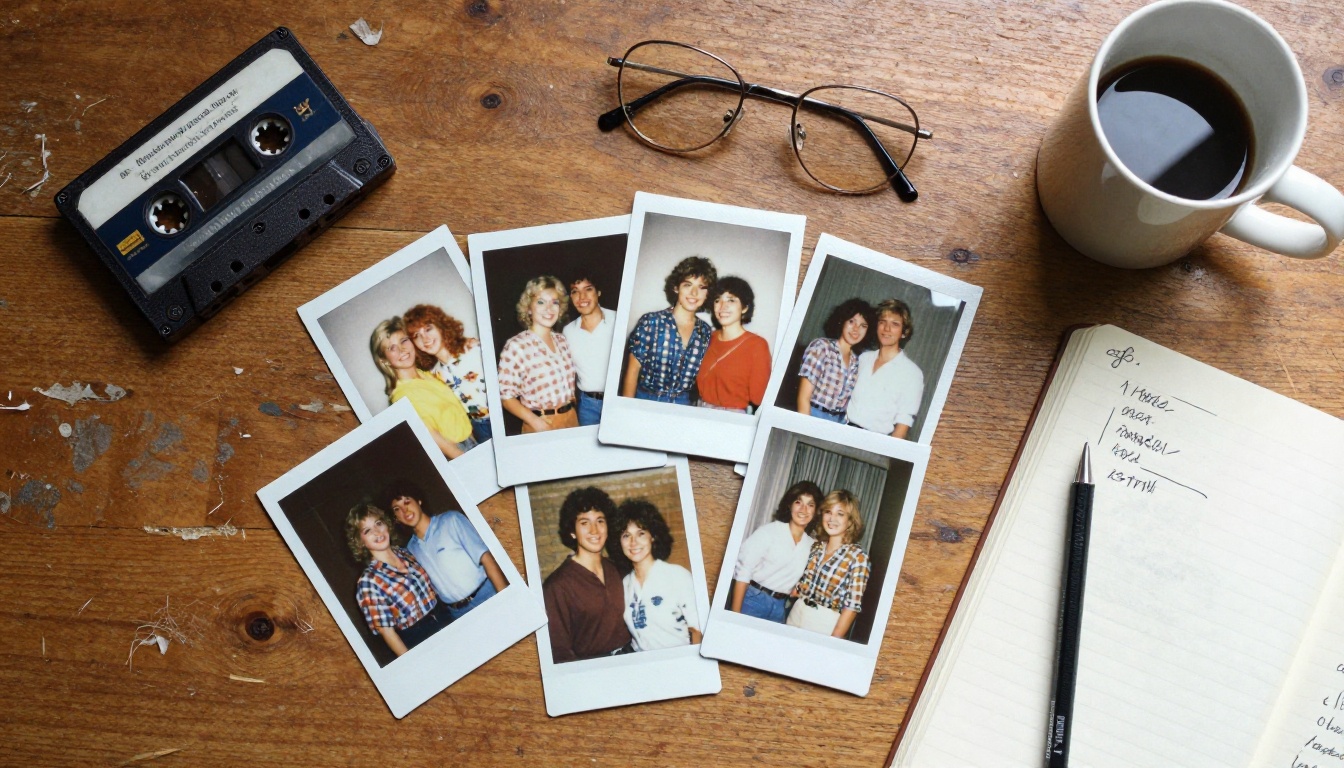
Your phone camera is too sharp for 1985. That is the first thing to fix when you write an 80s AI photo prompt for couples, families, men and women. The decade had its own look: soft on-camera flash, mottled studio backdrops, grainy drugstore prints and clothes cut a size too big. Name those ingredients and the model hands you a snapshot that feels pulled from a shoebox. Skip them and you get a crisp modern portrait with a perm pasted on top.
Below you get a six-part prompt formula, nine ready-to-paste prompts split by who is in the photo, the models that handle the look best and the small mistakes that quietly ruin the era. Every image in this article was made with the same method, so you can see what each prompt produces before you copy it.
Why Most 80s AI Photos Fail
Type "80s" into an image model and most of them reach for the same cliché: a grid horizon, a glowing sunset and a chrome sports car. That is a poster look, not a photo look. A real photo from 1985 was shot on 35mm or 110 film, printed at a drugstore and slipped into an album, so it carries flat flash, slightly faded color and visible grain.
Three habits fix almost every bad result:
Describe a photograph, not a decade. Write "scanned 1985 snapshot" instead of "retro 80s style".
Name real objects. A wood-paneled station wagon, a rotary phone and a boombox tell the model more than the word "vintage" ever will.
Add imperfections on purpose. Film grain, slightly soft focus, uneven flash and a few flyaway hairs push the result away from the plastic AI look.
Pick one year, not the whole decade. The early 80s lean on earth tones, wide collars and feathered hair. The late 80s bring bolder colors, bigger shoulders and high-waisted denim. Writing "1986" in the prompt anchors the clothes, the cars and the color balance in one word.
💡 Tip: Put "photorealistic" and "natural skin pores" in every prompt. Without them, faces drift toward a smooth, airbrushed finish that no 1980s photo lab ever produced.
The 6-Part Prompt Formula
Every prompt in this article follows the same order. Think of it as a checklist you can fill in for any scene, whether it is two people on a porch or a whole family at a lake.
Part
What to write
Example
1. Subject and pose
Who, how many, what they are doing
A couple laughing, her head tilted back
2. Wardrobe and hair
Fabrics, cuts, accessories
Shoulder-padded blazer, perm, scrunchie
3. Location
Real objects from the era
Wood-paneled living room, shag carpet
4. Light
Direction and quality
On-camera flash with a hard wall shadow
5. Camera and lens
Focal length, aperture, angle
35mm f/2, eye level
6. Film and texture
Grain, color cast, skin detail
Kodak Portra 400 grain, visible pores
Fill the six slots with one or two phrases each and you land between 50 and 75 words, which is the sweet spot for everyday prompts. Shorter prompts leave the model guessing. Much longer ones start to contradict themselves.
Film Words That Work
These phrases pull the image toward a printed photograph:
Kodak Portra 400 film grain: warm skin tones, fine grain and gentle contrast.
Drugstore print, slightly faded: lifts the blacks and mutes the saturation.
On-camera flash: flat front light plus the hard shadow on the wall behind the subject.
Soft vignette: darkens the corners the way an old lens does.
Scanned snapshot: tells the model to treat the result as a photo of a photo.
Use two or three of them, not all five. A prompt stuffed with film words ends up muddy.
Lens and Light Pairings
Match the lens and the light to the scene and the photo feels like it came from a real camera bag.
Scene
Lens
Light
Studio portrait
85mm f/1.8
Diffused strobe with a hair light behind
Living room family
28mm f/2.8
On-camera flash
Street or stoop
85mm f/1.8
Soft overcast sky
Car at sunset
50mm f/1.4
Low golden sun from the side
Road trip landscape
24mm f/4
Late afternoon sun
Kitchen candid
35mm f/2
Window light from one side
Couples Prompts That Feel Real
Couples photos in the 80s fall into three moods: the formal studio sitting, the date-night snapshot and the parked-car candid. Each one needs different light, so copy the prompt that matches the mood you want.
Mall Studio Portrait
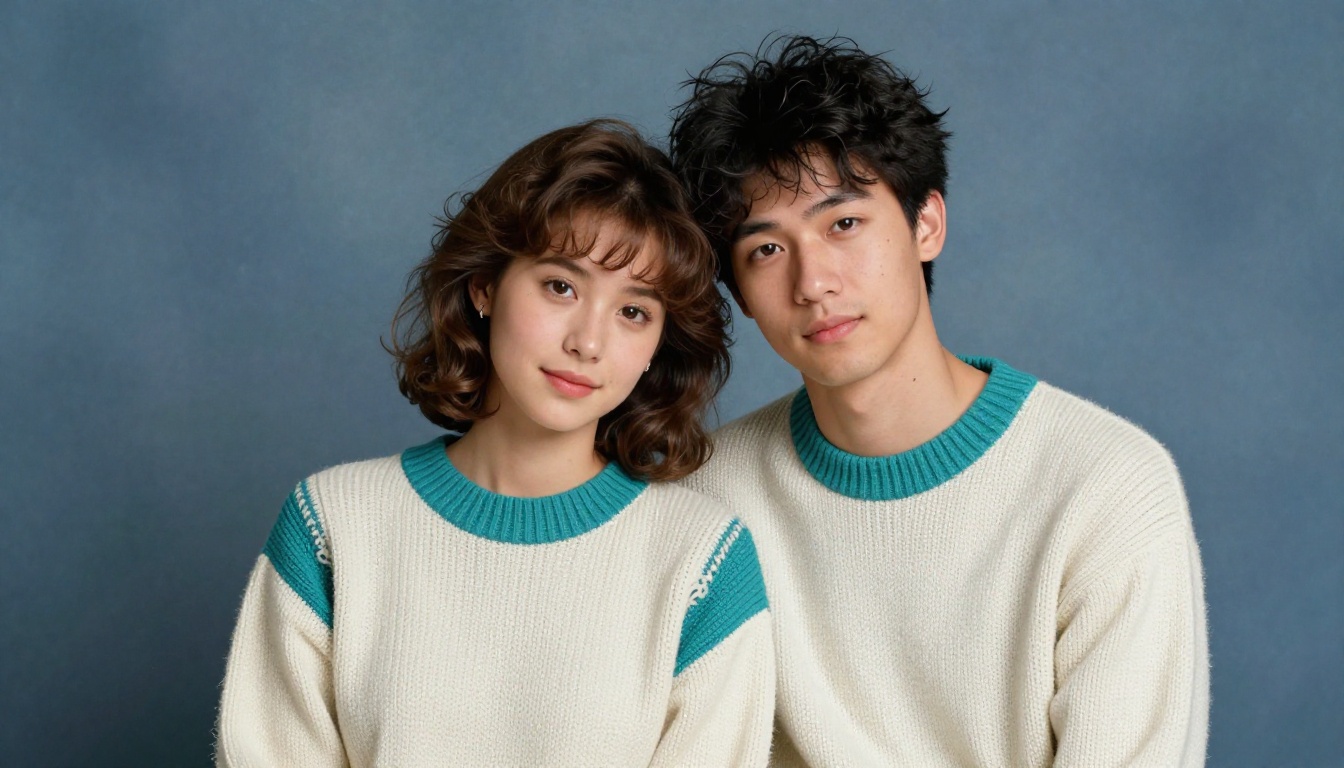
Every shopping mall had a portrait studio with a painted backdrop and a photographer who said "heads together". The mottled blue-gray canvas is the most recognizable 1980s studio detail, and the matching sweaters are optional but very on brand.
A young couple posing for a classic 1980s mall studio portrait, matching teal and cream knit sweaters, her permed hair and his feathered hair, heads gently touching, in front of a mottled blue-gray painted canvas backdrop, soft diffused strobe from front left with a gentle hair light behind, medium shot at eye level, 85mm f/1.8 lens, visible knit texture and natural skin pores, slight film grain, Kodak Portra 400, warm nostalgic tones, photorealistic
If the model smooths the backdrop into a clean gradient, add painted canvas, uneven brush texture and the studio feel comes back.
Roller Rink Date
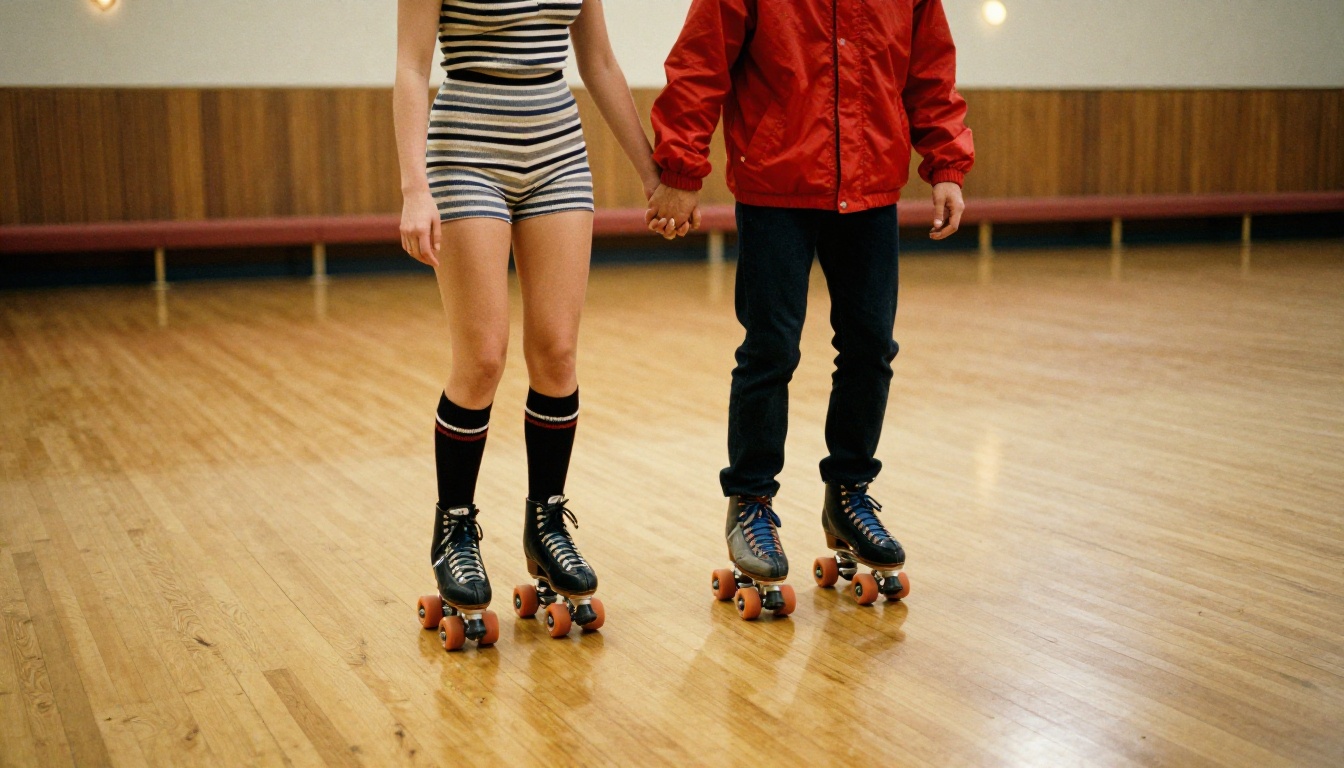
The rink was the date-night spot of the decade. This prompt works because it names plain, physical details: quad skates, tube socks, a wood floor and incandescent bulbs.
A couple holding hands while gliding across a polished wooden roller rink floor in 1986, she in striped high-waisted shorts and knee-high tube socks, he in a vintage red nylon windbreaker, quad roller skates with orange wheels, low-angle tracking shot near the floor, warm incandescent bulbs overhead, carpeted benches and wood-paneled walls softly blurred behind, 35mm f/2 lens, slight motion blur in the background, visible skin texture and scuffed floorboards, Kodak Portra 400 film grain, photorealistic
Keep the lighting plain. Describe bulbs, wood and carpet, and avoid words that invite special effects, because those push the image toward a poster.
Golden Hour Car Hood
This is the setup behind the main image at the top of this page: a couple on the hood of a cream Camaro in a quiet cul-de-sac, shot a few minutes before sunset.
A couple sitting on the hood of a cream 1984 Camaro in a quiet suburban cul-de-sac at golden hour, she laughing with her head tilted back in a cream shoulder-padded blazer and acid-wash jeans, he in a faded denim jacket with a light mustache, arm around her waist, ranch houses and maple trees behind them, low sun from camera left, 50mm f/1.4, shallow depth of field, Kodak Portra 400 grain, photorealistic candid snapshot
💡 Tip: For couples, one sentence about body language does more than three about clothes. Say who leans on whom, who is laughing and where each person is looking.
Family Prompts With Real Warmth
Family photos in the 80s were rarely perfect. Someone blinked, the flash flattened everybody and a sibling was mid-sentence. That imperfection is the whole charm, so write it in: candid, mid-laugh, slightly off-center.
Christmas Morning Living Room
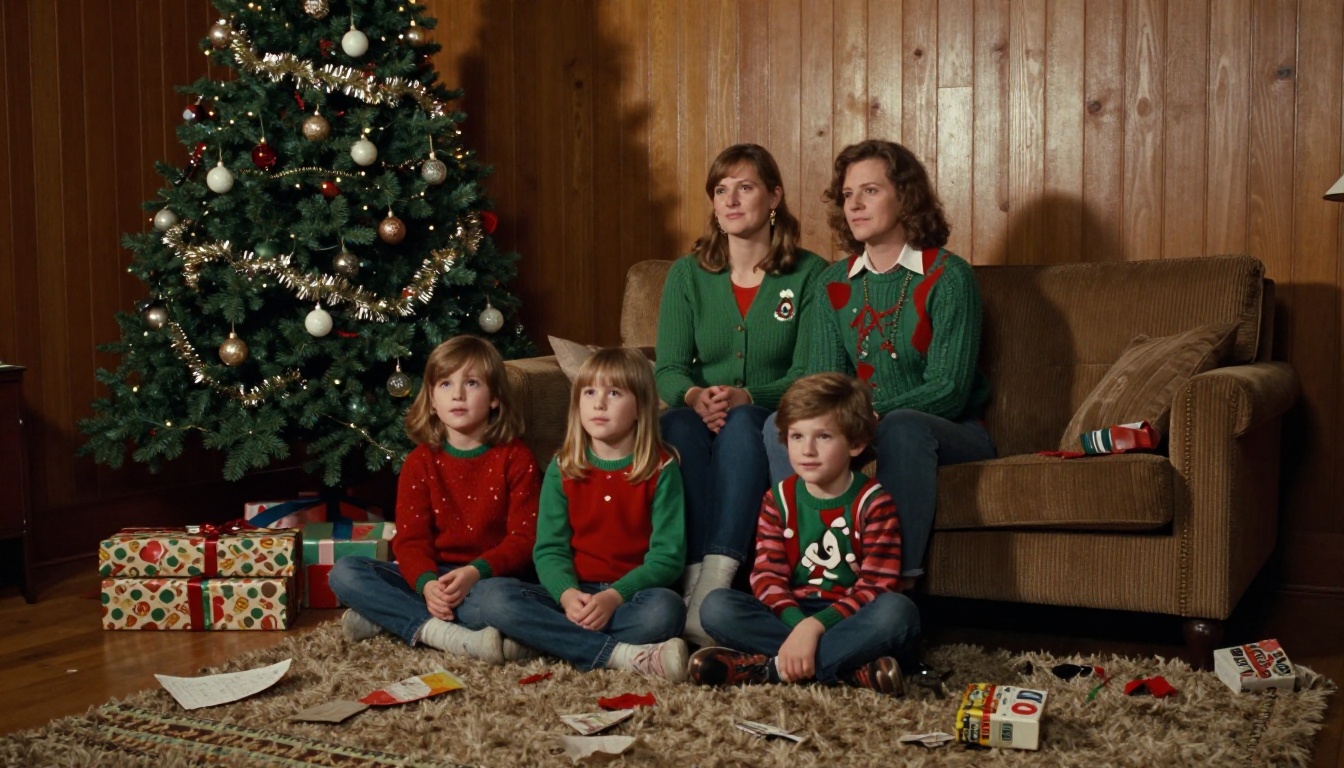
Nothing says 1980s family album like brown corduroy, shag carpet and a tree with oversized bulbs. The on-camera flash is the star here, because it throws the hard shadow on the paneled wall that every real print from the era has.
A family of four in a 1980s living room on Christmas morning, parents on a brown corduroy sofa and two kids in matching red and green sweaters sitting on a shag carpet, a real fir tree with tinsel and old-fashioned bulbs behind them, wood-paneled walls, on-camera flash casting a slight hard shadow on the wall, eye-level medium-wide shot, 28mm f/2.8 lens, scattered wrapping paper, visible knit texture, Kodak Portra 400 film grain, photorealistic
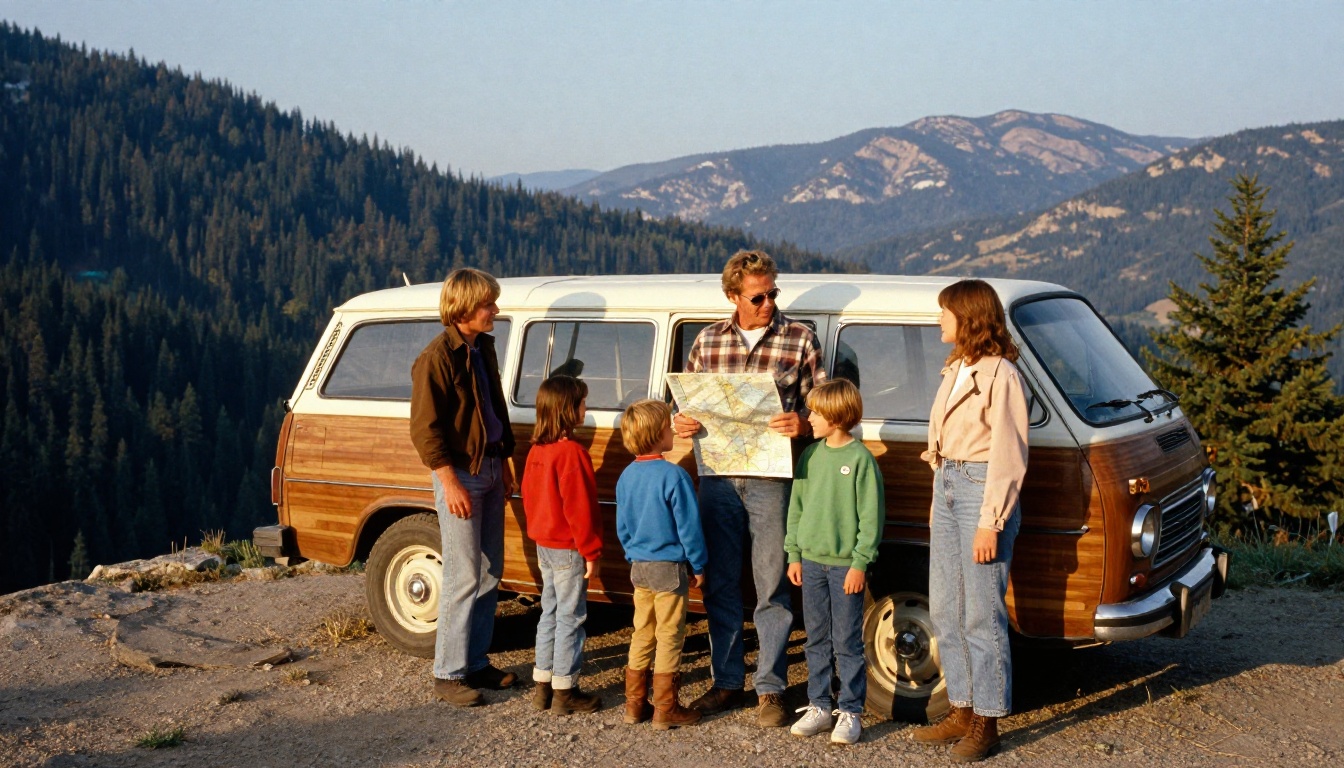
Station Wagon Road Trip
Road trip photos let you change the angle. Instead of eye level, shoot from a rock ledge above the group, so the valley and the car fit in the same frame.
A family of five standing around a wood-paneled station wagon at a mountain overlook in 1987, dad in a plaid shirt and aviator sunglasses holding a paper road map, mom in a pastel windbreaker and high-waisted jeans, three kids in primary-colored sweatshirts, pine forest and a wide valley behind them, late afternoon sun from the right, elevated high-angle shot from a rock ledge, 24mm f/4 lens, dusty car paint and creased map texture, Kodak Portra 400 film grain, photorealistic
Groups are where image models stumble, since faces blur and hands multiply when too many people share the frame. Three habits keep the results clean:
Keep the group to five people or fewer. Past that, faces lose detail.
Give each person one clothing color. It stops the model from blending outfits.
Repair instead of rerolling. If one face is off, fix only that area with an editing model such as P Image Edit and keep the rest of the photo.
💡 Tip: Generate four versions, pick the best composition and then repair the weakest face. It is faster than hunting for a perfect first try.
Prompts for Men
The 1980s men's look splits into two camps: sun-bleached pastel suiting and street-level nylon. Both depend on hair, facial hair and accessories that models skip unless you ask.
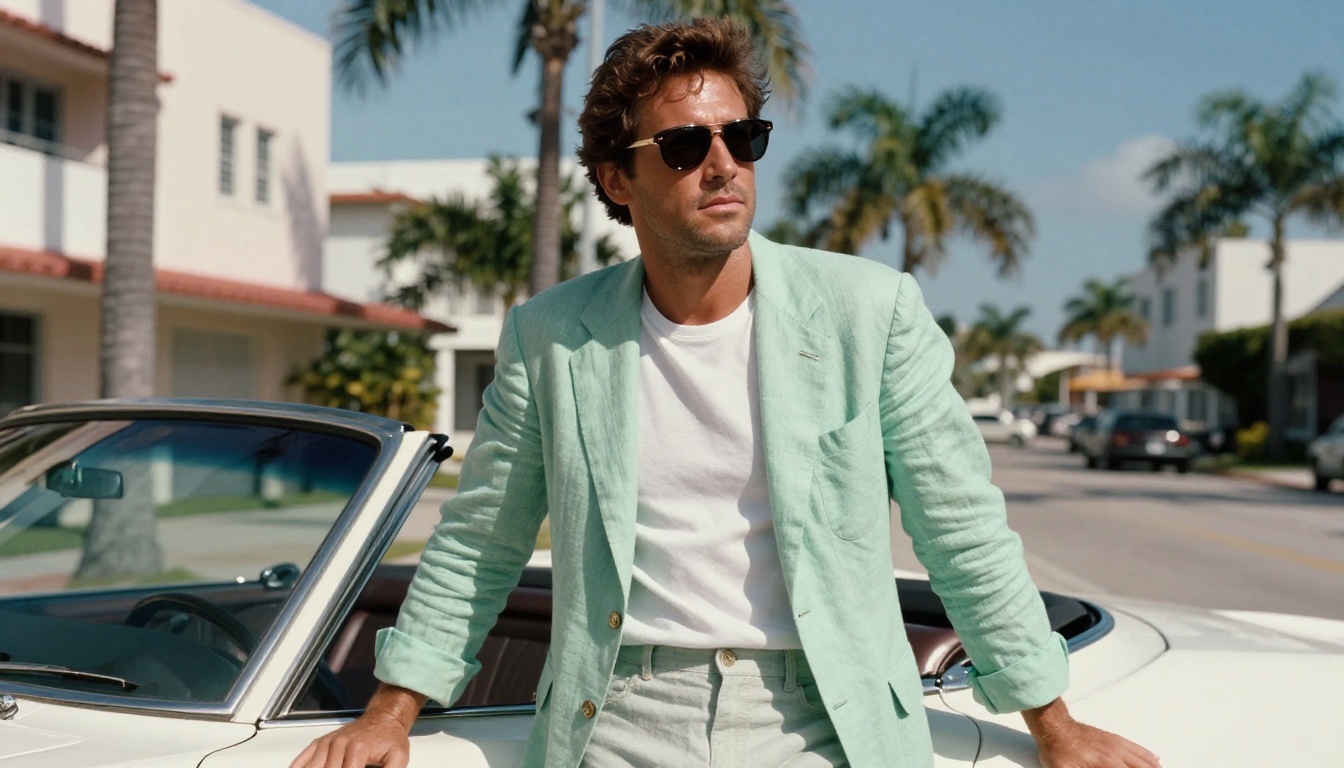
Pastel Blazer and Convertible
Rolled sleeves over a plain white tee is the classic move. Shoot from hip height and the white convertible looks bigger than the man, which is exactly how the decade framed its heroes.
A confident man in his thirties wearing a pastel mint-green linen blazer with rolled sleeves over a white t-shirt, light stubble, sunglasses pushed up into his hair, leaning against a white convertible on a palm-lined Miami street in 1985, low-angle shot from hip height, 35mm f/2 lens, hard afternoon sun from the upper right with crisp shadows, pastel stucco buildings behind, visible fabric wrinkles and a light sheen on his skin, Kodak Portra 400 film grain, photorealistic
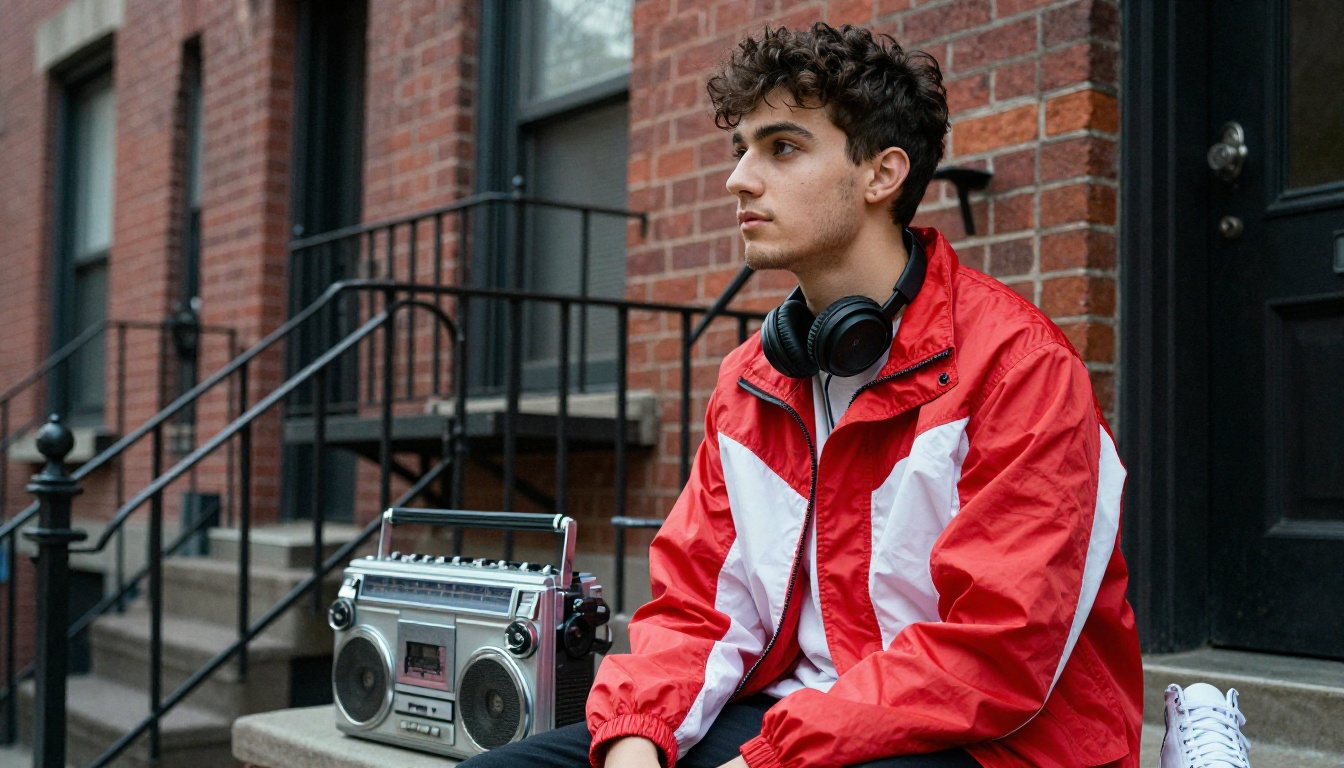
Boombox on the Stoop
Street style needs soft light and a tight crop. Overcast sky works better than sun here because it keeps the red nylon from blowing out.
A young man in a red and white nylon windbreaker sitting on a city apartment stoop with a chrome boombox beside him and foam headphones around his neck, white high-top sneakers, brick row house and iron fire escape behind him, soft overcast light from above, close three-quarter angle, 85mm f/1.8 lens, worn brick and slick nylon texture, light stubble and natural skin pores, fine Kodak Portra 400 film grain, photorealistic
Keep these words handy when you adapt a prompt for a different man:
Hair: feathered, short mullet, flat-top, slicked back
Extras: digital watch, foam headphones, cassette player
Prompts for Women
Women's looks from the decade are all about volume: hair, shoulders and color. Models tend to tone everything down, so spell out the big hair and the bold blazer, or you will get a quiet, modern portrait.
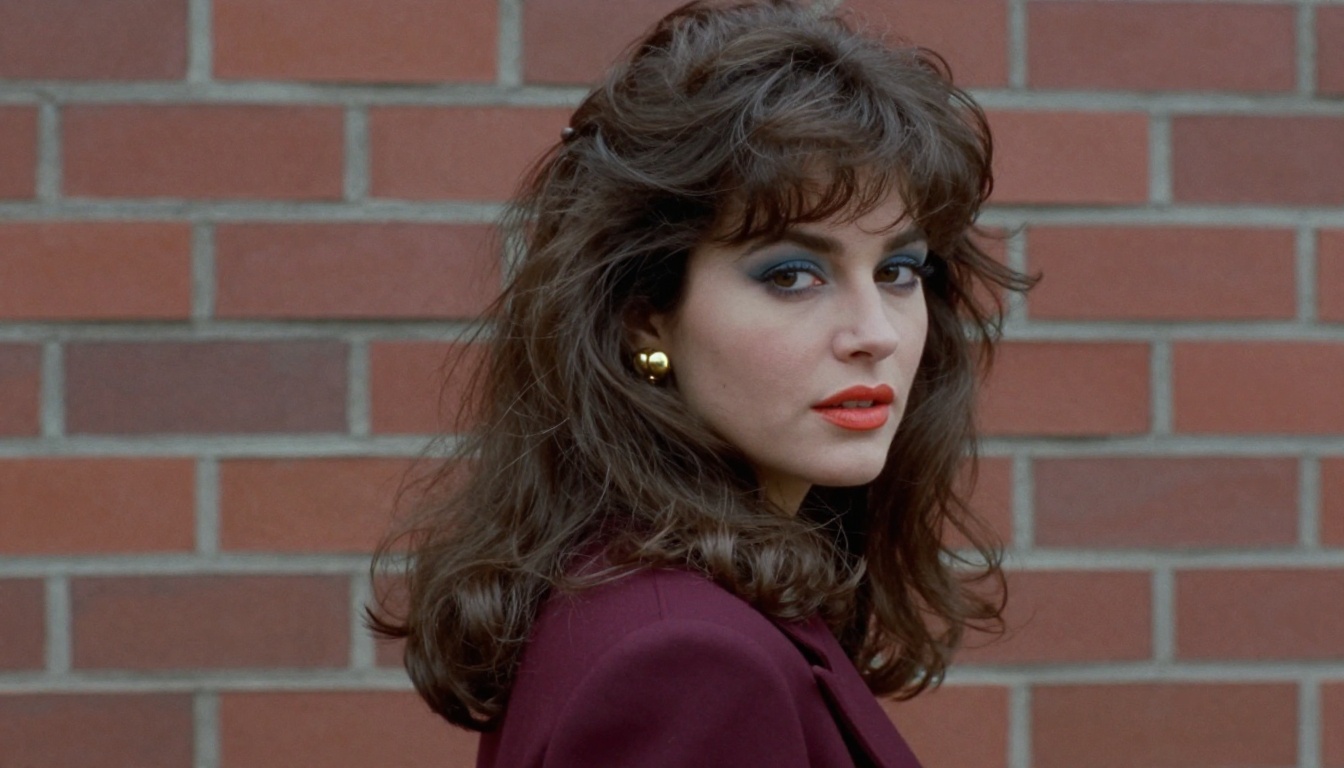
Big Hair and Shoulder Pads
A tight portrait with a brick wall behind it is the easiest place to start. The shallow depth of field keeps attention on the hair, the earrings and the eyeshadow.
Close-up portrait of a woman in her twenties with big voluminous permed hair and teased bangs, a bold shoulder-padded burgundy blazer, gold button earrings, coral lipstick and soft blue eyeshadow, standing against a red brick wall in gentle overcast light, glancing back over her shoulder at the camera, 85mm f/1.4 lens with shallow depth of field, individual hair strands and skin pores visible, Kodak Portra 400 film grain, photorealistic 1980s snapshot
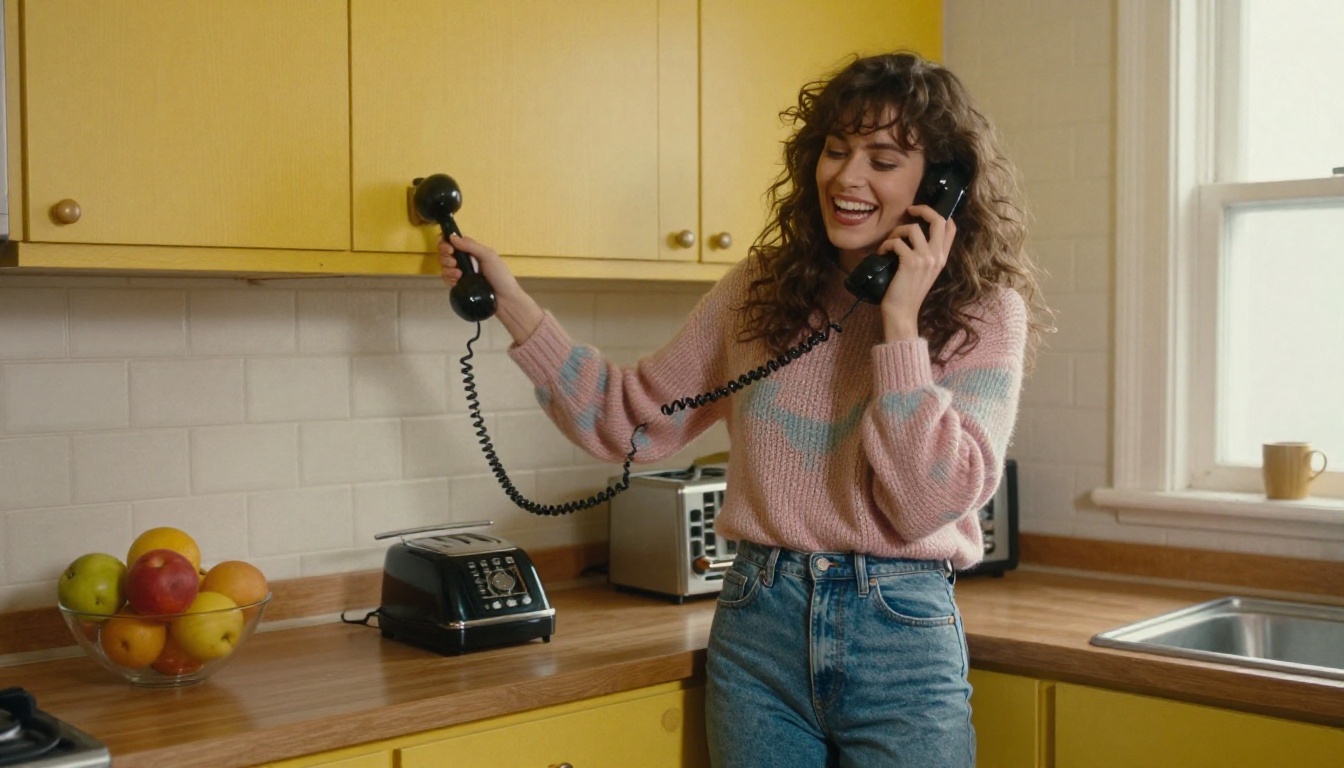
Kitchen Phone Candid
The best everyday scenes come from the home. A woman twisting a phone cord in a yellow kitchen says more about the decade than any costume.
A woman in high-waisted acid-wash jeans and an oversized pastel sweater twirling the coiled cord of a wall-mounted rotary phone in a 1980s yellow kitchen with wooden cabinets, laughing, a fruit bowl and a retro toaster on the counter, soft window light from the right, waist-up shot from a slightly high angle, 35mm f/2 lens, knit fabric and cabinet grain texture, warm Kodak Portra 400 film grain, photorealistic candid snapshot
Swap in your own details with this vocabulary:
Category
Words to use
Hair
Permed, teased bangs, feathered sides, side ponytail, scrunchie
Makeup
Blue eyeshadow, coral lipstick, defined brows, blush swept high
Clothing
Shoulder-padded blazer, acid-wash jeans, leg warmers, oversized sweater
Seedream 4.5 is a strong first pick for these prompts. It produces up to 4K images from text and holds on to small details like knit fabric, freckles and background objects, which is exactly what a convincing 1980s snapshot needs.
Paste one of the nine prompts into the prompt box.
Pick a wide ratio such as 16:9 for group scenes and a taller ratio for single portraits.
Run it and generate a few versions of the same prompt.
Change one thing at a time: first the lens, then the light, then the film words.
Save the best result and note which change improved it.
Two parameter tips make a visible difference. Test with the same seed if the page offers a seed field, so you can see what each edit really does. And keep the subject count low: a couple and a family of four need different prompts, not the same prompt with extra people added.
Other Models Worth Trying
No single model wins every scene. This short list handles the jobs that come up most often when you build 80s photos:
To turn a real photo into an 80s version, upload it to an editing model and give it a short instruction:
Restyle this photo as a 1985 drugstore print with on-camera flash, faded color and fine film grain. Keep the faces and the pose unchanged.
💡 Tip: Photos of yourself work best when the face is well lit and looking at the camera. A shadowed or turned face gives the model less to hold on to.
Animate the Stills
Once a still looks right, you can set it in motion. Image-to-video models such as Wan 2.7 I2V, Kling v2.1 and Hailuo 2.3 Fast take a finished photo as the first frame. Keep the movement small and believable: a slow push-in, hair lifting in a breeze, a laugh.
Slow dolly-in on the couple, she laughs and turns toward him, a light breeze moves her hair, film grain stays visible, clothes and background unchanged
PicassoIA also has an effects library with 500+ video effects, so you can add a camcorder or tape look to the clip afterward.
Try Your Own 80s Photo Shoot
You now have nine scenes, a prompt formula and a short list of models, which is more than enough to build a full album. Here is a simple plan for your first session on Picasso IA:
Pick a year between 1982 and 1989 and keep it in every prompt.
Start with the group you care about: a couple, your family, your dad or your mom.
Swap the details for the real ones: your car, your living room, your haircut.
Run each prompt three times and keep the version with the best light.
Repair the weakest face with an editing model instead of starting over.
Open Picasso IA, choose a model from the list above and paste your first prompt. Within a few minutes you can have a shoebox of snapshots that look like they spent forty years in a closet. Try the couple on the Camaro, then put your own family in the station wagon, and see how far a few well-chosen words can go.