Voice is the missing layer in most adult AI chatbots. A clever persona backed by a powerful large language model still feels flat when it can only type back at you. The moment a chatbot can speak in a warm, responsive, emotionally varied voice, something fundamentally shifts in how the interaction feels. This article breaks down how to add natural-sounding AI voice to adult chatbots in 2027, which models deliver, and how to wire them together into something that actually works.
Why Chatbot Voice Matters More Than Text
The Problem with Silent Chatbots
Text is functional. Voice is intimate. The gap between those two things is enormous when building an adult AI companion. Human conversation relies on tone, pacing, and breath in ways that punctuation cannot replicate. A chatbot that responds in writing is essentially a messaging app. One that speaks in a warm, natural voice is something qualitatively different.
Platforms that have integrated voice consistently report higher session lengths and user retention than text-only equivalents. The mechanism is straightforward: voice triggers neurological responses associated with face-to-face conversation in ways that reading text simply does not. For adult AI applications, where emotional connection is the product, that difference is the product.
What "Natural" Voice Really Requires
Not all TTS is equal. A natural-sounding voice in 2027 requires several layers working together:
- Prosody control: Pitch variation, rhythm, and stress patterns that match semantic content
- Emotional range: The ability to shift from warm and teasing to sincere and attentive
- Low latency: Sub-300ms response for real-time conversational feel
- Voice consistency: The same voice across long sessions without drift
- Multilingual support: For platforms with global audiences
Older rule-based synthesis hits maybe two of those. Modern neural TTS hits all five.
How Neural TTS Works in 2027
Legacy Synthesis vs. Neural Models
Traditional text-to-speech used concatenative synthesis, stitching together recorded phoneme clips. The result was robotic, flat, and immediately recognizable as machine-generated. Neural TTS models train on hours of real human speech using transformer architectures, picking up not just pronunciation but the subtle patterns of human vocal expression.
The difference in output quality is not incremental. It is categorical. Neural models produce speech that passes casual listening tests. In double-blind evaluations, listeners struggle to distinguish top-tier neural TTS from actual human recordings.
Emotion, Prosody, and Pacing
The state of the art in 2027 includes models that accept explicit emotion tags alongside input text. You can specify that a sentence should be delivered with curiosity, amusement, warmth, or urgency, and the model adjusts pitch contour, speaking rate, and micro-pauses accordingly. This is what separates a chatbot that sounds like a GPS from one that sounds like a person.
Prosody is handled through attention mechanisms that look at the full semantic context of a sentence before generating audio. The model understands that a question should have rising intonation, that a whispered confidence should slow down and soften, that excitement compresses inter-word gaps. The result is speech that reacts to meaning, not just letters.
The Best TTS Models for Adult Chatbots
ElevenLabs V3: Most Natural Output
ElevenLabs V3 is currently the benchmark for natural-sounding AI voice. Trained on an enormous multilingual corpus, V3 handles emotional nuance better than almost anything else available. For adult chatbot personas, the ability to dial in warmth, playfulness, or intimacy through voice style parameters is critical, and V3 delivers on all of them.
Its voice cloning capability is particularly valuable: train a persona on 30 seconds of reference audio and get consistent, character-specific output across the entire session. For a chatbot with a specific personality and name, this consistency matters enormously for user immersion.
💡 Tip: Pair V3 with explicit emotion tags in your input text. Wrapping segments in style markers significantly improves prosody quality in emotionally charged conversation.
MiniMax Speech 2.8 HD: Studio-Grade Quality
MiniMax Speech 2.8 HD produces the highest raw audio fidelity of any model currently on the platform. If V3 is the most natural, Speech 2.8 HD is the most polished, with clarity and tonal richness that sounds genuinely studio-recorded. The warmth in the mid-range frequencies is particularly noticeable.
For platforms where audio quality directly affects perceived product value, Speech 2.8 HD is the right call. It supports a broad voice library and handles long-form output without fatigue artifacts. Its companion model, MiniMax Speech 2.8 Turbo, offers faster response times when latency is more important than absolute quality.
| Model | Strength | Best For |
|---|
| ElevenLabs V3 | Emotional nuance | Character personas |
| MiniMax Speech 2.8 HD | Audio fidelity | Premium platforms |
| MiniMax Speech 2.8 Turbo | Speed | Real-time chat |
| Resemble AI Chatterbox Pro | Emotion control | Expressive voices |
| Inworld Realtime TTS 2 | Low latency | Live conversation |
Resemble AI Chatterbox Pro: Fine-Grained Emotion Control
Resemble AI Chatterbox Pro gives you the most granular control over emotional delivery of any model in the current lineup. It accepts emotion intensity values rather than just labels, letting you specify not just "playful" but exactly how playful, on a continuous scale.
For adult chatbots where tonal subtlety matters, this level of control is genuinely useful. A voice that can modulate between warm, teasing, sincere, and breathless across a natural conversation arc creates a fundamentally different experience than one locked to a single register. Its faster sibling, Chatterbox Turbo, sacrifices some nuance for speed when quicker response times are needed.
Inworld Realtime TTS 2: Built for Live Conversation
Inworld Realtime TTS 2 was built from the ground up for real-time interactive applications. Its latency figures are exceptional: sub-100ms to first audio byte in most deployments. For conversational chatbots where users expect voice to begin almost instantly after they finish speaking, that speed is the difference between immersive and broken.
Voice quality is excellent if not quite at V3 levels, but in a live conversation at normal speaking pace, the speed advantage matters more than the marginal quality gap. Inworld Realtime TTS 1.5 Max offers a strong alternative with sub-200ms latency for broader deployment scenarios.
Qwen3 TTS: Voice Cloning on Demand
Qwen3 TTS stands out for its voice design and cloning capabilities. Where other models offer a library of preset voices, Qwen3 lets you construct a voice from a description or clone one from audio reference. For adult AI platforms where the chatbot persona needs a distinctive, owned voice rather than a stock option, this is a compelling capability that saves significant production time.
LLMs That Power the Personality
Voice without intelligence is just a speaker. The LLM underneath your chatbot is what gives the voice something worth saying. The right model choice affects not just response quality but how well generated text maps to natural-sounding TTS output. Some LLMs produce output that reads awkwardly when spoken aloud. The best ones do not.
Pairing Voice with GPT 5
GPT 5 produces consistently fluent, contextually aware output that reads naturally when fed into a TTS model. Its responses have rhythm and sentence variety that TTS handles well, avoiding the monotonous sentence structure that makes synthetic speech feel robotic even when the voice model is excellent.
For adult chatbot applications with high request volume, GPT 5 Mini offers a fast, cost-efficient alternative that still generates text with enough linguistic naturalness for high-quality TTS output. GPT 5 Pro brings built-in reasoning for deeper, more contextually intelligent conversations when the interaction demands real depth.
Claude Models for Character Depth
Claude Sonnet 5 and Claude 4 Sonnet both produce output particularly well-suited to character-driven conversation. Claude's tendency toward measured, natural sentence construction helps TTS models find appropriate rhythm and emphasis without additional prompt engineering.
For persona-heavy applications where the chatbot maintains consistent character across long conversations, Claude Opus 4.7 delivers the deepest contextual consistency. Pair it with a voice model tuned to that character's specific traits and the combination holds up across extended sessions. DeepSeek V3.1 is worth considering for platforms that need a high-quality, cost-efficient LLM backbone without sacrificing response naturalness.
Lipsync Makes It Real
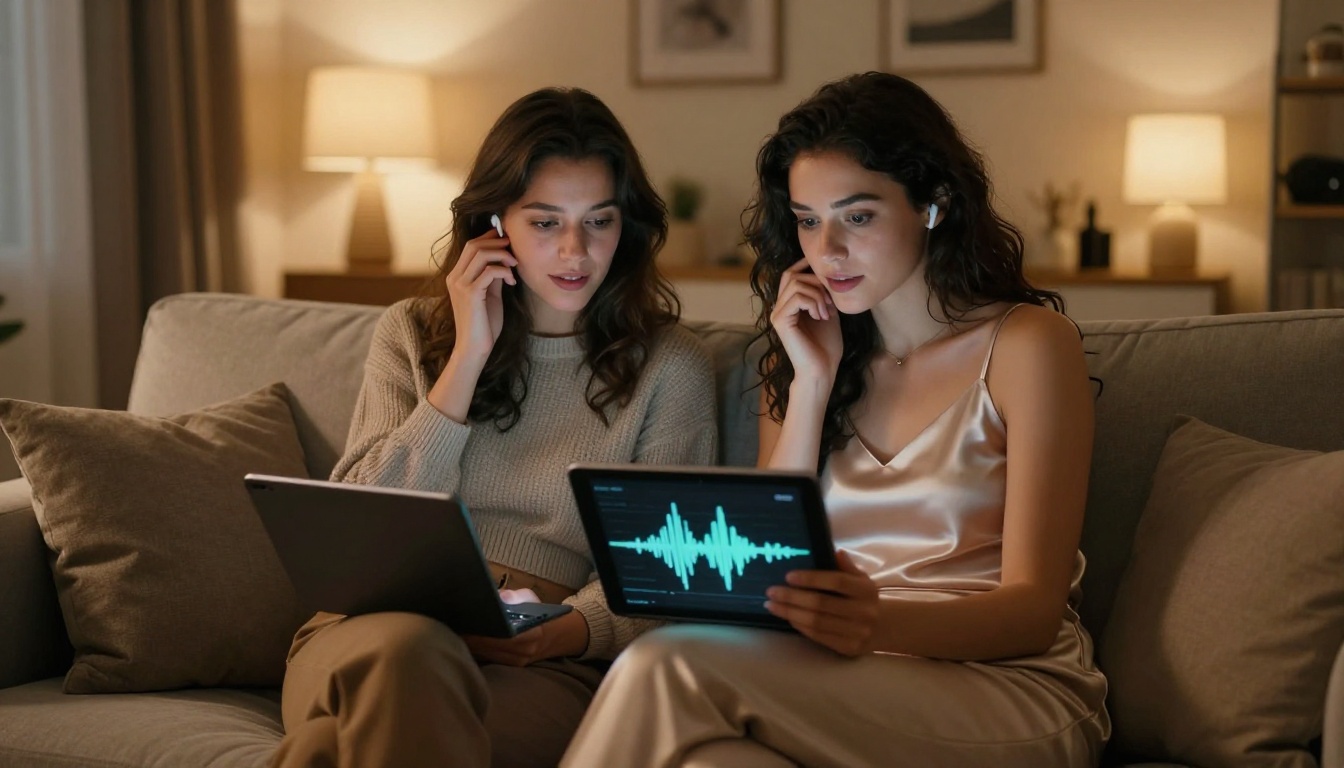
Audio alone creates intimacy. Audio plus a face that moves in sync creates presence. If your chatbot has a visual avatar, lipsync is the bridge that makes voice feel like a person rather than an audio track playing over a static portrait.
Omni Human 1.5: Photo to Talking Avatar
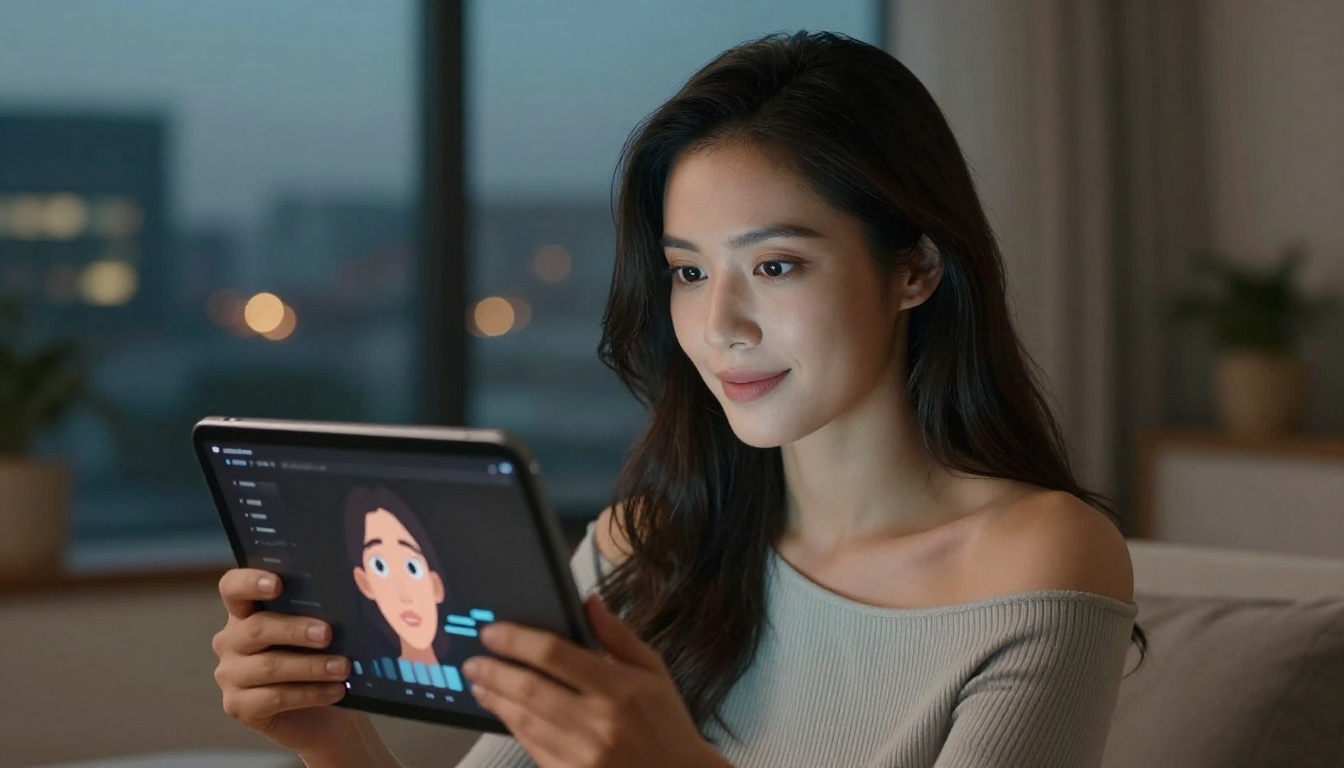
ByteDance Omni Human 1.5 takes a single photograph and animates it to speak audio in real time. The lip synchronization is tight, micro-expressions are plausible, and the output looks like a live face rather than a puppet. For adult AI companions where the chatbot has a defined visual appearance, this is the fastest path from a static character image to a talking, breathing persona.
The workflow is clean: generate audio with your chosen TTS model, pass the audio plus a reference image to Omni Human 1.5, receive a lipsync video. Turnaround is fast enough for asynchronous conversation, and quality has crossed the threshold for most production use cases.
Sync Lipsync 2 Pro: Precise Lip Matching
Sync Lipsync 2 Pro takes a different approach, applying voice synchronization to existing video footage. If your chatbot persona is based on a video avatar rather than a static image, Lipsync 2 Pro replaces the original audio with your TTS output and precisely remaps lip movements to match.
Frame-level accuracy is impressive. Consonants that require specific mouth shapes, like B, P, and M sounds, are handled correctly even at normal speaking speed. HeyGen Lipsync Precision offers a compelling alternative when accuracy is paramount over speed, while Kling Lip Sync delivers excellent results for high-volume applications.
Setting It Up on PicassoIA
PicassoIA consolidates all the models described above in a single platform, accessible without managing provider credentials across multiple services or handling infrastructure setup. Here is the practical workflow.
Step 1: Choose your LLM
Open the Large Language Models section and select a model that fits your persona's communication style. Claude Sonnet 5 for deep character consistency, GPT 5 for fluent natural language output, or any of the 75+ models in the category.
Step 2: Generate the voice output
Navigate to the Text to Speech section. Pick from ElevenLabs V3 for emotional depth, MiniMax Speech 2.8 HD for audio quality, or Inworld Realtime TTS 2 for real-time speed. Paste the LLM-generated text and select a voice profile that fits your persona.
Step 3: Add lipsync for visual avatars
Upload a reference photo or video of your chatbot avatar plus the audio from Step 2 into Omni Human 1.5 or Sync Lipsync 2 Pro. The output is a ready-to-use video with synchronized lip movement matched to the TTS audio.
Step 4: Build a unique voice
Use MiniMax Voice Cloning or Resemble AI Chatterbox to create a voice that belongs to your chatbot rather than a preset. Feed in 30 to 60 seconds of reference audio and the model builds a consistent vocal identity that persists across every conversation.
💡 Pro tip: Write LLM prompts that include explicit tone directions in brackets, like [speak warmly] or [low energy, intimate]. Strip those tags before sending to TTS. This gives you full conversational control without cluttering the audio output.
3 Mistakes That Kill the Immersion
Locking One Emotion Setting
A voice model at a fixed style setting will eventually feel robotic regardless of how good the underlying model is. Natural human speech shifts register constantly. Your chatbot needs to do the same. Use emotion parameters actively, adjusting them based on conversational context rather than locking one style for the entire session.
Ignoring Latency in Live Conversation
Response speed matters as much as quality in real-time applications. A rich voice that takes two seconds to start is worse than a solid voice that begins in under 200ms. Profile your stack and choose accordingly. Inworld Realtime TTS 2 and ElevenLabs Flash v2.5 exist precisely for this reason, delivering speed without sacrificing the vocal quality that makes AI voice worth using.
Skipping Voice Cloning for Named Personas
Generic preset voices work for prototyping. They are not acceptable for production. If your chatbot has a name and a face, it needs a voice that belongs to it. Voice cloning takes minutes and creates the kind of consistent vocal identity that holds up across sessions and builds genuine familiarity with users. Use Qwen3 TTS, MiniMax Voice Cloning, or Resemble AI Chatterbox Pro to build something distinctive from the start.
Start Building Your AI Voice Experience
The tools to build a genuinely natural-sounding AI chatbot voice are here, accessible without deep technical infrastructure, and have crossed the quality threshold where users will not immediately recognize them as synthetic. The combination of a strong LLM, a top-tier TTS model, and optional lipsync covers everything from text generation through to a talking, expressive avatar that holds a conversation.
PicassoIA puts all of this in one place. Whether you want to experiment with a single voice model or build a full LLM-to-TTS-to-lipsync pipeline, the entire stack is available at picassoia.com/en/all-models. Start with ElevenLabs V3 for voice, Claude Sonnet 5 for personality, and Omni Human 1.5 for lipsync. That combination is what actually works.