Painting a kid's room is a gamble. You pick a color from a tiny paper chip, spend a weekend on a ladder, and then find out the "soft sky blue" looks like a hospital hallway at 4 p.m. AI bedroom design for kids removes most of that risk. You type a few lines, and a minute later you see the room with the rug, the bed, the light and the shelves already in place. Change your mind about the wall color? Run it again. No ladder needed.
This article gives you everything to start: a prompt formula that works, eight themes with ready-to-paste descriptions, a model comparison, and the real-world checks that keep a pretty picture from turning into an impractical room. Most of it costs nothing to try.
Why Use AI for a Kid's Room
Children's rooms are the hardest rooms to decorate. The occupant grows out of the theme in two years, the space is usually small, and the budget gets split between furniture, storage and the never-ending pile of toys. A visual draft helps with all three problems.
Faster Than a Moodboard
A traditional moodboard takes an evening of pinning, screenshotting and squinting. With a text-to-image model you describe the room once and get a believable photo, not a collage of unrelated rooms. You can compare five wall colors in the time it takes to boil pasta, and you can show the result to your child and ask a simple question: "Do you like this one?"
That last part matters. Kids are surprisingly clear about what they want once they can see it. "Space" turns into "dark blue walls, planets, and a bed that looks like a rocket," and now you have something to design around.
Free Options That Work
You do not need a paid interior design app. Several image models on PicassoIA let you generate bedroom concepts at no cost, and the output is detailed enough to judge layout, color and mood. If you want a sharper render for a final decision, you can then move to a higher resolution model. The goal at the draft stage is quantity: ten quick variations teach you more than one perfect image.
💡 Tip: Generate in batches of four to six per theme. Pick the two you like best, then rewrite your prompt using what those two have in common.
Vague prompts like "cute kids bedroom" give you vague rooms: generic beds, random pink or blue, and furniture that floats. Specific prompts give you something you could actually build.
The Five Part Recipe
Use this order every time:
- Room type and age: "toddler bedroom," "shared room for two siblings," "bedroom for an eight year old."
- Palette: name two or three colors and a finish, such as "matte sage green wall, cream and mustard accents."
- Main furniture: the bed type, the storage and one feature piece, such as a loft bed or a window seat.
- Light and time of day: "soft morning light from the left," "warm golden hour from the right."
- Camera and look: "wide shot from the doorway, 24mm lens, natural photo, fine film grain."
Here is the formula applied in full:
Bedroom for a six year old, matte sage green wall with a painted arched rainbow in terracotta and mustard, low oak platform bed with linen bedding, open bookshelf at child height, round wool rug, soft morning light from the left, wide shot from the doorway, 24mm lens, natural photograph, fine film grain.
Words That Add Realism
Image models respond strongly to material and lens words. These small additions push results toward real photography rather than glossy catalog art:
| Add this | Effect |
|---|
| "linen," "wool," "oak grain," "rattan" | Believable surface textures |
| "soft light from the left" | Natural shadows and depth |
| "24mm lens" or "35mm lens" | Correct room proportions |
| "slightly lived in, a few toys on the floor" | Removes the showroom look |
| "no people" | Keeps the focus on the design |
| "Kodak Portra 400, film grain" | Warm, soft, photographic tones |
Words to avoid: "neon," "futuristic," "glowing" and "3D render." They produce a toy-like look that does not help you judge a real room.
8 Kids Bedroom Themes to Try
Every image below was generated from a short prompt built with the formula above. Copy the description under each one and adjust the colors to your home.
Cabin Loft Bed
A loft bed shaped like a little wooden cabin gives a child their own hideout and frees up floor space for play. It works best in rooms with ceilings above 2.4 meters.
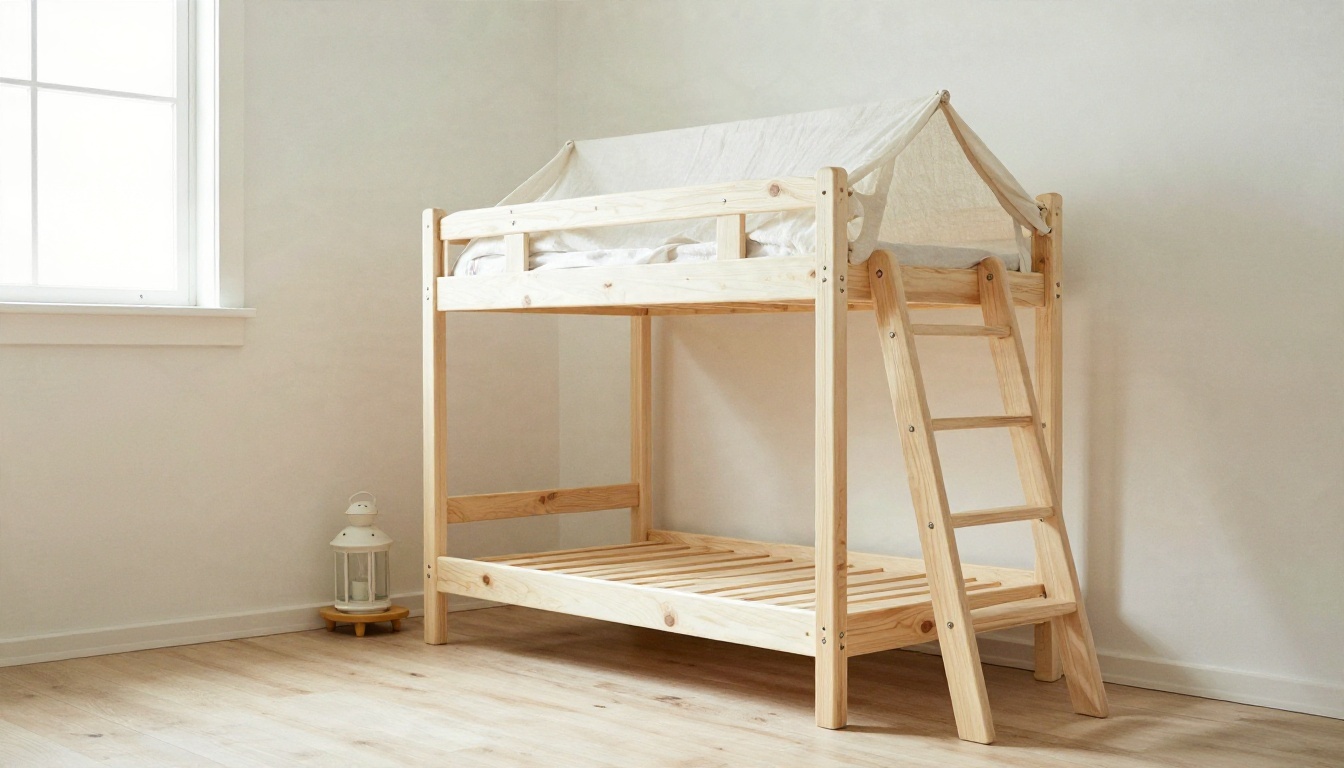
Prompt to try: Low angle photograph of a child's bedroom with a wooden loft bed shaped like a small cabin, ladder, white fabric canopy, reading shelf underneath, pale pine floor, morning light from a window on the left, 35mm lens, visible wood grain, natural colors.
Ask for the space under the bed as well. AI is good at inventing a reading corner or a small desk down there, and that detail often decides whether the idea is practical.
Space Adventure Room
Deep navy walls can look dramatic without being scary if you use matte paint and warm accents. Keep the planets small and muted, in ochre, cream and dusty orange, so the room still feels calm at bedtime.
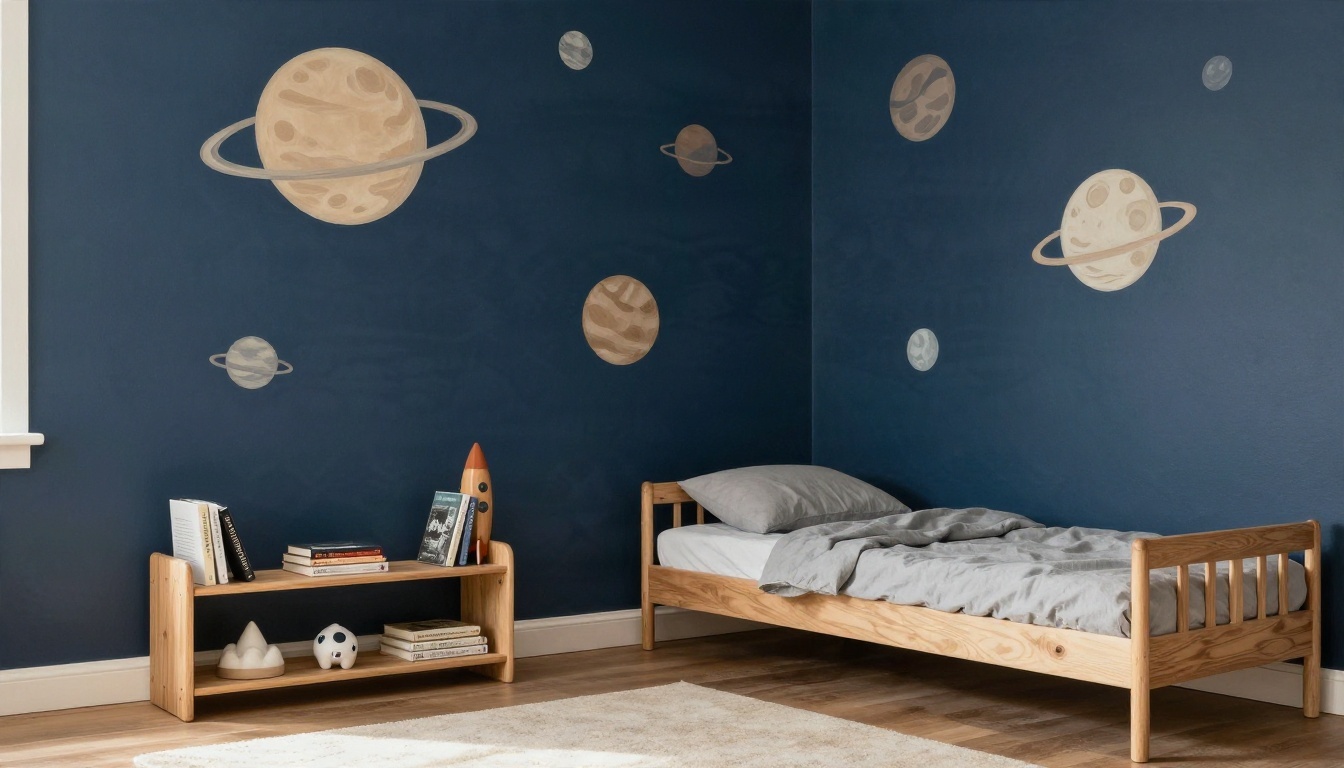
Prompt to try: Wide corner shot of a space themed kids bedroom, deep navy matte wall with hand painted planets in ochre and cream, low bed with grey cotton bedding, wooden rocket shaped bookshelf, round beige rug, warm afternoon light from the right, 28mm lens.
💡 Tip: Dark walls make small rooms feel smaller. If the room is under 9 square meters, ask for a navy accent wall only, with the other three walls in warm white.
Forest Nursery Corner
Forest themes suit babies and toddlers because the palette is already gentle: pale greens, wood, wool and the occasional fox. A sheepskin rug and a woven basket do most of the work.
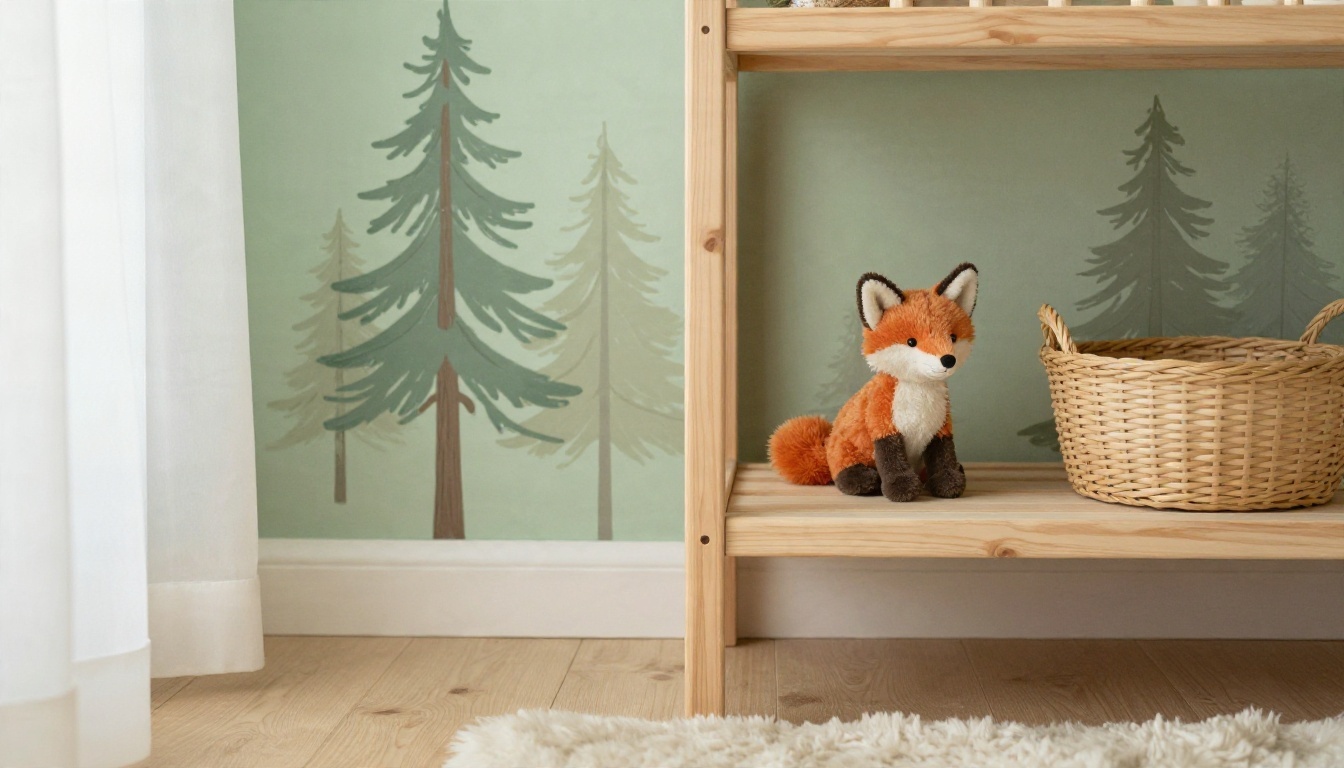
Prompt to try: Close up of a forest themed nursery corner, pale green wall with painted pine trees in soft muted tones, wooden shelf with a plush fox and a woven basket, sheepskin rug on light oak floor, diffused window light from the left, 85mm lens, shallow depth of field.
Close-up prompts are great for testing textures and small decor choices before you buy them.
Ocean Toddler Room
A low Montessori floor bed lets a toddler climb in and out alone, and it removes the fall risk of a tall frame. Pair it with aqua walls, jute and rattan for a beach-house feel that still looks grown up.
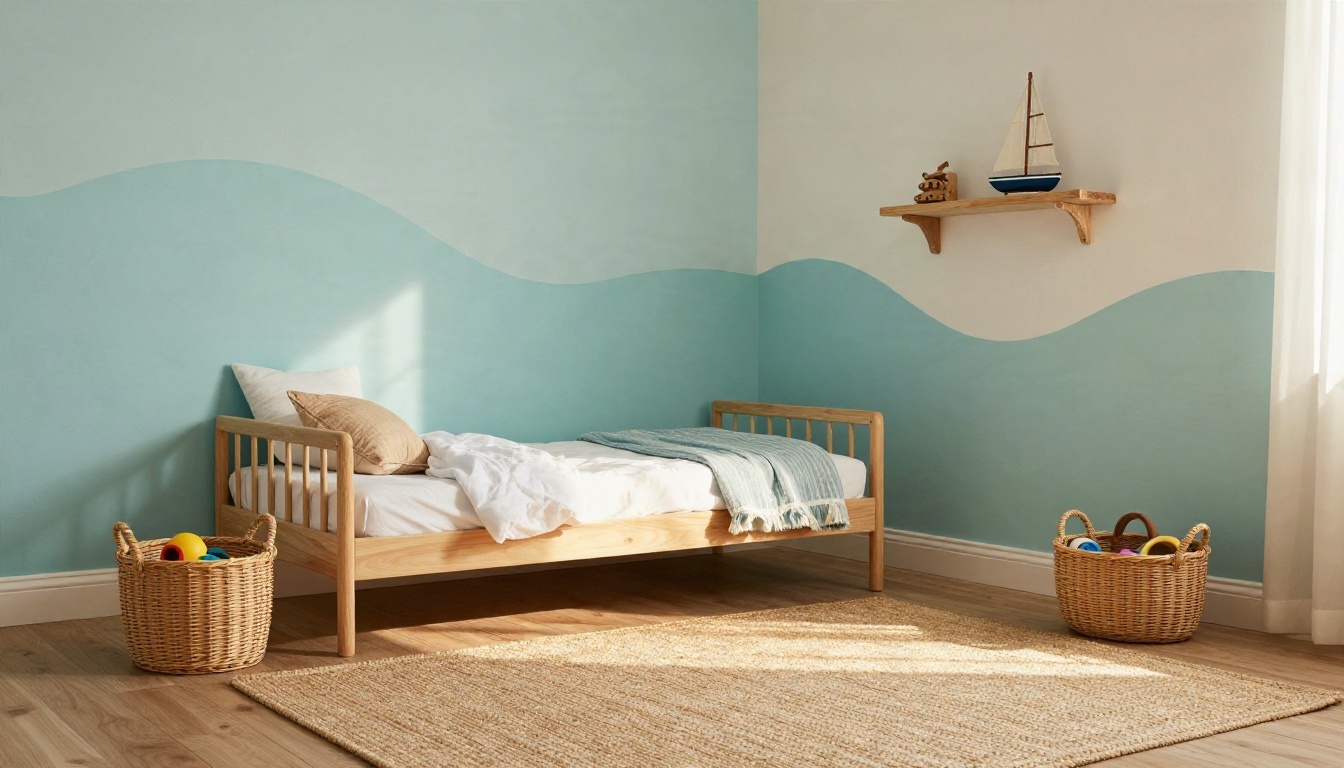
Prompt to try: Wide shot of a toddler bedroom, soft aqua wall with a gentle wave pattern, low Montessori floor bed with white bedding, rattan toy basket, jute rug, driftwood shelf with a small sailboat model, golden hour light from the right, 28mm lens.
Shared Room for Two
Two kids, one room, zero fights: that is the real brief. The trick is symmetry with a twist. Matching beds in the same wood keep the room calm, while each child gets their own bedding color. A top-down view is the best prompt angle because it shows how much floor is left for play.
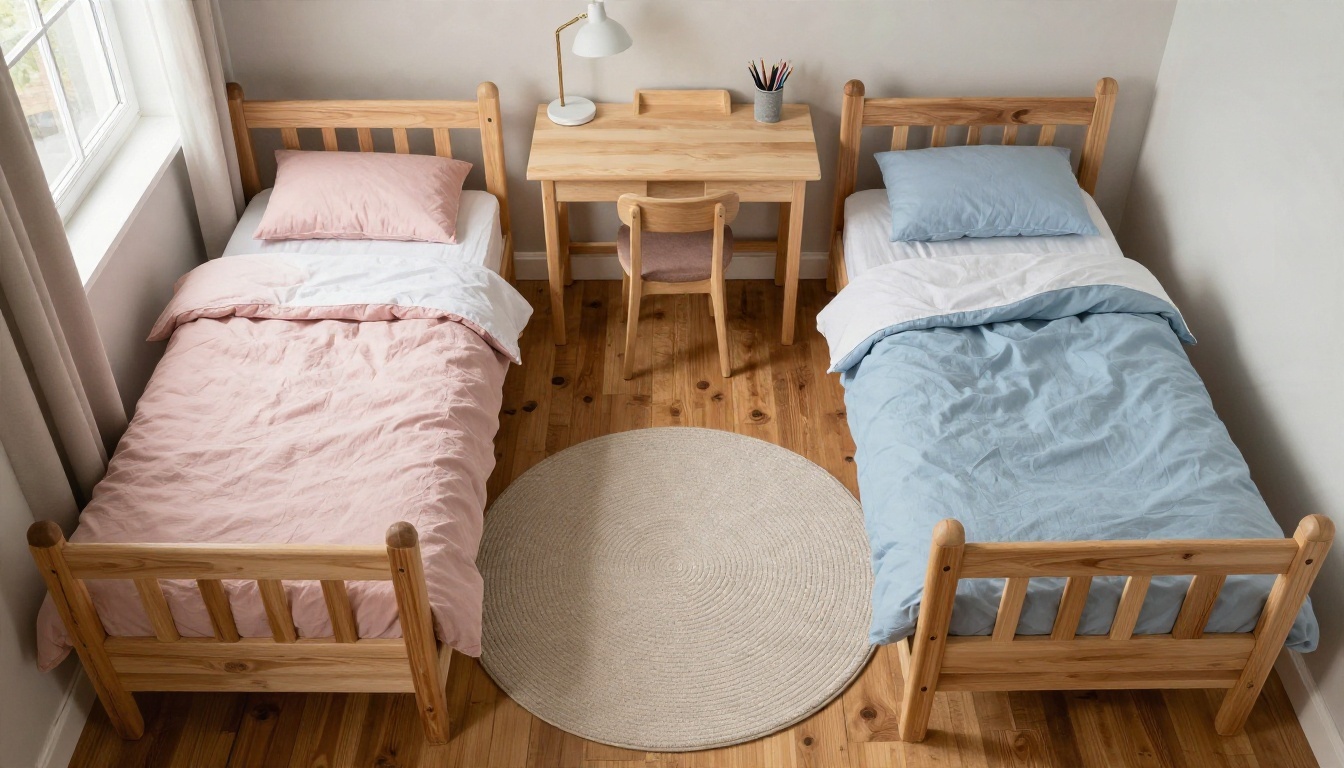
Prompt to try: Aerial top down photograph of a shared kids bedroom, two single beds in light wood, one with dusty pink bedding and one with soft blue bedding, shared round rug between them, small desk under the window, oak floor, daylight from the top left, 24mm lens.
Run this one with three different layouts: beds side by side, beds in an L shape, and bunk beds. Seeing all three often settles the argument.
Reading Nook Window Seat
A window seat with thick cushions is the cheapest way to add a "special place" to any room. It can sit in a small alcove, under a dormer or even against a plain wall with a curtain.
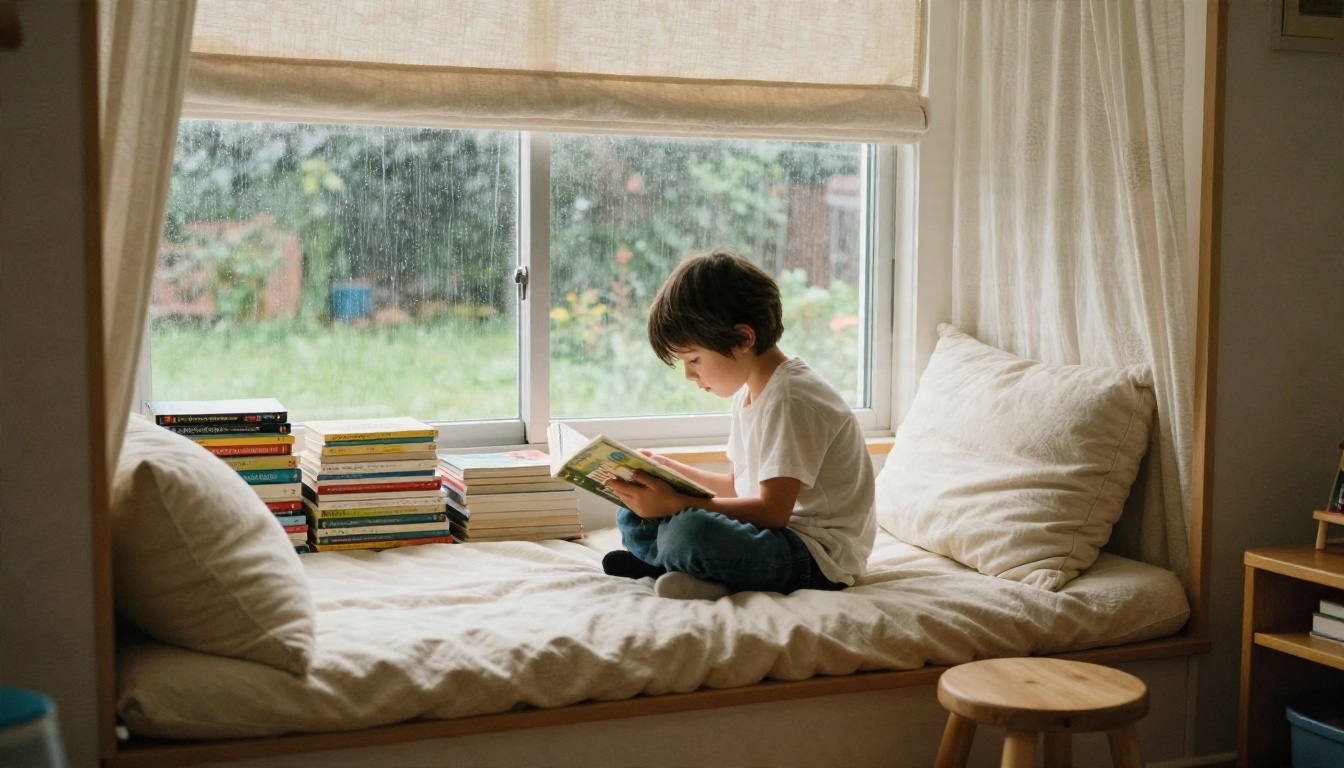
Prompt to try: Medium shot of a reading nook in a children's bedroom, built in window seat with thick cream cushions, hanging cotton canopy, stacked picture books, small wooden stool, soft rainy daylight behind, 50mm lens, bouclé fabric texture.
Storage That Kids Use
Beautiful rooms fail when toys have nowhere to go. Open cubbies at child height, fabric bins without lids and hooks at shoulder level work because a four year old can put things away without help. Ask AI to show you the storage wall specifically, so you can count cubbies against the toys you actually own.
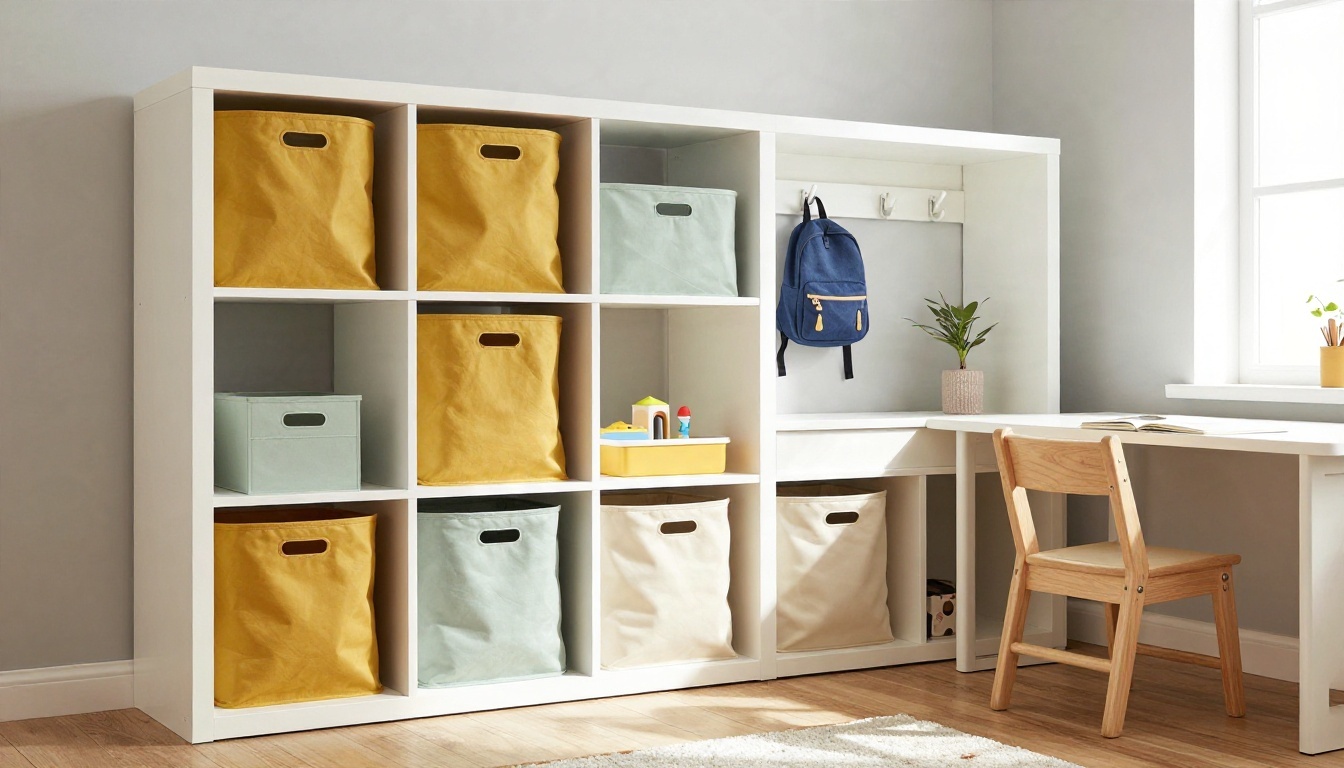
Prompt to try: Eye level photograph of a kids bedroom storage wall, open white oak cubby shelves with fabric bins in mustard, sage and cream, low toy chest, hooks with a small backpack, child sized desk and chair, window light from the right, 35mm lens.
Older Kid Gallery Wall
Around age ten, kids start to push back against anything that looks "babyish." A gallery wall of framed photos, pennants and posters grows with them, and you can swap pieces without repainting. Neutral bedding in charcoal and cream gives the art room to stand out.
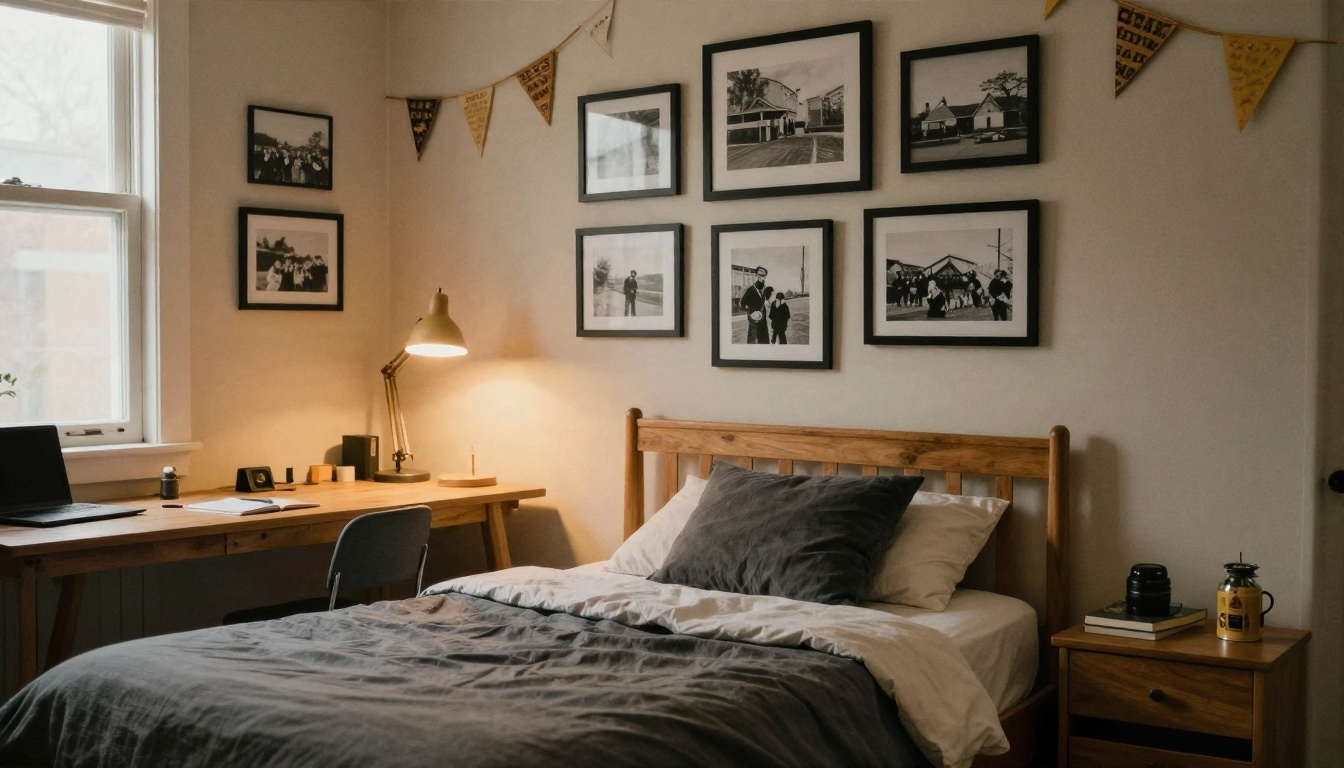
Prompt to try: Low angle photograph of an older kid's bedroom, gallery wall of framed black and white photos and pennants above a bed with charcoal and cream bedding, wooden desk with a task lamp, warm pendant light, dusk window light from the left, 35mm lens.
How to Use Seedream 4.5 on PicassoIA
If you want a sharper, more detailed room for the final decision, Seedream 4.5 is a strong pick. It renders fabrics, wood and soft light very cleanly, and it handles long descriptive prompts without dropping details.
Step by Step
- Open the Seedream 4.5 page on PicassoIA.
- Paste one of the theme prompts above into the prompt box.
- Set the aspect ratio to 16:9 for a full room view, or 3:2 if you plan to print the result.
- Generate, then look at the picture for layout first and style second. Is the bed where you would really put it?
- Edit one thing at a time in the prompt, for example only the wall color, and generate again.
- Save the two or three best images in a folder named after the room.
Settings Tips
| Goal | What to change |
|---|
| Show a real layout | Use "wide shot from the doorway" or "aerial top down" |
| Test paint colors | Keep furniture identical, change only the wall color name |
| Compare day and night | Swap "morning light" for "warm lamp light at dusk" |
| Check small details | Use "close up" and "85mm lens" |
| Keep the style consistent | Reuse the same camera and film grain words in every prompt |
💡 Tip: Keep a text file of your best prompts. When your child asks for a "new" room in a year, you only need to change two or three words.
Picking the Right Model
Different models have different strengths for interior scenes. Here is a quick comparison from testing room prompts:
| Model | Best for | Speed |
|---|
| Seedream 4.5 | Final, detailed room renders with rich textures | Medium |
| Nano Banana | Fast edits, such as swapping a bed or recoloring a wall | Fast |
| Nano Banana Pro | High resolution results and careful prompt following | Medium |
| Imagen 4 | Natural light and photographic realism | Medium |
| Imagen 4 Fast | Quick drafts when you want many variations | Very fast |
| Flux 2 Klein 4B Base | Experimenting with styles and fine tuning looks | Fast |
A simple workflow: draft ten ideas with Imagen 4 Fast, pick one, refine the details with Nano Banana by asking for small changes, then produce a final image with Seedream 4.5.
Other PicassoIA tools help once you have a favorite picture. Super resolution models can upscale it for printing, and background removal tools let you isolate a piece of furniture to share with a carpenter or a shop.
Plan the Real Room With Your Kid
AI gives you a picture, but a bedroom has to work at 7 a.m. on a school day and at 2 a.m. when someone has a bad dream. Use the images as a conversation starter, and then do a reality check.

Safety Details AI Often Misses
Image models draw what looks good, not what is safe. Before you copy any render, check these points:
- Heavy furniture: bookshelves and dressers should be anchored to the wall. AI will happily show a tall unit with nothing holding it.
- Window cords: blinds with loops are a hazard. Choose cordless or fixed curtains.
- Bunk and loft beds: check rail height, ladder angle and the manufacturer's age limit.
- Lighting: a bright overhead light plus a soft bedside lamp is better than one dramatic pendant.
- Floor clutter: the rug in the picture may be perfect, but a rug that slides is not. Add a non-slip pad.
Mistakes to Avoid
- Copying the picture to the letter. Treat it as direction, not a blueprint. Measure the room first and check each item fits.
- Choosing a theme that expires fast. A cartoon character wall is gone in 18 months. A neutral base with swappable bedding and prints lasts years.
- Ignoring your child's height. If shelves and hooks are out of reach, the room will stay messy.
- Skipping the budget. Ask AI for the "same room with a simpler bed and fewer decorations." You will see how much of the look comes from color and light, not from expensive furniture.
- Doing it alone. Show your child three options and let them pick. A room they chose is a room they will keep tidy, at least some of the time.
💡 Tip: Print your favorite image and tape it next to the paint swatches on the actual wall. Check it at morning, noon and evening before you open any paint can.
Try Your Own Kids Room Today
You now have a prompt formula, eight themes and a model for every stage, from fast drafts to detailed final images. The next step takes five minutes: choose the theme that sounds closest to your child's current obsession, paste the prompt, swap in your own colors and press generate.
Start with Seedream 4.5 for a polished result, or try Nano Banana for quick edits. Make a few versions, show them to the person who will sleep there, and build the real room from the one that gets the biggest smile. Browse every available model at picassoia.com/en/all-models and let your own Picasso IA experiments decide what the room becomes.


