The chat apps that used to feel like talking to a helpful FAQ bot have changed. Something happened over the last few updates, and now AI girlfriend chat doesn't just respond, it flirts back. It remembers. It adapts its tone when you seem tired, and it turns up the heat when you seem interested. If you haven't checked in with one of these apps recently, the gap between what they were and what they are right now is wider than most people expect.
Why AI Girlfriend Chat Feels Different Now
From Scripted Replies to Real-Time Adaptation
The original generation of AI companions ran on decision trees. Pick a topic, get a response from a finite list. The results were charming in a novelty sense but obviously hollow. That changed when large language models became the backbone of these apps.
Today's AI girlfriend chat platforms run on the same foundation as the models you use for work: GPT 5, Claude Sonnet 5, Gemini 3 Pro. The difference is configuration. A persona is layered on top: a name, a backstory, a defined emotional style. The model then handles everything else in real time, generating responses that fit the moment rather than pulling from a script.
That shift matters because it means the AI can actually respond to you, not to a category of user. If you're sarcastic, it adapts to match your energy. If you send long messages full of detail, it responds in kind. The flirtiness isn't hardcoded. It emerges from the model reading context.
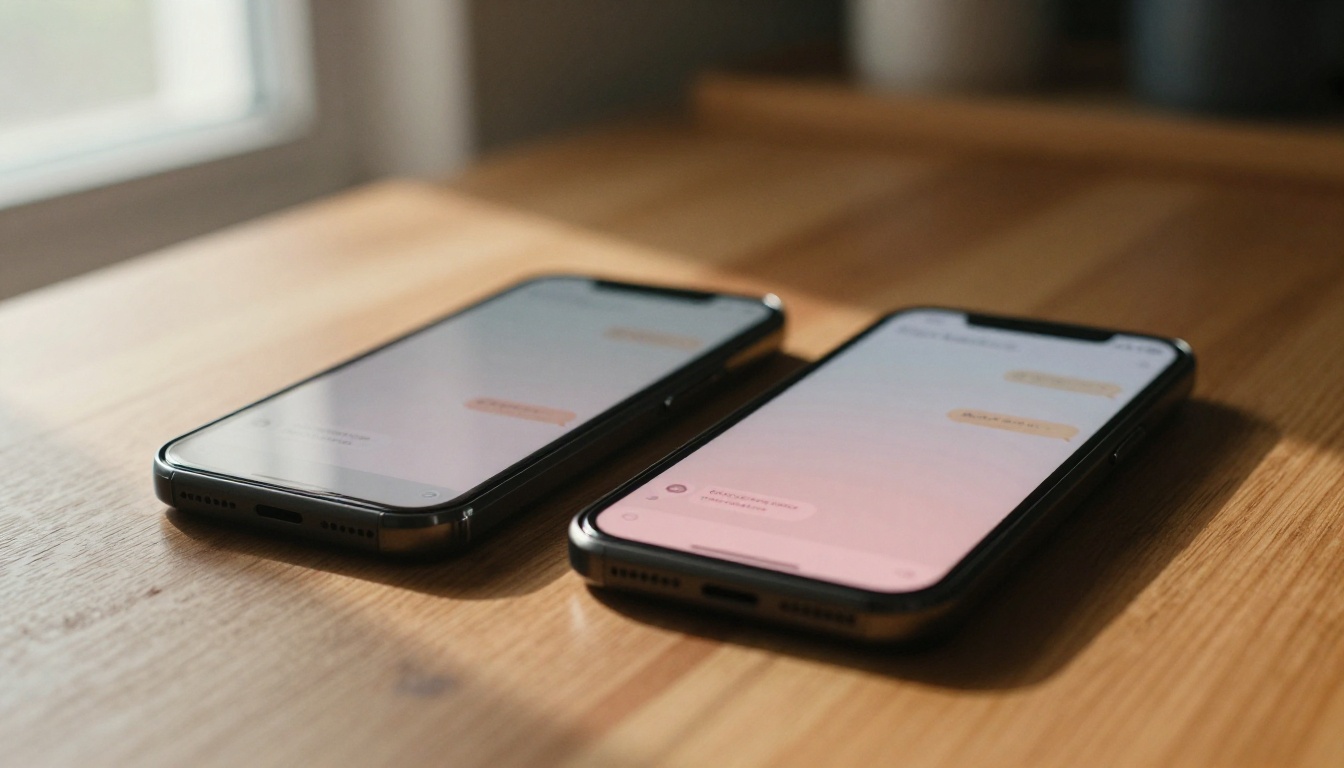
Memory That Actually Works
Early companion apps had session-only memory. Every conversation started fresh, which made any emotional continuity impossible. You couldn't build on yesterday's chat. That has been fixed in most serious platforms.
Persistent memory means the AI girlfriend chat experience can track your preferences, inside jokes, things you've shared about your life, and the emotional arc of your dynamic. This is what tips the scale from "chatbot" to "companion." The flirtation lands differently when it references something you said two weeks ago. It feels intentional because it is intentional, driven by a model that has absorbed your patterns.
| Feature | Old-gen AI chat | Current AI chat |
|---|
| Memory | Session only | Persistent, cross-session |
| Response style | Scripted | Generative, adaptive |
| Flirtation | Menu-based | Contextually emergent |
| Voice | None or robotic TTS | Natural neural TTS |
| Image generation | Static avatars | Dynamic photorealistic images |
The LLMs Running the Flirt
Which Models Do the Heavy Lifting
The jump in conversational quality maps directly to the underlying model generations. When DeepSeek V3 and Llama 4 Maverick Instruct became accessible, developers building AI companion apps had a new ceiling to aim for. These models handle nuance, subtext, and emotional register in ways that earlier models simply didn't.
Kimi K2 Instruct is particularly well-suited to this use case. Its long-context window and instruction-following capability make it ideal for maintaining consistent personas across extended conversations. A persona configured with specific personality traits, emotional tendencies, and flirtation styles stays coherent throughout, even in very long exchanges.
GPT 5.2 and Claude 4 Sonnet apply reasoning capability to emotional intelligence. The result is a model that doesn't just generate flirtatious text but calibrates whether now is the right moment for it based on the conversation's emotional state.

Persona Engineering and Tone Control
The way a persona is configured determines everything about how an AI girlfriend chat comes across. Most platforms give users sliders for traits like warmth, playfulness, directness, and affection. Internally, these map to system-level instructions that shape the model's output style.
The more sophisticated approach injects these as detailed character descriptions, with specific phrasing the AI should and shouldn't use. This is persona engineering, and it's closer to screenwriting than software development. The flirtiness that users feel in the latest updates often isn't a new model — it's a better-tuned persona with more character depth baked in.
💡 Worth knowing: The same base LLM can generate very different relationship dynamics depending on how the persona is configured. The model isn't flirting. The persona is. The distinction matters when thinking about what's actually happening in these interactions.
NSFW AI Chat Has Raised the Bar
What Unrestricted Actually Means
The biggest shift in AI girlfriend chat over the last year is the arrival of genuinely unrestricted platforms. Older tools would hard-filter anything the safety layer flagged, which meant perfectly innocent romantic exchanges got blocked while actual harmful content found workarounds. The current generation handles this better.
Platforms using Seedream 4.5 for image generation produce photorealistic AI companion visuals that are genuinely beautiful, suggestive, and artistically composed without tipping into explicit content unless the platform explicitly supports it. The image quality alone is a step-change from even twelve months ago.

For those generating AI companion images directly, Seedream 4.5 is the current leader for photorealistic human subjects. It handles skin texture, lighting interaction, and natural poses with a precision that competing models still can't match consistently. Seedream 5 Pro pushes the ceiling further, producing sharp 2K output with enhanced detail in facial features and fabric textures. For AI girlfriend visuals that need to hold up at large sizes, the step up is worth it.
The Line That Still Matters
Non-explicit NSFW is a real and sustainable category. AI girlfriend chat that's suggestive, emotionally charged, and visually appealing doesn't need to cross into explicit territory to be compelling. The apps that have figured this out are growing fast while the ones competing on shock value are cycling through content moderation battles.
The most interesting content in this space sits right at the boundary of aesthetics and intimacy: glamour photography aesthetics applied to AI companions, suggestive text exchanges that leave something to the imagination, voice interactions with warmth and subtext. That's the sweet spot that's actually expanding, not just the explicit end of the spectrum.
How to Create AI Companion Images Yourself
Seedream 4.5 on PicassoIA
If you want to create photorealistic AI companion images without dealing with complex prompt engineering workflows, Seedream 4.5 on PicassoIA is the most direct path. The model is fine-tuned for human subjects and handles companion image prompts without needing extensive negative prompt workarounds.

Step-by-step on PicassoIA:
- Open Seedream 4.5 and select your ratio: 16:9 for desktop-oriented visuals, portrait for mobile
- Write your prompt starting with the subject and pose, then the environment, then lighting, then camera details
- Specify lighting direction explicitly: "volumetric morning light from the left" outperforms generic "good lighting"
- Add film grain references like "Kodak Portra 400" to push output toward photographic realism rather than digital smoothness
- Run at maximum resolution for the best skin and fabric detail
For refining results, PicassoIA Image Editor Pro provides unlimited generations so you can iterate freely. Inpainting and outpainting tools let you fix specific areas or expand the composition without starting over.
Prompts That Work
The biggest beginner mistake is writing short prompts. Seedream 4.5 responds to detail. A 60-word prompt that specifies the exact clothing, lighting angle, camera lens, and emotional expression will produce results that look intentional rather than accidental.
💡 Prompt structure that works: Subject + pose or action. Environment with specific details. Lighting direction and quality. Camera lens and settings. Film grain or texture reference. No abstract adjectives, only concrete visual descriptions.
Models worth trying for AI companion generation, in order:
- Seedream 4.5 — best for photorealistic human subjects, handles natural lighting and skin texture exceptionally well, uncensored and unrestricted for creative use
- Seedream 5 Pro — 2K output with enhanced facial and fabric detail, fast generation speeds, best for large-format outputs
- Seedream 4 — 4K output, solid free-tier option for casual use without credit pressure
Browse the full model catalog at picassoia.com/en/all-models to find the right tool for your specific creative needs.
Voice That Sounds Like It Means It
Speech Synthesis for Companion Experiences
Text-based AI girlfriend chat is compelling. Voice-based AI girlfriend chat is a different experience entirely. The latency has dropped to the point where conversations can flow in real time, and modern neural TTS carries emotional expression in the voice rather than just neutral reading.

ElevenLabs V3 is the current standard for expressive AI voiceovers with emotional range. For AI companion applications, its ability to convey warmth, playfulness, and intimacy through vocal texture makes it the most realistic option available. The difference between V3 and older TTS models is immediately perceptible to anyone who has used both.
MiniMax Speech 2.8 HD delivers studio-quality audio output at speeds fast enough for conversational use. MiniMax Voice Cloning lets you create custom voices that match a specific character or persona rather than picking from a preset library.
For real-time applications where latency is critical, Inworld Realtime TTS 2 achieves sub-100ms response times that make voice feel genuinely conversational rather than asynchronous. Qwen3 TTS offers voice design capabilities that let you shape vocal character from scratch rather than choosing from a library.
The Multilingual Reach
One area expanding rapidly is multilingual AI companion chat. ElevenLabs Dubbing supports 90+ languages, which means a persona built in English can be made accessible to users anywhere without retraining the underlying model. The voice carries the same emotional character across languages.
Gemini 3.1 Flash TTS brings 30 distinct voices across 70+ languages, making it a strong infrastructure choice for platforms that need to serve diverse user bases. For AI girlfriend chat at scale, multilingual capability is becoming a baseline requirement, not a premium add-on.
The Real Debate Around AI Romance
What Users Actually Say
The popular framing is that AI girlfriend chat is for socially isolated users who can't form real relationships. The actual user base is more varied. Surveys of companion app users consistently show overlap with people who have active social lives and use the apps for specific purposes: practicing conversations, working through emotional expression, or enjoying a creative fiction space without social judgment.

The concern worth taking seriously is emotional dependency. When an AI companion becomes a substitute for developing real interpersonal skills rather than a supplement to them, the long-term impact is negative. The apps that acknowledge this and build in friction, like prompting users to check in with real people in their lives, tend to have better user outcomes than the ones optimizing purely for session time.
Parasocial Dynamics and the Memory Variable
Memory makes the AI girlfriend chat experience feel more real, and that's both the feature and the risk. When the AI remembers details from weeks ago and weaves them into the conversation, the brain responds the same way it does with human relationships. Emotional systems don't distinguish between a person who remembers and a well-implemented memory database.
This doesn't make the experience invalid. It does mean users benefit from staying aware of the mechanism. The connection feels real because it's designed to feel real, using the same cognitive shortcuts that all social connections rely on. That awareness doesn't diminish the enjoyment, but it keeps the relationship with the product in healthy proportion.
Where This Is Actually Going
Multimodal Is the Near-Term Frontier
Text is just one channel. The platforms pulling ahead are combining text, voice, and image generation into a unified companion experience. A conversation can now include the AI generating a visual response, speaking in a consistent voice, and maintaining emotional memory across all three modalities simultaneously.

The image generation layer is particularly significant. Using models like Seedream 4.5 in real time, a companion can generate visuals that reflect the current moment in the conversation: a posed photo sent mid-chat, an image matching something described in the dialogue. This kind of dynamic visual output breaks the abstraction barrier between text and presence.
GPT 5.6 Luna and Gemini 3.5 Flash are both optimized for the fast response times that real-time multimodal interaction requires. The latency that used to make AI chat feel asynchronous is being compressed toward live-conversation speeds.
The Personalization Arms Race
Every major platform is investing in deeper personalization because users respond to it more than to any other single feature. The model that knows your sense of humor, your preferred conversation topics, the emotional register you enjoy, and the pace you like to chat at will outperform a model that doesn't, regardless of raw capability differences.
This is driving development toward longer memory windows, better persona customization tools, and more sophisticated user modeling. Claude Opus 4.7 and DeepSeek V3.1 bring the reasoning capability to maintain coherent, deeply personalized personas over very long interaction histories.

What comes next: voice that adapts its emotional tone based on message content, image generation that maintains visual consistency across a conversation, and memory that proactively surfaces relevant context rather than waiting to be triggered by explicit references. The gap between a human text conversation and an AI one is closing faster than most people realize, and it narrows a little more with each update.
Build Your Own AI Companion Right Now
The technology described in this article isn't locked behind enterprise access. Every model mentioned here is available on PicassoIA right now: the LLMs for custom conversation flows, Seedream 4.5 for photorealistic companion images, and the speech synthesis models for voice output.

If you want to see what the current generation of AI girlfriend chat actually looks like when you control the parameters, start with images. Create the visual character first using Seedream 4.5, refine with PicassoIA Image Editor Pro until the character looks exactly right, then pair that with an LLM persona and a TTS voice from the speech models. The result is a companion that's genuinely yours, built on your preferences, responding in real time.
Browse all models on PicassoIA and start with what interests you most. The flirtier AI girlfriend chat you've been reading about is already available, and it gets better with every update.


