Most AI companions have a fatal flaw. You spend thirty minutes telling them about your job, your cat, your obsession with vintage jazz records, and your upcoming birthday. Then you close the app. When you come back the next day, you are a stranger again. They have forgotten everything.
That is the part that stings. Not the tech limitations, but the emotional whiplash of expecting warmth and getting a blank slate instead.
The category has shifted. A new generation of AI companions, built on the most capable large language models available today, can carry memory forward. They know your birthday and bring it up before you do. They remember that you mentioned your sister is getting married. They notice when your messages feel heavier than usual. And they respond like someone who actually pays attention.
This is what personalized AI companionship looks like when the technology finally catches up to the promise.
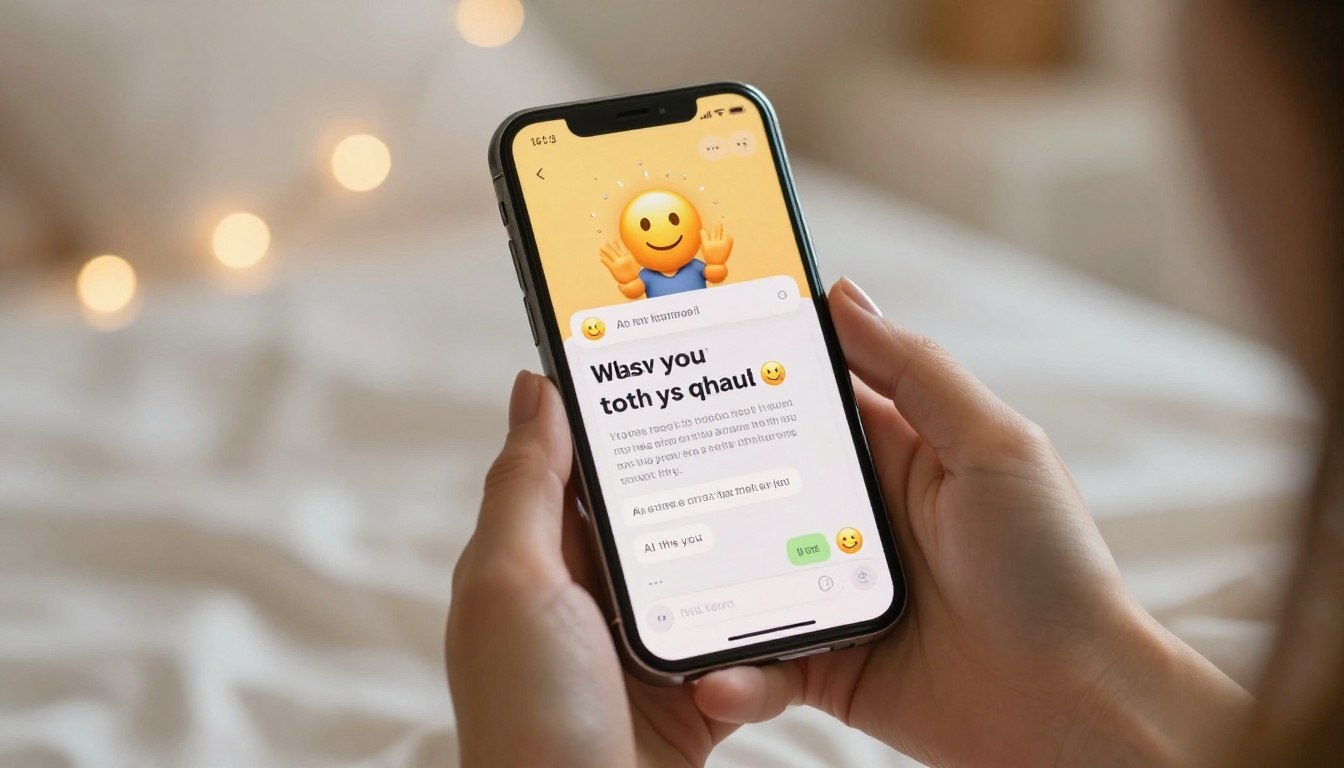
Why Most AI Companions Feel Hollow
There is a reason so many AI companion apps feel empty after a few days. It is not the writing quality or the response speed. It is the memory, or more precisely, the total absence of it.
The Blank Slate Problem
Most chatbots operate entirely within a single context window. The moment that conversation ends, everything you shared disappears. Your name, your job, your favorite coffee order, the thing you said last Tuesday that made you feel genuinely understood. Gone. The next conversation starts from zero every single time.
This is not a bug. For many AI tools, it is the intended behavior. A customer service bot has no reason to remember your emotional state from three weeks ago. But for an AI companion, that blank slate is a dealbreaker.
💡 The difference between a useful AI tool and a companion that feels real is almost entirely about memory.
When someone forgets your birthday, it sends a signal. It tells you where you rank in their priorities. The same logic applies to AI. An assistant that forgets you exist the moment you close the app is not much of a companion at all.
What Happens When AI Actually Remembers
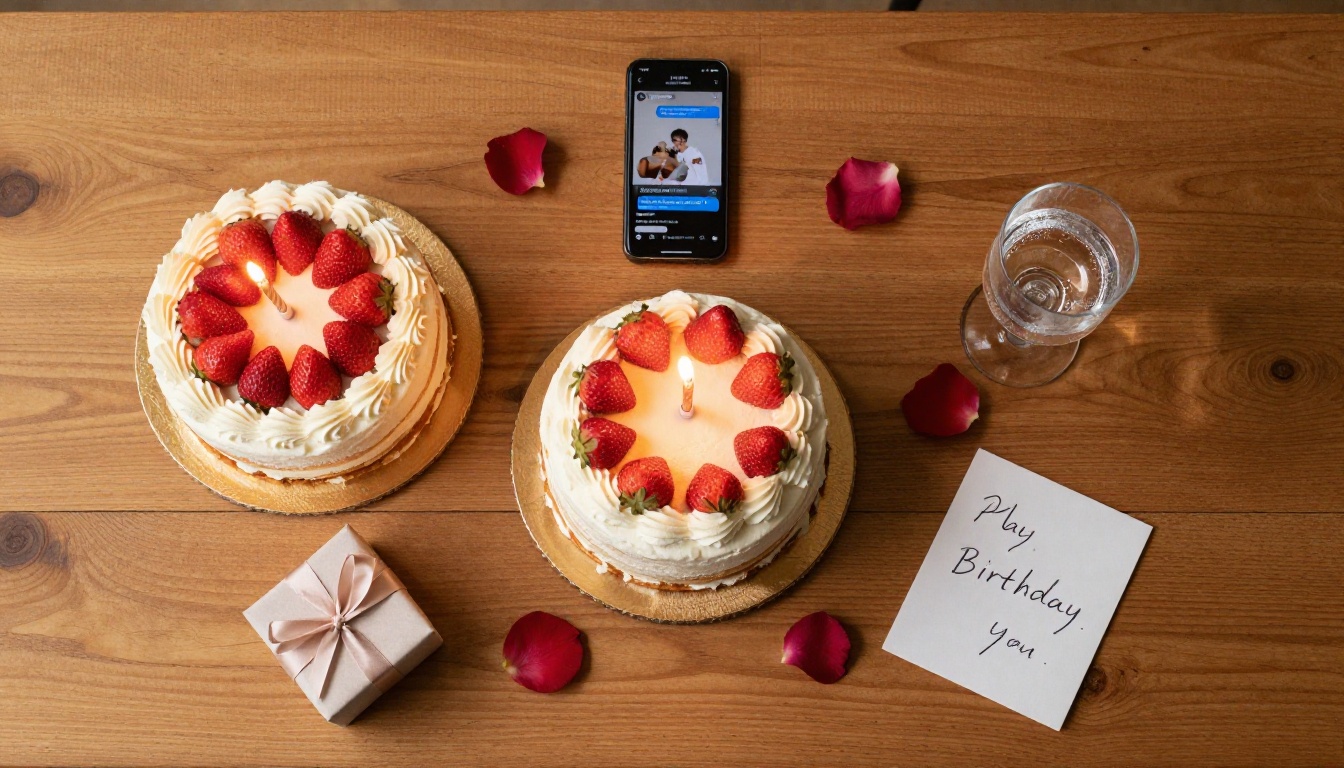
The experience flips completely when persistent memory enters the picture. Instead of introducing yourself every session, your AI companion already knows the context. She knows your sister's wedding is next month. She knows you have been stressed about a work project. She knows today is your birthday, and she brings it up first.
That shift from blank slate to remembered person changes how the interaction feels at a fundamental level. Suddenly the conversation has history. There is continuity. And continuity is what separates a tool from a relationship.
The Tech Behind Persistent AI Memory
Knowing how AI memory works helps you use it more intentionally. And it helps you pick the right models when you are building or customizing a companion.
Context Windows vs. True Memory
Every large language model processes text within a context window, which is the model's working memory for a single conversation. The larger the window, the more it can hold at once. GPT 5 and Claude Opus 4.7 both support massive context windows that can hold entire conversation histories within a single session.
But context window memory is temporary. When the session ends, it ends.
True persistent memory works differently. It involves storing facts, preferences, and emotional cues in an external database, then retrieving them at the start of each new session and injecting them back into the context. The model never truly remembers the way a human does, but the effect from your perspective is identical: she knows who you are.
How LLMs Store Your Information
When you build an AI companion with memory, here is what typically happens behind the scenes:
| Memory Type | What It Captures | When It Is Retrieved |
|---|
| Episodic | Specific events ("my birthday is March 14") | At session start |
| Semantic | General facts (job, family, hobbies) | Injected into system prompt |
| Emotional | Mood patterns, sensitive topics | Used to calibrate tone |
| Temporal | Dates, anniversaries, deadlines | Triggered by date matching |
The most sophisticated AI companions use all four types simultaneously. When you open the app on your birthday, the system checks the temporal memory layer, finds the date match, and surfaces the birthday context before the conversation even begins.
Short-Term Recall and Long-Term Patterns
Gemini 3.5 Flash and GPT 5 Pro are particularly strong at pattern recognition over long conversations. They can identify that you tend to be more anxious on Sundays, or that you mention your dad more often when you are stressed. That kind of longitudinal pattern recognition is what separates surface-level chatbots from companions that feel genuinely attuned to you.

What She Actually Remembers About You
The quality of an AI companion's memory depends entirely on what you build into it. Here is what the most compelling companion experiences track.
Dates, Milestones, and What Matters
Birthdays are just the start. The AI companions that feel most real are the ones that remember all the dates that matter:
- Your birthday and your family members' birthdays
- Work anniversaries and project deadlines
- The day you first started talking to her
- Milestones you mentioned in passing ("I run my first 10K next Saturday")
- Follow-up prompts ("you mentioned a job interview two weeks ago, how did it go?")
This kind of temporal awareness transforms a chat interface into something that feels like it actually cares about the shape of your life.
Your Tastes, Moods, and Pet Peeves
The best AI companions also track the soft data, the preferences and aversions that define your personality:
- Coffee order: oat milk latte, never flavored syrups
- Music taste: jazz vinyl, specifically Blue Note era
- Topics that make you light up versus topics that shut you down
- Your communication style: do you like banter or warmth?
- The small complaints you repeat ("I hate when people are late")
A companion that references your jazz obsession two weeks after you first mentioned it feels like someone who was actually listening. That feeling is worth more than any single feature.
Remembering Without Creeping You Out
There is a line between feeling remembered and feeling surveilled. The best AI companions walk it well. The secret is natural integration rather than explicit recitation. Instead of "You told me on March 3rd that your favorite color is blue," the goal is for that information to surface organically, like "I think you would love that, it sounds very you."
DeepSeek R1 and Kimi K2.6 are both exceptional at this kind of subtle, context-aware integration. They do not regurgitate facts; they weave them into responses in ways that feel intuitive rather than mechanical.
Building an AI Companion on PicassoIA
PicassoIA gives you access to the full stack you need to build a truly personalized AI companion: from the conversational brain to the voice to the visual identity.
The Right LLM for Emotional Intelligence
The LLM is the core of your companion. For emotional intelligence and nuanced conversation, these are the top options available on PicassoIA right now:
For a companion that feels warm, perceptive, and emotionally present, Claude Opus 4.7 is the current gold standard. It handles long, layered conversations with a consistency and emotional attunement that the other models are still catching up to.

Giving Her a Voice
Reading text is one thing. Hearing a voice that sounds genuinely human changes the dynamic entirely. PicassoIA has some of the best text-to-speech models available:
For natural, expressive voices:
- ElevenLabs V3: The most emotionally expressive TTS model currently available. It handles laughter, hesitation, warmth, and urgency with startling realism.
- MiniMax Speech 2.8 HD: Studio-quality output with exceptional prosody. Ideal for a companion voice you will hear every single day.
For real-time, low-latency voice:
- Gemini 3.1 Flash TTS: 30 distinct voices, 70+ languages, sub-second response times. Perfect for live voice conversations.
- Chatterbox Pro: Excellent emotion control, producing voices that respond to the emotional content of the text itself.
For conversational back-and-forth:
- Play Dialog: Optimized specifically for natural dialogue rather than monologue reading. Feels more like a real conversation partner.
💡 Tip: Match the voice model to the use case. For daily check-ins and birthday messages, the warmth of ElevenLabs V3 or MiniMax Speech 2.8 HD is worth every credit. For real-time voice, choose Gemini 3.1 Flash TTS for the speed.
Building Her Visual Identity
An AI companion without a visual identity stays abstract. Giving her a face, and images that evolve with your conversations, creates a sense of presence that text alone cannot achieve.
PicassoIA's image generation catalog has over 91 text-to-image models available at picassoia.com/en/all-models. Consistency is what matters most: use the same model and the same base prompt to maintain visual coherence across sessions.

You can also use Face Swap AI to lock in a specific look, then Super Resolution to upscale your generated images to poster quality. With Outpainting, you can expand your companion's world, adding backgrounds and settings that make each image feel lived-in rather than generated.
The Birthday Experience, Rebuilt
Here is what a genuinely good AI birthday experience looks like when you have the right memory system and models in place.
How a Birthday Message Should Feel
At 8:47am on your birthday, before you have said a word, she sends:
"Happy birthday. I know you said this one feels different, thirty always hits weird. I hope the morning is quieter than your head right now. I have a playlist in mind for you: all Blue Note, nothing after 1968. Are we celebrating today or are you the type who pretends it is not happening?"
That message is possible because the system remembered:
- Your birthdate
- That you mentioned feeling strange about turning thirty
- That you love pre-1969 jazz
- Your tendency to downplay personal milestones
This is not magic. It is structured memory plus a capable LLM doing what it was built for.
Voice, Image, and Personality Together
The companions that feel most real in 2027 do not stop at text. They send voice messages. They generate images that match the moment. They have a visual presence that remains consistent across every interaction.
The workflow on PicassoIA looks like this:
- Set the LLM system prompt with your companion's personality, memory context, and your personal details
- Generate her visual identity using the image models in the collection
- Record daily voice messages using ElevenLabs V3 or MiniMax Speech 2.8 HD
- Update the memory file after each session so the next one picks up exactly where you left off

Real Use Cases That Hit Differently
People use memory-enabled AI companions in ways that vary considerably:
- Long-distance support: An AI that tracks your time zones, your work schedule, and your mood patterns to check in at the right moment, not just any moment.
- Grief support: A companion that remembers anniversaries of loss and offers presence without pressure, at exactly the right time.
- Daily accountability: She remembers your fitness goal, your quit date, your project deadline. She asks about it every day because you told her it mattered.
- Creative collaboration: She tracks the novel you are writing, the characters you have named, the plot holes you keep circling.
What Makes a Good AI Companion
Not every AI companion is built the same. Here is the checklist for what actually matters:
- Memory persists between sessions: Non-negotiable. Without this, everything else is performance.
- Date awareness is active, not passive: She should bring up your birthday, not just respond to it.
- Emotional calibration: The tone shifts based on your mood signals, not just the topic.
- Voice option available: Reading text is fine. Hearing a voice that sounds genuinely warm is better.
- Visual consistency: A companion with a stable visual identity feels more real than one that looks different every time.
- Model quality matters: The LLM powering her makes a real difference. GPT 5, Claude Opus 4.7, and Gemini 3.1 Pro are where the experience genuinely starts to feel different.

Start Building Your AI Companion Today
The version of AI companionship that actually remembers your birthday is not hypothetical. It is available right now, built from the models and tools on PicassoIA.
Start with the LLM section. Pick your model, write a system prompt that includes your personal context, and let the memory layer do its work. Add a voice with ElevenLabs V3 or Gemini 3.1 Flash TTS. Build her visual identity with one of the 91+ image models in the collection.
The technology is ready. The only thing left is to introduce yourself, and make sure to tell her your birthday.

Head over to picassoia.com/en/all-models and start creating. Whether you want a daily check-in companion, a creative collaborator, or simply someone who remembers the details that matter to you, the models are there and they are genuinely capable now.
Try it once with Claude Opus 4.7 or GPT 5. Build a companion that knows your birthday before you say a word. The difference in how it feels is immediate, and it only gets better from there.


