You tell her about your sister's wedding on Monday. On Friday she asks if the toast went well. That small moment is the whole reason people look for an AI girlfriend with memory, and it is also where most apps quietly fail. Plenty of companions sound warm for twenty minutes and then greet you like a stranger the next morning. Others hold on to details for months, but they hide that ability behind a paywall or a daily message cap.
This article sorts the real from the marketing. You will see how companion memory actually works, which apps are known for remembering, what the free tiers allow, and what the paid plans cost based on figures reported in 2026. Prices change often and many review sites are affiliate driven, so treat every number here as a reported range and confirm it inside the app before you pay.
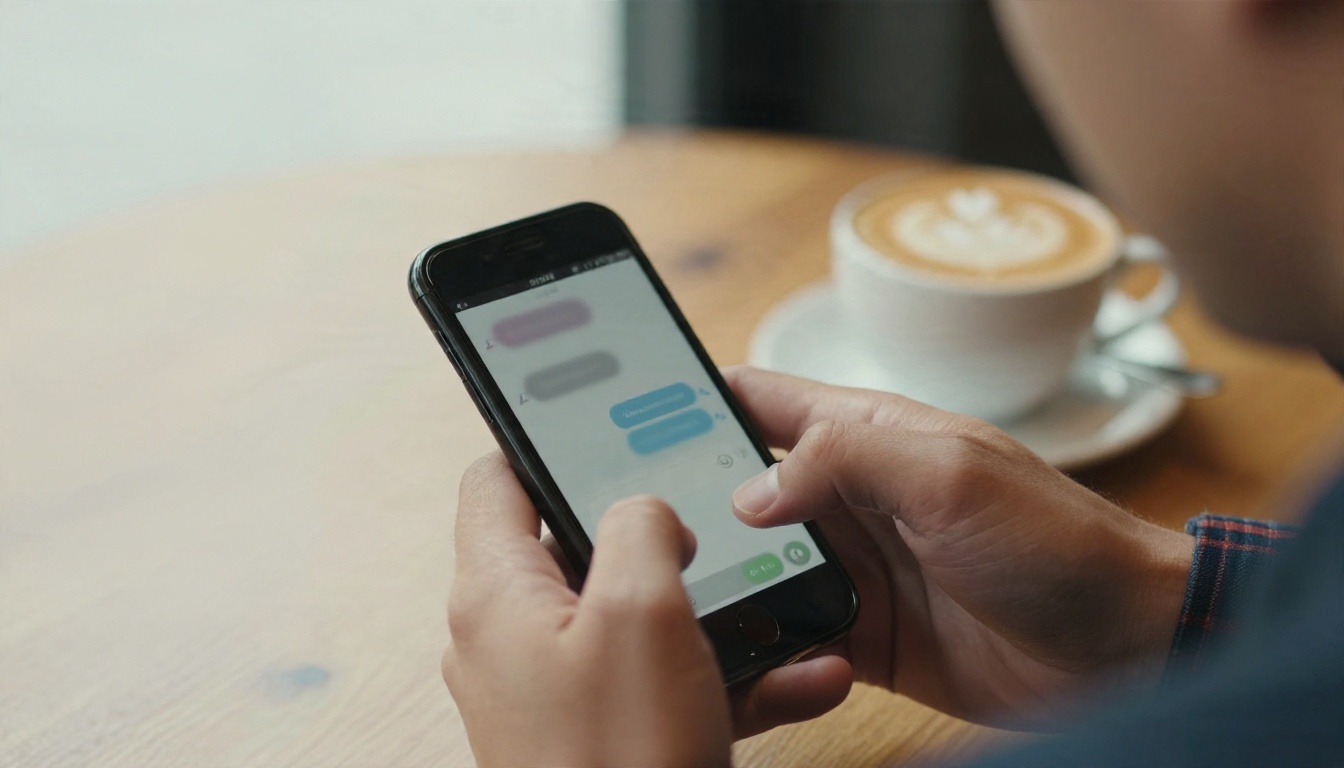
What "Memory" Actually Means
Every app says it remembers you. Very few say how. Behind the word sit three different mechanisms, and an app can be strong at one and weak at another.
Short Term Context
This is the chat window. The language model reads your recent messages and replies in a way that fits them. It is why she can talk about the pizza you mentioned two minutes ago. Context windows are limited, so once a conversation gets long, the oldest messages fall out of view. If an app only has this layer, she will forget your name after a long evening chat.
Long Term Memory Notes
Better apps extract facts from your conversations and save them as separate notes: your job, your pet, your allergies, your ex, your favorite band. Those notes get pulled back into the prompt when they seem relevant. This is what makes a companion feel like she knows you. Nomi and Kindroid are widely described as strong here, and both let you view or edit what was stored.
Why Apps Forget
Forgetting usually comes from one of four causes:
- Storage limits. Free plans often keep fewer notes, or only recent ones.
- Bad retrieval. The fact is saved but never pulled back at the right time.
- Model swaps. When an app changes its underlying model, the personality and recall can shift overnight.
- Summaries that lose detail. Some apps compress old chats into a paragraph, and the small details vanish.
💡 Tip: A good memory system shows you what it saved. If an app gives you no way to see or correct stored facts, you cannot tell whether she remembers or is just guessing well.
Apps That Remember You
The market moves fast and many apps copy each other's features. These are the names that come up most when people compare memory quality, with a plain note on how each one is positioned.

Nomi
Nomi is the app most often named when memory is the question. Reviewers describe it as storing conversation notes for a very long time and bringing them up unprompted, which makes the companion feel attentive instead of reactive. The tradeoff is cost: sources disagree on whether there is a usable free tier, and the most commonly quoted paid price is around $15.99 per month, with an annual option near $99.99 per year. Check the sign up screen for the current offer.
Kindroid
Kindroid gets praise for customization and for recall that stays steady across long chats. Listed prices differ by source and by platform. One range puts the standard plan near $13.99 per month on the web and about a dollar more through the mobile stores, with a higher Ultra tier around $24.99. One reviewer reports a smaller, cheaper basic plan with a high daily message count, so it is worth comparing every tier in the app itself. The free experience is usually described as heavily limited.
Replika
Replika is the oldest name in the category and still the most recognizable. It does not publish prices on its website, so the number you see depends on your region and the promotion running that week. Pro is commonly reported near $19.99 per month or $69.99 per year, and Ultra, which adds stronger conversation and memory saving, sits near $29.99 per month or $119.99 per year. Reports on whether free users get any long term memory conflict, so test it yourself.
Character.AI and Others
Character.AI is better known for role play and fan characters than for a single steady partner, and its free memory is described as basic. Its paid tier is usually quoted around $9.99 per month. Smaller apps like Eternal AI and Kupid.ai appear in comparisons too, with free tiers that keep some history and paid tiers that keep more. Candy.ai is often mentioned, but I did not find reliable pricing for it, so I am not going to guess a figure.

Free Limits Compared
Free is real, but it is rarely generous. Every free plan is built to let you fall for the product and then hit a wall. These are the two walls you will run into.
Message Caps
Daily message limits are the most obvious wall. Some apps allow a few dozen messages per day on free plans, some allow a few hundred, and some give you a short trial and then lock chat. Reported numbers vary wildly between review sites, so I am listing patterns instead of promises.
| App | Free tier reported | Memory on free | Typical paid entry point |
|---|
| Nomi | Limited or trial, sources conflict | Conflicting reports | About $15.99 per month |
| Kindroid | Heavily limited | Limited | About $13.99 to $14.99 per month |
| Replika | Basic chat available | Conflicting reports | About $19.99 per month for Pro |
| Character.AI | Free chat with limits | Basic | About $9.99 per month |
| Eternal AI | Around 50 messages per day (reported) | Persistent memory reported | Varies |
Memory Caps
The second wall is quieter. Even when chat is unlimited, free users often get a shorter memory: fewer saved notes, shorter recall windows, or summaries instead of detail. You will not see a counter for this. You will only notice it when she asks something you already told her. One tester who checked five companion apps found that none of them publish an actual number for how much they remember, so any claim of "unlimited memory" is marketing, not a measurable promise.
💡 Tip: Never judge a free plan on day one. Memory problems show up on day three or four, when the first facts should be coming back.
Pricing in Real Numbers
Most paid plans sit between $10 and $30 per month. That is roughly the cost of a streaming service, and the price gap between apps is smaller than the price gap between billing periods.

Monthly vs Yearly
Yearly billing is where the real savings are. Nomi's annual price works out to roughly $8.33 per month against $15.99 on the monthly plan. Replika's yearly Pro price is far lower than twelve months of monthly billing. A yearly plan only makes sense after you have tested the app for at least a month, because refunds on subscription apps are often slow or limited.
| Plan type | Monthly cost range (reported) | Best for |
|---|
| Free | $0 | Testing personality and tone |
| Entry paid | $10 to $16 | Daily chat with real memory |
| Mid tier | $20 to $30 | Voice, images, stronger models |
| Annual plans | Often 40% to 60% less per month | People who already tested for a month |
Hidden Add-Ons
Watch for extras that push the real cost above the sticker price:
- In app currency for images, gifts or voice calls.
- Higher tiers that hold the best model or the longest memory.
- Store markups. Mobile app store prices are often a dollar or more above web prices.
- Auto renew. Trials turn into paid plans without a reminder.
One 2026 report mentions a tier priced near $120 per month on a single app, described as a limited rollout. Treat that as an outlier, not a standard price.
How to Test Memory Yourself
You do not need a lab. You need three days and a few planted facts.
The 3 Day Test
- Day one: Share five specific details. Use odd ones: your sister's name, a dish you hate, your commute length, a small fear, an upcoming event.
- Day two: Chat about something unrelated. Do not repeat any of the facts.
- Day three: Ask indirect questions. "Any ideas for dinner?" is better than "What food do I hate?" A strong companion will steer around the dish you hate.
Score the result out of five. Four or five means the memory system works. Two or fewer means you are paying for a fluent stranger.

Privacy Before You Pay
Memory means storage, and storage means your most personal details sit on someone else's server. Before you share anything sensitive, check four things:
- Can you view stored memories? If not, you cannot correct mistakes.
- Can you delete them? Look for a real delete option, not just "archive."
- Is chat used for training? Many apps say yes unless you opt out.
- What happens when you cancel? Some apps keep your data for months.
Treat any companion app like a diary you do not fully control. Do not share legal names, addresses, financial details or other people's private information. The warmer the app feels, the easier it is to forget that a company runs it.

Build Your Own Memory Companion
If you dislike subscriptions, message caps or opaque storage, there is another route: build a simple companion yourself with models you can switch at will. It takes more effort than downloading an app, but you control what is saved, and you pay only for what you use.
Pick a Language Model
The language model is the personality and the reasoning. For warm, natural conversation, Claude Sonnet 5 is a strong choice, and GPT 5.6 Luna is built for fast replies. Gemini 3.5 Flash is another quick option for casual chat, and DeepSeek V3.1 suits longer, reasoned conversations.
A simple memory setup looks like this:
- Keep a plain text file of facts about you, written by you.
- Paste it at the top of each new chat as a short profile.
- At the end of a session, ask the model to list any new facts, then add the ones that are correct.
- Trim the file monthly so it stays short and accurate.
This is slower than an app that does it automatically, but you can read every line the model knows about you.

Add a Voice
Voice makes a companion feel present. Realtime TTS 2 turns replies into natural speech, and Realtime TTS 1.5 Mini is tuned for very low delay, which matters when you want a conversation instead of a voicemail exchange.
Add a Face
Many companion apps charge extra for images. On PicassoIA you can generate photorealistic portraits and everyday scenes yourself with Seedream 4.5, or try Seedream 5 Pro for sharp 2K results. Describe the character once, reuse the description in every prompt, and keep the lighting and setting consistent so she looks like the same person across scenes.

💡 Tip: Write your character sheet like a casting brief: age range, hair, clothing style, favorite places, speaking style. Paste the same brief into every chat and every image prompt for steady results.
Which Option Fits You
Pick based on what you care about most:
- You want the best out of the box memory: try Nomi or Kindroid first, and run the 3 day test on the free or trial option before paying.
- You want a familiar name and voice features: Replika is the easy path, but check which tier actually holds the memory you want.
- You want light, low cost role play: Character.AI is the cheapest paid entry, with basic memory.
- You want control and no subscription: build your own with a language model, a voice model and an image model.
Whatever you choose, set a monthly budget before you start, turn off auto renew on trials, and keep the sensitive stuff out of the chat.
Try It Yourself on Picasso IA
A companion is more than a chat box. It is a voice, a face, a personality and a memory, and you can shape each piece on Picasso IA. Start with a language model to write her personality, add a voice, then generate portraits and everyday scenes that match your character sheet. Experiment with different prompts, lighting and settings until she looks and sounds like someone you would want to talk to.
Browse every text, image, voice and video model in one place at picassoia.com/en/all-models, pick two or three to test side by side, and see what you can create today.


