Your dog has a thousand photos on your phone, and almost none of them look like the portrait you picture in your head. The eyes are half closed, the background is a mess of laundry, and the lighting makes your cat look like a grey blur. AI changes that. With the right prompt, you can place your golden retriever in a velvet cape, put your black cat in a moody studio, or show your senior lab resting in warm window light, all in a realistic photographic look that feels like a real session with a pro.
This article is built around AI pet portrait ideas you can use today. You will find nine photographic styles with example images, a five-part prompt formula, copy-ready prompts for dogs and cats, a short tutorial for generating them on PicassoIA, and fixes for the problems that ruin most results.
💡 Quick tip: Every image in this article follows the same rule: realistic photography only. Real lens choices, real light direction, real fur texture. That is what separates a portrait you want to print from one that looks like a filter.
Why Pet Portraits Work So Well
People search for pet portrait ideas because pets are the most photographed subjects at home, and also the hardest. They do not hold a pose, they blink at the wrong moment, and the best light in the house is usually where they refuse to sit.
AI image generation removes those limits. You decide the pose, the costume, the room, the time of day and the lens. The animal in the image can look like your pet if you describe the breed, coat color and markings, or if you use a reference photo with an image editing model.
Here is what people typically use AI pet portraits for:
- Wall art and canvas prints for living rooms and hallways
- Memorial portraits for pets who have passed away
- Gifts for friends, family and new pet owners
- Social media content for pet accounts and small pet brands
- Holiday cards with costumes and seasonal scenes
- Product mockups for mugs, tote bags and phone cases
The common thread is emotion. A good pet portrait does not just show an animal. It shows a personality: the dignified one, the goofy one, the sleepy one.
Nine Pet Portrait Styles Worth Trying
Each style below includes a real example, what makes it work, and a short prompt direction. Mix and match the lighting, setting and costume ideas to build your own variations.
Royal and Costume Portraits
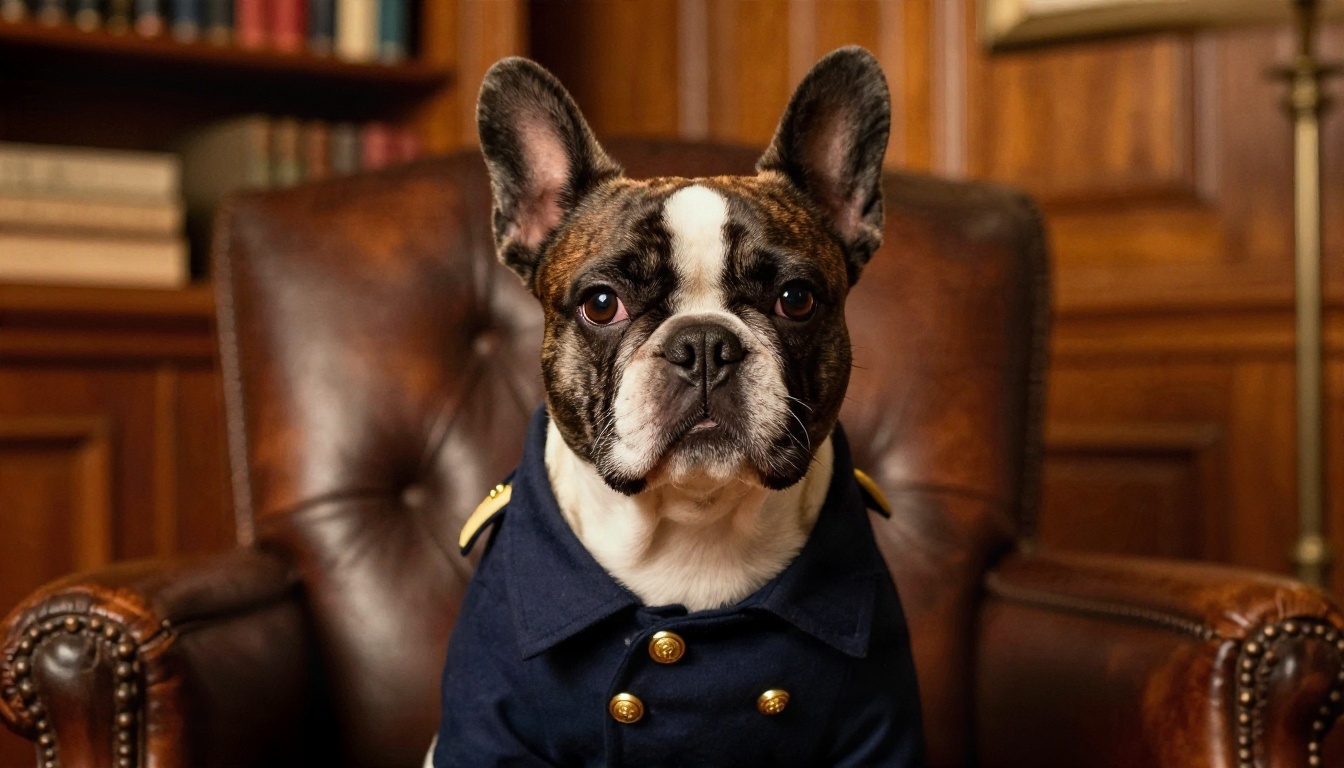
This is the classic: a pet dressed in historical clothing, posed like an aristocrat. It works because the contrast between a serious pose and a very relaxed animal is funny and charming at the same time.
What makes it work:
- A flat or short-nosed breed like a French bulldog or pug gives a naturally solemn expression
- Warm tungsten lamp light from one side adds depth to the fur
- A wood-paneled study or velvet drape suggests old money
- Details like gold buttons and leather texture make the costume believable
Prompt direction: French bulldog wearing a navy admiral jacket with gold buttons, sitting on a leather chair, wood-paneled study, warm lamp light from the right, 85mm f/1.8, film grain.
Low-Key Studio Drama
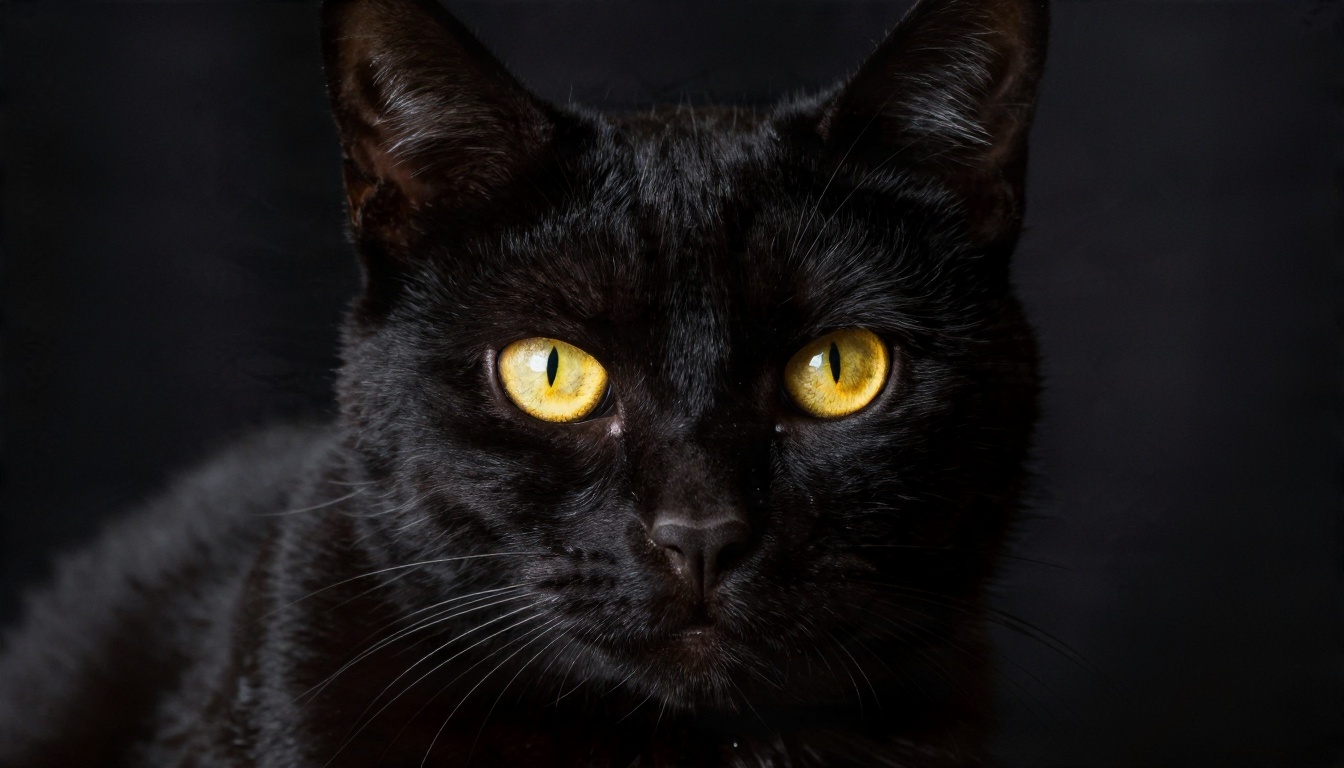
Black cats and dark-coated dogs are tough to photograph with a phone. In AI, they are a gift. Low-key lighting uses a dark background and a single soft rim light to trace the outline of the fur.
What makes it work:
- The eyes become the focal point, so pick a breed or coat with striking eye color
- A macro or 100mm lens gives a tight close-up with soft falloff
- A velvet black backdrop keeps the frame clean
- Whiskers and fur edges catch the light and look sharp
Prompt direction: Close-up of a black cat with bright yellow eyes, dark studio, single soft rim light from behind left, 100mm macro lens, velvet backdrop, fine whisker detail.
Golden Hour Outdoor Action
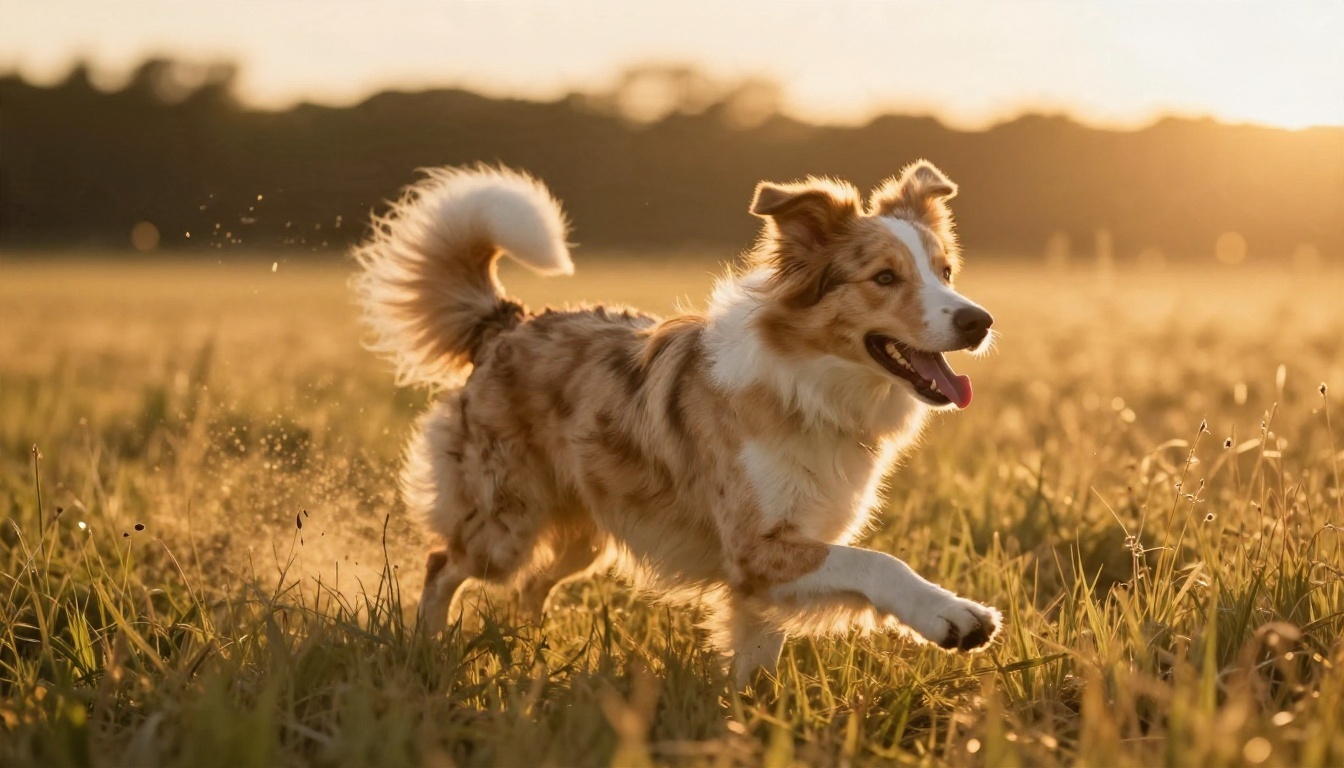
Action shots are the hardest to catch in real life and one of the easiest to describe in a prompt. Think of a dog mid-sprint, ears flying, backlit by the setting sun.
What makes it work:
- A low camera angle at grass level makes the dog look powerful and fast
- Backlight creates a warm halo around the fur
- A telephoto lens at 135mm with f/2.8 melts the background into soft color
- Small particles like seeds and dust in the air add realism
Prompt direction: Border collie running through tall golden grass at sunset, low-angle shot, backlit golden hour light, 135mm f/2.8, seed particles in the air, realistic fur texture.
Cozy Home Lifestyle
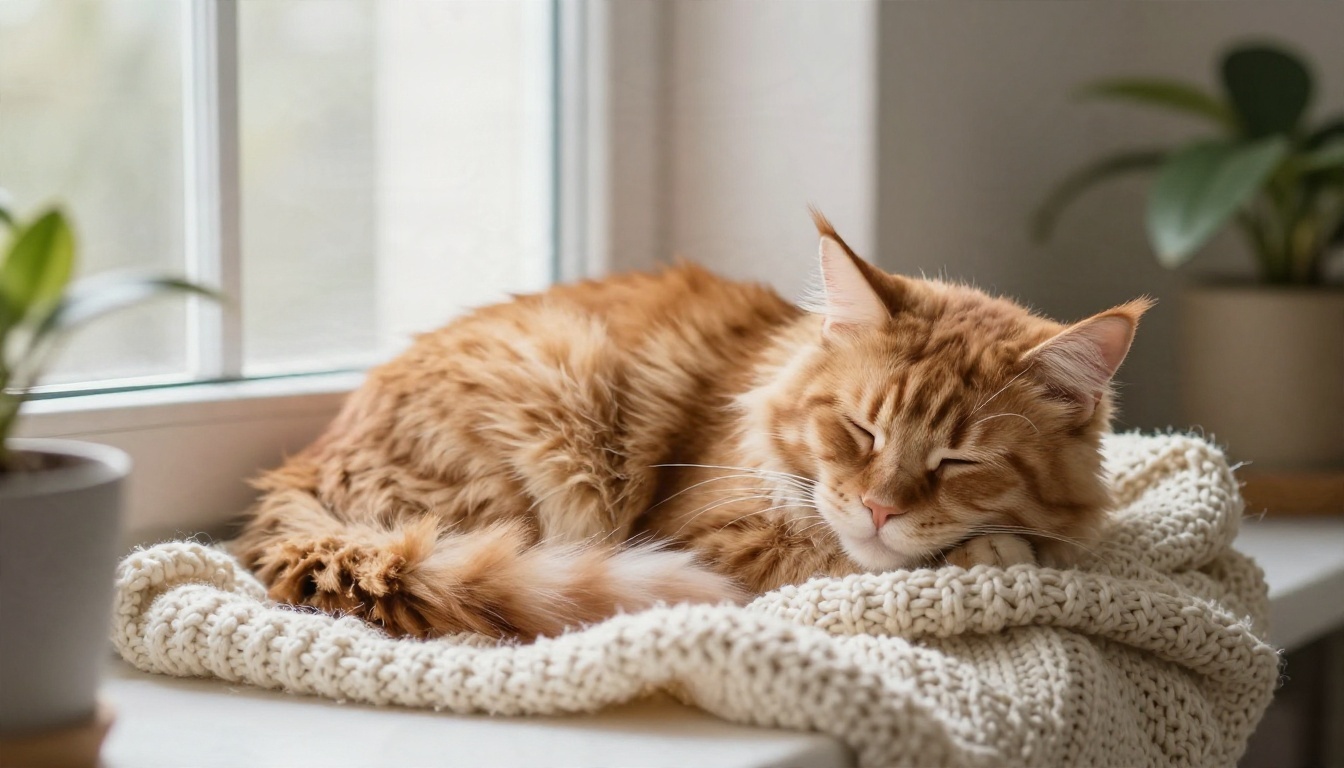
Not every portrait needs a costume. A sleeping cat on a knit blanket in morning light is the kind of image people hang above a sofa. It feels honest and calm.
What makes it work:
- Soft, diffused window light from one side
- Textures that invite touch: knit wool, long fur, linen
- An overhead three-quarter angle that shows the full curl of the body
- A blurred houseplant or shelf behind for depth
Prompt direction: Ginger Maine Coon asleep on a cream knitted blanket beside a sunny window, overhead three-quarter angle, soft morning light from the left, 50mm f/1.8.
Winter and Seasonal Scenes
Holiday cards and seasonal gifts are where pet portraits shine. A puppy in a tiny beanie and scarf, with snowflakes on its whiskers, is hard to resist.
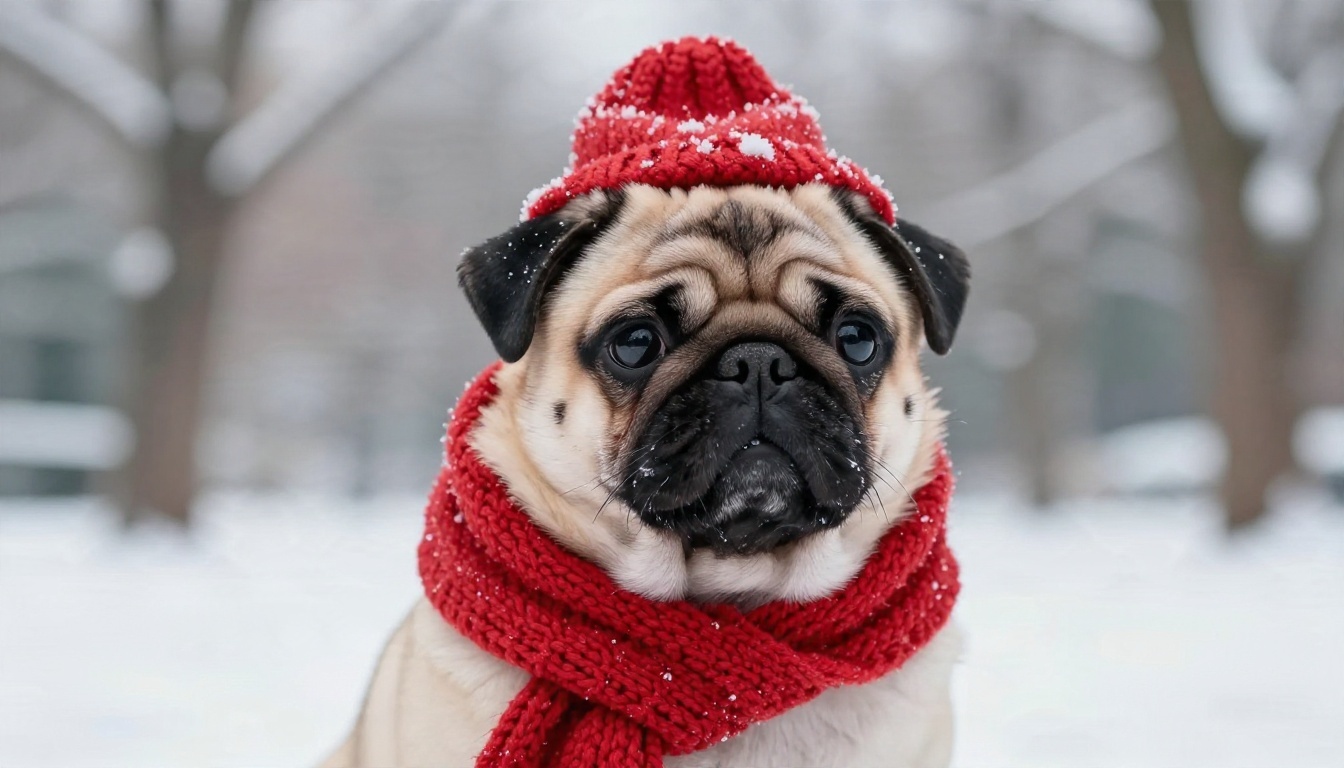
What makes it work:
- Soft overcast light is flattering and avoids harsh shadows on white snow
- Small accessories (a beanie, a scarf, a ribbon) read clearly even at card size
- Eye-level framing builds a connection with the viewer
- Snowflakes landing on fur add a believable detail
💡 Seasonal ideas: autumn leaves and a mustard scarf, spring flowers in a wicker basket, summer sunglasses by a pool, Halloween pumpkins with a small witch hat.
Memorial Portraits for Senior Pets
This is the most emotional use of AI pet portraits. A senior dog with a gray muzzle and soft eyes, resting in warm light, can become a lasting tribute.
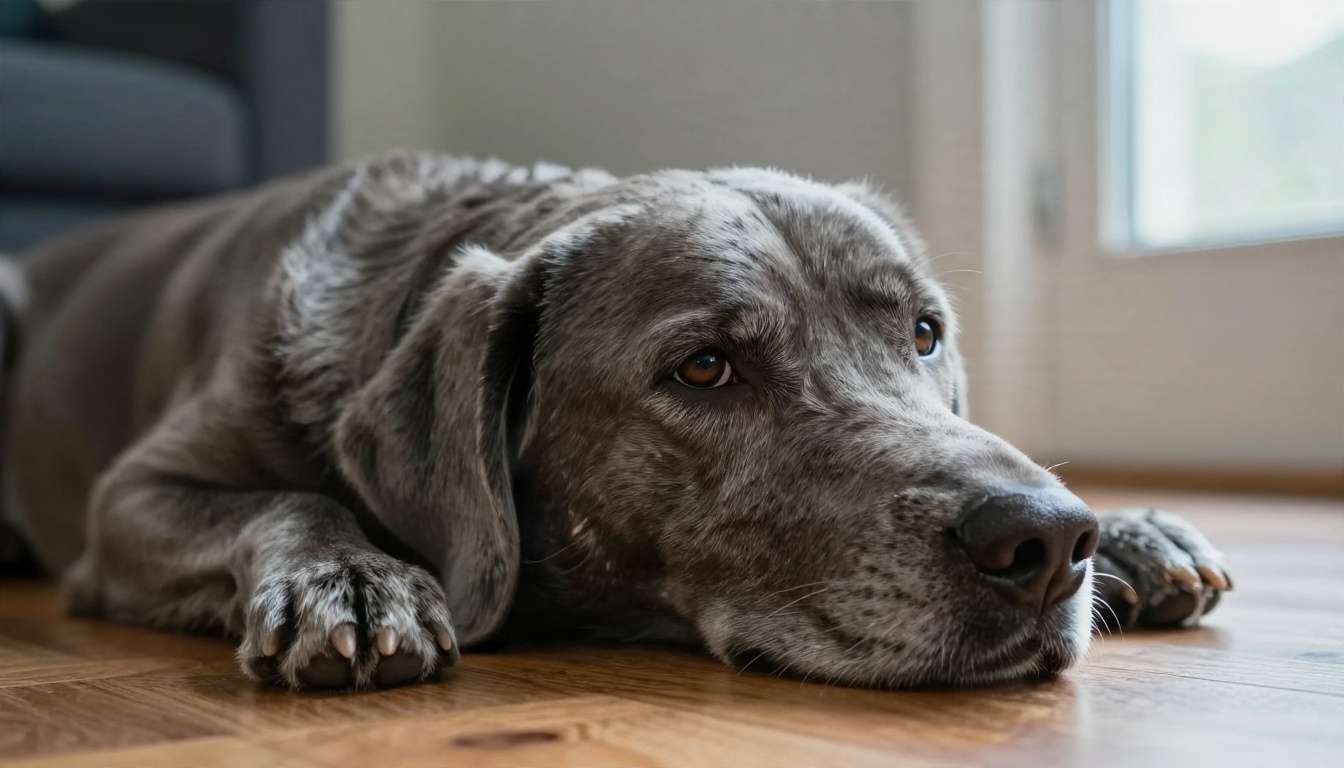
What makes it work:
- A floor-level close-up places the viewer right next to the dog
- Extremely shallow depth of field (f/1.4) keeps attention on the eyes
- Gray whiskers and fur detail tell the story of a long life
- Warm window light feels gentle, never dramatic
Tip: For memorial pieces, use a real photo of your pet as a reference in an editing model such as Nano Banana. It keeps markings, ear shape and coat color closer to the animal you remember.
Owner and Pet Together
A portrait of you with your pet is one of the most requested ideas, and one of the most meaningful gifts for family members.
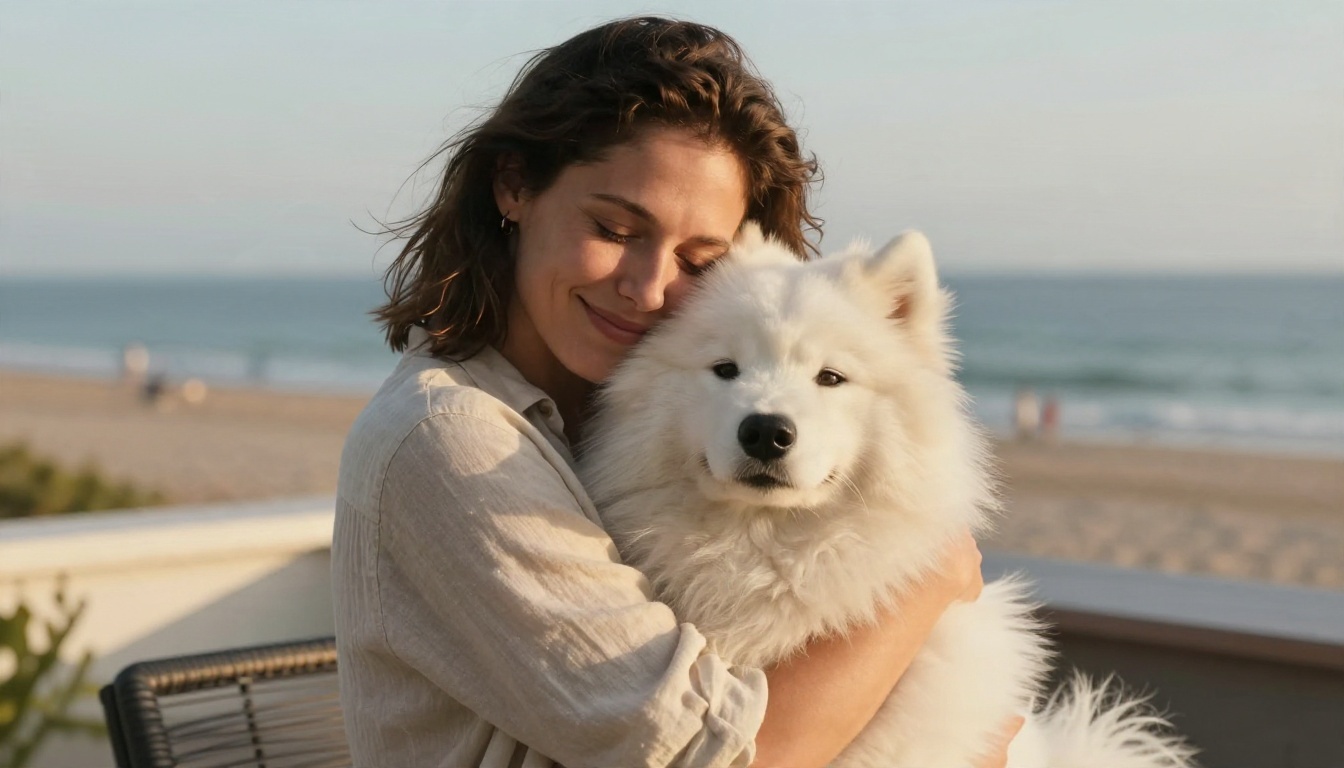
What makes it work:
- A natural hug or a head resting on a shoulder feels warmer than a stiff pose
- Late afternoon light from one side gives skin and fur a warm glow
- A 35mm lens keeps both subjects in focus with a bit of environment
- Neutral clothing, like linen or cotton, keeps attention on the faces
Minimal Studio Look
If you prefer calm and modern, a clean studio look with soft colors suits contemporary homes and rental apartments where bold art would feel too heavy.
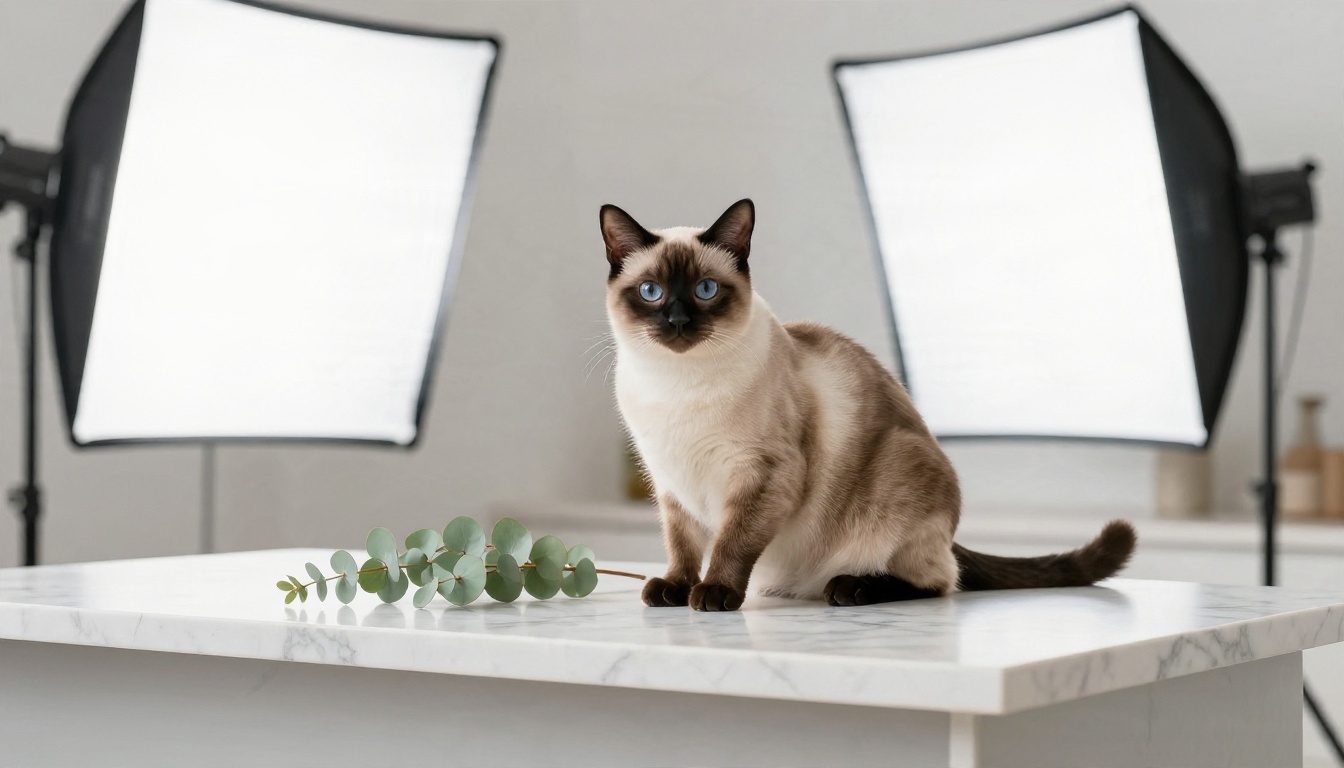
What makes it work:
- A limited palette, here cream, sage and marble white
- Soft, even light from a large softbox
- One simple prop, like a eucalyptus sprig, instead of many
- Lots of negative space for a framed print
Dog and Cat Duos
Households with both a dog and a cat have a built-in story. A duo portrait shows friendship, rivalry or sheer tolerance, and it makes people smile.
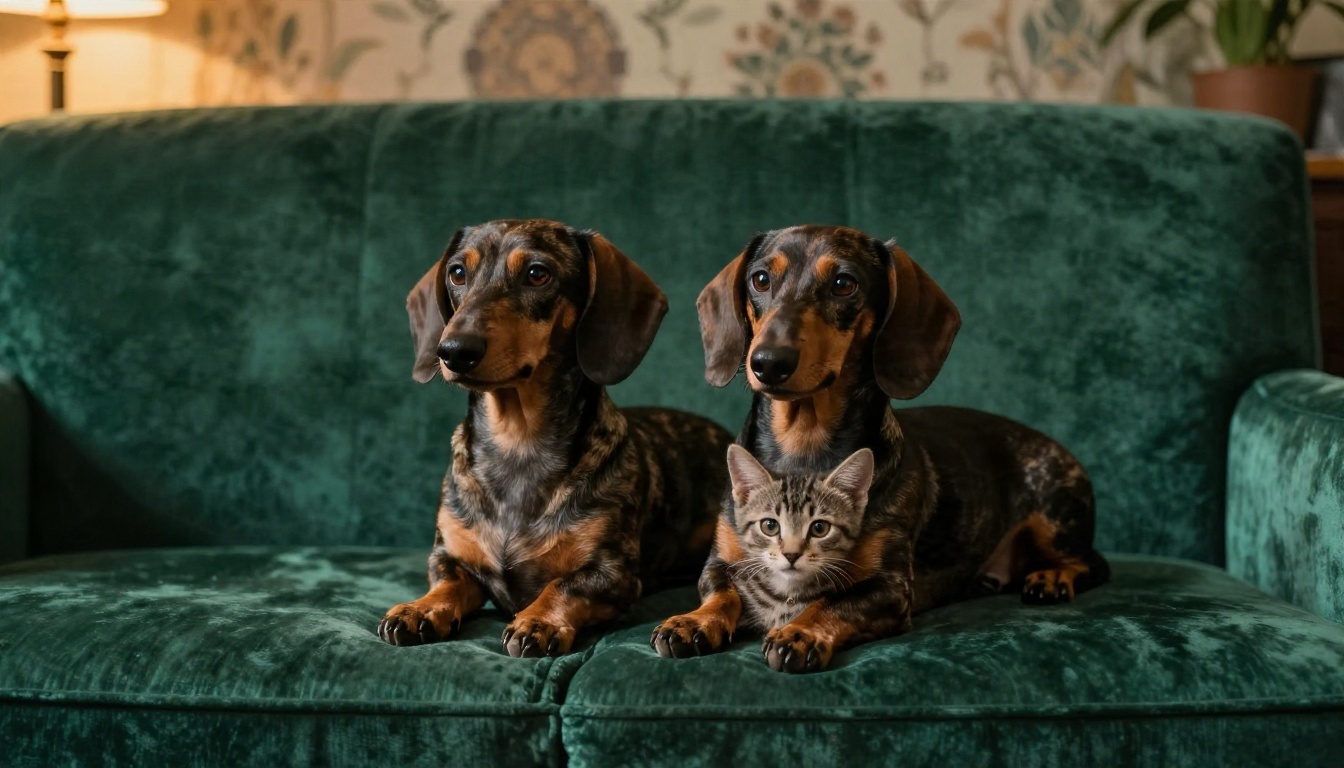
What makes it work:
- A shared prop like a velvet sofa ties the two animals together
- Different sizes and coat textures create visual rhythm
- Warm lamp light from one side adds a cozy evening feel
- A slightly elevated angle shows both faces clearly
After testing dozens of variations, the same structure keeps producing the best results. It has five parts, and each one controls something specific.
The Five-Part Structure
| Part | What it controls | Example |
|---|
| 1. Subject | Breed, coat, age, expression, pose | Senior gray-muzzled labrador resting its head on the floor |
| 2. Outfit or props | Costume, blanket, scarf, background object | Cream knitted blanket, eucalyptus sprig |
| 3. Setting | Room, outdoor location, backdrop | Wood-paneled study, snowy park, marble counter |
| 4. Light | Direction, softness, time of day | Soft window light from the right, golden hour backlight |
| 5. Camera | Lens, aperture, angle, film look | 85mm f/1.8, eye-level, Kodak Portra 400 grain |
If a result looks wrong, find which of the five parts is vague and rewrite only that one. Most weak portraits come from skipping parts 4 and 5.
Words to Add and Words to Skip
Add these for realism:
- Individual strands of fur, whiskers catching the light, damp nose texture
- Shallow depth of field, natural film grain, soft directional light
- A specific lens like 50mm, 85mm or 100mm macro
Skip these if you want a photographic look:
- Digital art, illustration, 3D render, cartoon
- Glowing, neon, hyper-detailed fantasy
- Long lists of unrelated adjectives, because they pull the image in different directions
Ready-to-Paste Prompts
Copy any of these, then swap the breed, color or setting for your own pet.
For dogs:
- Golden retriever sitting proudly in a burgundy velvet cape, dark olive drape behind, soft window light from the left, 85mm f/1.8, individual strands of golden fur, film grain.
- Corgi sitting on a wooden pier at sunrise, low-angle view, warm backlight, 70mm f/2.8, sea mist in the background, damp nose and sharp whiskers.
- Beagle puppy asleep in a woven basket with a cream wool blanket, overhead angle, soft diffused light, 50mm f/2, realistic fabric texture.
- Husky with pale blue eyes standing in a snowy pine forest, eye-level, overcast light, 135mm f/2.8, frost on the fur.
For cats:
- Tabby cat sitting on a dark oak table, green eyes, folded linen cloth, Rembrandt light from the left, 85mm f/1.8, fine whisker detail.
- White Persian cat on a gray velvet cushion, soft studio light from a large softbox, 100mm f/2.8, long fur with visible tufts.
- Bengal cat walking along a garden wall at golden hour, side angle, 135mm f/2.8, spotted coat with warm highlights.
- Orange kitten peeking out of a paper bag on a wooden floor, low-angle, soft morning light, 35mm f/2, curious expression.
💡 Pro move: Always name the breed AND the coat color. Tabby is vague. Brown mackerel tabby with white chest and green eyes gives the model something concrete to draw.
How to Use Seedream 4.5 on PicassoIA
For realistic pet fur and lighting, Seedream 4.5 is a strong first choice. It handles fine texture, natural skin and fur tones, and accurate prompt following. Here is the full flow.
- Open the model page. Go to the Seedream 4.5 page on PicassoIA and open the generator.
- Paste your prompt. Use the five-part structure: subject, outfit, setting, light, camera. Keep it between 50 and 120 words.
- Choose a 16:9 or 3:2 ratio for landscape prints and website headers, or a 4:5 or 2:3 ratio for framed vertical art.
- Set a high resolution. Use the highest size available, since pet fur benefits from extra pixels.
- Generate a batch. Create four to eight variations from the same prompt, because small changes in pose and expression can be big.
- Pick the best and refine. Change only one part of the prompt per round, such as the light or the lens, and generate again.
- Save your favorite. Download it and move on to upscaling or background changes if you need them.
Alternatives worth testing on PicassoIA:
Fixing Common Pet Portrait Problems
Even good models slip sometimes. These are the issues you will meet most often, and what to change.
Fur looks plastic or too smooth. Add individual strands of fur, natural film grain and realistic coat texture. Remove words like perfect and flawless, because they push the model toward polished, artificial surfaces.
Eyes look flat or mismatched. Describe the eye color and the light reflection: warm amber eyes with a soft window reflection. Use a close-up lens like 85mm or 100mm so the model gives the eyes more detail.
Wrong number of paws or odd anatomy. Simplify the pose. A sitting or lying animal is far more reliable than a running or jumping one. For action shots, generate a larger batch and pick the best.
The pet does not look like yours. Use a reference image with an editing model and describe the unique markings: white blaze on the forehead, one brown ear, one black ear. Short, specific markings beat long vague descriptions.
Costume looks painted on. Describe the fabric and how it sits on the body: velvet cape with visible pile, small gold clasp, folds resting on the shoulders.
Background steals attention. Add shallow depth of field and softly blurred background, or choose a plain backdrop like velvet, marble or a seamless studio wall.
Polish and Print Your Results
A good generation is only the start. A little post-work makes the difference between a nice image and a wall-ready portrait.
Upscale for Large Prints
If you plan to print on canvas or a large poster, run your favorite image through Real ESRGAN to upscale it up to 4x. Fur detail stays sharp and clean, which matters at 24 by 36 inches or larger.
Swap or Remove the Background
Want your pet on a plain white background for a mug, sticker or card? Use Remove Background to get a clean cutout, then place it on any color or scene you like. This is also handy for merchandise and pet-brand mockups.
💡 Print checklist: upscale first, crop to the frame ratio second, and check the eyes at 100% zoom before ordering. If the eyes are sharp, the rest will look great.
Make Your Own Pet Portrait Today
You now have nine styles, a five-part prompt formula and a list of fixes. The best way to improve is to try it with your own animal. Start with the style that matches your pet's personality: a regal pose for the proud one, golden hour for the energetic one, a cozy blanket for the sleepy one.
Open PicassoIA, pick a model like Seedream 4.5, paste one of the prompts above and swap in your pet's breed and coat color. Generate a batch, change one detail at a time, and keep the versions that feel like them. Within a few rounds, you will have a portrait worth framing, and probably a dozen more you will want to make for friends.


