Podcasting used to require a full production team. Today, a single creator with the right AI tools can record, edit, transcribe, generate music, and publish a polished episode in the same afternoon. The tools are no longer experimental. They work. And the gap between podcasters who use them and those who don't is widening fast.
This roundup breaks down the best AI tools for podcasters in 2027 across four critical categories: voice generation, transcription, music creation, and workflow automation. Whether you run a solo show or manage a network, these tools will change how you work.
The Real Shift in Podcasting Right Now
The average podcast listener consumes 7+ hours of content per week. But most independent podcasters hit the same ceiling: production time. Writing show notes, editing filler words, creating intro music, translating episodes for international audiences. These tasks used to eat 10-15 hours per episode.
AI has collapsed that timeline. Transcription that once took days is instant. Voice-overs that required booking a studio now take 30 seconds. Intro music that cost hundreds in licensing is now generated on demand from a single text prompt.
💡 Pro tip: The biggest ROI for most podcasters is in AI transcription, followed closely by AI voice generation. Start there before moving to music tools.
AI Voice Generation: Sound Like a Pro
Voice is the core of podcasting. Whether you need to narrate a script, create a second host voice, produce ad reads, or generate language dubs for international audiences, AI text-to-speech models have reached a level of realism that is genuinely hard to distinguish from recorded human speech.
ElevenLabs V3
ElevenLabs V3 is the most capable voice model available to podcasters right now. It handles emotional nuance, pacing variation, and long-form narration with a consistency that earlier models could not. Feed it a 3,000-word script and it returns a full narration that sounds like a seasoned broadcaster, not a robot.
What makes it stand out:
- Natural breath patterns at sentence ends
- Emotional range from clinical to warm without extra prompting
- Handles technical jargon without mispronunciation
For producing polished ad reads, narrated intros, or full episodes from scripted text, V3 is the standard.
ElevenLabs Flash v2.5
For podcasters who prioritize speed over maximum fidelity, Flash v2.5 delivers near-instant voice generation across 32 languages. It's the right tool for batch-generating episode summaries, social media clips, or quick voiceover patches during editing.
Minimax Speech 2.8 HD
Minimax Speech 2.8 HD targets studio-quality output with very low audio artifacts. For podcast ads that need to sound indistinguishable from a human recording, this model produces results that hold up even under headphone scrutiny. Particularly strong on prosody, the natural rise and fall of spoken sentences.
PlayHT Play Dialog
PlayHT Play Dialog is purpose-built for multi-speaker conversations. If you're producing a scripted interview format, a two-character debate episode, or audio drama content, Play Dialog lets you assign distinct voices to each speaker and render the full dialogue in one pass. No stitching multiple audio files together in post.
TTS models at a glance:
Resemble AI Chatterbox
Resemble AI Chatterbox brings emotional control to AI voice generation. You can dial in intensity, inject specific tones like excited, contemplative, or urgent into different segments, and clone a voice from a short audio sample. For podcasters who want to maintain their own voice for dubbed versions without re-recording everything, Chatterbox's voice cloning is remarkably accurate.
Minimax Voice Cloning
Minimax Voice Cloning lets you build custom AI voices from your own recordings. The practical use case: record your podcast once in English, then generate Spanish, Portuguese, and French versions in your cloned voice for international distribution, without hiring voice actors.
How to Use ElevenLabs V3 on PicassoIA
ElevenLabs V3 is available directly on PicassoIA. No separate subscription required. Here's how to use it for podcast production:
Step 1: Open the model page
Go to the ElevenLabs V3 model page on PicassoIA.
Step 2: Paste your script
Enter your episode narration, ad read, or intro script in the text input. V3 handles long-form input well, so you can paste an entire segment rather than breaking it into short sentences.
Step 3: Choose a voice
Select from the available voice presets. For podcast narration, voices with a lower pitch and moderate warmth tend to hold listener attention across long sessions.
Step 4: Adjust the parameters
- Stability: Higher values (70-80%) produce a consistent tone. Lower values add natural variation.
- Similarity: Controls how closely the output matches the source voice. Values above 75% produce professional results.
- Style Exaggeration: Use sparingly (10-20%) to add character without sounding theatrical.
Step 5: Generate and download
Hit generate, listen through for any mispronounced words or pacing issues, then download. For specific mispronunciations, use the phonetic override before exporting your final file.
💡 Best practice: For episode intros, use a slightly higher style exaggeration (25-30%) to create a more energetic feel that hooks listeners in the first 10 seconds.
AI Transcription That Saves Hours
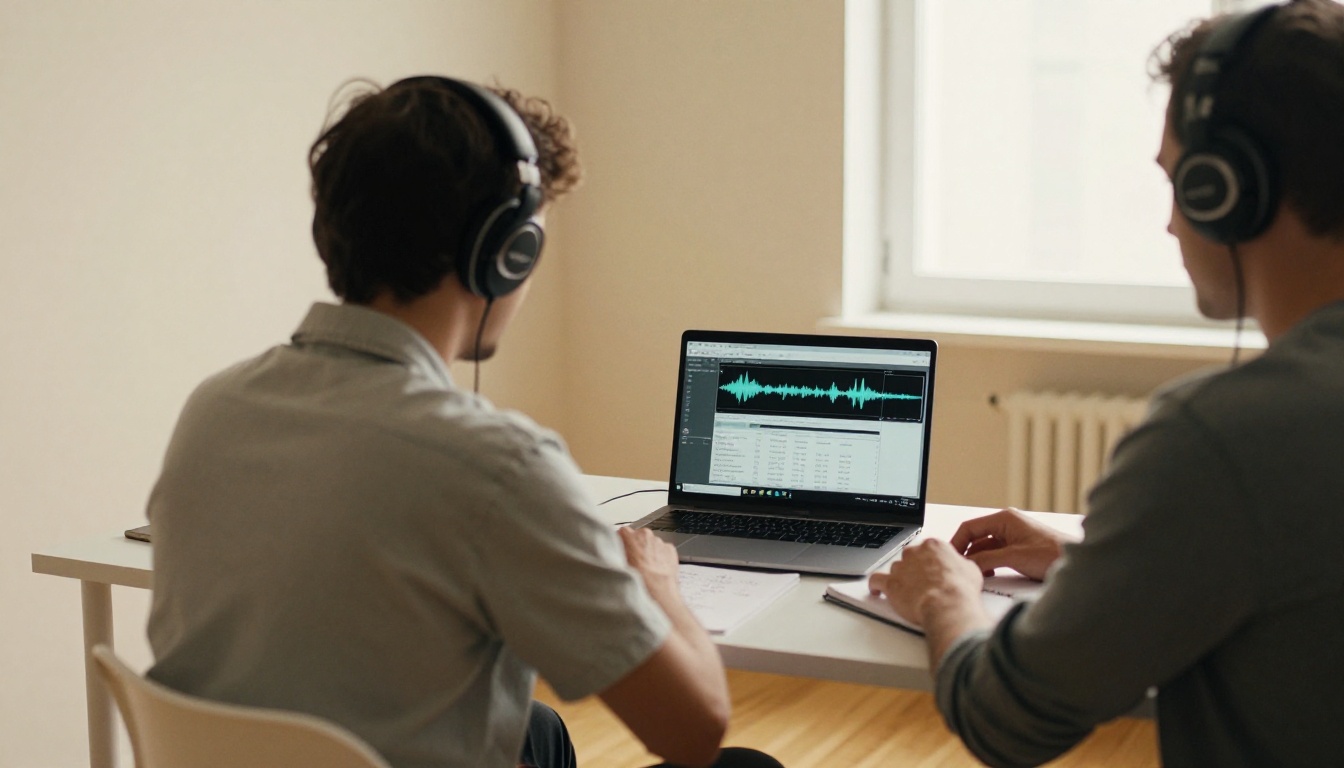
Every podcast episode produces a transcript that can become show notes, blog posts, social captions, email newsletters, and SEO content. Manual transcription at $1.50/minute for a 45-minute episode costs $67. AI transcription returns results in under two minutes.
GPT-4o Transcribe
GPT-4o Transcribe from OpenAI is the most accurate transcription model available to podcasters today. It handles crosstalk between multiple speakers, technical vocabulary, accents, and filler words with precision that manual transcriptionists often miss.
What you can do with the transcript:
- Show notes: Feed the transcript to a language model and get structured show notes with timestamps in minutes.
- Blog posts: Raw transcripts become article drafts with minimal editing.
- Social clips: Pull the highest-energy quotes directly from the transcript.
- SEO: Transcripts published on your site create enormous long-tail keyword surface area.
GPT-4o Mini Transcribe
GPT-4o Mini Transcribe is faster and more cost-efficient. For shorter content, teasers, or quick social clips, it delivers solid accuracy at higher speed. Not recommended for full-length episodes with heavy crosstalk, but excellent for solo-host shows.
Google Gemini 3 Pro
Gemini 3 Pro from Google stands out for multilingual episodes and mixed-language conversations. If your podcast serves an international audience or you regularly interview guests with diverse linguistic backgrounds, Gemini 3 Pro's accuracy holds steady where other models degrade.
Transcription model comparison:
AI Music for Intros, Outros, and Segments
Podcast music sets the tone of your entire brand. A weak intro kills listener retention in the first 10 seconds. A memorable, professionally produced theme makes your show feel like it belongs in the top charts. AI music generation now puts studio-quality podcast music in reach for every creator.
Google Lyria 3 Pro
Google Lyria 3 Pro is the most sophisticated AI music model currently available. It produces full-length, broadcast-quality tracks from text prompts with remarkable tonal consistency. For podcast intros, tight punchy tracks in the 15-30 second range are its sweet spot.
Sample prompts that produce solid podcast intros:
- "Upbeat corporate pop intro, bright piano lead, light percussion, 20 seconds, professional broadcast quality"
- "Dark investigative journalism theme, deep bass, minimal piano, tense atmosphere, 25 seconds"
- "Warm conversational morning show theme, acoustic guitar, gentle strings, friendly energy, 20 seconds"
ElevenLabs Music
ElevenLabs Music excels at producing vocal-forward tracks and branded musical beds. For podcasters who want background music that doesn't compete with speech, it generates instrument-only tracks with exceptional control over energy levels and mood dynamics. Output is royalty-free, which matters for monetized podcasts on platforms that copyright-check audio.
Stability AI Stable Audio 2.5
Stability AI Stable Audio 2.5 produces longer, more dynamic compositions. Where Lyria 3 Pro is best for short punchy intros, Stable Audio 2.5 excels at 60-90 second segment music, transition bumpers, and episode background tracks. Its control over BPM, key, and instrumentation is granular enough to match your existing brand sound precisely.
Minimax Music 2.6
Minimax Music 2.6 lets you generate full songs with lyrics. For podcasters who want to produce branded single tracks for their show, it delivers pop structure, verse-chorus format, and commercial-ready production quality. A proper branded theme song is a tangible brand asset, and Music 2.6 makes one achievable without a music production budget.
The real power of AI for podcasters is not any single tool. It's how they chain into a production workflow that eliminates bottlenecks:
1. Script to episode
Write a script. Paste it into ElevenLabs V3 for narration. Add a custom intro from Google Lyria 3 Pro. Publish.
2. Interview episodes
Record the raw interview. Run it through GPT-4o Transcribe for a full transcript. Edit the transcript, not the audio. Use the cleaned transcript to generate show notes and social clips automatically.
3. International distribution
Clone your voice with Minimax Voice Cloning. Translate your script. Generate dubbed episodes in Spanish, Portuguese, or French in your own cloned voice. Reach 4x the potential audience without 4x the recording time.
4. Ad production
Write three ad scripts for your sponsor. Generate reads with Minimax Speech 2.8 HD in different tones. A/B test them. Find the highest-converting read in a week without a single studio session.
5. Social content pipeline
Every episode transcript from GPT-4o Transcribe feeds into a content repurposing pipeline: pull the 5 best quotes, generate short audiogram clips, write a thread, write a LinkedIn post. One recording session produces two weeks of social content.
What Most Podcasters Still Get Wrong
Even with access to excellent tools, most podcasters make the same mistakes when adopting AI into their workflow:
Over-relying on a single tool. The podcasters seeing the biggest time savings combine transcription, TTS, and music generation into a full pipeline. Using just one tool keeps you at 20% of the potential efficiency gain.
Skipping the editing pass. AI transcription is accurate, but not perfect. AI voice generation is realistic, but not infallible. A 10-minute review pass before publishing catches the 2-3% error rate that would embarrass you in front of your audience.
Not testing for your audience. Older listeners are often more sensitive to AI voice artifacts than younger listeners. Technical podcast audiences will notice subtle audio quality issues that casual listeners won't. Know your audience before deploying AI narration at scale.
Ignoring music licensing. When using AI-generated music, confirm the platform provides royalty-free commercial licenses. All models on PicassoIA produce royalty-free output, which matters if your podcast earns ad revenue.

Where to Start Without Getting Overwhelmed
Start with what breaks your current workflow. For most podcasters, that's one of three things:
- Transcription: If you're spending hours manually transcribing or paying expensive rates for human transcription, GPT-4o Transcribe solves this immediately.
- Voice production: If you're writing scripts but don't want to record them, or need ad reads without re-recording for every sponsor rotation, ElevenLabs V3 is the entry point.
- Music: If your current intro is royalty-free stock from years ago, Google Lyria 3 Pro can generate something that actually sounds like your brand.
Pick the one that matters most. Spend a week with it. Then add the next.
💡 Practical checklist for your first AI podcast workflow:
- Record or write your episode content
- Transcribe with GPT-4o Transcribe
- Generate show notes from the transcript
- Use ElevenLabs V3 for additional narration or ad reads
- Generate intro/outro music with Google Lyria 3 Pro
- Pull 3-5 quotes from the transcript for social clips
Try It on PicassoIA
Every tool in this article is accessible through PicassoIA without managing separate subscriptions across five different platforms. Text-to-speech, transcription, and AI music generation are all in one place, ready for production use.
The fastest way to see what these models can do for your podcast is to run a real production task: paste your actual intro script into ElevenLabs V3, transcribe a real episode clip with GPT-4o Transcribe, and generate a real intro track with Google Lyria 3 Pro.
Real output from your real content will tell you more in 20 minutes than any comparison article can. Start creating on PicassoIA and see what your podcast sounds like with the best AI tools available in 2027.


