You made a painting with an AI model, you love how it looks, and a friend says it would sell. Before you upload it to a print shop, there is a fair question to ask: can you actually sell it? The short version is yes, you can sell AI generated paintings as prints, canvas wraps and digital downloads. The longer version is that selling something and owning it are two different things, and the gap between them is where most sellers get into trouble.
This article walks through what the law says right now, what your generator's terms probably allow, how to get files that print well, and which kinds of paintings you should never list. It is general information, not legal advice, and rules differ by country, so treat it as a map and not a verdict.
The Short Answer
Yes, With Conditions
Nothing stops you from putting an AI generated painting on a canvas and selling it to someone who wants it on their wall. Buyers do not need copyright to enjoy a print, and you do not need copyright to sell one. What you need is permission from the tool you used, no borrowed material inside the image, and honesty about how it was made.
The conditions boil down to four checks:
- Your generator's terms allow commercial use.
- The image does not copy a living artist, a brand, a character or a real person.
- The marketplace you sell on accepts AI work and you follow its disclosure rules.
- You are realistic about what protection you have if someone copies your design.

What "Sell" Actually Means
People use the word loosely, so split it into the ways money can change hands. Each one carries different risk.
| Way to sell | What the buyer gets | Main risk |
|---|
| Original physical canvas | One unique object | Low, buyers may ask how it was made |
| Limited edition prints | A numbered set | Edition claims must be honest |
| Open edition prints | Unlimited copies | Easy for others to copy your design |
| Digital downloads | A file to print at home | License wording matters a lot |
| Print on demand products | Mugs, posters, shirts | Marketplace AI rules apply |
| Licensing to a business | Usage rights for a fee | Buyers may ask for ownership proof |
If you are new, physical prints and canvas are the simplest route, because the product is a finished object and the license question is mostly yours to settle.
Who Owns an AI Painting?
What the Courts Decided
In the United States, the question got a clear answer in 2026. The Supreme Court declined to review Thaler v. Perlmutter in March, which leaves in place the rule that a work created entirely by AI, with no human creative contribution, cannot be registered for copyright. The Court did not write an opinion, so it did not say how much human input is enough. It simply let the lower court's human authorship requirement stand.
The Copyright Office has also said that typing a prompt, even a detailed one, is generally not enough by itself to make you the author of what comes out. A separate case involving an image made with Midjourney through hundreds of prompt revisions was still open when I last checked, and its outcome could sharpen the line.
💡 Plain reading: if you press a button and sell the result untouched, expect little or no copyright protection in the US. That does not make selling illegal. It means you probably cannot stop copycats with a copyright claim.
Human Input Is the Dividing Line
The US Copyright Office has signaled that human contribution can still earn protection. The parts that count are the ones you author:
- Selection and arrangement: choosing which outputs to keep and how to compose them into a larger piece.
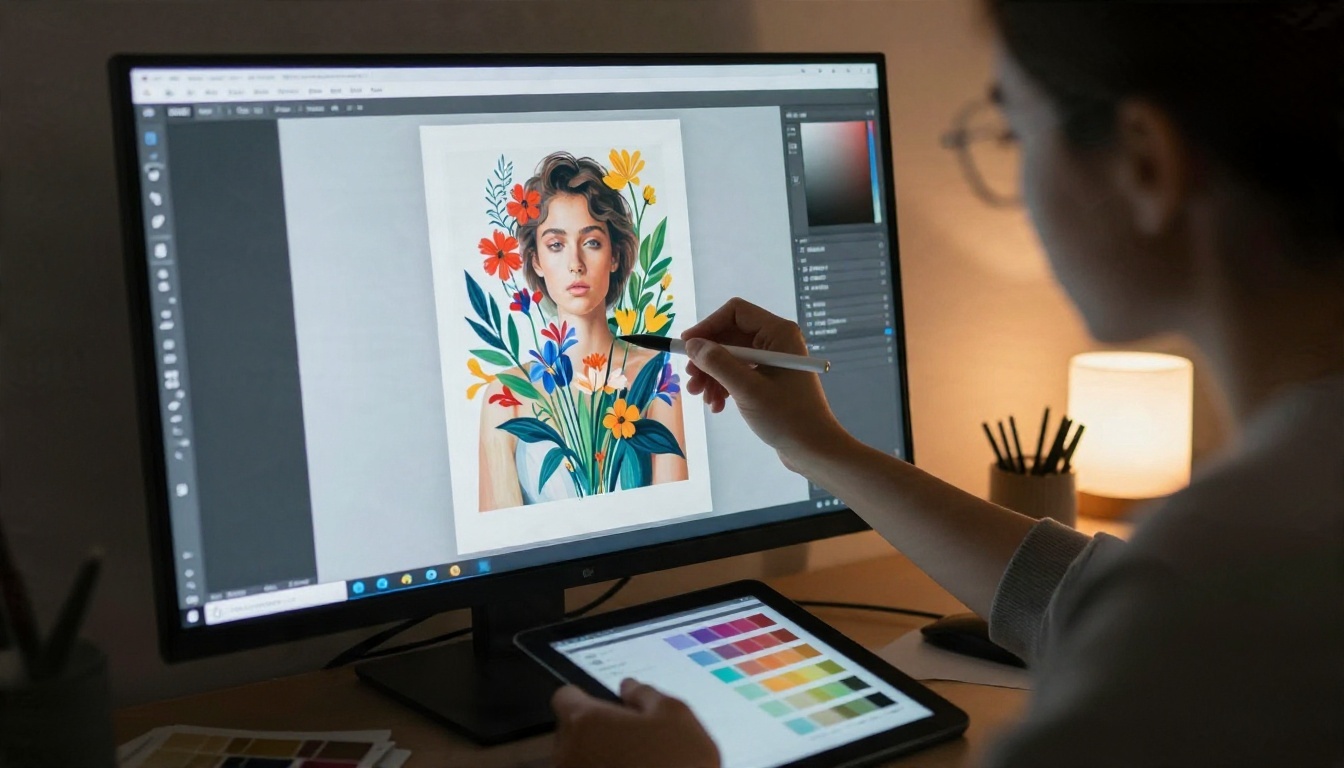
- Modification: painting over, retouching, compositing or editing the image by hand.
- Original inputs: your own sketch, photograph or artwork that the model transforms, where your original material remains visible.
Protection in those cases usually reaches your contribution, not the raw machine output underneath. If you register, you are expected to disclose AI involvement and describe what you did.
Why Weak Copyright Still Lets You Sell
Think of a street vendor selling a photograph of a public landmark. Many people can photograph it, and the vendor still has a business. Your edge is curation, quality, presentation, a consistent series and your audience, not a legal monopoly on a single image.
Other countries differ. The United Kingdom, for example, has a special rule for computer-generated works that has been under review, and several jurisdictions lean toward requiring clear human authorship. If most of your buyers sit outside the US, check local rules before you promise anyone exclusivity.
Check Your Generator's Terms
This is the step people skip. Every image generator sets its own rules about what you can do with outputs. Some give you broad commercial rights on paid plans, some limit free tiers, and some restrict particular uses such as resale as stock or training other models. Read the terms for the exact model and plan you used, and save a copy or a screenshot with the date, because terms change.
When you build a collection, it helps to choose tools you can rely on for commercial work. On PicassoIA you can generate paintings with models such as Seedream 4.5, Nano Banana Pro, Imagen 4 Ultra and Qwen Image 3 Pro. Whatever you choose, confirm the current commercial terms for that model before you list anything.
Licenses You Can Offer Buyers
If you sell digital files, you are not selling ownership. You are selling a license, so spell out what the buyer can do. Short, plain wording beats legal jargon.
| License type | Buyer may | Buyer may not |
|---|
| Personal use | Print for home or gifts | Resell prints or the file |
| Small commercial | Use on a website or in a shop interior | Sell the art as a product itself |
| Extended commercial | Print on products for sale | Claim to have created the original |
| Exclusive | Be the only licensee | Resell the exclusivity |
💡 Tip: never promise that you "own all rights" or that an image is "100 percent original and copyrighted." Say "created with AI tools and edited by me" and let the license describe what the buyer receives.
Prints, Canvas and Digital Files
Resolution Math
Most generators output images far smaller than a wall piece needs. Print shops want roughly 300 pixels per inch at the final size, and large canvases viewed from a few feet away can get by on less. Here is a quick reference.
| Print size | Pixels at 300 PPI | Pixels at 150 PPI |
|---|
| 8 x 10 in | 2400 x 3000 | 1200 x 1500 |
| 16 x 20 in | 4800 x 6000 | 2400 x 3000 |
| 24 x 36 in | 7200 x 10800 | 3600 x 5400 |
| 36 x 48 in | 10800 x 14400 | 5400 x 7200 |
A 4K generation lands near 4000 pixels on the long side, so anything above a small print needs upscaling. Good options on PicassoIA include Real ESRGAN for a free 4x boost, Image Upscale for enlargements up to 6x, Clarity Pro Upscaler for detail rich scenes and Recraft Crisp Upscale for clean lines. Painterly textures hide upscaling artifacts better than photos do, which is one reason paintings suit this market.
Giclee Prints vs Canvas Wraps
Both formats sell well, and they suit different buyers.
- Giclee on cotton rag paper: crisp detail, archival inks, framed behind glass. Best for impressionist scenes, florals and anything with delicate gradients. Price points are usually lower than canvas, and shipping is lighter.
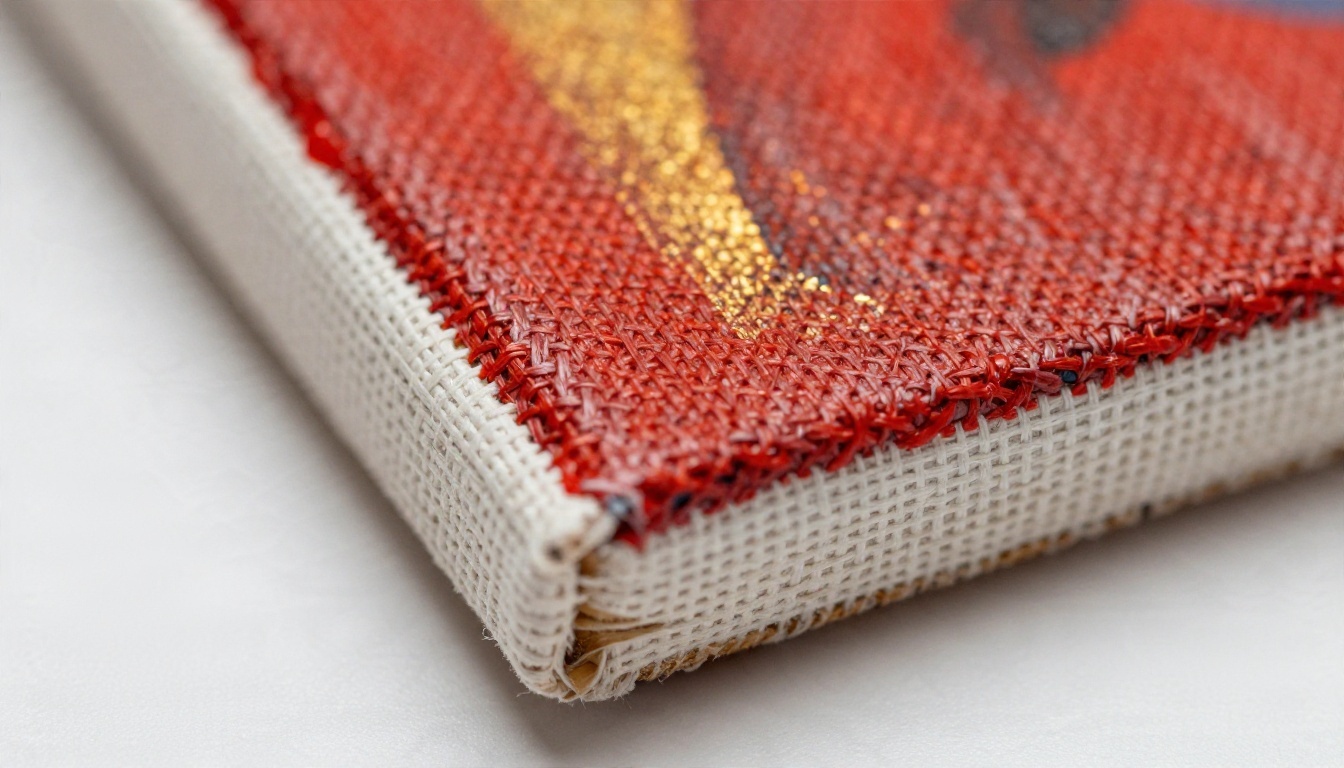
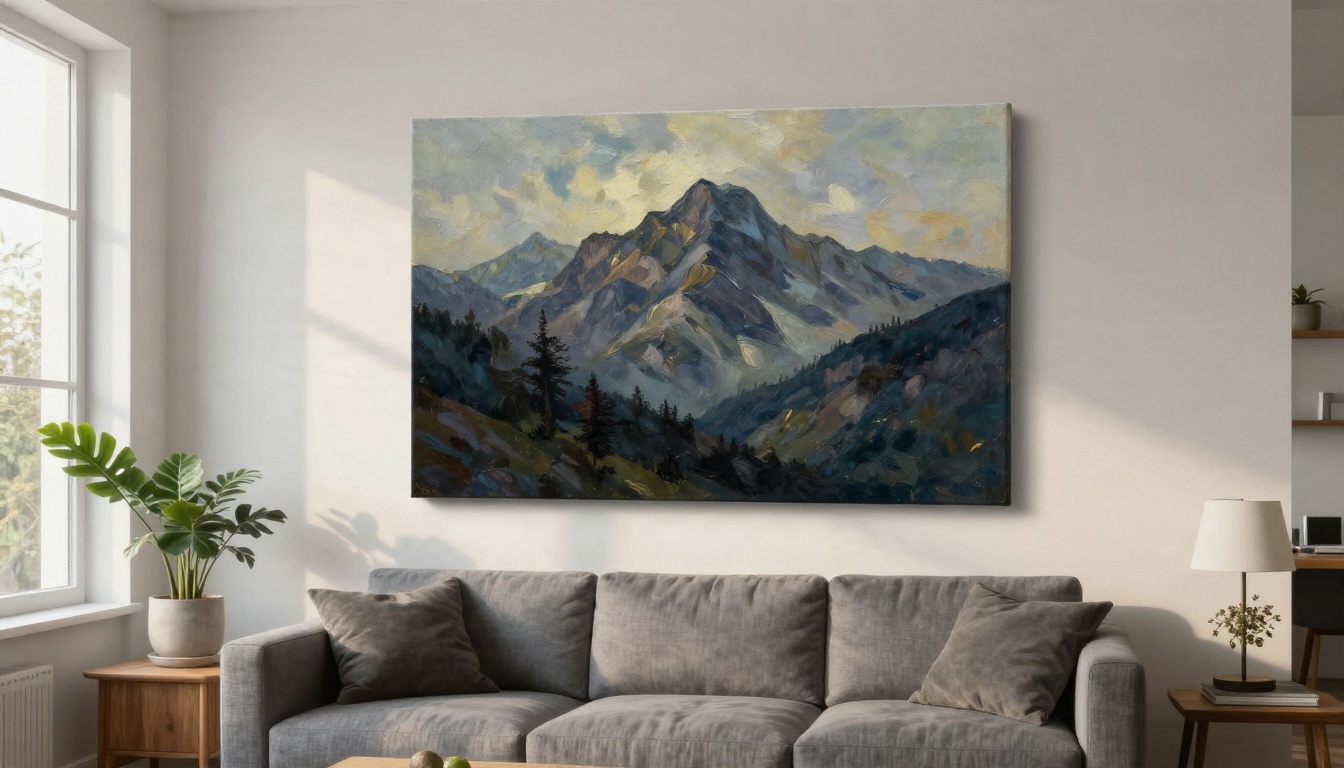
- Gallery wrapped canvas: texture, no frame required, instant wall presence. Best for abstract work, landscapes and bold color fields. The canvas weave adds a hand made feel, which can make an AI painting read as an object and not a screen image.
- Framed originals with a certificate of authenticity: the premium option. Describe the process honestly on the certificate.
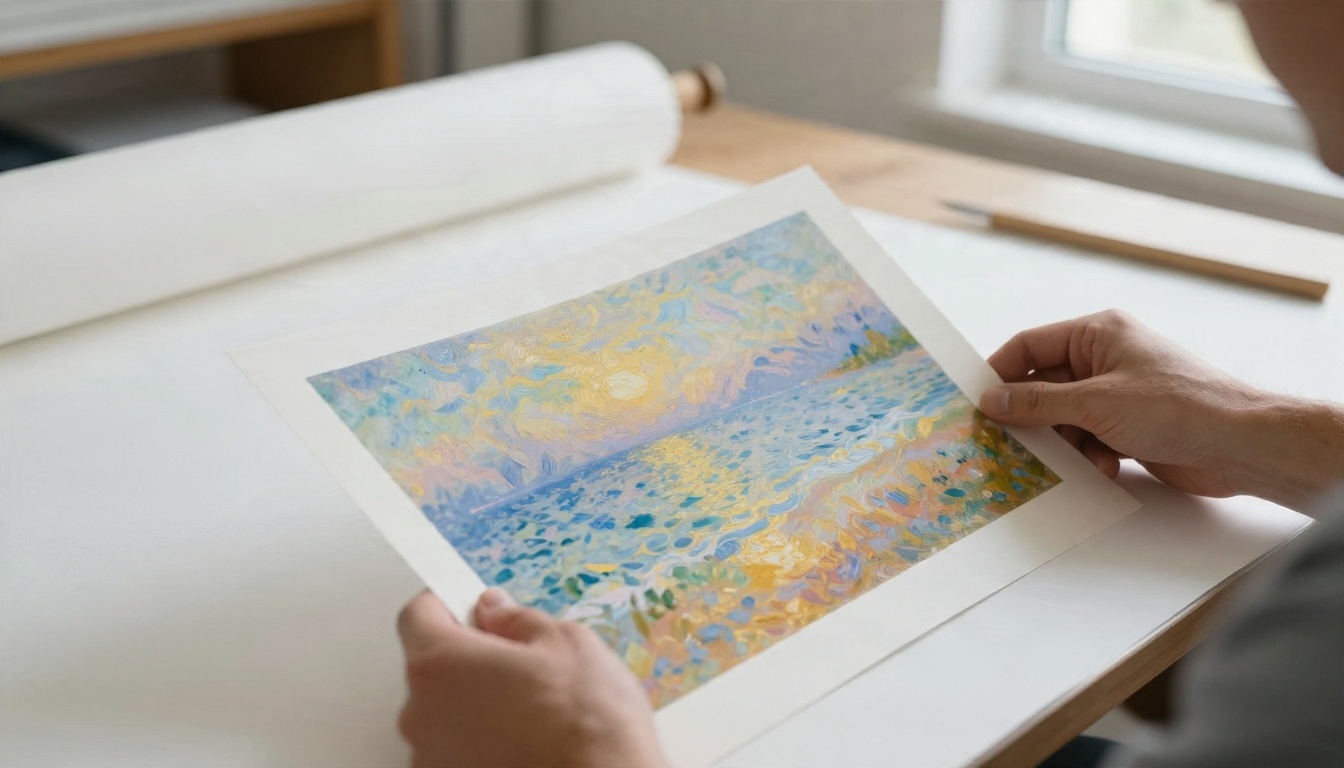
Order a proof print before you list a design. Screens glow and paper does not, so colors that look rich on a monitor can arrive flat and dark. A single proof saves you from returns and refunds.
What You Cannot Sell
Copycats, Brands and Real People
Legal ownership aside, some paintings should never go on sale, no matter how good they look.
- Living artists' names and signature styles: prompting "in the style of" a named living painter and selling the result invites complaints, takedowns and bad press. General styles such as impressionism, baroque or abstract expressionism are fair territory. Specific living individuals are not.
- Trademarks and characters: logos, cartoon characters, film franchises, sports teams and branded products are protected whether or not an AI drew them.
- Real people: a recognizable face of a celebrity or a private person can raise right of publicity and privacy problems in many places.
- Look alike outputs: models sometimes reproduce familiar compositions or watermarks. If an output resembles a known work or carries stray text, discard it.
- Fake provenance: claiming a piece was hand painted when it was generated is misleading, and it is the fastest way to lose a buyer's trust.
💡 Quick test: if you would be uncomfortable showing the image next to its likely source, do not sell it.
Marketplace Disclosure Rules
Online marketplaces and print on demand platforms set their own policies on AI work, and those policies shift often. Some ask you to label AI involvement, some limit what categories you can use, and some restrict certain product types. I could not verify the current wording for specific platforms, so read the seller policy on the day you list and keep your labeling consistent across every channel.
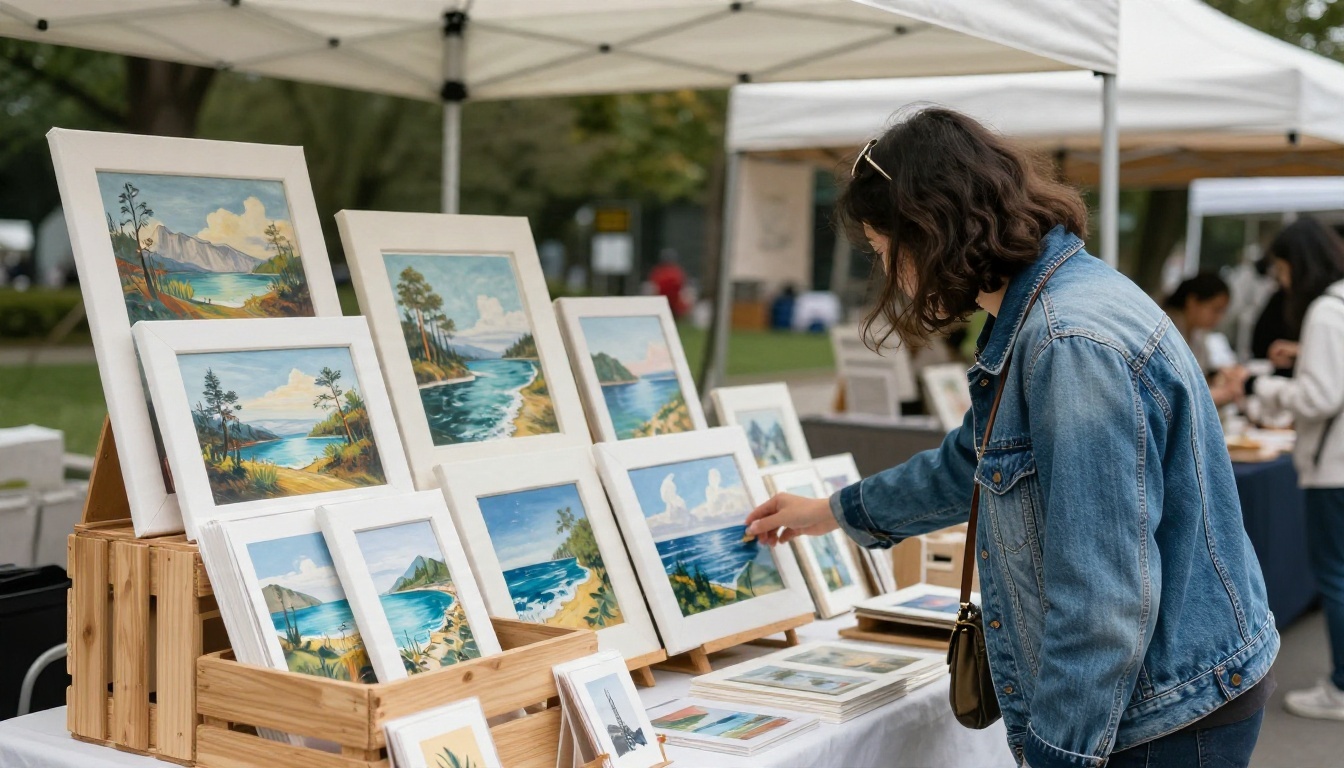
In person sales are a good test bed. Art fairs and craft markets often have their own rules about hand made work, so ask the organizer and say it plainly: "created with AI, finished and printed by me." Most buyers respond to honesty far better than to vague wording.
A Workflow That Holds Up
Generate With Intention
Random generation produces random results. Pick a series theme, such as coastal mornings, desert dusk or botanical studies, and write prompts that name the medium, palette, brushwork and mood. Oil impasto, watercolor wash and gouache each give distinct textures. Generate in batches, then keep only the strongest.
For painterly work, Seedream 4.5 and Imagen 4 give strong detail, while Flux 2 Klein 9B Base LoRA lets you steer toward a particular visual style across a whole series. PicassoIA Image Editor Pro is handy when you need to adjust a result without starting over.
Edit and Document Your Work
This is where you add human authorship, and where you build evidence if you ever need it.
- Save every prompt and every version, including rejected ones.
- Edit by hand: adjust composition, repaint weak areas, fix hands and edges, tweak color.
- Combine your own sketches or photographs where it makes sense.
- Keep dated files showing the progression from raw output to final piece.
Records like these support a registration claim in places that allow it, and they help when a buyer asks how the piece was made.
Upscale and Proof
Upscale to the size your product needs, check edges for artifacts, then order a proof. Review it in daylight, next to the screen, and note differences in color and contrast. Adjust the file, not your expectations.
List, Price and Ship
Write the listing like a person, not a bot. Tell buyers what the piece is, which size and material they are buying, and that it was created with AI and finished by you. Photograph the product in a real room, because mockups that look obviously fake hurt trust.
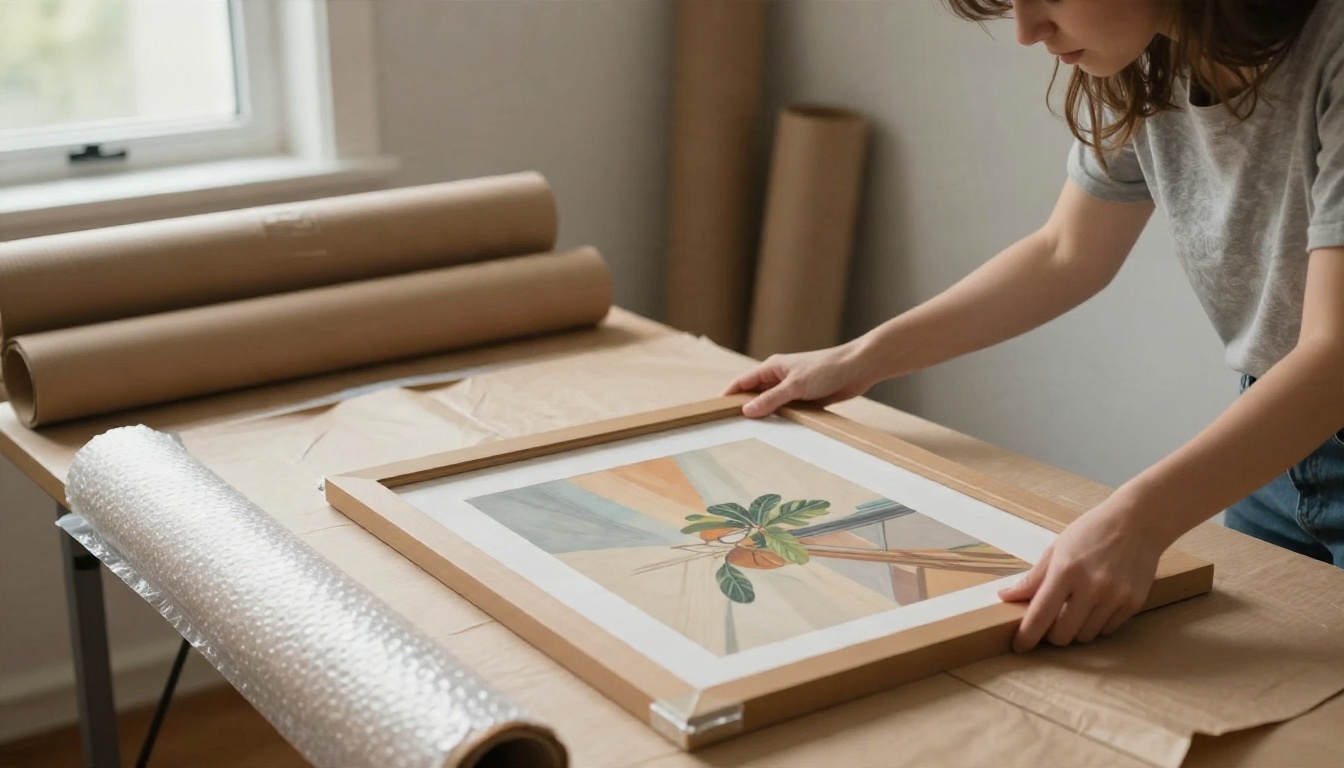
Pack rigid frames with corner protectors, ship canvas in boxes and rolled prints in sturdy tubes. A damaged piece costs more than the shipping you saved.
Pricing and Real Expectations
AI makes creation cheap, so your price should reflect the physical product, the curation and the finish, not the minutes spent generating. Here is a rough way to think about it.
| Product | Typical cost drivers | Pricing logic |
|---|
| Small giclee print | Paper, ink, packaging | Low, aim for volume |
| Large canvas wrap | Canvas, frame bars, shipping | Mid, margin from size |
| Framed original with certificate | Frame, glass, handling | Higher, margin from presentation |
| Digital license | Almost none | Low per sale, scale through catalog |
The honest reality is that the market is crowded. Thousands of sellers list similar AI paintings, so a coherent series, a recognizable look and good photography matter more than any single image. Build a small collection of ten to twenty related pieces, sell a few formats and watch which ones move before you invest in stock.
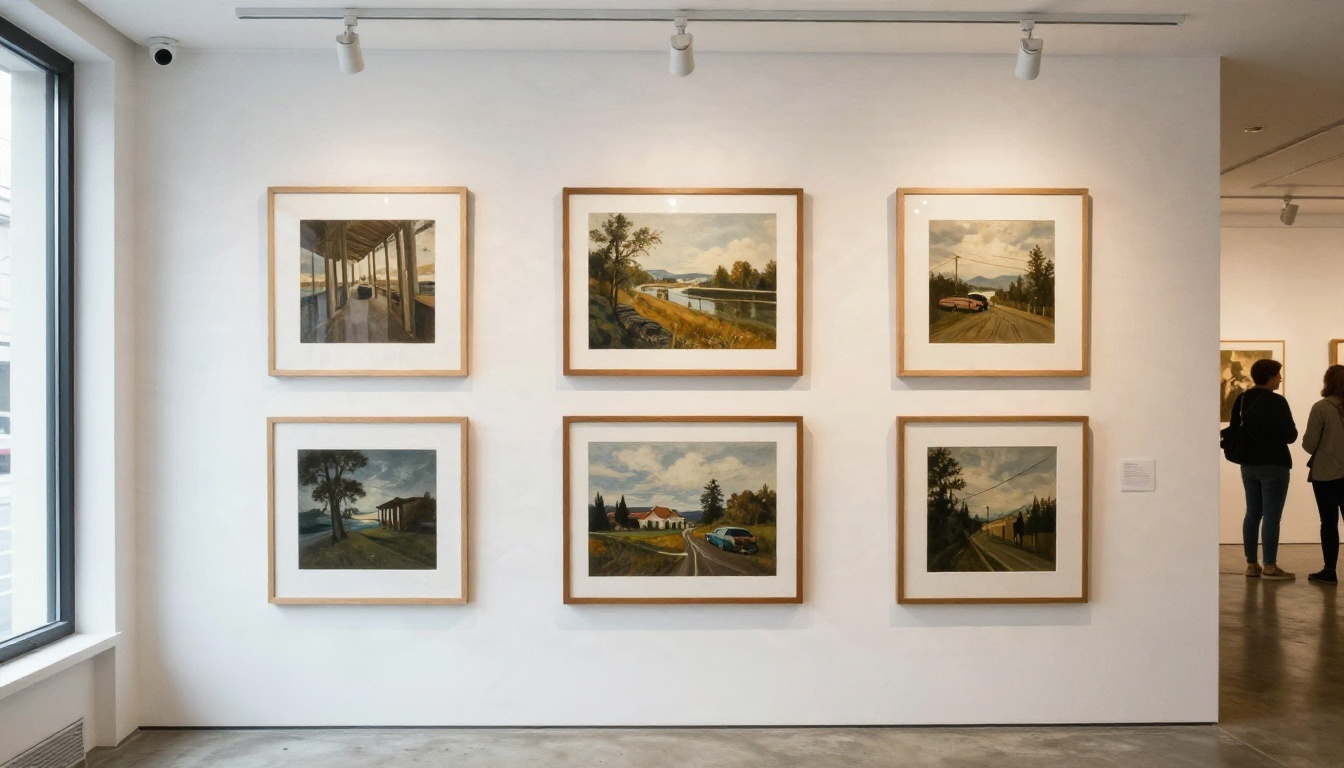
A few things tend to separate shops that last from shops that fade:
- A consistent theme instead of random styles.
- Clear labeling that builds trust.
- Proofed products, not guesses.
- Fast, careful shipping and friendly customer messages.
- Patience, because first sales often take weeks.
Make Your First Collection
Selling AI generated paintings is legal and workable, as long as you respect your tool's terms, avoid borrowed material, label your work honestly and treat copyright as thin protection. The strongest sellers add their own hand to the result, then build a brand around a series people want to hang at home.
The best way to find out is to try. Open PicassoIA, pick a model such as Seedream 4.5 or Nano Banana Pro, write a prompt for your first painting, upscale the best result with Real ESRGAN and order a single proof print. See the full list of tools at picassoia.com/en/all-models, and start your own series today.