Somewhere between a $4 and a $100 price tag per million characters sits the voice your project actually needs, and the gap between those two numbers is bigger than most people expect. A text to speech API looks like a simple utility until the invoice arrives. Then you notice that the same 10,000-word script costs a few cents with one provider and several dollars with another, and that the cheap one sometimes sounds like a GPS from 2012 while the pricey one sounds like a radio host.
This article lays out the numbers in plain terms, shows where the cheap options hold up and where they fall apart, and points to the free tiers that renew every month instead of vanishing after a trial.
💡 Price check: TTS pricing changes often, and the figures below are rounded from public pricing pages and comparison posts seen in late 2026. Always confirm the current rate on the provider's own pricing page before you commit a budget.
What "Cheap" Really Means
Price per million characters
Almost every provider bills by the character, not by the minute or the word. That makes comparison easy once you know the conversion. One million characters is roughly 170,000 words, which is about 18 hours of spoken audio at a normal reading pace.
So when a provider lists $16 per million characters, you are paying roughly 88 cents per hour of finished audio. At $4 it drops to about 22 cents an hour. At $80 it climbs to more than $4 an hour. Those hourly numbers are far easier to compare against a freelance narrator or a studio booking.

Costs that hide in the fine print
The headline rate is only part of the bill. Watch for these:
- Voice tier multipliers. The same provider may charge $4 for a basic voice and $30 for its newest neural or HD voice.
- Billing by token. Some newer speech models charge by input and output tokens, which makes a per-character comparison messy.
- Minimum plans. A subscription with included characters can look cheap until you notice the overage rate.
- Rate limits. Free and entry plans often cap concurrent requests, which matters for apps that generate audio on demand.
- Commercial rights. A free tier may allow testing but not publishing the audio.
Price Table: The Big Providers
The table below puts the best-known providers side by side. Figures are per one million characters and are approximate.
| Provider and voice type | Approx. price per 1M characters | Free allowance |
|---|
| Amazon Polly, Standard | $4 | Limited trial allowance |
| Google Cloud, Standard voices | $4 | First 4M characters each month |
| Amazon Polly, Neural | $16 | Limited trial allowance |
| Microsoft Azure Speech, Neural | $15 to $16 | 500K characters each month (F0 tier) |
| OpenAI tts-1 | $15 | None |
| Microsoft Azure Speech, Neural HD | About $22 | Shared with F0 tier |
| Google Cloud, Chirp 3 HD | $30 | First 1M characters each month |
| OpenAI tts-1-hd | $30 | None |
| Deepgram Aura-2 | About $30 | Starter credit |
| ElevenLabs, Flash and Turbo | $40 to $50 | Small monthly plan allowance |
| ElevenLabs, Multilingual and v3 | $80 to $100 | Small monthly plan allowance |
Sources disagree on ElevenLabs, so treat its row as a range. The shape is clear anyway: basic voices sit around $4, solid neural voices cluster between $15 and $30, and premium expressive voices run three to five times higher.
💡 OpenAI's newer gpt-4o-mini-tts model is billed per token, so it does not fit neatly in this table. Run a sample script through it and check the usage numbers before assuming it matches the older per-character rates.

Free Tiers Compared
Monthly allowances that renew
A free tier that resets every month is worth far more than a one-time credit. Based on what is published today, the most generous renewing allowances are:
- Google Cloud Standard voices: 4 million characters per month. That is about 72 hours of audio, enough to run a small side project for free indefinitely.
- Google Cloud Chirp 3 HD: 1 million characters per month, about 18 hours of a much more natural voice.
- Microsoft Azure Speech F0: 500,000 characters per month, with no expiry date on the tier.
- Speechify's free plan: 500,000 characters included each month, according to the pricing summaries I found.
If your volume is a weekly podcast summary, a few blog narrations, or an accessibility feature on a small site, these allowances can keep your bill at zero.
One-time credits and trials
Most newer providers hand out a starting credit instead. That is fine for testing, but it is not a pricing plan. Budget for the paid rate from day one, because the credit ends faster than you think: a single audiobook chapter can use 50,000 characters.

Does Cheap Still Sound Good?
Standard voices versus neural voices
The $4 tier exists for a reason: it is built on older concatenative or early statistical methods. Short prompts such as "Your order has shipped" sound acceptable. Long paragraphs reveal flat rhythm, odd stress on names, and a mechanical edge on numbers.
Neural voices at $15 to $16 are where most listeners stop noticing. Pacing improves, sentences rise and fall naturally, and breaths and pauses sit in believable places. For e-learning, notifications, IVR menus and narrated articles, this tier is the sweet spot of price and quality.
Premium voices and when they pay off
Expressive models, the ones that whisper, laugh, and shift tone mid-sentence, cost more because they use larger networks. They earn the premium in three situations:
- Character voices for games or interactive stories.
- Marketing video where a flat read hurts conversions.
- Audiobooks with long dialogue sections.
Everything else rarely needs them. A calm, clear narrator at $15 beats a dramatic voice at $80 when the content is a software tutorial.
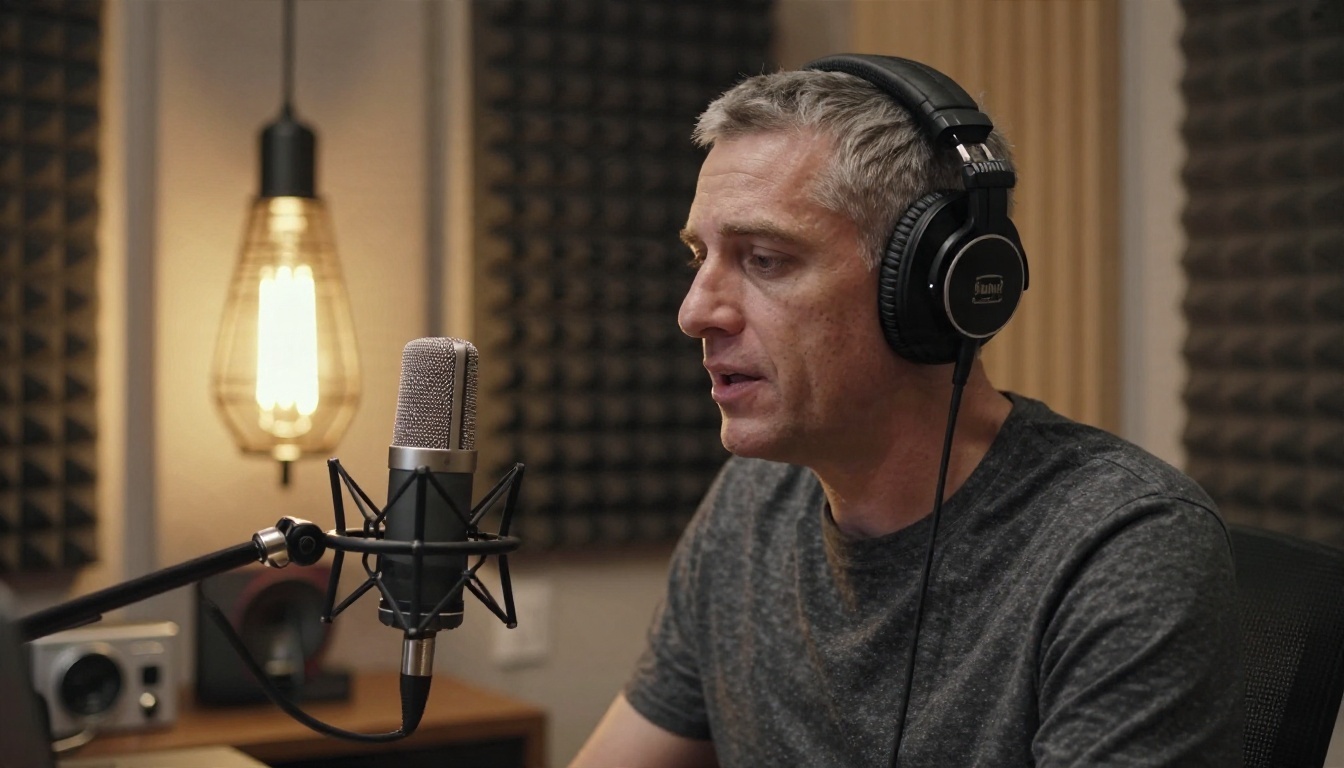
💡 Quick listening test: Paste a paragraph with a date, a price, a brand name and a question. Cheap voices usually fail on the date and the question's intonation first.
Budget Voices Worth Testing on PicassoIA
Cloud giants are not the only route to a low bill. PicassoIA gathers many speech models in one place, so you can compare voices on your own script without setting up a separate account for each provider. A few that suit cost-conscious projects:
Fast and light models
- Gemini 3.1 Flash TTS offers 30 voices across more than 70 languages, a strong pick when you need breadth in one model.
- TTS 1.5 Mini delivers quick output in 15 languages and is sized for high-volume jobs.
- Realtime TTS 1.5 Mini targets very low latency, useful for voice assistants and live chat.
- Chatterbox Turbo is a fast option when you want expressive delivery without a heavy model.

Studio and multilingual models
Voice design and cloning
Qwen3 TTS lets you clone a voice or design a new one from a description. That matters for cost in a way people overlook: a custom brand voice can replace a recurring voice actor fee, and one consistent voice across a whole project saves editing time.
💡 Speech to text works the other way. If you need transcripts of the audio you create, the speech-to-text category on PicassoIA handles that side of the pipeline.
Real Monthly Costs by Use Case
Numbers on a pricing page are abstract until you attach them to a project. These examples assume a script of roughly 6 characters per word, including spaces.
A weekly podcast summary
A 40-minute episode is about 36,000 characters. Four episodes a month is 144,000 characters.
| Rate per 1M characters | Monthly cost |
|---|
| $4 | About $0.58 |
| $16 | About $2.30 |
| $30 | About $4.32 |
| $80 | About $11.52 |
At this volume, even the priciest voice is pocket change, and the free allowances from Google and Azure make it free. Pick the most natural voice you can hear, not the cheapest.

A 10-hour online course
Ten hours of narration is about 540,000 characters, produced once.
| Rate per 1M characters | One-time cost |
|---|
| $4 | About $2.16 |
| $16 | About $8.64 |
| $30 | About $16.20 |
| $80 | About $43.20 |
Compare that to hiring a narrator, which often costs hundreds of dollars for the same length. This is where TTS wins decisively, and where paying $30 for a premium voice is easy to justify since students will listen for hours.

An app with 10,000 active users
If each user triggers 3,000 characters of speech a month, that is 30 million characters. Now the rate matters a lot:
| Rate per 1M characters | Monthly cost |
|---|
| $4 | $120 |
| $16 | $480 |
| $30 | $900 |
| $80 | $2,400 |
Here a mid-priced neural voice is usually the right call, and caching becomes your best friend. If many users hear the same prompt, generate it once and store the file. Caching alone can cut a bill by half or more.
How to Pick Without Regret
Test with your own script
Demo pages show each provider at its best. Use a real paragraph from your project: one with names, numbers, acronyms and a question. Generate it on three or four voices and play them back to back through the same speakers. Ask a colleague which one they would listen to for ten minutes.

Watch for these traps
- Quoting a price without the voice tier. Always confirm which voice the rate applies to.
- Ignoring latency. A cheap API that takes three seconds to respond ruins a conversational app.
- Skipping language checks. A voice that is great in English may be mediocre in Portuguese or Hindi.
- Forgetting SSML or pronunciation controls. Without them, brand names get mangled and you pay to regenerate.
- Locking into one vendor. Keep your text and settings separate from the provider so you can switch when prices change.
A simple decision path
- Under 500,000 characters a month with plain content: use a renewing free tier and keep a paid backup.
- Narration or courses, one-time volume: choose the best-sounding voice, since the cost is small.
- High-volume apps: pick a neural voice in the $15 to $30 range, add caching, and test a cheaper model for non-critical prompts.
- Branded or character voices: consider voice cloning or design, then compare the monthly cost to a recurring voice actor.

Run Your Own Voice Tests
The fastest way to settle the cheap-versus-good question is to hear the voices yourself. Open PicassoIA's text to speech models, paste the same paragraph into Gemini 3.1 Flash TTS, Speech 2.8 Turbo, TTS 1.5 Mini and ElevenLabs Flash v2.5, and compare the results side by side.
Then match what you hear to the cost tables above. You may find that a budget voice is enough for your notifications, while your course narration deserves the studio-grade option. Either way, you decide with your ears and your own numbers, not with a marketing page. Try a few scripts today and see which voice earns a place in your project.


