Two open-weight giants stepped into the ring in 2025, and the AI community is still arguing about which one won. DeepSeek V4 Pro arrived with aggressive benchmark claims and a Mixture-of-Experts architecture built to punch far above its active parameter count. Llama 4 Maverick brought Meta's full engineering weight behind it, including a native 1-million-token context window, multimodal inputs, and broad ecosystem support. Choosing between them is not trivial. The wrong choice costs money, compute, and months of integration work. This article cuts through the noise and puts numbers where opinions used to be.
What These Two Models Actually Are
Before the benchmarks, it helps to understand what each model is and what problem it was designed to solve. Both sit in the upper tier of publicly available open-weight models, but their design philosophies diverge in ways that matter for real deployments.
DeepSeek V4 Pro in 30 Seconds
DeepSeek V4 Pro is the fourth major release in DeepSeek AI's flagship series, building directly on the architectural foundations established by DeepSeek v3 and DeepSeek v3.1. The Chinese AI lab has consistently surprised the industry by matching or beating much larger models at a fraction of the training cost, and V4 Pro continues that pattern.
V4 Pro uses a sparse Mixture-of-Experts (MoE) architecture with approximately 671 billion total parameters but only around 37 billion active per forward pass. That distinction matters enormously for inference: you get the representational capacity of a 670B dense model while paying the compute bill of a 37B one.
Key facts at a glance:
- Total parameters: ~671B
- Active parameters per token: ~37B
- Context window: 128K tokens
- Training emphasis: Code-heavy, trilingual (English, Chinese, code)
- Licensing: MIT (weights available for download and self-hosting)
Llama 4 Maverick in 30 Seconds
Meta released Llama 4 Maverick in April 2025 as the performance tier of the Llama 4 family, sitting above Llama 4 Scout Instruct in both capability and resource requirements. Llama 4 Maverick Instruct is the instruction-tuned version most developers will use day-to-day.
Like DeepSeek V4 Pro, Maverick is a Mixture-of-Experts model, but Meta made a very different set of architectural tradeoffs. Maverick ships natively multimodal: it can reason over images and text simultaneously in the same context window. The context window lands at 1 million tokens, making it one of the longest-context open-weight models available anywhere.
Key facts at a glance:
- Total parameters: ~400B
- Active parameters per token: ~17B
- Context window: 1,000,000 tokens (1M native)
- Multimodal: Yes (image + text input)
- Licensing: Llama 4 Community License (free for most commercial use)
Architecture Under the Hood
Both models abandoned the traditional dense transformer in favor of Mixture-of-Experts. That is where their similarities largely end, and the differences explain almost every divergence in their benchmark profiles.
MoE Designs That Work Differently
DeepSeek V4 Pro routes each token through a gating mechanism that selects a small subset of its 256 expert sub-networks. The routing is dynamic and token-level, meaning different tokens in the same sentence can activate entirely different experts. The model uses Multi-head Latent Attention (MLA), DeepSeek's proprietary memory-efficient attention variant that dramatically reduces KV cache size during inference. This is what allows deployment on fewer GPUs compared to conventional attention-based models of equivalent total capacity.
Llama 4 Maverick uses an interleaved architecture: it alternates between regular dense transformer layers and MoE layers rather than making the entire network sparse. This hybrid approach produces more consistent activation patterns across layers, which tends to help with tasks requiring sustained coherent reasoning over very long inputs. Given the 1M-token context window, that design choice makes complete sense.
💡 For self-hosting: DeepSeek V4 Pro's smaller active parameter footprint makes it more GPU-friendly per inference call. Maverick's interleaved design requires more VRAM headroom when processing documents near its context ceiling.
Training Data and Where the Edges Come From
Training data composition explains much of what benchmarks reveal. DeepSeek V4 Pro was trained on a corpus where code tokens represent a significantly higher share than in most comparable models. The model has processed billions of lines of code across Python, C++, Rust, JavaScript, SQL, and dozens of other languages. This deliberate skew explains the consistent coding benchmark lead.
Maverick's training corpus was built for breadth and multimodal integration. Meta incorporated image-text pairs from the start, training the vision encoder and language backbone jointly rather than adding vision as a post-hoc adapter. This produces significantly more natural visual reasoning: Maverick does not just describe images; it reasons about relationships, spatial layouts, and implied context within them.
Both models used reinforcement learning from human feedback (RLHF) and constitutional AI-style alignment techniques, but the exact reward modeling approaches remain partially proprietary.
Context Windows That Actually Matter
The 1M-token context Maverick ships with is not just a spec sheet number. At roughly 750 words per 1,000 tokens, 1M tokens maps to approximately 750,000 words: essentially a small library in a single context. This is practically useful for:
- Entire codebase ingestion for large-scale refactoring
- Full legal document review without chunking
- Multi-session conversation continuity without summarization
- Research paper clustering and cross-document synthesis
DeepSeek V4 Pro's 128K context covers the vast majority of real-world use cases including most code files, API documentation, and medium-length research papers. The gap becomes relevant primarily at enterprise scale or in research contexts handling book-length documents.
Benchmark Numbers Side by Side
Numbers without context are noise. The table below organizes the most credible publicly available benchmark scores across the categories developers actually care about.
| Benchmark | DeepSeek V4 Pro | Llama 4 Maverick | What It Tests |
|---|
| MMLU | 88.5% | 85.5% | General world knowledge |
| HumanEval (coding) | 82.6% | 77.8% | Python code correctness |
| MATH-500 | 90.2% | 73.5% | Mathematical problem solving |
| GPQA (science) | 59.1% | 52.1% | Graduate-level reasoning |
| MultilingualBench | 79.3% | 74.8% | Non-English language tasks |
| LiveCodeBench | 43.4% | 38.6% | Real-world coding challenges |
| DocVQA (visual QA) | N/A | 91.6% | Image document understanding |
Scores compiled from LM Arena, EleutherAI evaluations, and community testing as of mid-2025.
Coding and Math Performance
DeepSeek V4 Pro holds a measurable lead in both coding and mathematics. On HumanEval, a 4.8 percentage point gap might look small, but in practice it translates to noticeably fewer compile errors and hallucinated API calls per hundred generations. On MATH-500, the gap widens dramatically: V4 Pro scores 90.2% versus Maverick's 73.5%. That is not a margin you can close with clever prompting.
The DeepSeek R1 reasoning variant pushes even higher on math benchmarks by adding a chain-of-thought reasoning phase before outputting answers. If raw mathematical accuracy is your priority over speed, R1 is worth running alongside V4 Pro and comparing on your specific problem types.
For coding specifically, DeepSeek's advantage comes from training emphasis. The model has seen significantly more code tokens than Llama 4 Maverick, and this shows up in LiveCodeBench results where problems come from recent competitive programming contests: harder to memorize, closer to real production scenarios.
💡 Practical tip: For anything involving complex SQL generation, algorithmic problem solving, or low-level systems code, DeepSeek V4 Pro is the safer default. Maverick narrows the gap on higher-level scripting and conversational coding assistance.
Reasoning and Logic Tasks
GPQA (Graduate-Level Google-Proof Questions) puts both models against PhD-level science questions designed to be unsearchable from surface-level web recall. DeepSeek V4 Pro scores 59.1% against Maverick's 52.1%. Both results are impressive given the difficulty, but the 7-point gap reflects a consistent pattern: DeepSeek V4 Pro handles multi-step analytical reasoning better at this point in time.
Where Maverick pulls closer is in tasks requiring long-context reasoning, specifically reading a 50-page document and answering detailed questions about its contents. Maverick's 1M-token window combined with its interleaved attention design gives it a structural advantage in these scenarios that a benchmark table cannot fully capture.
Multilingual and Cross-Language Tasks
On MultilingualBench, DeepSeek V4 Pro scores 79.3% versus Maverick's 74.8%. The V4 Pro lead in multilingual tasks is strongest in Chinese, Japanese, and Korean, where its trilingual training corpus included substantially more high-quality data than English-dominant corpora. Maverick performs more consistently across a wider range of lower-resource languages due to Meta's more geographically diverse training data sourcing.
For applications targeting East Asian markets or Chinese-English bilingual workflows, DeepSeek V4 Pro holds a practical edge. For broader global deployment spanning dozens of languages, Maverick's wider language coverage makes it more reliable.
Speed, Cost, and Real-World Use
Benchmark scores are only half the story. Production decisions live or die on throughput, latency, and cost per million tokens processed.
Token Throughput in Practice
On dedicated inference infrastructure, DeepSeek V4 Pro consistently achieves higher output tokens-per-second than Llama 4 Maverick at equal hardware allocation. The smaller active parameter count per forward pass means each generation step completes faster in wall-clock time.
| Model | Output Tokens/sec (8xH100) | API Cost Input / Output (per 1M tokens) |
|---|
| DeepSeek V4 Pro | 58-72 tok/s | $0.27 / $1.10 |
| Llama 4 Maverick | 45-60 tok/s | $0.19 / $0.65 |
Estimates based on community benchmarks and provider pricing as of Q2 2025. Self-hosted costs vary.
Maverick is cheaper to run through API providers. If you process millions of tokens per day and your task does not demand V4 Pro's benchmark edge, Maverick's lower cost per token is a real operational advantage that compounds quickly at scale.
Running These Models Locally
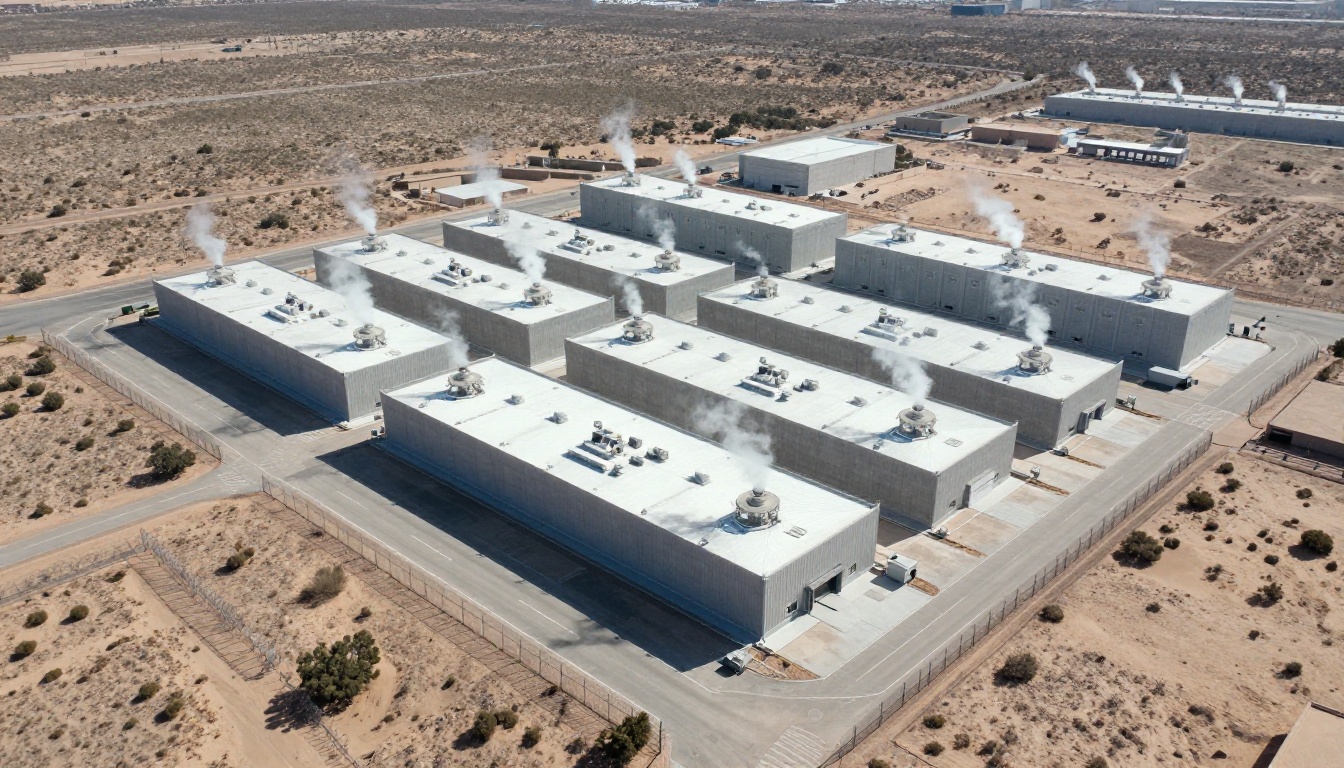
Both models are self-hostable under permissive licenses, but the practical hardware requirements differ significantly.
DeepSeek V4 Pro (self-hosted):
- Full BF16 precision: approximately 1,342 GB VRAM (17x H100 80GB)
- Quantized INT4: approximately 335 GB VRAM (5x H100 80GB)
- Realistic for teams with dedicated GPU clusters; too large for most consumer setups
Llama 4 Maverick (self-hosted):
- Full precision: approximately 800 GB VRAM (10x H100 80GB)
- Quantized INT4: approximately 200 GB VRAM (3x H100 80GB)
- More accessible for smaller GPU clusters and well-equipped research labs
For individual researchers and small teams, Maverick's lower VRAM floor at quantized precision is a practical advantage. DeepSeek V4 Pro is more realistic through API providers unless your organization has serious dedicated GPU infrastructure already in place.
As AI applications mature beyond simple chat, the real test is how well each model performs in agentic systems: multi-step workflows where the model calls external tools, writes and executes code, and maintains state across many steps.
When JSON Reliability Matters
Structured output reliability is a proxy for how well a model can serve as the "brain" of an agentic system. In production agentic pipelines, even a 2% JSON parsing failure rate can cascade into significant downstream errors at scale.
DeepSeek V4 Pro's stronger coding foundation translates directly into more reliable structured outputs. Its JSON generation consistency scores higher across tested scenarios, particularly in complex nested schemas with more than three levels of nesting.
Maverick's instruction-following strength helps it adhere to output format instructions even in long contexts where many models tend to drift, but its raw JSON reliability on complex schemas falls slightly below V4 Pro's.
Long-Context Agents
For agentic tasks requiring very long memory, such as processing an entire codebase across multiple planning steps or maintaining a multi-day research thread without summarization, Maverick's 1M-token context creates fundamentally different possibilities. You can keep the entire conversation history, all retrieved documents, and all tool outputs in context simultaneously rather than building lossy summarization pipelines.
This matters most for:
- Code refactoring agents: Feed the entire repo and get consistent cross-file edits
- Research agents: Maintain full citation context without chunking papers
- Customer service agents: Keep complete customer history without summarization
For shorter agentic tasks where context is not the constraint, DeepSeek V4 Pro's reliability and speed advantage makes it the stronger default.
Where Each Model Wins
After weighing architecture, benchmarks, cost, and practical deployment, clear strengths emerge for each model.
DeepSeek V4 Pro Strengths
- Coding: Consistently better on HumanEval, LiveCodeBench, and production code generation
- Mathematics: A 17-point MATH-500 gap is significant and reflects real-world differences
- Scientific reasoning: Stronger on GPQA and graduate-level analytical tasks
- Multilingual (CJK): Particularly strong in Chinese-English and Japanese tasks
- Throughput: Faster output token generation on equivalent hardware
- Best for: Backend development, scientific research, quantitative workflows, agentic coding pipelines
Llama 4 Maverick Strengths
- Long-context tasks: 1M-token native context with no workarounds required
- Multimodal input: Native image understanding integrated into the base model
- Cost efficiency: Lower API pricing and lower VRAM floor at quantization
- Broad language coverage: Stronger across low-resource languages beyond CJK
- Ecosystem: Meta's open model community with the widest tooling support
- Best for: Document AI, multimodal applications, high-volume chat, RAG systems
💡 The honest answer: Neither model is universally better. Pick DeepSeek V4 Pro for math, code, and science. Pick Llama 4 Maverick for long documents, multimodal inputs, and cost-sensitive deployments at volume.
Using These Models on PicassoIA

PicassoIA gives you direct browser access to both model families with no local setup, no API key management, and no GPU bills. If you want to test Llama 4 Maverick Instruct on your own data today, it is available in the Large Language Models section alongside DeepSeek v3.1 and DeepSeek R1.
Step 1: Pick your model for the task
Navigate to the Large Language Models collection on PicassoIA. Both Meta Llama 4 models and DeepSeek models appear with capability tags. Use the category filters to narrow by use case.
Step 2: Load your content
For Llama 4 Maverick, paste in long documents, upload images alongside text prompts, or start a multi-turn conversation. The interface handles context management automatically, so you can focus on the output.
Step 3: Compare outputs side by side
Open DeepSeek v3.1 and Llama 4 Maverick Instruct in separate tabs. Run the same prompt through both and score the outputs on your own criteria. Real-world performance on your specific prompts beats any benchmark table.
Step 4: Add reasoning when needed
When a task demands extended chain-of-thought, switch to DeepSeek R1 on PicassoIA. It is the reasoning-focused sibling of the V-series and consistently outperforms both models on problems requiring systematic multi-step analysis.
The platform also includes Claude Opus 4.7 for nuanced writing, GPT 5 for broad general capability, and Gemini 3 Pro for Google ecosystem integrations. The ability to test all of them at zero infrastructure cost is the real advantage of starting on PicassoIA.
What the Numbers Do Not Tell You

Benchmarks measure what benchmarks measure. They do not capture instruction-following consistency across thousands of production calls, refusal behavior on ambiguous edge-case inputs, or how gracefully each model degrades when given malformed context. These properties show up in production over weeks, not in 10-minute evaluations.
Three things worth testing in your own environment before committing:
-
Prompt sensitivity: Does output quality shift significantly when you rephrase the same question? Both models have this tendency at different rates by task type.
-
Repetition in long generations: Very long outputs sometimes cause models to loop or repeat phrases. Test your longest expected output length explicitly before deploying.
-
Tool use reliability: If you are building agentic pipelines, test JSON output consistency across 50+ calls. DeepSeek V4 Pro's coding strength typically produces more reliable structured outputs, but your prompt engineering matters too.
Both models are moving targets. DeepSeek has shown a pattern of rapid iteration, and Meta has committed to continued Llama 4 family updates. A benchmark advantage today may not hold in three months. The smartest strategy is to build infrastructure flexible enough to swap models when better options ship, rather than locking into either model at the architecture level.
Try Them Yourself and See

The open AI space moved fast enough in 2025 that theoretical comparisons become stale within months. The only comparison that truly matters is performance on your specific prompts, your actual data, and your real production constraints.
PicassoIA makes that evaluation cost nothing. Both Llama 4 Maverick Instruct and DeepSeek v3.1 are available right now, alongside DeepSeek R1 for reasoning-heavy workloads and Llama 4 Scout Instruct for lightweight, high-speed tasks. The full library spans over 70 large language models from every major provider.
Run your own 50-prompt benchmark. Score them on what matters for your use case. The winner might surprise you, and spending 20 minutes testing today will save months of rebuilding later.


