You hear a song in a cafe, you want your app to name it, and you would rather not pay for the privilege. That is the whole appeal of a free music recognition API. The catch is that "free" in this corner of the internet usually means a trial, a tiny monthly quota, a platform lock-in or a pile of setup work. Almost nobody gives away an unlimited, commercial-grade song identification service, because the catalogs behind it cost real money to license and maintain.
This article sorts the real options from the marketing. You will see what a music recognition API actually does, which free routes exist today, where the limits hide, what paid plans tend to cost and what to do when none of them fit. Pricing figures come from third-party listings checked in autumn 2026, so treat them as a starting point and confirm on each provider's own pricing page before you commit.
💡 Quick answer: For a hobby project, ShazamKit (if you are in the Apple ecosystem) or a free trial from a fingerprinting provider is the fastest start. For anything with real traffic, budget for a paid tier, because free quotas run out within hours.
What a Music Recognition API Does
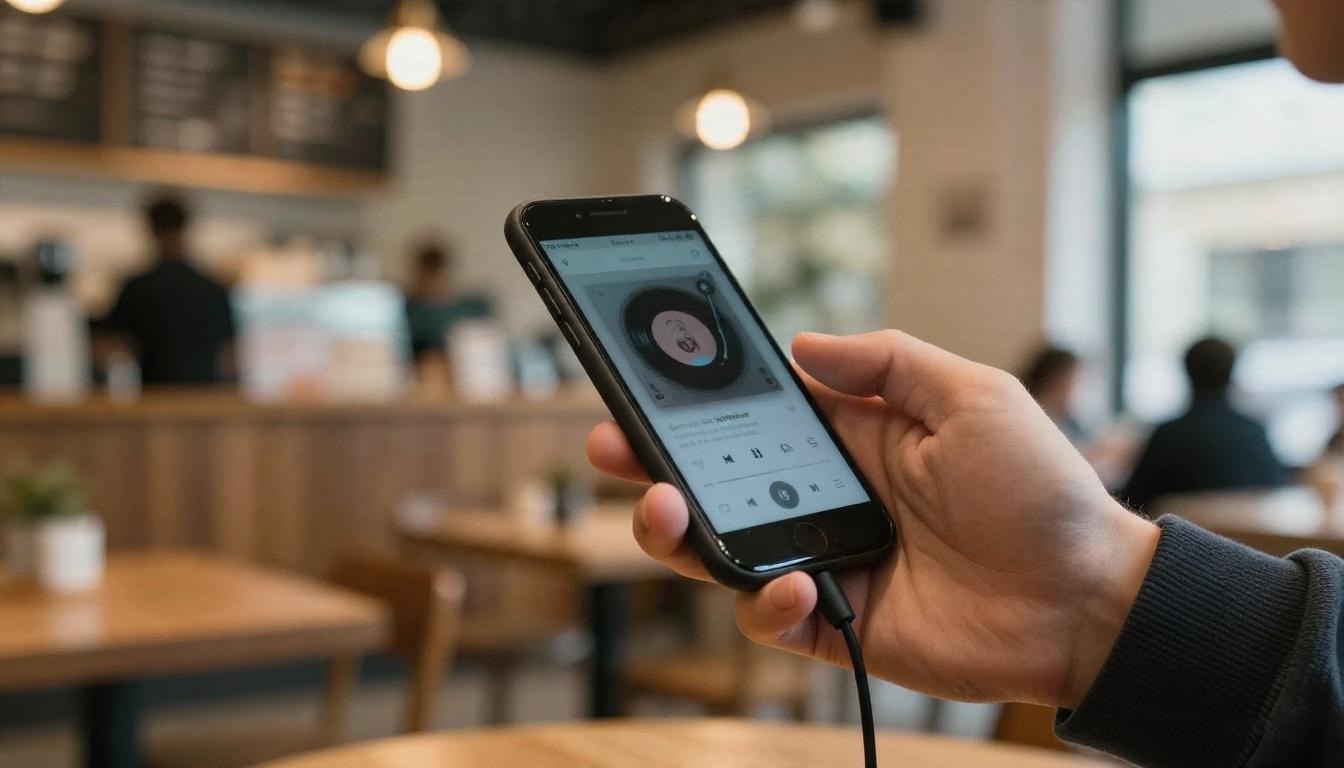
A music recognition API takes a short audio sample, usually somewhere between 5 and 20 seconds, and returns the song it belongs to. Title, artist, album and often streaming links come back as JSON. The experience feels like magic, but the engineering underneath is surprisingly simple to describe.
Fingerprinting in Plain Terms
The service converts your audio into a fingerprint: a compact pattern built from the loudest frequency peaks over time. That pattern survives background chatter, compression and low-quality phone microphones because it ignores most of the waveform. The provider then compares your fingerprint against a giant index of fingerprints from known recordings and returns the closest match.
This matters for pricing. The expensive part is not the matching. It is the catalog: millions of licensed or ingested tracks that someone has to collect, tag and keep current. A free tier is only as good as the catalog behind it.
Recognition Versus Metadata Lookup
People often confuse two different jobs:
- Audio recognition: you send sound, you get a song identity.
- Metadata lookup: you send a title or an ID, you get album art, genre, release date or lyrics.
Many "free music APIs" only do the second job. If your plan is to identify unknown audio, make sure the provider offers actual fingerprint matching, not just a search endpoint.
Free Options Worth Testing

Here is how the main candidates stack up for a developer who wants to start without a credit card or at least without a big bill.
AudD
AudD is a long-running, developer-friendly recognition service. Third-party listings describe an entry plan around $5 per month for 1,000 requests, with extra requests priced at roughly $5 per 1,000, plus a trial period. Requests need an account token passed as a parameter. Recognition without a paid service token has been described as heavily restricted and not guaranteed, so do not plan a launch around the unauthenticated behavior.
It is a good fit for small apps, Discord bots and prototypes where a thousand lookups a month is plenty.
ACRCloud
ACRCloud is the heavyweight in this space, serving broadcast monitoring, radio tracking and content identification in addition to simple song lookup. Aggregator sites mention a free version with limited functionality and usage-based pricing for production, but concrete free-tier numbers are not consistently published outside the account dashboard. Expect a trial that works well for testing and a conversation with sales once you scale.
Its strength is breadth: humming recognition, live stream monitoring and custom catalogs where you upload your own audio to be recognized. If you own a library of tracks and want to detect them in user uploads, this is the category you want.
ShazamKit and Shazam Wrappers
Shazam does not offer a public, open REST API. What exists instead is split into two very different paths:
| Route | Cost | Platforms | Stability |
|---|
| ShazamKit (Apple) | Included with an Apple Developer Program membership ($99 per year for individuals) | iOS, macOS, Android SDK support | Official |
| Marketplace wrappers | Short trials (around 50 requests over 7 days reported); paid plans near $49.99 for 5,000 monthly requests | Any, through REST | Unofficial, can break |
ShazamKit is the cleanest "free" answer if you already pay for the developer program. The REST wrappers are convenient for quick tests, but they sit on top of an unofficial layer, so building a business on one is risky.
Open Source Fingerprinting
If you are comfortable doing the plumbing yourself, open source tools give you unlimited matching with zero per-request fees:
- Chromaprint with AcoustID: a community-run fingerprint database that works well for identifying full or near-full recordings, mostly aimed at tagging music libraries. Commercial use has its own terms, so read them first.
- Dejavu and similar Python projects: let you build your own fingerprint index from your own audio files. Perfect for "does this clip match anything in my catalog" problems.
- MusicBrainz: a free metadata database that pairs naturally with fingerprinting for enrichment.
The trade-off is brutal and simple: you save money and spend time. Open source gives you the engine but not the catalog of commercial releases. You will not recognize a random chart hit unless you index it yourself.
Limits That Catch Developers Off Guard
The pricing page is only half the story. The limits that hurt tend to be buried in documentation or discovered in production.
Request Caps and Rate Limits
A monthly quota of 1,000 sounds generous until you add a button to a public app. If 200 users tap it five times a day, you burn through the allowance in a single afternoon. Rate limits are the other trap: a plan that allows 5,000 requests per month might still cap you at 60 per minute, which can throttle a busy moment such as a live event.
💡 Tip: Cache results by fingerprint hash. If ten people record the same song on the radio, you only need to pay for one lookup.
Audio Length and Noise
Free and low tiers often limit the audio sample size or format. Typical rules include:
- A maximum clip length (shorter clips are cheaper to process and less accurate).
- Accepted formats such as MP3, WAV or raw audio fingerprints.
- A minimum sample length for reliable matching, often around 5 seconds.
Noise matters more than most tutorials admit. A clean line-in recording matches almost instantly. A phone held across a noisy room needs a longer sample and sometimes a retry.
Catalog Gaps
Even the best catalogs miss things. Independent releases, DJ mixes, live recordings, remixes and regional music are the usual blind spots. If your audience listens to niche genres, run a test with a few hundred real clips before choosing a provider. Match rate on your own audio is the only number that counts.
The Real Cost of Free

Free tiers are marketing. They exist so you can test accuracy and then convert to paid. That is not a criticism, it is just the model, and you can plan around it.
Typical Pricing at a Glance
| Provider type | Entry price (reported) | Best for | Main drawback |
|---|
| Indie fingerprint API | About $5 per month for 1,000 requests | Bots, prototypes | Small quota |
| Enterprise recognition | Usage-based, quoted per project | Broadcast, large apps | Sales process |
| Shazam marketplace wrapper | Around $50 per month for 5,000 requests | Quick REST tests | Unofficial |
| ShazamKit | Included with $99 per year developer membership | Apple-first apps | Platform tied |
| Open source | $0 plus your server time | Private catalogs | No commercial catalog |
These are indicative numbers from public listings, not guaranteed quotes. Prices change, and annual or volume discounts often apply.
Hidden Costs Nobody Mentions
Beyond the sticker price, count these:
- Engineering time to handle retries, caching, audio capture and error states.
- Licensing: displaying album art, previews or lyrics may need separate rights even if recognition itself is cheap.
- Server load if you self-host fingerprint indexes. Storage and RAM grow with catalog size.
- Support risk when a marketplace wrapper disappears or changes its response format.
A $5 plan that saves you a week of work is cheaper than a free tool that eats it.
Alternatives When Free Falls Short
Sometimes the honest answer is that song fingerprinting is the wrong tool. Depending on what you actually need, a different approach can be faster and cheaper.
Transcribe Lyrics Instead
If your goal is to find out what is being sung, speech-to-text models can transcribe lyrics from a clip, and the text can then be searched against any lyrics source. This works well for spoken-word tracks, rap, podcasts and songs with clear vocals. It struggles with heavy production, so treat it as a clue rather than a guarantee.
PicassoIA does not provide song fingerprinting, but it does offer transcription models that fit this workflow:

A practical flow looks like this: transcribe a 15 second clip, take the most distinctive line, search it, and confirm the match by ear. It is not as fast as a fingerprint API, but it costs nothing in recurring fees beyond the transcription itself.
💡 Tip: Transcription also solves a different problem: turning interviews, podcasts and voice memos into searchable text. If that is part of your project, you get double value from the same setup.
Generate Original Music
Many developers ask for a recognition API because they need music for a video, game or app, and they are worried about licensing. If that is you, recognition is not the real need. Generating original tracks sidesteps the problem because there is no existing song to identify or license.
Try these AI music models on PicassoIA:
- Lyria 3 for original instrumental and vocal tracks from a text prompt.
- Lyria 3 Pro for longer, full-length songs.
- Music 2.6 for full songs with lyrics and structure.

Always check the usage terms of whatever you generate and publish, but the core point stands: original music removes the identification problem entirely.
Picking the Right Option by Use Case

The best choice depends less on price and more on what you are building.
For a Weekend Prototype
Use a free trial or a $5 indie plan. Keep the code behind a single function so you can swap providers later. Spend your effort on audio capture and user experience, not on a custom matching engine.
For a Mobile App With Real Users
If your users are mostly on iPhone, ShazamKit removes per-request billing worries. For a cross-platform app, pick a paid recognition API, set a spending alert and cache every result. Estimate your monthly requests honestly: active users multiplied by lookups per user per day multiplied by 30.
For Copyright and Content Matching
If you need to detect copyrighted audio in uploads, or monitor radio and streams, you are looking at enterprise recognition products or a self-hosted index of your own catalog. Free tiers are not built for this. The correct move is a trial, a clear accuracy test and a quote.
Common Mistakes to Avoid

- Trusting a marketplace wrapper for production. Unofficial layers change without notice.
- Testing only with studio audio. Real users record through noisy phone microphones.
- Ignoring rate limits. A quota that looks fine monthly can fail in a one minute spike.
- Skipping caching. Repeated lookups of popular songs waste money.
- Assuming recognition includes display rights. Lyrics, previews and artwork often need separate licenses.
- Comparing price instead of match rate. A cheaper API that misses 30 percent of your audience's music is the expensive one.
| Mistake | Quick fix |
|---|
| Surprise bills | Set usage alerts and hard caps |
| Poor match rate | Test 200 real clips before choosing |
| Vendor lock-in | Wrap the API in your own function |
| Missing songs | Add a lyrics transcription fallback |
Build Your Next Audio Project
A free music recognition API is a fine way to test an idea, but the sustainable answer usually combines a small paid plan, caching and a fallback. If you want to go beyond identification, PicassoIA gives you tools for the creative side of audio: transcribe clips with GPT 4o Transcribe, turn the text into new material, and compose original soundtracks with Lyria 3.
Open the platform, upload a short clip, and see what comes back in under a minute. Then browse the full catalog of image, video, speech and music models at picassoia.com/en/all-models and start building your own project today.


