Most people who type "NSFW AI character writer" into a search bar are not looking for a wall of generic text. They want a character who feels like a person: a voice, a past, a weakness, a way of teasing you that nobody else would write. The tools exist. The difference between a flat, repetitive chat and a story you actually want to keep reading comes down to three things: how you build the character, how you set the scene, and which tool you hand it to.
This article walks through all three. You will get a short list of free tools worth opening, prompt templates you can paste right now, three example scenes, a table of story settings that work, and a way to turn your finished character into a photorealistic portrait. Everything here is for adults writing about adult characters. If a character is not clearly 18 or older, they do not belong in the story, and that is the one rule with no exceptions.
💡 Quick take: a strong NSFW character writer setup is a detailed character sheet, a clear setting, a defined tone, and a tool whose content rules match what you want to write. Skip any one of them and the story drifts.
What an NSFW AI Character Writer Does
At its simplest, an NSFW AI character writer is a language model pointed at adult fiction. You describe a character, a situation and a tone, and the model writes dialogue, narration or a whole scene in that voice. Some tools behave like a chat partner who stays in character. Others behave like a story generator that returns a finished passage from one prompt.
Character Sheet vs. Chat Bot
A chat bot reacts. You say something, it answers, and the plot goes wherever the last message pushed it. A character writer works from a sheet you control: name, age, job, speech habits, secrets, what the character wants and what they refuse to say out loud. The sheet is what keeps message forty sounding like message one.
If you only take one habit from this article, make it this: write the sheet first, and paste it at the top of every new session.
Who This Is For
Three groups use these tools most:
- Fiction writers drafting romance, slow-burn or steamy scenes and needing a sparring partner for dialogue.
- Roleplayers who want a persistent character with a personality, not a blank assistant.
- Game and comic creators building adult characters with backstories before they draw or animate anything.
The common thread is control. The more of the character you define yourself, the less the model invents on its own.
The free landscape changes quickly, and plenty of directory listings repeat old pricing. Treat every claim below as a starting point and check each tool's current terms before you commit. I have not tested these platforms myself for this article, so read it as a map, not a review.
Chat and Roleplay Platforms
These are built for ongoing conversation with a persistent character:
- Prechance is described as a no-signup, unlimited character chat that stores data locally in your browser.
- DreamGen advertises a free tier with a monthly message allowance and a roleplay assistant that helps when you run out of ideas.
- JanitorAI is a large library of user-made characters across many genres, with a relaxed approach to filters.
The upside is speed. You can be mid-scene in two minutes. The downside is that free tiers tend to cap messages, shorten memory or slow down at peak hours.
Story Generators
If you would rather read a finished scene than play one, story generators take a short description and return a passage:
- Prechance also offers a free story generator that works from a basic text prompt.
- AI Smut Writer is listed as producing erotic fiction across romance and other genres from a prompt.
- Dreampress is listed as a free-trial option that generates titles and tags along with the story.
- Sudowrite is a mainstream writing platform for authors that some writers also use for steamier scenes.
Several of these platforms state clear limits on content, and at least one explicitly prohibits anything involving minors. Read the rules before you write, not after a message gets blocked.
General Models on PicassoIA
General-purpose language models are a different route. They are strong at voice, structure and consistency, which makes them excellent for building the character sheet, outlining a slow-burn arc, polishing dialogue, and writing flirtatious, romantic and suggestive scenes. Each model follows its own content policy, so how explicit you can go varies by model. Use them for the craft work and keep expectations realistic.
💡 A smart split: draft the character and plot with a general model, then take the finished sheet to a roleplay platform whose rules fit the tone you want.
Prompts You Can Copy
Good prompts are specific. Vague prompts get vague, repetitive output, and that is where the "every character sounds the same" problem comes from.
The Character Prompt
Paste this at the start of a session and fill the brackets:
You are [Name], a [age, 18 or older] year old [job] in [city]. Personality: [3 traits, one of them a flaw]. Speech: [short sentences / dry humor / formal and teasing]. Wants: [goal]. Hides: [secret]. How you flirt: [slow, direct, through insults, through questions]. Stay in character, never narrate my actions, and keep replies under 150 words.
The flaw and the secret do most of the work. A character with only strengths becomes a compliment machine within ten messages.
The Scene Prompt
Scene prompts set the stakes and the pace:
Setting: [place, time, weather]. We have just [event]. The mood is [tense, playful, wistful]. Pace: slow burn, nothing happens in the first three exchanges beyond conversation and tension. Describe what [Name] notices before what [Name] says.
The line about pacing is the most useful one. Without it, models tend to rush to the climax of the scene.
The Style Prompt
Tone is the third lever. Use one of these short lines:
- Write in close third person, past tense, sensual but restrained, like a literary romance.
- Write in second person, present tense, playful and teasing.
- Write dialogue first, with minimal narration, like a screenplay with warmth.
Pick one and stay with it. Switching voices mid-story is the fastest way to lose a character.
Story Settings That Work
A setting is more than a backdrop. It decides what the characters can plausibly do, who might interrupt them, and what the scene smells and sounds like. Models write better when you hand them concrete sensory anchors.

Nights, Cities and Closed Rooms
Urban, nocturnal settings give you built-in tension: rain on glass, a late elevator, a bar about to close, a hotel corridor with one open door. They work well for slow burn because the walls and the clock create pressure.
Sun, Travel and Open Air

Holiday villas, yachts, mountain cabins and long train rides strip away daily routines. Characters speak more freely when nobody knows them, which makes these settings ideal for confessions and flirtation that builds over days.
Here is a quick reference for matching setting to story type:
| Setting | Mood | Best for | Sensory anchors to include |
|---|
| Rooftop penthouse | Glossy, tense | Power-play romance | Glass, wind, city hum, silk |
| Quiet wine bar | Playful, witty | First meetings | Candle smoke, clinking glass, brick |
| Tropical villa | Warm, unhurried | Slow-burn holiday romance | Salt air, linen, cicadas |
| Fireside study | Intimate, literary | Long-form drama | Wool, paper, crackling wood |
| Rainy hotel | Secretive | Tension and secrets | Wet pavement, key cards, neon-free lamps |
| Artist loft | Creative, raw | Muse and artist stories | Paint, concrete, window light |
💡 Name three senses in every scene prompt. Sight alone produces postcards. Sound, smell and touch produce scenes.
Three Short Examples
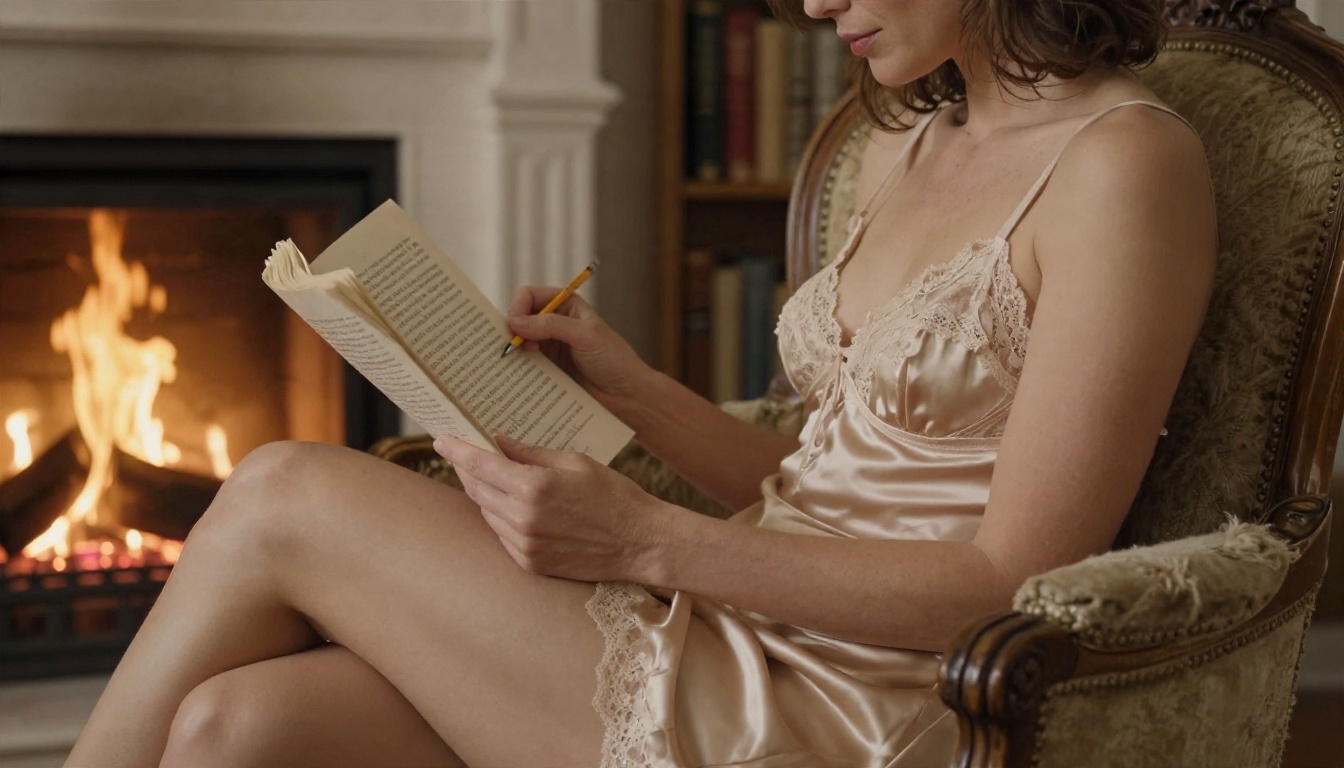
Here are three non-explicit samples that show how the sheet, setting and style combine. Each stays suggestive and leaves the rest to the reader.
Example 1: The wine bar (playful, dialogue-led)
"You've read that message four times," Mara said, tilting her glass. "Either it's very good news or you're composing a lie."
"Maybe I'm just enjoying the view."
"Of my laptop?" She smiled slowly. "Brave. Keep going."
Example 2: The penthouse (tense, close third person)
Rain ran down the glass in thin silver lines. Iris did not turn when the door opened; she watched his reflection instead, the way his hand stopped on the handle, the way he decided to stay. "You're late," she said, and the silk of her robe whispered as she finally faced him. "I almost stopped waiting."
Example 3: The villa (slow burn, second person)
The hammock sways. You can smell salt and sunscreen and the lime she squeezed into her glass an hour ago. She has not looked up from her book since you sat down, but her foot has stopped moving, and that tells you everything.
Notice the pattern. Every sample uses one concrete detail, one line of subtext and one unfinished moment. That is the recipe for sensual writing that stays tasteful.
Give Your Character a Face
Once the personality is solid, many writers want a portrait: a cover image, a character card, a reference for a comic. Photorealistic image models make this easy, and the same character sheet you wrote for the text becomes your image prompt.
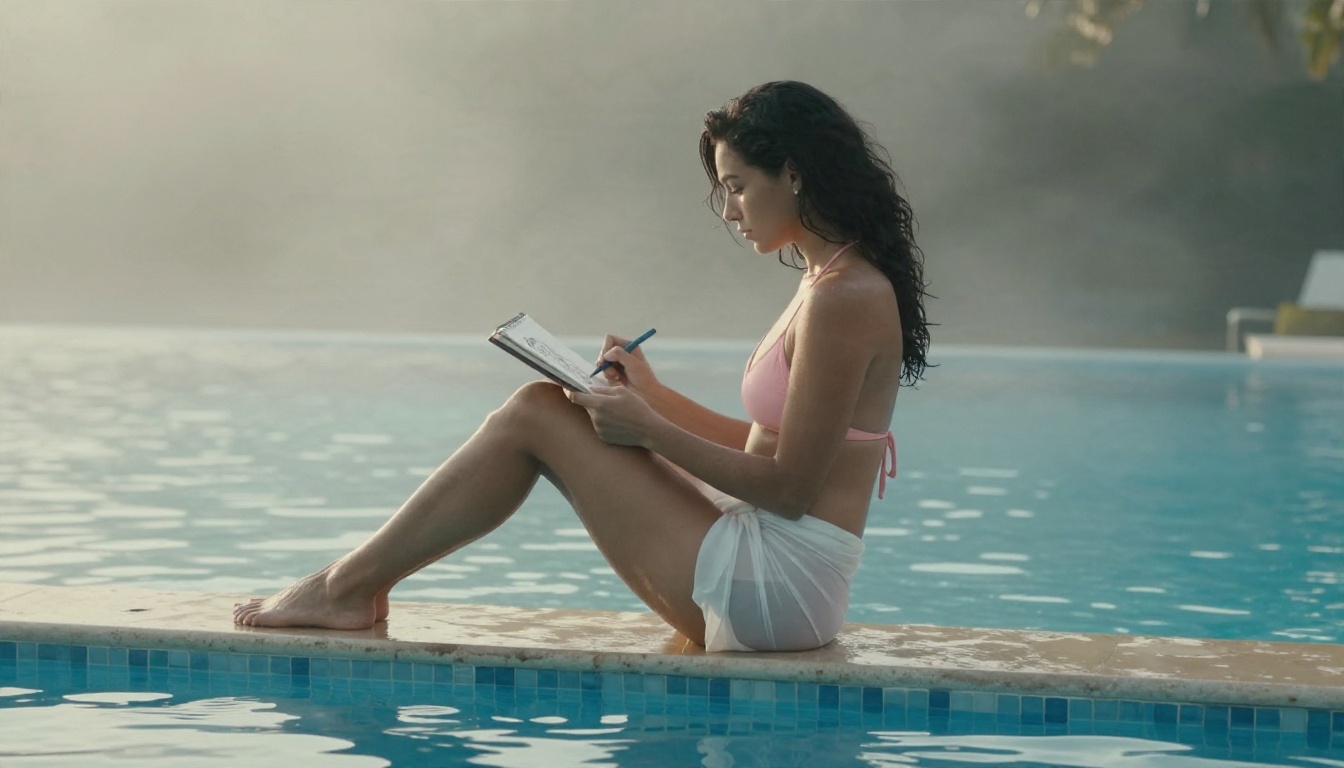
Start With Seedream 4.5
Seedream 4.5 is the model to open first. It handles skin texture, fabric and lighting convincingly, and it is comfortable with glamour, swimwear and sensual portraiture while staying non-explicit. Turn your character sheet into a visual prompt:
- Copy the character's age, hair, build and signature style from the sheet.
- Add the setting from your scene prompt (rooftop at night, villa terrace at golden hour).
- Describe the light direction and lens, such as soft window light from the left, 85mm f/1.8.
- Add photorealistic, film grain, natural skin texture and keep the prompt to one clear subject.
Refine With Image Editor Pro
PicassoIA Image Editor Pro offers unlimited generations, which matters when you are iterating on a face. Use it to change outfits, adjust the background, fix hands or move the same character from the bar to the villa without starting over. Fast, uncensored-friendly and free of per-image anxiety, it is the model for trial and error.
Keep the Same Face Across Scenes
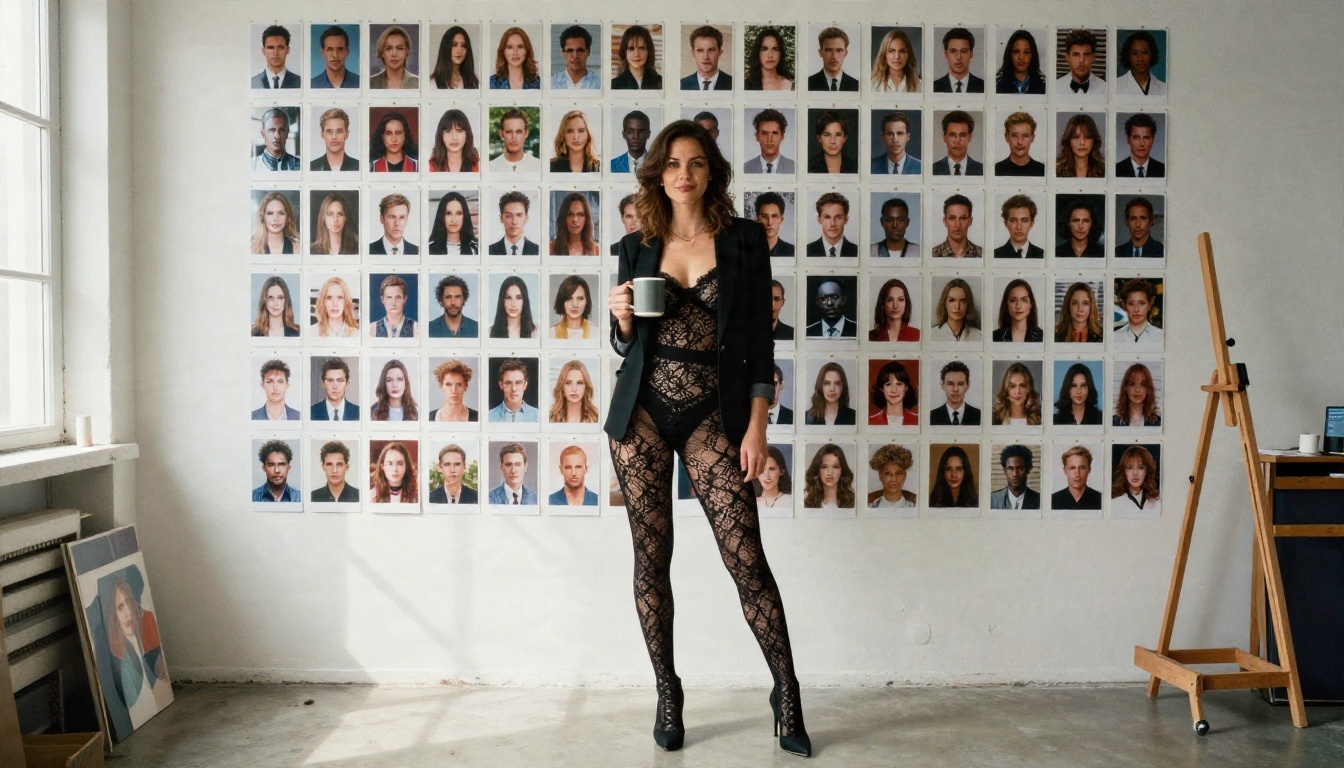
Consistency is the hard part. Two options help:
Only train on images of fictional characters you generated or photos you have full rights to. Never use a real person's likeness without their consent.
Mistakes That Ruin the Story
Most weak results come from a short list of habits:
- No flaw in the sheet. Perfect characters read as blank. Give them a fear, a bad habit, a grudge.
- Pasting the same prompt for every scene. Update the setting, the stakes and the mood each time.
- Letting the model narrate your actions. Add a rule that it only controls its own character.
- Skipping pacing. Write the pace into the prompt or the scene will sprint.
- Ignoring tool rules. If a platform blocks your content, switch to one whose policy matches, instead of rewording until something slips through.
- Mixing ages and ambiguity. State the age as 18 or older in the sheet, every time, and keep every character clearly adult.
💡 Rule of thumb: if you cannot say who the character is in one sentence, the model cannot either. Cut the sheet down to a sentence, then build back up.
| Problem | Likely cause | Fix |
|---|
| Character sounds generic | No speech habits in the sheet | Add 3 verbal quirks |
| Scenes rush ahead | No pacing line | Add "slow burn, nothing happens in the first three exchanges" |
| Replies repeat | Prompt too short | Add a goal and a secret |
| Tone drifts | Style changes mid-story | Lock one style prompt |
| Portrait looks different each time | No fixed visual traits | Reuse the same hair, build and outfit words |
Start Building Your Own Character
You now have the full toolkit: a character sheet, a scene prompt, a style line, a handful of free platforms, a set of settings, and a way to give your character a photorealistic face. The best next step is small. Write one character in ten lines, pick one setting from the table, and run a single scene.
When you are ready to see her, open Seedream 4.5 for the first portrait, then move to PicassoIA Image Editor Pro to iterate without limits. For more image and text models you can mix into the same workflow, browse everything at picassoia.com/en/all-models. Write the character, set the scene, and generate your first image today.


