If you've built AI agents before, you already know the failure pattern. The model sounds intelligent in a single prompt. But chain it through five tool calls, a few failed steps, and some ambiguous user input, and suddenly you're looking at a loop that won't terminate, or a response that ignores half the context it was given. Claude Opus 4.7 was designed with exactly that problem at the center of its development.
This is not another incremental version bump. The changes Anthropic shipped with Opus 4.7 directly affect how the model handles multi-step reasoning, tool use reliability, and autonomous decision-making in production-grade agentic systems. For developers building real automation pipelines, that distinction matters enormously. This piece breaks down the specifics: what changed, what it means in practice, and where the model genuinely outperforms what came before.

What Claude Opus 4.7 Actually Is
Anthropic positions Claude Opus 4.7 as the flagship model in the Claude 4 generation, optimized specifically for complex, multi-step workloads. It sits above Claude 4 Sonnet and Claude 4.5 Sonnet in terms of raw reasoning capability, and is positioned as the right tool for the category of tasks where reasoning quality directly determines outcome quality.
Not Just a Chatbot
The critical shift with Opus 4.7 is that it was designed, from the architecture up, to function as an autonomous reasoning engine rather than a turn-based conversational assistant. Most large language models are trained primarily on single-exchange patterns: a user says something, the model replies. Agentic workflows break that pattern entirely.
Agentic execution requires the model to hold a goal in working memory across dozens of intermediate steps, execute tool calls with correct parameters on the first try, handle partial failures gracefully without abandoning the overall plan, and revise its approach mid-stream when new information arrives from the environment. These are fundamentally different demands.
Claude Opus 4.7 shows significantly improved behavior on all of those fronts compared to Claude Opus 4.6. The gap is most visible in workflows that exceed ten sequential steps, which is precisely where earlier models tended to degrade.
Where It Sits in the Claude 4 Family
The table above is not about speed rankings. It is about where you actually spend tokens. For agentic pipelines that run long chains with infrequent user interaction, the reasoning quality of Opus 4.7 translates directly into fewer failed steps. Fewer failed steps means fewer retries. Fewer retries means lower total cost, even at a higher per-token price. The economics work out in favor of using the stronger model when task correctness is load-bearing.

The Real Bottleneck in AI Workflows
There is a commonly-held belief that adding more tools to an AI agent makes it more capable. In practice, the opposite often happens. More tools expose more surface area for wrong decisions, and most models without strong native reasoning will pick the wrong one at a nontrivial rate, especially when multiple tools look plausible for a given situation.
Why Most Agents Fail
The failure modes in agentic AI cluster into three categories that appear repeatedly across different frameworks, models, and use cases:
- Context drift: The model loses track of the original goal after several intermediate steps and starts optimizing for a slightly different objective. This is subtle and hard to catch in logs.
- Tool call hallucination: Parameters are invented rather than derived from actual context, causing downstream errors that may not surface until several steps later.
- Premature termination: The agent decides the task is complete before it actually is, often because its confidence threshold is miscalibrated for the specific domain.
- Circular reasoning: Without a mechanism to detect that it is repeating prior steps without progress, an agent can loop indefinitely on a blocked path.
None of these failures are about the model being incapable. They are about the model's reasoning architecture not being built for iterative, stateful execution at scale. Fixing them requires changes at the model level, not just prompt engineering.
What Deep Reasoning Fixes
Claude Opus 4.7 includes extended thinking capabilities, which allow the model to spend tokens reasoning explicitly before producing an action or a response. In agentic loops, this is critical. The model can write out an internal chain of thought that checks its current context against the original task goal, evaluates which tool is actually appropriate for the current step, and flags inconsistencies before committing to an action.
💡 Practical insight: When building agents with Opus 4.7, allow generous thinking token budgets. The upfront reasoning cost is almost always recovered in fewer retry loops and corrective steps downstream. A well-reasoned first action beats three fast, incorrect ones.

Core Capabilities That Drive Automation
Extended Thinking in Agent Loops
Extended thinking is not a marketing term for "better reasoning." It is a specific architectural feature that allocates a portion of the model's context window for scratchpad reasoning before producing an output. When the model works through a multi-step problem with intermediate reasoning visible to itself, it reliably produces more coherent, self-consistent actions downstream.
For automation use cases, this matters most in three specific situations:
- The agent encounters an ambiguous branch point with two valid paths and must commit to one without additional user input
- A tool returns an unexpected error format and the agent needs to adapt its approach rather than retry identically
- Multiple subtasks have interdependencies that must be respected in a specific sequence, and the model must reason about what is safe to parallelize versus what must run serially
In all three cases, extended thinking prevents the model from making a fast, shallow decision and instead enforces a structured evaluation of options before any external action is taken.
Tool Use and Computer Use
Claude Opus 4.7 supports both function-calling-style tool use and computer use, giving it the ability to operate a desktop or browser environment directly. For automation pipelines, the right choice depends on the target system:
- Tool use is appropriate for API-based workflows: reading databases, calling external services, triggering webhooks, writing to filesystems
- Computer use is appropriate when the target system has no API and must be interacted with via its visual interface, filling forms, clicking buttons, reading screens
The combination of both in a single model is what separates Opus 4.7 from simpler automation approaches. You do not need two separate systems for structured and unstructured automation tasks, and you do not need to orchestrate handoffs between specialized agents when one model can handle both modes.
Context Retention Across Steps
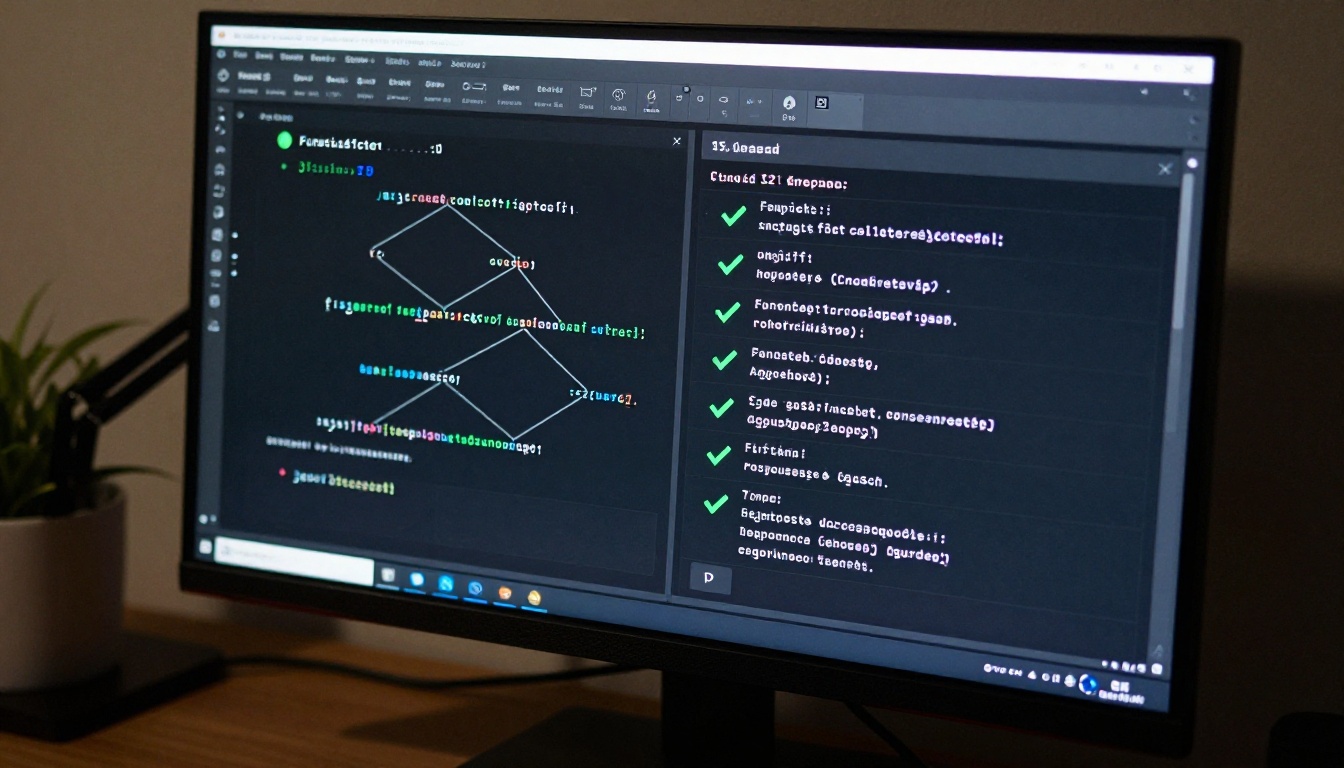
One of the subtler improvements in Opus 4.7 is how it handles long context windows during multi-step execution. Previous models tended to show a form of attention decay, where information at the beginning of a long context received progressively less weight as the context window filled with intermediate results and tool outputs.
Opus 4.7 shows meaningfully better recall of original instructions, constraints, and earlier tool results when operating deep into a long agentic session. For workflows that run hundreds of steps with accumulated intermediate results, this is not a minor convenience. It is the difference between a reliable pipeline that can be left to run overnight and one that requires constant human monitoring to catch when it has silently deviated from its original objective.
How to Use Claude Opus 4.7 on PicassoIA
Claude Opus 4.7 is available directly on PicassoIA, giving you access to the model's full reasoning capabilities without managing your own API infrastructure. Here is how to get the most out of it for agent and automation use cases.
Setting Up Your First Request
- Navigate to the Claude Opus 4.7 model page on PicassoIA.
- In the system prompt field, define the agent's role with explicit constraints. Be specific about what success looks like for the given task, not just what the task is.
- Provide the task context in the first user message. Include any tool definitions or data schemas the model will need to reference during execution.
- If the interface exposes a thinking budget parameter, enable it. For complex automation tasks, this is always worth the token cost.
- Specify stopping conditions explicitly. Tell the model when it should report completion versus when it should continue working.
💡 System prompt pattern that works: "You are an automation agent. Your goal is [X]. You have access to the following tools: [list]. Do not proceed to the next step without verifying that the previous step produced the expected output format. If a step fails, describe the failure and propose a corrective action before retrying. Stop and report your final state after completing [X] or after [N] steps, whichever comes first."
Practical Tips for Agent Prompting
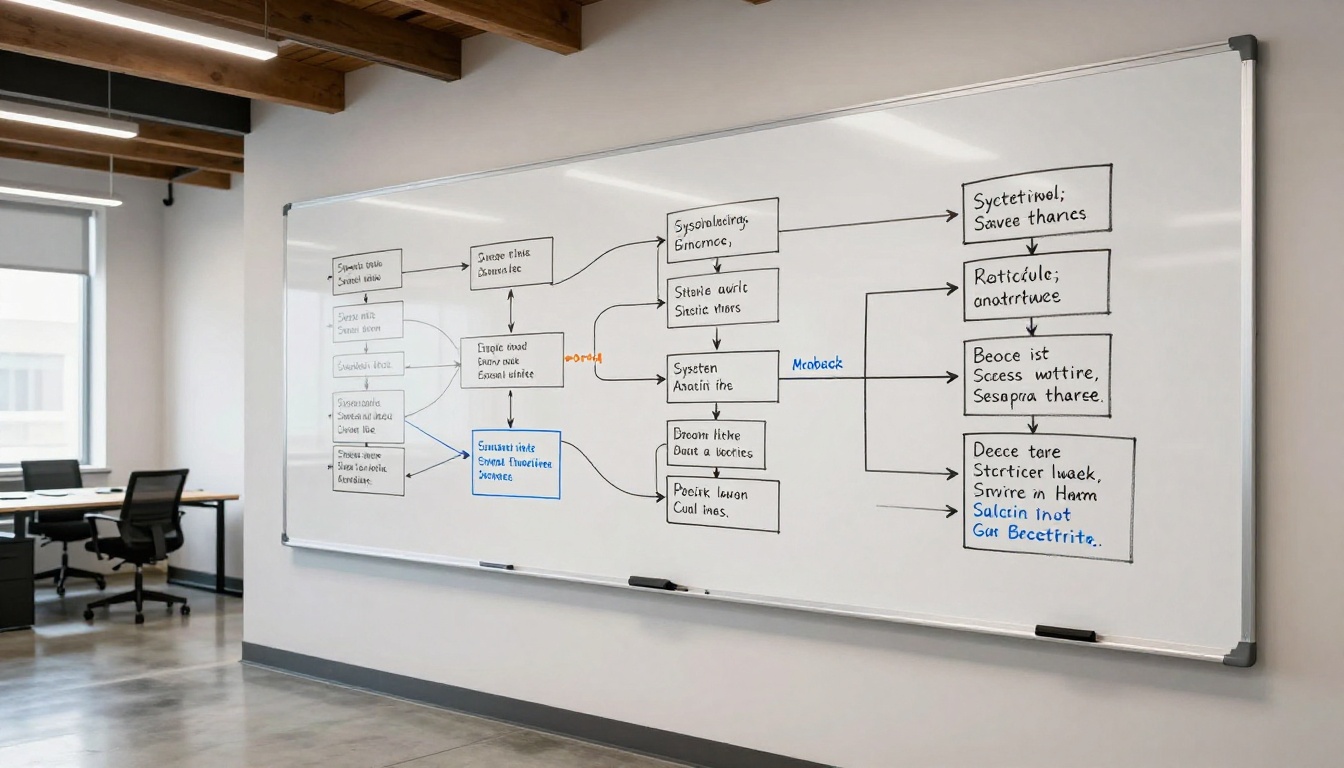
- Be explicit about stopping conditions. Tell the model exactly when the task is done. Open-ended agents loop unnecessarily because they do not know what "finished" looks like.
- Give tool call examples in the system prompt. Even one example of a correct tool call significantly reduces parameter hallucination rates on subsequent calls.
- Use numbered steps in your instructions. The model follows numbered sequences more reliably than prose paragraphs when executing multi-step workflows.
- Set a maximum iteration count. Instruct the agent to report its current state and stop after N steps without resolution, rather than continuing indefinitely.
- Log intermediate tool call results. Feeding tool outputs back into context explicitly helps the model track what has actually happened versus what it planned to happen.
Real-World Automation Use Cases
Code Generation Pipelines
One of the strongest demonstrated uses of Claude Opus 4.7 is in multi-file code generation pipelines where the model must analyze an existing codebase, write new modules that respect existing patterns and conventions, generate corresponding test suites, and update configuration files accordingly. This is a four-step chain where each step depends on the output of the previous one.
Earlier models frequently broke the pattern at step three or four, generating tests that referenced functions with wrong signatures or configurations pointing to non-existent paths. Opus 4.7's context retention and extended reasoning dramatically reduce this failure rate. The model reasons explicitly about what it read in step one before writing anything in step four.
💡 You can pair code-generation agents built on Opus 4.7 with text-to-image and super-resolution models on PicassoIA to produce AI-generated documentation visuals or architecture diagrams alongside the generated code, creating a fully automated documentation pipeline.

Research and Synthesis Agents
A research agent built on Opus 4.7 can take a broad question, break it into sub-queries, retrieve information from multiple sources, reconcile conflicting data points, and produce a structured synthesis report autonomously. What makes this work at scale is not just the model's knowledge base but its ability to track source reliability, note gaps in its evidence, and flag areas where it could not find sufficient data to support a conclusion.
That meta-reasoning capability, the ability to reason about the quality of its own reasoning, is significantly stronger in Opus 4.7 than in Claude 3.5 Sonnet or Claude 3.5 Haiku. For research tasks where the downstream consumer of the report needs to trust its conclusions, this self-calibration matters more than raw knowledge breadth.
Support Automation at Scale
Customer support automation is one of the most commercially important agent use cases, and one of the most unforgiving. The challenges are well-known: support queries are often ambiguous and require clarification before action, incorrect automated responses damage trust more than no response at all, and edge cases appear far more frequently than in controlled test environments.
Opus 4.7's improved tool use reliability means it makes fewer mistakes when querying CRM systems, checking order status, or triggering refund workflows. Its extended reasoning helps it decide when not to act autonomously and escalate to a human agent instead, which is arguably the most important judgment call in any support automation system. A model that knows its limits is more valuable than one that always attempts an answer.

Claude Opus 4.7 vs Other AI Models
When to Pick Opus Over Sonnet
The cost difference between Claude Opus 4.7 and Claude 4.5 Sonnet is real and should factor into architecture decisions. Here is a practical decision framework based on task type:
The practical rule: use Opus 4.7 when the cost of an incorrect decision in an agentic step is higher than the cost of the extra tokens. For most production automation pipelines that touch money, customer data, or production code repositories, that bar is met.
Opus 4.7 Among Frontier Models for Agents
When comparing Claude Opus 4.7 against other frontier models available on PicassoIA, the distinctions become clearer around specific workload types. Models like GPT-5 and Gemini 3 Pro are strong across general tasks, but Anthropic's training approach for Opus 4.7 specifically targets the failure modes described earlier in this article.
What this means practically: on tasks where the model must make high-stakes autonomous decisions with incomplete information, Opus 4.7's tendency toward explicit internal reasoning before committing to an action leads to higher task completion rates in head-to-head comparisons. On tasks that are fast, high-volume, and low-stakes, the cost efficiency of models like GPT-5 Mini or Gemini 3 Flash becomes more relevant.
The right answer for most production teams is a tiered architecture: Opus 4.7 at decision nodes, faster and cheaper models for execution of well-defined subtasks.
Benchmark Performance That Actually Matters
Benchmarks for large language models are notoriously gameable and frequently poorly correlated with real-world utility. The numbers that matter for agentic workloads are:
- Tool call accuracy rate: How often does the model call the right tool with correct parameters on the first attempt?
- Multi-step task completion rate: What percentage of N-step tasks reach a correct terminal state without human intervention?
- Context utilization at long range: Does recall of earlier context degrade as the session lengthens, and if so, at what rate?
On all three metrics, Opus 4.7 shows improvements over its predecessors in Anthropic's published evaluations. Third-party testing in production environments has generally confirmed these findings, with the largest gap appearing in tasks with fifteen or more sequential steps that involve real tool calls to external systems.

3 Limitations Worth Knowing
No model is appropriate for everything. Before deploying Claude Opus 4.7 in a production pipeline, be clear-eyed about these constraints.
Token Cost at Scale
Opus 4.7 is the most expensive model in the Claude 4 family on a per-token basis. For high-volume applications running hundreds of thousands of requests per day, the cost difference versus Claude 4.5 Sonnet becomes a significant line item. The standard approach is a tiered architecture: use Opus 4.7 for complex decision nodes and task planning phases, and route simpler, well-defined subtasks to Sonnet or Claude 4.5 Haiku.
This is not a workaround. It is how most production teams at scale actually use frontier models: strategically, at the points where capability differences translate into measurable outcome differences.
Latency in Real-Time Flows
Extended thinking adds latency. For applications where users expect sub-second responses, a live chat interface or an interactive code completion tool, Opus 4.7 with thinking enabled is not the right choice. This is not a flaw in the model. It is a fundamental tradeoff: deeper reasoning requires more time. For background automation jobs, batch processing, and asynchronous agent loops where a task runs while a user does something else, latency is rarely a binding constraint and the reasoning quality benefit dominates.
Context Window Boundaries
Even with improved long-context performance, there are hard limits on how much information Claude Opus 4.7 can hold in a single context window. Very long agentic runs that accumulate large amounts of intermediate data, tool outputs, error logs, and revised plans will eventually approach these limits. Building a lightweight context compression or summarization step into your agent loop is standard practice for production deployments that run for hours or process very large datasets. This applies to all frontier models, not just Opus 4.7, and is best handled at the orchestration layer rather than at the model level.
Try Building Something with PicassoIA
You have seen what Claude Opus 4.7 can do for agents and automation: stronger reasoning in multi-step loops, more reliable tool use, better context retention, and a model architecture that was designed for autonomous execution rather than retrofitted for it.

Now consider what happens when you pair that reasoning capability with a full suite of AI creative and generation tools in a single platform. PicassoIA brings together the strongest LLMs, image generation models, video tools, voice synthesis, and more. You can use Claude Opus 4.7 to reason through and draft complex content, then hand off to image generation or super-resolution models to produce photorealistic visuals. You can use Claude 4.5 Sonnet for faster iterative drafts when speed matters more than depth.
Whether you are building a research automation workflow, generating documentation at scale, or experimenting with what a fully AI-powered content pipeline looks like in practice, PicassoIA gives you access to the models and infrastructure to do it without setting up your own API keys and billing accounts across a dozen different providers.
Start with Claude Opus 4.7 on PicassoIA today. Build your first agentic prompt. Define a real task with real steps, give it the tools it needs, and observe how far it gets without human intervention. The results will tell you more about this model than any benchmark number can.


