The gap between a good LLM and the best one for your specific job in 2027 is wider than ever. With dozens of capable models now available from OpenAI, Anthropic, Google, Meta, DeepSeek, xAI, and others, picking the wrong one can cost you money, time, and quality. This article breaks down what actually separates them, model by model, so you can make a faster decision.
The LLM Landscape in 2027

Why the Rankings Keep Shifting
Two years ago, there were maybe three or four models worth discussing seriously. Today, there are dozens that could legitimately be called "the best" depending on what you are measuring. Reasoning benchmarks, coding scores, context window size, multimodal capabilities, and cost per token all tell different stories about the same model.
The biggest shift in 2026 is that open-source models have closed the gap significantly. Models like Llama 4 Maverick and DeepSeek R1 now compete directly with proprietary models on tasks that would have been unthinkable 18 months ago.
What to Actually Measure
Before diving into individual models, here is what separates the strong ones from the rest:
- Reasoning depth: Can it solve multi-step logic problems without losing track of the original goal?
- Code quality: Does it produce working code on the first pass, or does it require constant correction?
- Context handling: Does performance degrade at 100K+ tokens, or does it stay sharp throughout?
- Response speed: Is latency acceptable for real-time use cases and agent workflows?
- Cost at scale: What does it actually cost when running thousands of calls per day?
- Multimodal support: Can it process images, documents, and data tables, not just plain text?
💡 No single model wins on all six dimensions. The best choice is always the one that wins on your criteria.
OpenAI's GPT-5 Family

OpenAI launched the GPT-5 family as its most ambitious product line yet. Rather than a single flagship model, it spans specialized variants optimized for different workloads, so you pick the member of the family that fits your task.
GPT-5 and GPT-5 Pro
GPT-5 is the baseline, and it is genuinely strong across the board. It handles writing, reasoning, coding, and complex instruction following without requiring any special setup. For most users with general-purpose needs, it is still the safest starting point.
GPT-5 Pro adds built-in extended thinking, meaning the model takes longer to respond but produces noticeably sharper outputs on problems that require multi-step work. Financial modeling, scientific work, debugging complex codebases: the cost premium is usually worth it.
GPT-5.4 is the latest iteration, refining GPT-5 Pro's capabilities with better instruction following and fewer refusals on borderline but entirely legitimate tasks. GPT-5.1 is purpose-built for agentic workflows and sustained code generation, while GPT-5.2 covers general chat and writing at faster speeds.
The Specialized Variants Worth Knowing
| Model | Best For | Speed |
|---|
| GPT-5 Structured | Clean JSON output for data pipelines | Fast |
| GPT-5 Mini | High-volume, low-cost repetitive tasks | Very Fast |
| GPT-5 Nano | Edge and embedded low-latency applications | Ultra-fast |
| o4-mini | Reasoning tasks without Pro pricing | Fast |
| o1 | Deliberate step-by-step problem solving | Moderate |
| GPT-4o | Proven multimodal performance | Fast |
| GPT-4.1 | Writing, reasoning, and chat at lower cost | Fast |
💡 If you want GPT-5-class reasoning without the full GPT-5 Pro price, o4-mini is consistently underrated for math, logic, and structured problem-solving.
Anthropic's Claude 4 Series

Anthropic has built Claude's reputation on three things: safety, long-context reliability, and writing quality. The Claude 4 series continues that trajectory while pushing hard on reasoning and coding tasks.
Claude Opus 4.7
Claude Opus 4.7 is Anthropic's most capable model. Its standout strength is handling very long documents without the quality degradation that plagues most models past 50K tokens. Legal documents, research papers, and large codebases: Opus 4.7 reads and synthesizes them with precision that other models struggle to match.
It also outperforms most models on nuanced writing tasks. Tone control, stylistic variation, and complex instruction following are all noticeably better than what GPT-5 base delivers by default.
Claude Opus 4.6 is its predecessor, still widely used due to its stability and well-understood behavior in production environments.
Claude 4 Sonnet and Below
For teams that need Claude's quality at lower cost, the lineup scales down cleanly:
💡 Claude models consistently beat competitors on document-heavy tasks. If your workflow involves reading or summarizing long text, this family deserves serious consideration before defaulting to OpenAI.
Google's Gemini 3 Models

Google's Gemini 3 lineup is arguably the most underrated in 2027. The models combine strong multimodal performance with aggressive pricing and impressive context windows.
Gemini 3.1 Pro
Gemini 3.1 Pro is Google's flagship. Where it really pulls ahead is multimodal reasoning: feeding it a combination of images, tables, code, and text produces coherent, integrated outputs that rival or exceed OpenAI's models in that specific domain.
Its deep integration with Google's tools also makes it the natural choice for teams already working within Workspace, BigQuery, or other Google services. Gemini 3 Pro offers similar capabilities at a slightly lower price point.
Gemini 3 Flash: Speed vs. Depth
Gemini 3 Flash sacrifices some depth for dramatically faster response times. For customer-facing chat applications, quick document Q&A, or pipelines where throughput matters more than nuance, it is one of the best options available. Latency is genuinely impressive.
Gemini 2.5 Flash remains relevant for teams on tighter budgets who need reliable performance without the cost of newer Gemini 3 variants.
Open-Source Heavy Hitters

The open-source segment has produced models in 2026 that were impossible to imagine just two years ago. Free to run, transparent in their weights, and increasingly competitive with the best proprietary options.
Meta Llama 4 Maverick
Llama 4 Maverick Instruct is Meta's biggest leap forward yet. It competes directly with mid-tier proprietary models on reasoning and coding benchmarks, and its open weights mean you can fine-tune it for domain-specific applications without licensing fees or usage restrictions.
Llama 4 Scout Instruct is the faster, lighter variant suited for latency-sensitive applications where the full Maverick architecture is more than needed.
DeepSeek R1 and v3.1
DeepSeek R1 is the reasoning specialist of the open-source world. It uses a chain-of-thought architecture that makes its reasoning process fully visible, which is valuable both for verifying answers and for debugging complex problems. On math and code tasks, it matches or exceeds GPT-4-class models at a fraction of the cost.
DeepSeek v3.1 is DeepSeek's general-purpose model with strong text and code generation across a wide range of domains. DeepSeek v3 remains widely used due to its stability and well-documented behavior in production pipelines.
Qwen3 235B
Qwen3 235B A22B from Alibaba's Qwen team is one of the largest open-source models available in 2027. At 235 billion parameters, it brings enterprise-grade performance to long-form content generation, multilingual work, and complex data processing. It is particularly strong for teams working across Asian language markets or needing broad multilingual coverage.
Other Models Worth Watching
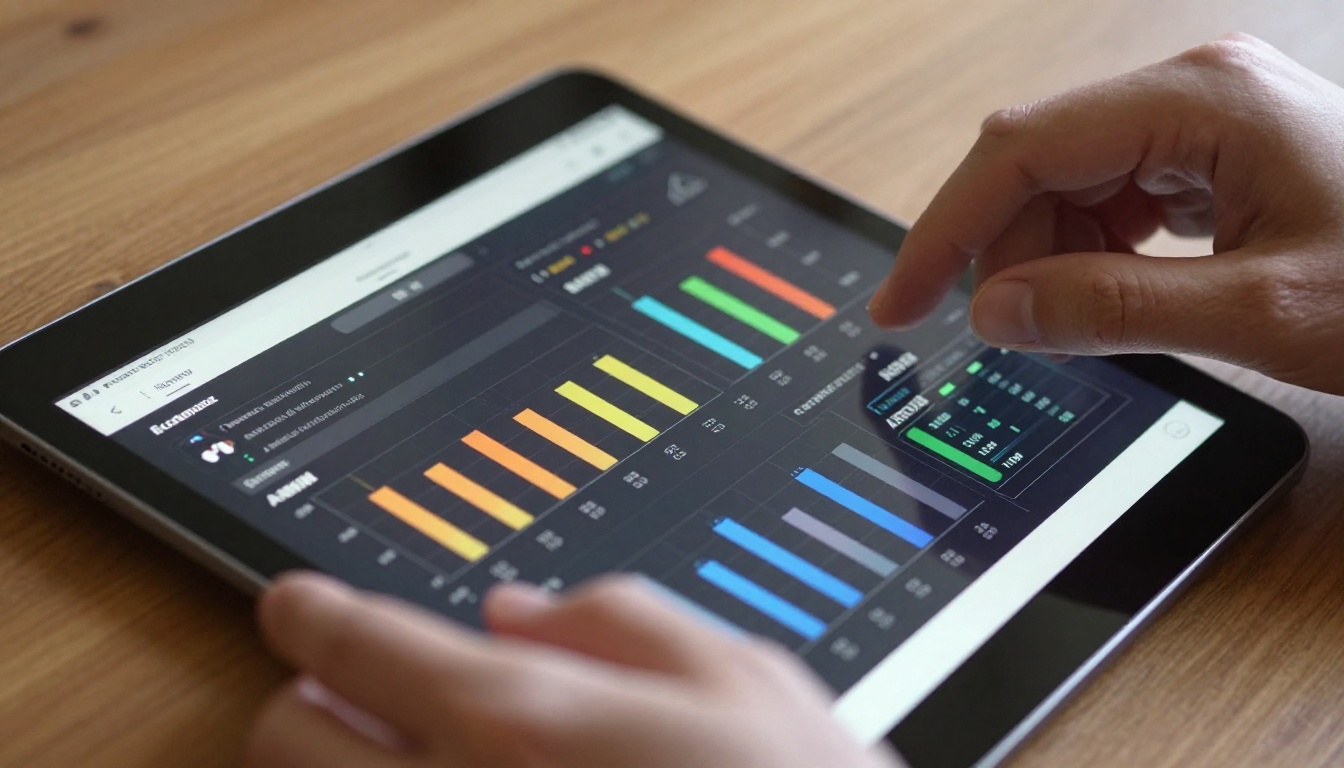
Grok 4 by xAI
Grok 4 from xAI is notable for its strong real-time information access and its approach to working through complex, multi-step problems. It has been particularly well-received by developers building agentic applications that require up-to-date knowledge without manual context injection.
Kimi K2 and IBM Granite
Kimi K2 Instruct from Moonshot AI delivers strong value for coding and reasoning tasks. Kimi K2.6 extends this with better agent support, while Kimi K2 Thinking adds a visible reasoning chain that makes it easier to audit its problem-solving process.
IBM's Granite 4.1 8B is the enterprise-focused option, with a strong emphasis on compliance, safety, and structured code generation. For organizations with strict data governance requirements, it is worth evaluating alongside the more widely discussed frontier models.
Side-by-Side: Which Model Wins What
Here is a direct comparison across the most common real-world use cases in 2026:
💡 Speed versus reasoning quality is the most common trade-off. Models optimized for throughput (Flash, Mini, Nano variants) will always sacrifice some depth on genuinely complex tasks. Know which matters more before choosing.
How to Use LLMs on PicassoIA

PicassoIA hosts the full range of LLMs described in this article, giving you immediate browser-based access without API setup, billing configuration, or infrastructure overhead. Here is how to access any of them.
Accessing a Model
- Go to the Large Language Models collection on PicassoIA
- Browse the full catalog or filter by capability (chat, code, reasoning, vision)
- Click any model, for example GPT-5 or Claude Opus 4.7
- Type your prompt directly in the interface and press run
- Adjust parameters like temperature and max tokens to control output style and length
Getting Better Results Faster
A few things that consistently improve output quality across all models:
- Be specific about format: Tell the model exactly what you want back, whether that is a table, a numbered list, a paragraph, or raw JSON
- State context upfront: Do not assume the model knows your domain. Name it clearly in your first sentence
- Iterate deliberately: A mediocre first answer often becomes excellent with a single targeted follow-up
- Switch models when stuck: If GPT-5.1 gives a disappointing answer on a coding task, run the exact same prompt through Claude 4 Sonnet or DeepSeek R1. Different architectures respond differently to the same input, and the variation is often dramatic

Which Model Is Right for You

The answer to "which LLM is best in 2026" always comes back to the same thing: it depends on the task, the budget, and whether you need open or proprietary weights.
Here is the short version:
The best way to find your preferred model is to run the same prompt through three or four of them and compare results directly. PicassoIA makes that frictionless: no setup, no billing, just open the model page and type. Try GPT-5, Gemini 3.1 Pro, and DeepSeek R1 side by side on your own task today. The differences become obvious fast, and you will stop second-guessing which one to use.


