Two of the most capable language models available in 2027 are now competing for the same users. DeepSeek V4 Pro and Kimi K2.6 Thinking both claim to sit at the frontier of what AI can do, but they get there through fundamentally different architectures and training philosophies. One bets on speed, breadth, and a massive context window. The other slows down deliberately, traces every reasoning step, and refuses to commit to an answer it has not pressure-tested internally. If you are picking between them for real work, the choice matters.
This piece puts both models through coding benchmarks, mathematical reasoning tests, long-document tasks, and real-world developer workflows. By the end, you will know exactly which one fits your work and why the other might still have a place in your toolkit.
What These Two Models Are
Before running any tests, it helps to understand what each model was actually built to do. These are not two versions of the same product. They represent different bets about what a frontier LLM should prioritize.
DeepSeek V4 Pro in Brief
DeepSeek V4 Pro is the latest flagship from DeepSeek AI, the research lab that first surprised the industry with DeepSeek R1's open-source reasoning capabilities. V4 Pro builds on the mixture-of-experts (MoE) architecture refined in DeepSeek v3 and DeepSeek v3.1, activating only the most relevant expert sub-networks per query rather than running the full parameter set every time. This design pays dividends in inference speed without proportionally sacrificing quality.
The result is a model that feels fast and confident across a wide surface area of tasks. General knowledge questions, coding, summarization, translation, data analysis, creative writing: DeepSeek V4 Pro handles all of them with low latency. Its 256k token context window is one of the largest currently available in any publicly accessible model, which opens up use cases that are simply impossible at 128k or below.
Where the model shows its limits is on tasks that require backtracking. If its first intuition about a problem is wrong, the model tends to commit to that path rather than reconsidering. The internal reasoning is not surfaced to the user, so when errors occur, they often arrive as polished, confident wrong answers.
Kimi K2.6 Thinking in Brief
Kimi K2.6 Thinking comes from Moonshot AI and represents a deliberate evolution of the Kimi K2 Thinking architecture. The "Thinking" designation is not cosmetic. It means the model runs an extended internal scratchpad before producing its final answer, using reinforcement learning feedback to reward chains of reasoning that arrive at verifiably correct conclusions rather than merely plausible-sounding ones.
This matters because most hard problems in coding, mathematics, and scientific reasoning have objectively correct answers. A model trained to sound confident and a model trained to be accurate are different things, and the gap between them is most visible at the tail of the difficulty distribution, the problems that require genuine reasoning rather than pattern matching to training examples.
Kimi K2 Instruct and Kimi K2.5 provided the foundation, but K2.6 Thinking sharpens the reasoning capabilities specifically for complex multi-step tasks. The tradeoff is latency. The internal reasoning pass costs time. First-token response takes roughly twice as long as DeepSeek V4 Pro.
Benchmark Numbers at a Glance
Raw benchmark scores are imperfect proxies for real-world performance. They still tell you something meaningful, especially when the gaps are consistent across multiple independent test sets.
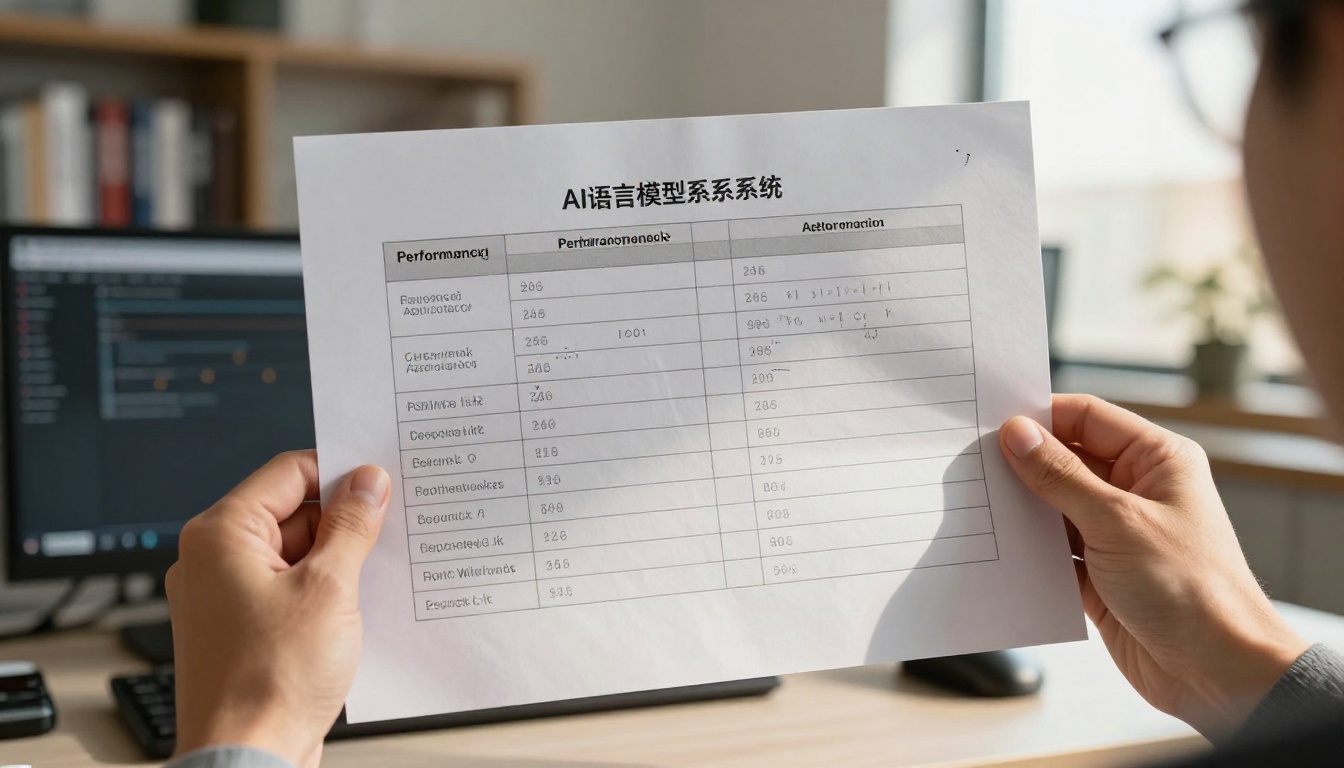
| Benchmark | DeepSeek V4 Pro | Kimi K2.6 Thinking |
|---|
| MMLU (General Knowledge) | ~89.2% | ~88.7% |
| HumanEval (Python Coding) | ~91.4% | ~93.1% |
| MATH Level 5 (Competition) | ~85.6% | ~90.3% |
| GPQA Diamond (Science PhD) | ~72.1% | ~76.8% |
| LiveCodeBench (Competitive) | ~74.3% | ~79.6% |
| Context Window | 256k tokens | 128k tokens |
| Avg. First Token Latency | ~1.8s | ~3.4s |

💡 These numbers reflect community benchmarking from mid-2025. Results shift with prompt formulation and temperature. Use them as directional signals, not hard limits.
Coding Performance
The HumanEval benchmark measures whether a model can write correct Python functions from docstring descriptions. Kimi K2.6 Thinking's 93.1% versus DeepSeek V4 Pro's 91.4% is a meaningful gap, not noise. On LiveCodeBench, which uses problems from competitive programming contests that are unlikely to have appeared in training data, the gap widens to over five points. This suggests Kimi K2.6 Thinking's reasoning advantage is genuine rather than the result of memorizing common coding patterns.
That said, DeepSeek V4 Pro writes usable code very fast. For boilerplate generation, simple script writing, API integration work, and code translation between languages, the speed advantage is real and the quality is entirely acceptable. The 91.4% on HumanEval still means it solves 91 out of 100 standard coding tasks correctly on the first attempt.
Math and Reasoning
A 4.7-point gap on competition-level MATH problems is significant. MATH Level 5 problems require chained algebraic reasoning, geometric proof construction, and combinatorics that cannot be solved by retrieving a memorized pattern. The model has to actually work through them. Kimi K2.6 Thinking's thinking mode gives it a working scratchpad to hold intermediate values, verify sub-steps, and revise when a calculation path does not converge. That structural advantage explains the gap.
GPQA Diamond tests graduate-level science reasoning across chemistry, biology, and physics. The 4.7-point advantage for Kimi K2.6 Thinking holds at this harder level too, suggesting the reasoning benefit scales with difficulty rather than plateauing at moderate complexity.
The Thinking Mode Difference
This is the architectural choice that separates these models most clearly, and understanding it changes how you should use each one.
DeepSeek's Direct Approach
DeepSeek V4 Pro responds like an expert who has internalized their domain deeply enough that they do not need to show their work. Ask it to solve a problem and it produces output. The internal computation that arrives at that output is not surfaced to the user. This is how most language models work, and it has genuine advantages: lower latency, lower compute cost per query, and responses that are easier to read because they are not padded with reasoning commentary.
The limitation appears when the model's initial intuition is incorrect. Without a visible reasoning chain, errors arrive as confident, well-formatted wrong answers. For tasks where you can verify outputs immediately, code that either compiles and passes tests or does not, calculations you can check in a spreadsheet, this limitation is manageable. You run the code, you see the error, you ask for a fix. For tasks where verification is expensive or impossible, drafting a legal argument, constructing a scientific hypothesis, planning a multi-step project, confident errors are costly.
Kimi's Chain-of-Thought
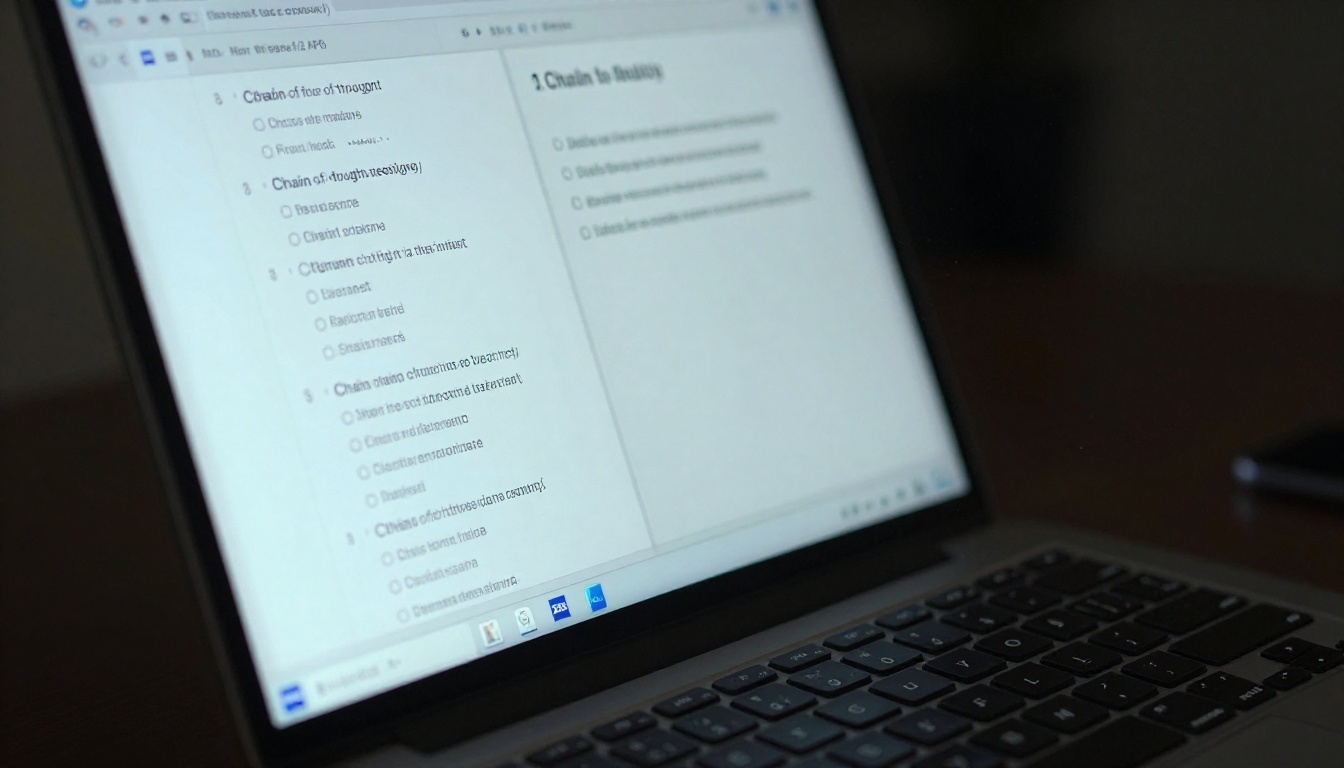
Kimi K2.6 Thinking shows you its reasoning. This sounds like a minor feature. In practice it changes the interaction model significantly. When the model encounters a point where its reasoning chain reaches a contradiction or an uncertain branch, it flags that uncertainty explicitly rather than resolving it silently with a confident guess. You see the backtrack. You see the model reconsider. You can intervene at that point if you have domain knowledge that should constrain the answer.
The Kimi K2 Thinking architecture trained this behavior specifically. The reinforcement learning reward function was designed to value arriving at correct answers through genuine reasoning exploration, not just producing text that sounds like correct reasoning. The practical effect is a model that is substantially less likely to hallucinate on tasks where multiple reasoning steps depend on each other.
Speed vs Accuracy Tradeoff
The 1.8-second versus 3.4-second first-token latency gap does not sound decisive in isolation. Context changes that calculus.
In an interactive session where you are asking 60 to 80 questions over two hours, those extra 1.6 seconds per response add up to 100 to 130 seconds of additional waiting. That is not catastrophic. But in a real-time application, an autocomplete tool, a customer-facing chatbot, a coding assistant responding to every keystroke pause, the latency difference is felt at a product level. DeepSeek V4 Pro wins on any use case where the human experience of waiting matters.
Kimi K2.6 Thinking's argument against that is different. It does not try to win on raw speed. It argues that its answers require fewer iterations to be useful. If you ask DeepSeek V4 Pro to solve a complex debugging problem and it gives you three plausible hypotheses that you then have to validate one by one, the total time to resolution may be longer than if Kimi K2.6 Thinking had spent 3.4 seconds thinking and given you the correct hypothesis directly.
💡 For batch processing pipelines and high-volume API workloads, DeepSeek V4 Pro's MoE architecture is typically more cost-efficient per token. For precision tasks where getting it right the first time saves significant downstream work, Kimi K2.6 Thinking often pays back the latency cost in fewer correction rounds.
Real Coding Tests
Algorithmic Problems
Running both models through LeetCode Hard problems reveals consistent behavioral patterns. DeepSeek V4 Pro generates working solutions quickly on problems that fit recognizable structural templates: dynamic programming over a grid, shortest-path variants, interval merging. The implementation is clean, the code is idiomatic, and it arrives fast. The failure mode is edge cases. Off-by-one errors on boundary conditions, incorrect handling of empty inputs, and wrong assumptions about integer overflow appear more frequently than they do in Kimi K2.6 Thinking's outputs.
Kimi K2.6 Thinking tends to pause at the edges explicitly. The reasoning chain will surface thoughts like "I should check whether the list can be empty before indexing" or "this approach assumes the array is sorted, but the problem statement does not guarantee that." These checkpoints catch the class of bugs that trip up even experienced developers writing under time pressure. On novel algorithmic problems with non-obvious solutions, the gap between the two models becomes substantial.
Debugging and Refactoring
Both models perform well when given clean stack traces, error messages, and the relevant source code. Given a Python TypeError with a full traceback and 50 lines of context, either model identifies the bug correctly in most cases. The differentiation shows up on vague bug reports. "This function sometimes returns None" or "the output is occasionally wrong on large inputs" are the kinds of descriptions real users actually give.
DeepSeek V4 Pro generates a list of likely candidates with confidence and offers fixes for each. The list is usually correct, occasionally not. Kimi K2.6 Thinking walks through diagnostic reasoning before committing to a hypothesis: "Let me consider the cases where None could be returned. The function has three early return points and one assignment that could fail silently." The diagnosis it arrives at is more frequently the right one. For refactoring large modules, DeepSeek V4 Pro's 256k context window provides a practical edge, fitting entire codebases into a single prompt where Kimi K2.6 Thinking's 128k window requires chunking.
Context Window and Long Documents
Context window size determines which categories of tasks are possible at all. DeepSeek V4 Pro's 256k token window holds roughly 200,000 words of text in a single prompt. That is enough for an entire novel, a full multi-file codebase, or several years of company communications processed as a single analytical unit.
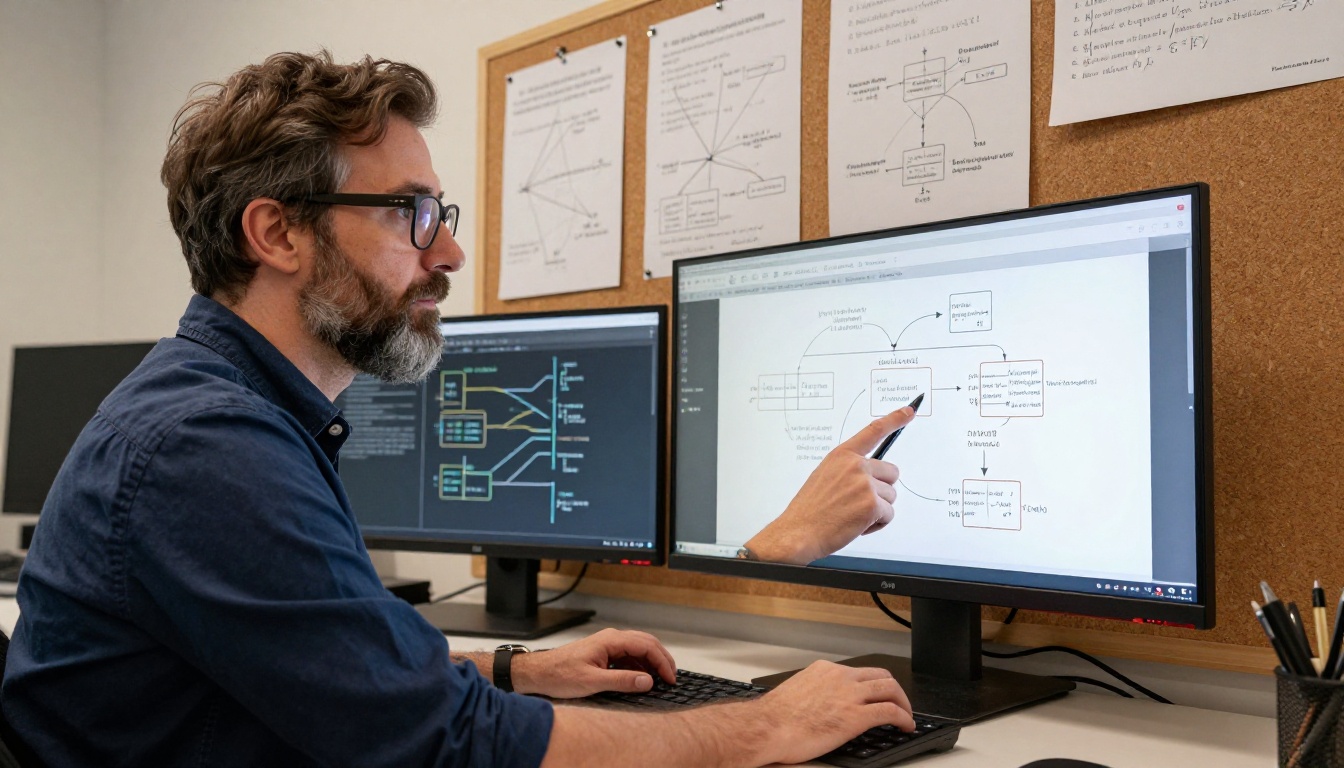
Kimi K2.6 Thinking's 128k window is not small by any historical standard. It comfortably processes most individual documents, standard research papers, legal contracts under 100 pages, and codebases up to medium complexity. The ceiling shows on tasks like analyzing entire software repositories for security vulnerabilities, processing comprehensive financial audit documentation, or maintaining continuity across very long multi-session conversations that have been concatenated.
For teams building production document processing systems, this difference is operationally meaningful. For individual practitioners working on typical daily tasks, 128k tokens is sufficient for the vast majority of real work.
Multimodal and Extended Capabilities
Both models sit within broader platform ecosystems. Accessing them through PicassoIA connects them to a wider set of AI capabilities that extend what you can do beyond text generation.
When you are working on a project that involves both language reasoning and visual content, PicassoIA gives you access to over 91 text-to-image models alongside LLMs like Kimi K2.6 and the DeepSeek family. You can use DeepSeek R1 to draft a technical article, then generate accompanying diagrams and visuals in the same session without switching platforms. The platform also provides text-to-speech models for voice output generation and speech-to-text transcription, which pairs naturally with LLM workflows for content creation and accessibility applications.
For researchers who need a broader benchmark comparison, other frontier models are accessible in the same interface, including GPT-5, Claude 4 Sonnet, Claude Opus 4.7, Grok 4, and Gemini 3 Pro. Having all of them available through a single interface makes direct comparisons substantially faster than spinning up separate API accounts.
Who Should Use Which

The practical choice comes down to the nature of your work more than any abstract notion of which model is "better."
Choose DeepSeek V4 Pro when:
- Response latency directly impacts product quality or user experience
- Your tasks involve documents, codebases, or data sets exceeding 128k tokens
- You are running high-volume API workloads where per-token cost is a real budget concern
- Most of your outputs are immediately verifiable, code that runs or does not, facts you can check
- You need broad capability across many domains rather than exceptional depth in one
Choose Kimi K2.6 Thinking when:
- First-attempt accuracy matters more than response speed
- Your work involves competition-level math, complex algorithms, or scientific reasoning chains
- You need to audit the model's reasoning, not just accept its conclusions
- You are working on problems where a confident wrong answer is more costly than a slow correct one
- Debugging involves non-obvious failure modes that require systematic hypothesis elimination
The most effective pattern for teams with diverse workflows is using both. Route speed-sensitive, high-volume, or verification-friendly tasks to DeepSeek V4 Pro. Route precision-critical, mathematically intensive, or reasoning-dependent tasks to Kimi K2.6 Thinking. The two models are complementary more than they are competitive.

Both Available on PicassoIA
PicassoIA's large language model library gives you direct access to both model families without API account management. The Moonshot AI lineup includes Kimi K2.6, Kimi K2 Thinking, Kimi K2 Instruct, and Kimi K2.5. The DeepSeek family includes DeepSeek R1, DeepSeek v3, and DeepSeek v3.1.
Running your own side-by-side comparison takes about five minutes:
- Open picassoia.com/en/all-models and filter by Large Language Models
- Select Kimi K2.6 and enter a complex reasoning prompt relevant to your actual work
- Copy the same prompt to DeepSeek v3.1 and compare outputs side by side
- Pay attention to where the reasoning chains diverge and which answer you would trust in a production context
💡 PicassoIA lets you switch between models within the same session. Start a complex task with Kimi K2.6 Thinking for the architectural reasoning, then hand off boilerplate generation to a faster model without rebuilding context from scratch.
Beyond LLMs, the platform offers 91+ image generation models, text-to-speech, speech-to-text, and AI video generation, all accessible without managing separate API keys. If you are building content workflows that mix text generation with visual assets, the unified access point saves significant setup time.
Make Your Call
DeepSeek V4 Pro and Kimi K2.6 Thinking are both legitimate frontier models that have earned their benchmarks honestly. DeepSeek V4 Pro wins on speed, context capacity, and operational cost at scale. Kimi K2.6 Thinking wins on mathematical reasoning, algorithmic correctness, and the reliability of its chain-of-thought output on genuinely difficult problems.
Neither model is universally better. They are calibrated for different kinds of difficulty. Pick based on what you actually need to get right on the first try.
Both are waiting for you on PicassoIA. Open the platform, run your hardest real-world prompt through both models, and see which one you would rather have in your corner when the stakes are high. You might be surprised which one earns your daily trust.


