Every few months, a headline appears claiming Google has cracked antigravity, and the internet goes into overdrive. The reality is both less dramatic and more interesting than those headlines suggest. Gravity is the most familiar force in human experience, yet it remains the least understood at a quantum level. What Google researchers have published touches on that gap, and it requires no physics degree to follow.

What Antigravity Actually Means
The word "antigravity" gets used in two very different ways. In science fiction, it means a technology that completely cancels gravitational pull, like flipping a switch that makes objects float. In actual physics, it refers to something far more nuanced: the theoretical and practical manipulation of gravitational force, or the use of other forces to counteract it locally.
Nothing in known physics allows you to simply turn gravity off. What researchers study are ways to reduce its effective pull, counteract it with opposing forces, or simulate its absence in controlled environments. Those are three very different problems, and progress on each of them is real.
Gravity Is Not What You Think
Most people grow up thinking of gravity as a pulling force between two masses. That description works for everyday calculations, but Albert Einstein showed it is not the whole picture. According to general relativity, massive objects curve the fabric of spacetime itself. What we experience as gravitational pull is actually objects following the straightest possible path through curved spacetime.
This matters because it changes what "antigravity" would have to accomplish. You would not just need to push two objects apart. You would need to flatten or reverse the curvature of spacetime around an object, which requires a truly staggering amount of energy, far more than any current or projected technology can produce.
The practical takeaway: No one is turning off Earth's gravity anytime soon. But counteracting it locally, simulating its absence, and detecting its waves are all things we can do right now.
Why Canceling Gravity Is Complicated
The gravitational force between two objects depends on their masses and the distance between them. For an object on Earth's surface, that force is enormous because Earth is enormously massive. To counteract it completely, you need an equal and opposite force applied continuously.
Rockets do this through thrust. Orbital spacecraft do this by moving sideways fast enough that their constant fall matches the curvature of the planet below them. Neither of these is truly "canceling" gravity. They are working around it with other forces.
The dream of generating a true gravitational shield, something that blocks or reverses gravitational attraction between masses, has no basis in currently understood physics. That does not stop researchers from looking for mechanisms that might exist outside our current models, and that is exactly where Google enters the picture.
What Google Has to Do With It
Google's involvement in gravity research is not about levitation devices or spacecraft. It comes primarily through quantum computing research and its intersection with theoretical physics.
Quantum Computing Meets Gravity Simulation
In 2022 and 2023, Google published research using their Sycamore quantum processor to simulate aspects of quantum gravity, specifically something called a traversable wormhole in a quantum system. Headlines immediately declared that Google had "created a wormhole," which overstated things considerably.
What actually happened: researchers used a quantum computer to simulate the mathematical behavior of two quantum systems that, according to a hypothesis called the holographic principle, have the same information structure as a wormhole. They did not create any physical wormhole. They ran a calculation on a chip that verified predictions of a theoretical model.
The significance, however, is real. Quantum gravity is the unsolved problem of uniting general relativity (which describes gravity at large scales) with quantum mechanics (which describes particle behavior at tiny scales). These two frameworks are mathematically incompatible, and resolving that incompatibility is one of the biggest open problems in physics.
Using quantum computers to simulate scenarios that cannot be tested experimentally is genuinely new territory. It opens a path to probe questions about quantum gravity that were previously purely theoretical, untouchable by any real-world instrument.
Reading the Papers Without the Hype
When Google publishes physics research, the papers go through peer review and say exactly what was done. The gap between the paper and the headline is usually enormous. Terms like "wormhole" and "antigravity" attract clicks, while the actual findings are about mathematical models and quantum information theory.
For a beginner, the most useful habit is to look for what was actually measured or calculated, not what the model is named. Google's quantum gravity simulations measure quantum information transfer through entangled systems. They reveal something about how information behaves in quantum systems that share mathematical structure with gravity theories.
That is not antigravity. It is something more interesting: a new experimental window into the mathematics of gravity itself, and one that will grow more powerful as quantum computers improve.
Levitation Technologies That Actually Exist
While theoretical antigravity remains elusive, real levitation technologies are in daily use around the world. None of them cancel gravity, but several create the practical effect of objects floating without physical support.
The Meissner Effect in Action
Superconductors are materials that, when cooled below a critical temperature, expel all magnetic fields from their interior. This creates a powerful repulsive interaction with permanent magnets. Place a superconducting disk above a magnet track, and it hovers in a stable, self-correcting position.
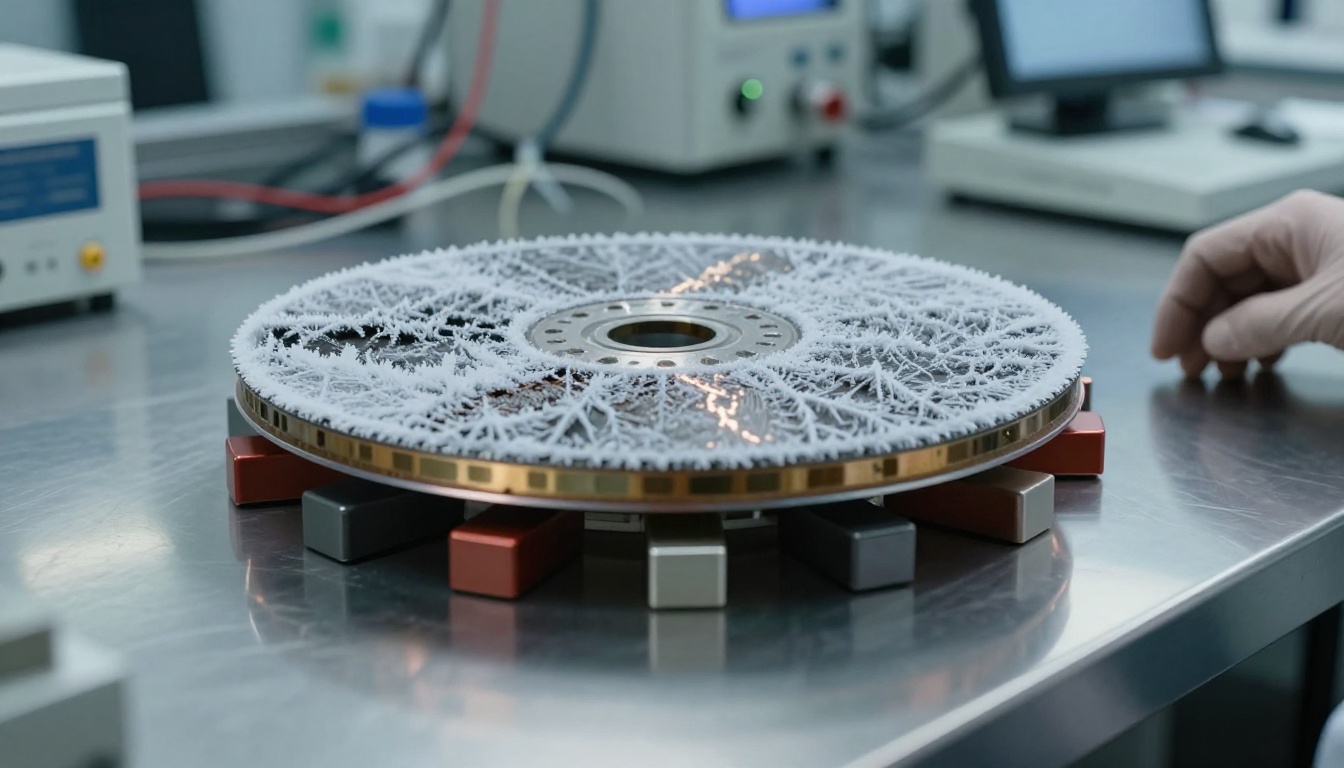
This is called the Meissner effect, and it is the basis for real, working levitation that requires no moving parts and no continuous energy input beyond keeping the material cold. The disk simply floats.
The limitation is obvious: you need extremely low temperatures, typically achieved with liquid nitrogen or liquid helium. It works beautifully in controlled conditions and is not yet practical for most real-world applications.
Research into room-temperature superconductors, materials that exhibit this behavior without extreme cooling, is one of the most actively pursued areas in condensed matter physics. A confirmed, scalable room-temperature superconductor would change electronics, energy transmission, and levitation technology in ways that are difficult to overstate.
Maglev Trains Are Real Antigravity
The most commercially mature levitation technology is magnetic levitation, or maglev. Maglev trains in Japan, China, and Germany use powerful electromagnets to lift the train body off its guideway track, eliminating friction and allowing speeds that conventional rail cannot reach.

Japan's SCMaglev holds the world speed record for a train at 603 km/h, achieved in 2015. The technology uses superconducting magnets and a reaction rail to generate lift and propulsion simultaneously. The train body never touches the track.
From a physics standpoint, this is a genuine counteraction of gravity for the train body, achieved through electromagnetic force. The energy cost is significant, but the absence of friction makes long-distance operation efficient enough to justify building commercial lines.
Maglev systems compared:
| Technology | Lift Method | Record Speed | Status |
|---|
| SCMaglev (Japan) | Superconducting magnets | 603 km/h | Commercial lines in operation |
| Transrapid (Germany) | Electromagnetic suspension | 500 km/h | Shanghai Airport link |
| EMS systems | Attractive electromagnets | 430 km/h | Multiple countries |
| Hyperloop concepts | EM plus vacuum tube | 1,200 km/h (projected) | Testing phase |
How Scientists Study Weightlessness
True weightlessness, as astronauts experience it, is not the absence of gravity. It is free fall. In orbit, the spacecraft and everything inside it are all falling toward Earth at the same rate, so there is no relative force between them. The experience feels like floating, but gravity is absolutely present and doing its job at full strength.
Parabolic Flights and Drop Towers
Before sending experiments to orbit, researchers test them in short bursts of weightlessness on Earth. Parabolic flights have aircraft fly a series of arcing trajectories. At the top of each arc, the aircraft and passengers are in free fall for 20 to 30 seconds.
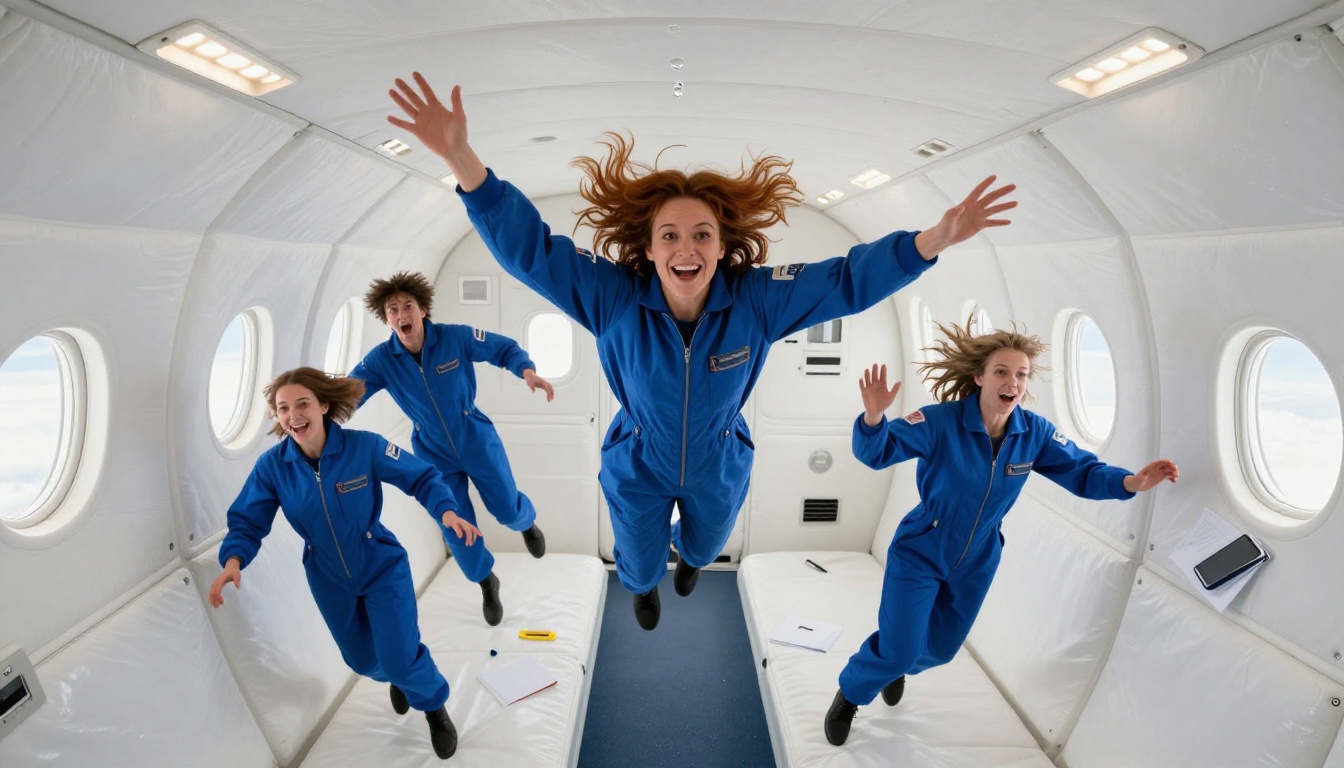
This is how NASA trains astronauts and tests zero-gravity hardware without the expense of orbit. The physics is identical to orbital weightlessness. The time window is short, but 30 seconds is enough to test many biological and mechanical behaviors that matter for space missions.
Drop towers take another approach: objects are released in a tall evacuated shaft and fall for several seconds of microgravity. Research centers in Bremen and Cleveland have drop towers that provide up to 9 seconds of weightlessness for experiments that do not need a human in the loop.
Gravitational Wave Detectors
One of the most remarkable physics achievements of recent decades has nothing to do with canceling gravity and everything to do with detecting its ripples. When massive objects like black holes or neutron stars collide, they send gravitational waves through spacetime at the speed of light.
LIGO, the Laser Interferometer Gravitational-Wave Observatory, detected these waves for the first time in 2015, a century after Einstein predicted them. The facility measures distortions in spacetime smaller than one-thousandth the diameter of a proton.
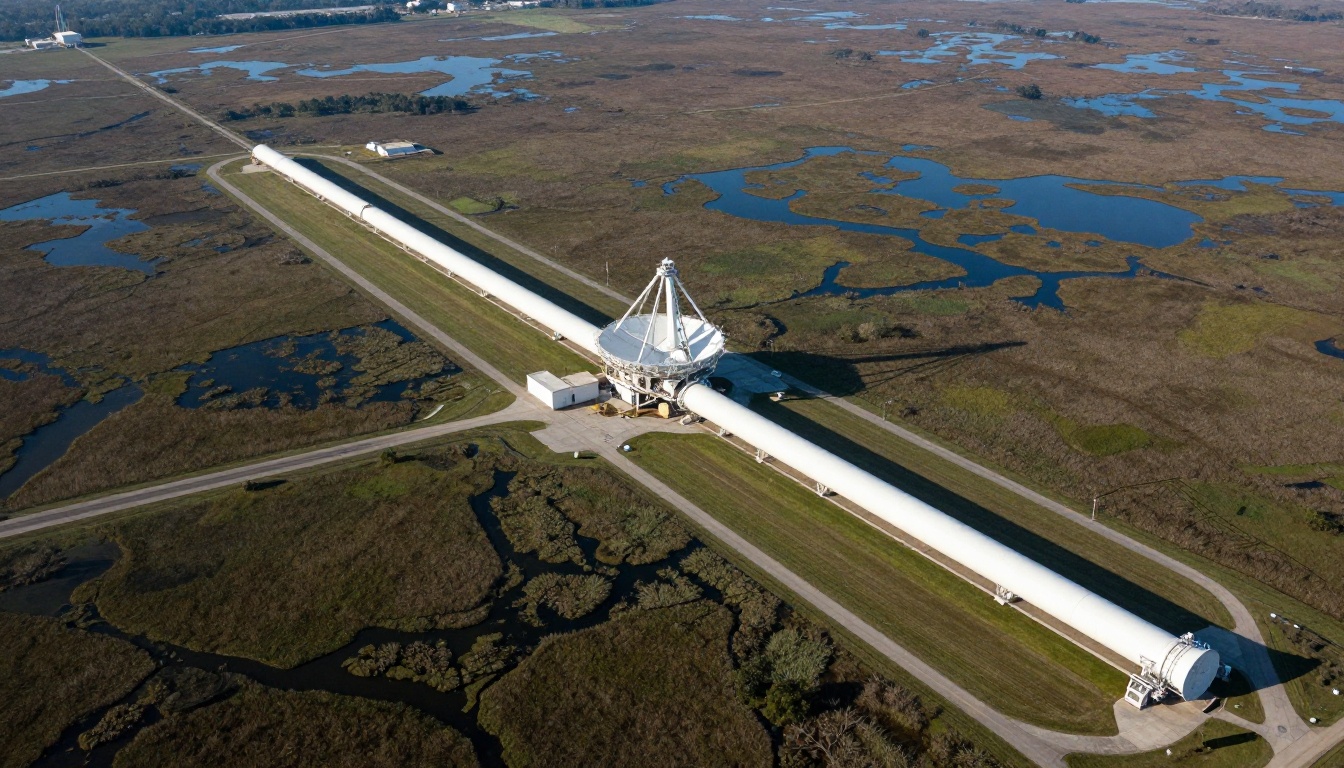
LIGO is not an antigravity device. It is a gravity telescope: a tool for observing the universe through gravitational waves rather than light. It represents the most precise measurement instrument ever built and has opened an entirely new branch of astronomy.
What gravitational wave astronomy reveals: Each detection carries information about the masses, spins, and merger dynamics of distant objects. We are building a map of the universe written in gravity itself.
Why Rockets Still Beat Antigravity
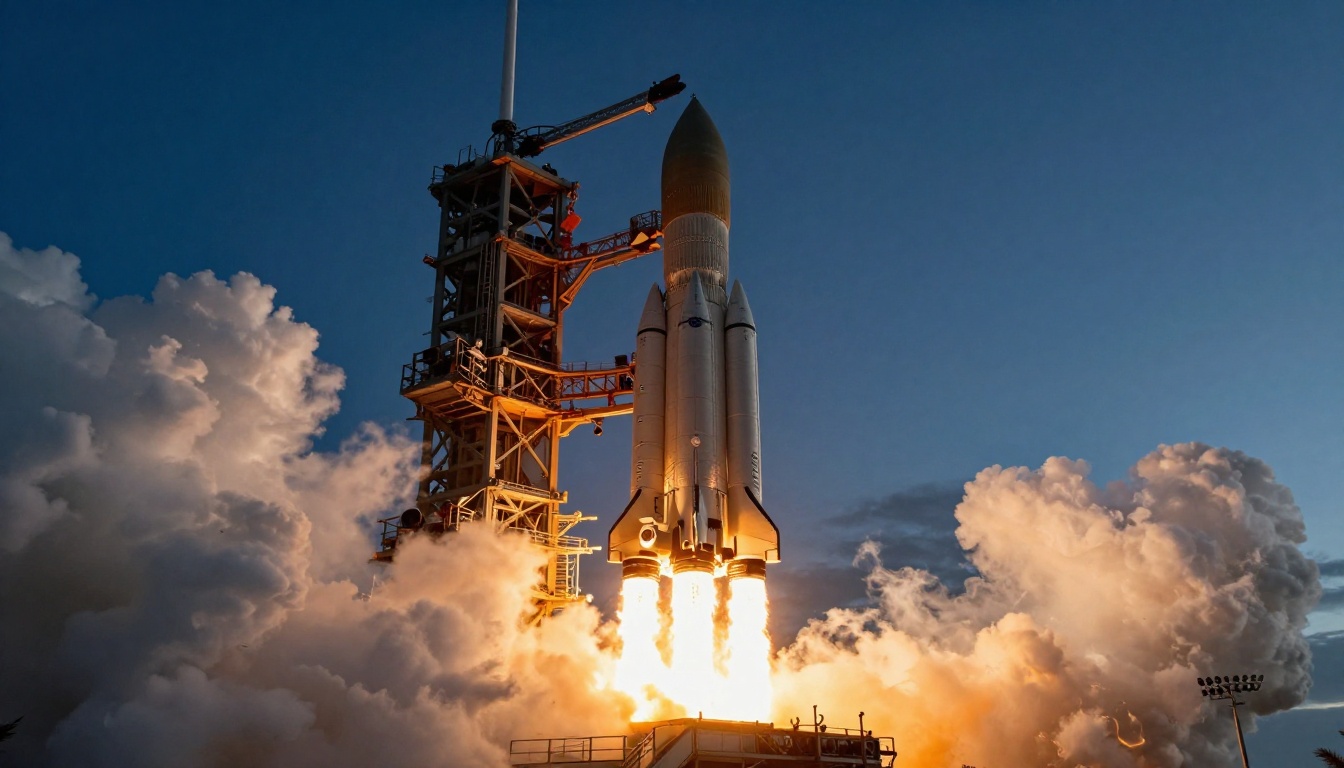
Even if some form of gravity manipulation became possible, rockets would remain the benchmark against which it is measured. Rockets work, are completely understood, and have taken humans to the Moon and beyond. The question is whether anything better can realistically replace them for Earth launch.
The Energy Problem
Any system that counteracts gravity for a spacecraft must apply continuous force against Earth's gravitational pull for the duration of the ascent. The energy required is enormous. For a 10,000 kg spacecraft, lifting it to low Earth orbit requires roughly 30 gigajoules of energy in the best-case scenario.
Rockets store that energy as chemical propellant. An electromagnetic system would need to draw that same energy from somewhere else. The source does not change the calculation. Gravity does not care whether you fight it with rockets, electromagnets, or theoretical exotic matter.
What Ion Propulsion Changes
Ion drives, used on deep space probes like NASA's Dawn mission and ESA's SMART-1, work by ionizing propellant (usually xenon gas) and accelerating the ions electrostatically to very high velocities. The thrust is tiny, far too small for launch, but the efficiency is extraordinary.
Over months and years of continuous thrust in the near-vacuum of space, ion drives achieve speeds and orbital maneuvers that are impossible with chemical rockets. They do not help with Earth launch, but for deep space travel they represent a real step toward more efficient propulsion.
Propulsion systems compared:
| System | Thrust Level | Efficiency (Isp) | Best Use Case |
|---|
| Chemical rocket | Very high | 450 s | Earth launch |
| Ion drive | Very low | 3,000-10,000 s | Deep space cruise |
| Solar sail | Near zero | Unlimited | Long-duration solar missions |
| Nuclear thermal | High | 900 s | Mars transit |
Visualizing Space Physics With AI
One thing that has changed dramatically is how people interact with physics concepts. Where textbooks once offered flat diagrams of orbital mechanics and gravitational fields, AI image generation now makes it possible to create photorealistic visualizations of these concepts from a simple text description.
Platforms like PicassoIA provide access to over 91 text-to-image models capable of generating scientifically-inspired visuals: a spinning black hole bending light around its event horizon, astronauts floating in the ISS cupola, a maglev train suspended above its track in motion, or a superconductor disk hovering with frost forming on its surface from liquid nitrogen cooling.
How AI Brings Physics to Life
The connection between AI image generation and physics education is direct. When a concept is abstract, seeing a photorealistic representation of it changes how the brain processes and retains information. The scale of a gravitational wave detector from above, the sensation of weightlessness in a parabolic flight cabin, the raw power of a rocket clearing its launch tower: these are things most people will never witness in person.
AI image tools make these visuals accessible to anyone with a text description. A student writing about the Meissner effect can generate a laboratory photograph showing a superconductor hovering above a magnetic track. A science communicator can illustrate a piece about LIGO with an aerial view of the facility stretching across Louisiana marshland. The constraint shifts from access to imagination.

What You Can Create on PicassoIA
Creating physics-inspired imagery on PicassoIA's text-to-image models follows one clear principle: specificity matters more than general terms. Compare these two prompts:
Generic: "An antigravity experiment in a lab"
Specific: "A photorealistic laboratory photograph of a black ceramic superconductor disk levitating three centimeters above a permanent magnet track, frost crystals forming on the disk surface, diffused fluorescent overhead lighting, 100mm macro lens, brushed stainless steel workbench, Kodak Portra 400 film grain"
The second prompt produces a result that looks like it belongs in a scientific journal. The difference is sensory specificity: material, lighting, lens, and context. PicassoIA handles that level of detail exceptionally well, producing images indistinguishable from photographs when the prompt is written with care.
Prompt tip: For physics or science subjects, always specify the camera angle, lens length, and lighting source. "Overhead diffused lighting, 50mm lens, eye-level perspective" will consistently outperform vague directions and produce more convincing results.
Where This Research Goes Next
Antigravity as a concept sits at the intersection of several fast-moving fields. Progress in any one of them could meaningfully shift the picture within the next decade.
3 Milestones Worth Watching
1. Room-temperature superconductors. Several research groups have published claims of materials that exhibit superconductivity at or near room temperature. If a stable, reproducible room-temperature superconductor is confirmed and scaled, electromagnetic levitation becomes practical for applications far beyond maglev trains, from contactless manufacturing to new propulsion architectures.
2. Quantum gravity experiments. As quantum computers grow more powerful, simulations of quantum gravity scenarios will grow more complex and more informative. This will not produce a working antigravity device, but it could reveal whether exotic theoretical mechanisms, such as negative energy or spacetime curvature modification, are mathematically plausible at all.
3. Precision gravity measurement. Technologies descended from LIGO are being developed for smaller-scale gravitational sensing. Gravimeters accurate enough to detect underground density variations have clear applications in navigation, construction, and resource mapping. Measuring gravity at this resolution is itself a form of gravity technology with immediate practical value.
None of these are antigravity in the science fiction sense. All of them represent real physics done with real instruments, producing results that build on each other year by year.
The honest picture of Google antigravity is exactly that: serious researchers using serious instruments to probe one of the hardest problems in physics, one experiment at a time. The gap between the headline and the paper is where the actual science lives, and that science is worth paying attention to.
If this breakdown sparked something in you, try visualizing these concepts yourself. PicassoIA's text-to-image tools let you generate photorealistic images of gravitational experiments, space environments, and physics concepts from nothing more than a descriptive text prompt. Start with what you find most striking about gravity, and describe it as if you were directing a photograph. The results might surprise you.


