If your team is running more than a few thousand AI calls per month, the gap between GPT 5.5 Pro and DeepSeek V4 Pro pricing isn't a rounding error. It's a budget decision that can free up thousands of dollars or quietly drain them. Both models sit at the frontier of what's possible in 2027, but they price themselves very differently, and knowing exactly what you're paying for matters more now than ever.
The Numbers Don't Lie

The most straightforward way to see the gap is at the token level. GPT 5.5 Pro charges at premium rates that reflect OpenAI's infrastructure investment, multi-modal capabilities, and the extensive tool-use ecosystem built around it. DeepSeek V4 Pro, by contrast, was engineered with cost-efficiency as a first-class design constraint, not an afterthought.
GPT 5.5 Pro Pricing Breakdown
GPT 5.5 Pro is OpenAI's flagship reasoning and generation model as of mid-2026. Its API pricing sits at approximately $15 per million input tokens and $60 per million output tokens. That positions it at the high end of the frontier model spectrum, but that price includes native image processing, extended context support up to 256K tokens, real-time web access capabilities, and deeply integrated function-calling that makes it the default for enterprise agentic pipelines.
Beyond the raw token cost, GPT 5.5 Pro ships with OpenAI's full enterprise feature set: data residency options, SOC 2 compliance, configurable content filters, and priority API queues. For regulated industries like legal, finance, and healthcare, these aren't optional extras. They're table stakes that justify a portion of the premium on their own.
When you run the math on a mid-scale production deployment, say 10 million input tokens and 2 million output tokens per month, you're looking at roughly $270/month just in API costs. That's before hosting, storage, and any orchestration overhead.
DeepSeek V4 Pro Pricing Breakdown
DeepSeek V4 Pro plays the cost card hard. With input pricing around $2 per million tokens and output pricing around $8 per million tokens, it's aggressively positioned against Western frontier models. Running the same 10M input / 2M output workload costs approximately $36/month on DeepSeek V4 Pro.
That's a 7.5x cost reduction for identical volume. On a 100M token/month workload, the savings swing past $2,300 per month. For a startup or a cost-conscious enterprise team, that difference funds real infrastructure.
DeepSeek V4 Pro also offers batch pricing discounts for asynchronous workloads, which can drop costs even further on non-real-time pipelines like document processing, overnight report generation, or training data curation tasks.
Token Cost Comparison Table
| Model | Input (per 1M tokens) | Output (per 1M tokens) | Context Window |
|---|
| GPT 5.5 Pro | ~$15 | ~$60 | 256K |
| DeepSeek V4 Pro | ~$2 | ~$8 | 128K |
| GPT 5 Pro | ~$12 | ~$50 | 256K |
| DeepSeek V3.1 | ~$1.50 | ~$6 | 128K |
💡 Tip: These figures reflect API pricing from mid-2026. Prices shift frequently. Always verify against official provider documentation before committing to a long-running deployment.
What You Actually Pay Per Task

Raw per-token pricing is only half the picture. The other half is how many tokens each task actually consumes, and that varies significantly by use case.
Simple Text Generation Cost
For standard chatbot queries, customer support responses, or content drafts averaging 500 output tokens, the economics look like this per 10,000 requests:
- GPT 5.5 Pro: ~$30 (at average 100 input tokens + 500 output tokens)
- DeepSeek V4 Pro: ~$4.10 for the same volume
For a support chatbot handling 10K conversations per month, DeepSeek V4 Pro saves roughly $26/month on that workload alone. Multiply by scale and the savings compound fast. At 500K monthly conversations, the delta reaches $1,300/month on this single task type.
Code Generation Cost
Code generation is output-heavy. A typical code completion request might average 80 input tokens and 800 output tokens. For a developer tooling product handling 50K code requests per month:
- GPT 5.5 Pro: ~$2,460/month
- DeepSeek V4 Pro: ~$340/month
The quality gap narrows considerably on code benchmarks in 2026. Many teams route standard code completion to DeepSeek V4 Pro and reserve GPT 5.5 Pro for complex architectural reasoning, multi-file refactors, and tasks requiring deep context about a large codebase passed in full.
Long Document Processing Cost
This is where context window size becomes a real constraint. GPT 5.5 Pro's 256K context window lets you pass entire contracts, codebases, or research papers in a single call. DeepSeek V4 Pro tops out at 128K, which handles most documents but requires chunking for the longest inputs.
For a legal tech product processing 1,000 contracts monthly at roughly 30,000 tokens each:
- GPT 5.5 Pro: ~$1,800/month in input tokens alone
- DeepSeek V4 Pro: ~$240/month (assuming no chunking needed)
That $1,560/month difference is material for most early-stage legal tech products.
Speed and Latency Tradeoffs
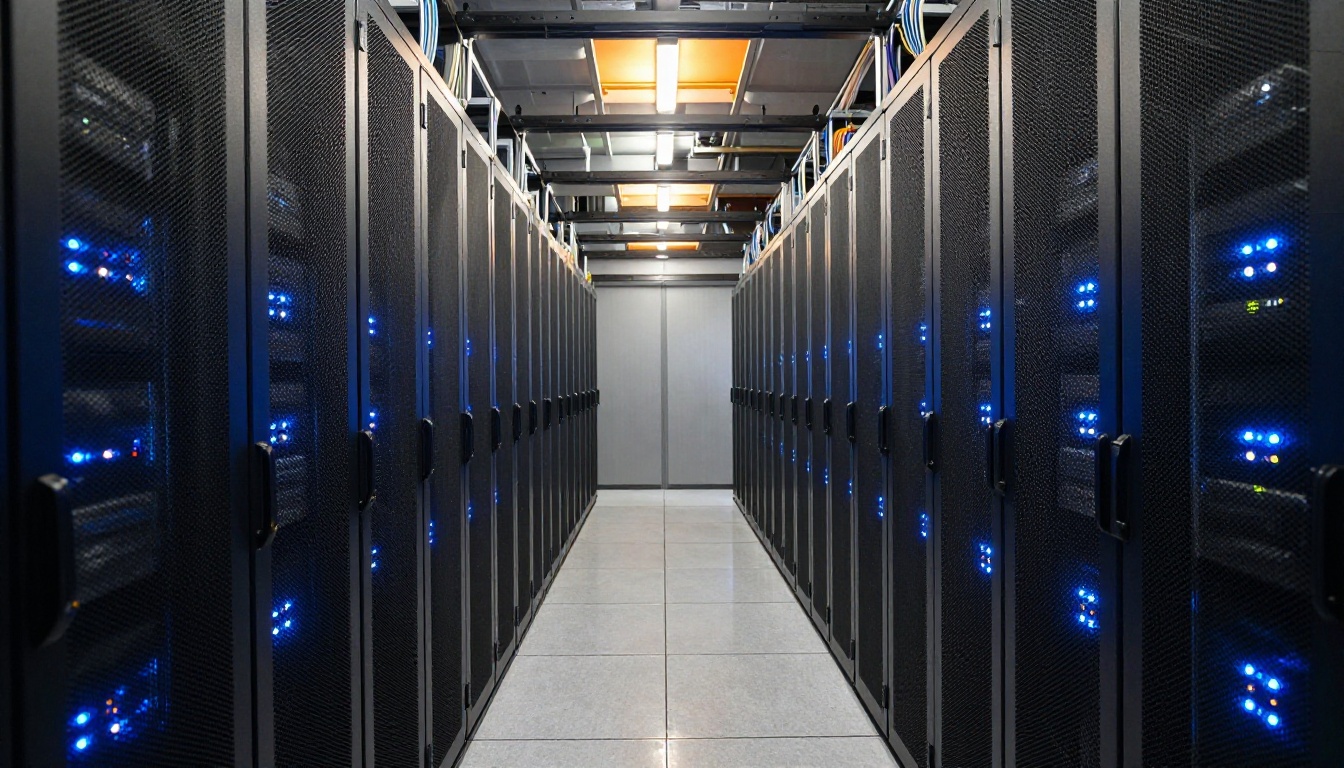
Cost and quality are only two sides of the evaluation triangle. Speed closes the loop, and it matters more depending on how your users experience your product.
Response Time Matters Too
GPT 5.5 Pro's time-to-first-token (TTFT) averages around 400-700ms under normal load, with output throughput in the range of 80-120 tokens per second. That's fast enough for most interactive applications. DeepSeek V4 Pro, particularly when routed through international infrastructure, can introduce higher latency variability, averaging 600-1200ms TTFT, with occasional spikes during peak usage windows.
For real-time chat, voice interfaces, or applications where a user actively waits for a reply, that latency gap becomes noticeable. For batch processing, document analysis, nightly report generation, or async pipelines, it rarely matters in practice.
OpenAI offers priority queues for enterprise tiers of GPT 5.5 Pro, which can reduce p99 latency significantly during peak hours. DeepSeek V4 Pro's priority tier options are more limited, though the situation is improving with their expanding global infrastructure footprint.
Context Window Differences
The 256K vs 128K context gap sounds manageable until you actually hit it. A large codebase passed as context, a full transcript from a three-hour meeting, or a 200-page legal document: these hit the DeepSeek V4 Pro ceiling. When that happens, you either chunk the input, which adds complexity and latency, or you route to GPT 5.5 Pro.
Smart architectures detect input size at the routing layer and switch models automatically. This keeps costs low for the vast majority of requests while gracefully handling the edge cases without manual intervention.
💡 Tip: Design your routing logic early in the project. Hardcoding a single model into every API call is the fastest way to paint your infrastructure into a corner as workload patterns shift.
When GPT 5.5 Pro Makes Sense

For all the savings DeepSeek V4 Pro offers, GPT 5.5 Pro still owns several categories outright.
Use Cases Worth the Premium
Multi-step agentic workflows where the model needs to call tools, process results, and iterate over multiple rounds represent GPT 5.5 Pro's clearest win. Its native function-calling reliability and structured output fidelity are measurably better for chains with five or more tool calls. Each misfire in an agent loop is an error that has to be caught, re-routed, or manually corrected. At production scale, that operational overhead often costs more than the raw token price difference over a monthly billing cycle.
Real-time document analysis with mixed media is another area where GPT 5.5 Pro leads. It processes charts, diagrams, scanned documents, and images natively without preprocessing pipelines. For products where users upload arbitrary files and expect instant interpretation, this matters enormously.
Compliance-sensitive enterprise deployments default to GPT 5.5 Pro because OpenAI's data processing agreements, audit logging capabilities, and enterprise SLAs are more mature and better documented. When a procurement or legal team is signing off on your AI stack, GPT 5.5 Pro is the easier approval.
Enterprise Integrations
GPT 5.5 Pro slots cleanly into the existing OpenAI ecosystem: the Assistants API, batch processing endpoints, file uploads, vector store integration, and the Responses API for stateful agent runs. If your team has architecture built around these primitives, the migration cost of switching to a cheaper model needs to be factored carefully into the total savings calculation.
You can access GPT 5 Pro directly on PicassoIA to test its reasoning and generation capabilities without setting up separate API credentials or managing a new billing account.
When DeepSeek V4 Pro Wins

There's a reason DeepSeek V4 Pro has gained ground rapidly in 2027. The performance-to-cost ratio at mid-tier tasks is simply hard to argue with.
High-Volume Workloads
Any application that processes at scale but doesn't require GPT 5.5 Pro's premium features is a natural candidate. Content moderation, summarization pipelines, structured data extraction from text, translation, classification, and retrieval-augmented generation (RAG) pipelines all run efficiently on DeepSeek V4 Pro without meaningfully compromising output quality on these task types.
A startup running a document summarization product across 5 million documents per month would spend approximately $40,000/month on GPT 5.5 Pro compared to $5,500/month on DeepSeek V4 Pro. That $34,500/month difference funds a senior engineering hire, a meaningful marketing budget, or significant runway extension depending on where you are in your growth stage.
Cost-Sensitive Applications
Early-stage products and indie developers building AI-native tools often can't absorb frontier pricing during the growth phase. DeepSeek V4 Pro makes genuine frontier-quality AI affordable at seed and pre-seed stage. Its benchmark performance on MMLU, HumanEval, and MATH rivals GPT 5 across most task categories, with the gap appearing only at the most complex multi-step reasoning challenges and tool-heavy agentic chains.
💡 Tip: Run both models on a representative sample of your actual production inputs before committing. Published benchmark scores are averages across thousands of test cases. Your specific workload may land very differently from the headline numbers.
Both DeepSeek V3.1 and DeepSeek R1 are accessible on PicassoIA, giving you direct access to the DeepSeek model family for hands-on evaluation.
How to Run Both on PicassoIA

PicassoIA hosts both the OpenAI GPT lineup and the DeepSeek series under one platform, making it straightforward to run side-by-side tests without juggling multiple API credentials or separate billing accounts.
Accessing GPT Models
The GPT family on PicassoIA spans several versions across price and capability tiers:
- GPT 5 Pro: complex reasoning with built-in extended thinking
- GPT 5: general text and code generation at scale
- GPT 5.4: writing, coding, and reasoning tasks
- GPT 5.2: general AI chat access for everyday tasks
- GPT 5.1: coding workflows and AI agent use cases
- GPT 5 Mini: lightweight, instant text generation at minimal cost
This range lets you test the full cost curve from compact to frontier within the OpenAI model family, which is useful for building a tiered routing policy grounded in actual quality comparisons.
Accessing DeepSeek Models
The DeepSeek lineup on PicassoIA includes:
Running your actual prompts against both families on PicassoIA is the fastest way to build an evidence-based model selection policy. You can run dozens of test prompts in a single session and produce a clear quality-vs-cost picture for your team before touching a single API credential.
The Real Cost Calculation

The per-token price is only the visible cost. A full cost model has to account for several factors that don't show up directly on the invoice.
Hidden Costs to Consider
Retry and error handling overhead: A model that produces malformed JSON, hallucinates tool calls, or requires multiple retries to hit a quality bar effectively multiplies your token spend. A model that costs 7x more but needs 1 retry per 50 calls versus one that needs 1 retry per 10 calls is much closer to price parity than the raw numbers suggest. Always measure retry rates on your actual production traffic before drawing cost conclusions.
Chunking and prompt engineering work: If DeepSeek V4 Pro's shorter context window forces you to build chunking pipelines for existing workloads, that's real engineering hours. Factor in the one-time development cost and the ongoing maintenance burden. For a small team, even 40 hours of extra infrastructure work represents $6,000-10,000 depending on seniority, which changes the breakeven math significantly.
Latency impact on user retention: For consumer-facing products, a 400ms response vs a 1000ms response affects user satisfaction and retention measurably. Slower tools lose users at the margin. The downstream revenue impact over a 12-month period can dwarf the monthly API savings many teams are optimizing for.
Vendor concentration risk: Relying entirely on one provider creates exposure to outages, price increases, and policy changes. A dual-provider architecture adds resilience at the cost of some orchestration complexity, but the tradeoff is usually worth it for any product with real SLA commitments to customers.
Prompt caching benefits: Both GPT 5.5 Pro and DeepSeek V4 Pro offer prompt caching that dramatically reduces costs for repeated context. If your system prompts are long and consistent across calls, caching can cut effective input token costs by 80-90%. Enable caching on both platforms and re-run your cost calculations with realistic cache hit rates before finalizing your model selection.
Building Your AI Budget
The most practical approach for most teams is a tiered routing strategy:
- Tier 1 (GPT 5.5 Pro or GPT 5 Pro): Multi-step agents, vision tasks, documents over 100K tokens, compliance-sensitive outputs
- Tier 2 (DeepSeek V3.1 or DeepSeek V3): Single-turn text generation, summarization, classification, RAG pipelines, code completion
- Tier 3 (GPT 5 Mini or lightweight models): Simple classification, intent detection, short-form formatting tasks
This architecture typically cuts AI infrastructure costs by 50-70% without sacrificing quality on the tasks that matter most. The routing logic itself is straightforward to implement and pays back its development cost within the first billing cycle at any meaningful scale.
Pick Your Model and Test It Now


The debate between GPT 5.5 Pro and DeepSeek V4 Pro doesn't have a single winner. It resolves into a routing decision grounded in your actual workload. GPT 5.5 Pro earns its price on the tasks that genuinely need its ceiling: extended context, reliable agentic chains, vision processing, and compliance-grade enterprise features. DeepSeek V4 Pro earns its place on the tasks where volume and cost discipline matter: text generation at scale, summarization, classification, and any pipeline where the output quality is already good enough without the premium.
The teams doing the most with AI in 2027 aren't the ones who picked one model and stayed loyal. They're the ones who built flexible inference layers that route each request to the cheapest model capable of handling it reliably.
Start that evaluation today on PicassoIA, where both model families are available side by side with no API setup required. Test GPT 5 Pro, DeepSeek V3.1, DeepSeek R1, Claude Sonnet 4.6, and the rest of the catalog at picassoia.com/en/all-models. Run your actual prompts, compare quality side by side, and build your tiered routing policy with real data instead of published benchmarks.


