Two AI reasoning models have been drawing intense attention from researchers, developers, and AI enthusiasts throughout 2027: Grok 4.20 from xAI and Kimi K2.6 Thinking from Moonshot AI. Both sit near the top of competitive benchmarks, both feature extended multi-step reasoning, and both have passionate defenders who claim their pick is objectively superior. The truth? It depends on what you are trying to do, and the differences are more subtle than most comparisons suggest.
This article puts both models through a direct comparison across benchmarks, reasoning depth, coding performance, agent-building capabilities, and practical use cases to help you decide which one belongs in your workflow.
The Context: Two Models That Changed the Game

The large language model space in 2027 looks nothing like it did two years ago. Reasoning is no longer a premium feature locked to the most expensive tiers. Models like Grok 4 and Kimi K2.6 have pushed multi-step chain-of-thought inference into the mainstream, making it accessible to anyone with an API key or a platform subscription.
What Grok 4.20 Brings to the Table
Grok 4 is xAI's most capable model to date. Version 4.20 represents a significant refinement over the base Grok 4 release, with particular improvements across several key areas:
- Extended reasoning chains: Grok 4.20 can allocate significantly more compute to complex problems, exploring multiple solution paths before committing to a final answer
- Scientific and mathematical depth: Its training dataset leans heavily into academic papers, competition mathematics, and technical domains
- Real-time knowledge integration: Unlike many competitors, Grok has live access to current information via xAI's infrastructure, reducing hallucinations on recent events
- Tool use and agentic tasks: Grok 4.20 performs consistently well on multi-step agentic workflows that require calling external tools in sequence
- Self-correction under pressure: When it reaches a dead end in its reasoning, it backtracks rather than committing to a wrong path
💡 Grok 4.20 is particularly strong when problems require iterative self-correction. It actively re-examines its own intermediate steps before producing a final answer, a behavior that becomes visible on hard math and logic problems.
What Kimi K2.6 Thinking Actually Does
Kimi K2 Thinking is Moonshot AI's dedicated reasoning variant of the K2 series. The "Thinking" designation is not just branding: the model is specifically trained for extended chain-of-thought inference and operates in a deliberate, step-by-step mode by default. Every response begins with a long internal reasoning trace before reaching a conclusion.
Key characteristics of Kimi K2.6:
- Structured internal monologue: The model produces long, visible reasoning traces before giving its final answer, making its logic transparent and auditable
- Massive context window: Support for extremely long contexts means it can process entire codebases or lengthy technical documents without truncation
- Strong instruction adherence: It follows complex, multi-part instructions reliably, which makes it well-suited for structured output generation tasks
- Competitive coding benchmarks: Kimi K2.6 consistently scores at the top on HumanEval, SWE-bench, and LiveCodeBench
- Depth-first reasoning: Rather than branching across multiple hypotheses, it commits deeply to a well-chosen reasoning path and follows it through completely
Raw Benchmarks: Numbers That Tell the Truth

Numbers never tell the whole story, but they are the most honest starting point for comparing two models with competing claims about intelligence. The benchmarks below represent performance across the most widely cited evaluation suites for frontier reasoning models.
Math and Science Performance
The AIME (American Invitational Mathematics Examination) and MATH-500 benchmarks remain the gold standard for evaluating formal mathematical reasoning in large language models. GPQA Diamond tests graduate-level scientific knowledge, while MMLU Pro covers broad academic reasoning.
| Benchmark | Grok 4.20 | Kimi K2.6 Thinking |
|---|
| AIME 2024 | ~92% | ~88% |
| MATH-500 | ~95% | ~93% |
| GPQA Diamond | ~87% | ~84% |
| MMLU Pro | ~91% | ~89% |
💡 These figures represent approximate reported performance at time of publication. Individual results vary based on prompt construction, temperature settings, and evaluation methodology. Always run your own evals for production decisions.
Grok 4.20 edges ahead on pure mathematical reasoning, particularly on competition-level problems. The margin is consistent rather than dramatic across multiple evaluation suites. For research-heavy or academic applications where peak STEM performance matters, this difference is real.
Coding Tasks: Where Each Shines
Coding is where the comparison gets more interesting. Kimi K2.6 and Kimi K2 Thinking were built with agentic software engineering workflows in mind from the start.
| Benchmark | Grok 4.20 | Kimi K2.6 Thinking |
|---|
| HumanEval | ~93% | ~95% |
| SWE-bench Verified | ~49% | ~53% |
| LiveCodeBench | ~72% | ~76% |
Here Kimi K2.6 pulls ahead. Its SWE-bench performance, which measures the ability to resolve real GitHub issues in production codebases, is notably stronger. This makes it the preferred choice for agentic coding workflows, automated PR review, and complex refactoring tasks.
Grok 4.20 is not weak in coding, but its training emphasis on scientific reasoning means its coding strength leans toward algorithmic and mathematically-grounded code rather than messy real-world software engineering tasks with legacy constraints and ambiguous requirements.
How Each Model Thinks
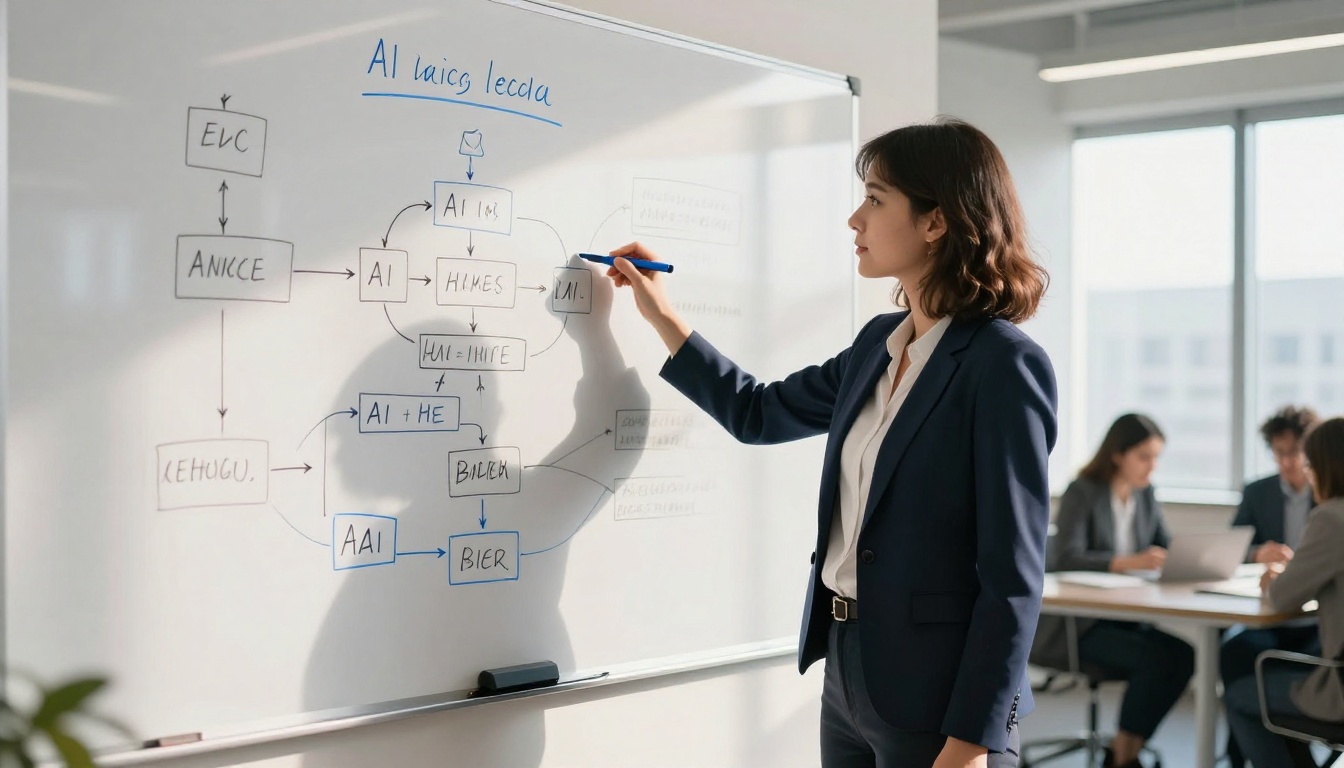
Understanding the reasoning architecture of each model helps predict how they behave on novel, unfamiliar problems that were not part of any benchmark suite.
Grok 4.20 Reasoning Architecture
Grok 4.20 uses a dynamic compute allocation approach. When it encounters a hard problem, it does not simply produce a single chain of thought: it explores multiple reasoning branches simultaneously, evaluates intermediate conclusions against each other, and backtracks when a path leads nowhere productive.
This is best described as a tree-style reasoning approach at inference time. The practical result is that Grok 4.20 produces more reliable answers on problems where a single linear reasoning chain would get stuck in a local minimum, arriving at a wrong answer confidently.
The model also shows strong calibration. When it is uncertain, it usually says so explicitly rather than generating confident-sounding text that happens to be incorrect. This property is more valuable in real production use than most benchmarks capture.
The tradeoff is latency: complex problems that trigger deep multi-branch reasoning can take noticeably longer to complete. For time-sensitive applications, this cost needs to be factored into architectural decisions.
Kimi K2.6 Thinking's Chain-of-Thought
Kimi K2 Thinking operates more like an expert who writes out every step of their work before submitting a final answer. The internal reasoning trace is long, detailed, and fully visible to the caller. This transparency is one of its biggest advantages for teams that need to audit AI decision-making or debug unexpected outputs.
Its approach is more linear than Grok's branching style, but it compensates with exceptional depth per step. Where Grok might explore three moderate-depth paths, Kimi digs very deep into one well-chosen path, following implications further before moving on.
For instruction-following tasks and structured output generation, this depth-first approach consistently produces cleaner results. Kimi K2 Thinking almost never produces malformed JSON, truncates mid-response, or loses track of a complex multi-part instruction spanning hundreds of tokens of context.

Benchmarks confirm the theory. Real-world tasks reveal character under pressure.
Building AI Agents
Both models are capable of powering sophisticated AI agents. The question is which one handles the messiness of real agentic workflows better.
Kimi K2 Instruct (the non-thinking variant of the K2 series) is often the faster choice for agentic pipelines where latency matters and the tasks are well-defined. When extended reasoning is needed, Kimi K2 Thinking handles the hard planning steps without losing context.
Grok 4 tends to handle unexpected edge cases in agentic workflows more gracefully, because its multi-branch reasoning lets it recover from tool call failures or unexpected API responses without losing track of the overall objective.
On agents, the practical split looks like this:
- Use Kimi K2.6 Thinking for structured, predictable agentic pipelines with defined tool schemas and expected output formats
- Use Grok 4.20 for agentic tasks that involve open-ended research, unpredictable external data, or environments where the agent must improvise
Long Document Analysis
Both models support very long contexts, but they handle long-document tasks with different strengths.
Kimi K2.6 Thinking's structured reasoning style is well suited for extracting specific information from long documents. When asked to identify inconsistencies across a 100-page technical specification, it will work through the document methodically, flagging specific sections with precise references. Kimi K2.5, the earlier variant in the series, already demonstrated strong long-context extraction performance, and K2.6 Thinking takes this further.
Grok 4.20 is better at synthesizing insights across disparate sources. Feed it three research papers on conflicting topics and ask for a nuanced synthesis, and it will produce a more intellectually sophisticated response than Kimi in most cases. Its multi-branch reasoning lets it hold contradictory ideas in tension rather than forcing a premature reconciliation.
Try Both Models on PicassoIA

Both models are available directly on PicassoIA's platform with no complex API setup required. You can test either one immediately from your browser.
Use Grok 4 on PicassoIA
Grok 4 is available in the Large Language Models section of PicassoIA. You can run it with extended reasoning enabled for complex tasks or switch it to a faster mode for simpler queries. The interface lets you inspect reasoning traces, adjust temperature, and compare outputs.
Best prompts to try with Grok 4.20:
- Feed it a competition math problem from AIME and request a full step-by-step derivation
- Give it a multi-tool agentic task with dependencies between each step
- Ask it to critique a technical architecture document and flag logical inconsistencies
- Use it for real-time research tasks that require pulling in current information
Use Kimi K2.6 and Kimi K2 Thinking on PicassoIA
Kimi K2.6 and Kimi K2 Thinking are both accessible on PicassoIA. The Thinking variant is the right one when you need the full visible reasoning trace.
Best prompts to try with Kimi K2.6 Thinking:
- Paste a 500-line Python file and ask it to identify all potential race conditions with line references
- Give it a complex multi-part instruction for generating structured JSON with nested schemas
- Ask it to review a pull request description and suggest specific, actionable code improvements
- Use it to analyze a long legal or technical document and extract key obligations
💡 PicassoIA also offers Kimi K2 Instruct for faster, direct responses without the extended thinking overhead. Combining both in the same pipeline, using Instruct for quick tasks and Thinking for hard planning steps, is a practical strategy for production cost optimization.
Where Each Model Falls Short

No model is perfect. Knowing the failure modes is as valuable as knowing the strengths, especially before committing to a model in production.
Grok 4.20 Limitations
- Verbose on simple tasks: Grok 4.20 sometimes over-reasons simple problems, producing lengthy explanations when two sentences would suffice. Managing this requires explicit brevity instructions in the system prompt.
- Latency on hard problems: Its multi-branch reasoning approach can be slow on complex queries. For latency-sensitive real-time applications, this overhead is a real architectural cost.
- Less transparent reasoning trace: Grok does not always surface its intermediate reasoning in a format that is easy to audit step by step. Teams that need full explainability for compliance reasons may find Kimi's approach easier to work with.
- Pricing at scale: For high-volume production workloads, Grok 4.20's pricing can escalate quickly, particularly when extended reasoning mode is enabled on every API call.
Kimi K2.6 Thinking Weak Spots
- Depth vs. breadth trade-off: Kimi's depth-first reasoning style means it commits strongly to one interpretation of a problem. If that interpretation is slightly off, it may not self-correct as gracefully as Grok 4.20 would with its branching approach.
- Creative and open-ended tasks: Kimi K2.6 Thinking is optimized for structured reasoning. For open-ended creative writing, worldbuilding, or lateral thinking tasks, models like Claude Opus 4.7 or GPT 5 often produce more original and engaging outputs.
- No real-time knowledge: Unlike Grok, Kimi K2.6 Thinking does not have live web access. For questions that depend on current events or rapidly changing technical documentation, it may produce outdated information.
- Confident assumption on ambiguous prompts: When a prompt is genuinely ambiguous, Kimi sometimes makes a strong assumption and proceeds rather than asking for clarification. This can produce confident but off-target responses on poorly scoped tasks.
The Verdict: Pick the Right One
The most useful way to summarize this comparison is with a clear decision table rather than a single winner declaration.
| Use Case | Better Choice |
|---|
| Competition math and STEM | Grok 4.20 |
| Agentic coding workflows | Kimi K2.6 Thinking |
| Real-world software engineering | Kimi K2.6 Thinking |
| Open-ended research synthesis | Grok 4.20 |
| Structured JSON output | Kimi K2.6 Thinking |
| Long document extraction | Kimi K2.6 Thinking |
| Current events and real-time data | Grok 4.20 |
| Auditable step-by-step reasoning | Kimi K2.6 Thinking |
| Novel multi-path reasoning problems | Grok 4.20 |
| High-volume production pipelines | Kimi K2.6 Thinking |
Pick Grok 4.20 If...
- Your work is heavy in formal mathematics, physics, or scientific reasoning
- You need a model with live web access and current information
- Your agentic pipelines involve open-ended, unpredictable environments
- You value robust self-correction over transparent step logging
- You are running academic research or working with competition-level problem sets
- Your tasks benefit from creative synthesis across multiple conflicting sources
Pick Kimi K2.6 Thinking If...
- Software engineering tasks dominate your workflow, especially real-world bug fixing and PR review
- You need full transparency into reasoning steps for compliance, debugging, or team review
- Your agentic pipelines are well-structured with defined tool schemas and expected outputs
- Long document analysis and structured information extraction are core use cases
- You want consistent, well-formatted structured outputs without heavy prompt engineering overhead
Start Building with Smarter AI Today

The honest answer to "who is smarter" is that it depends on what you mean by smart. Grok 4.20 is the better scientist and the more creative reasoner under pressure. Kimi K2.6 Thinking is the more reliable engineer and the more auditable thinker at scale. Both are genuinely impressive. Both solve real problems. Neither is universally superior.
The only way to settle this comparison for your specific use case is to run both on your actual workload with your actual prompts. PicassoIA's platform puts Grok 4, Kimi K2.6, and Kimi K2 Thinking in one place, letting you compare responses side by side without managing separate API accounts or billing setups.
Beyond these two models, PicassoIA offers over 70 large language models including DeepSeek R1, Claude Opus 4.7, GPT 5 Pro, and GPT 5, all accessible from a single interface with no setup friction. Whether you are building an AI agent, analyzing documents, generating code, or testing reasoning depth on hard problems, there is a model in the collection tuned for your exact task.
Stop arguing about benchmarks and start running your own tests at picassoia.com/en/all-models.


