Every time you upload a photo, post a comment, or prompt an AI image generator, something is watching. Not a human. A classifier. A neural network with millions of parameters trained on hundreds of millions of labeled examples. It makes its decision in under 50 milliseconds, assigns a probability score, and either passes your content through or blocks it entirely.
The mechanics behind this process are more interesting than most people realize, and the failure modes are more revealing than platforms like to admit.
What Content Filters Are Actually Doing
The word "filter" makes it sound like content moderation is a simple sieve: bad content in, bad content blocked, everything else passes. It is not that simple.
At its core, a content filter is a binary classifier, or more precisely a multi-class classifier with a binary output. It takes input (an image, text string, audio clip, or video) and produces a probability score for each category it was trained to detect. If the probability of "violates policy" exceeds a set threshold, the content gets flagged. Below the threshold, it passes.

That threshold is one of the most consequential decisions in the entire system. Set it too high and you let harmful content slip through. Set it too low and you block legitimate content by the thousands: beach photos, medical diagrams, breastfeeding images, harm-reduction information. Finding the right threshold is not a technical problem. It is a policy problem, and reasonable people disagree sharply about where to draw the line.
The Three Layers of Detection
Most production content moderation systems operate across three distinct layers simultaneously:
-
Pre-classification hashing — For categories of known harmful material, platforms maintain cryptographic hash databases (perceptual hashes like PhotoDNA for images). Before any AI runs, uploaded content is hashed and compared against this database. A match triggers an immediate block before the classifier even receives the input.
-
AI inference — The main classifier runs on everything that cleared the hash check. Neural networks analyze the content and produce confidence scores across policy violation categories.
-
Human review queue — Content scoring in an uncertain middle range (roughly 35-65% confidence) gets routed to human reviewers for the final call. This is where the most nuanced decisions actually get made, and where the most errors occur.
Where the Model Gets Its Rules
The classifier does not "know" what is offensive or harmful in any meaningful sense. It learned statistical patterns from a labeled dataset. Someone sat and tagged content as safe, unsafe, or somewhere between. Thousands of someones, across months of annotation work, each bringing their own cultural backgrounds and interpretations to the task.
Those human decisions carry their biases, cultural assumptions, and internal inconsistencies directly into the model's learned behavior. The model encodes whatever pattern the annotators converged on, noise and all.
How Image Recognition Filters Work
Image content filters are built on Convolutional Neural Networks (CNNs) or, increasingly, Vision Transformers (ViTs). These architectures break down an image into spatial patches, identify local features in early layers (edges, textures, color gradients), and combine them in progressively deeper layers to recognize higher-order patterns: skin tone regions, body part shapes, object configurations, and spatial relationships between elements in the frame.
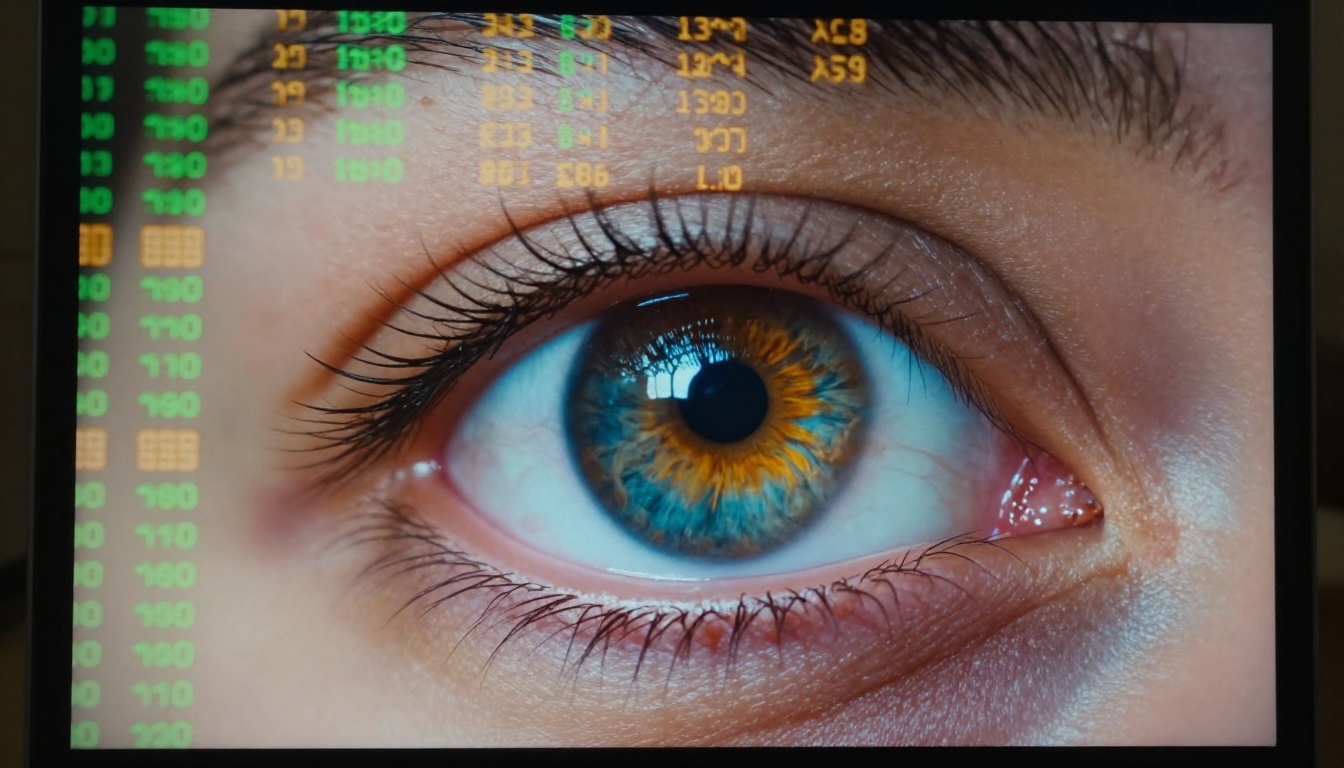
The model does not see what humans see. It processes pixel value tensors. When a classifier flags an image as NSFW, it is not making an aesthetic or moral judgment. It is reporting that this pixel configuration statistically resembles the distribution of patterns that human annotators labeled as NSFW in the training set. That distinction matters more than it might initially seem.
Convolutional Neural Networks in Action
Here is how the inference pipeline actually flows for a single image submission:
| Step | What Happens |
|---|
| Resize | Image rescaled to model input size (e.g., 224x224px) |
| Normalize | Pixel values mapped to model's expected numerical range |
| Forward pass | Image propagates through dozens of convolutional layers |
| Feature extraction | Deeper layers activate on high-level visual patterns |
| Softmax output | Probability score assigned to each category label |
| Threshold check | If P(violating) exceeds threshold, content is blocked |
The entire process typically takes 20 to 80 milliseconds on a GPU. At platform scale, this pipeline runs across fleets of inference servers processing millions of images per hour.
Why "Skin Color Detection" Keeps Failing
Here is the problem that has plagued image content classifiers since the beginning: early models were overfitted on skin detection rather than context detection.
A classifier trained predominantly on explicit images learns to associate large regions of exposed skin with NSFW content, regardless of context or artistic intent. The result is predictable: sunburn photos trigger the filter, black-and-white photography of classical sculptures gets flagged, and darker skin tones are disproportionately over-flagged because they create different contrast signatures against common background colors.
This is not hypothetical. Multiple major platforms have documented exactly this failure mode when their classifiers encountered real-world diversity in user content at scale.
💡 The fix is context, not just pixels. Modern classifiers increasingly use spatial attention mechanisms to model relationships between elements: where body parts appear relative to each other, what surrounding objects indicate about setting, and whether contextual signals suggest medical, recreational, or artistic intent rather than relying on raw pixel similarity alone.

Text-Based Filters and Their Limits
Text moderation is a fundamentally different challenge. Unlike images, text requires processing sequence, context, irony, cultural reference, and intent. A pixel pattern does not carry different meanings depending on who wrote it or what community they belong to. A sentence does.
Early text filters were keyword blocklists: fast, cheap, and spectacularly bad at nuance. A blocklist that catches "kill" also blocks conversations about "skill," "thriller," and "Kilimanjaro." The second generation used regular expressions. The third used TF-IDF classifiers that scored term frequency against document context. The current generation uses transformer-based language models fine-tuned specifically on policy violation examples.

Keyword Lists vs. Context Models
The differences between moderation approaches are dramatic across every dimension that matters:
| Approach | Speed | Accuracy | Handles Sarcasm | Multilingual |
|---|
| Keyword blocklist | Very fast | Very low | No | No |
| TF-IDF classifier | Fast | Medium | Struggles | Partial |
| Fine-tuned LLM | Slower | High | Better | Yes |
| Ensemble (all layers) | Slow | Highest | Best | Yes |
Most production systems use ensemble architectures. A fast keyword pass catches obvious violations first. Edge cases escalate to progressively slower, more accurate models. The architecture optimizes for throughput at the cheap end and accuracy at the expensive end of the pipeline.

The Problem with Sarcasm and Slang
Even a well-trained language model can be consistently defeated by specific linguistic patterns:
- Sarcasm and irony: "Yeah, totally a great idea to hurt yourself" suppresses the harm signal because the words "great idea" carry positive weight in the model's learned associations
- Dog whistles: Coded language designed to carry meaning within a specific community while appearing innocuous to automated classifiers trained on more explicit violations
- Cross-language mixing: A single message blending English, Spanish, Tagalog, and intentional misspellings to fall outside any single model's trained distribution
- Semantic drift: Slang evolves faster than retraining cycles allow. A term that was neutral eight months ago may now carry specific harmful meaning that no version of the model has ever encountered
💡 The evasion cycle is real and ongoing. For every moderation upgrade, adversarial users find new routes around it. This is why major platforms layer behavioral signals on top of content analysis: account age, posting patterns, network connections, reported content history, and device fingerprints all factor into the final trust score alongside the content itself.

Video Content Detection
Video adds a time dimension that makes filtering dramatically more complex. A five-second clip at 24fps contains 120 individual frames, a full audio track, embedded metadata, and the sequential meaning that emerges from how those frames are ordered. A clip's intent can change entirely based on temporal context, not just what appears in any single frame.

Frame-by-Frame Analysis
The simplest video moderation approach samples frames at a fixed interval (every second, or every N frames) and runs each through a standard image classifier. If any sampled frame scores above threshold, the full video is flagged and held for review.
The weakness is obvious: a single violating frame appearing for 1/24th of a second between 119 safe frames may fall between sampling points and escape detection entirely. More importantly, meaning is temporal. A sequence of individually safe-looking frames can compose into something problematic only when viewed in motion and sequence.
Newer systems use 3D CNNs and Video Transformers that process temporal sequences as unified inputs. These models detect motion patterns, optical flow across frames, and temporal context that single-frame classifiers miss entirely. The computational cost is significantly higher, but the accuracy on edge cases improves substantially.
Audio and Transcript Scanning
Video moderation is not a purely visual problem. The audio track runs through a parallel analysis pipeline via:
- Automatic Speech Recognition (ASR): Audio is transcribed in real time and the transcript passes through a text classifier
- Audio signature detection: Non-speech audio patterns (screams, slurs as audio events, specific sound profiles) detected via classifiers trained on labeled sound clip datasets
- Acoustic fingerprinting: Licensed content identified via database matching, using the same acoustic fingerprinting approach as music recognition applications
A video with completely safe visuals but a violent audio track still triggers the system on platforms running full audio scanning. Many lower-tier platforms skip audio analysis entirely for cost reasons, creating a documented and widely exploited blind spot.

The Training Data Problem
Every content filter is only as accurate as its training data. This deserves far more attention than it typically receives in public discussions about AI safety systems.

Garbage In, Garbage Out
Training a content classifier at production quality requires three things that are much harder to obtain than they appear:
- Millions of labeled positive examples of violating content across every category the classifier needs to cover
- Millions of labeled negative examples of safe content with equivalent visual and topical variety
- A labeling workforce applying consistent, documented, culturally-aware guidelines across every category without degradation over time
The labeling is typically handled by contract workers, often in lower-income markets, working under tight time pressure on content that ranges from the mundane to the extremely disturbing. Studies of this workforce document high burnout rates and measurable degradation in labeling consistency as annotators experience repeated exposure to harmful content without adequate support.
When labels are inconsistent, the model learns inconsistent rules. The classifier has no mechanism to distinguish a labeling error from genuine ambiguity in the content itself. It learns the statistical average of imperfect human judgment, permanently encoded until the next full retraining cycle.

Bias Built Into the Filter
Geographic bias: Training data sourced primarily from English-speaking Western platforms encodes those cultural norms directly into the model. Traditional dress from other cultures, body modification practices standard in certain communities, or artistic conventions with centuries of cultural history get flagged simply because they fall outside the training distribution, not because they violate any coherent policy.
Temporal bias: Models are trained at a specific point in time. Cultural norms shift. Political contexts change. A classifier calibrated on what constitutes harmful speech in 2022 may be meaningfully miscalibrated by 2026, producing both false positives on newly acceptable language and false negatives on newly problematic content.
Class imbalance: Safe content vastly outnumbers violating content in any real-world dataset. Without careful rebalancing during training, the model learns to lean toward safe predictions because that is statistically safer across most inputs. Content near the decision boundary that genuinely violates policy slips through at a higher rate than summary accuracy metrics reveal.

Real-Time vs. Deferred Moderation
Not all content is reviewed at the same point in its lifecycle. The timing of review has significant implications for both safety outcomes and user experience, and platforms make very different choices about where to draw this line.

The Speed vs. Accuracy Tradeoff
Three distinct timing architectures exist in production systems today:
- Pre-publication (synchronous): Content is held and run through the full classifier stack before going live. Maximum safety, higher latency. Standard on AI image generation platforms where the pipeline controls the output before the user sees any result at all.
- Post-publication (asynchronous): Content goes live immediately, with classification running in the background. Violating content is removed retroactively after it has already been visible. Common on platforms prioritizing low latency and creator-first experience.
- Hybrid approach: Fast classifiers gate obvious high-confidence violations pre-publication. Slower, more accurate models analyze the remainder asynchronously in a background queue. Most major social platforms use this architecture because it balances throughput against safety.
AI image generation platforms overwhelmingly use pre-publication moderation because they control the output pipeline end-to-end. The safety layer sits between model inference and delivery. If the output scores above threshold, the platform can resample, return an error message, or substitute a safe result without the user ever seeing the flagged output.
Human Review in the Loop
No automated system achieves sufficient accuracy across all content categories to eliminate human review entirely. The standard layered architecture for large platforms works as follows:
- High-confidence safe content: auto-approve and publish immediately
- High-confidence violating content: auto-remove without human review
- Low-confidence ambiguous content: route to human review queue with context
Human reviewers working the queue must make decisions quickly, often under 30 seconds per item to keep up with volume, which introduces its own consistency problems. Reviewer fatigue, cultural background, and time-of-day effects all measurably affect decision accuracy at the individual level. The result is a cascade system where automated classification errors and human review errors compound across millions of daily decisions.

How AI Platforms Handle NSFW Content
AI image generation is a uniquely interesting case for content moderation because the filter applies to generated content, not uploaded content. The platform controls the entire pipeline from text prompt to delivered pixel. This creates moderation opportunities that social platforms uploading user content do not have.

Safety Level Controls
Most text-to-image platforms implement safety via three mechanisms that can be configured independently of each other:
- Prompt filtering: The text prompt is screened before generation begins. Flagged terms or patterns trigger immediate rejection before the model runs, saving inference compute and preventing the generation entirely.
- Concept suppression: Specific visual concepts are suppressed in the model's learned weights via techniques like guidance masking or negative embedding injection. Prompts that would otherwise produce violating outputs produce generic safe-looking results instead, without exposing the underlying capability.
- Output classification: The generated image passes through an NSFW classifier after inference completes. Images scoring above threshold are withheld and a new sample is drawn, up to a configured maximum retry count before returning an error.
These three layers are not always all active simultaneously. A platform might use strict prompt filtering with no output classification for speed, or skip prompt filtering entirely and rely solely on output gating. The combination in use on any given platform is rarely disclosed publicly.
What "Safe Mode" Actually Toggles
When a platform exposes a "safe mode" or "adult mode" toggle, it is most commonly adjusting the output classification threshold rather than adding or removing model capabilities. Safe mode sets a lower threshold: more content is blocked. Adult mode raises the threshold: more content passes through the gate.
The underlying model weights are identical in both configurations. The same forward pass and the same inference run generate both results. Only the scoring gate at the output changes what the user receives.
💡 Some platforms go further. Rather than a simple threshold adjustment, a small number of platforms maintain genuinely separate fine-tuned model versions for safe and unrestricted outputs, with different learned weights and different training data compositions. This produces more consistent and predictable behavior at both extremes than a threshold toggle can achieve.

Create With Full Visibility Into the System
Knowing how content filters work gives you real creative leverage. You know what triggers classifiers at the pixel level, what prompt terms activate blocklist layers before generation even begins, and how contextual signals shift borderline scores in either direction. That knowledge belongs in your creative workflow.

PicassoIA gives you direct access to the full spectrum of image generation models, each with its own safety configuration and creative range. PicassoIA Image is the platform's core text-to-image generator, built for high-volume creative work with consistent quality across prompt styles. For editing and remixing existing images, PicassoIA Image Editor Pro provides inpainting, outpainting, and precise object-level editing without requiring separate tools or workflows.
For portrait and character work where realism is the priority, Seedream 4.5 from ByteDance produces 4K output with exceptional skin texture and photographic detail. For compositional control and stylistic variation, Flux Redux Dev and Flux Schnell LoRA from Black Forest Labs offer precise structural guidance and rapid iteration. Stable Diffusion 3 from Stability AI remains a dependable photorealistic foundation with wide compatibility across workflows.

For post-generation editing where spatial coherence matters most, Flux Fill Pro handles inpainting tasks with context-aware fill that produces naturally consistent results within the image's existing visual language, passing output classifiers more reliably because the internal coherence reads as photographic rather than assembled.
Every model on PicassoIA is accessible at picassoia.com/en/all-models, with live previews, full parameter documentation, and credit-based access to test any model before committing it to your workflow.

The content filter is not your adversary. It is a statistical system with documented mechanics, predictable failure modes, and configurable parameters. The more precisely you know what triggers it and why, the more precisely you can create the work you actually intend, on any platform, at any content level.