The same photograph you take at a dinner party could, with the right AI pipeline, become a fully navigable 3D scene. Not an artist's interpretation of that scene, but an accurate geometric reconstruction where every surface has measurable depth, every object occupies real three-dimensional space, and the light across the tablecloth maps onto actual material properties. What makes this possible is a convergence of three distinct AI approaches, each solving a different part of the geometry problem, each dramatically more capable than what existed five years ago.
What Photo-to-3D AI Actually Does
It's Geometry, Not Art
When people hear that AI generates 3D models from photos, many picture something artistic: a model trained on 3D art datasets that produces something looking three-dimensional. The reality is more rigorous. Photo-to-3D AI is fundamentally a geometry recovery problem. The system is solving one question: given a set of pixels with known color values, what arrangement of surfaces in three-dimensional space would produce exactly those colors when viewed from that camera angle?
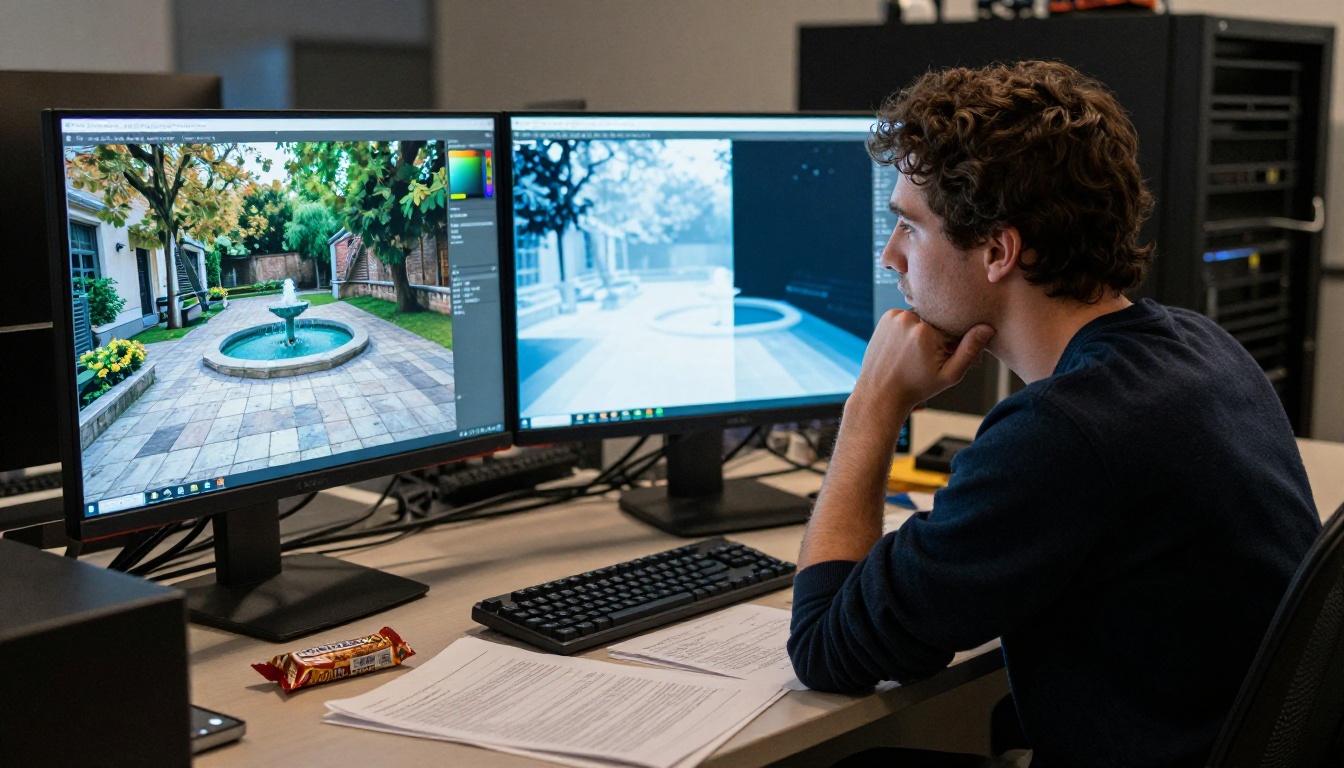
That question is harder than it appears. Photography compresses three dimensions down to two. All spatial information (which object is closer, what angle a surface faces, how far apart two points actually are) collapses into a flat grid of pixels. Recovering the third dimension from that compressed record is what these AI systems do, and the accuracy possible today is remarkable.
State-of-the-art photo-to-3D systems can reconstruct objects with submillimeter accuracy from multi-image captures, and single-image methods now produce plausible geometry for familiar object categories where no direct depth information exists at all.
Depth Is the Missing Piece
Every 3D reconstruction algorithm shares the same foundational task: recover depth. A standard photographic pixel tells you color and luminance intensity. It does not tell you how far that point is from the camera. The AI must infer that missing dimension using either geometric relationships across multiple images, or visual priors absorbed from a single frame.
The choice of method depends on what inputs are available and how precise the output needs to be. Multi-image geometric methods are more accurate. Single-image methods are faster and require less capture effort. Both are used, often in combination.
The Three Technologies Driving This
Photogrammetry: Still the Gold Standard for Accuracy
Photogrammetry predates AI by decades. The method is geometric: take multiple photos of the same object from different positions, find matching visual features across those photos, and use the geometric relationships between those matches to triangulate the 3D position of each point.
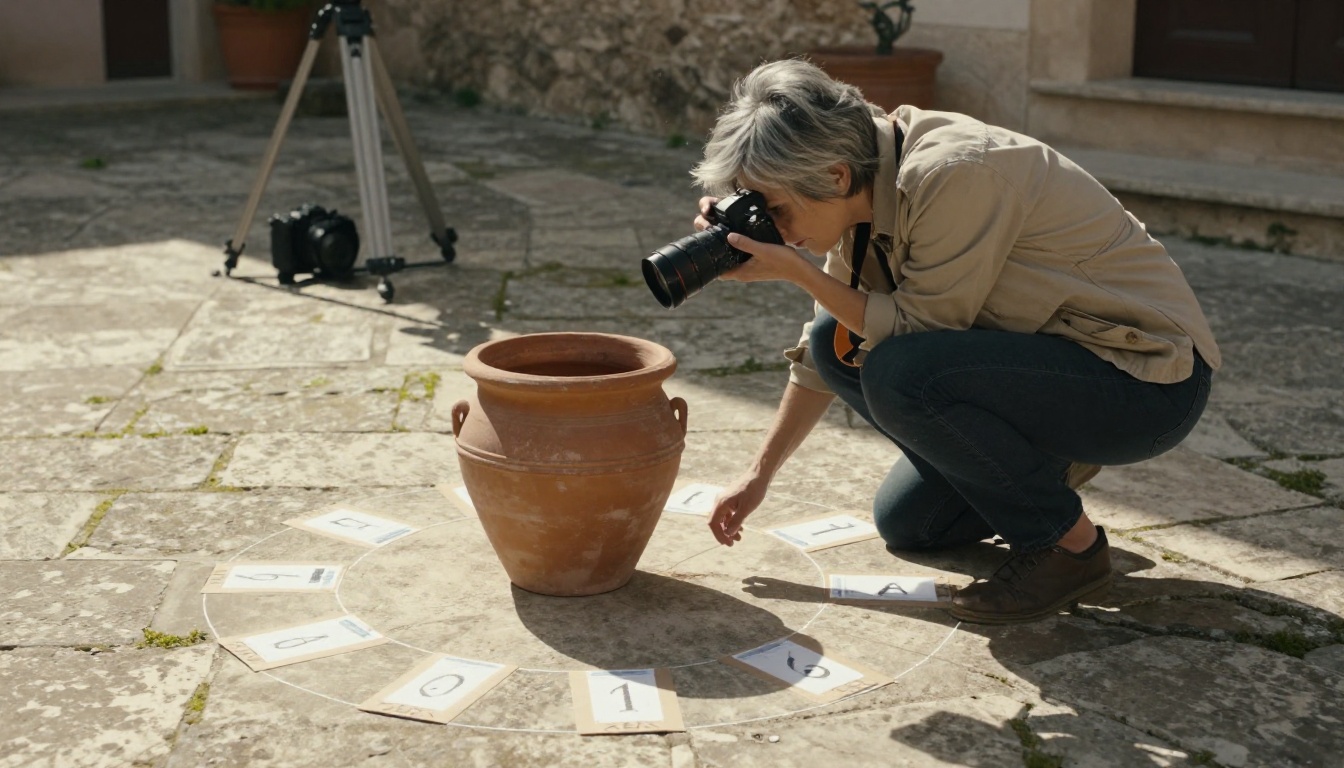
What modern AI has done to photogrammetry is accelerate and generalize it. Traditional photogrammetry required controlled lighting, clean feature-rich surfaces, and manual quality checks on feature matches. Current AI-assisted pipelines handle objects with repetitive textures, reflective surfaces, and inconsistent lighting that would have defeated older methods entirely.
The core pipeline flows like this:
- Feature Extraction: Neural networks identify reliable keypoints in each image (corners, edges, distinctive texture patches).
- Feature Matching: The system finds which keypoints in one image correspond to the same real-world point in another.
- Structure from Motion (SfM): From the matched features, the algorithm simultaneously estimates camera positions and 3D point positions.
- Dense Reconstruction: The sparse SfM point cloud gets filled in with dense depth estimation across every pixel pair.
- Mesh Generation: The dense point cloud gets triangulated into a continuous surface.
- Texture Projection: Original photo colors project back onto the mesh.
The output of a well-executed photogrammetry run is a textured 3D mesh that, for properly captured subjects, is visually indistinguishable from a physically scanned model.
The Point Cloud: Geometry's Raw Form
Before a mesh exists, there is a point cloud. This intermediate representation sits at the center of all multi-image reconstruction methods, not just photogrammetry, and understanding it clarifies how the rest of the pipeline works.
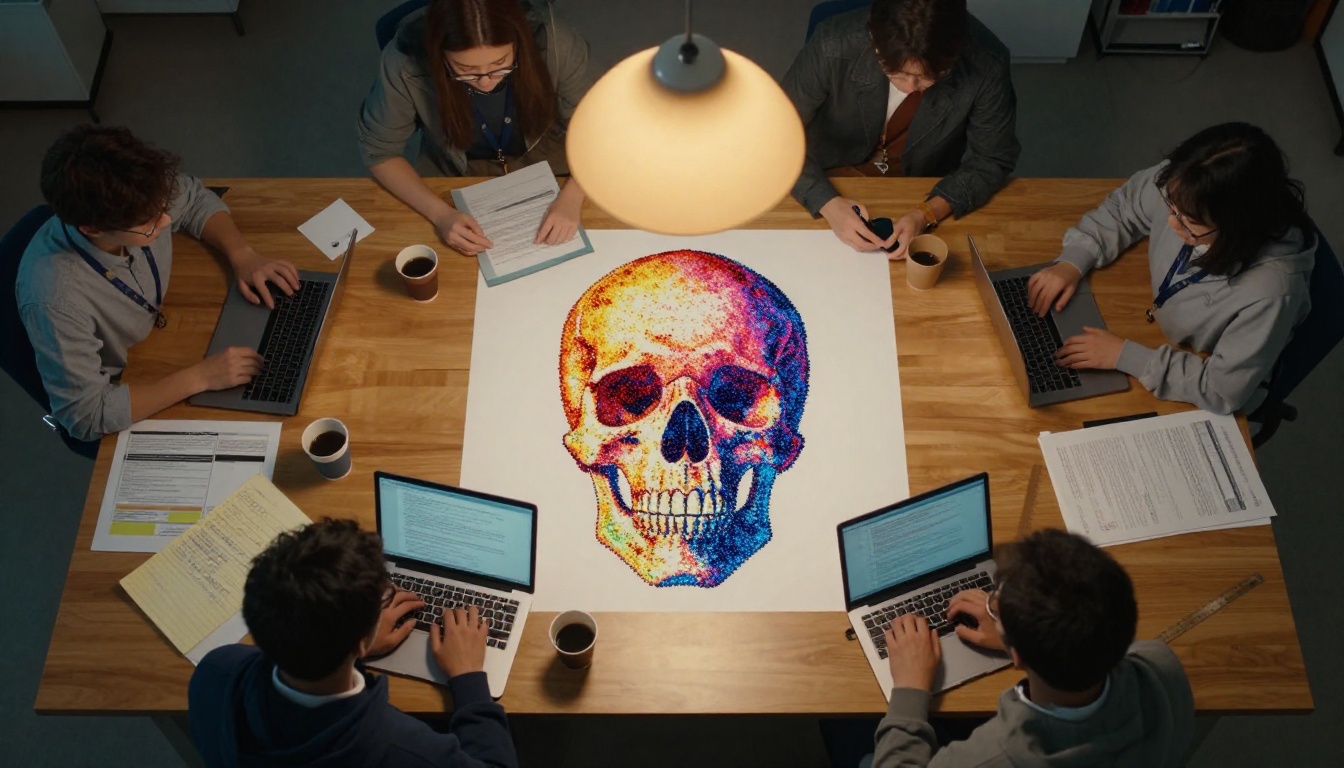
A point cloud is exactly what it sounds like: millions (sometimes billions) of individual 3D coordinate positions, each carrying the color value observed at that location in the source photos. Modern photogrammetry software routinely generates point clouds with 50 to 200 million points from a few hundred images. At that density, the cloud itself looks like a solid object when rendered, even before any meshing step is applied.
The meshing step converts the unstructured cloud into a connected surface. Algorithms like Poisson surface reconstruction or ball-pivoting fit a continuous triangle mesh to the point distribution. The quality of this step determines how well the final model handles thin structures, sharp edges, and concave geometry.
Depth Estimation: 3D from a Single Frame
Photogrammetry requires multiple images. Monocular depth estimation works from just one. This is the technology behind phone apps that approximate room geometry from a single video frame, and it relies on patterns the model has absorbed from training on millions of image-depth pairs.
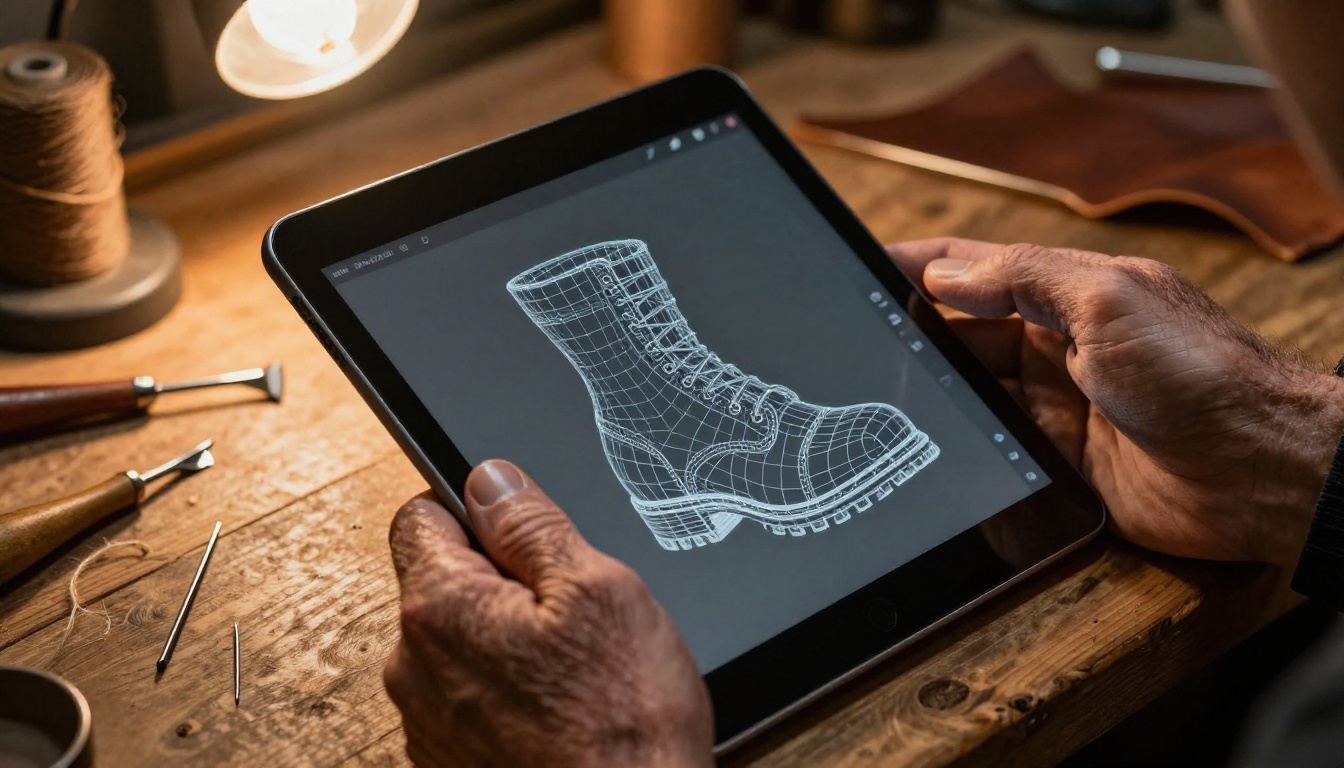
AI models trained on this data internalize visual cues that reliably indicate spatial relationships:
- Atmospheric perspective: Haze increases with distance, desaturating and softening far objects.
- Linear perspective: Parallel lines converge toward vanishing points as distance increases.
- Occlusion: Objects that block others occupy closer space.
- Familiar size: Known objects provide implicit scale references.
- Texture gradient: Surface texture appears finer at greater distances.
- Defocus blur: Shallow depth of field keeps near-field objects sharper.
The output is a depth map: a grayscale image where pixel brightness encodes estimated distance. Bright white means near, deep black means far. From this depth map, a rough 3D surface can be reconstructed by projecting each pixel outward from the camera at its estimated distance.
Monocular depth estimation produces relative depths. The model can tell you the vase is closer than the bookshelf, but not exactly how far each is in real-world units. For applications requiring metric accuracy, stereo camera setups or dedicated depth sensors provide the calibration scale factor needed to convert relative estimates into absolute measurements.
Neural Radiance Fields: A Different Kind of Representation
NeRF, introduced in 2020, offered a fundamentally different answer to the photo-to-3D problem. Rather than reconstructing a mesh and applying textures, a NeRF trains a compact neural network to represent the scene itself as a continuous volumetric function.
Given any 3D position and viewing direction as input, the network outputs the color and density of space at that location. To render a view, you cast rays through the pixels of a virtual camera, sample the network at many points along each ray, and composite the results into a pixel color. The network trains on the same multi-image inputs photogrammetry uses, but rather than extracting explicit geometry, it absorbs an implicit function that can reproduce original training views and generalize to entirely new viewpoints.
The quality advantage over traditional photogrammetry was immediate in certain areas. NeRFs naturally handle:
- Specular reflections that change appearance with viewing angle
- Translucent materials like glass, liquid, and smoke
- Fine structures like hair and foliage that defeat meshing algorithms
- Consistent appearance across novel viewpoints not present in training data
The original limitation was computational cost. Early NeRF models took hours to train on a single scene and seconds per frame to render. The research community has since closed this gap dramatically. Methods like Instant-NGP reduced training time to minutes. 3D Gaussian Splatting (3DGS), introduced in 2023, achieves real-time rendering at high quality by representing scenes as millions of oriented 3D Gaussians rather than a neural network, enabling interactive preview on consumer-grade hardware.
The Capture Patterns That Make or Break Results
For Multi-Image Methods, Coverage Is Everything
The quality of any multi-image reconstruction depends more on how images were captured than on which reconstruction algorithm processes them. A state-of-the-art algorithm with poor coverage produces holes and geometric errors. A solid algorithm with thorough, overlapping coverage produces a clean result.
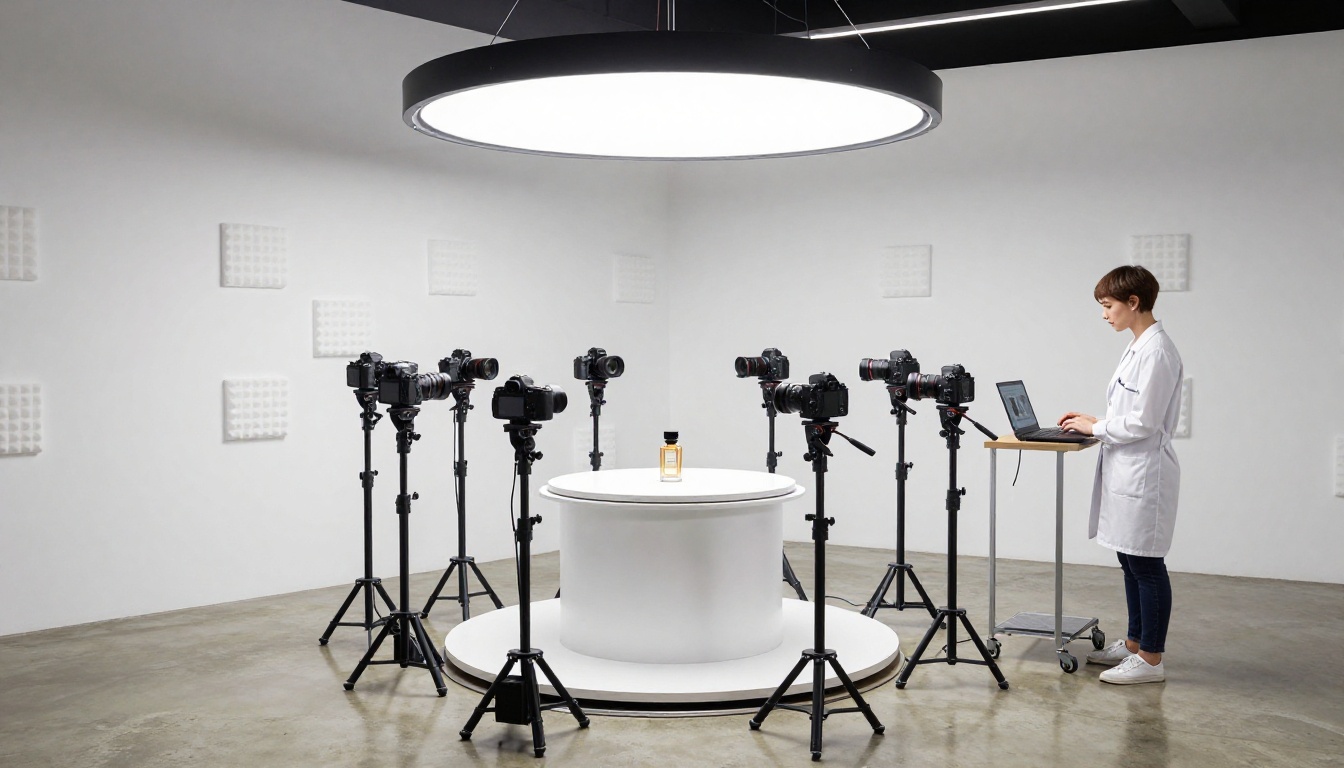
| Capture Element | Minimum Standard | Professional Standard |
|---|
| Angular spacing | Every 20-30 degrees | Every 10-15 degrees |
| Vertical tiers | 2 (horizontal + upward tilt) | 3-4 (including downward-facing nadir) |
| Image overlap | 60% between adjacent images | 80% between adjacent images |
| Lighting | Consistent, no hard shadows | Overcast or diffused studio |
| Resolution | 12 MP | 24 MP minimum |
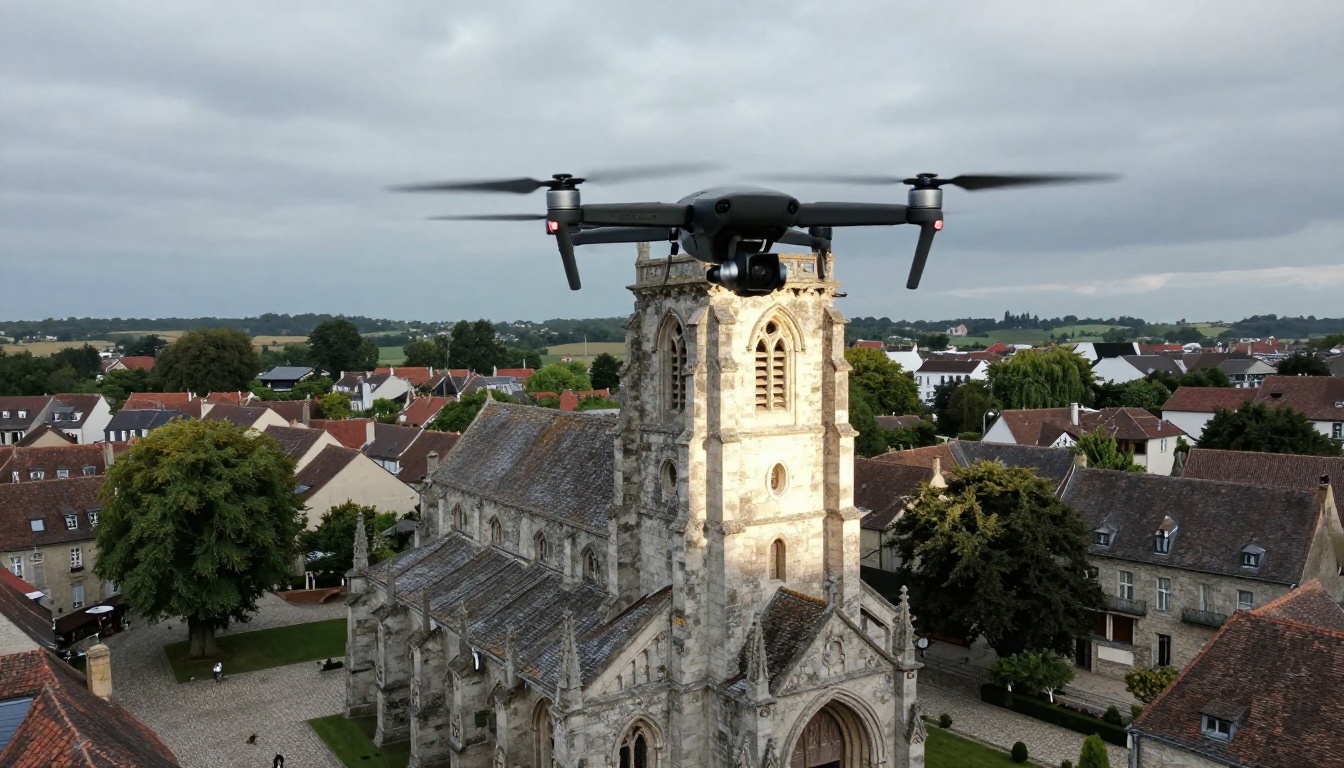
For large-scale subjects (buildings, archaeological sites, terrain), drone photogrammetry is the current industry standard. A drone flies a programmed grid pattern, capturing overlapping frames at each waypoint. The flight plan is designed so every point on the subject appears in at least three or four images from meaningfully different angles, giving the reconstruction algorithm enough geometric constraints for accurate triangulation.
💡 Capture tip: Wind is one of the most common sources of photogrammetry error outdoors. Even slight camera shake during capture introduces blurring that disrupts feature matching. Shoot in calm conditions or use a faster shutter speed to freeze any motion.
Industries Already Using This at Scale
Orthopedic Surgery and Patient-Specific Implants
Medical imaging was among the earliest high-value applications, and it has moved well beyond experimental status. Orthopedic surgeons routinely use 3D reconstructions from CT scans to plan joint replacement procedures, selecting and positioning implants on a digital model of the patient's actual anatomy before the first incision.
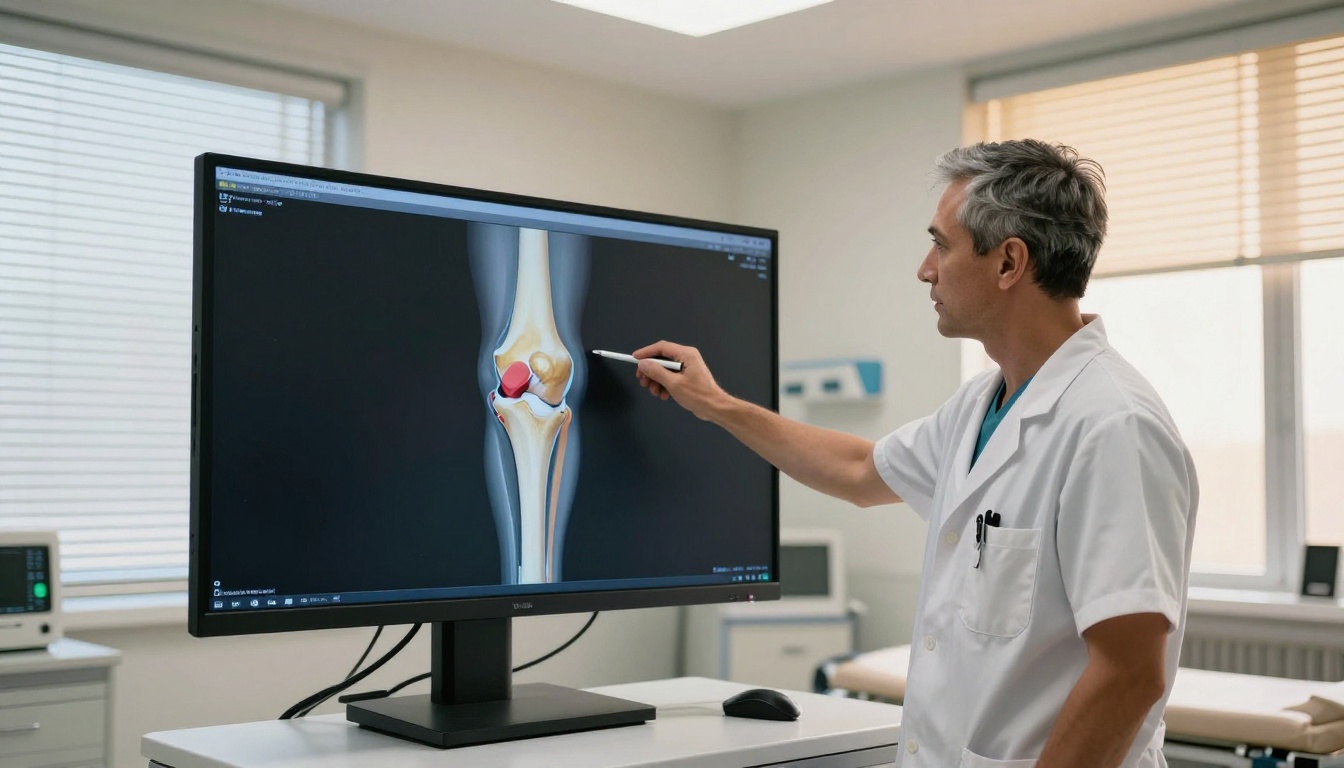
Custom implants designed from patient-specific 3D anatomy represent one of the clearest clinical payoffs. A standard off-the-shelf hip prosthetic comes in a limited range of sizes. A custom prosthetic modeled from the patient's actual bone geometry fits precisely, reducing operative time and improving long-term stability. The 3D model enabling this comes from a standard pre-operative CT scan processed through a segmentation and reconstruction pipeline.
Wound assessment is a newer application gaining traction in clinical settings. Structured-light scanners or depth cameras attached to standard smartphones can generate accurate 3D models of wound geometry, giving clinicians objective longitudinal measurements of wound dimensions instead of relying on visual estimation.
Architecture and Heritage Documentation
Architects and preservationists were early adopters, and their use cases have only expanded.

For existing building renovation, a drone survey produces a 3D model accurate to within a few centimeters, suitable for use as the basis for as-built drawings. What previously required expensive LIDAR scanning (often $5,000 to $50,000 per project) now costs a drone flight and a few hours of processing.
Heritage documentation benefits from the non-contact nature of photogrammetric scanning. Fragile archaeological sites, damaged sculptures, and deteriorating architectural details can be captured in precise 3D without any physical contact, creating a permanent digital record and a baseline for monitoring future deterioration.
Urban planning departments use 3D city models for shadow analysis, sight-line assessment, and development impact visualization. When a construction permit is filed, the proposed building drops into the actual 3D city model, making impacts on neighbors and public spaces immediately visible.
Gaming, Film, and Real-Time Environments
VFX studios and game development teams have used photogrammetry for high-fidelity asset creation for years. Scanning physical props, actor faces, and real filming locations produces assets with a level of photographic detail that procedural generation or manual sculpting cannot match at comparable production speed.
💡 Why it matters for games: A single photogrammetric scan of a real stone wall produces a texture map with genuine geological variation that no material artist could replicate cost-effectively by hand. That specificity is what separates photorealistic environments from ones that merely approximate reality.
The shift in recent years is who can do this work. Consumer-grade photogrammetry software now processes smartphone footage into production-quality assets, making photorealistic 3D asset creation accessible to independent developers and small studios who previously lacked the equipment budget for professional scanning rigs.
E-Commerce and Augmented Reality
Product scanning has become a significant commercial workflow. A single photogrammetric scan of a physical product produces a 3D model from which marketing teams can generate any combination of camera angles, lighting conditions, and context environments, programmatically, without additional photography.

AR product preview apps extend this further. The app reconstructs basic room geometry from the phone's camera stream, positions the product model at the correct scale, and renders it with lighting estimated from the environment. Shoppers interact with a product in their own space before purchasing. Return rate data from major retailers consistently shows AR product previews reduce returns for furniture and home goods by 25 to 40 percent.
Sharpen Your Source Photos Before Reconstruction
💡 The quality of any reconstruction is hard-capped by the quality of input photos. Blurry, JPEG-compressed, or underexposed images introduce feature-matching errors that compound through every downstream processing step.
The most impactful pre-processing action is maximizing image sharpness and resolution. AI upscaling tools restore detail that compression or slight camera softness removed, giving photogrammetry algorithms more reliable keypoint data to work with.
Real ESRGAN is proven in professional reconstruction pipelines for restoring photographic detail from compressed source material. It recovers fine texture that JPEG compression discards, which directly improves feature matching accuracy in photogrammetry workflows.
Clarity Pro Upscaler adds a precision micro-sharpening pass that sharpens edge definition without the haloing artifacts traditional unsharp masking produces. Crisper edges translate directly into more accurate feature detection.
For workflows requiring clean subject isolation before reconstruction, Remove Background produces artifact-free cutouts that prevent background pixels from interfering with the depth estimation step.
When the goal is maximizing output resolution after reconstruction is complete, Image Upscale by Topaz Labs supports up to 6x enlargement while preserving fine grain structure, useful when source images were captured on older hardware or in constrained conditions.
What Still Trips Up Current Systems
Despite significant progress, certain scene types reliably challenge current methods:
| Problem Category | Root Cause | Current Workarounds |
|---|
| Transparent and glass objects | Light bends through them, no surface texture to match | Cross-polarized structured-light scanning |
| Mirrors and reflective surfaces | Appear to contain impossible geometry | Treat as masked regions, reconstruct from surrounding context |
| Thin structures (hair, wire, foliage) | Insufficient pixel coverage for accurate triangulation | High-resolution capture, category-specific priors |
| Textureless surfaces (white walls, smooth plastic) | No detectable keypoints for feature matching | Project structured-light patterns onto the surface |
| Dynamic elements (moving people, wind-blown objects) | Breaks the static-scene assumption all multi-image methods rely on | Separate foreground and background, reconstruct independently |
Motion is arguably the hardest practical constraint. Every multi-image reconstruction method assumes the scene is static while images are captured. A person shifting weight between shots, a leaf moved by wind, or a shadow changing position as clouds pass creates geometric inconsistencies that corrupt the output.
For single-image methods, accuracy is bounded by the training distribution. Objects or configurations the model has not encountered enough of during training produce implausible geometry in occluded regions where learned priors must substitute for actual geometric evidence.
Photo-to-3D reconstruction sits at the intersection of computer vision, machine learning, and geometry. The barriers to using this technology are falling rapidly, and the applications now span from consumer smartphone apps to surgical planning systems used in hospitals worldwide.
If you are working on any project where image quality drives output quality, PicassoIA's AI tools give you direct access to the same upscaling and image-processing models that professional 3D pipelines rely on. Upscale and restore your source photos before reconstruction, remove backgrounds for cleaner subject isolation, or push output resolution to its limit with Topaz Image Upscale.
The technology is ready. Start with the images you have and see what AI does with them.


