Ten years ago, asking software to transcribe a phone call accurately felt like wishful thinking. Today, you can record a noisy coffee shop interview, feed it to an AI, and get back a near-perfect transcript in seconds. That leap did not happen by accident. It happened because of a specific sequence of scientific breakthroughs, massive training investments, and a fundamental rethink of how machines process human speech. This article breaks down exactly how AI transcription got so accurate, what remains difficult for current systems, and where the best tools stand right now.
What Transcription Actually Requires
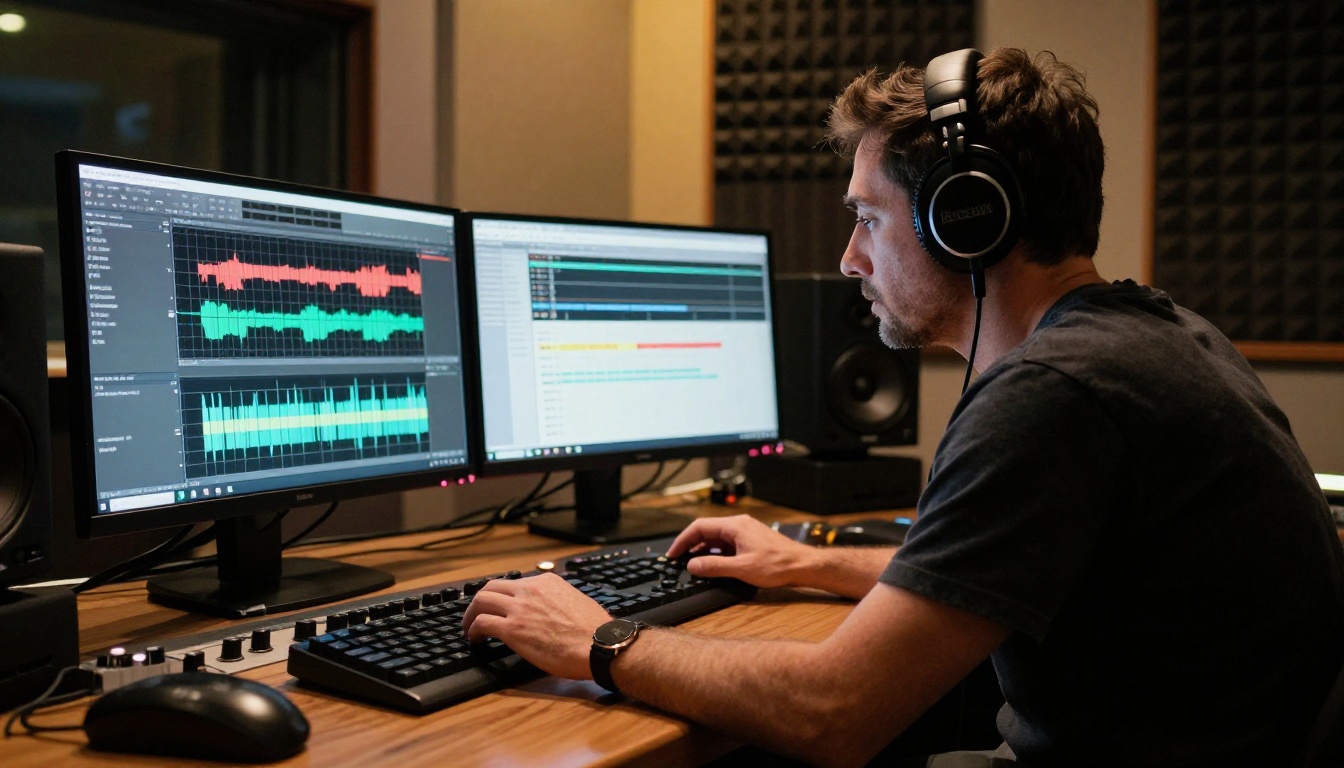
Speech is messy. Unlike text, which sits still on a page, spoken audio arrives as a continuous stream of overlapping sounds. A single spoken word is not a clean unit you can isolate. Sounds blend together, people swallow syllables, background noise competes, and the same word sounds different depending on who says it, how fast they talk, and whether they are excited, tired, or reading from a script. Building a system that reliably converts that chaos into accurate text requires solving several distinct problems at once.
The Acoustic Challenge
The first job of any speech recognition system is to convert raw audio into something a computer can process. Audio arrives as a waveform, a signal capturing pressure changes in the air over time. To work with it, systems break that signal into short overlapping windows (around 25 milliseconds each) and extract features representing the frequency content at each moment. These feature vectors form the raw material the model operates on.
The problem is that the same phoneme, the smallest unit of sound distinguishing one word from another, sounds different depending on surrounding sounds. The "t" in "stop" sounds different from the "t" in "top." The "d" in "dog" shifts depending on the vowel that follows. Early systems tried to hard-code these variations. That approach broke under real-world conditions because language is too variable to capture with explicit rules. The number of possible phonetic combinations across accents, speaking speeds, and recording environments is effectively infinite.
Language Is Not Just Sound

Even if you perfectly identify every sound, you still need to determine which word was said. English is full of homophones: "their," "there," and "they're" sound identical. Context is everything. A system that only listens to sounds will get those wrong constantly. Accurate transcription requires a language model sitting on top of the acoustic model, one that can determine which word sequence is most probable given what was already said.
The acoustic model hears the sounds. The language model makes sense of them in context. For decades, these two components were trained separately and combined with glue code. That separation was one of the biggest bottlenecks to accuracy. The system would identify the right sounds but then choose the wrong words because the two halves did not share a common internal representation of what was happening in the audio.
How Training Data Changed Everything

Every AI model is only as good as the data it was built on. Early ASR systems trained on hundreds of hours of audio, usually recorded in controlled conditions with professional speakers in quiet rooms. The result was systems that performed well in labs and failed in the real world. The shift to large-scale, diverse training data is one of the biggest single reasons accuracy improved so dramatically through the 2010s and 2020s.
The Scale Problem
The amount of audio used to train modern models is staggering. OpenAI's Whisper model was trained on 680,000 hours of multilingual audio sourced from across the internet. Gemini models were trained on even larger corpora that included audio, text, images, and code simultaneously. IBM's Granite Speech series was built with a focus on enterprise and specialized-domain accuracy. When a model is exposed to enough variety in how people speak, it stops needing explicit rules and starts extracting implicit patterns instead.
| Model | Training Focus | Best Use Case |
|---|
| GPT-4o Transcribe | Massive multimodal | General + real-time |
| Gemini 3 Pro | Large-scale multimodal | Long-form, multilingual |
| Granite Speech 3.3 8B | Enterprise-focused | Domain-specific, 6+ languages |
| Granite Speech 4.1 2B | Lightweight enterprise | Fast, multilingual |
| GPT-4o Mini Transcribe | Compact, optimized | Speed and volume |
Diversity Matters More Than Size
Raw scale only gets you so far. A model trained on 680,000 hours of studio-recorded English speech would still fail on a phone call recorded in a market in Lagos. What matters is diversity: different accents, different recording environments, different speaking rates, different languages, different domains. Healthcare terminology sounds nothing like sports commentary. Legal depositions have a different rhythm than casual conversations. Models trained on diverse, representative audio generalize to new situations they have never technically encountered before, because they absorb the underlying patterns that define speech rather than memorizing specific examples.
💡 The real metric here is word error rate (WER). State-of-the-art models now achieve WERs below 5% on standard benchmarks, a level that rivals professional human transcription in controlled conditions.
The Architecture Shift That Made It Click
The biggest jump in transcription accuracy did not come from more data alone. It came from a fundamental change in the underlying architecture of the models themselves.
From HMMs to Deep Learning
For thirty years, speech recognition ran on Hidden Markov Models (HMMs) combined with Gaussian Mixture Models (GMMs). These systems modeled speech as sequences of states, each representing a short segment of sound, with probabilities for transitioning between states. They were mathematically elegant and powered early voice assistants and dictation software reasonably well. But they had a ceiling: they could not capture long-range dependencies in speech, and they required extensive hand-engineering of features before the model could even begin training.
Deep neural networks broke through that ceiling. When researchers began replacing the GMM component with a deep neural network in the early 2010s, error rates dropped sharply. The networks could extract richer, more flexible representations of acoustic features without being told explicitly what to look for. This data-driven approach proved far more robust than rule-based systems across varied acoustic conditions, accents, and speaking styles.
Why Transformers Won
The transformer architecture, introduced in 2017 for text and then adapted for audio in the years that followed, changed everything again. Transformers process the entire input sequence at once rather than step by step, and they use attention mechanisms to model relationships between any two points in the sequence regardless of how far apart they are. This matters enormously for speech, where a word spoken ten seconds ago can determine the meaning of a word spoken right now.
End-to-end transformer models collapsed the separate acoustic model and language model into a single unified system, trained jointly on audio-text pairs. Instead of hand-crafting the boundary between "what does this sound like" and "what word is this," the model was built to handle both simultaneously. The result was faster training, better accuracy, and systems that could be fine-tuned for new domains or languages in far less time than before.
💡 Connectionist Temporal Classification (CTC) was the loss function that made end-to-end training practical. It allows a model to train from audio-text pairs without needing precise time-alignment between individual sounds and letters, which is nearly impossible to annotate at scale.
Noise, Accents, and Real-World Audio

Ask anyone who used early voice recognition software what broke it, and they will give the same two answers: background noise and accents. These remain the hardest problems in automatic speech recognition, and the performance gap between state-of-the-art models and average models is most visible here.
How Models Handle Background Noise
Modern models address noise in two complementary ways: robustness training and preprocessing. Robustness training means deliberately exposing the model to noisy audio during the training process, with music, crowd noise, traffic, air conditioning, and other interference mixed in at varying levels. The model absorbs the pattern that speech has consistent spectral characteristics even when buried under other sounds.
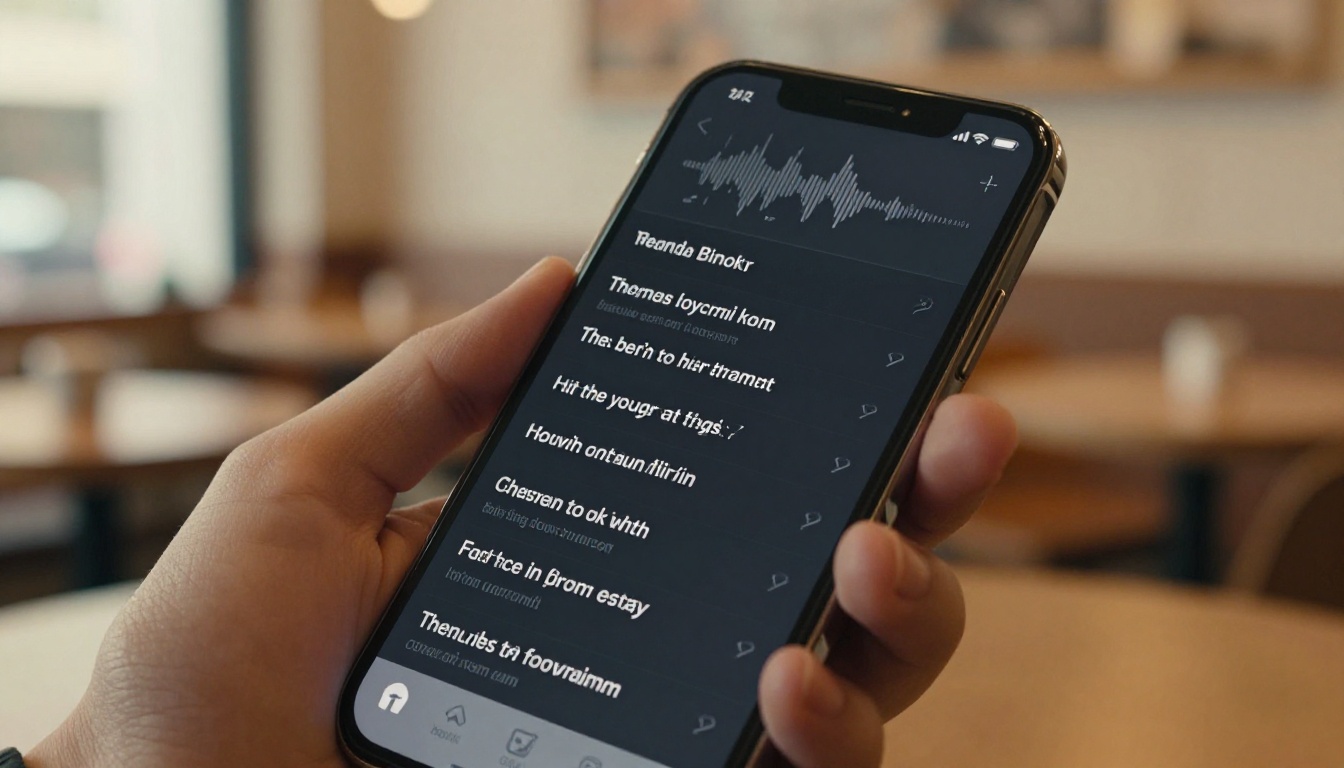
Preprocessing techniques like spectral subtraction, noise reduction filtering, and beamforming (using multiple microphones to focus on the direction of the speaker) clean up audio before it reaches the model. Many production systems combine both approaches: clean the signal first, then run it through a noise-robust model. The combination is what allows a system like GPT-4o Transcribe to handle a recording made on a phone in a busy restaurant with far fewer errors than earlier systems managed in quiet rooms with professional equipment.
Accents Are Not Errors
Early ASR systems were trained almost exclusively on what linguists call "General American" English, a broadcasting-style accent that is spoken natively by only a small fraction of English speakers. Any deviation was treated by the model as noise to be corrected, which meant systematically higher error rates for speakers with regional accents, non-native speakers, and anyone whose speech patterns did not match the training data.
Modern models handle accents better for two reasons. First, training data is more diverse. Second, models with larger architectures and more parameters can capture a wider range of phonetic variation without treating it as noise to suppress. Granite Speech 4.1 2B and Granite Speech 3.3 8B are specifically built to handle multilingual and accented speech across six languages, reflecting a real enterprise need for consistent accuracy regardless of who is speaking.
💡 Speaker diarization, the ability to label "who said what" in a multi-speaker recording, is a separate capability that many transcription tools now include alongside the main transcript. It works best on recordings with clear conversational turn-taking and is still an active area of improvement for fast-paced overlapping conversations.
The Models Getting It Right Today
The current generation of speech-to-text models splits between general-purpose accuracy and specialized performance. Here is how the leading options compare in practice.
GPT-4o Transcribe and GPT-4o Mini Transcribe
GPT-4o Transcribe is built on OpenAI's multimodal GPT-4o architecture, which processes audio natively rather than converting it to an intermediate representation before applying a language model. That deep integration produces noticeably better results on ambiguous or context-heavy content, including slang, proper nouns, and domain-specific terminology where context is necessary to pick the right word among several that sound nearly identical.
GPT-4o Mini Transcribe trades some accuracy for significantly faster processing and lower computational cost, making it the right choice for high-volume workflows where near-real-time speed matters more than perfection on every single word.
Gemini 3 Pro
Gemini 3 Pro brings Google's multimodal training approach to transcription. It handles long-form audio particularly well, maintaining coherence across recordings that run for an hour or more without the context drift that affects shorter-context models. For researchers, journalists, or anyone processing lengthy interviews and lectures, the ability to stay accurate across an extended context window is a meaningful practical advantage.
Granite Speech Models
IBM's Granite Speech 3.3 8B and Granite Speech 4.1 2B are built for enterprise environments where compliance, consistency, and multilingual support matter as much as raw accuracy numbers. They are optimized for professional settings including healthcare, legal, and financial services, where specialized vocabulary and reliable output formatting are non-negotiable requirements.
Who Actually Benefits From This

Accurate AI transcription is not a novelty for the people who rely on it professionally. For many, it is the difference between a workflow that is sustainable and one that burns hours of manual labor every day.
Journalists and Researchers
A one-hour interview used to mean two to four hours of manual transcription. With a tool like Gemini 3 Pro or GPT-4o Transcribe, that same interview returns a searchable, editable transcript in minutes. Researchers can now process audio archives, oral histories, and field recordings that would have been financially inaccessible before. The ability to run full-text search across hundreds of hours of recorded speech changes which research questions you can even afford to ask.
Healthcare Professionals
Clinical documentation is one of the highest-value applications for accurate transcription. Doctors spend a disproportionate share of their working hours on documentation rather than patient care. Voice-driven documentation, powered by models trained on medical vocabulary, reduces that burden substantially. Granite Speech 3.3 8B's focus on domain-specific accuracy makes it particularly relevant in settings where a misheard medication name carries real consequences.
Students and Content Creators

For students, AI transcription turns lectures into searchable, highlightable notes without any typing. For content creators, it produces captions, converts podcast episodes into blog posts, and generates subtitles without manual effort. The accessibility angle is equally important: for people who are deaf or hard of hearing, accurate real-time transcription is not a productivity feature but a core communication tool. The same technology that saves a podcaster twenty minutes of cleanup work also makes a live presentation accessible to someone who cannot hear it.
Using PicassoIA for Transcription
PicassoIA gives you direct access to the best speech-to-text models available, without requiring API keys, code, or technical setup. Here is how to put them to work on your audio.
Step 1: Pick the right model
Head to PicassoIA's speech-to-text collection and choose based on your specific use case:
Step 2: Upload your audio
Upload your audio file directly in the interface. Supported formats include MP3, WAV, M4A, and OGG. The platform handles preprocessing automatically so you do not need to convert files beforehand.
Step 3: Set the language
If your audio is multilingual or recorded primarily in a non-English language, set the language parameter before running the model. This single setting significantly reduces word error rate on accented or non-English content, because the model prioritizes the correct phoneme inventory and vocabulary for that language.
Step 4: Review and export
The transcript appears in a clean editable interface. You can correct any errors inline, export as plain text, copy to clipboard, or pass the output to another tool on the platform for further processing such as summarization or translation.
💡 For best results, use audio recorded with a decent microphone at close range. Even the most accurate model performs better on clean input. If you have a noisy recording, run it through an audio cleanup tool first, then feed the processed file to the transcription model.
Accuracy Is Not the Whole Story
The word error rate on standard benchmarks is at an all-time low. But laboratory accuracy does not always translate directly to real-world performance on your specific audio. Models still struggle with heavy regional dialects underrepresented in training data, extremely fast speech, overlapping speakers, and domain-specific vocabulary that sits well outside their training distribution. Punctuation and sentence formatting are inconsistently applied across models. Timestamps can drift in very long recordings. Speaker diarization, knowing who said what in a multi-person recording, remains an active development area that works best on recordings with clear turn-taking.
None of this means the current generation of tools is not impressive. It means that matching the right model to your specific use case still matters. A model built for enterprise multilingual content will outperform a general-purpose model on medical dictation. A model optimized for speed will trade some accuracy in exchange. Knowing what each model was built for is the difference between a workflow that consistently saves time and one that creates as much cleanup work as it prevents.
The rate of improvement in AI transcription over the last five years has been faster than in the preceding three decades of research. The remaining hard problems, heavy accents, overlapping speech, highly specialized domains, are all getting substantially better with each new generation of models.
Start Transcribing on PicassoIA

You do not need a developer account, a billing dashboard, or a single line of code to start using state-of-the-art transcription right now. PicassoIA puts GPT-4o Transcribe, Gemini 3 Pro, Granite Speech 3.3 8B, Granite Speech 4.1 2B, and GPT-4o Mini Transcribe in one place, ready to run on any audio you upload. Pick the model that fits your content, upload your file, and see why professional-grade transcription no longer requires professional-grade infrastructure. Visit picassoia.com/en/all-models and try it for yourself.


