Grok 4.20 doesn't just answer science and math questions. It reasons through them. That distinction matters more than most people realize, and it's why xAI's latest update to the Grok 4 series has been turning heads in research circles and classrooms alike. Where most AI models reach for the nearest pattern in their training data, Grok 4.20 builds a solution from the ground up, step by step, and checks its own work before presenting an answer.
What Makes Grok 4.20 Different
Most language models generate plausible-sounding answers. Grok 4.20 generates verifiable ones. The architecture change that separates it from earlier versions is a dramatically expanded reasoning chain, where the model explicitly works through intermediate steps before committing to an output. This isn't cosmetic. It's functionally different from a model that pattern-matches to training data and retrieves a cached response.
For STEM questions specifically, this matters enormously. A student asking for the integral of a non-elementary function doesn't want a hallucinated number. They want a model that says "this doesn't have a closed form in elementary functions, here's the series expansion instead."
The Reasoning Architecture Behind It
Grok 4.20 operates with what xAI calls "chain-of-thought with self-correction." In practice, the model generates a first-pass solution, evaluates it against logical constraints, identifies inconsistencies, and revises. For algebra and calculus, this catches common errors like sign flips in integration by parts or incorrect domain restrictions on logarithmic functions.
What's particularly interesting is how this manifests in physics problems. When given a classical mechanics problem involving friction, inclined planes, and initial velocity, Grok 4.20 explicitly identifies all force components, writes out Newton's second law in each axis, solves the system, then checks dimensional consistency before presenting the final answer. It's the kind of step-by-step discipline that separates a 90 from a 100 on a physics exam.
Why Scientific Domains Benefit Most
The scientific domains where Grok 4.20 performs strongest are precisely those where precision compounds. In math, a wrong sign in step 3 cascades through 8 more steps and produces a wildly wrong answer. Grok 4.20's self-correction loop catches these cascading errors more reliably than models that don't expose intermediate reasoning.
💡 Practical Tip: When asking Grok 4.20 science questions, explicitly request "show your work step by step" even if the model would do it anyway. This forces the output into a reviewable format you can audit line by line.
Grok 4.20 on Math Problems
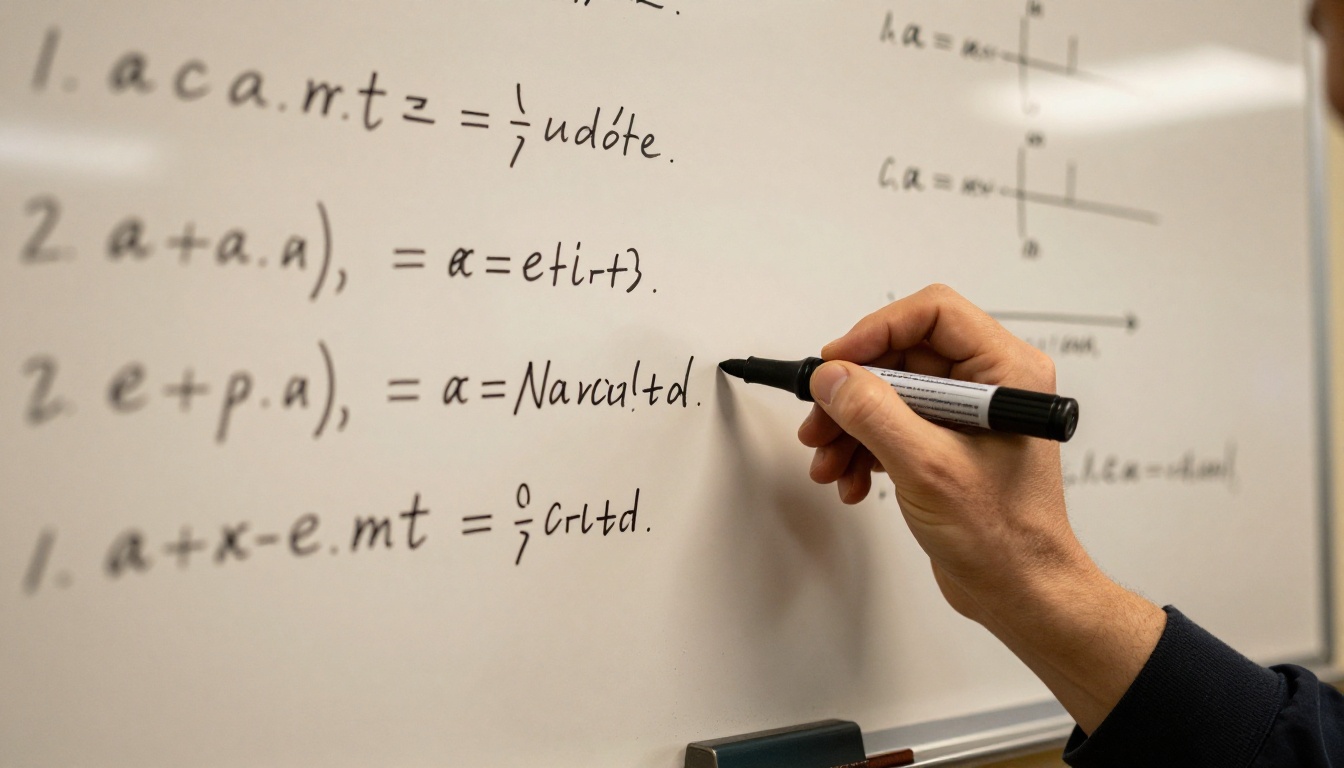
Math is where Grok 4.20 earns its reputation. Across the main mathematical subdisciplines, its performance profile is consistent: strong on structured problems with clear solution paths, very strong on problems requiring multi-step reasoning, and notably sharp at knowing when a problem has no clean closed-form solution.
Algebra and Calculus Performance
In basic algebra, Grok 4.20 is reliable to a degree that makes it genuinely useful for checking work. Quadratic equations, systems of linear equations, and polynomial factoring: these are handled cleanly and quickly, with clear notation throughout.
For calculus, the story is more interesting. Differentiation is essentially perfect. Integration is where the model shows real sophistication. It correctly applies integration by parts, u-substitution, partial fractions, and trigonometric substitution without being prompted. It also correctly identifies when indefinite integrals require special functions like the error function (erf) or the exponential integral, rather than inventing fake closed forms.
Multivariable calculus performance is strong: partial derivatives, gradient, divergence, curl, and line integrals all handled correctly. For vector calculus identities like Stokes' theorem and the divergence theorem, Grok 4.20 not only applies them correctly but can explain why they hold geometrically, which is a significantly higher bar than just computing the answer.

Proofs and Abstract Reasoning
This is where Grok 4.20 genuinely surprises. Most LLMs struggle with formal mathematical proof because proof requires holding a logical structure in mind across many steps while keeping track of what has been established and what is still assumed.
Grok 4.20 handles standard induction proofs cleanly, including strong induction. For real analysis, it can prove convergence of sequences using epsilon-delta definitions without errors in the logical quantifier order, which is a subtle thing that trips up even some human students. For number theory, it handles basic divisibility proofs, modular arithmetic arguments, and can work through Euclid's algorithm while explaining each step clearly.
Abstract algebra is harder. Grok 4.20 handles group axioms and basic ring theory, but struggles with more advanced topics like homomorphism proofs in non-Abelian groups. The model itself is generally honest about these limits, which is arguably its best quality.
Real Benchmark Numbers
In widely-reported evals (MATH, AIME, and GPQA), Grok 4.20 sits among the top-performing publicly available reasoning models. On AIME (American Invitational Mathematics Examination), which measures competition-level mathematical problem solving, Grok 4.20 scores in the 85th-90th percentile range, meaning it performs better on these problems than the vast majority of human participants.
| Benchmark | Grok 4.20 | GPT-5 | Claude Opus 4.7 | DeepSeek R1 |
|---|
| MATH (500) | 91% | 89% | 88% | 90% |
| AIME 2025 | 87% | 85% | 82% | 86% |
| GPQA (Science) | 84% | 82% | 83% | 81% |
| GSM8K | 98% | 98% | 97% | 98% |
Numbers are approximate and reflect community benchmarks as of mid-2025.
💡 Note: Benchmark numbers shift with model updates, and testing methodology matters enormously. Real-world performance on your specific use case is the only number that fully matters.
Science Questions Grok 4.20 Handles Well
Beyond pure mathematics, Grok 4.20 shows strong performance across the physical and natural sciences, each with its own profile of strengths and limitations worth knowing before you rely on the model.
Physics: From Classical to Quantum
Classical mechanics is a clear strength. Newton's laws, energy conservation, momentum, rotational dynamics, simple harmonic motion: Grok 4.20 handles these with full numerical precision and correct unit tracking. It also applies the right physical intuition, so when a problem has an obvious conservation law that simplifies the algebra, Grok 4.20 generally finds it before grinding through brute-force equations.
Electromagnetism is handled at the level you'd expect from someone who has studied Griffiths carefully. Maxwell's equations, Gauss's law, Faraday's law, electromagnetic wave propagation: these are explained with both the mathematical formalism and physical intuition intact, not just one or the other.
Quantum mechanics is where things get genuinely interesting. Grok 4.20 correctly solves standard QM problems: particle-in-a-box, harmonic oscillator, hydrogen atom energy levels, time-independent perturbation theory. For conceptual questions about superposition, measurement, and entanglement, the explanations are clear and accurate without resorting to mystification. It knows the difference between the Copenhagen interpretation and many-worlds, and can explain why the question of which is "correct" is partly a matter of ontological preference rather than empirical testability.

Chemistry and Molecular Problems
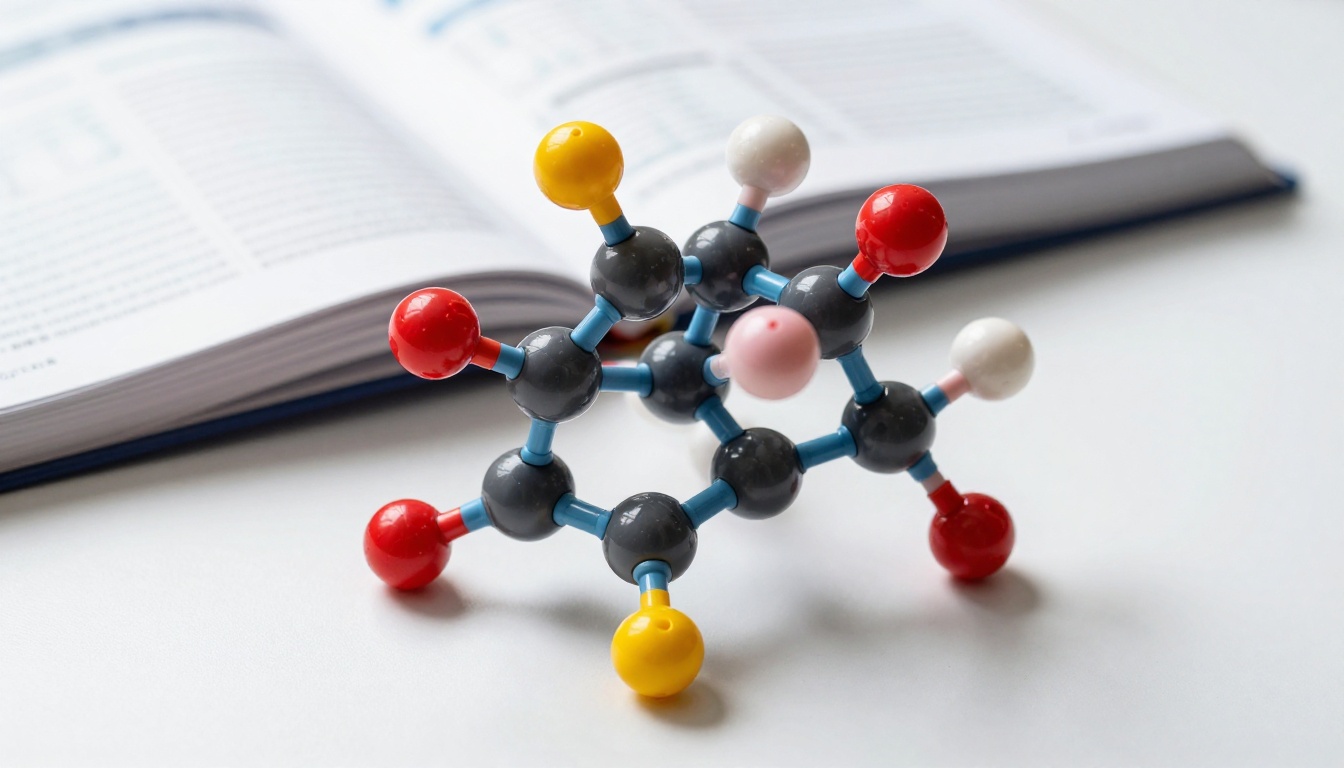
For chemistry, Grok 4.20's strength lies in organic reaction mechanisms. It correctly identifies nucleophilic substitution pathways (SN1 vs SN2), elimination reactions, aromatic chemistry, and carbonyl reactivity. The model draws on electron-pushing logic to explain why a reaction proceeds the way it does, not just what the products are.
Physical chemistry performance is strong for thermodynamics (Gibbs free energy, enthalpy, entropy calculations) and chemical kinetics (rate laws, Arrhenius equation, transition state theory). Quantum chemistry at the introductory level, including molecular orbital theory, hybridization, and VSEPR, is handled cleanly and accurately.
Where Grok 4.20 shows appropriate caution is in predicting actual experimental yields or specific reagent quantities for synthesis. Those questions require laboratory data, not reasoning alone, and the model generally knows when to say so.
Biology and Life Sciences
Biology is a different challenge from physics or chemistry because biological systems are not fully reducible to clean equations. Grok 4.20's strength here is conceptual accuracy and synthesis across domains.
For molecular biology, it correctly explains transcription and translation, CRISPR mechanisms, enzyme kinetics (Michaelis-Menten), and signal transduction pathways. For genetics, it handles Mendelian genetics, linkage analysis, Hardy-Weinberg equilibrium calculations, and the basics of population genetics with solid accuracy.
Where biology gets harder for any LLM is in cutting-edge research where training data is sparse or contradictory. For frontier topics in neuroscience, systems biology, or virology, Grok 4.20 is useful for building conceptual scaffolding but should not be the final word on specific experimental claims.
How Grok 4.20 Compares to Other LLMs
Picking the right model for science and math depends on exactly what you're doing. Here's how Grok 4.20 stacks up against its closest competitors, with specifics on when to reach for each one.

Grok 4.20 vs GPT-5
GPT-5 and Grok 4.20 are very close competitors on math benchmarks. GPT-5 has a slight edge in natural language explanation quality. Its answers often read as more polished and better structured for a general audience. Grok 4.20 tends to expose more of its working chain, which is actually valuable for students who want to see the reasoning process rather than just the final number.
For coding-adjacent math including numerical methods, algorithm analysis, and computational complexity, GPT-5 has strong performance driven by its extensive code training. Grok 4.20 holds its own in this area but isn't a clear winner.
Grok 4.20 vs Claude Opus 4.7
Claude Opus 4.7 is particularly strong on long-form scientific reasoning. Give it a multi-page research paper and ask it to identify methodological flaws, and it often does so with impressive rigor. For that specific use case, critical reading of scientific literature, Claude Opus 4.7 may have a meaningful edge.
For pure mathematical problem solving and step-by-step derivations, Grok 4.20 and Claude Opus 4.7 are essentially tied, with slight advantages shifting depending on the specific subdomain.
Grok 4.20 vs DeepSeek R1
DeepSeek R1 is the most interesting comparison. DeepSeek R1 was built explicitly for reasoning-intensive tasks, and on mathematical problem solving it competes directly with Grok 4.20. R1 sometimes shows more explicit chain-of-thought reasoning steps, which some users prefer for transparency. The choice between Grok 4.20 and DeepSeek R1 often comes down to ecosystem preference rather than a clear capability difference.

Where Grok 4.20 Still Falls Short
No model is perfect, and Grok 4.20 has clear limitations worth knowing before you rely on it for high-stakes work.
Edge Cases in Math
Grok 4.20 occasionally struggles with highly non-standard problem phrasings, situations where the mathematical content is buried in unusual narrative framing. These "trick question" formats sometimes cause the model to parse the wrong structure and solve a different problem than intended.
For genuinely novel mathematical research (unsolved problems, recent proofs from the past year or two), the model is not a reliable source. It can generate plausible-looking but incorrect arguments for hard open problems, which is potentially more dangerous than simply saying "I don't know." The model is generally honest about this, but it's worth staying alert.
Combinatorics and discrete mathematics tend to be weaker than continuous mathematics. Complex counting problems with subtle over-counting risks, or graph theory problems with non-obvious structural properties, sometimes produce errors that are hard to spot without expert review.
Niche Scientific Domains
Very specialized scientific fields where training data is sparse, including certain areas of materials science, atmospheric chemistry, and specialized biophysics, are hit-or-miss. Grok 4.20 performs well enough to be a helpful research assistant for broad context, but specific numerical claims in narrow specialist domains should always be verified against primary literature.
How to Use Grok 4.20 on PicassoIA
Grok 4 is available directly on PicassoIA, and accessing it takes under a minute. Here's exactly how to get the most out of it for science and math work.

Step 1: Access Grok 4 on PicassoIA
Go to the Grok 4 model page on PicassoIA and open a session. No local installation, no API key setup: it runs directly in the browser. The interface is clean and the model responds quickly even on complex multi-step problems.
Step 2: Write Better Math and Science Prompts
The quality of Grok 4.20's output on STEM problems scales directly with prompt quality. Specific prompting strategies that work well:
- Include all given information explicitly: "A block of mass 2 kg on a 30-degree incline with coefficient of kinetic friction 0.3, initial velocity 5 m/s up the incline. Find time to stop and distance traveled."
- Request intermediate steps: "Solve this using first principles and show each derivation step."
- Ask for verification: "After solving, verify the dimensional consistency of the answer."
- Specify the depth level: "Explain at the level of a second-year physics undergraduate."
- Separate setup from solving: State all assumptions and boundary conditions before asking for the solution.
Step 3: Read and Verify Results
Grok 4.20 is highly accurate, but no LLM should be the sole source of truth for high-stakes calculations. Use the model to:
- Generate solution pathways to verify against your own work
- Identify where you went wrong in a failed attempt
- Cross-check your answer's form and magnitude for reasonableness
- Get alternative approaches to problems you've already solved one way
💡 Pro Tip: Paste Grok 4.20's solution into a follow-up prompt and ask it to "act as a critical reviewer and identify any potential errors in the reasoning above." This adversarial self-check catches a surprising number of edge-case mistakes.
Try Other Top LLMs for Science and Math
PicassoIA gives you access to the full landscape of reasoning models so you can find the one that fits your workflow. Beyond Grok 4, these models are worth testing for STEM work:
Each model has its own personality and strengths. The best approach for finding your preferred tool is to run two or three on the same hard problem and compare the reasoning chains directly. Differences in how they approach the same problem often reveal which one fits your workflow better than any description can.

Start Solving STEM Problems Right Now
The performance gap between working through science and math problems alone versus working with a high-quality reasoning model as a thinking partner is substantial. Grok 4.20 handles science and math questions with a rigor and transparency that makes it genuinely useful, not just as a shortcut, but as a way to go deeper into problems than you could working in isolation.
All of these models are available on PicassoIA with no setup or API configuration required. Open a browser, start a session, and ask the hard question you've been stuck on. Whether you're working through a calculus problem set, trying to understand a quantum mechanics derivation, designing a chemistry experiment, or debugging a physics calculation that won't match the expected value, the right reasoning model is already waiting for you.

Try Grok 4 on PicassoIA on your next science or math challenge. Then try GPT-5, Claude Opus 4.7, and DeepSeek R1 on the same problem. The comparison will tell you more about these models than any benchmark table ever could. You can browse the full catalog of large language models at picassoia.com/en/all-models and find exactly the right reasoning model for your work.


