AI lipsync has come a long way from its earliest versions, when even the best models produced uncanny, puppet-like mouth movements that broke the illusion of reality within the first second of playback. Today, tools like HeyGen Lipsync Precision can sync any voice to any face with the kind of frame-perfect accuracy that professional dubbing studios once required weeks of painstaking animation to achieve. That shift did not happen by accident. It took years of compounding breakthroughs in neural architecture, training data, and audio processing. Here is what actually drove the leap.
Where Lipsync AI Started
The first wave of AI lipsync tools emerged around 2020, built primarily on generative adversarial networks trained to match phoneme shapes to video frames of speaking faces. Researchers were excited by the proof of concept. Anyone who watched the results closely noticed the same persistent problems: a blurry halo around the replaced mouth, jitter between frames, and a persistent failure to capture the natural tension of facial muscles during real speech.
The Wav2Lip Era
Wav2Lip, published in 2020, represented the first practical milestone in audio-driven lip synchronization. It introduced a discriminator network specifically trained to reject lip-sync errors, which pushed accuracy noticeably higher than previous approaches. For its time, it was genuinely impressive. In retrospect, it had three hard ceilings:
- The blurry mouth patch: The model composited a generated lower-face region onto existing video, creating a visible quality mismatch where AI-generated lips met the real surrounding skin. The boundary was obvious on any screen larger than a smartphone.
- Resolution limits: Wav2Lip was trained on relatively low-resolution datasets. Scaling to 1080p introduced artifacts along the jawline and around lip corners that were difficult to suppress in post-production.
- No emotion modeling: The system matched phoneme-to-viseme shape based purely on audio amplitude and frequency. An anguished cry and a cheerful greeting could produce identical mouth shapes if the audio waveform was similar. Natural speech is never that mechanical.
Three Problems Nobody Solved for Years
These failures were not minor aesthetic issues. They made early AI lipsync unusable for professional video work:
- Head rotation failure: When a speaking subject turned more than 30 degrees from a frontal position, early models either generated incorrect geometry or stopped updating the mouth entirely. Profile shots were off-limits.
- Temporal flicker: Without explicit frame-to-frame consistency modeling, each frame was generated with partial independence from adjacent ones. The result was visible jitter in the mouth area even during slow, natural speech.
- Skin blending artifacts: The hard compositing boundary between generated and original pixels was nearly impossible to hide. Post-processing could reduce it, but every frame required manual attention. At scale, this was not sustainable.
Five Breakthroughs That Changed Everything
The improvement from Wav2Lip-era models to today's tools was not the result of a single invention. It came from five separate research threads that matured roughly simultaneously between 2022 and 2025.
Diffusion Models and Temporal Coherence
The introduction of diffusion-based video generation fundamentally changed what was possible. Where GANs optimized each frame against a discriminator independently, diffusion models could be conditioned on adjacent frames and audio context simultaneously. The model could "see" where the mouth was in the previous frame and where it needed to be in the next before deciding what the current frame should look like.
The practical result was the near-elimination of temporal flicker. Lips in diffusion-based lipsync move with the same smooth, continuous motion as they would in naturally filmed video, including the subtle micro-movements that occur between fully formed phoneme positions. This single change made output look dramatically more natural.
Better Audio Encoders
Early lipsync models used relatively simple audio features, often just mel spectrograms, to derive mouth shape information. The problem was that mel spectrograms encode frequency content rather than linguistic meaning. Two phonetically different sounds can have similar spectrograms, causing the model to generate incorrect mouth shapes for the audio it receives.
Modern lipsync models use audio encoders pretrained on massive speech datasets, such as Wav2Vec 2.0 and Whisper derivatives, which encode linguistic meaning rather than just acoustic properties. The result is phoneme prediction accuracy that matches or exceeds human lip-readers in controlled testing environments.
3D Face Priors
One of the most significant advances was incorporating 3D face models into the lipsync pipeline. Rather than working directly in 2D image space, newer models estimate a 3D face mesh from each input frame, animate that mesh using audio-derived control signals, then render the result back into 2D video.
This approach solved the head-rotation problem almost entirely. Because the model works in 3D, it can correctly predict what a mouth looks like at any angle, including three-quarter and profile views. It also addressed the skin blending problem, because the output is rendered from the same 3D model as the surrounding face, eliminating the hard compositing boundary.
Real-Time Processing
Processing speed was a hidden barrier for years. High-quality lipsync pipelines were so computationally expensive that even well-resourced studios faced multi-hour render times per minute of output. This made iteration painful and commercial deployment effectively impossible for most creators.
The combination of model distillation (training smaller, faster models to replicate the output of large, slow ones) and GPU inference optimization reduced lipsync generation time dramatically. Models like HeyGen Lipsync Speed now operate at speeds that make near-real-time applications viable for the first time.
Multimodal Training at Scale
The quality of training data improved significantly. Older models trained on a few hundred hours of talking-head video. Current models train on tens of thousands of hours of high-quality video spanning diverse languages, lighting conditions, face shapes, ages, and recording environments.
This scale shift means modern lipsync models generalize far better to unusual inputs: low-light conditions, older faces, thick beards that partially obscure the lips, and non-English phoneme sets that older systems consistently struggled with. The diversity of training data is arguably the most underappreciated factor behind the quality jump seen between 2022 and 2025.
How Good Is AI Lipsync in 2027
The honest answer: good enough that most viewers cannot detect it when source material is reasonable.
Accuracy You Can Actually Measure
The standard benchmarks for lipsync quality are Landmark Distance (LD) for geometric accuracy and PSNR/SSIM for pixel-level fidelity. On both metrics, the best 2024-2025 models score significantly higher than Wav2Lip on standard test datasets. Real-world observer studies show detection rates dropping below 15% for trained evaluators watching clips under 10 seconds.
💡 Practical note: Detection rates matter less than overall watchability. Even if a model achieves 90% geometric accuracy, a single badly-rendered frame can break viewer confidence. Prioritize models with strong temporal consistency over those that optimize purely for per-frame accuracy.
Multilingual Dubbing Without the Uncanny Valley
One of the most commercially significant improvements is in multilingual dubbing. HeyGen Video Translate now supports over 150 languages and dubs video with accurate lip movement for the target language rather than simply replacing the audio track.
This matters because different languages have dramatically different phoneme distributions and viseme patterns. French and Japanese have mouth shapes that simply do not exist in English speech. Earlier models would generate English-biased mouth shapes even when dubbing into other languages, which felt deeply wrong to native speakers of those languages. Current models trained on multilingual data produce viseme patterns appropriate to the actual target language.
| Capability | 2020 Models | 2025 Models |
|---|
| Frontal face accuracy | Moderate | Very High |
| Head rotation support | Poor | Strong |
| Multilingual visemes | No | Yes, 150+ languages |
| Real-time processing | No | Yes |
| Temporal consistency | Weak | Strong |
| Emotional nuance | None | Partial |
The Best Lipsync Models on PicassoIA
PicassoIA offers twelve lipsync models spanning different use cases, processing speeds, and quality levels. These produce the strongest results for most professional applications.
HeyGen Lipsync Precision
Lipsync Precision is HeyGen's quality-optimized model, designed for situations where accuracy matters more than speed. It produces the tightest phoneme-to-lip-shape correspondence in the collection, with particularly strong handling of consonant clusters and bilabial stops (sounds like "b," "p," and "m" that require full lip closure). For dubbing corporate presentations, news content, or any material where viewers watch closely, this is the right tool.
Sync Lipsync 2 Pro
Lipsync 2 Pro from Sync.so is the highest-accuracy general-purpose lipsync model on the platform. It handles a wide range of head angles, lighting conditions, and video qualities with consistent results. The model is particularly well-regarded for its skin blending quality, with transitions at the jaw and lip corners that are nearly invisible even at full resolution.
Its companion model, Lipsync 2, offers the same architecture at slightly lower fidelity in exchange for faster processing, making it practical for batch work and rapid iteration.
ByteDance Omni Human 1.5
Omni Human 1.5 from ByteDance takes a different approach: instead of animating only the lips, it animates the full face and neck in response to audio, producing natural head nods, brow raises, and micro-expressions that make the output feel genuinely alive. This makes it the best choice when creating a talking portrait from a still photograph, since static images have no pre-existing motion for the model to preserve. The earlier Omni Human model is also available for lighter workloads.
Kling Lip Sync
Kling Lip Sync from KwaiVGI is optimized for short-form video content and produces results with a broadcast-ready appearance. It handles high-resolution source video well and performs better with fast speech above 180 words per minute than most alternatives in the collection.
React 1 and Pixverse Lipsync
React 1 from Sync and Lipsync from PixVerse target responsive, low-latency applications. React 1 is built for pipelines where output needs to be available within seconds of audio input. PixVerse Lipsync handles stylized or animated source material, including 2D characters and animated avatars, that would trip up photorealism-focused models.
You can also animate a still image into a talking video using Fabric 1.0 from VEED, or create fully animated talking avatar videos with P Video Avatar.
How to Use Lipsync on PicassoIA
PicassoIA's lipsync tools follow a straightforward two-input workflow: a video source and an audio file. Here is how to get the best results.
Step by Step
1. Prepare your source video.
The best results come from video shot in good lighting with the subject facing roughly forward. Head movement is fine, but extreme angles beyond 60 degrees from frontal will reduce accuracy even on the strongest models. Resolution of 720p or higher is recommended.
2. Prepare your audio.
Clean audio produces better lipsync than noisy or music-heavy recordings. If your audio has significant background noise, run it through a noise-reduction pass first. AI lipsync models use the audio's phoneme content to drive mouth shapes, and noise can interfere with phoneme extraction accuracy.
3. Choose your model.
Use this as a quick reference:
4. Upload and process.
Upload your video and audio to the selected model on PicassoIA, configure any available parameters, and submit. Processing time ranges from a few seconds for short clips on speed-optimized models to several minutes for high-resolution content on quality-first models.
5. Review carefully.
Watch the output at reduced speed, paying specific attention to bilabial consonants (b, p, m) and fricatives (f, v, s) where the mouth position changes most dramatically. These are the frames most likely to show artifacts if any exist.
💡 Pro tip: If you spot problems in specific segments, note the timecodes and re-run only those segments. Most models accept trimmed input clips, and mixing a corrected segment back into a longer timeline is far faster than reprocessing everything.
Where AI Lipsync Still Falls Short
Current models are impressive, but knowing their limits helps you plan production around them.
Extreme Poses and Occlusion
Even the best models struggle when the speaking subject's mouth is partially occluded by a hand, a microphone, or another object, or when the face is in extreme profile. The 3D face prior approach has extended the usable angle range significantly, but beyond 60-70 degrees from frontal, geometry estimation becomes unreliable and artifacts appear.
Solution: Plan shoots to avoid extreme head angles during critical dialogue moments. If working with existing footage where occlusion is unavoidable, React 1 has the strongest handling of partial occlusion among current models.
Emotional Register Mismatches
Modern models handle emotional nuance better than earlier generations, but they still primarily optimize for accurate phoneme shapes rather than full emotional congruence. When you feed an angry vocal performance to a smiling face, most models will produce accurate lip shapes but miss the muscular tension in the cheeks and brow that accompanies genuine anger.
For content where emotional authenticity is critical, match the emotional register between source video and dubbed audio. Omni Human 1.5 handles this case best because it models full-face expression alongside lip movement.
Fast Speech and Dense Phoneme Sequences
Very fast speech above 220 words per minute can cause temporal compression artifacts, where the model lacks enough output frames to represent every phoneme transition cleanly. This produces blur or skipped mouth positions during rapid speech sequences.
Solution: Use Kling Lip Sync, which is optimized specifically for fast speech, or record at a slightly more measured pace where the content allows.
Try It on Your Own Content
AI lipsync in 2027 is genuinely production-ready for most professional applications. The technology has moved from a research curiosity to something that content creators, film studios, and online training platforms rely on at scale. Whether you are dubbing a corporate video into a dozen languages, animating a talking portrait from a photograph, or adding a new voiceover to archived footage, there is a model in the lipsync collection on PicassoIA that fits your project.
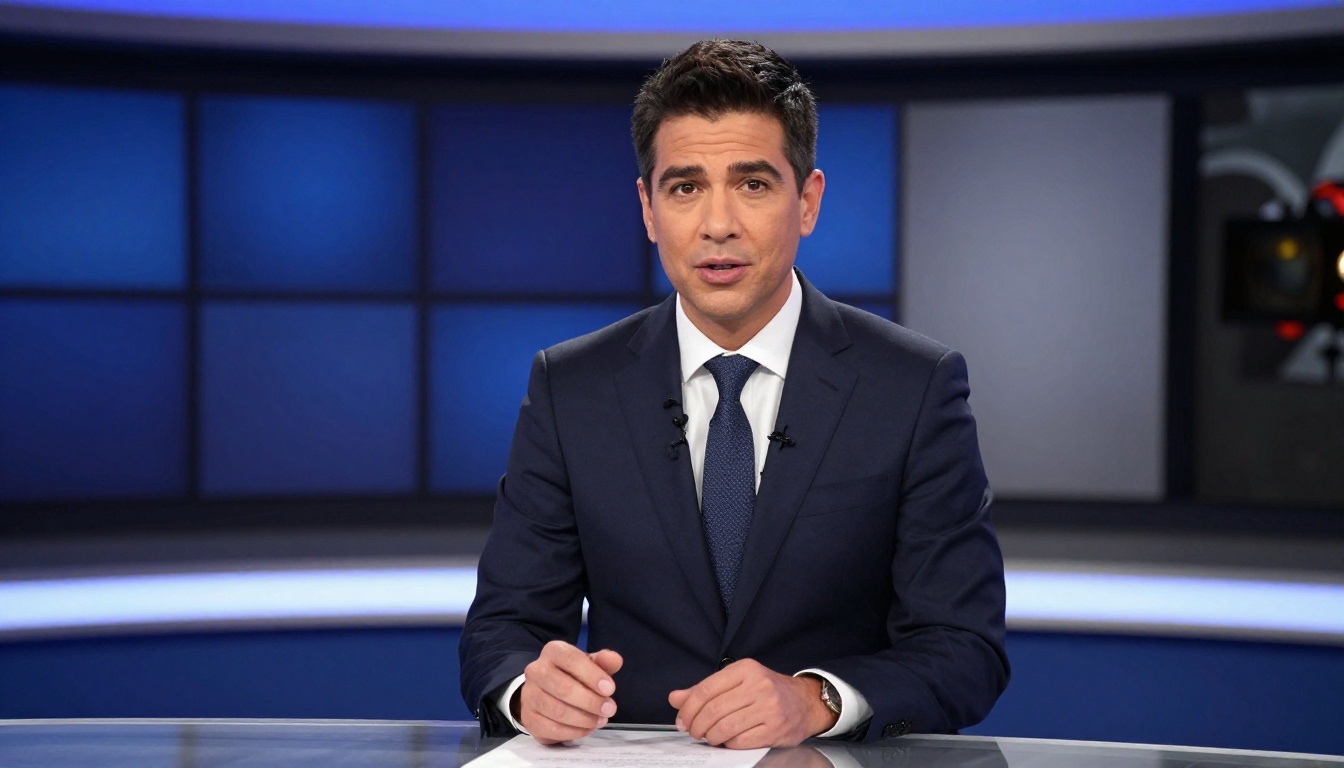
The best way to see the quality is to test it yourself. Start with a short clip of 30 to 60 seconds, run it through Lipsync 2 Pro for a baseline of what the technology delivers today, then experiment with models tuned for your specific use case. The full lipsync collection, alongside PicassoIA's broader suite of video, image, and audio AI tools, is at picassoia.com/en/all-models.
The gap between where AI lipsync was in 2020 and where it sits today is not incremental. It represents a categorical shift in what is possible without a professional dubbing studio. And based on the pace of the last three years, what arrives in 2027 will likely make today's results look dated.


