Seedream 5 Lite is one of those models that makes you rethink what a "lite" label actually means in generative AI. Released by ByteDance as a compact but capable text-to-image model, it sits at roughly 2 billion parameters, a fraction of its larger sibling. Yet in practice, the visual fidelity it produces, particularly in style consistency and fine detail, often outperforms expectations for its weight class.
If you have spent time working with AI image generation, you know that style consistency and detail preservation are where most models show their cracks. Getting a model to hold onto a visual identity across a complex scene, while also rendering hair texture, fabric weave, and background depth simultaneously, is genuinely hard. Seedream 5 Lite takes a specific approach to solving both problems, and it is worth breaking down exactly how that works at a practical level.
The distinction between a "lite" model that merely sacrifices quality for speed and one that makes smarter architectural choices is significant. Seedream 5 Lite falls firmly in the second category. This article breaks down the mechanisms behind its style and detail capabilities, where it genuinely performs well, and what realistic limits look like in practice.
What Seedream 5 Lite Is
The 2B Parameter Architecture
Seedream 5 Lite belongs to ByteDance's Seedream model family, which has positioned itself as a serious competitor in the Chinese and global AI image generation space. The "Lite" designation refers to the model's parameter count: approximately 2 billion, compared to the full Seedream 5's larger footprint.
This is not just about size for accessibility. The Lite architecture reflects deliberate decisions about where to allocate model capacity. ByteDance's team focused on training efficiency and carefully curated dataset quality rather than simply scaling parameters. The result is a model that produces perceptual quality significantly above what the parameter count alone would suggest.
| Spec | Seedream 5 Lite | Typical Full-Scale Model |
|---|
| Parameters | ~2B | 8B–12B |
| Training Data | Curated high-aesthetic | Broad web-scraped |
| Text Rendering | Bilingual (CN + EN) | English-focused |
| Inference Speed | Fast | Slower |
| Style Accuracy | High | Variable |
Why Transformer Architecture Changes Things
The architecture of a diffusion model directly affects what it can retain about style. Seedream 5 Lite uses a transformer-based diffusion backbone rather than the older UNet architecture that dominated earlier generations of models.
The practical difference: transformer architectures use global self-attention, meaning every spatial position in the image generation process can attend to every other position. In a UNet model, information flows through a hierarchical encoder-decoder structure where distant positions only influence each other indirectly. For style coherence across a full composition, the transformer approach gives meaningfully better results.
Larger cross-attention windows allow the model to relate distant parts of an image to each other, which is how it maintains stylistic coherence from foreground to background, from subject to setting. This is one reason Seedream 5 Lite often shows stronger compositional integrity than UNet-based models with higher parameter counts.
💡 Why it works: Transformer self-attention lets the model "see" the whole image at once during generation, not just local neighborhoods. This is what prevents the disjointed look you get when a model renders a subject in one style and the background in another.
The Style Engine Inside Seedream 5 Lite

How Aesthetic Scoring Shapes the Model
One of the most distinctive aspects of Seedream 5's training pipeline is aggressive use of aesthetic scoring during dataset curation. Rather than training on every available image-text pair, the pipeline filters for visual quality, color harmony, compositional balance, and overall aesthetic appeal.
This is a form of quality-weighted training: the model sees clean, high-quality examples far more often than mediocre ones. The effect on output is real and measurable. Seedream 5 Lite has a strong prior toward producing images with natural-feeling color palettes, well-balanced lighting, and compositions that feel intentional rather than accidental.
Beyond curation, ByteDance's training process incorporates aesthetic feedback as a reward signal, similar to how RLHF (Reinforcement Learning from Human Feedback) works in language models but adapted for visual output. Human raters evaluate generated images, and those evaluations shape the model's reward function during fine-tuning. This is why the model tends toward visually pleasing output even when prompts are ambiguous or underspecified.
Style Tokens and Text Conditioning
Seedream 5 Lite uses a sophisticated text encoder that processes style-related language with notable precision. When you write "watercolor on rough paper" or "film grain, Kodak Portra 400," the model's text conditioning pathway has been trained to associate those phrases with specific visual distributions.
This is the difference between a model that loosely approximates a style and one that actually commits to it. The texture of a watercolor wash, the specific tone rolloff of a film stock, the painterly edge quality of oil on canvas: these translate from prompt to pixel with greater fidelity than you typically see at this parameter count.
Consistent Visual Identity Across a Scene
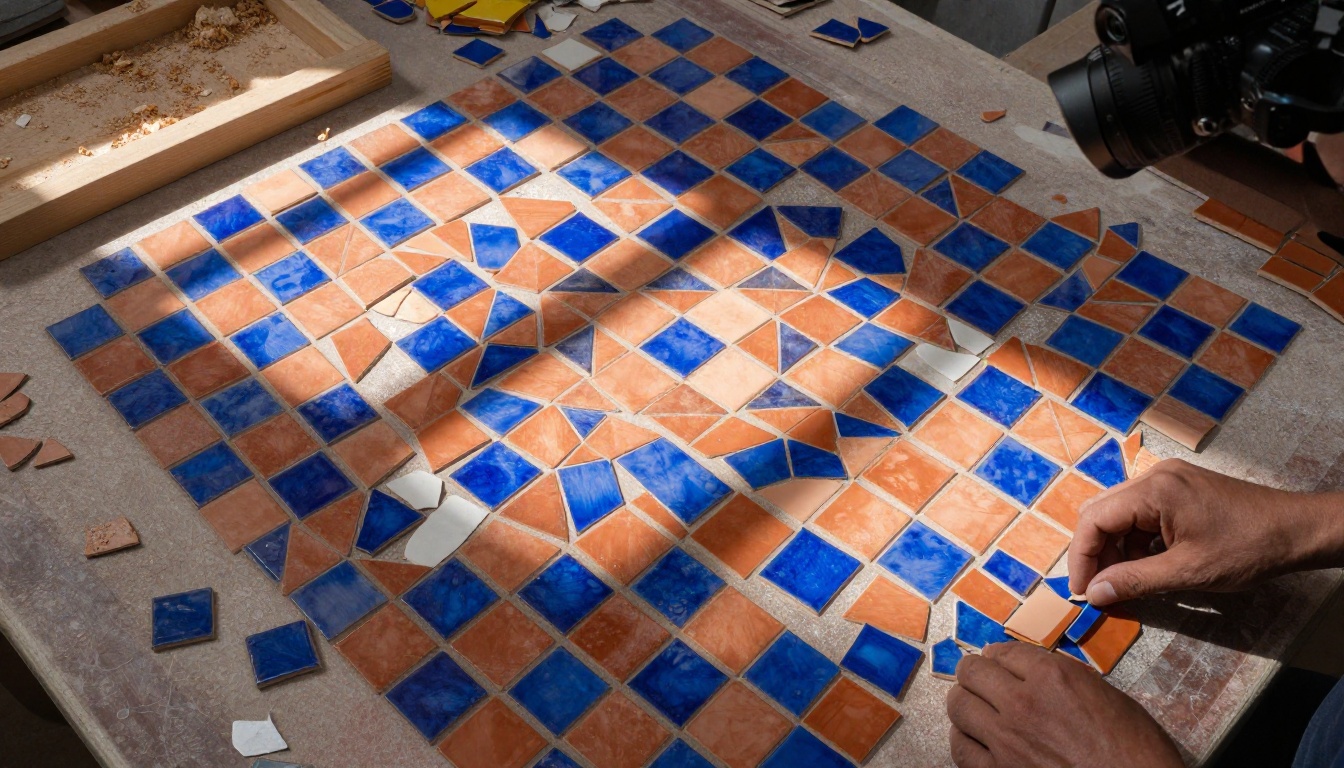
Where many models struggle is maintaining a consistent style across all elements of a complex scene. A model might render the subject in photorealistic style while the background looks like a different aesthetic entirely. Seedream 5 Lite's global attention mechanism allows every patch of the image to influence every other patch during generation.
The result is compositional coherence: lighting logic stays consistent from foreground to background, color grading applies uniformly, and stylistic textures do not suddenly shift halfway through the frame. When you specify a visual style, it sticks throughout the entire composition.
How It Captures Fine Details
Texture and Surface Fidelity
Detail rendering in diffusion models comes down to the model's ability to maintain high-frequency information through the denoising process. Diffusion models work by gradually removing noise, and fine details such as skin pores, fabric weave, and leaf veins occupy the highest frequency bands of an image.
Seedream 5 Lite handles this better than most 2B-parameter models because of its training resolution. The model was trained on high-resolution image crops, which means it has seen and learned fine-grained visual information at a level of detail that models trained on smaller crops simply have not encountered.
The denoising schedule also matters: how many steps the model takes to resolve detail from noise, and at what point fine versus coarse structure gets established. Well-tuned denoising schedules result in better preservation of fine detail at the same inference step count. This is an area of active optimization in the Seedream family.
Micro-Detail in Fabric and Hair
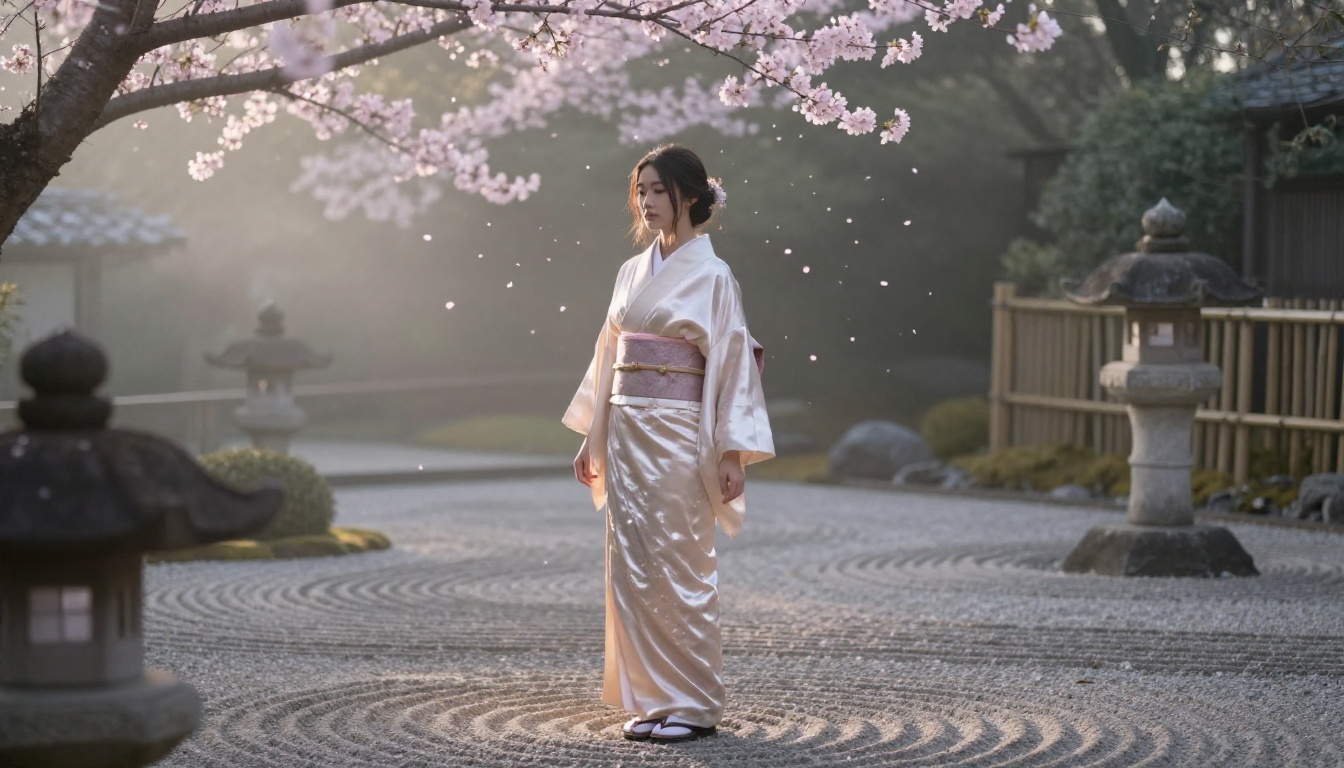
Two categories of detail that consistently expose model weaknesses are fabric and hair. Both involve complex patterns with directional information (weave direction, hair flow), sub-pixel-scale features, and interactions with light that require modeling of both geometry and material properties simultaneously.
Seedream 5 Lite performs well on both. Fabric textures, particularly structured materials like denim, lace, and wool, show believable weave patterns. Hair renders with directional flow and appropriate micro-strand variation rather than the painted-looking uniform mass that weaker models produce.
This reflects both training data quality and the model's effective receptive field, which allows it to model local texture patterns while remaining consistent with the larger structural context around them.
💡 Prompt tip: To get the most detail out of Seedream 5 Lite, describe texture explicitly. Phrases like "visible linen weave texture" or "individual hair strands in sharp focus" will activate the model's high-frequency rendering capability more reliably than vague style words.
Bilingual Text Rendering

Why Text in Images Is Hard
Rendering readable text inside generated images is one of the genuinely difficult problems in diffusion-based image synthesis. The reason is architectural: diffusion models generate images as a whole field of pixels, not as a semantic composition of distinct elements. Text, with its precise glyph shapes and spatial relationships, requires extremely high spatial precision across fine feature boundaries.
Most Western AI image models were trained primarily on English-language data and still struggle with multi-word text inside images. Character spacing, baseline alignment, and font consistency all degrade as text complexity increases.
The Chinese-English Advantage
Seedream 5 Lite was explicitly trained on bilingual text rendering, covering both Simplified Chinese and English characters. This is a significant differentiator for content creators working in Asian markets, or anyone who needs accurate text embedded in generated images.
The model handles signage, product labels, poster text, and decorative typography with notable accuracy for its class. Chinese character rendering is particularly strong given the stroke complexity of Chinese glyphs compared to Latin letterforms. Individual character strokes maintain their distinct shapes rather than bleeding together.
| Text Type | Seedream 5 Lite | Typical Western Model |
|---|
| English short text | Excellent | Good |
| English long sentences | Good | Poor |
| Simplified Chinese | Strong | Very poor |
| Mixed bilingual | Strong | Usually broken |
| Handwritten style | Moderate | Poor |
Writing Prompts That Get the Most Style and Detail
Specificity Over Vagueness
One of the practical lessons from working with Seedream 5 Lite is that the model responds very well to specific, concrete language. Vague style descriptors like "beautiful," "nice," or "high quality" are processed by the text encoder but do not carry much discriminative information. Specific material and optical descriptions carry far more weight.
Instead of "detailed painting," try "oil on linen canvas, visible impasto brushwork, palette knife texture in highlights, cool shadow underpainting." Instead of "good lighting," try "single diffused north window light, cool 5500K color temperature, soft shadow transition."
This specificity principle applies across every category of style descriptor:
- Film stocks: "Kodak Portra 400 grain and color rendering" rather than "film look"
- Lens characteristics: "85mm f/1.8 shallow depth of field" rather than "blurry background"
- Surface textures: "visible fabric weave, individual thread definition" rather than "textured"
- Atmospheric conditions: "volumetric morning haze through pine trees" rather than "foggy"
Multi-Element Prompt Structuring
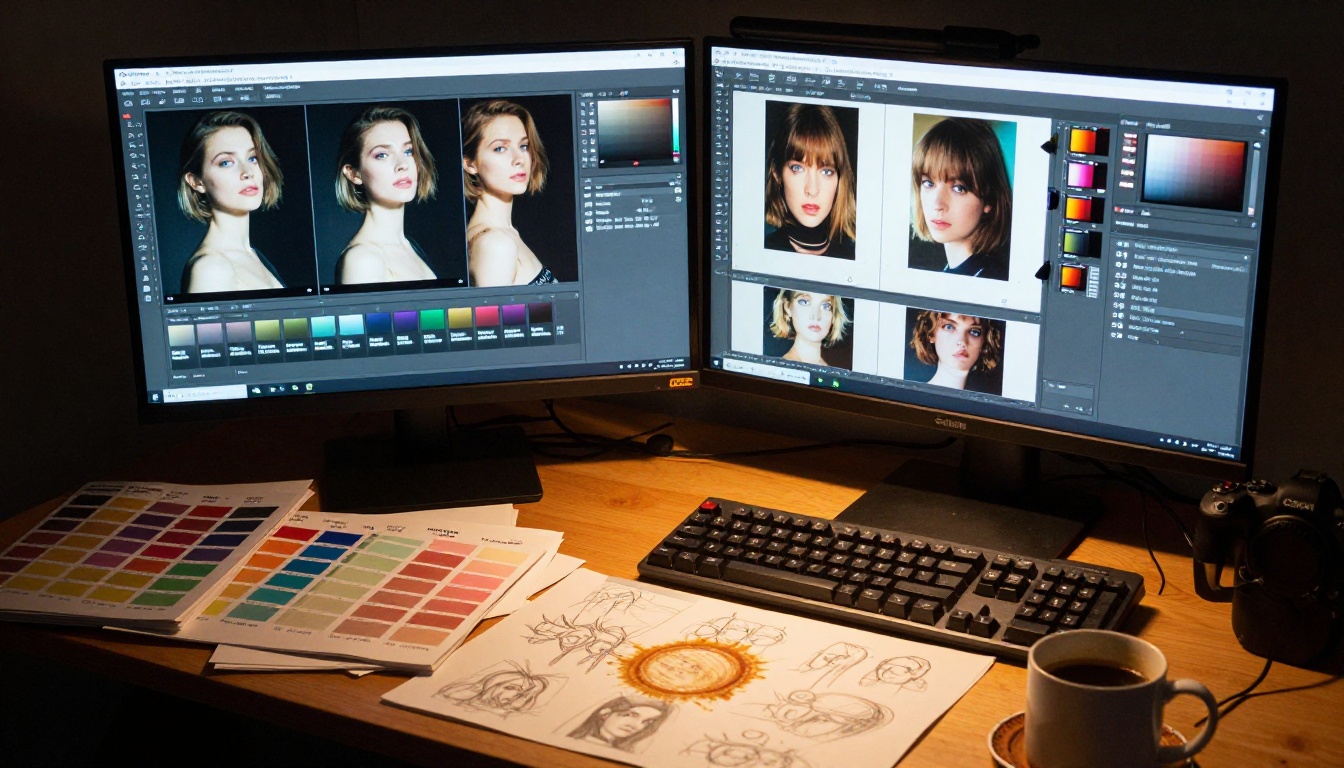
For complex scenes with multiple style requirements, structuring your prompt in layers gives Seedream 5 Lite cleaner conditioning signals:
- Subject and action first: Who or what, doing what
- Environment second: Where, with what surroundings
- Lighting third: Source, direction, quality, color temperature
- Camera and lens fourth: Focal length, aperture, shooting angle
- Texture and atmosphere fifth: Surface details, atmospheric effects, film characteristics
This ordering roughly matches the hierarchy of visual importance in an image: global composition first, local detail last. When a generation misses on style but hits on composition, keep the structural elements of your prompt and rewrite only the style descriptors.
Speed vs. Quality in Lite Models
What "Lite" Actually Cuts
The size reduction from a full-scale to a Lite model is not free. In Seedream 5 Lite's case, the tradeoffs appear most clearly in:
- Many-object scenes: Full-scale models can hold more distinct visual concepts simultaneously in a single frame
- Extreme close-up detail on non-human subjects: Complex architectural ornament and machinery show more simplification at fine detail levels
- Prompt complexity ceiling: Very long, heavily layered prompts may partially drop specified elements when they conflict with each other
What is notably not sacrificed: style coherence, single-subject detail quality, color fidelity, and bilingual text rendering all hold up well relative to larger models.
Inference Speed in Practice
Because of the reduced parameter count, Seedream 5 Lite runs noticeably faster than full-scale alternatives on equivalent hardware. For creators doing high-volume work such as portraits, product shots, or editorial images, faster inference means more iterations per hour, which often produces better final results than a single slow generation from a heavier model.
Use the speed advantage to run 5-10 prompt variations and select the best, rather than spending the same compute on one carefully tuned generation from a slower model. Iteration speed is itself a creative tool.
Real-World Results

Where It Performs Best
Seedream 5 Lite is at its strongest in:
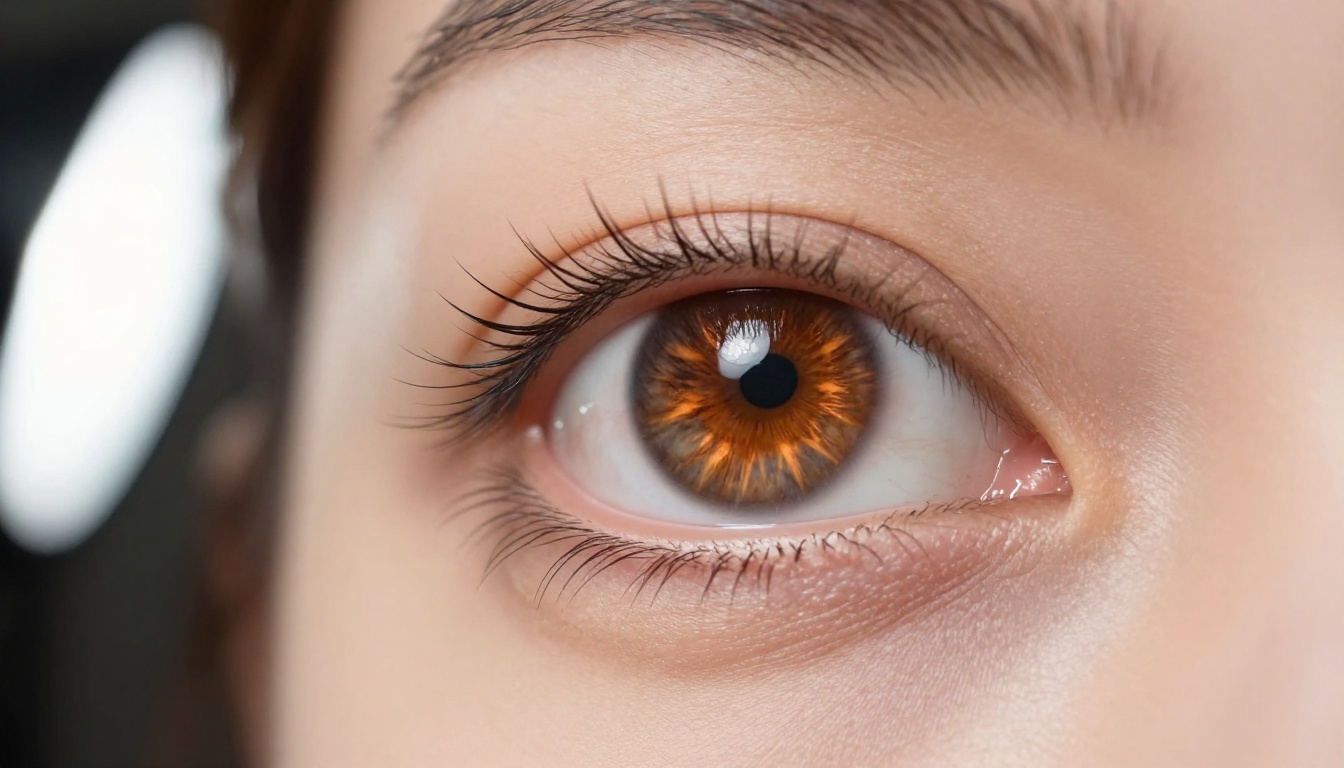
- Portrait and figure work: Human anatomy, skin detail, and facial feature accuracy are notably strong across a wide range of styles
- Fashion and textile imagery: Fabric rendering is one of its clearest capabilities, with structured materials like denim, lace, and wool producing believable weave patterns
- Stylized photography aesthetics: Film grain simulations, color grading styles, and cinematic looks reproduce with high fidelity to their source aesthetics
- Single-focus compositions: Images with one or two subjects against contextual backgrounds, where the model can devote more capacity to detail on the primary subject
- East Asian aesthetic styles: Training data skews toward high-quality Asian art and photography, giving the model a distinctive strength in these visual traditions
Where You Will Notice Limits
Seedream 5 Lite shows its limits in:
- Hands with many interacting fingers: A persistent diffusion model weakness that is slightly more visible at the Lite parameter count
- Complex architectural interiors: Many-element scenes with precise geometric requirements tend to soften or simplify
- Animals in motion: Dynamic non-human subjects with complex limb articulation
- Highly specific product designs: Object geometry with precise structural or branding requirements
Being clear-eyed about these limits is part of using any model effectively. For its target use cases, the capabilities significantly outweigh the limitations.

If the style and detail capabilities of Seedream 5 Lite interest you, several models on PicassoIA offer comparable or complementary strengths for different creative workflows.
PicassoIA Image is the platform's own text-to-image model, offering high visual fidelity across a wide range of styles and subjects. It handles complex prompt conditioning well and is particularly strong for photorealistic portrait and fashion output, with a similarly strong emphasis on aesthetic quality in its output distribution.
Flux Redux Dev takes a different approach: rather than starting purely from text, it creates variations from a reference image while preserving the core visual identity of the original. This is valuable when you have an existing style or aesthetic that you want to maintain across multiple generated images, which maps closely to what Seedream 5 Lite achieves from the text prompt side.
PicassoIA Image Editor Pro adds editing capabilities on top of generation, letting you refine generated images with inpainting, outpainting, and targeted edits. This pairs well with any primary generation model when you need to fix specific detail issues in an otherwise strong output without regenerating from scratch.
Create Your Own Images

The best way to actually feel how a model handles style and detail is to run it. Seedream 5 Lite's approach, focusing on aesthetic training data curation, transformer-based global coherence, and bilingual text support, produces a recognizable visual signature worth experiencing directly.
If you want to start experimenting with high-quality AI image generation right now, PicassoIA gives you access to a broad library of text-to-image models where you can immediately start working with prompts that test style consistency, detail fidelity, and complex compositions.
Start with something specific: describe a fabric texture, a lighting condition, a film stock. See how precisely the model translates your words into visual reality. That precision is what Seedream 5 Lite and the models built on similar principles are working to get right, and it is what separates images that feel generated from images that feel genuinely crafted.


