If you have ever tried picking up a new language with textbooks and weekly classes, you already know how slow and frustrating it can feel. Hours spent conjugating verbs in a vacuum, zero real conversation practice, and almost no feedback on whether your pronunciation is anywhere close to correct. AI has changed all of this. Today, anyone with a phone and an internet connection can build real fluency in a foreign language, at their own pace, with tools that adapt to them personally.
Why Old Methods Don't Work Anymore
The speed problem with classrooms
Traditional language classes move at the pace of the slowest student in the room. You spend 45 minutes on a grammar concept you already grasped in 10, then rush through pronunciation practice that actually takes weeks to internalize. The curriculum was not designed around you. It was designed around a group.
Beyond pacing, the feedback loop is broken. You write an essay, your teacher marks it, you get it back three days later. By that point, the moment has passed. Real language acquisition requires immediate correction, repeated exposure, and constant output.
What AI does differently
AI adapts to you in real time. It does not wait for a class schedule. It corrects your grammar the moment you write it. It responds to your spoken sentence with pronunciation tips tied to the specific sounds you mispronounced. And it never gets tired, impatient, or booked up.
The shift is significant. Instead of fitting into a system, the system fits around you.
LLMs as conversation partners
Large Language Models are, at their core, text generators trained on billions of human-written sentences across dozens of languages. That makes them extraordinarily capable conversation partners. You can write a message in French, get a natural response back, ask for corrections, then repeat the same exercise in Spanish ten minutes later.
The best part is that LLMs respond to context. You can tell GPT-5 to act as a patient Italian conversation partner who only corrects major errors and keeps replies under 50 words. That specificity is something no human tutor or app can replicate consistently.
Speech recognition for pronunciation
Speaking a language without ever receiving corrections is how bad habits solidify. AI speech recognition tools listen to you speak, compare your sounds to native pronunciation patterns, and flag the specific phonemes you are getting wrong. This kind of targeted feedback used to require an expensive human phonetics tutor.

AI-powered flashcard systems
Spaced repetition is one of the most well-proven methods in language acquisition research. AI flashcard systems take this a step further by tracking not just whether you got a card right or wrong, but how confident you seemed, how long it took you, and what related words you also struggle with. The result is a vocabulary practice session that feels almost intuitive in how well it knows your weak spots.
How to Use AI to Learn a New Language Step by Step
The steps below assume you are starting from a beginner level in a new language. Adjust the pace based on where you already are.
Step 1: Set your baseline with an AI assessment
Before practicing anything, ask an LLM to assess your current level. Paste a paragraph you have written in the target language, or ask it to test you with a short dialogue. Models like Gemini 3 Pro can quickly identify your vocabulary range, grammatical patterns, and sentence complexity, then suggest what to focus on first.
This step alone saves weeks of practicing things you already know.
Step 2: Build vocabulary with AI flashcards

Do not start with random wordlists. Instead, give an LLM a topic you care about — cooking, business, travel — and ask it to generate 30 vocabulary words relevant to that topic, with example sentences, phonetic pronunciation guides, and a note on any irregular forms. Copy these into a flashcard app with spaced repetition enabled.
The combination of AI-generated context and spaced repetition practice is significantly more effective than any standard textbook vocabulary chapter.
💡 Tip: Ask the LLM to write each example sentence using vocabulary from a previous session. This forces review of old words in new contexts, which accelerates retention dramatically.
Step 3: Practice grammar through conversation
Rather than drilling conjugation tables, have a conversation. Tell the LLM to chat with you in your target language and insert a grammar correction in brackets whenever you make an error, without breaking the flow of the conversation. Something like this:
"Yo fui al mercado ayer" [correction: "Fui al mercado ayer", subject pronoun unnecessary in Spanish] "y compré pan fresco."
This method ties grammar rules to real sentences you produced yourself, which makes them stick far better than abstract drills.
Step 4: Fix pronunciation with speech AI

Pronunciation practice should be daily and targeted. Use a text-to-speech model to hear native-quality audio for any sentence, then record yourself saying the same sentence and compare. Many AI tools will score your output and tell you exactly which sounds were off. Focus on five to ten challenging phonemes at a time rather than trying to fix everything at once.
How to Use LLMs on PicassoIA for Language Practice
PicassoIA has a full collection of Large Language Models available directly in the browser, with no setup required. Here is how to build an effective language practice workflow using them.
Picking the right model
For daily conversation practice, GPT-4o and Gemini 2.5 Flash offer the fastest response times, which keeps conversation feeling natural. For detailed grammar explanations or reading comprehension work, Claude 4 Sonnet and GPT-5 give more thorough, nuanced answers.
If you want to practice with a free model, Llama 4 Maverick Instruct and Deepseek R1 both perform well for conversational language practice at no cost.
Prompts that actually work
The quality of your AI language practice depends almost entirely on how you set up the initial prompt. Vague prompts give vague results. Here are three high-performance prompt structures:
For conversation practice:
"Act as a native [language] speaker. Respond only in [language]. Keep each reply to 3-4 sentences. After each of my messages, point out one grammar or vocabulary error I made and explain the correction briefly in English."
For vocabulary building:
"Give me 20 [language] words related to [topic], each with a phonetic guide, an English translation, and one example sentence. Format as a table."
For reading comprehension:
"Write a short 200-word news article in [language] at B1 level. Then ask me three comprehension questions about it."
Building a daily practice routine

Consistency beats intensity. A 20-minute daily session with an LLM on PicassoIA will produce better results than a 3-hour binge once a week. Here is what a simple 20-minute daily session looks like:
- 5 minutes — Flashcard review with spaced repetition
- 10 minutes — Conversation practice with your chosen LLM
- 5 minutes — One grammar point or vocabulary set requested from the model
After 30 days of this routine, most people report a noticeable jump in their reading comprehension and writing confidence.
Speaking Skills That Actually Stick
The AI shadowing method
Shadowing is a technique where you listen to a native speaker and repeat what they say in real time, mimicking the rhythm and intonation. AI makes this accessible without needing a native speaking partner. Use a text-to-speech model to read a paragraph aloud at natural speed, then repeat it immediately. Record both and compare.
The goal is not perfection on day one. It is building muscle memory for the sound patterns of the language.
💡 Tip: Ask an LLM like Claude 4 Sonnet to write shadowing scripts at your exact vocabulary level on topics you enjoy. Sports, food, travel, tech — whatever keeps you engaged.
Recording yourself for real feedback

Most people never hear themselves speak a foreign language, which means their pronunciation errors go unnoticed indefinitely. The fix is simple: record a 60-second voice note in your target language daily, then transcribe it using an AI speech-to-text tool. Read the transcription to spot where the AI misheard you. Those are exactly the sounds that need work.
Grammar Without the Grind
Why grammar rules alone don't work
Every language textbook starts the same way: verb tables, noun cases, tense forms. Learners spend hours memorizing rules and then freeze completely when a real conversation happens because they never practiced applying those rules under pressure.
AI shifts this dynamic entirely. When grammar is corrected in the middle of a real conversation, the rule attaches to a memory of using it incorrectly, which is far more durable than any table you memorized.
Correction without judgment
One of the biggest barriers to speaking a new language is embarrassment. Most people avoid speaking because they are afraid of making mistakes in front of others. An AI has no reaction to your errors. It simply corrects them and moves on.
This changes the psychological dynamic of practice completely. You can make hundreds of mistakes in a single session, get corrected on all of them, and walk away with genuine progress rather than anxiety.
Vocabulary That You Actually Remember
Context-based vocabulary
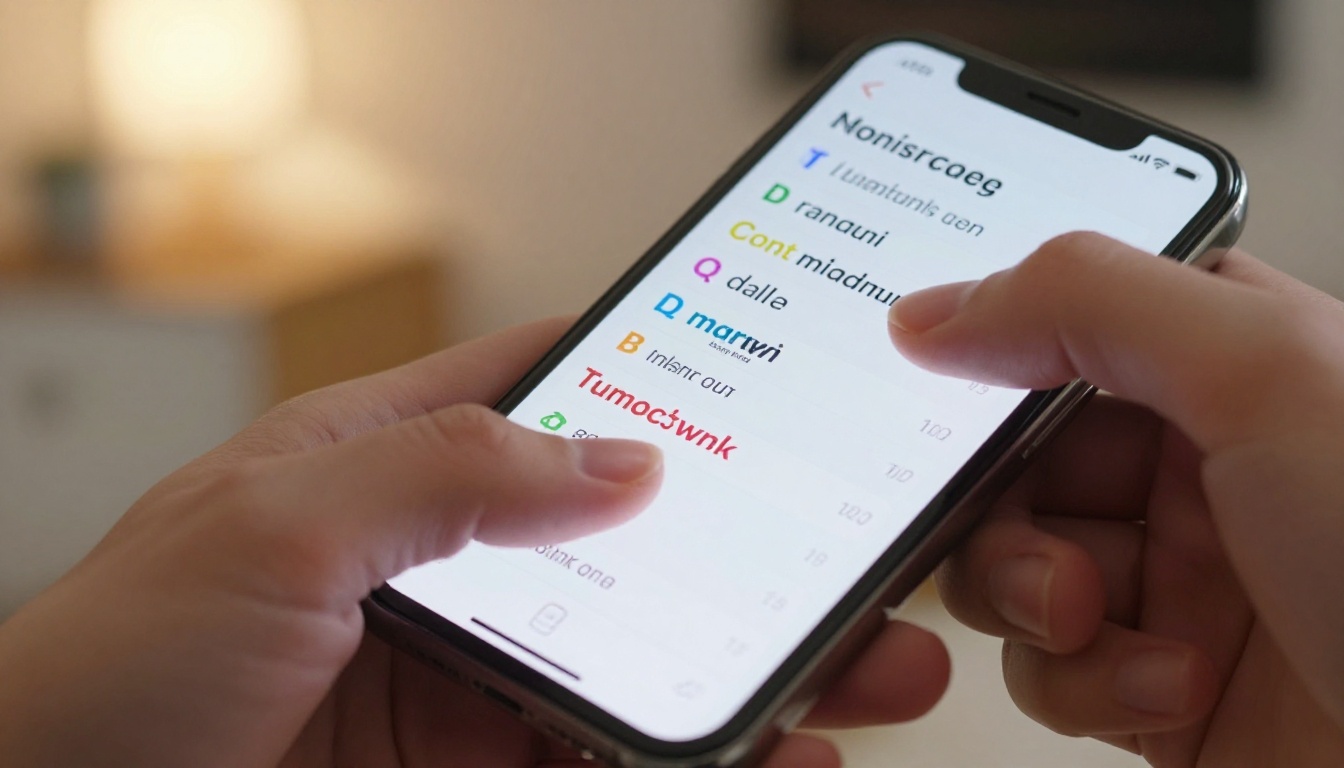
Isolated word lists are the least effective way to build vocabulary. Words stick when you encounter them in multiple contexts over time. AI makes this easy: ask the model to use your new vocabulary words in five different sentences, each from a different situation — a formal email, a text to a friend, a news headline, a recipe, a product review. The variety creates rich associative memory hooks.
Building topic-specific word banks
If you are picking up a language for work, ask for business vocabulary. If you are traveling to Japan, ask for travel and hospitality phrases. If you love cooking, start there. Relevance dramatically increases retention, and AI lets you personalize your vocabulary list in seconds.
| Learning Goal | Topic Focus | Suggested Words Per Session |
|---|
| Travel | Transport, accommodation, food | 15-20 words |
| Business | Meetings, emails, negotiations | 20-25 words |
| Social | Small talk, opinions, feelings | 10-15 words |
| Academic | Articles, essays, lectures | 25-30 words |
Tracking Progress Over Time
Setting measurable targets

Vague goals like "get better at Spanish" produce vague results. Instead, set measurable targets: write a 200-word diary entry in the target language each week and ask an LLM to score it on grammar accuracy, vocabulary range, and naturalness. Track the scores over time. Seeing improvement in concrete numbers is one of the strongest motivators for continuing.
💡 Tip: Save each weekly writing sample. Re-reading your entries from two months ago is one of the best ways to see how far you have actually come.
What progress actually looks like
Progress in language acquisition is non-linear. There will be weeks where nothing seems to click, followed by a day where sentences suddenly start flowing naturally. This is normal. The brain is building structures in the background even when it does not feel like it.
AI tools help during the plateau periods specifically because they do not require motivation to be available. The model is there at 2am when you cannot sleep and want to practice. That consistency across difficult stretches is where AI-assisted practice separates from traditional methods.
3 Common Mistakes to Avoid

Even with powerful AI tools at your disposal, certain habits will slow your progress significantly. Here are the three most common ones:
1. Only reading and never speaking
Reading and listening are passive inputs. Speaking and writing are active outputs. Fluency requires both. Make sure at least half of your practice time involves producing language, not just consuming it.
2. Using translation as a crutch
Translating every sentence back to your native language slows your brain down and prevents you from thinking directly in the target language. Push yourself to respond to AI prompts in the target language without mentally translating first. It feels uncomfortable initially, but it is the fastest path to genuine fluency.
3. Skipping the foundational vocabulary
It is tempting to jump into conversation practice immediately. But if your foundational vocabulary is weak, conversations stall constantly. Spend the first two to four weeks building a strong base of 500-1000 high-frequency words. Everything gets easier after that foundation is in place.
Start Creating With AI Today
Language practice is just one of many ways AI is reshaping how people work, create, and communicate. If you want to go further and put powerful AI models to work generating images, editing video, building voiceovers, or producing music, PicassoIA has over 200 models available directly in the browser.
From GPT-5 for deep language reasoning to Gemini 2.5 Flash for fast daily practice, the LLM collection alone gives you everything you need to build a serious, personalized language practice system. No subscriptions, no installations, no waiting.
The only thing left to do is start. Pick a language, open a model, and send your first message. Fluency is built one sentence at a time.


