Three of Hollywood's biggest studios are suing the same AI image company, and the case is still a long way from a verdict. Disney and Universal filed first in June 2025, Warner Bros. followed in September, and a federal judge in California merged the cases that November. Since then the fight has moved into the slow, paper-heavy middle of a lawsuit: who must hand over which records, which deadlines hold, and when a judge will finally say whether training an image generator on movie art counts as fair use. This update lays out where the Midjourney lawsuit stands in October 2026, what each side actually claims, and what it means if you make images, video or music with AI.
💡 At a glance
- Court: U.S. District Court for the Central District of California, Judge John A. Kronstadt
- Plaintiffs: Disney, Marvel, Lucasfilm, 20th Century Fox, Universal, DreamWorks, and Warner Bros. with affiliated companies
- Defendant: Midjourney, Inc.
- Status: Pretrial, no trial date, no ruling yet on infringement or fair use
Where the Case Stands Today
The merged case, Disney Enterprises, Inc. v. Midjourney, Inc., sits in front of Judge John A. Kronstadt. It is in the pretrial stage, which means both sides are still gathering evidence. Nobody has argued the core question to the judge yet, so there is no finding that Midjourney infringed anything and no finding that its training counts as fair use. Headlines that say a studio "won" or Midjourney "lost" are describing procedural skirmishes, not the verdict.
Three Studios, One Courtroom
Disney, Marvel, Lucasfilm and 20th Century Fox sued together with Universal and DreamWorks. Warner Bros. then filed its own suit, and the court joined the two actions. That gives Midjourney a single judge, a single schedule and one set of fair use arguments to answer for all three studio groups at once.
The Fight Over Studio AI Records
The loudest dispute right now is about the studios' own AI use. Midjourney argues that the studios use generative AI themselves, and it wants records that show how. In June 2026 a magistrate judge limited that request to the studios' consumer-facing AI applications. Midjourney then asked Judge Kronstadt to overturn the limit and order broader disclosure, reportedly including internal material about training data and board-level presentations. At the time of writing, no ruling on that request has been reported.
The studios want information too. They are pressing for a full inventory of what Midjourney trained on, how it filtered that material, and how it handled takedown notices. Midjourney resists, citing trade secrets.
Dates on the Calendar
Court trackers list the following deadlines. Complex cases shift their calendars often, so treat these as a snapshot rather than a promise.
| Milestone | Date |
|---|
| Non-expert evidence cutoff | September 21, 2026 (passed) |
| Expert evidence closes | November 9, 2026 |
| Summary judgment motions due | November 23, 2026 |
| Trial | Not set, 2027 at the earliest |
💡 Why summary judgment matters: Fair use is usually decided on motions before any jury is seated. The first real answer about training is more likely to arrive in a judge's written order than in a courtroom drama.
How It Started
June 2025: Disney and Universal File
On June 11, 2025, Disney and Universal filed their complaint. They called Midjourney a "bottomless pit of plagiarism" that produces "endless unauthorized copies" of their characters. The filing reproduces page after page of prompts and results: a user asks for a Star Wars figure with a lightsaber, or for Shrek, and gets an image that looks a lot like the studio's registered work. The claims are direct copyright infringement and secondary infringement, the second resting on the idea that Midjourney knows what its users generate and benefits from it.
Midjourney filed its answer in August 2025. It denied the core allegations and put fair use at the center of its defense.
September 2025: Warner Bros. Joins
In September 2025, Warner Bros. and its affiliated companies filed a separate suit. Their complaint accuses Midjourney of producing, displaying and distributing "unauthorized derivatives" of Superman, Wonder Woman, Batman, Bugs Bunny and Scooby-Doo, among other properties. The pattern matched the first complaint: ordinary prompts, recognizable characters in the output.
November 2025: The Cases Merge
On November 4, 2025, the court consolidated the Warner Bros. action with the Disney and Universal action. The request cited Federal Rule of Civil Procedure 42(a) and the overlap in facts and legal questions. In practice, the same judge now weighs the same fair use arguments for every plaintiff.
What Each Side Argues
The Studios' Case
The studios make two connected points:
- Training: Midjourney built its model on copyrighted films and artwork without a license.
- Output: The model produces their protected characters on demand, so every Yoda, Minion or Batman image is a potential copy.
Their complaint backs both points with page after page of prompts paired with the images they produced.
Midjourney's Defense
Midjourney's main shield is fair use. It argues that its model studies patterns across huge numbers of images instead of storing and copying them, so the model is not a library of the studios' works. It also points out that the studios use generative AI in their own work, an "unclean hands" style argument that tries to weaken the studios' footing.
Why Fair Use Decides Everything
Fair use is a four-part balancing test. A court weighs:
- Purpose and character of the use, including whether the new use adds a different meaning or purpose and whether it is commercial.
- Nature of the original work, where creative works get stronger protection than factual ones.
- Amount used, both in quantity and in how central the borrowed part is.
- Market effect, meaning whether the new use substitutes for the original or hurts its licensing value.
Factor four is where the studios will push hardest, because Hollywood sells character licenses for a living.
Training Versus Output
Courts tend to split this into two questions. First, was training on the images lawful? Second, do particular outputs copy protected characters? A model can win the first and still lose the second. If training turns out to be fair use but the system keeps producing near-identical Superman images from a short prompt, the studios still have a path to liability. That is why this case is watched so closely: the answer could differ for the data going in and the pictures coming out.
Cases Beyond Midjourney
No ruling here yet, but other decisions give hints about the mood of the courts:
- Bartz v. Anthropic (June 2025): Judge William Alsup held that training on lawfully obtained books can be fair use, while building a library from pirated copies was not protected. Anthropic later agreed to a settlement of at least $1.5 billion.
- Getty Images v. Stability AI (UK, November 4, 2025): The High Court rejected Getty's main copyright claims, finding the model does not store or reproduce the images, though it found limited trademark liability where watermarks appeared. Different country and different law, so a California judge is not bound by it.
- Disney and OpenAI (December 2025): Disney announced a three-year licensing deal and a $1 billion investment, putting more than 200 characters on a video tool, with talent likenesses and voices excluded and no training on Disney material. In the same period, Disney sent cease-and-desist letters to Google and Character.AI.
💡 The pattern: Studios are not against AI. They are against unlicensed AI use of their characters, and they are willing to sign deals with companies that pay. That shapes how every creator should think about prompts.
What This Means for Creators
You do not need to wait for a verdict to make smart choices. The lawsuit is about one company's model, but the habits that keep your own work safe are simple.
Safer Habits for Original Work
- Prompt for original subjects. Describe the person, place, mood, light and lens you want, not a franchise.
- Keep your prompts and settings. A saved record shows what you asked for and when.
- Read the license terms of any tool before you sell what it makes.
- Use reference material you own or have permission to use.
- Treat client work with extra care. A brand that hires you expects clean, original assets.
Prompts That Invite Trouble
- Naming a studio character or franchise in the prompt.
- Asking for a result "in the style of" one specific studio film.
- Requesting official-looking posters, logos or merchandise.
- Selling fan art of protected characters as your own product.
💡 This article is general information, not legal advice. If you sell AI-made work at scale, talk to a lawyer who handles intellectual property.
How to Use Picasso IA Image
If you want to make original images without a single borrowed character, Picasso IA Image is a good place to start. Here is a simple workflow.
- Open the model page for Picasso IA Image and pick an aspect ratio. Use 16:9 for scenes and banners, 1:1 for profile images and 9:16 for stories.
- Describe an original subject. Write who or what is in the frame, what they are doing, and where. Invent your own details instead of borrowing a known character.
- Add light and lens language. Terms like "soft window light from the left" and "85mm lens, shallow depth of field" steer the look of the result.
- Generate and review. Check hands, edges and text first, since those are the usual weak points.
- Change one thing at a time. Adjust the light, the angle or the setting, then regenerate, so you can see which change did what.
- Refine the winner in Picasso IA Image Editor Pro to fix small details or adjust the mood.
| Prompt element | What to write | Example |
|---|
| Subject | An invented person, animal or object | "A lighthouse keeper with a weathered yellow raincoat" |
| Setting | A specific place and time | "Foggy harbor at dawn" |
| Light | Direction and quality | "Low golden light from the right" |
| Lens | Focal length and depth | "50mm lens, shallow depth of field" |
| Texture | Surfaces that sell realism | "Wet rope, peeling paint, salt on the glass" |
Want a different look? Try Seedream 5 Pro for polished detail, Flux Krea Dev for natural photographic tones, GPT Image 2 for prompt accuracy, or Nano Banana 2 Lite for quick drafts.
Video and Music Without Borrowed Characters
The same rule applies beyond still images. Original ideas are the safest raw material for video and sound, and they tend to look better too, because nobody has seen them before.
Turning Stills into Motion
Start with an original image, then animate it. Picasso IA Video works from text or from an image, and Seedance 2.5 Lite generates clips up to 10 seconds. If you want native audio in the clip, Veo 3.1 Lite is another option. Describe the motion in order: what the subject does, how the camera moves, and what the light does over the clip.
Scoring Your Own Tracks
Music prompts follow the same logic. Describe mood, tempo, instruments and genre rather than asking for the sound of a particular famous song. Lyria 3 builds original music from a text prompt, Stable Audio 2.5 suits instrumental beds and loops, and ElevenLabs Music composes songs from a short brief. Pair a generated score with an animated still and you have a finished short without touching anyone else's property.
Try Your Own Original Ideas
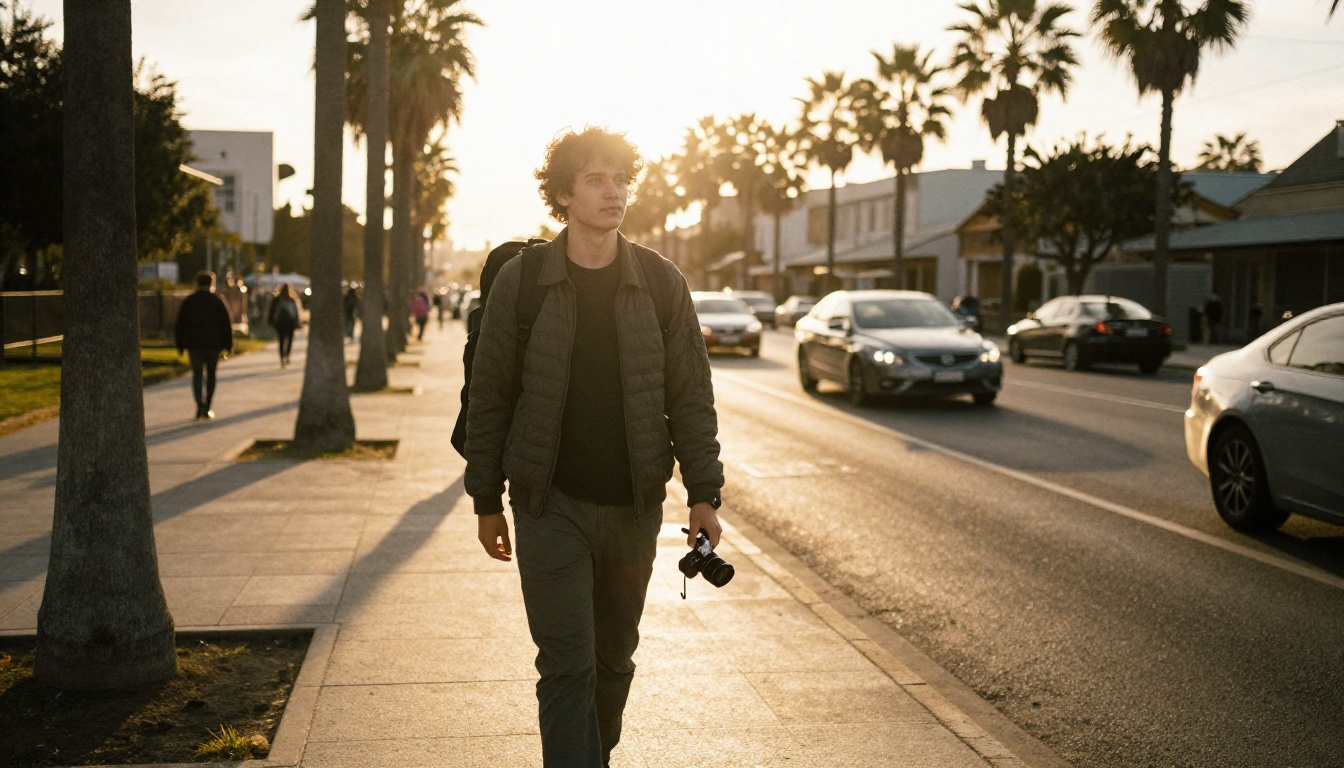
The Midjourney case will take months to reach its biggest decisions, and it will take longer for the appeals and the licensing deals that follow. You do not have to wait. Pick a character you invented, a place you know, or a mood you want to capture, and build it from scratch.
Open Picasso IA Image, write a prompt about something that belongs entirely to you, and see what comes back. Then animate the best frame with Picasso IA Video and add a score with Lyria 3. One idea, three formats, zero borrowed characters. Start with your next idea today at picassoia.com.


