In late March 2025, it felt like half the internet had moved into a Studio Ghibli film. Wedding photos, pet portraits, office selfies and old memes all came back with painted skies, soft light and big round eyes. Then the mood shifted. A years-old clip of Hayao Miyazaki calling AI animation "an insult to life itself" started circulating again, illustrators posted furious threads, and lawyers began arguing over whether anyone had actually broken a law.
This article separates the noise from the facts: how the trend started, what Miyazaki really said, what copyright law protects in the US and Japan, what artists on both sides of the debate argue, and which court cases are still unresolved. It ends with a practical way to make painterly images of your own without borrowing another studio's identity.
💡 Short answer: copying a visual style is generally not copyright infringement in either country. The fights that matter are about training data and about reproducing specific characters or scenes.
How the Trend Started
One Update, Millions of Portraits
In late March 2025, OpenAI added a new image generator to ChatGPT. Users quickly found that it could take an ordinary photo and redraw it in the look of Studio Ghibli films: pastel skies, painted clouds, rounded faces and a warm, nostalgic palette. Within days, "Ghiblified" was a verb, and feeds were packed with portraits that nobody had paid an illustrator to make.
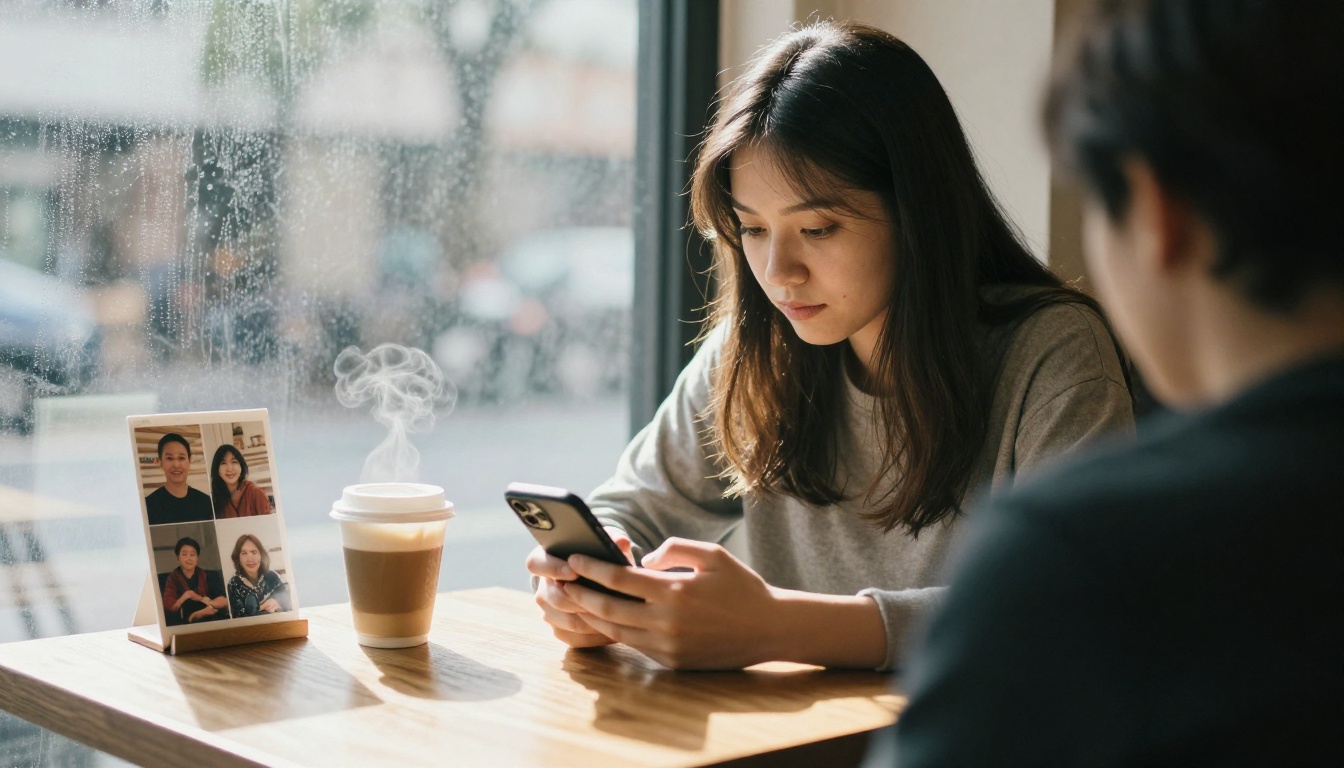
The speed was the point. What once took an artist days of drawing now took about a minute, and it cost the user nothing more than a prompt. That gap between effort and output is exactly what made the debate so heated. People were not only asking whether the images were legal. They were asking whether it was fair.
Why Ghibli Got Singled Out
The studio's look is easy to recognize and surprisingly hard to fake by hand. Its films are known for hand-painted backgrounds, towering cumulus clouds, green hills and gentle natural light. Years of human labor sit behind every frame, and fans tend to treat that labor as part of the magic.
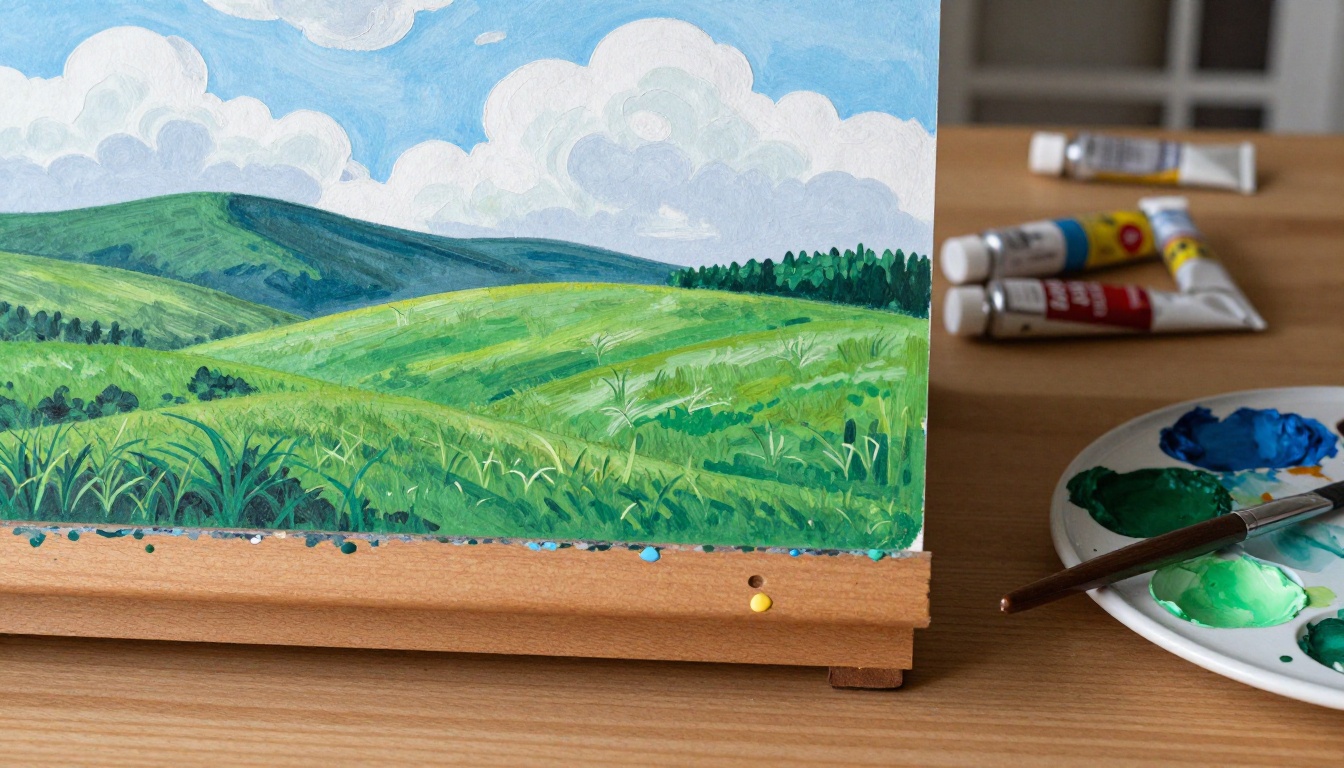
Few studios are so closely tied to the idea of handcraft. That is why a one-minute AI filter felt like a sharper provocation here than it would have with almost any other style. The look was also warm and harmless on the surface, which helped it spread: friends, brands and public figures all joined in before the backlash caught up.
What Miyazaki Actually Said
The 2016 Demo Reaction
The quote that went viral comes from a 2016 documentary scene in which Miyazaki was shown an AI animation demo. He said he was "utterly disgusted" and that he would "never wish to incorporate this technology into my work at all." He also called it "an insult to life itself."
The clip is real, and the reaction was genuine. It is also nine years older than the trend, which matters for how much weight it should carry in the current argument.
What He Never Said
This is where the story gets distorted. The 2016 remarks were a response to one specific demo of a grotesque, crawling figure, not to ChatGPT images. Miyazaki was not reacting to Ghiblified selfies, and Studio Ghibli declined to comment officially on the trend. Any post claiming a fresh statement from the studio deserves suspicion.
💡 Fact check: the Miyazaki quote is authentic, but it predates modern image generators by almost a decade. It reflects his personal view of AI animation, not a legal position taken by the studio.
Can a Style Be Copyrighted?
What US Law Says
In the US, copyright protects specific expression: a particular drawing, frame, character or script. It does not protect ideas, methods or general style. That is why countless painters can work in a "soft watercolor landscape" manner without anyone owning the look. The table below shows where the line usually falls.
| Use | Usually allowed? | Why |
|---|
| Painterly image with soft clouds and a warm palette | Generally yes | General style is not protected |
| Redrawing a famous character such as Totoro | Risky | A specific character is protected expression |
| Recreating a recognizable frame from a film | Risky | Copies protected expression |
| Selling merchandise with studio characters | Almost never | Infringes copyright and trademarks |
So a landscape with soft clouds and a warm palette sits in safe territory, while a recognizable character or a recreated scene does not. The same logic applies whether the work is made with a pencil or a prompt: the question is what the final image copies, not what it feels like.
Businesses face a different risk than hobbyists. Even when a style is free to use, putting a famous studio's name in an ad, or implying that the studio endorses a product, can create trademark and false endorsement problems that have nothing to do with the look of the image.
What Japan Said in 2025
Japan's lawmakers took up the question in April 2025. In a House cabinet committee session on April 16, the clarification given was that if only the style or the ideas are similar, it would not be considered copyright infringement. That position lines up with the US view: style alone is open territory.
The picture changes when an output copies characters, scenes or story elements from specific works. Japanese law treats that as potential infringement just as US law does. The legal gray zone is not the look of a cloud. It is the point where an image stops being "inspired by" and starts being a derivative copy.
What Artists Are Saying
Voices Calling It Exploitation
Artist Karla Ortiz, who is also a plaintiff in a major lawsuit against AI image companies, called the trend "an insult" and "exploitation." Her argument is not that the law forbids style imitation. It is that the models behind these images were built on artists' work without consent, and that the trend cashes in on one studio's reputation to do it.
Many others in the illustration community echoed the point. They see a pattern: take an admired body of work, train on it, then let millions of people generate lookalikes for free while the original creators see none of the value.
The Fan Defense
Defenders see it differently. They argue that stylistic influence has always been how art moves forward, that people are celebrating films they love, and that a personal portrait in a familiar look harms nobody's sales. Some also point out that human artists have drawn Ghibli-inspired fan art for decades and that no one called it theft.
There is a fair counterpoint here. A fan drawing one picture is a different act from a system producing millions of them in an afternoon, and that difference of scale is where most of the disagreement actually lives.
Where Illustrators Stand
Most working illustrators do not dispute that style is free to borrow. Their complaint is about scale and consent. A person can study a style for years and still be one artist, while a model can reproduce it endlessly. For freelancers who live on commissions, that changes the market even if it does not change the law.
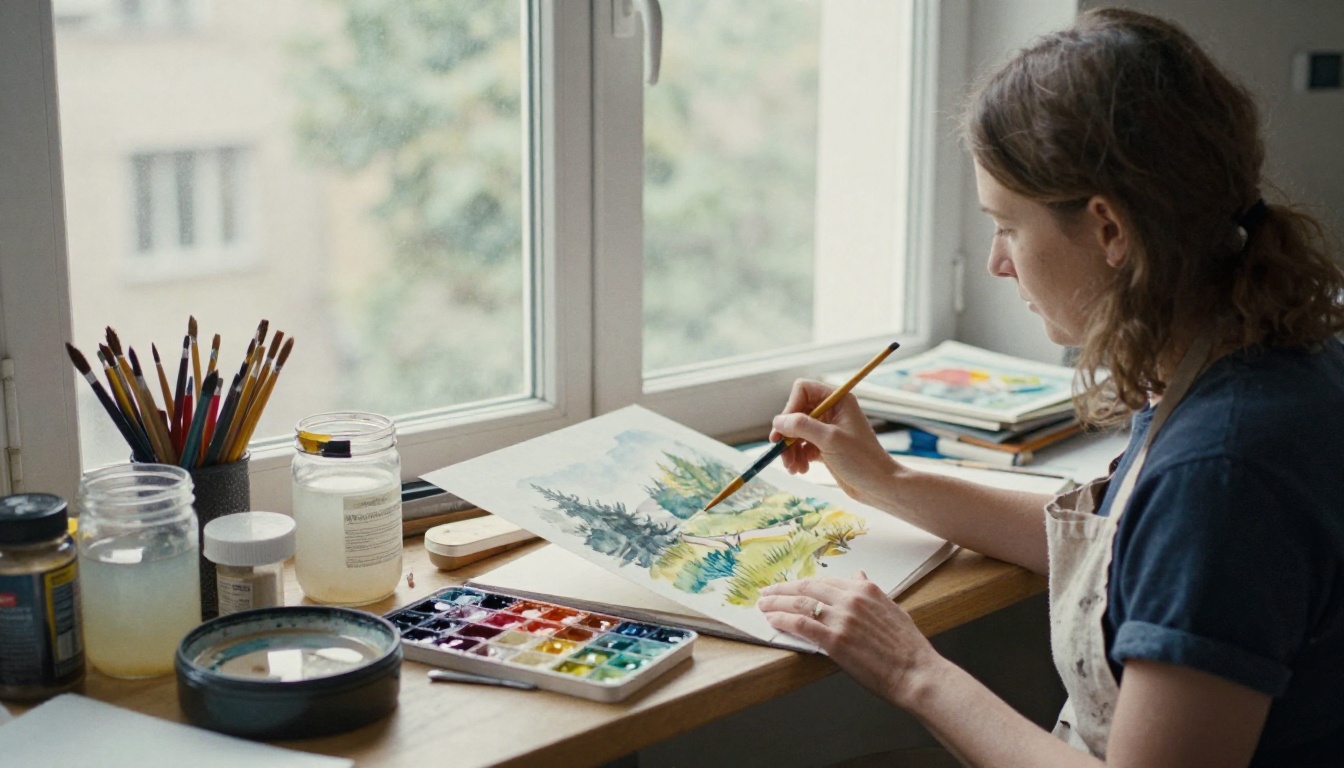
The practical worry is simple: clients who once hired a human for a warm, hand-painted look can now ask for it in a chat window. Many artists want clearer rules on consent, credit and compensation before that becomes the default.
The Training Data Question
The most serious legal question is not about the output. It is about what went into the model. If a system was trained on copyrighted films and artwork without permission, the dispute becomes about copying at scale, not about anyone's resemblance to a famous look. That is the argument at the center of most lawsuits.
Two terms come up constantly. Opt-out means a work can be used for training unless its owner objects. Opt-in means the owner has to agree first. Most artists' groups push for opt-in, while most AI companies prefer opt-out because it keeps the pool of training material much larger.
What CODA Told OpenAI
On October 27, 2025, the Content Overseas Distribution Association (CODA), a Japanese anti-piracy group representing more than 30 major rights holders including Studio Ghibli, Bandai Namco and Square Enix, sent a letter to OpenAI about its video model Sora 2. CODA said a large portion of the outputs closely resembled Japanese content and argued that this likely came from training on members' works without authorization.

The group also pointed out that OpenAI relies on opt-out systems, while its reading of Japanese law is that permission is generally required before works are used for training. Whether that reading holds up is untested.
💡 Worth noting: CODA's concern is about specific works and characters, not about a general aesthetic. That is a much stronger legal footing than "it looks like us."
Courts Still Have No Final Answer
Artists vs. Image Generators
In January 2023, illustrators Sarah Andersen, Kelly McKernan and Karla Ortiz filed a class action against Stability AI, Midjourney and DeviantArt. It was one of the first major US cases of its kind, and as of this writing it has not produced a final ruling. Whatever it decides will shape how image generators handle training data in the US.
The $1.5 Billion Book Deal
In September 2025, a group of authors and Anthropic reached a settlement of $1.5 billion over books taken from pirate libraries, roughly $3,000 per work for up to 500,000 works. That case was about books, not images, and about how the books were obtained rather than a ruling on training itself. Still, it showed that how training data is acquired can carry a very real price tag.
The US Copyright Office also weighed in. Its May 2025 pre-publication report on generative AI training said many steps in AI training may be infringing unless a defense such as fair use applies, and that using vast troves of works commercially to produce competing content goes beyond established fair use boundaries.
Here is how the main events line up:
| Date | Event |
|---|
| 2016 | Miyazaki reacts to an AI animation demo in a documentary |
| January 2023 | Artists file a class action against Stability AI, Midjourney and DeviantArt |
| March 2025 | ChatGPT image update sets off the Ghibli trend |
| April 2025 | Japanese House committee says style alone is not infringement |
| May 2025 | US Copyright Office publishes its pre-publication training report |
| September 2025 | $1.5 billion book settlement announced |
| October 2025 | CODA sends its letter to OpenAI |
Make Original Art on PicassoIA
Why Original Direction Matters
Given the legal gray zones and the artist backlash, the safest route is also the most satisfying one: build your own look. A painterly image generator does not need a studio's name to produce a painterly result. Describe the scene, the light, the palette and the materials, and you get something that belongs to you.
Krea 2 Medium is built for expressive, painterly and illustrated work, and it keeps its style consistent across generations. When you want a photographic scene instead, Krea 2 Large is the better pick.
How to Use Krea 2 Medium
- Open the Krea 2 Medium page on PicassoIA.
- Write a prompt describing your own scene: subject, setting, light and materials. Leave out studio names and living artists.
- Pick a creativity level. Raw renders only what you write, low fills obvious gaps, medium adds reasonable interpretation, and high takes meaningful creative liberty.
- Choose an aspect ratio from eight presets, including 16:9, 9:16 and 4:5.
- Optionally upload up to 10 style reference images that you own, such as your own sketches or photos, and set how strongly they apply.
- Reuse a seed whenever you want to reproduce the same composition.
| Setting | What it does | Good starting point |
|---|
| Prompt | Describes the scene | Subject, light, palette, materials |
| Creativity | Controls how freely the model interprets | Medium |
| Aspect ratio | Sets the canvas | 16:9 for landscapes |
| Style references | Transfers texture from up to 10 images | Your own sketches |
| Style strength | 0 means no influence, 1 means full influence | 0.5 (default) |
| Seed | Repeats a composition | Any fixed number |
Try a prompt like this one: "A quiet village road after rain, hand-painted gouache texture, towering clouds, warm late afternoon light, visible brush strokes, muted greens and ochres." It names no studio and no artist, and the result is yours to refine.
💡 Tip: if the model keeps adding details you did not ask for, drop the creativity setting to raw and let your prompt do the work.
A Practical Checklist
- Skip names. Do not put a living artist or a studio in your prompt.
- Avoid known characters. Do not recreate protected characters, frames or logos.
- Use references you own. Upload only sketches, photos and paintings you have the right to use.
- Label your work. Say clearly when an image is AI generated.
- Hire humans when it counts. If a project needs one person's hand, pay that person.
- Check licensing. Read the terms before selling prints or merchandise.
Make Something Original Today
The Ghibli debate will not be settled by one article, one lawsuit or one viral post. But you do not have to wait for the courts to make better choices about your own images. Pick a scene from your own life, describe its light and colors in your own words, and see what comes back.
Open Picasso IA, try Krea 2 Medium with a prompt that is entirely yours, and compare the result with what a stock filter would give you. Experiment with creativity levels, add a few of your own sketches as references, and keep what feels like your voice. Browse more image models at picassoia.com/en/all-models and start building a look nobody else has.


