Nano Banana Pro is a name that circulates frequently in AI art communities, but most beginners encounter it and have no idea where to even begin. If you have seen the term in forums, Discord servers, or model marketplaces and wondered what it actually is, this article breaks it all down in plain language. No jargon walls. No assumptions about your technical background.
What Is Nano Banana Pro?
Nano Banana Pro is a fine-tuned Stable Diffusion checkpoint model designed for high-quality image generation with a focus on photorealism and vivid color rendering. Unlike base Stable Diffusion models, which require significant prompt engineering and parameter tuning to produce clean results, Nano Banana Pro has been trained on a curated dataset to output visually polished images from relatively straightforward prompts.
The "Pro" designation signals that it sits above the standard "Nano Banana" variant in terms of detail fidelity and color accuracy, though it trades a small amount of generation speed to get there.
The Architecture Behind It
At its core, Nano Banana Pro runs on a latent diffusion model framework. Image generation does not happen in pixel space from the start. Instead, the model works in a compressed "latent space," which is a mathematical representation of the image, and only decodes it into pixels at the final step.
This architecture has two direct benefits:
- Speed: Working in latent space is computationally cheaper than processing full pixel arrays.
- Quality: The compression learns meaningful visual patterns rather than raw pixel noise, so outputs tend to be more coherent.
The model uses a text encoder (typically CLIP or a similar transformer) to convert your written prompt into a vector the diffusion process can act on. That vector then guides the denoising process from random noise toward your intended image.
Why "Nano" Actually Matters
The "Nano" label refers to model size, not output quality. Nano Banana Pro uses a reduced parameter count compared to full-scale checkpoints like Stable Diffusion XL. This makes it faster to load, faster to generate, and viable on consumer-grade hardware, including machines without a dedicated high-end GPU.
For beginners, this is significant. You do not need a high-end workstation to experiment with it. That accessibility is a large part of what makes the model popular as a starting point.
💡 Tip: If you are just starting with AI image generation and do not want to deal with local installations, PicassoIA Image lets you run powerful models directly in your browser, no GPU required.
How It Generates Images
Knowing how the generation process works helps you prompt more effectively. The model does not "paint" your description. It begins with random Gaussian noise and progressively removes that noise over multiple steps, guided by your text prompt at each step.

Text Prompt Processing
Your prompt is not read word-by-word in a linear sense. The text encoder converts the entire prompt into a high-dimensional embedding. Terms that appear more frequently in the model's training data carry more weight in the output.
This is why specificity matters. Compare these two approaches:
| Weak Prompt | Strong Prompt |
|---|
| "a woman in a city" | "woman in 30s, dark coat, rainy Tokyo street, neon reflections on wet pavement, 85mm f/1.8, golden hour" |
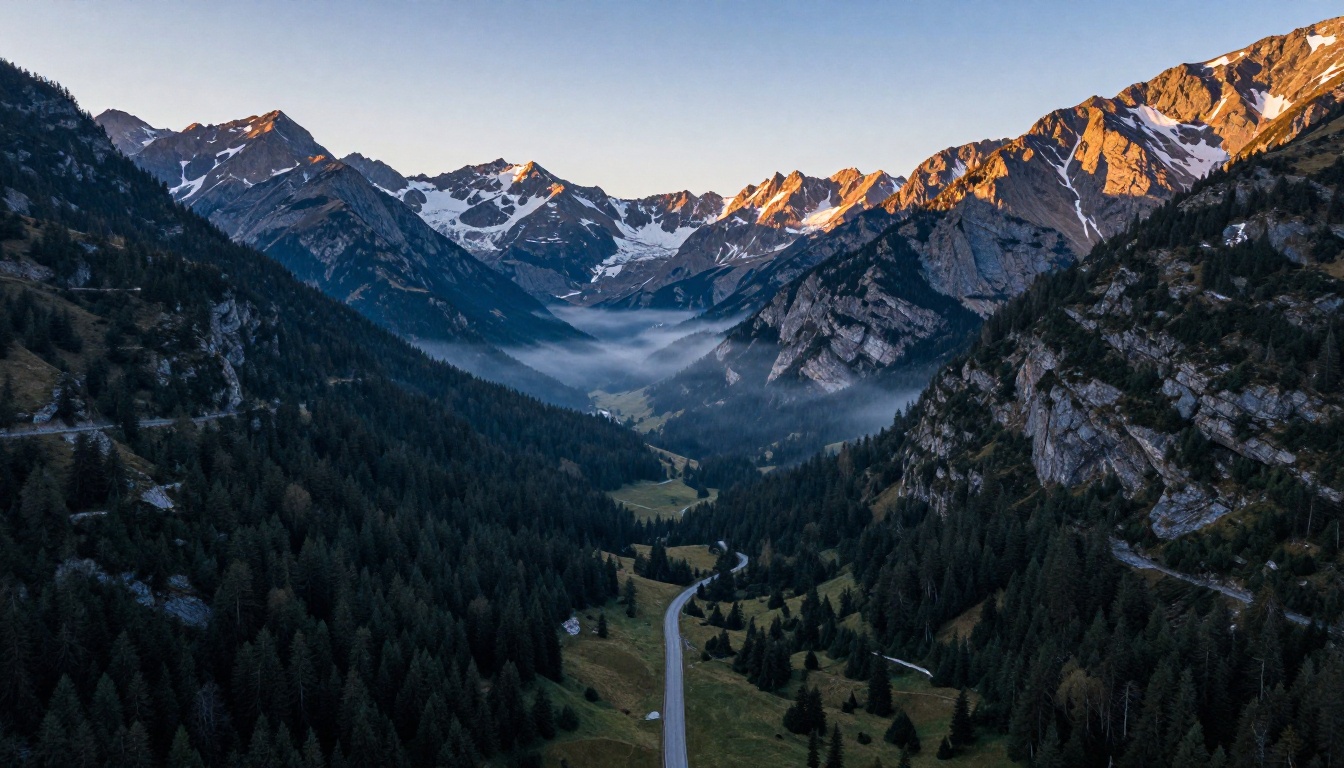
| "a mountain" | "alpine peak at sunrise, granite texture, snow patches, 24mm f/8, Kodak Ektar colors, morning mist" |
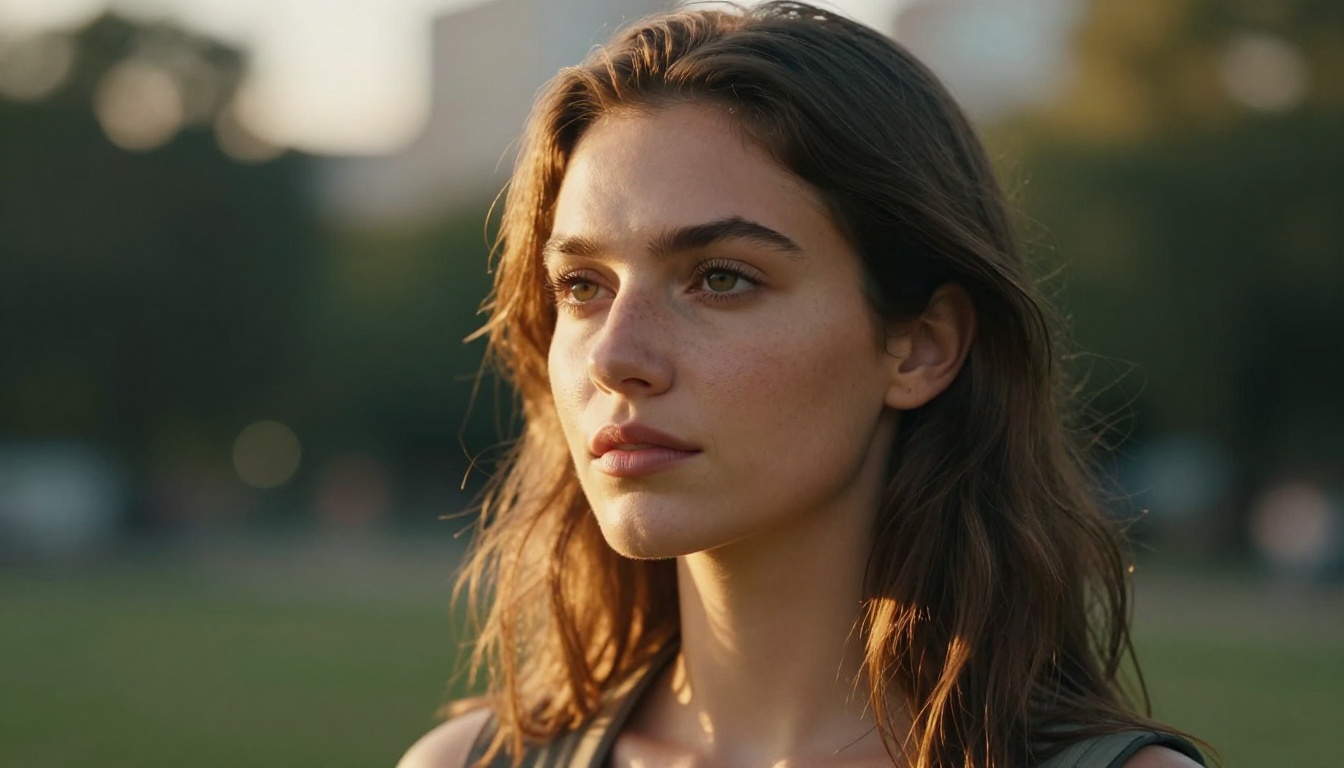
| "a portrait" | "close-up portrait, natural window light, film grain, Kodak Portra 400, 50mm f/2.0, freckles visible" |
The additional detail in the strong prompts pushes the model toward a more specific region of its learned image distribution.
Sampling Steps and Speed
Nano Banana Pro can produce usable images in as few as 20 sampling steps. Running more steps (30 to 50) generally increases fine detail but adds generation time. The relationship is not linear: most of the meaningful denoising happens in the first 15 to 20 steps, with additional steps refining edges and textures.
Samplers that work well with this model:
- DPM++ 2M Karras: Good balance of speed and quality for most prompts
- Euler A: Fast and produces slight variation across seeds, useful for exploring styles
- DDIM: More deterministic, good when you want consistent results from a fixed seed
Nano Banana Pro vs Other Models
The AI image generation space has many competing models, and knowing where Nano Banana Pro sits helps you decide when to use it and when to reach for something else.
Compared to Flux
Flux Kontext Fast is a newer architecture from Black Forest Labs that uses a flow matching approach rather than traditional DDPM diffusion. Flux models generally produce more prompt-adherent results and better text rendering within images. However, Flux requires significantly more VRAM on local setups and is slower at comparable quality settings.
Nano Banana Pro wins on:
- Hardware accessibility: runs on 6GB VRAM GPUs where Flux needs 12GB or more
- Generation speed on mid-range hardware
- Extensive community LoRA and embedding ecosystem
Flux wins on:
- Typography and text rendered inside images
- Prompt adherence on complex multi-element descriptions
- Raw photorealism ceiling on strong hardware
Compared to Stable Diffusion 3
Stable Diffusion 3 introduced a multi-modal diffusion transformer (MMDiT) architecture, which separates text and image processing streams for better semantic alignment. SD3 handles compositional prompts better than older SDXL-based checkpoints.
| Feature | Nano Banana Pro | Stable Diffusion 3 |
|---|
| Model size | Compact, lower VRAM | Large, higher VRAM |
| Generation speed | Fast | Slower |
| Photorealism | High | Very high |
| Text rendering | Moderate | Good |
| LoRA ecosystem | Extensive | Growing |
| Beginner friendliness | High | Moderate |
For pure photorealism with minimal prompt complexity, Nano Banana Pro holds its own. For detailed multi-subject compositions, SD3 has an edge.
Visual Effects and Style Control
One area where Nano Banana Pro genuinely excels is its visual effects capability, particularly around color and lighting reproduction.
Color Accuracy and Photorealism
The model was fine-tuned with a dataset biased toward high-quality photographic reference material, which means its color rendering tends toward natural, film-like tones rather than the oversaturated, hyper-vivid look common in less refined checkpoints.
You can push the style further with prompt modifiers:
- Film emulation:
Kodak Portra 400, Kodak Ektar, Fujifilm Velvia 50
- Lighting direction:
volumetric morning light from left, golden hour rim light, overcast soft fill
- Lens characteristics:
85mm f/1.4 shallow depth of field, 24mm f/8 deep focus, 100mm macro
These modifiers work because the training data contained photography metadata and caption information that the model has implicitly learned to map to visual outputs.
💡 Pro move: Combining a film stock name with a specific f-stop and lighting direction in one prompt gives you significantly more consistent photorealistic results than using generic terms like "realistic" or "photorealistic."
Fine-Tuning with LoRA
LoRA (Low-Rank Adaptation) files are small addons that modify a base model's outputs toward a specific style, subject, or aesthetic without replacing the entire checkpoint. Nano Banana Pro has a substantial LoRA ecosystem developed by the community.
Common LoRA categories that work with this model:
- Portrait LoRAs: Enhanced skin texture, eye detail, hair strand definition
- Architecture LoRAs: Improved interior space rendering, material texture fidelity
- Nature LoRAs: Enhanced foliage detail, water reflections, atmospheric conditions
Stack LoRAs with weight values typically between 0.6 and 1.0 to blend their influence with the base model. Too high a weight on a single LoRA can collapse output diversity; 0.7 to 0.85 is a reliable starting range.
AI Upscaling Your Results
Nano Banana Pro, like most diffusion models, generates images at relatively modest resolutions by default (512x512 to 1024x1024 depending on settings). Getting print-quality or large-display outputs requires an AI upscaling step.
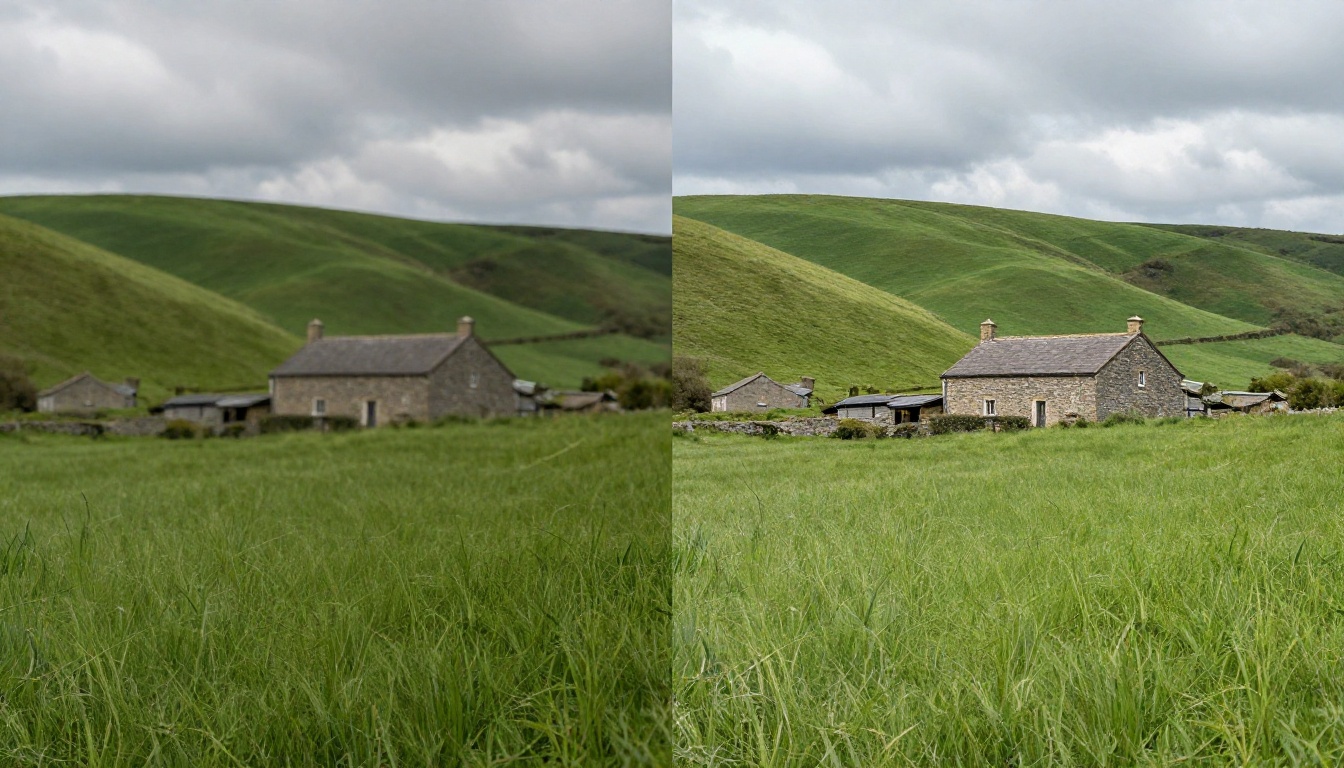
Why Resolution Matters
A 512px image looks acceptable on a phone screen but degrades visibly on monitors above 1080p. Print reproduction typically requires 300 DPI, meaning a 512px image can only print cleanly at roughly 1.7 inches wide. AI upscaling solves this by intelligently synthesizing additional detail rather than simply interpolating pixels.
Traditional bicubic upscaling blurs edges and loses texture. AI upscaling models trained on paired low/high-resolution datasets learn to produce plausible high-frequency detail, including skin pores, fabric weave, leaf vein texture, and architectural edge sharpness.
The Best Upscalers to Use
When your Nano Banana Pro output is ready, these upscaling tools on PicassoIA deliver strong results:
Clarity Pro Upscaler is specifically designed for photorealistic imagery. It preserves natural skin tones and adds genuine detail in portrait work without the artificial sharpening artifacts common in simpler upscalers.
Real ESRGAN is one of the most battle-tested open-source upscalers available. It handles general imagery well and can push images to 4x their original resolution. Particularly strong on architectural and landscape content.
Image Upscale by Topaz Labs goes up to 6x and uses Topaz's proprietary neural network training. It is particularly effective at recovering fine detail in images that were generated at lower quality settings.
Crystal Upscaler specializes in portrait detail, making it ideal when your Nano Banana Pro output centers on a human subject.
P Image Upscale sharpens photos in under a second, making it the fastest option in the lineup when turnaround time matters.
💡 Workflow note: Generate at 768x432 or 1024x576 (16:9) with Nano Banana Pro, then upscale 2x to 4x. You get better base quality from the generation stage than trying to generate at maximum resolution directly.
How to Use Similar Models on PicassoIA
If running Nano Banana Pro locally is not practical for your setup, PicassoIA gives you browser-based access to a wide range of models with equivalent or superior output quality.
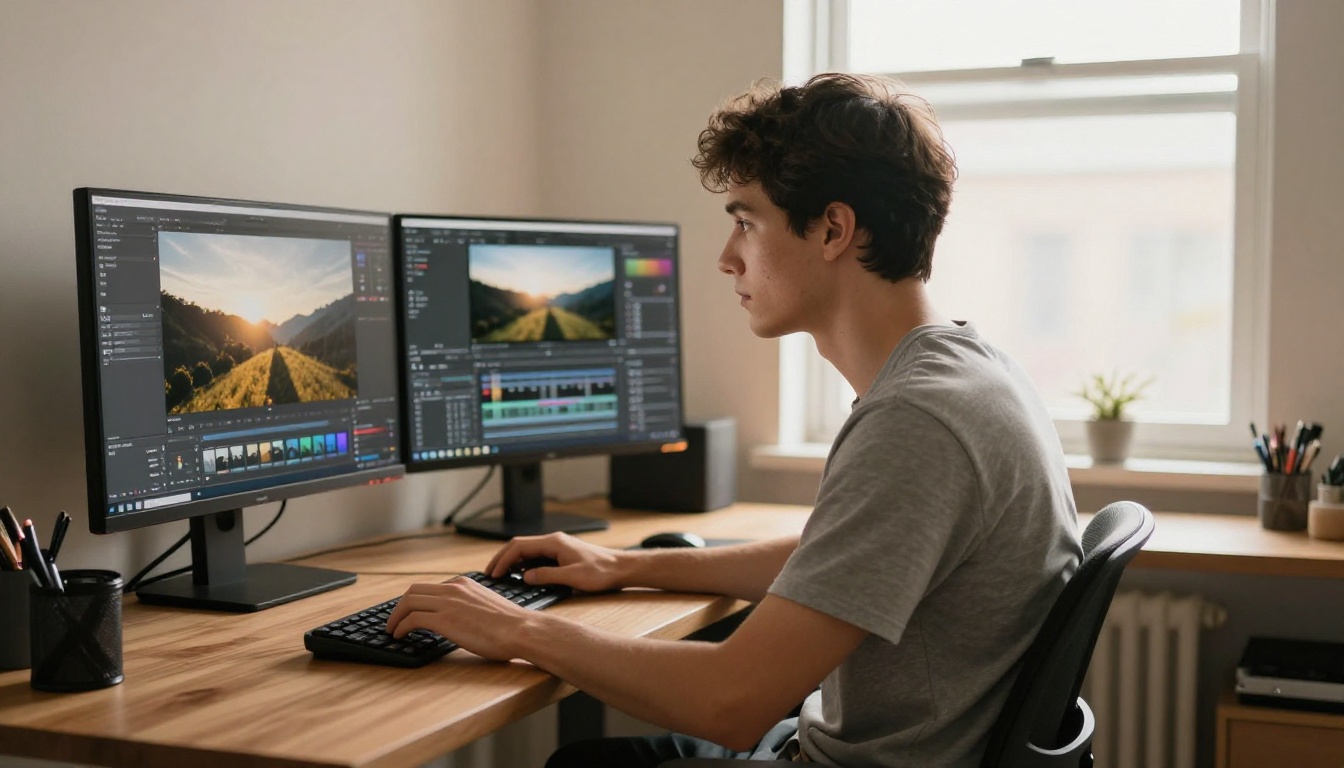
Step-by-Step for Beginners
1. Choose your model
For Nano Banana Pro-style photorealistic outputs, start with PicassoIA Image. It offers unlimited text-to-image generation and is optimized for accessible, high-quality photorealistic results without any setup.
For more editing control, PicassoIA Image Editor Pro adds inpainting, outpainting, and object replacement on top of generation.
2. Write your prompt
Structure it as: [Subject] + [Setting/Environment] + [Lighting] + [Camera specs] + [Style/Film]
Example: "Young woman reading in a sunlit library, afternoon light through tall windows, dust motes visible, 50mm f/1.8, Kodak Portra 400"
3. Set aspect ratio
For social media or blog use, 16:9 works well for landscape compositions. Use 3:4 for portrait-oriented outputs.
4. Generate and review
Run 3 to 5 generations from different seeds before committing to a result. Seed variation is your fastest way to get compositional diversity without rewriting prompts.
5. Upscale before publishing
Take your best result into Clarity Pro Upscaler or P Image Upscale to sharpen it for final use.
From Generation to Upscaling in One Place
PicassoIA connects these workflows without needing to export and re-import between separate tools. You generate, then upscale, within the same platform session.
Models like Wan 2.7 Image Pro can output at 4K natively, which reduces the need for upscaling entirely for standard digital use cases. Seedream 4.5 is another strong option for cinematic photorealistic images with vivid color depth.
Tips That Actually Work
These are the practical adjustments that have the largest impact on output quality, regardless of which model you use.
Writing Better Prompts
Be directional with light: Instead of "bright lighting," specify "volumetric morning light from left" or "golden hour rim light from behind". Directional cues produce dramatically more consistent lighting behavior in the output.
Name specific materials: "brushed stainless steel" beats "metal". "hand-stitched leather" beats "leather." Specific material names are more likely to appear in training caption data and produce sharper texture rendering.
Use negative prompts: For realistic photography, common negatives include "cartoon, illustration, CGI, 3D render, overexposed, watermark, text". These steer the model away from stylistic artifacts that conflict with photorealism.
Anchor the style with film stock names: The model's training data included large amounts of labeled photography. Terms like "Kodak Portra 400", "Fujifilm Pro 400H", or "Ilford HP5" reliably shift color tone and grain character toward analog photographic aesthetics.
Settings That Make a Difference
| Setting | Recommended Range | Effect |
|---|
| CFG Scale | 5 to 8 | Higher values follow prompt more strictly; too high causes artifacts |
| Sampling steps | 25 to 35 | Adequate detail without excess generation time |
| Seed | Fixed for iteration | Lock seed to isolate the effect of prompt changes |
| Clip skip | 1 to 2 | Skip 2 can reduce over-literal interpretation for artistic styles |
| LoRA weight | 0.7 to 0.85 | Balance addon influence without overwhelming base model |
💡 Iteration tip: Change one variable at a time when refining outputs. If you adjust the prompt, the sampler, and the CFG scale simultaneously, you will not know which change produced the improvement.
The combination of Nano Banana Pro-style image generation with AI upscaling creates a production pipeline for a wide range of real outputs.
Content creators use these tools for generating unique blog and social media visuals without licensing or stock photo costs.
Product designers use them to quickly visualize concepts before committing to expensive photography or 3D rendering sessions.
Educators use AI-generated imagery to create custom visual material for presentations and online courses.
Independent developers produce UI mockup assets and app store graphics in a fraction of the time traditional methods require.
The workflow scales from hobbyist experiments to professional production when paired with the right upscaling and editing tools. Platforms like PicassoIA handle the infrastructure, so you focus entirely on the creative output.
Start Creating on PicassoIA Right Now
If you have been holding off on trying AI image generation because the technical barrier seemed too high, Nano Banana Pro is one of the clearest demonstrations that high-quality output does not require expert-level setup. The model architecture is approachable, the community resources are extensive, and results are consistently strong for photorealistic work.
The fastest way to apply what you read here without any local installation is to open PicassoIA Image and run your first prompt. Write what you see in your head, apply two or three of the prompt tips above, generate a few seed variations, then put the best result through Clarity Pro Upscaler or Real ESRGAN. That single workflow will show you more about how these models behave in practice than any amount of reading.
Browse the full model catalog at picassoia.com/en/all-models to find the exact model that fits your creative goal. Whether you are after photorealistic portraits, landscape photography aesthetics, or style-specific outputs with LoRA fine-tuning, the range of available tools means you are never stuck with one approach.


