If you spend time generating AI images, you already know the debate. Nano Banana Pro and GPT Image 2.0 sit at opposite ends of the model philosophy spectrum: one is Google's tightly engineered multimodal system, the other is OpenAI's conversationally integrated image API. Both produce stunning output. Both have real limitations. Picking the wrong one for your workflow can cost hours of frustrating prompt iteration.
This is not a surface-level overview. It is a practical, category-by-category breakdown based on actual generation tests, prompt fidelity benchmarks, and output quality comparisons. By the end, you will know exactly which model fits your use case, and where PicassoIA gives you access to both.
The Basics: What Each Model Does
Nano Banana Pro in 60 Seconds
Nano Banana Pro is Google's premium text-to-image model built on the Nano Banana architecture. It prioritizes photorealistic output with exceptional attention to natural lighting, skin texture, and environmental depth. Google trained it on a massive proprietary dataset with heavy weighting toward documentary photography and editorial imagery, which means it excels at scenes that feel captured rather than generated.
The "Pro" designation reflects higher resolution output (up to 2048px natively), full aspect ratio control, and priority API throughput. It follows the Nano Banana architecture lineage but adds fine-tuned instruction following that makes complex multi-element prompts noticeably more reliable.
Specs:
- Native output: Up to 2048x2048px
- Aspect ratios: Full support including custom
- Style range: Photorealistic through editorial, limited abstract
- Speed: 6 to 12 seconds per image on standard tier
GPT Image 2.0 in 60 Seconds
GPT Image 2.0 is OpenAI's second-generation image model built into the GPT API ecosystem. Where Nano Banana Pro leans toward photographic realism, GPT Image 2.0 prioritizes instruction fidelity above all else. It interprets complex, conversational prompts with exceptional accuracy and handles multi-object scenes with remarkable spatial coherence.
The model builds on the foundations of GPT Image 1.5 with significant improvements to lighting consistency, text rendering within images, and iterative editing through conversation. It does not just generate: it responds to follow-up instructions, making it uniquely suited for workflows where you refine output across multiple iterations without starting from scratch.
Specs:
- Native output: 1024x1024px default, 1792x1024px wide
- Aspect ratios: Standard presets, less flexible than Pro
- Style range: Wide, from photorealistic to stylized illustration
- Speed: 10 to 18 seconds depending on complexity
How They Fit the Landscape
Both models sit at the top tier of the current text-to-image generation market. They compete with Imagen 4, Flux 2 Pro, and Seedream 4.5. The difference is that Nano Banana Pro and GPT Image 2.0 occupy different creative niches rather than being direct replacements for each other.
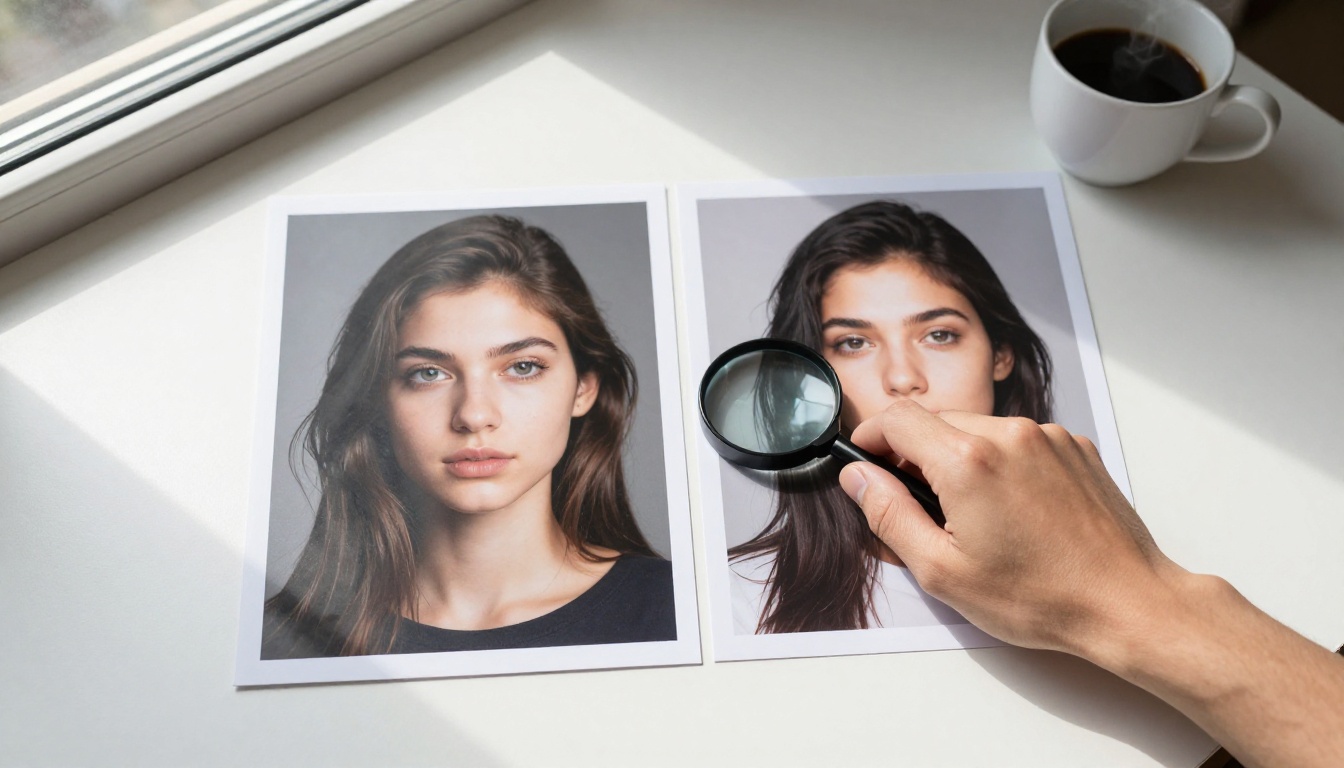
Image Quality, Side by Side
Photorealism and Skin Texture
This is where Nano Banana Pro consistently wins. The model renders human subjects with photographic-grade accuracy: fine pores, individual hair strands, natural subsurface scattering in skin. Prompts that include specific lighting conditions like "volumetric morning light from left, rim lighting from window" translate directly into the output with minimal loss.
GPT Image 2.0 produces highly competent portraits but the skin rendering sits slightly below the threshold you would expect from professional photography. It leans toward idealized rather than naturalistic results. For editorial or commercial photography styles, this difference matters significantly.
💡 For photorealistic portraits and product shots, Nano Banana Pro has a noticeable edge over GPT Image 2.0 in skin and texture rendering.
Architectural and Landscape Detail
Here the gap narrows considerably. GPT Image 2.0 handles architectural environments with excellent geometric coherence. Buildings stay straight, perspective lines converge correctly, and complex structural details like stonework, glass facades, and interior lighting render without the warping artifacts common in earlier generation models.
Nano Banana Pro matches this technical accuracy while adding environmental atmosphere. Shadow behavior, volumetric haze, golden hour color grading: these qualities feel organic rather than applied. Landscape photography prompts that specify time of day, weather conditions, and atmospheric perspective consistently produce more convincing results.
Lighting and Depth of Field
Both models handle depth-of-field effects well when explicitly prompted. The difference shows in transitional lighting: dawn, dusk, overcast conditions. Nano Banana Pro processes these scenarios with more nuance because of its training emphasis on natural photography. GPT Image 2.0 tends to produce slightly flatter ambient light in transitional conditions, which can be corrected with more explicit prompt engineering but requires extra iteration.
Speed, Cost, and Accessibility
Generation Time Compared
Raw generation speed depends heavily on server load and tier access. In practice:
| Model | Average Time | Peak Load | Tier |
|---|
| Nano Banana Pro | 6-12 seconds | Up to 25s | Standard + Priority |
| GPT Image 2.0 | 10-18 seconds | Up to 35s | Usage-based |
For batch workflows generating dozens of images, Nano Banana Pro's speed adds up fast. For single-image iterative work where you are refining through conversation, GPT Image 2.0's iteration speed within the same session partially compensates for the slower generation.
Pricing Models
This is where operational reality gets complicated. GPT Image 2.0 operates on a per-image token pricing model that scales with resolution and quality settings. High-resolution outputs with complex prompts can cost more than three times the price of standard outputs. Nano Banana Pro uses a flat per-generation model with priority queue access on higher tiers.
For production environments generating hundreds of images per day, PicassoIA provides access to both models through a unified subscription that eliminates managing separate API budgets. This alone makes it the preferred access point for professional creative teams.

API Access and Integration
GPT Image 2.0 integrates natively into OpenAI's API ecosystem, making it straightforward to embed in existing applications already using GPT models for text. Nano Banana Pro requires separate API authentication through Google's Vertex AI platform, adding integration overhead for teams not already on Google Cloud.
PicassoIA abstracts this entirely. Access both models through a single unified interface without managing separate API keys, billing accounts, or SDK dependencies. For teams that need flexibility without infrastructure complexity, this matters.
Prompt Accuracy and Control
Simple Prompts
GPT Image 2.0 handles simple, conversational prompts better than almost any model in the current generation. A plain-language description like "a coffee cup on a wooden table with morning light" produces a result that accurately matches the intent without requiring photography terminology or style modifiers. This accessibility makes it the better choice for teams without dedicated prompt engineers.
Nano Banana Pro produces technically superior output for simple prompts but responds more dramatically to prompt quality. A minimal prompt gives decent results; a detailed photographic prompt gives exceptional results. The ceiling is higher, but so is the floor requirement.
💡 If your team works with plain-language descriptions, GPT Image 2.0 requires less prompt engineering investment to reach quality output.
Complex, Multi-Element Scenes
This is GPT Image 2.0's strongest category. The model maintains spatial coherence across complex prompts with multiple subjects, environmental elements, and lighting conditions. Where earlier models hallucinate objects or blend spatial relationships incorrectly, GPT Image 2.0 processes multi-element scenes with near-consistent accuracy.
Nano Banana Pro handles complexity well but shows occasional prompt dropout on scenes with more than five distinct elements. Priority elements (usually the main subject and lighting conditions) render accurately while secondary environmental details sometimes simplify or generalize away.
Negative Prompts and Style Control
Both models support style guidance but implement it differently. Nano Banana Pro responds to explicit photographic terminology: aperture settings, film stock names, lens focal lengths. This produces highly consistent results for creatives with photography backgrounds.
GPT Image 2.0 processes style instructions as natural language: "in the style of documentary photography" or "with harsh overhead lighting" works as naturally as any other instruction. The trade-off is less granular control over the technical photography parameters that professionals rely on for precise output.
Visual Effects and Style Range
Cinematic and Editorial Styles
For editorial and cinematic photography styles, Nano Banana Pro and GPT Image 2.0 diverge significantly. Nano Banana Pro produces results that sit immediately within a recognizable photographic tradition: Kodak Portra grain, warm golden hour temperature, the shallow depth of field of an 85mm f/1.4 prime. These results work directly in editorial layouts without additional processing.
GPT Image 2.0's cinematic output feels more influenced by digital post-processing aesthetics. It produces high-quality cinematic frames, but they carry the signature of color-graded digital video rather than traditional photographic film stock. For some commercial applications, this is exactly the aesthetic required. For others, it requires additional post-processing to achieve the right feel.
💡 Compare both against Flux Kontext Max or Ideogram V3 as baseline style references when building editorial workflows.

Product Photography and Commercial Use
Product photography is a category where GPT Image 2.0 shows clear advantages. The model places products in environments with better spatial accuracy and more convincing material rendering for common commercial subjects: glassware, electronics, cosmetics, food. Reflections on surfaces, transparent materials, and complex lighting setups with multiple sources all benefit from GPT Image 2.0's spatial coherence.
Nano Banana Pro competes strongly on organic materials (leather, wood, fabric, paper) where its photographic training produces superior texture detail. For high-gloss commercial product shots requiring precise surface rendering, GPT Image 2.0 has a measurable output advantage.
Artistic Rendering Modes
Beyond photorealism, both models offer artistic modes that expand their utility for creative projects. GPT Image 2.0's instruction-following gives it an edge in producing consistent artistic styles across a series of images, since you can carry the style instruction through a conversation thread. Nano Banana Pro's style control is more granular for photography-adjacent aesthetics but less flexible for purely illustrative work.
For teams that need stylistic consistency across a campaign or editorial series, GPT Image 2.0's session-based context retention offers a real workflow advantage. For one-off editorial shots demanding maximum photographic quality, Nano Banana Pro is the stronger choice.
Upscaling and Post-Processing
Native Resolution Output
The native resolution difference between the models has direct workflow implications. Nano Banana Pro's 2048px native output is print-ready for many applications without additional upscaling. GPT Image 2.0's 1024px standard output requires a super-resolution pass for print applications or large-format display.
This is not a minor point. Adding an upscaling step adds processing time, introduces potential quality variation, and requires additional compute. For pure digital applications, 1024px output is sufficient. For print-first workflows where output goes directly to press, the resolution gap matters.
Super-Resolution on PicassoIA
Both models integrate seamlessly with PicassoIA's super-resolution pipeline. After generation, you can pass any output through upscaling models to achieve 2x to 4x resolution increases with edge sharpening and detail retention. The platform hosts dedicated upscaling models that handle AI-generated content specifically, which produces better results than general-purpose upscaling tools.
This workflow effectively eliminates GPT Image 2.0's resolution disadvantage for print applications. For Nano Banana Pro outputs, super-resolution can push native 2048px images to 4096px and beyond, which opens large-format printing applications that neither model's native output supports directly.

Who Should Use Each One?
Nano Banana Pro: Best For
- Editorial and fashion photography workflows where photographic realism is non-negotiable
- Portrait generation that requires natural skin texture, realistic hair detail, and authentic lighting
- High-volume batch generation where speed per image directly affects daily throughput
- Teams with prompt engineering experience who can use the model's photographic vocabulary
- Print-first projects where native 2048px output reduces post-processing steps
GPT Image 2.0: Best For
- Product photography and commercial shoots requiring spatial coherence across complex multi-element scenes
- Teams without dedicated prompt engineers who need plain-language prompt interpretation
- Multi-image campaigns where style consistency across a conversational session matters
- Iterative creative development where refining output through follow-up instructions saves significant time
- Mixed-media projects that move between photorealistic and illustrative output styles
💡 Both models are available through PicassoIA's unified interface, so you do not need to choose permanently. Most professional teams use both strategically depending on the specific output requirement.

Try Both on PicassoIA Now
The most useful thing you can do after reading this comparison is run the same prompt through both models and observe the output difference in your own creative context. PicassoIA gives you direct access to Nano Banana Pro, GPT Image 1.5, and 90+ other text-to-image models in one place, without managing separate API credentials or switching between multiple platforms.
Beyond these two models, the platform hosts Imagen 4 Ultra, Flux 2 Max, Flux Kontext Pro, Seedream 4.5, and Stable Diffusion 3.5 Large. That range means you are not locked into a two-option comparison when the right answer for a specific project might be a third model entirely.
If you need photorealistic portraits for editorial work, start with Nano Banana Pro. If you need complex product scenes rendered with spatial accuracy, start with GPT Image 2.0. If you want to see how the current state of the art performs across the full model landscape, go to picassoia.com/en/all-models and run the same prompt across six different models in parallel.
The strongest creative workflows are not married to a single model. They use the right tool for each specific output requirement, and PicassoIA makes that flexibility operationally simple.