The question of whether to use open or closed AI models is not just philosophical. It has real consequences for your budget, your privacy posture, your ability to customize, and your long-term technical independence. The AI landscape in 2025 makes this question more relevant than ever, because the performance gap that once made the choice obvious has closed significantly. Open models can now match or beat closed ones on specific tasks, and closed models have become more accessible than at any point in their history. This article walks through the actual differences, with real numbers and real examples.
What "Open" and "Closed" Actually Mean in AI
These two terms get applied loosely in marketing copy, press releases, and developer forums. Before any comparison is useful, the definitions need to be precise.
The Open Model Formula
An open model, in the strictest sense, is one where the trained weights are publicly available for download. You can run the model on your own hardware, inspect its parameters, fine-tune it on your own data, and distribute modified versions within the terms of the model's license.
The most widely adopted open models in 2027 include Meta's Llama family, Mistral AI's models, DeepSeek's research models, and IBM's Granite series. On PicassoIA, you can access all of these directly:

Open does not always mean free for commercial use. The Llama Community License restricts use for companies above a certain scale. Apache 2.0 models like DeepSeek v3 are genuinely unrestricted. Reading the license matters as much as downloading the weights.
The Closed Model Formula
A closed model keeps its weights private. You access it only through an interface the provider controls, typically an API or a chat application. The company decides when to update the model, what safety filters to apply, what the pricing will be, and when to deprecate a version. You receive outputs; you never see internals.
Major closed models available on PicassoIA include:
These models typically receive more investment, more compute during training, and more aggressive safety alignment. In exchange, you accept that you are renting access, not owning anything.
Who Controls the Weights?
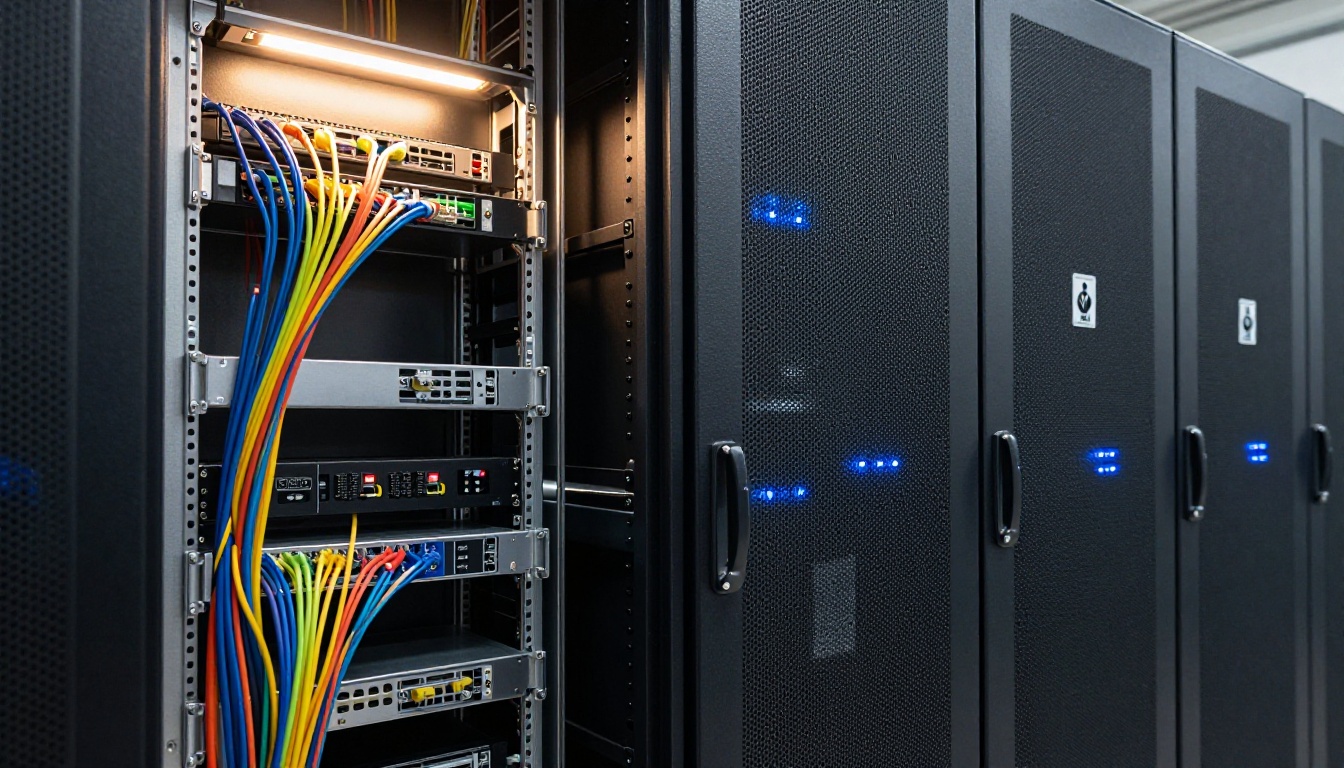
The weights are the model. They encode billions of learned associations that determine every output. Whoever holds the weights holds the model's behavior, and that distinction has cascading effects on everything from deployment architecture to vendor negotiations.
Why Weight Access Changes Everything
With downloadable weights, you can quantize the model to dramatically reduce memory requirements, run it on consumer hardware, version it permanently so it never changes without your consent, audit it for unexpected behaviors or security vulnerabilities, and deploy it in air-gapped environments with no internet connection whatsoever.
With an API-only closed model, none of that is possible. The provider can silently update behavior, change pricing mid-contract, or deprecate the version your production system depends on. These are not hypothetical risks: major closed providers have deprecated model versions with 30-90 days notice on multiple occasions, leaving engineering teams scrambling to re-validate their applications.
Fine-Tuning Without Limits
Open weights enable fine-tuning with complete control. Starting from Llama 2 70B Chat, a team can apply LoRA (Low-Rank Adaptation) to train a domain-specialized version using a few hundred curated examples. The resulting model consistently outperforms the base model on the target task, and the updated weights belong entirely to you.
💡 A LoRA fine-tune on a 7B model can complete in under 2 hours on a single A100 GPU, using as little as 500 training examples, with no data leaving your infrastructure.
Closed models offer fine-tuning products too, but the training data goes to the provider's servers, the resulting model remains hosted on their infrastructure, you never receive the updated weights, and pricing for fine-tuned inference is typically higher than base model pricing. The customization is real; the ownership is not.
The Cost Reality
The zero-dollar download price of open models is not the full picture. Infrastructure costs are real, and for small teams they can make closed APIs the more practical starting point.

The Real Infrastructure Math
Running Meta Llama 3.1 405B Instruct at production throughput requires multiple high-end GPUs running in parallel. Cloud GPU rental at that scale costs $20-30 per hour. That burden is prohibitive for most individuals and early-stage startups.
For smaller open models like Meta Llama 3 8B Instruct, the math looks very different. A single A10G GPU at $0.75-$1.50 per hour handles dozens of requests per second at moderate volumes, making self-hosting substantially cheaper than API pricing.
| Scale | Open Model Hosting | Closed API Equivalent |
|---|
| Prototype (10k tokens/day) | Free tier cloud / local dev | $0.50-$2/day |
| Small production (1M tokens/day) | ~$25-$50/day GPU rental | $50-$200/day |
| Mid-scale (100M tokens/day) | ~$800-$2,000/day | $5,000-$20,000/day |
The crossover point where self-hosting open models becomes clearly cheaper than closed APIs falls around 50-100 million tokens per month for 7B-class models. Below that threshold, the operational overhead often outweighs the cost savings. Above it, the savings compound quickly.
Hidden Costs in Both Paths
Closed models carry hidden costs beyond per-token pricing: engineering time to handle API rate limits, retry logic, latency variance, and unexpected deprecations. Open models carry their own: GPU provisioning, model serving infrastructure, monitoring, and the engineering bandwidth to stay current as better models release.
Neither path is free. The question is which costs align with your team's existing capabilities.

Privacy: Who Sees Your Data?
For many real-world workloads, privacy is not a preference but a hard requirement shaped by regulation and competitive risk.
The API Data Question
When you send a prompt to GPT 5.4, Claude 4 Sonnet, or Gemini 3 Flash, that data travels to and is processed on the provider's servers. Enterprise tiers typically include data processing agreements that prohibit using your data for training, but the data still physically leaves your infrastructure.
For healthcare, legal, finance, and government workloads, this can be a regulatory blocker. HIPAA, GDPR, and sector-specific regulations often require that sensitive data remain within controlled infrastructure, regardless of contractual assurances from a third party.
Running Models On-Premise
Open models eliminate this concern at the architectural level. A healthcare system running a fine-tuned Llama 4 Maverick Instruct on their own air-gapped servers processes patient records without any third-party involvement. The model, the data, and the outputs never leave their control.

This is a genuine operational advantage that no contractual arrangement with a closed provider can fully replicate. It is also why the majority of enterprise AI deployments in regulated industries moving to production in 2027 use open-weight models for the sensitive inference layer, even when they use closed APIs for non-sensitive tasks.
💡 On-premise open model deployments also protect competitive intelligence. Prompts that reveal your product roadmap, pricing strategy, or R&D directions stay fully internal.
The privacy case also extends to model behavior itself. When Kimi K2 Instruct is running on your own servers, you can verify exactly what version is running, confirm the model has not been updated without your knowledge, and log every inference for internal audit trails. With a closed API, you take the provider's word that behavior has not changed.
The performance story has shifted more than most observers expected. Open models no longer trail closed ones by a meaningful margin on general benchmarks, and they have pulled ahead in several specific categories.

Language Models: The Gap Has Closed
On widely cited benchmarks including MMLU for broad knowledge, HumanEval for coding performance, and MATH for reasoning, open models have made dramatic progress:
DeepSeek R1 made headlines when it matched GPT-4 class performance on mathematical reasoning while being fully open-weight. This was not an incremental improvement; it signaled that the research community's output, released openly, can compete with models that cost an order of magnitude more to train.
Image Generation: Open Models Already Lead
In text-to-image AI, the open-source community does not lag closed models; it sets the pace. FLUX.1, Stable Diffusion XL, and the ecosystem of fine-tuned variants built on them have consistently produced results that closed commercial image generation tools then try to match.
The reason is fine-tuning. An open image model trained on 500 images of a specific brand's visual identity, a particular artist's style, or a consistent character will outperform any general-purpose closed image model on that specific creative task. The customization ceiling of open image models is effectively limitless in a way that closed commercial offerings structurally cannot match.
4 Things Closed AI Does Better
1. Zero setup, immediate results. For teams that need a capable AI working in an afternoon, closed API access delivers. No GPU sourcing, no model serving infrastructure, no prompt engineering to unlock baseline capabilities. GPT 5 and Claude Opus 4.7 are capable straight out of the box.
2. Frontier multimodal capabilities. As of mid-2025, the most capable multimodal systems, combining vision, audio, and complex multi-step instruction-following, remain proprietary. Gemini 3 Pro handles interleaved vision and text reasoning in ways open models are still catching up to.
3. Sophisticated safety layers at scale. Closed model providers invest heavily in human feedback alignment and constitutional AI training. Reproducing equivalent safety behavior on top of a raw open-weight base model requires substantial dedicated engineering effort that most teams cannot afford to prioritize.
4. Enterprise SLAs and compliance documentation. Uptime guarantees, contractual rate limits, dedicated support channels, and compliance certifications (SOC 2, ISO 27001) are standard in enterprise closed model contracts. Self-hosted open models place all operational responsibility on your team.
4 Things Open AI Does Better
1. No vendor dependency. When Mistral 7B is on your infrastructure, no pricing change, policy update, company acquisition, or service deprecation disrupts your deployment. You own the model permanently.
2. Domain specialization through fine-tuning. A fine-tuned Llama 2 13B trained on 1,000 examples of legal contracts consistently outperforms general-purpose closed models on contract review tasks. Narrow specialization beats raw scale in specific domains, and that specialization is only possible with open weights.
3. Dramatic cost efficiency at volume. At production scale, self-hosted open models can be 10-100x cheaper per token than closed APIs. For companies running hundreds of millions of inferences per month, this is not a marginal difference; it is the difference between viable unit economics and a business that cannot sustain its AI costs.
4. Auditability and transparency. Security researchers can inspect open model weights for unexpected behaviors. Academic teams can reproduce capability claims independently. Enterprise compliance teams can certify model behavior through empirical testing of the weights themselves. None of that is structurally possible with a black-box API.
The open versus closed framing creates a false binary in practice. High-performing AI deployments in 2027 use both: closed APIs where frontier multimodal capability or zero-setup speed matters, open models where data privacy, cost efficiency, or fine-tuning customization is required.

A startup prototyping a new product should use GPT 5.4 or O1 Mini and iterate quickly. The operational overhead of self-hosted open models at that stage is waste. A healthcare company processing patient records should run DeepSeek v3 or Kimi K2 Instruct on their own servers. The privacy requirement is non-negotiable. A development team that needs strong code generation can use DeepSeek v3.1 for its benchmark performance alongside Claude 4.5 Sonnet for complex instruction-following tasks. The smartest deployments route tasks to whichever model fits the job, without ideological commitment to either camp.

PicassoIA puts both open and closed models on a single platform without requiring you to manage GPU infrastructure or build multiple API integrations. You can run DeepSeek R1 alongside Grok 4, compare their outputs on your actual use case, and make a decision based on real results. You can use Llama 4 Scout Instruct for cost-efficient tasks and GPT 5 Pro for cases that require frontier capability, all from one interface.
For image generation, the platform's collection of text-to-image models gives you access to the leading open-source tools from FLUX variants to fine-tuned Stable Diffusion derivatives, alongside closed commercial generators, without writing a single line of deployment code.
If you want to see the real performance difference between open and closed models on your own tasks, the only reliable method is to run both on your actual prompts. You can start that comparison right now at picassoia.com/en/all-models.


