Text to speech for audiobooks and courses has crossed a line. The voices are no longer robotic. The pauses land in the right places. The emotion tracks with the sentence. And the output ships in seconds, not after a three-week wait for a voice actor to return your project files.
The global audiobook market hit $6.8 billion in 2024. Online learning platforms that include narrated modules see 38-42% better completion rates than text-only alternatives. Creators who move fast on this trend are capturing audiences that passive readers simply never reach. If you're producing written content without an audio version, you're leaving reach and revenue on the table.
This is the practical breakdown of what AI text to speech actually delivers for long-form content, which models are worth your time, and exactly how to start producing audiobooks and course narration today without a studio, a microphone, or a professional narrator.
Why Audio Content Is Taking Over
The audiobook numbers are real
Audible, Spotify, and Apple Books are no longer the only major players. Audiobook sales grew 20% year over year in 2023 and have maintained double-digit growth through 2025. Non-fiction titles especially are seeing demand surge: business books, self-help, and educational content now account for over 45% of all audiobook downloads. This is precisely the content type that maps directly to AI TTS.
The listener profile has also shifted. Audio content is not just for commuters anymore. Research from Edison Research shows that 62% of audiobook listeners in the US listen at home. They're multitasking: cooking, exercising, or winding down. The demand for more content, in audio format, has never been higher than it is right now.
Course completion depends on audio
Text-only courses fail at the final mile. Learners start, skim the reading, and disengage before reaching the material that actually changes anything. Every major e-learning platform, from Teachable to Thinkific to Kajabi to Udemy, shows in their internal data that narrated modules hold attention longer. Adding a professional-sounding voice to your written slides and scripts directly improves learner outcomes.
The problem has always been cost and time. Professional narrators charge $200-400 per finished hour. Studio time adds another layer. For a 10-hour course, that's a minimum $2,000-4,000 investment just for audio. AI TTS collapses that cost to nearly zero.
What Separates Good TTS from Bad TTS
Not all text to speech engines are the same, and for long-form content the differences matter far more than they do in short snippets.
Prosody and natural rhythm
Prosody is the music of language: the rise and fall of pitch, the timing of pauses, the emphasis on stressed syllables. Bad TTS reads every sentence with the same flat meter. Good TTS models are trained on thousands of hours of actual human speech and learn where a speaker would naturally slow down, breathe, or add weight to a word.
For audiobooks, a chapter without natural prosody becomes fatiguing within 10 minutes. For courses, robotic pacing erodes learner trust in the instructor. The modern generation of models, particularly ElevenLabs V3 and Minimax Speech 2.8 HD, have made prosody quality their core differentiator.
Emotional range for storytelling
Narrating a thriller chapter is different from narrating a business management textbook. The voice needs to carry suspense or authority without the creator manually inserting SSML tags for every paragraph. The best current models infer emotional context from the text itself and adjust delivery accordingly.
This is where Resemble AI's Chatterbox stands apart. It allows direct control over emotional delivery and context-aware intonation, making it ideal for fiction audiobooks where mood needs to shift across scenes without manual intervention.
Language and accent coverage
For course creators targeting global audiences, the ability to output in 30+ languages from a single script is transformative. A business course originally written in English can ship to Spanish, Portuguese, German, and Japanese learners in the same afternoon.
Gemini 3.1 Flash TTS supports 70+ languages with 30 distinct voices and very fast processing. ElevenLabs v2 Multilingual covers 30+ languages with accent fidelity that sounds native rather than mechanically translated.
The Best TTS Models for Long-Form Content
Here is a direct comparison of the top models available on PicassoIA for audiobook and course production:
ElevenLabs V3: the benchmark for quality
ElevenLabs V3 is the gold standard for audiobook narration where quality is the primary concern. It produces voices with natural micro-pauses, appropriate emotional coloring, and studio-ready output that passes listener scrutiny even at high volumes. For authors and publishers who want professional results without a narrator, this is the first model to test.
Minimax Speech 2.8 HD: volume at scale
Minimax Speech 2.8 HD hits a specific sweet spot: it delivers voice quality close to ElevenLabs V3 at faster processing speeds, making it ideal for course creators who need to process 10 or 20 modules in a single session. The output sounds polished and clear with excellent diction, and it handles technical vocabulary better than most competing models.
Its sibling, Speech 2.8 Turbo, is the choice when you're generating audio at high volume and need processing in seconds rather than minutes. For bulk course module production, the Turbo variant saves significant time without a meaningful quality penalty.
Resemble AI Chatterbox: emotion as a feature
Chatterbox by Resemble AI was built with fiction in mind. The model picks up on emotional cues in the text and modulates delivery accordingly, making it the best option for novelists converting manuscripts to audio. Chatterbox Pro extends this with additional voice options and longer context handling for full chapter-length inputs without losing coherence.
Voice Cloning for Consistent Narration
What voice cloning actually solves
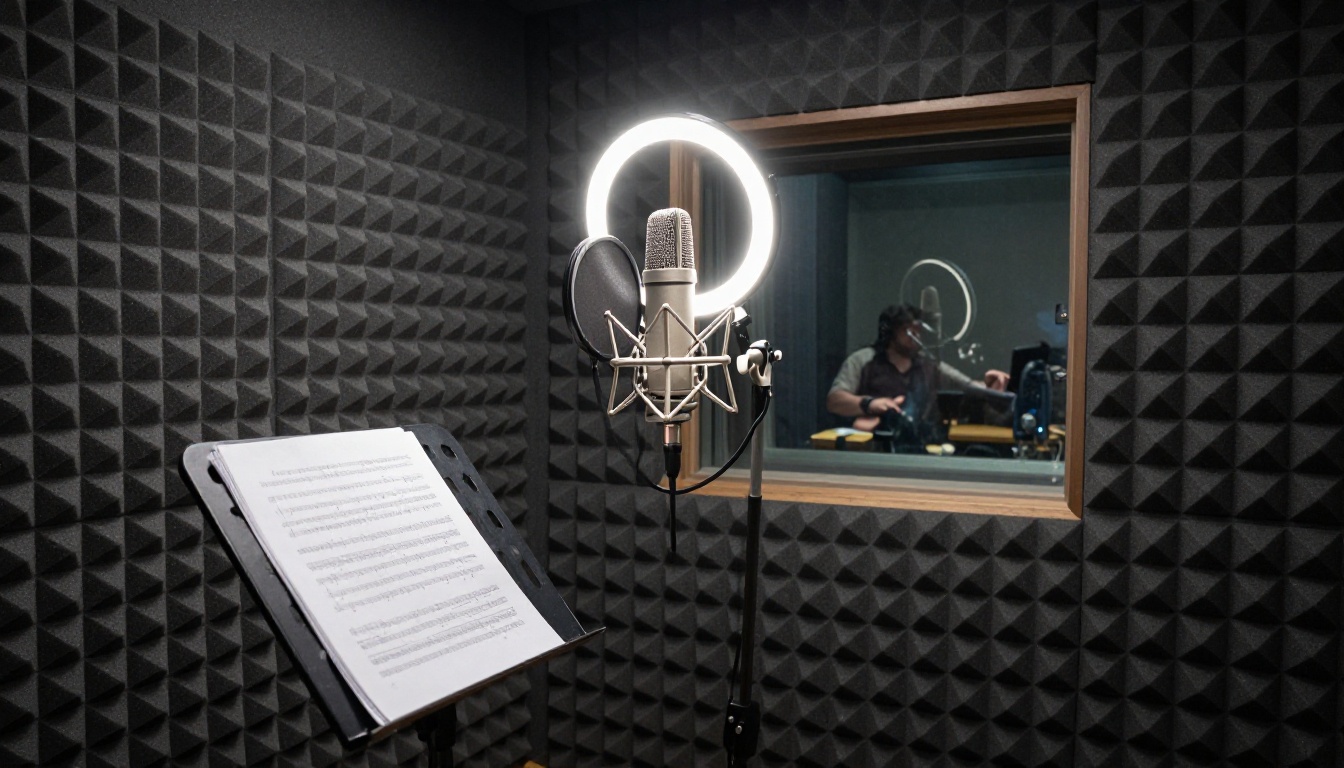
Standard TTS gives you a pre-built voice from a catalog. Voice cloning takes a sample of a specific voice, typically 30-60 seconds of clear audio, and builds a custom model that generates speech in that voice. For audiobook series, this is critical: your narrator voice needs to remain consistent across 10 hours of content and multiple production sessions.
For course creators who have already established a personal brand around their voice, cloning allows you to scale output without losing the connection your audience has built with your delivery style.
Minimax Voice Cloning on PicassoIA
Minimax Voice Cloning accepts a short voice sample and creates a cloned voice model you can use for any subsequent text generation. The resulting voice maintains accent, tone, and speaking rhythm from the reference audio. For a course creator who has already recorded one module and wants the rest narrated in the same voice, this is the fastest available path.
💡 Tip: For best cloning results, use a voice sample with minimal background noise recorded in a consistent acoustic environment. A 45-second clip from a prior recording session is usually enough to produce a high-fidelity clone.
An important additional option is Qwen3 TTS, which allows voice design from scratch rather than cloning from a sample. If you don't have reference audio but want a highly specific voice character, Qwen3 lets you specify tonal qualities and speaking style directly without needing a recording.
Preset voices vs. your own
Use preset voices when:
- You're producing content in a language you don't speak natively
- You need to ship quickly and don't have a clean voice sample ready
- You want different narrators for different course modules, such as one voice for business content and another for wellness
- The content doesn't rely on personal brand recognition
Use voice cloning when:
- You have an established audience that expects your specific voice
- You're producing a multi-book series where narrator consistency matters across every chapter
- You're translating your own course into other languages but want to maintain your personal vocal identity

How to Use Text to Speech on PicassoIA
PicassoIA's text-to-speech collection gives you direct access to 20 models from top providers including ElevenLabs, Minimax, Resemble AI, Google, Qwen, xAI, Inworld, and PlayHT, all without needing separate API keys or developer accounts. The models are accessible through a unified interface that handles input, voice selection, and download in one place.
Step 1: Choose your model
Visit the PicassoIA text-to-speech section and select based on your use case. For a premium audiobook, start with ElevenLabs V3. For a course, Minimax Speech 2.8 HD is a reliable default that handles long inputs well and processes quickly. If you're unsure, use ElevenLabs Flash v2.5 as a test model: it's fast, quality is high, and it costs very little per generation.
Step 2: Paste your script
Input your full script text into the model interface. For longer content like full chapters, break your script into logical chunks at scene breaks or module section dividers rather than submitting the entire manuscript at once. This gives you more control over pacing at natural stopping points and makes it easier to re-generate specific sections without reprocessing everything.
Step 3: Pick your voice and settings
Each model on PicassoIA offers voice selection within the platform interface. You'll typically pick from a catalog labeled by gender, accent, and tone, such as "calm female narrator" or "confident male professional." If you're working with voice cloning via Minimax Voice Cloning, upload your reference audio first before starting generation.
For multilingual output, models like Gemini 3.1 Flash TTS and ElevenLabs v2 Multilingual let you set the target language directly and generate a fully localized narration from your original script.
Step 4: Generate and download
Hit generate and the audio file renders, typically in seconds for fast models like Minimax Speech 2.8 Turbo or ElevenLabs Flash v2.5. Download the output as a standard audio file and import it directly into your course platform, DAW, or audiobook distribution pipeline.
💡 Tip: Generate a 2-3 sentence test before processing a full chapter. Use it to evaluate pacing and confirm the model pronounces technical terms, proper nouns, and brand references correctly. Adjust spelling or add phonetic hints in your script before the full batch run if any words sound off.

TTS for Courses vs. TTS for Audiobooks
These two use cases share a technology base but have meaningfully different success criteria that should influence your model selection.
What actually matters for each format
| Requirement | Audiobooks | Online Courses |
|---|
| Voice naturalness | Critical | Important |
| Emotional range | Very High | Medium |
| Consistent narrator | Essential | Recommended |
| Language coverage | Moderate | Very High |
| Processing speed | Medium | High |
| Pronunciation accuracy | High | Very High |
| Technical vocabulary | Moderate | Very High |
Pacing: the overlooked variable
Audiobook narrators typically read at 150-160 words per minute at normal pace, slowing for dramatic passages and accelerating slightly through action sequences. Most AI TTS models default to a rate around 140-170 WPM, which lands squarely in that natural range.
Course narration often benefits from slightly faster delivery because the content is instructional rather than experiential. Listeners want information efficiently. Models like ElevenLabs Flash v2.5 and Minimax Speech 2.8 Turbo allow speed adjustment so you can match the exact pacing your audience expects without re-recording.
Another underrated variable is sentence construction. Text written for reading often includes long complex sentences that work on the page but feel rushed or confusing when spoken aloud. Before running a script through TTS, break any sentence over 30 words into two shorter ones. The audio will sound dramatically more polished and easier to follow at normal playback speed.
Dialogue-heavy content
For audiobooks with multiple speaking characters, PlayHT Play Dialog handles voice differentiation in multi-speaker scenarios better than single-voice models. It was specifically built for dialogue-heavy content and can produce distinct character voices from a single input, making it the right choice for fiction with extensive conversation between named characters.

The Real Cost of NOT Using TTS
Time comparison at full scale
A professional narrator takes 6-8 hours of studio time to produce 1 finished hour of audiobook audio, including recording, editing, and mastering. At $250 per finished hour, that's $1,500-2,000 per produced hour of content.
With AI TTS, the same finished hour of audio takes roughly 15-20 minutes of your time: preparing the script, generating the audio, reviewing playback, and correcting any mispronounced terms. The quality gap between professional narration and premium TTS models like ElevenLabs V3 or Minimax Speech 2.8 HD is now small enough that self-published audiobooks using AI narration consistently earn 4-star ratings from listeners who can't detect the source.
What speed enables
The practical implication of TTS being near-instant is that you can now A/B test audio. Generate the same chapter intro in three different voices. Play them to a small test group. Pick the winner. That kind of iterative testing is impossible when you're paying a narrator per take and scheduling sessions weeks in advance.
Course creators can now also release audio versions of written posts, articles, and individual lessons without a budget approval process. The marginal cost of adding audio to existing written content drops to nearly zero when the models are readily accessible through a single platform.
The additional models worth knowing
Beyond direct TTS, PicassoIA also offers adjacent tools that complete the full audio production workflow:
- Inworld TTS 1.5 Max: Fast AI voiceovers in 15 languages, optimized for interactive and gaming content but equally useful for animated course scenarios where a consistent character voice narrates instructions.
- Grok Text to Speech: Fast, clean output from xAI's engine, a reliable secondary option when you need a second voice opinion or your primary model is under load.
- Inworld TTS 1.5 Mini: The lightweight variant for rapid generation of short-form audio like module titles, intro stings, and chapter markers.
- Minimax Speech 2.6 HD and Speech 2.6 Turbo: The previous generation of Minimax models, still highly capable and available for projects that have already standardized on a specific voice from that series.
Start Producing Audio Content Today
The gap between "I have a written course" and "I have a professional audio course" is now a single afternoon of work. The gap between "I wrote a book" and "I have an audiobook" can be closed in a weekend. The process doesn't require a production background, a voice that sounds like a radio host, or a budget that needs a business case to justify.
Pick your content. Pick your voice. Generate the first 500 words as a test. Within 30 seconds you'll know whether the voice matches what your audience expects and whether the model handles your specific vocabulary and sentence style correctly. From there, scaling to a full audiobook or complete course narration is a matter of processing time, not talent, scheduling, or money.
Browse all text to speech models on PicassoIA and produce your first narration project today without booking studio time or waiting on a narrator's schedule. The voices are ready, the platform handles everything from generation to download, and the first test output is seconds away from your script.
💡 Whether you're producing your first chapter or scaling an entire course catalog to five languages, PicassoIA's TTS collection has a model for every use case at the quality level your project actually requires. The only thing missing is your script.