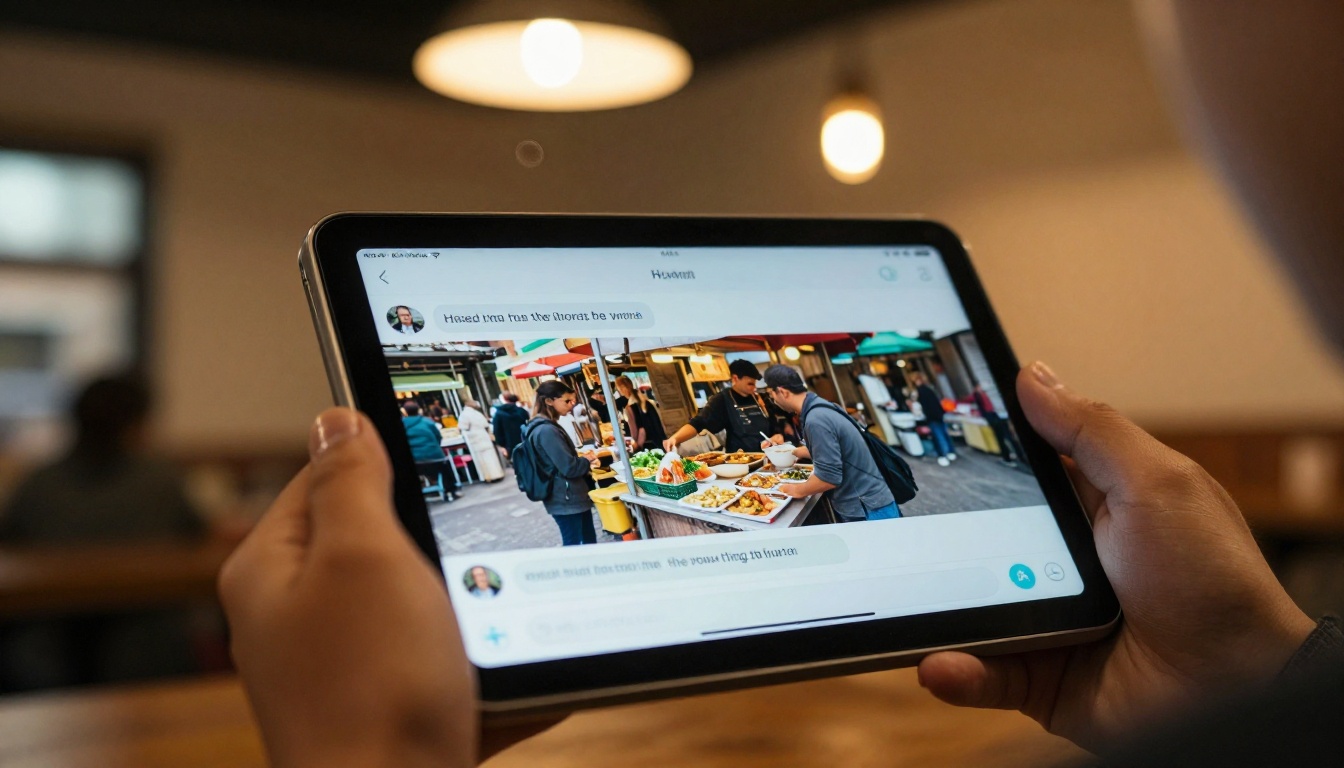
What you see, hear, and read all hit your brain at once. Multimodal AI models work the same way. Instead of processing one type of input at a time, they ingest text, images, audio, and sometimes video simultaneously, reasoning across everything together. That single shift changes what AI can do in the real world.
One Model, Many Senses
Most people first encountered AI as a text tool: ask a question, get a text answer. That works well for writing tasks. But the physical world isn't made of text. It's made of photographs, sounds, documents, charts, faces, and scenes. A model that can only read words is perpetually half-blind.
Multimodal AI solves that. It combines perception across input types so that one model handles the full range of signals humans naturally use.
Text Is Just the Beginning
Text-only models (like early GPT-2 or BERT) read sentences and generate responses. They are powerful at pattern matching within language. The limitation is hard: show them a photograph and they cannot see it.
Multimodal models accept inputs across different formats. They can read your question, look at the image you attached, listen to the audio clip you recorded, and respond with a coherent, context-aware answer that accounts for all three.
The shift isn't just about adding features. It changes the nature of what the model actually perceives.
What "Modality" Actually Means
In AI research, a "modality" is a type of data with its own statistical structure. Each modality has a distinct representation:
| Modality | Format | How AI Reads It |
|---|
| Text | Tokens / words | Tokenization + embedding |
| Images | Pixel grids | Patch-based visual encoding |
| Audio | Waveforms / spectrograms | Frequency feature extraction |
| Video | Frame sequences | Temporal + spatial encoding |
| Documents | Text + layout + images | Combined OCR + visual reasoning |
When a model is "multimodal," it has learned to process two or more of these modalities and, critically, to connect meaning across them.
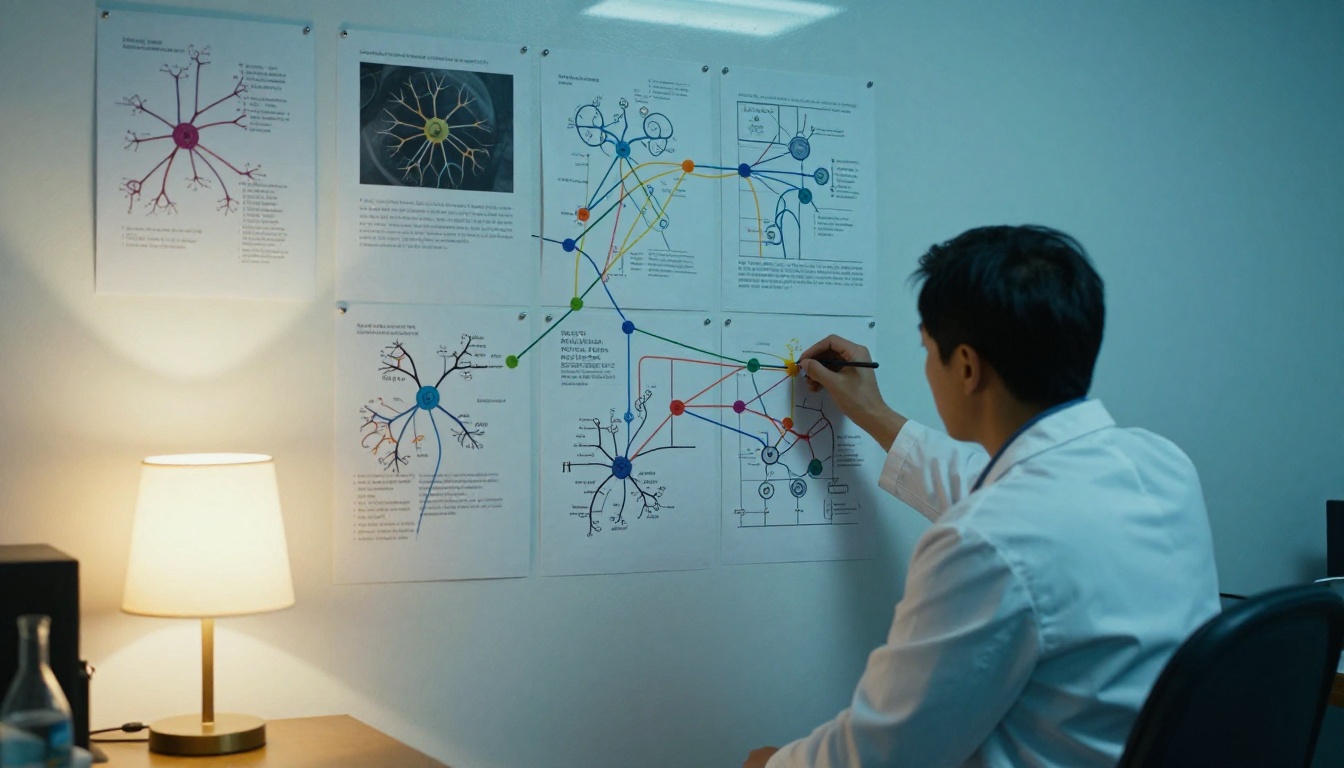
The engineering behind multimodal AI is more interesting than it sounds. It is not simply "plug a camera into a text model." The architecture has to be built so that different modality representations can communicate with each other.
The Transformer at the Core
Modern multimodal models are almost universally built on the transformer architecture first introduced in the 2017 paper "Attention Is All You Need." Transformers excel at attending to different parts of a sequence. It turns out that "sequence" doesn't have to mean words. It can mean image patches, audio frames, or video segments.
In a vision-language model like GPT-4o, the transformer receives a combined sequence that includes both text tokens and encoded image patches. The attention mechanism lets text tokens "look at" image tokens and vice versa. That cross-attention is where multimodal reasoning actually happens.
Encoders for Every Sense
Before the transformer ever sees the data, each modality passes through a modality-specific encoder:
- Images go through a visual encoder (often based on ViT, Vision Transformer) that breaks the image into 16x16 pixel patches and converts each into an embedding vector.
- Audio passes through a spectrogram encoder that converts sound waves into frequency-time representations.
- Text uses standard tokenization: words split into subword tokens and mapped to embedding vectors.
All these embeddings end up in the same dimensional space. From that point, the transformer treats them equally. The model doesn't know if it's "looking" or "reading." It's just attending to patterns in a unified sequence.
Text, Images, and Audio at Once
When a multimodal model receives mixed input, it doesn't process each modality sequentially and stitch results together afterward. It processes everything in context, allowing each modality to inform how the others are interpreted.
Vision and Language Together
This is the most developed branch of multimodal AI. Vision-language models (VLMs) are trained on vast datasets of image-text pairs. The training teaches the model to associate visual content with linguistic descriptions.
Practical outcomes of this training include:
- Image captioning: the model describes what it sees in natural language.
- Visual question answering (VQA): ask a question about an image, get a specific answer.
- Document interpretation: read a PDF with charts and tables and explain the data.
- Scene-based reasoning: "What safety issues do you see in this factory photo?"
Gemini 3 Pro and Claude Opus 4.7 are both vision-language capable models available on PicassoIA. They accept an image as part of a conversation and reason about its content in depth.
💡 Tip: When using a vision-language model, be specific in your question. "What is in this image?" gets a generic caption. "What materials are used in the furniture visible in this image?" gets a precise, actionable answer.
Audio as a First-Class Input
Audio modality support is less universal than vision but growing fast. Models with speech-to-text built in can transcribe spoken questions in real time. Newer architectures process the raw audio waveform directly, capturing tone, emotion, and speaker identity alongside the words.
The distinction matters. A text-only system that first transcribes audio loses everything beyond the words: hesitation, emphasis, ambient context. A truly multimodal audio model retains that richness.
Where Multimodal AI Shows Up
The shift from single-modal to multimodal AI isn't abstract. It's already changing the tools people use every day.
Healthcare and Radiology
Radiologists review thousands of medical images every week. Multimodal AI can read a patient's written clinical notes alongside an X-ray or MRI scan and flag inconsistencies or potential diagnoses. The model reasons across both the image and the text simultaneously, which is exactly how a skilled clinician operates.
Granite Vision 3.3 2B is a compact vision-language model that reads charts and tables, making it a practical entry point for document-heavy industries like insurance, legal, and clinical research.

Creative Tools and Design
Text-to-image generation is the most visible form of multimodal AI for creative professionals. Models like PicassoIA Image, GPT Image 2, and Seedream 4.5 take a text prompt as input and produce a photorealistic image as output. That is multimodal by definition: language drives visual generation.
Going further, tools like Qwen Image Edit Plus accept both an image and text instructions, then modify the image accordingly. That's multimodal input driving multimodal output, the full loop.
Everyday Apps on Your Phone
Point your phone camera at a restaurant menu in a foreign language. A multimodal AI reads the image, identifies the text, translates it, and explains the dishes. This is a real-time cross-modal pipeline: vision input, language output.
The same technology handles:
- Accessibility tools that narrate visual scenes for visually impaired users.
- Shopping apps that identify products from a photo.
- Search that accepts an uploaded image as a query instead of typed keywords.
Kimi K2.5 is described as a "Chat AI That Reads Text and Images," making it a practical multimodal assistant for everyday tasks. Gemini 3 Flash offers fast AI chat with vision for mobile-speed interactions.
Single-Modal vs Multimodal: The Real Difference
Seeing what multimodal AI can do is clearer when you compare it directly to single-modal alternatives.
| Capability | Text-Only AI | Multimodal AI |
|---|
| Answer text questions | Yes | Yes |
| Describe an image | No | Yes |
| Transcribe audio | No (without extra tool) | Yes |
| Reason about a chart | No | Yes |
| Edit an image from text | No | Yes |
| Interpret video content | No | Some models |
| Read a scanned document | No | Yes |
| Cross-modal reasoning | No | Yes |
The right column is not just "more features." It represents a qualitatively different relationship between AI and the world.

Top Multimodal Models Right Now
The multimodal AI space moves fast. These are the architectures that currently define the state of the art.
GPT-4o and the OpenAI Approach
GPT-4o ("o" for omni) was OpenAI's first natively multimodal model: trained end-to-end across text, vision, and audio rather than assembled from separate components. That end-to-end training means the model doesn't experience a "translation bottleneck" when switching between modalities. Its successor, GPT-5, extends this architecture further with stronger reasoning across all modalities.
For image generation, GPT Image 2 brings the same deep language capability to the visual output side, producing images that accurately reflect complex textual descriptions.
💡 Tip: Use GPT Image 2 when your image prompt describes complex relationships between multiple subjects. The model's language backbone handles compositional instructions better than most pure diffusion models.
Gemini's Architecture
Google's Gemini family was designed multimodal from the start. Gemini 3 Pro handles text, images, audio, and code in a single context window. This means you can share a photograph, a table of data, and a paragraph of text in one message and ask for a combined interpretation.
Gemini 3 Flash trades some capability for speed, making it practical for real-time applications where latency matters.
Claude's Visual Reasoning
Claude Opus 4.7 is described as "AI That Codes, Sees, and Reasons." Anthropic's models are particularly strong at careful, nuanced reading of visual documents like contracts, technical diagrams, and research papers, making them a solid choice when accuracy on complex material matters more than raw speed.
Claude 4 Sonnet offers the same vision capabilities in a faster, lighter form factor.
How to Use Multimodal Models on PicassoIA
PicassoIA gives you direct access to the full range of multimodal AI models, both for text-plus-vision reasoning and for text-to-image generation. Here's how to put them to work:
Using a Vision-Language Model:
- Open the Large Language Models collection on PicassoIA.
- Select a model with vision support: GPT-4o, Gemini 3 Pro, or Claude Opus 4.7.
- Attach an image file alongside your text message in the prompt area.
- Ask a specific question about the image, a document, or a chart. The model reasons across both inputs.
Using Text-to-Image Generation:
- Open the Text to Image section on PicassoIA.
- Pick a model: PicassoIA Image for general use, GPT Image 2 for compositional prompts, or Seedream 4.5 for 4K output.
- Write a detailed text prompt describing your scene, lighting, subjects, and style.
- The model converts your text into a photorealistic image, a textbook multimodal process.
Specific parameter tips:
- For vision-language tasks, keep images under 5MB for fastest processing.
- For text-to-image, add specific camera and lighting descriptors ("85mm lens, f/1.8, golden hour light") to improve photorealism.
- Wan 2.7 Image Pro is the highest-resolution option on the platform, suited for print-quality output.

Now Try It Yourself
Reading about multimodal AI is one thing. The concepts click faster once you've actually pointed a model at an image and asked it something non-obvious. Ask Gemini 3 Pro to read a nutrition label in a photo. Ask GPT-4o to interpret a chart from a PDF. Ask PicassoIA Image to turn a single sentence into a detailed photorealistic scene.
Each of those interactions shows you a different facet of what "multimodal" actually means in practice: not a buzzword, but a fundamental change in how AI perceives and responds to the world. The tools are there, access is free, and the learning curve starts the moment you upload your first image.