Voice cloning is no longer a science fiction concept. Today, with a few seconds of audio, an AI model can replicate a human voice so precisely that even people who know the original speaker cannot tell the difference. The technology behind this convergence of deep learning architectures, spectrogram modeling, and neural vocoders has matured rapidly over the past five years. Whether you are a content creator looking to produce voiceovers at scale, a developer building a voice-enabled assistant, or simply curious about how synthetic speech works, this article details what voice cloning is, how it operates at a technical level, and what you can do with it right now.
What Voice Cloning Actually Is
Voice cloning is the process of using AI to create a synthetic replica of a specific person's voice. The output sounds like that person speaking words they never actually said. It differs from standard text-to-speech in one critical way: standard TTS gives you a voice, while voice cloning gives you that specific person's voice.
Beyond Standard Text to Speech
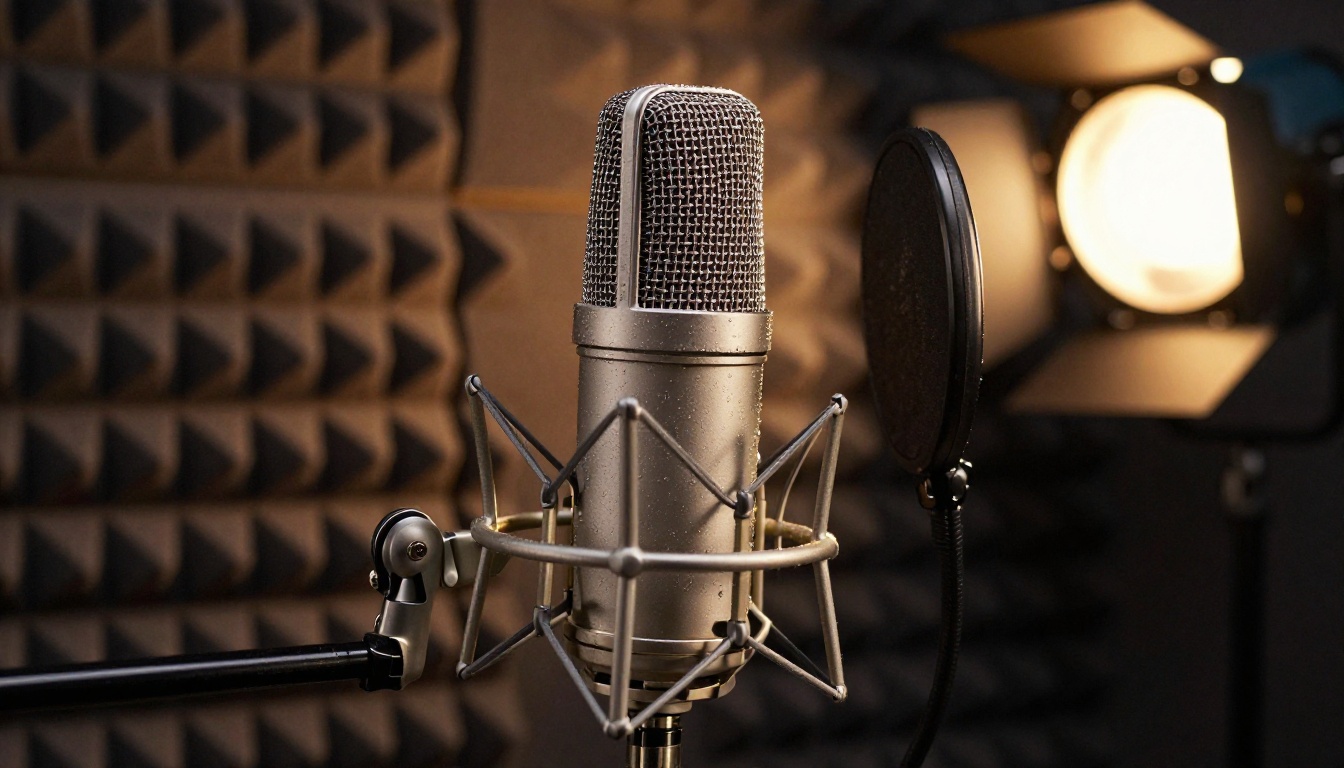
Traditional TTS systems use a pre-trained generic voice. You type text, and it reads it back in a neutral synthetic tone. The voice belongs to no one in particular. It sounds like a machine reading a script.
Voice cloning changes this entirely. It extracts the acoustic fingerprint of a specific speaker: their pitch range, cadence, breathiness, vowel formants, resonance, and even their micro-pauses between words. That fingerprint conditions a neural network to generate new speech that sounds exactly like that person, not just similar.
The difference becomes obvious the moment you hear the output. A cloned voice carries the warmth, authority, or roughness of its original speaker. It does not just read text. It reads it in their voice.
The Voice Identity Problem
Every human voice has a unique acoustic identity built from physical and behavioral characteristics. The shape of your vocal tract, the tension in your larynx, the natural resonance of your chest cavity, and the way you habitually stress syllables are all captured in an audio recording as a spectrogram, a visual map of frequencies changing over time.
Early voice cloning systems required hours of audio and weeks of fine-tuning to replicate this identity with any fidelity. Today, the best models can clone a voice in zero-shot mode: they process a five-second clip and immediately produce new speech in that voice, without any additional model training at all.
The Neural Architecture Behind It
Voice cloning is not a single model. It is a pipeline of three distinct neural components working together, each solving a separate part of the voice replication problem.

Speaker Encoders
The first component is the speaker encoder. This network takes raw audio input and converts it into a fixed-size vector, often called a voice embedding or speaker embedding. Think of it as a numerical ID card for a voice: a compact representation that captures what makes that voice unique.
The speaker encoder is trained on thousands of different speakers across diverse languages and acoustic environments. Its job is not to transcribe what was said, but to recognize who said it and how they typically sound. The resulting embedding condenses the full acoustic identity into typically 256 or 512 floating-point numbers that downstream networks can condition on.
What makes modern speaker encoders remarkable is their generalization ability. They were never trained on your voice specifically, yet they can extract a usable identity representation from a clip they have never heard before. This is the core capability that makes zero-shot cloning possible.
Synthesis Networks
The second component is the synthesis network. It takes two inputs simultaneously: the phoneme sequence of the text you want spoken, and the speaker embedding from the encoder. Its output is a mel spectrogram, a frequency-time map showing what the audio should look like.
Architectures like Tacotron 2, VITS, and more recent systems such as NaturalSpeech 3 all operate in this space. These models were trained to map text phonemes to acoustic patterns, but with speaker conditioning woven throughout. The speaker embedding shifts the entire synthesis toward the target voice's tonal characteristics, pacing, and articulation style.
The shift from autoregressive synthesis in Tacotron to flow-based and diffusion-based approaches in VITS and NaturalSpeech has been one of the biggest quality jumps in recent years. Non-autoregressive models generate speech in parallel rather than one token at a time, dramatically reducing latency without sacrificing naturalness.
Vocoders
The third component is the vocoder. Spectrograms are not audio files. A vocoder converts the mel spectrogram into a raw waveform that can actually be played back through a speaker.
HiFi-GAN and WaveNet are two well-established vocoders. HiFi-GAN generates audio at 22kHz in real time on a single CPU, making it the workhorse of most production voice cloning pipelines. Modern end-to-end architectures like VITS fold the vocoder directly into the synthesis network, eliminating the quality bottleneck that previously existed at the spectrogram-to-waveform conversion step.
💡 The quality of a cloned voice depends most heavily on the vocoder. A perfect spectrogram paired with a poor vocoder still sounds robotic. A strong vocoder can recover surprisingly natural output even from an imperfect spectrogram.
How AI Learns Your Voice
The actual training process depends on whether you are doing zero-shot cloning or fine-tuned cloning. These two paths have very different audio requirements and produce meaningfully different quality levels.
Zero-Shot vs. Fine-Tuned Cloning
| Approach | Audio Required | Quality Level | Time to Result |
|---|
| Zero-shot | 3-30 seconds | Good to Excellent | Instant |
| Fine-tuned | 5-60 minutes | Excellent to Near-Perfect | Hours to days |
| Custom training | 10+ hours | Highest fidelity | Days to weeks |
Zero-shot cloning is what most current cloud APIs rely on. The model was pre-trained on massive multilingual datasets with thousands of speaker identities, so it has already learned to generalize voice characteristics from short references. You provide the clip, and the model immediately conditions synthesis on that voice identity.
Fine-tuned cloning involves updating the model weights specifically on a larger sample of your target voice. This produces more consistent results across long-form output, especially for voices with unusual accents, distinctive speech rhythms, or wide emotional range that zero-shot models can sometimes flatten or average out.
How Much Audio Does It Need
Less than most people assume.
- 3-5 seconds: Enough for most zero-shot models to produce recognizable voice replication
- 30-60 seconds: The sweet spot for high-quality zero-shot results with consistent prosody
- 5-10 minutes: Reliable starting point for fine-tuning
- 60+ minutes: Required for training a fully custom model from scratch
Audio quality matters as much as duration. A clean 10-second clip recorded in a quiet room with a decent USB microphone consistently outperforms a noisy two-minute recording with background music, reverb, or heavy compression artifacts.
The Role of Multilingual Training Data
One of the most impressive recent advances in AI voice synthesis is cross-lingual voice cloning. A voice cloned from an English speaker can now speak Spanish, Portuguese, French, or Mandarin while preserving the original speaker's timbre, accent character, and characteristic vocal texture. The synthesis network borrows the voice's identity at the acoustic level while applying a completely different phoneme set for the target language.
This is possible because modern speaker encoders are trained to separate acoustic identity from linguistic content entirely. The embedding they produce captures how someone speaks, independent of what language they are speaking.
What You Can Build With Voice Cloning
The applications are broad and no longer limited to large media companies or research labs. Individual creators now have access to the same neural voice generation tools that were previously confined to specialized studio pipelines.
Voiceovers and Audiobooks
Producing an audiobook traditionally requires a narrator in a professional studio for several days, followed by audio editing, mastering, and quality control rounds. The total cost per finished hour easily reaches hundreds of dollars.
With voice cloning, an author records a clean 15-minute sample, clones their own voice, and generates the full audiobook entirely through text input. The result is read in their actual voice, not a generic synthetic one. The same approach applies to video narration: content creators use cloned voices to maintain vocal consistency across hundreds of episodes without re-recording after every script edit.
Language Dubbing
Films and video content have always been difficult to localize because traditional dubbing requires voice actors who rarely match the original speaker's vocal identity. Voice cloning lets studios clone a performer's voice in their native language and generate new lines in any target language while preserving that performer's actual vocal characteristics.
The audience experiences content that sounds like the original performer, not a replacement. The emotional resonance of the original performance stays intact across language boundaries.
Virtual Assistants With Your Voice
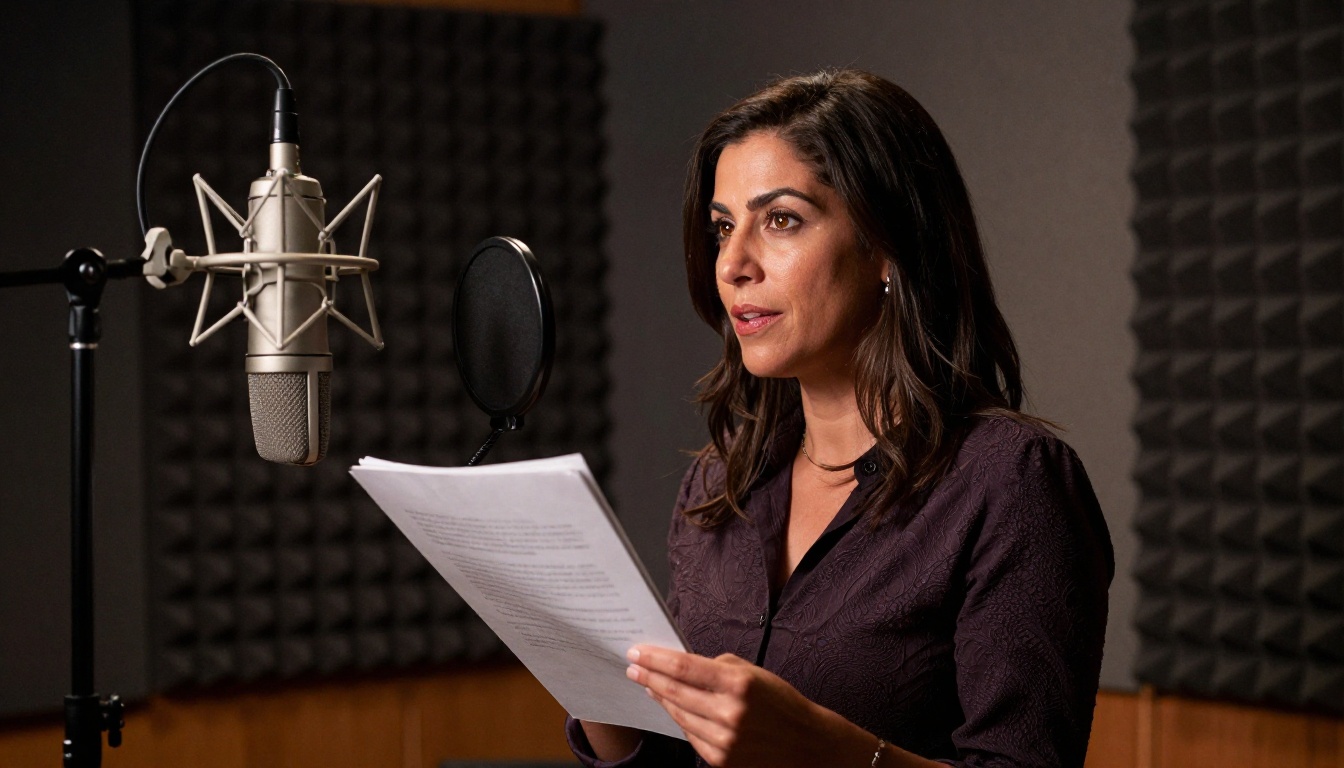
Developers building voice interfaces, smart home devices, and AI companions can now configure an assistant to respond in any specific voice. Rather than shipping a product with a generic synthetic voice, a company can build a branded voice identity, or allow users to personalize the assistant to speak in their own voice for a more personal experience.
Accessibility and Voice Restoration
One of the most substantively beneficial uses of voice cloning is for people who have lost the ability to speak due to ALS, laryngeal cancer, stroke, or similar conditions. By capturing voice samples before significant deterioration, individuals create a personal voice model that continues speaking for them through augmentative communication devices. The result is a device that speaks in their voice, not a clinical default.
💡 Voice cloning for accessibility is one of the clearest examples of AI augmenting human capability rather than replacing it. Several non-profit organizations now offer this service at no cost to people facing voice loss.
How to Use Voice Cloning on PicassoIA
PicassoIA has a dedicated voice cloning model that makes the entire process accessible without any local setup, API management, or infrastructure to run.
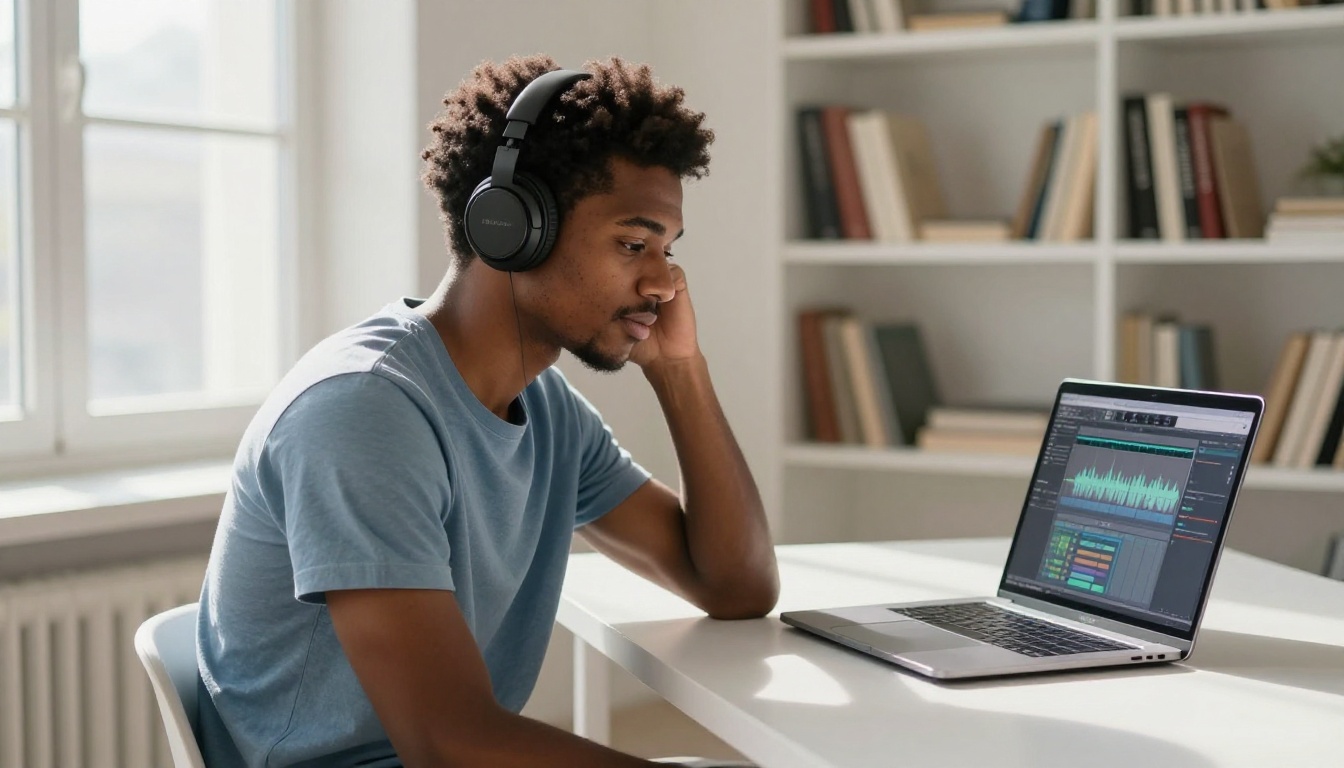
Step-by-Step With Minimax Voice Cloning
The Minimax Voice Cloning model on PicassoIA is one of the most capable zero-shot cloning tools available today. Here is the exact workflow:
- Record your reference audio. Use a clean microphone in a quiet room. Target 15-30 seconds of natural speech at a comfortable, relaxed pace. No background music, echo, or heavy processing.
- Open the model. Navigate to Minimax Voice Cloning on PicassoIA.
- Upload your reference clip. The model accepts MP3 and WAV formats. Trim silence from the start and end of the clip before uploading.
- Enter the text to synthesize. You can input multiple paragraphs. The model handles long-form content in a single pass without quality degradation.
- Adjust parameters. Speed, pitch, and emotional tone can be modified directly in the interface without re-uploading the reference audio.
- Generate and preview. The model processes the request and returns the audio file in under 30 seconds for most inputs.
- Download or integrate. Export the audio directly into your video editor, podcast production software, or any other audio workflow.
Tips for Better Results
- Record at 44.1kHz or 48kHz. Lower sample rates lose the upper frequency detail that contributes most to voice identity capture.
- Include tonal variety. Record questions, statements, and exclamations to give the speaker encoder a fuller picture of your prosodic range.
- Clean the reference clip. Remove filler sounds, false starts, and long pauses before uploading for cleaner embeddings.
- Test multiple reference clips. The model responds differently to different emotional registers. A calm read and an animated read may produce distinctly different cloned results worth comparing.
Other Voice Models Worth Trying
Beyond the dedicated cloning model, PicassoIA offers a range of text-to-speech models with strong voice customization and replication capabilities:
- Chatterbox by Resemble AI: voice cloning with direct emotion control per sentence
- Chatterbox Pro: higher fidelity output with richer expressive range
- ElevenLabs V3: highly expressive cloned speech with fine-grained style conditioning
- ElevenLabs v2 Multilingual: 30+ languages with preserved voice identity across all of them
- ElevenLabs Flash v2.5: ultra-low latency output built for real-time voice applications
- Qwen3 TTS: clone any voice or design a completely new one from scratch
How to Spot a Cloned Voice
The same capabilities that make voice cloning powerful also create new challenges around audio authenticity. Recognizing the signs of a synthetic voice is now a practical skill, not just a niche technical concern.

Tell-Tale Signs of Synthetic Audio
Even the best current voice models leave detectable artifacts. Here are the most common patterns to listen for:
- Unnatural prosody. The rhythm of speech does not quite match how a human would naturally stress words in conversational context. Pitch contours can feel slightly too smooth or too uniform across sentences.
- Narrow emotional range. Synthetic voices often stay within a constrained band of expression. Real speech fluctuates more dynamically, especially in spontaneous or informal conversation.
- Suspiciously perfect articulation. Human speakers naturally vary enunciation, mispronounce occasionally, and trail off at sentence ends. Consistently clean diction at every word can signal synthetic origin.
- Complete background silence. Real recordings always carry some ambient noise floor, even in treated studios. Absolute silence between words is statistically unusual in genuine speech recordings.
- Micro-artifacts at phoneme boundaries. At certain consonant transitions, neural vocoders occasionally produce faint pitch discontinuities or brief spectral interruptions. These are imperceptible individually but accumulate across a longer recording.
Detection Tools Available
Several AI audio detection systems now analyze recordings for synthetic speech signatures. These tools examine spectral consistency, formant trajectory patterns, and periodicity artifacts that cluster around neural vocoder outputs. Accuracy varies significantly by model version and audio compression, but detection rates above 80-90% are achievable for lower-quality clones from older architectures.
💡 For high-quality clones from current frontier models, human listeners correctly identify the audio as synthetic at only slightly above random chance in controlled tests. This is why technical detection tools are increasingly important for verification workflows in media, legal, and security contexts.
Try Voice Cloning Today
Voice cloning has reached a point where it is both technically accessible and practically effortless. The neural architectures that once required specialized hardware and months of careful training now run entirely in the cloud, returning studio-quality results in seconds.
Whether you are building a personal voiceover library, producing multilingual content, developing a voice-first product, or simply curious about what the technology sounds like in practice, the tools are available right now.
The Minimax Voice Cloning model, alongside Chatterbox Pro, ElevenLabs V3, and the full suite of text-to-speech models on PicassoIA, gives you everything you need to produce professional-grade cloned audio without spending a dollar on studio time. Pick a model, record a short clip, and hear your voice speak anything you write.


