How to Write Product Descriptions with AI That Actually Sell
Struggling to write product descriptions at scale? AI writing tools can cut your workload by 80% while producing copy that ranks and converts. This article covers how it works, which models perform best for e-commerce, and a step-by-step workflow you can apply today across any product catalog size.
Writing product copy sounds simple until you have 500 SKUs waiting and a publish deadline at noon. Most sellers know this pain: every product needs a unique, compelling description that tells the right story, hits the right keywords, and pushes the reader toward checkout. Do that for one product, it takes 20 minutes. Do it for a thousand, and you have a full-time job that costs real money and still produces inconsistent results.
AI changes that equation completely. Not by automating mediocrity at scale, but by giving you a repeatable system that produces genuinely good copy, fast. The right language model paired with the right prompt can output a conversion-ready product description in under 10 seconds, at a fraction of the cost of any human alternative.
This article breaks down exactly how to write product descriptions with AI, which models to use for which categories, and the prompt frameworks that produce the best results for real e-commerce workflows.
Why Product Descriptions Are Harder Than They Look
The volume problem
If you run a mid-size e-commerce store, you probably have between 100 and 5,000 active SKUs. Each one needs a title, a short description, a long description, and often a set of bullet points. Multiply that by seasonal updates, new arrivals, localization needs, and A/B testing variations, and you are looking at a content operation that can consume an entire team.
Freelance copywriters charge between $30 and $150 per product description depending on category and quality. For a catalog of 1,000 products, that's anywhere from $30,000 to $150,000 in copy costs alone, before you factor in revisions and updates. For most sellers, that math doesn't work.
AI collapses that cost to nearly zero.
The SEO vs. conversion tradeoff
Here's the real challenge most sellers don't talk about openly: writing product descriptions that rank in search AND convert visitors into buyers requires two different writing instincts operating simultaneously.
SEO wants keyword density, structured phrasing, and search-friendly language that signals relevance to crawlers. Conversion copywriting wants emotional hooks, sensory detail, trust signals, and urgency cues that speak to the buyer's real motivations. A human writer can toggle between these two modes, but doing it consistently across hundreds of products takes experience and a lot of time. An AI model, given the right prompt structure, can hold both objectives at the same time without fatigue.
What AI Actually Does to Your Copy
Pattern recognition at scale
Large language models have been trained on billions of words of human writing, including product pages, buyer reviews, marketing emails, category descriptions, and conversion-optimized landing pages. What they do when you prompt them is sophisticated pattern matching at a level humans physically cannot replicate for speed.
Feed a model the material specs of a hiking boot and it will recognize that buyers in this category prioritize waterproofing, ankle support, and break-in time. It knows this because it has processed thousands of hiking boot reviews, product pages, and outdoor gear articles. That context is available instantly, without any research on your part. The model already knows what matters to the buyer.
Tone matching across categories
The voice you need for a children's toy is nothing like the voice you need for a luxury watch or a B2B software product. AI models handle this distinction well when explicitly instructed. With a single sentence in your prompt, "write in a warm, playful tone for parents shopping for kids aged 3 to 8," the output shifts completely in register, word choice, and sentence structure.
This is particularly powerful for brands with diverse catalogs. A single AI writing setup can cover your sportswear line, your home decor range, and your wellness products, each with a distinct voice, all within the same workflow and prompt structure.
Benefit extraction from raw specs
Most sellers receive product data from suppliers in the form of raw technical specifications: materials, dimensions, weight, certifications. AI models are very good at reading those specs and extracting the human benefit behind each one. "Gore-Tex membrane" becomes "stays dry in heavy rain no matter how long you're out." "500-thread-count" becomes "the kind of softness you notice from the first night." That translation from spec language to buyer language is where most human writers earn their fees, and where AI shines.
The Best AI Models for Product Copy
Not all language models produce the same quality of output for e-commerce copy. Here's how the top models compare for this specific task.
GPT 5 is the strongest choice for high-end e-commerce categories like fashion, beauty, fine jewelry, and lifestyle goods. It has an innate feel for aspirational copy, the kind that makes a $400 candle sound like it belongs in an architectural design magazine. It picks up subtle brand voice cues from minimal instruction and maintains them consistently across long outputs.
Claude 4 Sonnet for nuanced tone
Claude 4 Sonnet is particularly strong when tone consistency matters across a large catalog. Its output reads more naturally than most models, with fewer of the telltale AI phrases that experienced readers pick out immediately. For brands that have invested in an established voice, Claude tends to stay in character more reliably than alternatives, making it ideal for catalog-wide copy standardization.
Gemini 3 Pro for multilingual catalogs
If you sell internationally, Gemini 3 Pro is worth testing specifically for multi-language workflows. It handles translation with better cultural and idiomatic context than most dedicated translation tools, which means your French, German, or Spanish product descriptions don't read like machine output. They read like a native speaker wrote them for that specific market.
Deepseek R1 for technical products
Electronics, power tools, automotive parts, and industrial goods require a different kind of copy: accurate, spec-forward, and precise without being dry. Deepseek R1 excels at reasoning through complex technical specifications and surfacing the features that matter most to buyers in those categories, in plain language that still converts.
How to Write Product Descriptions with AI
This is the practical part. Here's a four-step workflow that works whether you're writing one description or ten thousand.
Step 1: Build your prompt template
The single biggest mistake people make when using AI for product copy is writing a vague prompt and hoping for the best. "Write a product description for this jacket" will produce generic, forgettable output. A structured prompt template that specifies audience, tone, format, length, and objectives will produce something publishable.
A solid base template looks like this:
You are an e-commerce copywriter for [BRAND NAME], a [BRAND POSITIONING] brand.

Write a product description for the following item:
Product name: [PRODUCT NAME]
Category: [CATEGORY]
Key features: [BULLET LIST OF SPECS]
Target customer: [DESCRIBE BUYER PERSONA]
Tone: [TONE DESCRIPTOR - e.g. warm and confident, minimal and precise]
Format: Short description (50 words) + Long description (150 words) + 5 bullet points
SEO keywords to include naturally: [KEYWORD LIST]
Do not use: [ANY PHRASES OR CLAIMS TO AVOID]
The "Do not use" line is often overlooked. It's where you prevent the model from defaulting to clichés like "perfect for any occasion" or "you'll love this product."
Step 2: Add product specs as input
The quality of your output is directly proportional to the quality of your input. Raw supplier specs are a good starting point, but the best results come from adding buyer-language context: the problems the product solves, the occasions it suits, the feelings it creates.
Don't just say "waterproof membrane." Say "keeps feet dry in heavy rain, rated IPX7, tested in tropical climate conditions." Don't just say "premium leather." Say "full-grain leather that develops a natural patina over time and improves with age." The AI will pick up those cues and write copy that speaks to the buyer's real concerns rather than listing clinical facts.
Step 3: Set tone and audience parameters
Tone instructions are frequently underspecified, and the results suffer for it. "Professional" means something completely different for a B2B SaaS product versus a luxury fragrance brand. The more precise you are, the better the output.
Useful tone descriptors across different categories:
Confident and minimal (luxury goods, premium electronics)
Warm and conversational (parenting products, wellness, food)
Direct and technical (tools, industrial, automotive)
Aspirational and sensory-rich (beauty, travel, fine dining)
Playful and punchy (streetwear, youth brands, novelty items)
Trustworthy and clinical (health, supplements, medical devices)
Step 4: Edit and publish
AI output is a first draft, not a final product. The good news is it's a remarkably good first draft. In practice, a well-prompted AI description needs about three to five minutes of human editing before it's ready to publish: checking brand voice alignment, verifying specs against actual product data, adding any proprietary language or brand-specific claims the model couldn't know.
This is still 80 to 90 percent faster than writing from scratch, and the quality floor is much higher than most sellers achieve writing manually at speed.
Prompt Templates That Work
Here are three specific prompt frameworks tested across real product categories, with the output patterns they produce.
The feature-benefit formula
This is the most reliable structure for most product categories. Each technical feature gets immediately paired with the benefit it delivers to the buyer. Include this instruction in your prompt: "for every feature you mention, follow it immediately with why this matters to the buyer."
This forces the model to translate specs into benefits automatically, rather than producing a bullet list of dry technical claims.
💡 Result example: "300-thread-count Egyptian cotton, so soft it feels broken-in from the first night, durable enough to survive 200 washes without thinning or pilling."
The emotional trigger approach
For lifestyle, beauty, and fashion products, leading with emotion often outperforms leading with specifications. The prompt instruction here is simple: "begin with the feeling this product creates, not its features."
This works particularly well when combined with Claude 4.5 Sonnet, which naturally gravitates toward emotionally resonant language without becoming overwrought.
💡 Result example: "Some mornings call for armor. This blazer is that armor: structured enough to own any room, soft enough to forget you're wearing it by noon."
SEO-first structure
For high-competition categories where organic discovery matters more than immediate conversion, flip the priority. Keyword placement first, emotional hooks second. Instruct the model: "Begin the description by naturally using the primary keyword in the first sentence. Include a minimum of three LSI keywords throughout the long description."
3 Mistakes That Kill AI-Generated Copy
Skipping brand voice guidelines
If you don't tell the model who your brand is, it will write for a generic brand that sounds like no one in particular. The output will be technically correct and completely forgettable. Before using any AI writing tool at scale, write down your brand voice in two to three sentences and include it in every prompt.
At minimum, specify: the category you're in, who your typical buyer is by lifestyle and motivation, and one thing your brand never says. That last point is often the most powerful. "We never make promises we can't back with data" or "we never use hype language or superlatives" gives the model a hard constraint that shapes every sentence.
Using generic prompts
"Write a product description for this item" is not a prompt. It's an invitation for the model to fill all the blanks with assumptions, and most of those assumptions will be wrong for your specific brand and buyer. The more specific your prompt, the less editorial cleanup you need afterward.
Every prompt should include: format, word count, tone, target audience, keywords, and at least one constraint. That's six parameters. Most people specify one.
Publishing without editing
AI models occasionally hallucinate specifics: a material gets described differently than the actual spec, a feature gets attributed that the product doesn't have, or a claim gets made that your legal team would flag immediately. A publishing workflow that skips human review is a risk that isn't worth taking, especially at scale.
The fix is simple: a three-minute spot-check on specs, claims, and brand voice before every description goes live. At 1,000 products, that's 50 hours of review time, which still represents a 90 percent time savings compared to writing from scratch.
Scaling to 1,000 Product Descriptions
Once your prompt template is producing good output consistently, scaling is a matter of infrastructure rather than creativity.
Batch processing workflows
Most LLM platforms support batch inputs: you provide a spreadsheet of product specs, and the model outputs a corresponding spreadsheet of descriptions. This is where AI writing stops being a productivity boost and becomes an actual content operation.
A standard batch workflow:
Prepare a product data sheet with columns for name, category, key specs, target audience, and tone modifier
Build a master prompt template with variable placeholders for each column
Run the batch through your chosen model, GPT 4.1 and Gemini 2.5 Flash are both strong for high-volume batch work
Export the output and route it to a human review queue
Approve, edit as needed, and import directly to your catalog system
A catalog of 1,000 products can be processed in under an hour with this setup. An equivalent manual writing effort would take a team of three copywriters several weeks.
Quality control checkpoints
At scale, the main quality risk is uniformity: descriptions that are technically correct but start to sound identical by the hundredth product. Three checkpoints prevent this.
Tone variation: Assign different tone modifier strings to different product subcategories so the voice shifts naturally across your catalog
Length variation: Alternate between short-copy and long-copy formats based on product complexity and price point
Random sampling: Manually review five percent of outputs before giving final batch approval
💡 Pro tip: Use Deepseek R1 for technical categories like electronics and tools, and Claude 4 Sonnet for lifestyle and fashion. Running different models for different catalog sections naturally produces tonal variety without extra configuration.
What Good AI Product Copy Looks Like
A before-and-after comparison makes the difference concrete. Same product data, two different approaches.
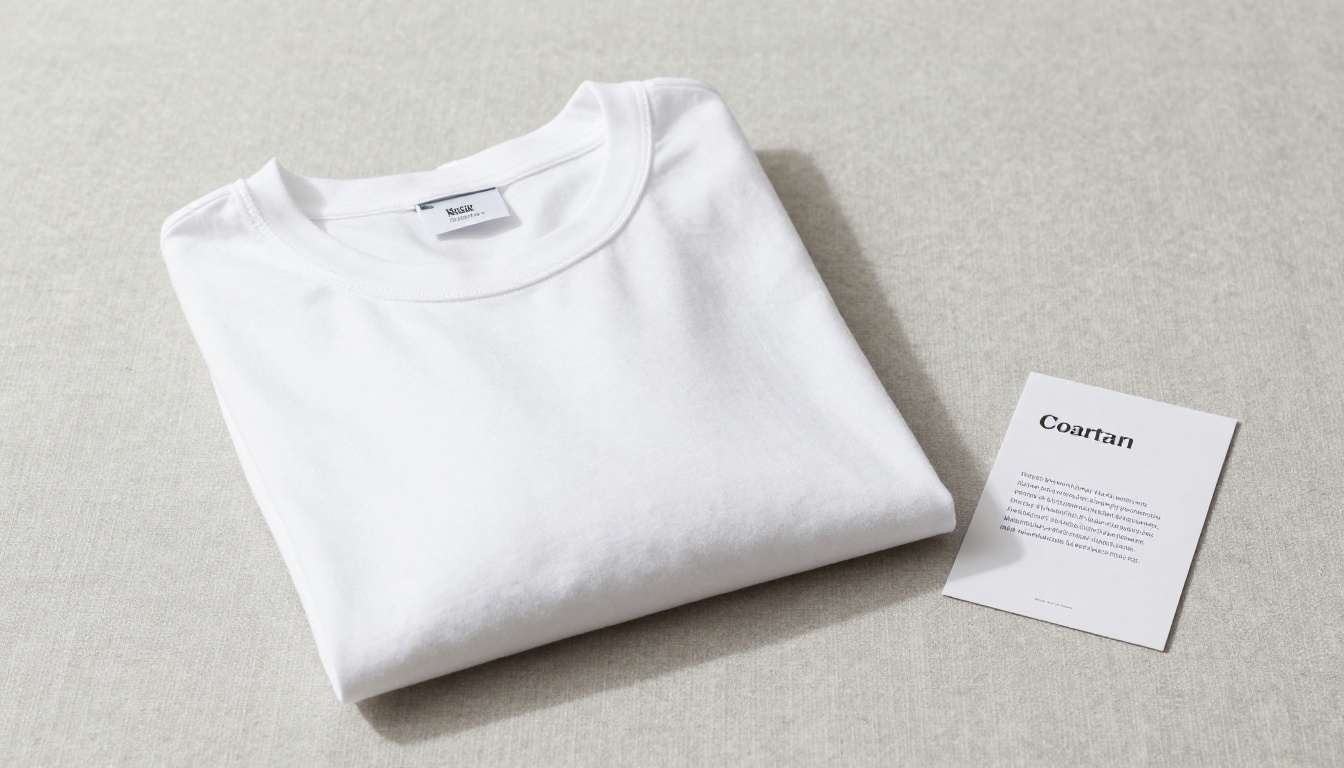
Without AI (typical seller-written copy):"100% cotton t-shirt. Available in 5 colors. Machine washable. Sizes S-XL."
With AI using GPT 5 and a feature-benefit prompt:"Built for the days when you need to look sharp without thinking about it. Cut from 200gsm brushed cotton that feels broken-in from the first wear, this t-shirt layers cleanly under a blazer or stands on its own. Machine washable, colorfast after 100 washes, available in five considered neutrals."
The second version includes sensory detail ("feels broken-in from the first wear"), a use case ("layers cleanly under a blazer"), a trust signal ("colorfast after 100 washes"), and an emotional hook ("days when you need to look sharp without thinking about it"), all in under 60 words. That's not a marginal improvement. It's a different category of copy.
For a catalog of 1,000 products, that difference compounds into a measurable conversion rate advantage across your entire store.
Start Writing Better Copy Today
Product copy is one of the highest-ROI applications of AI writing tools available right now. Every product page that converts better is direct revenue impact, and every hour saved on copy production goes back into building the actual business.
The models available today, from GPT 5 to Claude 4.5 Sonnet to Gemini 3 Pro, are capable of producing genuinely strong copy for virtually any product category. The constraint is no longer the technology. It's having a clear system for prompting, reviewing, and publishing at your specific scale.
Start with one product category. Build a prompt template using the structure in this article. Run ten descriptions. Review them honestly against your current copy. You'll have a working, repeatable system by the end of the day, and a catalog that sounds like it was written by someone who actually cares about your buyer.