The biomedical research world has a data problem. Not a shortage of data, but a surplus: millions of published papers, petabytes of genomic sequencing output, decades of clinical trial records, and proprietary compound libraries that no single research team can fully process in a career. Claude Mythos 5.1 for Life Sciences Research enters this context not as a magic fix, but as a genuinely capable tool that changes how quickly a trained scientist can move from raw data to interpretable results.
This piece breaks down where Claude Mythos 5.1 delivers real value in biomedical settings, which workflows it fits, and where the model's limitations matter more than its capabilities. Whether you work in oncology, genomics, pharmacology, or clinical operations, the practical picture is more specific than the marketing suggests.

Why Researchers Are Choosing Specialized LLMs
Life sciences workflows have resisted AI automation longer than most sectors, and for good reason. Scientific text demands precision, context-sensitivity, and a resistance to confident confabulation. General-purpose language models often hallucinate gene names, misattribute study findings, or flatten nuanced statistical claims into overconfident summaries. The shift toward domain-tuned models changes that calculus.
The Scientific Literature Bottleneck
A mid-career researcher in oncology or pharmacology typically spends 15 to 20 hours per week reading, tagging, and synthesizing published literature. For competitive intelligence or systematic review work, that figure doubles. The bottleneck isn't attention or intelligence; it's sheer throughput. LLMs capable of parsing dense biomedical text with structural fidelity can reclaim those hours for hypothesis generation and experimental design, where trained human judgment genuinely cannot be automated away.
The volume problem is particularly acute in fast-moving fields. CRISPR biology, GLP-1 receptor pharmacology, and mRNA therapeutics are each producing hundreds of new papers monthly. No individual researcher can maintain complete situational awareness without some form of automated synthesis assistance.
When General AI Falls Short
Standard large language models handle conversational queries well but struggle with:
- Gene nomenclature precision: HGNC symbols, RefSeq IDs, and cross-species ortholog naming conventions are frequently mangled by models without biomedical training.
- Statistical interpretation: Claims about p-values, effect sizes, and confidence intervals get distorted or oversimplified into declarative statements that misrepresent the original findings.
- Regulatory context: ICH guidelines, FDA guidance documents, and EMA scientific advice letters require specific institutional framing that generalist models don't reliably reproduce.
- Clinical terminology fidelity: MedDRA coding, adverse event severity grading (CTCAE), and pharmacovigilance terminology require exact language that varies significantly from everyday usage.
Claude Mythos 5.1 addresses these gaps with training specifically weighted toward primary scientific literature, clinical documentation, and regulatory filing corpora.
What Claude Mythos 5.1 Does in the Lab
The model's most practical contributions cluster around three functions: document parsing, structured summarization, and reasoning across disparate data sources. Each maps onto a specific pain point that biomedical researchers encounter regularly throughout their work.
Core Capabilities at a Glance
| Capability | Practical Application | Time Saved |
|---|
| Literature synthesis | Systematic review drafts | 8-12 hrs per review |
| Genomic variant annotation | Variant prioritization reports | 4-6 hrs per cohort |
| CRF data narration | Safety narratives, SAE reports | 2-3 hrs per case |
| Regulatory dossier drafting | Module 2 summaries, CTD sections | 6-10 hrs per section |
| Imaging report summarization | Radiologist pre-reads | 30-60 min per session |
What It Doesn't Replace
Clarity on limitations matters as much as enthusiasm for capabilities. Claude Mythos 5.1 does not:
- Run wet lab protocols or interact with laboratory instruments directly.
- Replace biostatisticians for primary statistical modeling or inference.
- Access real-time literature databases without API integration on the user's side.
- Make clinical decisions. It is a reasoning and writing assistant, not a diagnostic tool.
- Guarantee accuracy in rapidly evolving fields where published consensus has not been established.
The model is most powerful when a trained scientist sits in the loop, using it to accelerate routine cognitive work rather than to substitute for domain judgment. Teams that deploy it most effectively treat it as a drafting and synthesis collaborator, not an autonomous agent.

Genomics and Sequence Interpretation at Scale
Genomics workflows generate massive volumes of output that require expert annotation before they become scientifically useful. Whole-genome sequencing of a single patient produces gigabytes of raw reads, which bioinformatics pipelines condense into variant call format (VCF) files containing tens of thousands of flagged positions. The challenge isn't the sequencing; it's the downstream interpretation at every stage from variant prioritization to functional characterization.
Processing Variant Reports and Prioritization
Claude Mythos 5.1 excels at taking a filtered VCF output and generating structured variant prioritization narratives. Feed it a table of variants with gene symbols, HGVS notation, ClinVar classifications, and predicted functional impact, and the model produces interpretable text suitable for inclusion in case reports or multidisciplinary team discussions.
It handles:
- Pathogenicity classification reasoning per ACMG/AMP criteria
- Cross-referencing against known disease associations in public databases
- Framing uncertain-significance variants for clinician audiences without overstating confidence
- Flagging variants in pharmacogenomically relevant genes (CYP2D6, DPYD, TPMT, UGT1A1)
- Summarizing inheritance pattern implications for family counseling contexts
💡 Tip: Batch variant interpretation works best when you structure the input as a markdown table rather than raw VCF text. The model generates better structured output from formatted, column-organized input.
Annotating Pathways and Functional Impact
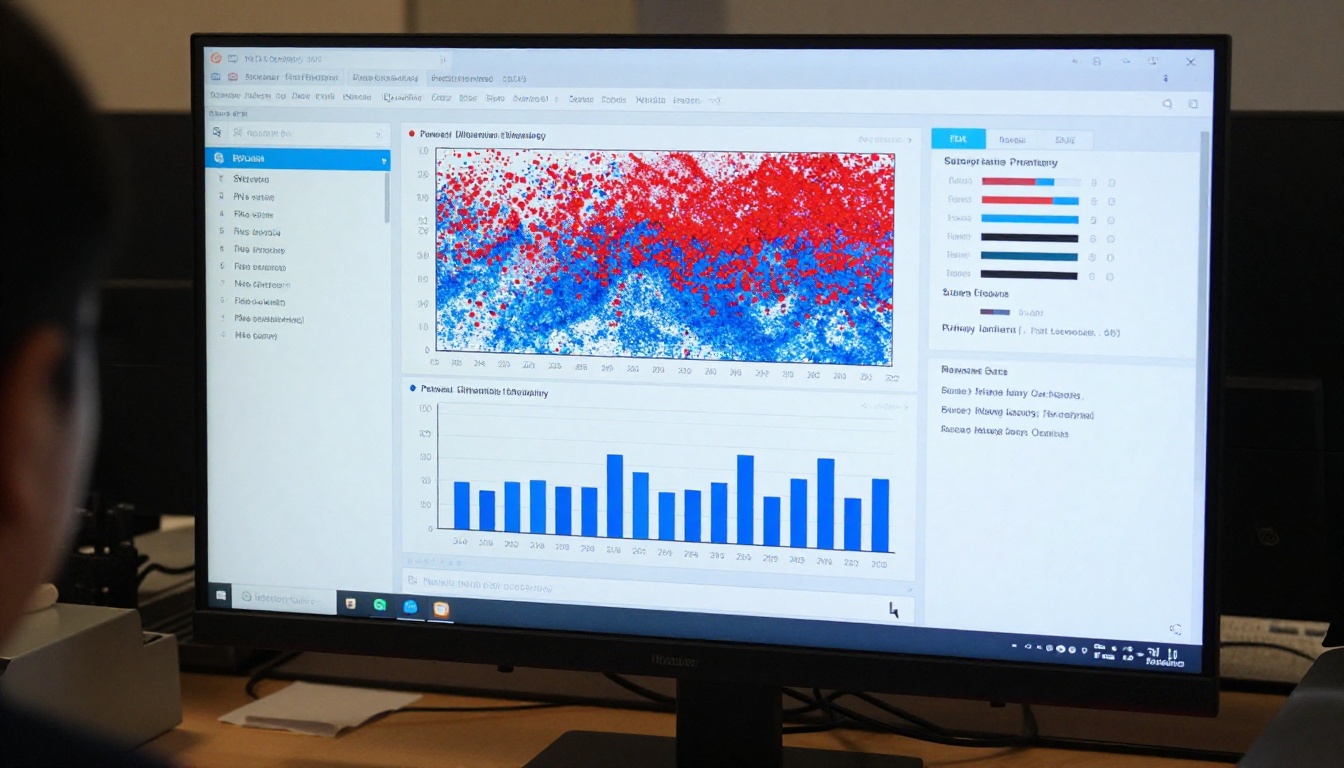
Beyond individual variants, the model interprets pathway-level data from RNA-seq experiments. Given a differentially expressed gene list with log2 fold-change and adjusted p-values, Claude Mythos 5.1 writes scientifically precise pathway summary paragraphs, cross-references enriched gene ontology terms, and contextualizes findings against published disease biology. This is particularly valuable for preparing MDT presentations where dense bioinformatics output needs translation into clinically actionable language for non-specialist audiences.
Drug Discovery: Compound Screening to Dossiers
Pharmaceutical research generates a second category of text-heavy, reasoning-intensive work where Claude Mythos 5.1 pays dividends. Drug discovery spans a spectrum from early target identification through preclinical characterization to IND filing, and every phase produces documentation that requires both scientific accuracy and regulatory compliance.
Structure-Activity Relationship Summaries
Medicinal chemistry teams generate hundreds of compound variants during lead optimization campaigns. The structure-activity relationship (SAR) data from these campaigns is recorded in internal databases but rarely synthesized into readable summaries until late in the program. Claude Mythos 5.1 can receive structured SAR data in tabular format and produce scientifically coherent summaries that identify potency trends, selectivity patterns, and DMPK liabilities with plain-language framing appropriate for internal program reviews, partner diligence packages, and grant applications.
This application alone typically saves six to ten hours per program review cycle. Medicinal chemists report that the model correctly identifies SAR trends in well-organized tables with high fidelity, requiring primarily verification rather than wholesale rewriting.
Regulatory Document Drafting
IND applications, NDA submissions, and orphan drug designation requests all require module-specific scientific narratives. The CTD format (Common Technical Document) is modular and formula-driven, which makes it well-suited to LLM-assisted drafting. Claude Mythos 5.1 can draft Module 2 summaries (sections 2.4, 2.5, 2.6, and 2.7) with appropriate regulatory language, placeholder citation formatting, and structural compliance to ICH M4 requirements.
💡 Critical: All regulatory drafts require expert review and cannot be submitted without qualified person sign-off. LLM output here is a first-draft accelerant, not a finished product.
Regulatory affairs teams report the most value in early-stage dossier construction, where the model produces a structurally sound skeleton that subject matter experts can populate and refine rather than building from a blank page.

Clinical Trial Data: Raw to Reported
Clinical trial operations produce a specific category of high-stakes documentation: case report forms (CRFs), serious adverse event (SAE) narratives, protocol deviation logs, and interim assessment reports. Each document type has rigid regulatory expectations around language, completeness, and timeline.
Parsing CRF Data and Protocol Deviations
Protocol deviation management is one of the most labor-intensive functions in clinical operations. Each deviation requires a narrative description, root cause assessment, and corrective action plan. For large multinational trials, this can mean hundreds of deviation reports per quarter. Claude Mythos 5.1 takes structured deviation data (event type, date, site ID, description) and generates first-draft narratives that meet ICH E6(R2) Good Clinical Practice language standards.
Clinical operations teams that previously spent three to four hours per deviation report have reported reducing first-draft time to under 30 minutes with LLM assistance, representing a significant reallocation of specialist time toward protocol management and site oversight.
Safety Narrative Generation
Individual case safety reports (ICSRs) follow a specific narrative structure for regulatory submission. The model generates MedWatch-compatible and EudraVigilance-compatible safety narrative formats from structured adverse event data, including:
- Patient demographics and relevant medical history framing
- Chronological event description with onset and resolution dates
- Suspect drug and concomitant medication details with dosing
- Reporter's causality assessment in standardized language
- Follow-up data integration when subsequent information arrives
Pharmacovigilance teams using Claude Mythos 5.1 for ICSR drafting report significant improvements in consistency across large case volumes, particularly in multinational programs where language variation and translation create narrative quality issues.

Medical Imaging Reports and AI-Assisted Radiology
Radiology is generating more data faster than radiologists can read it. AI-assisted imaging tools are increasingly common for detection, but the reporting workflow still requires substantial text generation. Claude Mythos 5.1 fits into this workflow at two points: report pre-summarization for radiologist review and secondary finding flagging across large image batches.
Report Summarization for Clinicians
Radiology reports are written for referring clinicians, but they're frequently dense and jargon-heavy. Claude Mythos 5.1 takes a full structured radiology report and generates a plain-language summary optimized for non-radiologist clinical audiences, preserving critical findings while removing technical boilerplate that referring physicians rarely need for clinical decision-making.
This is particularly valuable for:
- Multidisciplinary tumor board preparation, where oncologists need radiology findings without full radiological detail
- Patient-facing report communication in programs offering open-access records
- Primary care physician notification of specialist findings requiring follow-up
Flagging Incidental Findings at Scale
In screening programs processing thousands of studies, incidental findings outside the primary indication often go under-documented. The model ingests batched report text and flags studies containing specific incidental finding patterns for prioritized radiologist review, acting as a second-pass triage layer that reduces the risk of clinically significant findings remaining unaddressed.

Claude Models on PicassoIA for Life Sciences
PicassoIA gives researchers direct access to the most capable Claude variants without needing API credits, infrastructure setup, or model deployment experience. The platform provides every major Anthropic model through a single interface, alongside 75+ other large language models for side-by-side comparison.
Which Claude Variant to Use
Choosing the right model depends on your task type:
For complex multi-step reasoning (variant prioritization, regulatory drafting):
Claude Sonnet 5 and Claude Fable 5 are Anthropic's most capable models for sustained reasoning across long, complex documents. Claude Fable 5 specifically excels at tasks requiring extended multi-step logic chains, such as synthesizing a full systematic literature review with hierarchical evidence grading.
For high-volume, moderate-complexity tasks (SAE narratives, deviation reports):
Claude 4.5 Sonnet and Claude 4 Sonnet hit a strong speed/quality balance. These are the workhorses for production clinical documentation where throughput matters as much as depth.
For rapid first-draft generation and formatting tasks:
Claude 4.5 Haiku processes text quickly and efficiently, making it appropriate for bulk formatting passes, table extraction, template population, and first-pass literature screening at high volume.
For the deepest reasoning-heavy scientific work:
Claude Opus 4.7 brings extended thinking capability suitable for tasks where accuracy matters more than throughput, including complex variant of uncertain significance interpretation and multi-study evidence synthesis.
Step-by-Step: Running a Variant Interpretation Task
- Open PicassoIA Large Language Models and select Claude Sonnet 5.
- Paste your filtered variant table in markdown format. Include columns: Gene, HGVS notation, ClinVar classification, gnomAD allele frequency, and CADD score.
- Use this prompt structure: "Interpret the following variants per ACMG/AMP criteria. For each, provide: classification rationale, disease association, and clinical significance framing appropriate for an MDT report. Flag any variants of uncertain significance requiring additional segregation data."
- Review the output for gene nomenclature accuracy and ClinVar classification currency before including in reports.
- For variants of uncertain significance requiring deeper reasoning, switch to Claude Fable 5 and request extended pathogenicity reasoning with published functional evidence cited explicitly.

Which LLM Fits Your Research Team?
Claude Mythos 5.1 is not the only model worth considering for life sciences work. The competitive landscape includes strong options, each with distinct strengths. PicassoIA makes it straightforward to run the same prompt through multiple models and compare outputs side by side without managing separate API accounts.
Model Comparison for Biomedical Use Cases
| Model | Best For | Relative Weakness |
|---|
| Claude Sonnet 5 | Complex reasoning, regulatory drafting | Speed on very high-volume tasks |
| Claude Fable 5 | Multi-step scientific reasoning chains | Overkill for simple formatting work |
| Claude Opus 4.7 | Deep inference, extended thinking tasks | Slower throughput at scale |
| DeepSeek R1 | Mathematical reasoning, statistical framing | Less biomedical literature coverage |
| Gemini 3 Pro | Multimodal tasks: image plus text together | Variable performance on regulatory formats |
| GPT 5 | Broad general scientific writing | Less specialized regulatory framing |
| Grok 4 | Complex reasoning in research contexts | Less clinical documentation training |
When to Reach for a Different Model
DeepSeek R1 outperforms most models on pure mathematical reasoning tasks, making it a strong pick for biostatistical interpretation and survival model framing where step-by-step calculation verification matters. Gemini 3 Pro is the right choice when your workflow involves both images and text simultaneously, such as interpreting pathology imaging slide descriptions alongside laboratory report text.
For research teams running primarily text-based scientific workflows, however, Claude Mythos 5.1 represents the strongest overall package currently available: reasoning depth, biomedical vocabulary precision, and output structure compliance that regulatory audiences expect. The breadth of Claude variants available on PicassoIA means you can match the specific model tier to each task type without switching platforms.

The gap between research teams using LLMs well and those still doing everything manually is widening fast. Claude Mythos 5.1 for Life Sciences Research represents a concrete opportunity to recapture hours from documentation, interpretation, and literature synthesis, and redirect that time toward the creative, hypothesis-driven work that only trained scientists can do.
PicassoIA puts every major Claude model alongside dozens of other capable LLMs in one place, without billing complexity or API setup requirements. Whether your first task is a variant interpretation report, a safety narrative draft, or a literature synthesis for a grant application background section, the models are ready to run immediately.
Try Claude Sonnet 5, Claude Fable 5, Claude Opus 4.7, or Claude 3.7 Sonnet directly at picassoia.com/en/all-models and see how much faster your next research deliverable comes together. The productivity difference shows up in the first session.


