Something shifted quietly in the world of open-source image generation. Qwen Image 2, the text-to-image model developed by Alibaba's Qwen team, has been updated to handle a broader range of creative prompts with far fewer automatic refusals. For creators who have spent months testing models that block everything from swimwear to artistic nudity, this matters. The gap between what mainstream platforms allow and what actual creative work requires has always been real. Qwen Image 2 is now closing that gap in ways its earlier version simply couldn't.
What Changed in Qwen Image 2
Less Automatic Blocking
The original Qwen Image model processed prompts through a relatively conservative content filter. Requests involving romantic or suggestive subjects, even when framed in tasteful, artistic terms, were frequently refused. The updated Qwen Image 2 rewrites that behavior from the ground up. Prompts describing subjects in form-fitting attire, intimate atmospheres, or adult-coded scenarios now return generated images rather than error messages.
This isn't about removing every safety boundary. It's about narrowing the refusal trigger to content that is genuinely explicit rather than flagging anything that involves a human body. The distinction sounds simple but makes an enormous practical difference for photographers, visual novelists, illustrators, and brand creators who need a model that doesn't treat a beach portrait prompt like a policy violation.
Prompt Accuracy, Dramatically Improved
Beyond filtering, the model's core prompt comprehension has improved significantly. Qwen Image 2 now parses multi-part prompts more reliably, handling compound subject descriptions without losing earlier instructions midway through. If your prompt specifies lighting in the first clause and body language in the second, both elements appear in the output with more consistency than before.
This level of prompt fidelity matters most when you're working with detailed artistic briefs. A simple "woman in red dress" prompt performs similarly across many models. A 60-word prompt specifying fabric texture, posture, shadow direction, and background mood now returns something much closer to what you specified, which was not reliably the case in the first version.
Why Prompt Flexibility Matters for Creators
The Real Cost of Content Filters
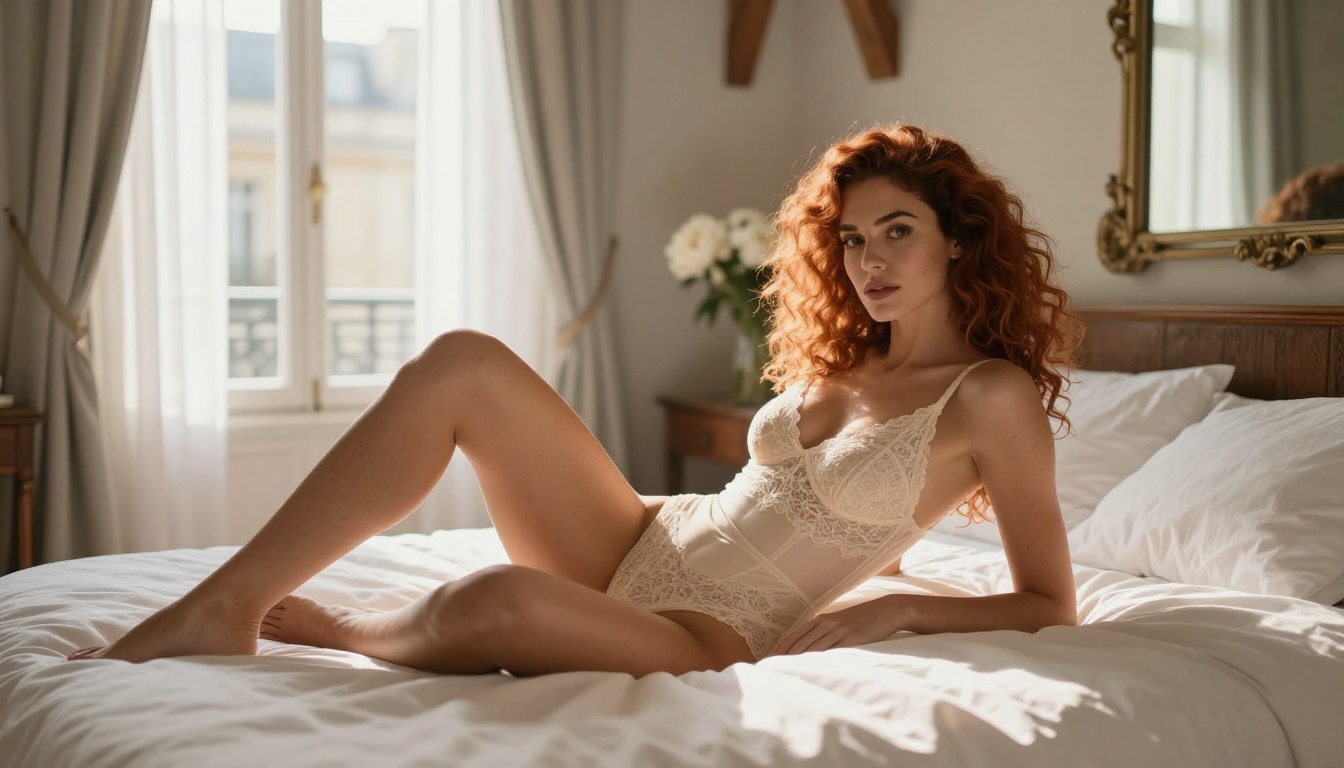
Content filters on AI image platforms exist for legitimate reasons, but their implementation often punishes legal, artistic work. A fashion photographer testing AI as part of a concept development process hits a wall when the model refuses an evening gown reference. A romance novelist working on book art concepts can't get a model to generate two people in an intimate setting without triggering blocks.
The practical effect is that creators end up with two options: either contort their prompts into vague approximations of what they actually need, or switch to a different model entirely. Qwen Image 2's expanded prompt flexibility solves this for a growing share of legitimate use cases without opening any genuinely harmful door.
💡 Tip: The most effective prompts combine subject description with specific lighting and mood. "Woman in a cream silk chemise, soft morning backlight, contemplative expression" produces better results than vague or overly clinical language.
Open Source as a Creative Advantage
Qwen Image 2 is open source, which means its weights are publicly available and deployable without the restrictive usage policies that come with closed commercial models. This gives the AI creative community something valuable: a capable, photorealistic model that can be run independently, fine-tuned, and integrated into workflows without approval gates or usage throttles from a central provider.
The open-source angle also means the model receives community scrutiny and rapid improvement cycles. Issues are spotted and patched faster. Performance gaps reported publicly get addressed in ways that proprietary models, hidden behind closed APIs, often cannot match.
Qwen Image 2 vs. Other Models

Where It Outperforms
| Capability | Qwen Image 2 | Typical Closed Models |
|---|
| Uncensored prompt handling | Strong | Often blocked |
| Photorealistic portraits | High fidelity | Varies widely |
| Prompt adherence (complex) | Improved significantly | Inconsistent |
| Open source / self-hostable | Yes | No |
| Speed on API platforms | Fast | Platform-dependent |
The model particularly excels at generating realistic portraits of people in everyday and glamorous contexts. Skin texture, hair detail, and fabric rendering have all improved in version 2 compared to the original. Where many text-to-image models produce an uncanny valley quality in close-up portraits, Qwen Image 2 handles facial features with enough anatomical correctness that results read as photographic rather than generated.
Where It Has Limits
Qwen Image 2 is not a perfect model. Hands and complex multi-person compositions remain areas where the model occasionally struggles, as they do across virtually every current text-to-image system. Very abstract or non-representational prompts don't always return coherent outputs because the model's training emphasizes realism over abstraction.
For high-volume production work where speed is critical, models like P-Image that generate in under one second may be more practical than waiting for Qwen Image 2's slightly longer inference time.
How to Use Qwen Image 2 on PicassoIA
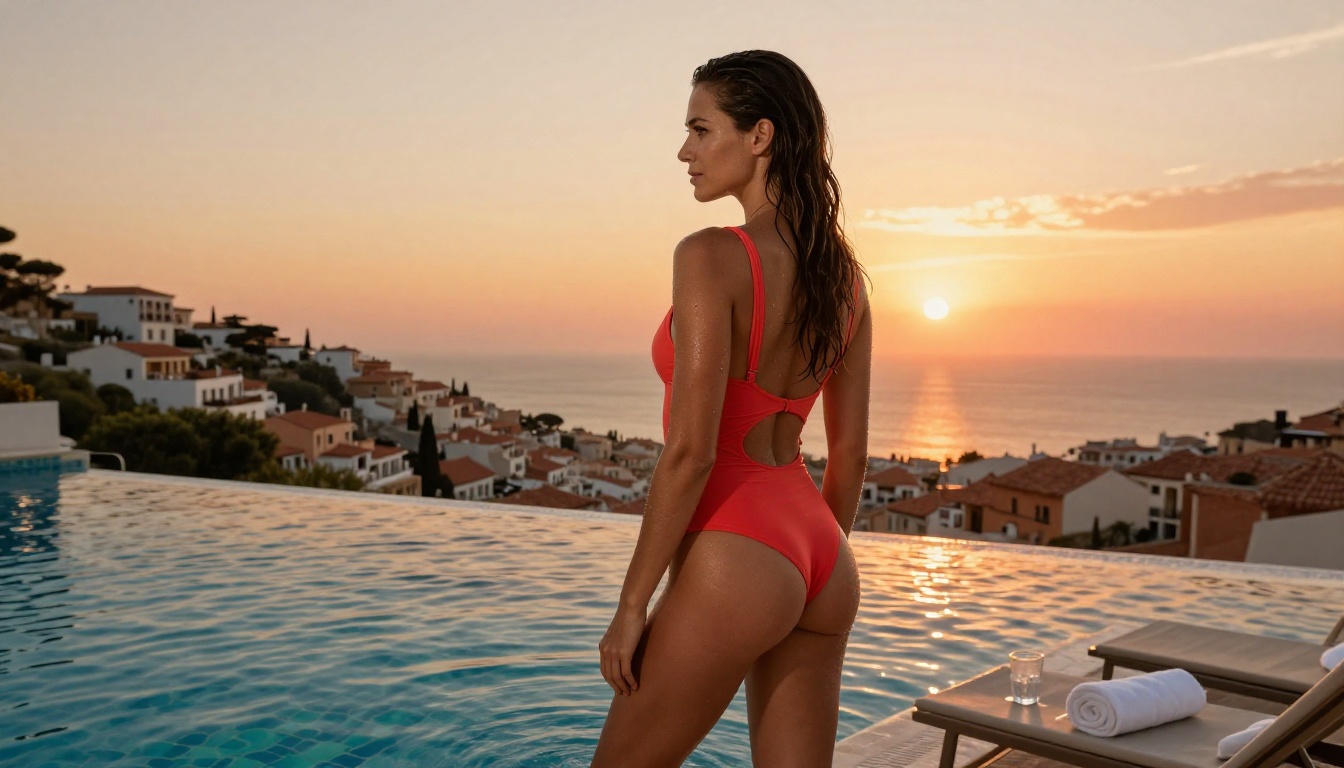
Qwen Image 2 is available directly on PicassoIA as a hosted model, which means you can access its capabilities without setting up local infrastructure, managing GPU resources, or dealing with API configuration. The platform handles all of that and delivers results through a clean generation interface.
Step-by-Step Workflow
Step 1: Open the model page
Navigate to Qwen Image 2 on PicassoIA. The page loads the model's generation interface with a prompt field and output settings panel on the right.
Step 2: Write a detailed prompt
This is where most of the output quality is determined. Don't write short prompts. Describe your subject's appearance, what they are wearing, the setting, the lighting direction, the camera angle, and the mood you want. Longer, more specific prompts return more precise results with fewer unexpected elements in the output.
Step 3: Adjust aspect ratio
For portrait work, use 9:16 or 3:4 for vertical framing. For landscapes and widescreen compositions, use 16:9. The model handles all standard ratios and maintains coherence across all of them without significant quality loss.
Step 4: Generate and iterate
Run your first generation and evaluate the output against your brief. Adjust specific elements that didn't land quite right. Because the model is now more faithful to detailed prompts, small wording changes in problem areas produce noticeable improvements on the next generation.
Prompt Tips That Actually Work
- Be specific about lighting: "soft window light from the left" outperforms "good lighting" by a significant margin
- Name the material: "crinkled silk" or "brushed linen" generates far more accurate fabric texture than "nice outfit"
- Set the camera lens: "85mm f/1.8 shallow depth of field" produces portrait-quality blur; "35mm wide angle" keeps the background in sharp focus
- Describe skin realistically: "natural skin with visible pores, slight shine on the forehead" avoids the plasticized skin quality that plagues many AI portrait generators
- Include atmosphere: "warm golden hour, slight haze, long shadows" sets a scene far more precisely than "sunset photo"
💡 Note: Qwen Image 2 processes image-editing prompts as well as text-to-image generation. If you already have a base image, you can pass it alongside an editing instruction and the model will modify specific elements while preserving the rest of the composition intact.
The Best Models for Uncensored AI Images on PicassoIA
PicassoIA hosts a curated set of models that support unrestricted creative output, including adult-oriented content. Here is how the top options compare, ordered by overall performance for this use case.
1. Seedream 4.5 Leads the Pack
Seedream 4.5 is the top-tier recommendation for anyone creating NSFW or adult-adjacent content with high realism demands. Developed by ByteDance, it accepts adult content in prompts and generates outputs with exceptional photorealism in under 3 seconds. It also supports image editing, meaning you can refine an existing image rather than always starting from text.
One critical note: Seedream 5 Lite does not support NSFW content. If you upgrade to the newer model expecting the same flexibility, you will be disappointed. Stick with Seedream 4.5 for adult content work.
2. Image Editor Pro for Volume Work
PicassoIA Image Editor Pro operates as an image-to-image editor and is the most cost-effective option for high-volume generation. On Elite or Infinite subscription plans, generations are unlimited. That means if your project requires 500 or 1,000 images, you generate all of them at no additional cost. For comparison, the same volume on a model like Nano Banana 2 would cost around $100. Results return in under one second, the model accepts NSFW content, and there is a 3-generation free trial with no credit card required.
3. Qwen Image 2 for Complex Prompts
Qwen Image 2 sits in third place for overall NSFW performance on the platform, but holds a distinct advantage: its open-source nature means it handles a wide variety of creative requests with very detailed realism and strong prompt faithfulness. For creators who want to generate or edit any image in seconds with fine control over output specifics, it is a powerful and flexible choice.
4. Grok Imagine for Image Conversion
Grok Imagine Image is particularly effective for image transformation tasks, converting any reference image into alternative formats including swimwear compositions with high realism. If you're working with existing images that need reinterpretation rather than entirely new generations, this model performs remarkably well.
5. Recraft V4 for Original Compositions
Recraft V4 produces very realistic text-to-image results and supports adult content in prompts. Its limitation is that it doesn't handle image-to-image editing, so it works best for generating original compositions from scratch.
6. P-Image for Speed
P-Image is the speed champion of the group, delivering NSFW-compatible text-to-image generations in under one second. If you need to iterate rapidly through concepts or run large batches quickly, P-Image is the most practical choice by far.
Upscaling Your AI Outputs
Generating an image is only part of the workflow. Once you have a strong base output from Qwen Image 2 or any of the models listed above, upscaling it to production-ready resolution is the next step. PicassoIA's super-resolution tools handle this with strong detail preservation and realistic high-frequency detail injection.
From 512px to Print Quality
The platform's super-resolution models can take a standard AI-generated image and upscale it 2x or 4x while adding realistic high-frequency detail rather than simply interpolating pixels. This is particularly important for portrait work where skin texture, hair strands, and fabric weave become more apparent at larger sizes. The difference between a standard generation and a properly upscaled version can be dramatic when the image is viewed at full size or prepared for print output.
Detail Injection on Faces
Some upscaling models include face-specific detail refinement, which corrects minor anatomical inconsistencies in AI-generated portraits while increasing resolution. For content creators publishing portrait work, this step can be the difference between a result that reads as photographic and one that reads as obviously AI-generated. Upscaling integrates naturally into a post-generation workflow: generate at the model's native resolution, select the strongest output, then upscale for final delivery.
💡 Workflow tip: Generate at the model's native resolution first, evaluate composition and content, then upscale only the outputs you intend to use. Upscaling every generation wastes credits and processing time unnecessarily.
What This Means for AI Creative Work
The broader shift that Qwen Image 2's improved prompt handling represents is not just about one model. It signals a direction in the open-source image generation space: that filtering approaches based on keyword matching or broad content categories are being replaced by more nuanced systems that can distinguish between artistic and explicit intent.
For creators working professionally with AI-generated imagery, this shift reduces the friction between creative brief and actual output. You spend less time rephrasing prompts to dodge filters and more time refining results to match your vision. That change in ratio, where more of your time goes toward creative decisions and less toward defensive prompt engineering, has a real effect on output quality over a full production session.
Where the Content Line Sits
Qwen Image 2's improved handling does not mean anything goes. The model still applies restrictions to genuinely explicit content. What changed is the zone between "clearly fine" and "clearly explicit" that existed in the previous version and caused so many false refusals. Suggestive but non-explicit content, artistic nudity with non-pornographic intent, and adult-coded situations that stop short of explicit depiction now generate without error.
This aligns with how professional creators actually work. Most commercial photography, fashion imagery, and entertainment content lives in that middle zone. Having a model that can operate there without constant friction is a practical improvement that changes day-to-day workflows in a real way.
What Open Source Brings Long-Term
The open-source foundation of Qwen Image 2 means improvements compound over time. Community fine-tuned versions, LoRA adaptations for specific aesthetics, and integration into local generation pipelines are all possible in ways that closed models cannot match. For creators building production workflows, this makes Qwen Image 2 more than just a generation tool. It's a base layer that can be adapted, extended, and improved by anyone with the skill to do it, creating a continuously expanding range of creative possibilities.
Try It on PicassoIA Right Now
The most efficient way to test what Qwen Image 2 can now do is simply to run your own prompts against it. PicassoIA hosts the model with no setup required. Write a detailed prompt, generate your first result, and compare it directly against Seedream 4.5 and P-Image to see how they differ in handling the same creative brief.
If you need high-volume output for a project, PicassoIA Image Editor Pro is worth testing first, because unlimited generations on the Elite plan make it the lowest-cost option for batch work. Its sub-one-second generation speed also means you can iterate through variations at a rate that no pay-per-credit model can match economically.
For the full catalog of models available for unrestricted creative generation, visit picassoia.com/en/all-models. There are currently over 90 text-to-image models on the platform, with the best NSFW-capable options clearly identified. Whether you are shooting editorial concepts, developing character art, or building a content production pipeline, there is a model that fits your workflow precisely. PicassoIA gives creators the creative freedom that most mainstream AI platforms simply won't offer.


