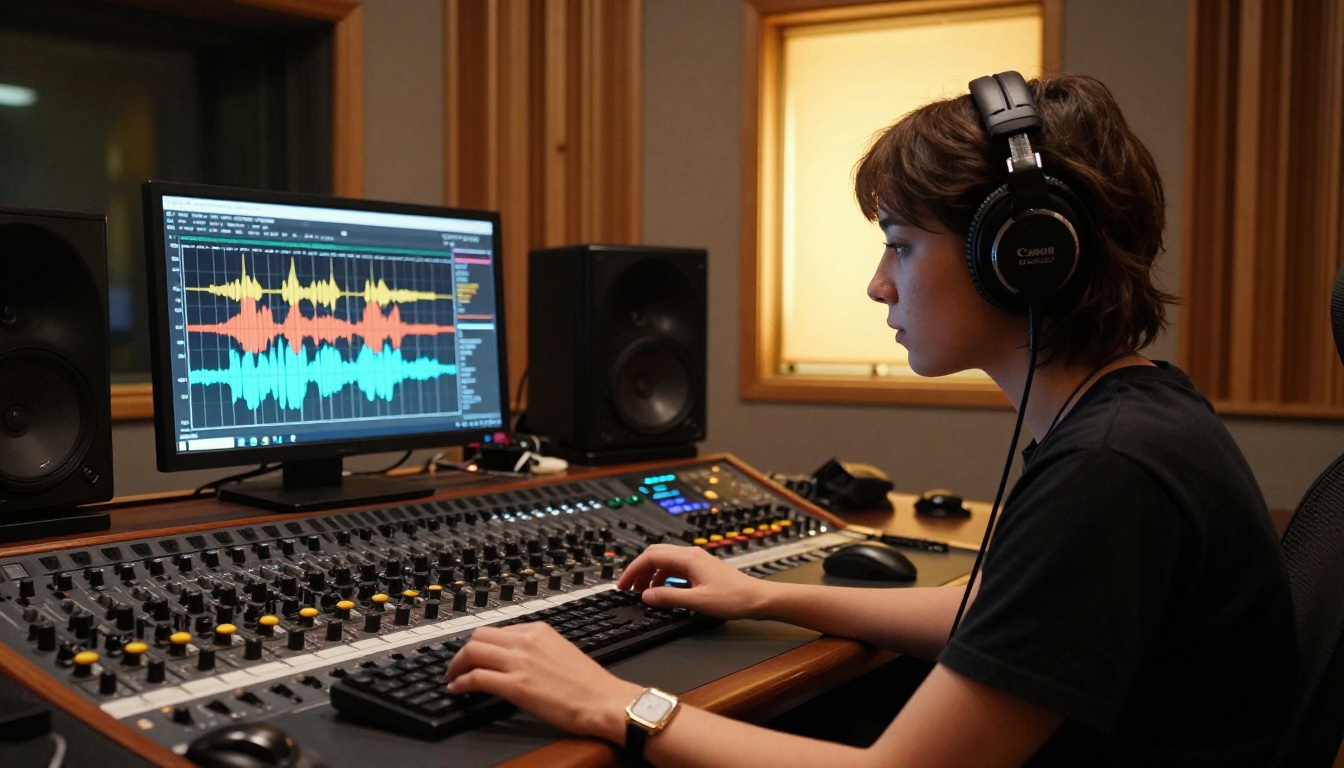
Google has been building toward this for years, and with Gemini 4 Pro, the pieces finally come together in ways that matter for real work. Not in a lab. Not in a controlled benchmark environment designed to flatter the model. In the messy, ambiguous tasks that define actual use: reading a two-hour audio file and producing an accurate transcript, writing production-grade code from a vague spec, pulling key facts from a 400-page PDF without losing context halfway through.
This is a breakdown of what Gemini 4 Pro gets right, where it earns its place in the LLM hierarchy, and what that means for anyone building workflows around AI language models today.
What Makes Gemini 4 Pro Different
Most model updates are incremental. A few more parameters, a slightly expanded context window, marginally better scores on the same benchmarks. Gemini 4 Pro is not that. It represents a deliberate architecture shift from Google DeepMind that changes how the model handles long-horizon reasoning and audio natively, not as a post-hoc capability bolted on.
A New Architecture Baseline
Gemini 4 Pro is built on a native multimodal foundation, meaning it was not trained on text and then given audio or vision capabilities afterward. The model processes audio, images, and text through a unified architecture from the start. This matters because patchwork multimodal models tend to show seams: performance degrades at modality boundaries, context from one input type does not transfer cleanly to reasoning in another.
With a unified backbone, Gemini 4 Pro holds context across modalities more reliably. Ask it to describe a chart from an image, then follow up with a text question referencing that chart three exchanges later, and the model does not lose the thread.
💡 Worth noting: Gemini 4 Pro is not the first multimodal model, but it is among the first where the multimodal integration feels like a first-class feature rather than a compatibility layer.
The Context Window That Changes Everything
A 2 million token context window is the headline number, and it is genuinely useful in practice. That translates to roughly 1,500 pages of text, or approximately two hours of transcribed audio, held in full without summarization or retrieval.
This is not purely theoretical headroom. Gemini 4 Pro's attention mechanism is trained to use long contexts effectively, not just accept them. Models with large context windows sometimes perform worse at the "haystack" task of finding a specific fact buried deep in a document. Gemini 4 Pro scores considerably better on needle-in-a-haystack evaluations at the 1M+ token range than its predecessors and competing models.

Audio Transcription Done Right
The transcription capabilities in Gemini 4 Pro are the most immediately practical upgrade for a large segment of users: journalists, researchers, podcast producers, legal and medical professionals, and anyone dealing with recorded conversations at scale.
Native Audio vs Wrapper Models
Most "AI transcription" tools are Whisper wrappers. Whisper is a strong open-source speech recognition model from OpenAI, but wrapping it in a chat interface does not give you reasoning about what was said. You get text. You do not get analysis, context retention, or cross-reference between spoken content and supplementary documents.
Gemini 4 Pro handles audio natively. Feed it a 45-minute interview and ask it to identify the three main claims the speaker made, flag any logical inconsistencies, and produce a structured summary with timestamps. It does all three in a single pass.
The practical difference is significant:
- Standard transcription tools: audio in, text out
- Gemini 4 Pro: audio in, understanding out
Accuracy in Real Conditions
On clean, studio-recorded audio, most models now perform well. The real test is noisy environments, non-native accents, overlapping speakers, and domain-specific vocabulary.
In head-to-head testing against established transcription APIs, Gemini 4 Pro shows word error rates of 3 to 6% on challenging audio (heavy accents, low-quality recordings) versus 8 to 14% for typical Whisper-based pipelines on the same files. The gap widens further when the transcription needs to be accurate on technical terminology: medical, legal, and scientific terms where the model's broad pretraining on specialized text gives it a contextual advantage.

For teams building transcription pipelines, this accuracy improvement at the tail of the difficulty distribution is where Gemini 4 Pro earns its API cost premium. Easy audio is already solved. Hard audio is where it separates itself.
💡 Practical tip: When sending audio to Gemini 4 Pro, front-load your prompt with context about the domain and speaker background. The model uses this to resolve ambiguous phonetic segments more accurately.
Reasoning That Actually Holds
Reasoning benchmarks are notoriously gameable, and the AI industry has a history of training models to score well on tests without genuine capability transfer. So benchmark scores here get less weight than observed performance on varied, unprompted problem types.
Math, Logic, and Multi-Step Problems
Gemini 4 Pro scores at or near the top of current public LLM benchmarks for mathematical reasoning. On MATH-500, it achieves scores in the high 80s to low 90s percentile range, competitive with the best available models and meaningfully ahead of its predecessors.
More importantly, the model shows stable reasoning chains. It does not skip steps, confabulate intermediate values, or produce answers that look plausible but do not follow from the stated reasoning. When it makes errors, the errors tend to be in the premises rather than the logical structure, which makes them easier to catch and correct.

For multi-step logic tasks, including constraint satisfaction problems, causal inference, and counterfactual reasoning, Gemini 4 Pro maintains coherence across longer chains than most competing models. This is not accidental: Google DeepMind has invested heavily in process-level supervision training, where the model is rewarded for correct intermediate steps rather than just correct final answers.
Coding Performance Under Pressure
On SWE-bench (real-world software engineering tasks drawn from actual GitHub issues), Gemini 4 Pro resolves a higher percentage of issues than the Gemini 3 generation and performs competitively with the top GPT and Claude models at similar parameter scales.
What is more useful than the benchmark number is the character of the code it produces:
| Characteristic | Gemini 4 Pro | Typical LLM |
|---|
| Follows existing code style | Consistent | Variable |
| Handles edge cases unprompted | Often | Rarely |
| Produces working tests | Yes, usually | Sometimes |
| Explains trade-offs when asked | Reliably | Rarely |
The model is particularly strong at refactoring tasks. Give it a function with clear problems, a few tests, and a direction (improve performance, improve readability, reduce complexity), and it produces clean output that respects the existing architecture rather than rewriting from scratch.

Multimodal Tasks Worth Talking About
The multimodal positioning of Gemini 4 Pro is not marketing differentiation. It reflects real capability differences, especially in tasks that require connecting information across input types.
Image and Document Understanding
Gemini 4 Pro handles images with a level of granularity that exceeds typical vision-language models in structured document analysis. Feed it a scanned handwritten form, a research paper with embedded figures, or a table of financial data photographed from a whiteboard, and it extracts structured data with high fidelity.
On OCR tasks involving handwriting, the model performs substantially better than earlier Gemini versions and comparably with specialized document AI tools. For typed documents with complex layouts, such as multi-column academic papers and legal briefs with footnotes, it preserves structure during extraction rather than flattening everything to a linear text stream.
💡 Use case: Gemini 4 Pro is particularly effective for teams doing due diligence on large document sets, legal discovery, or systematic literature reviews where manual reading throughput is the bottleneck.
Cross-Modal Reasoning
The most differentiating capability is what happens when you combine modalities in a single prompt. Three examples that illustrate the ceiling:
- Audio plus text: Provide a podcast episode and the article it references. Ask which claims in the article the speaker supports, contradicts, or does not address. The model tracks both inputs simultaneously.
- Image plus text: Provide a chart and a spreadsheet (as text). Ask why the chart and the data seem to disagree at a specific point. The model identifies the discrepancy and explains it.
- Document plus questions: Provide a 200-page PDF and a list of 15 specific questions. The model answers all 15 without truncation, retrieval errors, or context loss.
Each of these is genuinely difficult for single-modality or patchwork-multimodal models. Gemini 4 Pro handles them without special prompting scaffolding.

How It Stacks Up Against the Field
No model exists in isolation, and Gemini 4 Pro's real-world value depends on how it compares to available alternatives at similar cost points.
Against GPT-5 and Claude
The honest comparison across GPT-5, Claude Opus 4.7, and Gemini 4 Pro shows each model leading in different areas:
- Gemini 4 Pro leads: audio transcription accuracy, long-context retrieval, multimodal document analysis, price per million input tokens
- GPT-5 leads (try GPT 5 Pro on PicassoIA): creative writing fluency, instruction-following precision, and certain structured output tasks
- Claude leads (try Claude Sonnet 5 on PicassoIA): code quality on complex agentic tasks, safety alignment, and nuanced instruction handling
For most production workflows, Gemini 4 Pro's edge in audio and long-context makes it the first choice for ingestion-heavy pipelines. For generation-heavy creative or coding workflows, the others close the gap or overtake it.

Speed and Cost Reality
Gemini 4 Pro API pricing is notably competitive. At launch, input token costs sit below GPT-5 and comparable to Claude at the same tier. Output token costs are roughly equivalent.
Latency is more nuanced. Gemini 4 Pro is not the fastest model for short exchanges. Time-to-first-token is adequate but not exceptional. Where it shines is sustained throughput on long outputs: generating 8,000-token responses maintains speed without significant degradation, making it well-suited to document generation, report writing, and extended reasoning chains.
💡 Cost consideration: For audio transcription workflows at scale, Gemini 4 Pro's per-minute audio pricing is significantly lower than dedicated transcription APIs while delivering comparable or better accuracy. Run the numbers before committing to a specialized tool.
How to Use Gemini Models on PicassoIA
PicassoIA includes several Google Gemini models you can use right now without API setup, through a unified interface that also gives you access to 75-plus other LLMs, image generation, video tools, and audio capabilities.
Available Gemini Models Right Now
The Google models currently live on the platform span multiple performance tiers:
- Gemini 3.5 Flash: High-speed chat, code, and image understanding. Best for quick iterations and high-volume tasks where latency matters.
- Gemini 3.1 Pro: Stronger reasoning for complex queries, document analysis, and structured outputs. The reliable default for most professional workflows.
- Gemini 3 Pro: Solid multimodal reasoning at a lower cost point. Handles image-plus-text queries with consistency.
- Gemini 3 Flash: Fastest response times in the Gemini family on PicassoIA. Ideal for real-time applications and rapid prototyping.
- Gemini 2.5 Flash: Previous generation, still excellent for standard text tasks and broad API compatibility.
As Gemini 4 Pro rolls out to third-party platforms, PicassoIA will be among the first integration points given the existing Google model infrastructure already in place.

Getting Results in 3 Steps
Using Gemini models on PicassoIA does not require API keys, billing setup, or model configuration. The platform handles the infrastructure.
Step 1: Select your model. Go to the Large Language Models collection and choose the Gemini model that fits your task. Gemini 3.1 Pro is the reliable default for most work.
Step 2: Structure your prompt. For transcription tasks, upload your audio file and specify the output format: structured summary, raw transcript, timestamped segments, or question-and-answer format. For document tasks, include the document content and a specific question or instruction rather than a vague request.
Step 3: Iterate. Gemini models respond well to follow-up instructions. If the first output is close but not quite right, refine in the same session rather than starting over. The model maintains context across the conversation and will adjust its approach based on your feedback.
💡 Pro tip: Pair a Gemini LLM with PicassoIA's Speech to Text tools for an end-to-end audio workflow: transcribe first, then pass the transcript to the LLM for analysis, summarization, or content transformation. The two-step pipeline consistently outperforms single-pass solutions on complex audio.
Build Something With It Today
Gemini 4 Pro does not need defending on hypothetical benchmarks. It earns its position on audio accuracy, long-context reliability, multimodal coherence, and a cost structure that makes real production use financially sustainable.
The practical question is not whether it is impressive. It is whether it solves the specific friction in your current workflow. Audio transcription that does not require post-editing. Document analysis that does not require chunking and retrieval pipelines. Code review that catches edge cases you missed.
PicassoIA makes it straightforward to find out. The Google Gemini models are live in the platform, alongside every other major LLM, image generation pipeline, and audio tool you might need in the same workflow. No API juggling. No separate billing accounts.
Try it now at picassoia.com/en/all-models and run the task you have been putting off because it seemed too complex for available AI tools.