GPT Image 2.0 arrived with legitimate hype. OpenAI's image model, embedded directly into ChatGPT and accessible via the API, produces some of the most photorealistic outputs of any commercial AI system right now. Prompt it with a portrait, a product shot, or an architectural render, and the results are genuinely impressive. But if you've spent any time pushing its limits, you already know what happens when you try to generate adult content: you get a wall.
This article breaks down exactly what GPT Image 2.0 does and does not allow, why those restrictions exist, and which platforms give you something OpenAI won't: actual creative freedom for adult content generation.
What Is GPT Image 2.0, Really?
Built Into ChatGPT and the API
GPT Image 2.0 is OpenAI's latest native image generation model, launched in early 2025. It replaced the previous DALL-E 3 integration in ChatGPT and is now accessible directly via the gpt-image-1 model ID in the OpenAI API. Unlike DALL-E 3, which was a separate model with its own endpoint, GPT Image 2.0 is deeply integrated into the GPT-4o architecture.
The main difference on a technical level: GPT Image 2.0 uses a diffusion-based architecture informed by GPT-4o's multimodal reasoning. That means it doesn't just generate from text; it can interpret images you send it, make targeted edits, and produce consistent multi-image outputs with remarkable fidelity to the prompt.
Quality-wise, it punches above its price point. Response times are fast, photorealistic outputs are achievable with moderately detailed prompts, and text rendering in images is far better than previous models. For commercial use cases, product imagery, and general creative work, it is genuinely good.

What the API Actually Gives You
Via the OpenAI API, GPT Image 2.0 (model gpt-image-1) currently requires an organization to be verified before you can access it. Unverified accounts are restricted to DALL-E 3. Once verified, you get access to three quality tiers (low, medium, high), three sizes, and a moderation parameter.
That moderation parameter is where the story gets interesting. It accepts auto or low values. Setting it to low does relax some restrictions, but it does not disable NSFW filtering. It still blocks explicit sexual content, explicit nudity, and what OpenAI categorizes as "adult" material. The parameter shifts the threshold; it does not remove it.
What GPT Image 2.0 Actually Blocks
The Hard Lines
GPT Image 2.0 applies content filtering at the model level, not just at the interface level. That means even with API access, even with the moderation parameter tuned down, the following categories are blocked:
- Explicit nudity (genitals, fully bare breasts in a sexual context)
- Pornographic content of any kind
- Suggestive content involving anyone that could be perceived as a minor
- Sexual violence or non-consensual scenarios
- Explicit depictions of sexual acts
These restrictions are baked into the model's RLHF training and the safety filtering layer that runs on top of it. There is no parameter, no prompt trick, and no API flag that bypasses them. This isn't a UI limitation: it's the model itself.
What It Does Allow
GPT Image 2.0 is more permissive than many users assume, in some areas. It can generate:
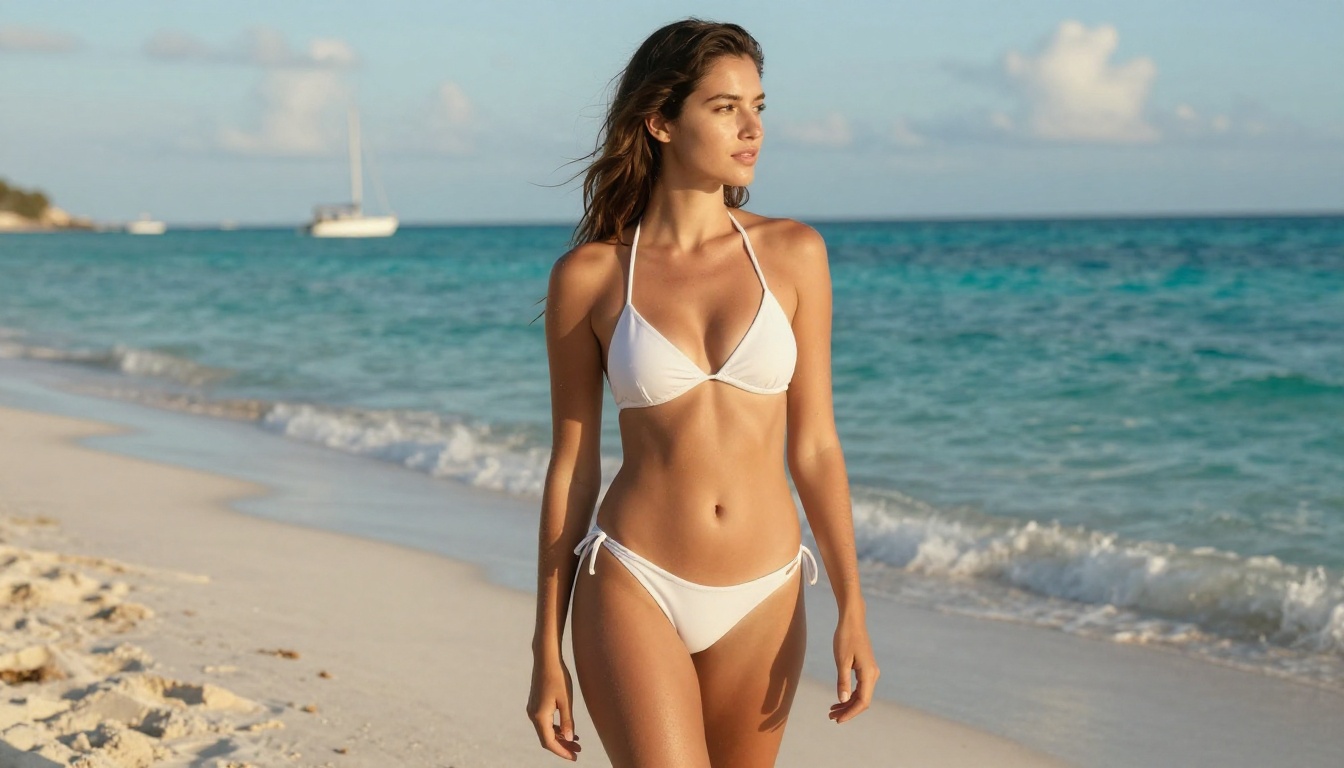
- Swimwear and bikini imagery, if not posed in an explicitly sexual manner
- Artistic figure studies without explicit details
- Fashion photography with form-fitting clothing
- Implied nudity, such as a figure photographed from behind with no explicit details visible
- Medical or anatomical content in clinical contexts
The distinction the model applies is essentially between "suggestive or artistic" and "sexually explicit." The line between those two categories is where most users run into trouble, because the model's classifier errs heavily on the side of caution. A prompt describing a realistic bikini photo can succeed. Add words associated with sexuality and it trips the filter regardless of what the actual output would look like.
Why OpenAI Won't Budge
Corporate Risk and the Moderation Calculation
OpenAI is, at its core, a company with regulatory exposure in multiple jurisdictions, enterprise contracts worth billions, and a consumer product used by people of all ages through a single interface. The calculus for allowing NSFW content isn't really about the technology: the model could almost certainly generate it. The decision is about liability, brand positioning, and the terms of service that let them operate in schools, hospitals, and regulated industries.
When you're the platform millions of people access through a free consumer tier, you cannot segment adult content behind an effective paywall the same way a dedicated platform can. Every bypass gets exploited within hours of discovery. Every misuse becomes a news story. The safety filter isn't perfect, but from OpenAI's perspective, over-restriction is a survivable business problem. Under-restriction is an existential one.
The Filter Mechanics
The filtering operates in two stages. First, the text prompt is evaluated by a content classifier before image generation begins. Flagged prompts are rejected immediately with an error response. Second, if the prompt passes, the generated image itself is evaluated before it is returned. This dual-layer approach means that bypassing the text filter doesn't guarantee a successful output, because the image is checked independently.
API users who have tried creative prompt engineering to work around this will recognize the pattern: you can sometimes get a first-stage pass, but the image check catches it on the output end. Both layers need to be satisfied, and both layers are enforced server-side.
The Real Cost of These Restrictions
Who Hits the Wall
The restrictions create friction for users who have entirely legitimate creative or professional reasons to generate adult-adjacent content:
- Adult content creators building solo operations or agencies on AI tools
- Romance novelists and visual storytellers who need suggestive imagery for book covers and promotional material
- Fashion and lingerie brands whose product photography naturally includes semi-nude models
- Digital artists working in the artistic nude tradition
- App developers building platforms for adult audiences who want to integrate image generation
For all of these use cases, GPT Image 2.0 simply isn't the right tool. The question is: what is?
Workarounds That Don't Work
The internet is full of supposed ways to get NSFW outputs from GPT Image 2.0. The reality is that the effective ones get patched within days of discovery, and the ones that persist usually return borderline images that don't actually fulfill what was requested. Chasing these workarounds is a dead end for anyone who needs reliable, high-quality adult content generation at volume.
The better answer is to use a platform that was designed, from the start, to support this use case.
NSFW AI Image Generators That Actually Work
If GPT Image 2.0 can't do what you need, these models on PicassoIA can. Here are the top options, in order of recommendation.
Seedream 4.5: The Top Pick
Seedream 4.5 by ByteDance is the strongest all-around NSFW model available right now. It accepts adult content without restriction, produces photorealistic results with excellent skin and fabric detail, supports image editing alongside text-to-image generation, and returns outputs in under 3 seconds.
That speed matters. At volume, a 3-second generation cycle versus a 15-second one is the difference between producing 100 images in 5 minutes versus 25 minutes. Seedream 4.5 is genuinely fast without sacrificing quality.
One important note: Seedream's newer model, Seedream 5 Lite, does not support NSFW content. Stick with 4.5 for adult use cases.
PicassoIA Image Editor Pro: Unlimited Generations
PicassoIA Image Editor Pro is an image-to-image model that operates under a different economic model than most AI generators. With an Elite or Infinite subscription, generations are unlimited. No per-image credits, no token limits, no throttling.
That changes the economics of high-volume creative work. If you're building training datasets, generating hundreds of product variations, or producing content at agency scale, paying per image quickly becomes prohibitive. Need 1,000 images? At a model like Nano Banana 2, that's roughly $100. On PicassoIA Image Editor Pro with an Elite plan, it's the same cost whether you generate 10 images or 10,000.
It also returns results in under a second and accepts NSFW content. New users get 3 free generations without requiring a credit card.
Qwen Image 2: Open-Source Precision
Qwen Image 2 is an open-source model from Alibaba that combines text-to-image generation with in-context editing. Because it's open-source, it comes without the content policy restrictions that commercial models impose. It handles very detailed, realistic prompts well and is particularly good at portrait-style work with nuanced skin texture rendering.
Grok Imagine Image: Best for Photo Remixing
Grok Imagine Image by xAI shines in one specific scenario: realistic image remixing. It converts reference photos into new stylistic contexts, including swimwear and bikini formats, with strong realism and natural-looking results. If you're working from existing source images and want to remix rather than generate from scratch, it's one of the most accurate options available.
Recraft V4: Clean Realism
Recraft V4 delivers extremely clean photorealistic outputs from text prompts. It's text-to-image only with no editing mode, but the output quality is high enough that it's worth having in your toolkit when you need polished results from a well-crafted prompt.
P-Image: Speed Above All
P-Image by PrunaAI generates images in under 1 second. If you need raw volume and speed above all else, and you're working with straightforward prompts, P-Image is in a class of its own for throughput. It's the logical choice for anyone running high-frequency generation pipelines.
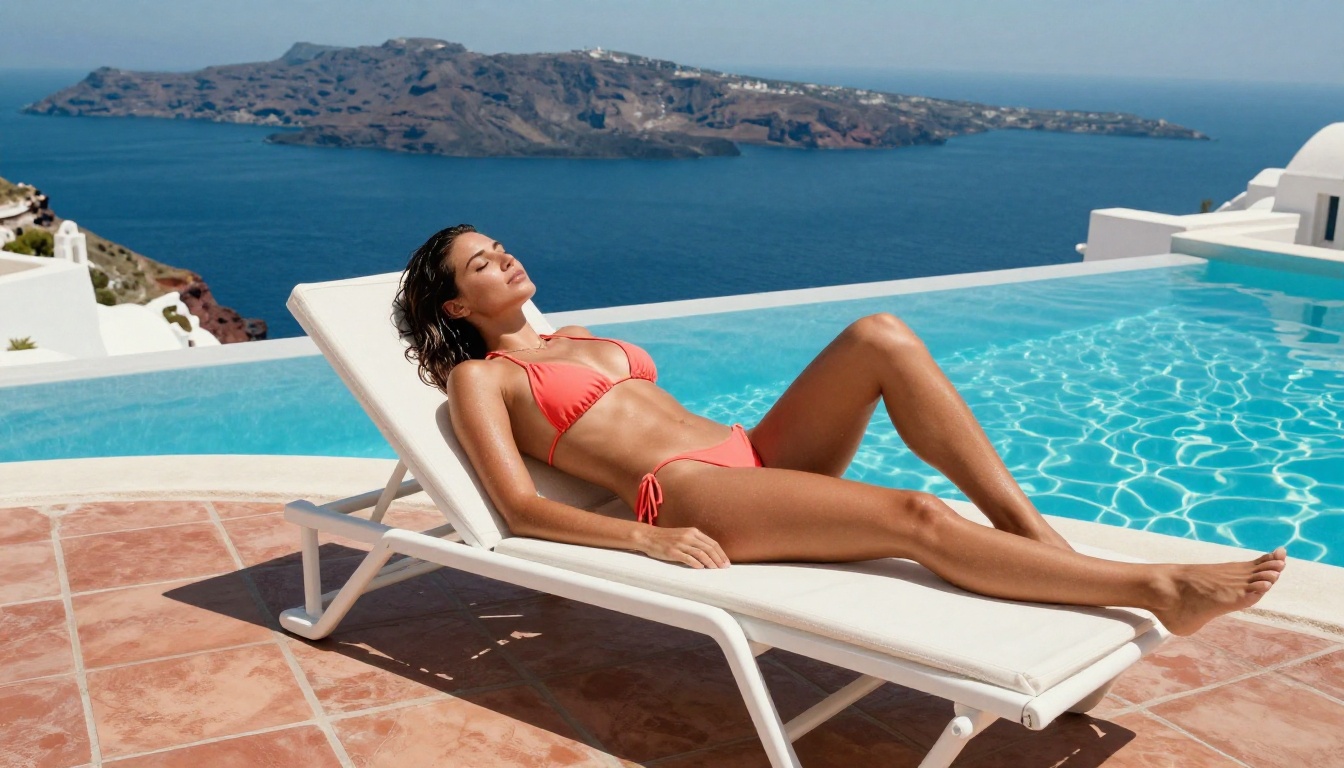
How to Use Seedream 4.5 on PicassoIA
PicassoIA hosts Seedream 4.5 directly in its platform. Here's how to get strong results from your first session:
Step 1: Go to Seedream 4.5 on PicassoIA and sign in or create a free account.
Step 2: In the prompt field, describe your subject with as much physical and contextual detail as possible. Seedream 4.5 responds well to specific lighting descriptions, clothing details, environment descriptions, and camera specifications.
Step 3: Choose your aspect ratio. For portrait work, 3:4 gives strong results. For landscape or scene compositions, 16:9.
Step 4: Set the style parameter if you want a specific aesthetic. Photorealistic is the default and the recommended setting for NSFW adult content.
Step 5: Generate. Results return in under 3 seconds.
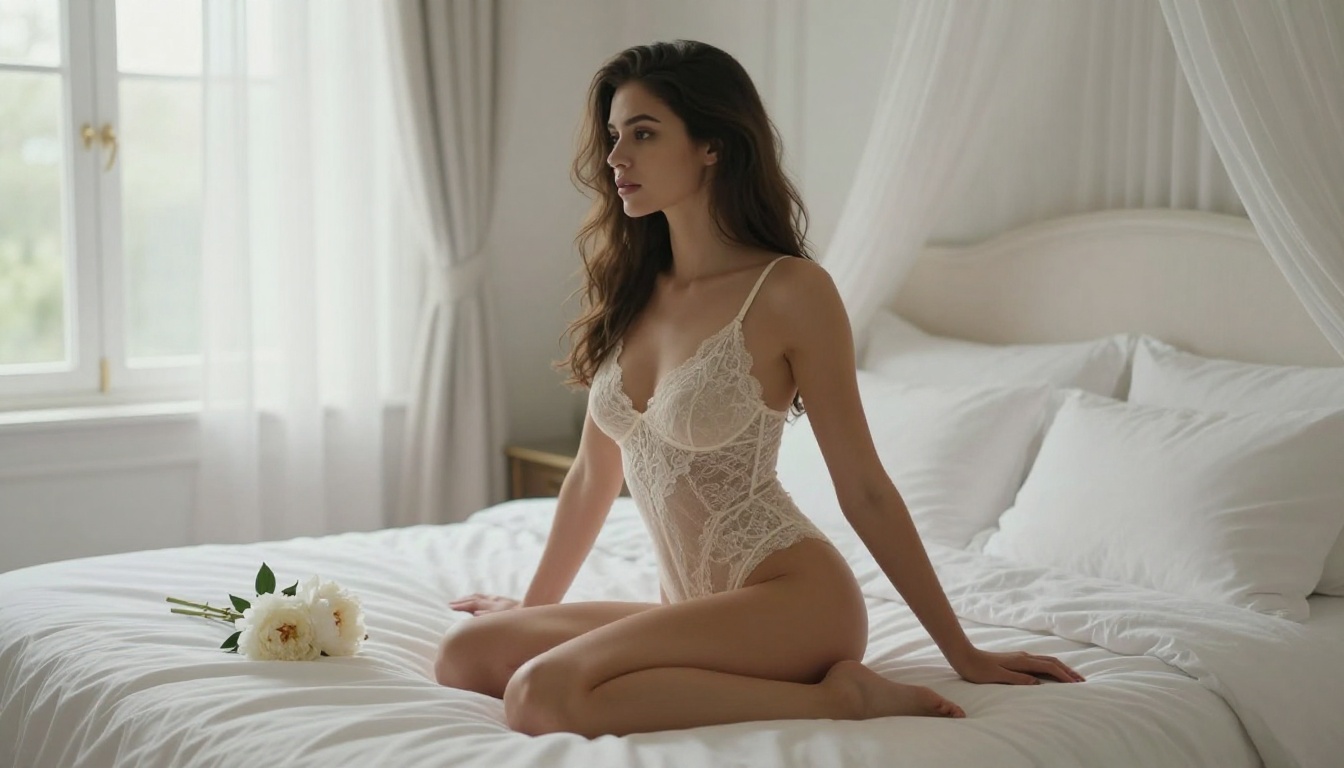
💡 Prompt tips: Describe lighting specifically, "soft window light from the left" outperforms "good lighting" every time. Describe the environment as clearly as the subject, "white linen bedsheets, morning light through sheer curtains" gives the model real grounding. Use camera and lens language such as "shot on Canon 85mm f/1.4, shallow depth of field" to influence the compositional style of the output. Avoid vague adjectives: words like "beautiful," "stunning," and "amazing" carry almost no semantic weight in diffusion models.
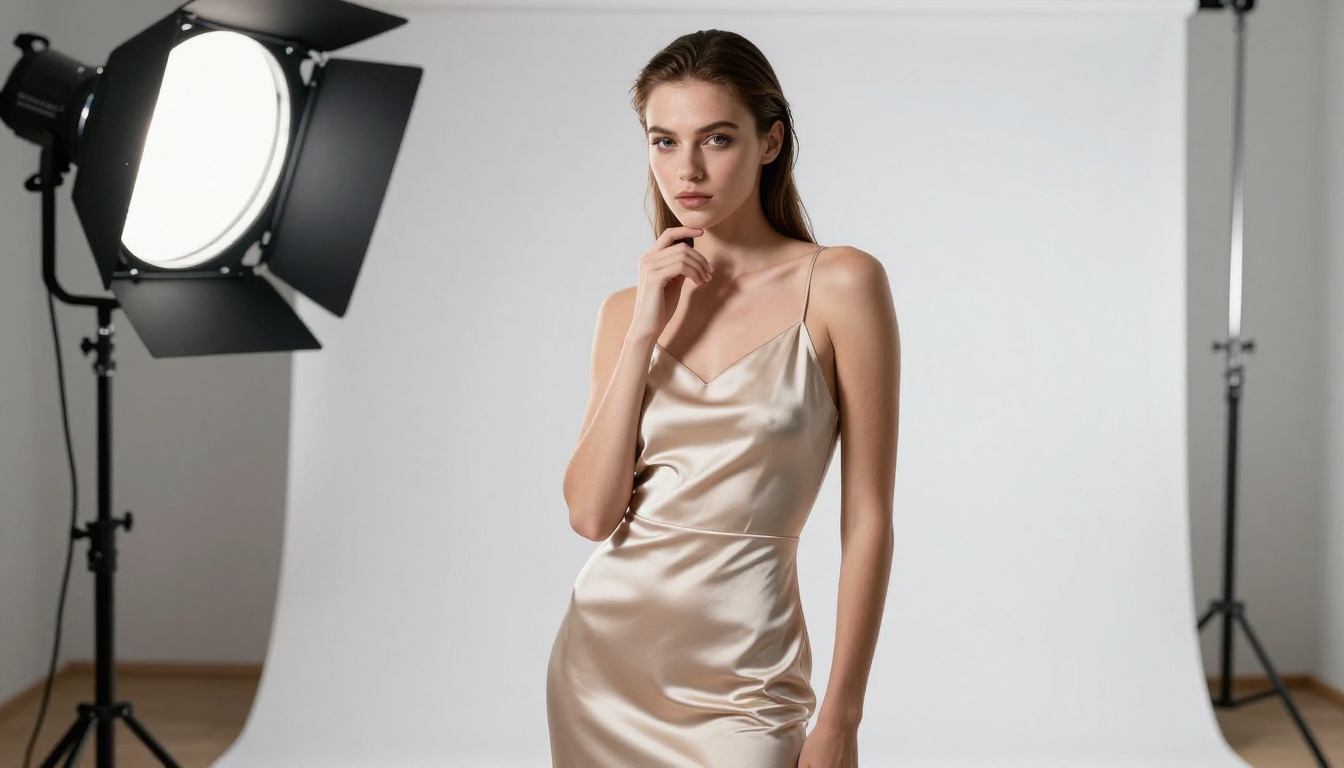
GPT Image 2.0 vs. NSFW Alternatives
| Feature | GPT Image 2.0 | Seedream 4.5 | PicassoIA Image Editor Pro |
|---|
| NSFW Support | No | Yes | Yes |
| Generation Speed | 10 to 20 seconds | Under 3 seconds | Under 1 second |
| Image Editing | Yes | Yes | Yes (img2img) |
| Unlimited Generations | No | No | Yes (Elite/Infinite plans) |
| API Access | Yes | Via PicassoIA | Via PicassoIA |
| Pricing Model | Per-image credits | Per-image credits | Subscription |
| Free Trial | Limited | No | 3 free generations, no card required |
💡 GPT Image 2.0 wins on general-purpose quality and direct API integration. Seedream 4.5 wins on NSFW realism and raw generation speed. PicassoIA Image Editor Pro wins on volume economics for high-output creators who need to generate at scale without counting credits.

The Full PicassoIA NSFW Lineup
Beyond the top picks, PicassoIA offers a deep catalog of NSFW-capable models worth knowing across both image and video generation.
Text-to-image options:
- Seedream 4.5 — Top pick. Photorealistic NSFW in under 3 seconds with image editing support
- PicassoIA Image Editor Pro — Unlimited generations on Elite/Infinite plans, results in under 1 second
- Qwen Image 2 — Open-source, no content policy restrictions, strong portrait realism
- Grok Imagine Image — Realistic photo remixing into bikini and swimwear formats
- Recraft V4 — Clean photorealistic text-to-image with strong fine-detail rendering
- P-Image by PrunaAI — Under-1-second NSFW generation, highest throughput available
- Wan 2.2 Image — Highly realistic images from text descriptions without content filters
For animated and video content:
- PicassoIA Video — Unlimited text-to-video generation at up to 720p, 5 seconds per clip
- P-Video by PrunaAI — Text, image, or audio to video at up to 1080p, safety filter off by default, draft mode for instant previews
- Grok Imagine Video — Clips up to 15 seconds from text or image input, no watermarks
- LTX 2.3 Pro — Up to 4K at 50fps for professional-grade video work, with retake and extend editing modes
Unlike mainstream AI platforms, PicassoIA gives creators full creative freedom with uncensored, high-performance models across both image and video pipelines.
GPT Image 2.0 is not going to change its NSFW policy. OpenAI's business model doesn't allow it, and there is no realistic expectation that a prompt trick or API setting will change the situation. The restrictions are structural, enforced at the model level, and intentional.
The better path is to stop fighting a platform that wasn't designed for your use case and start using one that was. PicassoIA hosts over 90 text-to-image models, multiple uncensored options, and unlimited-generation plans that make high-volume creative work economically viable.
Seedream 4.5 gives you photorealistic results in under 3 seconds with full NSFW support. PicassoIA Image Editor Pro lets you generate as many images as you want on an Elite plan, with results in under a second and no credit counting. Both are available right now without a long verification process or enterprise agreement.
Start with 3 free generations at PicassoIA Image Editor Pro or browse the full catalog of uncensored, high-performance AI image and video models at picassoia.com/en/all-models. Pick your model, write your prompt, and generate without a wall.


