Every major AI lab spent the first half of this decade drawing lines. Grok 4.20 arrived with xAI's boldest attempt yet at redrawing them. If you have been watching the adult AI content space closely in 2027, you already know that the conversation has shifted from "can AI do this?" to "which platform actually delivers, without throttling, without vague refusals, and without making you feel like you are arguing with a hall monitor?"
This breakdown is for creators who want straight answers: what Grok 4.20 actually permits for explicit and suggestive content, where it still pulls back, and which image generation models are outperforming it for visual output in 2027. The workflow exists. The results are real. Here is exactly how it works.

Grok 4.20 and the NSFW Question in 2027
Grok 4 from xAI represents the most significant shift in what a mainstream large language model will actually engage with. Unlike its predecessors, Grok 4.20 uses a permission layer that responds to account verification status rather than blanket content policies applied uniformly to every user regardless of context or intent.
The result is an LLM that will write adult-themed scenarios, generate suggestive dialogue, and assist with creative fiction in ways that GPT-5 and Claude Opus 4.7 consistently decline. For adult content creators and prompt engineers, this is a meaningful operational difference. It changes what the LLM layer of your workflow can actually do.
But it is worth being precise about what "explicit" means here, because the specifics matter for anyone building a production workflow around Grok's capabilities.
What xAI's Policy Actually Permits
Grok 4.20 operates under what xAI calls verified adult mode. When enabled on eligible accounts, it handles:
- Explicit written content: Detailed adult scenarios, erotica, mature creative fiction across a wide range of subjects and formats
- Mature dialogue generation: Character-driven adult conversation, roleplay, and narrative development at scale
- Adult content research: Writing about adult industry topics, platforms, and production without the deflections and refusals that other LLMs insert by default
- Image prompt crafting: Writing highly detailed, uncensored generation prompts for use with dedicated image platforms, including specific pose, lighting, and compositional instructions
💡 Key distinction: Grok 4.20 is a language model. Its strength is written content and prompt engineering for your image workflow. For the actual visual output, you still need a dedicated image generation platform that supports adult content natively.
Where the Hard Walls Still Stand
Verified adult mode is not without firm limits. Grok 4.20 will refuse:
- Any content involving minors, regardless of how the request is framed or what fictional context surrounds it
- Content designed to facilitate real-world harm to specific individuals
- Realistic deepfakes of identifiable real people without documented consent
These restrictions apply across every mode and account tier. xAI has built pattern detection that catches attempts to route around them through fictional or metaphorical framing. Disguising prohibited content as creative fiction does not bypass the filters, and repeated attempts can result in account restrictions.
For most adult content creators in 2027, the real bottleneck is not Grok's text output. It is the image generation side of the workflow, where the choice of platform determines whether your prompt produces the result you intended or a sanitized approximation of it.
Why Grok Alone Is Not Enough
Grok 4.20 can write your prompts with extraordinary precision and detail. What it cannot do is render the image. This is where most people encounter the first real friction: they take those carefully written prompts to standard image generators and discover that the image platform they are using applies stricter content policies than the LLM does.
The LLM vs. Image Generator Gap
There is a consistent gap between what Grok 4 will help you write and what mainstream image platforms will actually render. This gap exists because text and image generation are moderated differently at the infrastructure level. The visual output is the thing that gets flagged, screenshotted, and scrutinized, so platforms apply more aggressive filtering to images than to text.
The practical effect plays out the same way every time: your carefully crafted Grok 4.20 prompt hits a content filter the moment you paste it into a censored image generator. The model either returns a watered-down output that does not match the prompt or refuses outright with no useful diagnostic feedback.
Choosing the right image platform is the actual skill in 2027. The LLM is a tool for generating better prompts for that platform. The platform is what determines whether those prompts produce the images you actually want.
Who Is Actually Using Grok for This
The people extracting the most value from Grok 4.20's adult content capabilities in 2027 fall into three clear groups:
- Adult fiction authors who need volume output for serialized erotic content and use Grok to generate chapters, character voice, and scene development quickly without constant rewrites
- Prompt engineers who use Grok to draft, refine, and iterate on generation prompts before running them through uncensored image models at scale
- Content planners for adult subscription platforms who need ideation support across production briefs, scene descriptions, and character development at a pace that manual writing cannot match
For all three groups, the image generation workflow happens on a different platform. The LLM and the image generator are separate tools serving separate functions inside the same production pipeline.
Seedream 4.5 Is the Benchmark Right Now
If you want one model to measure everything else against for adult AI image generation in 2027, it is Seedream 4.5. ByteDance built it with photorealism as the primary design objective, and the output quality on suggestive and adult-oriented prompts is consistently the strongest available at this price point across the platforms tested this year.
What separates Seedream 4.5 from earlier versions in the same model line is its handling of anatomical accuracy and lighting physics. Previous models in this category produced outputs that looked generated at close inspection, with telltale drift in proportions and unnatural specular highlights. Seedream 4.5 holds up under scrutiny: real skin texture, natural shadow gradients, realistic proportions under complex and mixed lighting conditions.

Raw Speed That Does Not Sacrifice Quality
Seedream 4.5 generates a full 16:9 output in under 12 seconds on standard infrastructure. For creators working with volume, that speed compounds meaningfully. Running 20 variations in the time it used to take to produce 3 outputs changes how iteration and prompt refinement work in practice.
| Feature | Seedream 4.5 | Seedream 4 | Seedream 3 |
|---|
| Anatomical accuracy | Excellent | Good | Average |
| Lighting realism | Excellent | Average | Below average |
| Prompt adherence | Very High | High | Moderate |
| Generation speed | ~12s | ~18s | ~25s |
| Adult content support | Full | Full | Full |
Seedream 4.5 also handles complex scene compositions that previously required multiple passes and manual stitching. A subject in a detailed interior environment with multiple light sources and fabric elements used to require careful prompt surgery to get right. Seedream 4.5 processes these scenes in a single generation with consistent results.
The Prompt Style That Gets Results
Seedream 4.5 responds best to prompts that specify three distinct things: the subject's pose and expression, the lighting direction and quality, and the background environment. Prompts that pile on adjectives without spatial or compositional information return inconsistent results even when the individual words are all positive descriptors.
What works with Seedream 4.5:
- Specific lens focal lengths (85mm, 50mm, 135mm) paired with specific film stocks (Kodak Portra 400, Fujifilm Velvia)
- Named lighting setups: "Rembrandt lighting," "golden hour rim light from camera right at 45 degrees"
- Subject descriptions that include pose, active motion or stillness, and gaze direction as three separate elements
Seedream 5 Lite is not the right choice for adult content. It applies content filtering on adult prompts by design and is built for general audiences. Seedream 4.5 is the version that delivers full support.
💡 Treat your Seedream 4.5 prompt as a brief for a professional photographer. Describe a photograph that could physically exist. Specify what the camera sees, where the light comes from, and what the subject is doing. Let the model render it.
PicassoIA Image Editor Pro Has No Cap
For volume creators, the single most operationally important feature is not peak output quality on any one image. It is the absence of a generation cap. PicassoIA Image Editor Pro runs unlimited generations without throttling, daily limits, or credit exhaustion for plan subscribers.

Unlimited Generations for Real
Most platforms that advertise unlimited generation have fine print that surfaces only when you actually try to use the service at scale: rate limits per hour, concurrent request caps, or "fair use" throttling that cuts in once daily volume crosses an undisclosed threshold. PicassoIA Image Editor Pro does not work that way for plan subscribers.
The practical value compounds quickly for iterative workflows. Prompt refinement requires volume. Finding the exact pose, the exact lighting condition, the exact expression and environmental context for a specific content piece means running 15 to 30 variations, not 3. With true unlimited generation, that iteration costs time, not tokens. The workflow becomes fluid instead of rationed.
Why It Works Where Others Stop
PicassoIA Image Editor Pro runs on an uncensored model stack with native adult content support that other platforms filter by default. Where a standard platform would reject a suggestive or explicit prompt, Image Editor Pro processes it and returns the output without requiring workarounds or euphemistic prompt rewrites.
The post-generation editing tools extend the value across the full production workflow:
- Inpainting: Fix specific regions (faces, hands, backgrounds) while leaving the rest of the image untouched, avoiding full regeneration for small corrections
- Outpainting: Extend the canvas to add environmental context to a tight crop, useful for images that need more breathing room compositionally
- Object replacement: Swap specific elements within an existing generated image without regenerating the full scene from scratch
- AI Image Restoration: Recover fine detail in outputs that came back slightly soft, oversmoothed, or over-processed by the generation pipeline
This combination of unlimited base generation with robust post-generation editing is the most efficient production stack for adult content workflows in 2027.
Flux 2 Pro for When Realism Matters Most
Flux 2 Pro from Black Forest Labs is the model to reach for when photorealistic accuracy is the primary priority over generation speed. It takes longer per output than Seedream 4.5, but the detail preservation in complex scenes, particularly in skin texture rendering, fabric physics, and multi-source lighting, is exceptional and holds up under close examination.
Detail-First Output on Complex Scenes
Flux 2 Pro handles multi-subject compositions and complex lighting environments that cause faster models to produce anatomical drift or compositional inconsistency. A scene with mixed indoor and outdoor lighting, detailed environmental props, and subtle reflective surfaces across different materials will return more consistent results from Flux 2 Pro than from speed-optimized alternatives.
For creators building editorial-style adult content where image quality is the primary product rather than output volume, the longer generation time is a reasonable trade-off.
💡 Use Seedream 4.5 for speed and volume. Use Flux 2 Pro when you need one exceptional hero image that must hold up at full resolution.
Other models in the Flux lineup worth knowing for specific use cases:
- Flux Kontext Pro: Maintains subject consistency across multiple generations, which is valuable for character-based adult content series where the same person needs to appear across many scenes
- Flux Dev: Open access version for experimentation and workflow testing without requiring the full Pro tier
Prompt Patterns That Produce Real Results
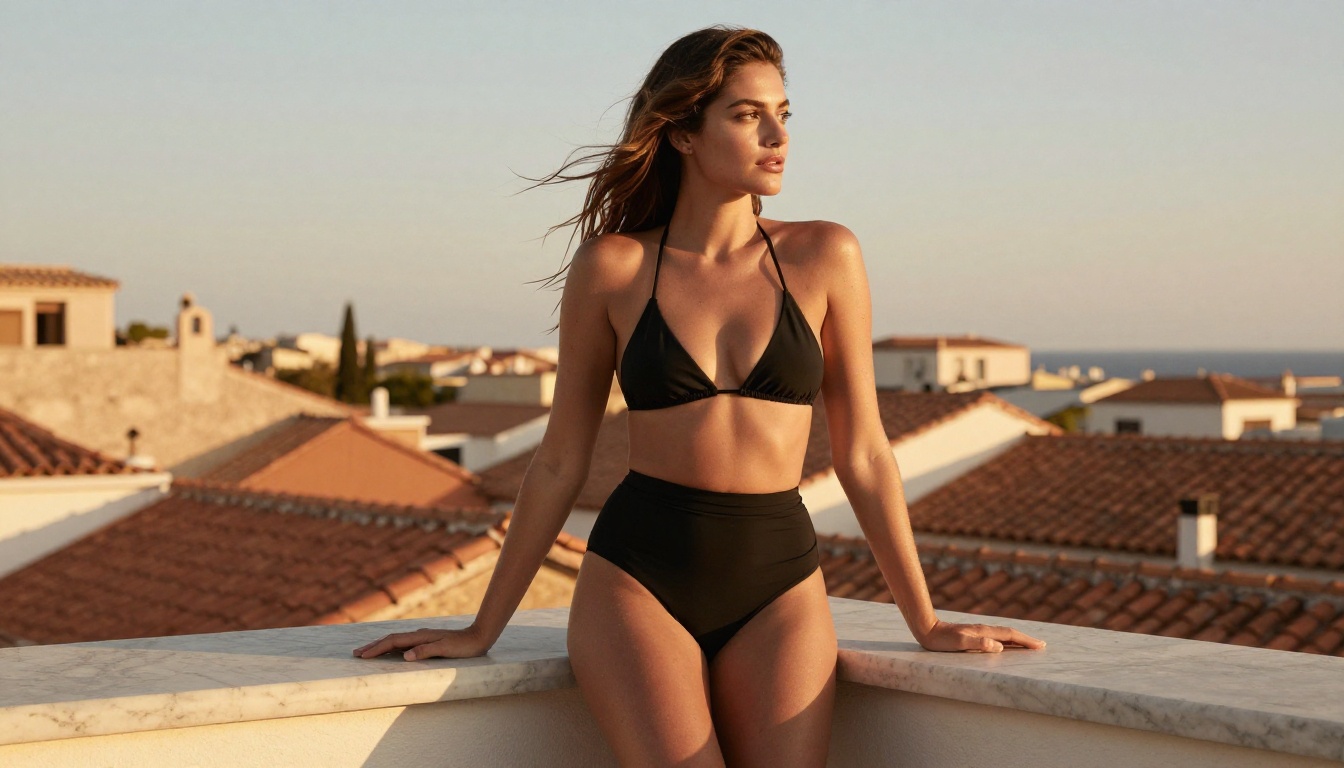
The quality gap between a good and a poor adult content prompt is larger than most people expect. The model is only as good as the instruction it receives. After running thousands of generations across platforms in 2026, these are the patterns that consistently outperform everything else.

5 Approaches That Work in 2027
1. The Photography Brief
Write your prompt as if you are directing a professional photographer on a paid shoot. Specify the camera position, the lens focal length, the light source direction, and the subject's exact physical pose. Seedream 4.5 and Flux 2 Pro both respond to this format more reliably than any other prompt structure.
2. The Environment Anchor
Establish the setting before describing the subject. "Luxury hotel room, late afternoon directional light through partially closed venetian blinds, cream-painted walls, rumpled white linen, polished concrete floor" gives the model a spatial context that shapes how it places and lights the subject automatically.
3. Negative Space Instructions
Tell the model explicitly what you do not want. Appending "no text, no watermarks, no cartoon elements, no illustration style, no overprocessing, no CGI artifacts, no neon lighting" at the end of a prompt directly improves output consistency across every major model. The negative instructions remove the ambient noise from the generation space.
4. Film Stock Specification
Naming a specific film stock carries more information than its name suggests. Kodak Portra 400, Fujifilm Velvia, Kodak Ektar each encode a specific lighting quality, color science, grain structure, and tonal range. These references shortcut the model toward naturalistic, analog-feeling output without requiring lengthy descriptions of those properties.
5. Pose Plus Action Plus Gaze
Subject descriptions that include all three elements produce more dynamic, intentional images. Pose alone is a static instruction. Adding what the subject is actively doing (one hand resting on her thigh, weight shifted to the left, a slow exhale) and exactly where she is looking (directly at camera, slightly past left lens, eyes cast downward) produces a human presence that generic pose instructions cannot replicate.
What Kills Your Outputs
Three patterns consistently damage output quality across every model tested in 2026:
- Superlative stacking: "Extremely detailed, hyper-realistic, incredibly beautiful, stunningly gorgeous" stacked in sequence does not compound quality. It introduces conflicting noise that the model averages into something mediocre. One precise descriptor is worth more than six vague superlatives.
- Vague body language: "Sexy pose" tells the model nothing actionable. Specific physical descriptions of how the body is positioned, where the weight is distributed, what the arms and hands are doing, and which direction the face is oriented produce dramatically better results every time.
- Ignoring the background: Adult content prompts that focus entirely on the subject and leave the environment undefined produce inconsistent backgrounds that look disconnected from both the subject and the lighting. The background is part of the image, not an afterthought.

The Full Model Lineup Worth Knowing
PicassoIA's text-to-image category includes over 90 models across every quality tier and use case. For adult content production specifically, here is the practical ranking for 2026 workflows:
| Model | Best Use Case | Speed | Adult Content |
|---|
| Seedream 4.5 | Volume, photorealism, daily production | Fast (~12s) | Full |
| Image Editor Pro | Unlimited output with editing tools | Fast | Full |
| Flux 2 Pro | Hero images, maximum realism | Moderate | Full |
| Flux Kontext Pro | Character series, subject consistency | Moderate | Full |
| Flux Dev | Experimentation, open access testing | Moderate | Full |
On the LLM side, Grok 4 leads for adult content writing and prompt engineering in 2027, but the broader ecosystem of LLMs available on the platform serves different functions in the workflow:
- DeepSeek R1: Excellent for long-form adult fiction with strong narrative structure and character consistency across chapters
- GPT-5: Structured content planning and production briefs, with more conservative default content policies than Grok
- Gemini 3 Pro: Multimodal capability if your workflow involves referencing existing images when writing new generation prompts
The winning production setup in 2027 combines Grok 4.20's text output for ideation and prompt engineering with Seedream 4.5 or PicassoIA Image Editor Pro for image generation. These two systems are built to complement each other: Grok writes the precise, structured, detailed prompts that Seedream 4.5 needs to return its best output. Platforms that try to handle both text and image generation inside one closed system consistently underperform the two-tool combination.

Start Generating Your Own Images Now
You have the workflow. You have the model rankings. You have the prompt patterns. The only step left is running it and seeing what your prompts actually produce when they hit a model that is not fighting them.
Picasso IA's full model library is available without waitlists or invite codes. Seedream 4.5 is live right now. PicassoIA Image Editor Pro is ready for unlimited generation the moment you start.
Start with one prompt structured as a photography brief. Specify camera position, lens focal length, light source direction, and the subject's exact physical pose. Run it through Seedream 4.5. Iterate 5 to 10 times with small, controlled changes to lighting and composition before switching the primary variable. That discipline in iteration, applied to a model that actually processes your prompt as written, produces results that no throttled or censored platform can match.

The gap between what is possible and what most people are actually producing with adult AI content in 2027 has never been wider. The models are available, the platform that runs them without caps or refusals is operational, and the combination of Grok 4.20 for writing and Seedream 4.5 for generation produces output quality that would have been implausible two years ago.
Browse the full model library at picassoia.com/en/all-models, pick the model that fits your specific use case, and run your first prompt structured the way this article describes. The difference in output quality, compared to what most censored platforms return, will be immediately visible in the first generation.


