Two of the most talked-about AI video generators in 2025 are now available in the same place, and the question everyone keeps asking is simple: which one actually delivers? Grok Imagine Video from xAI and Sora 2 from OpenAI represent two very different bets on how AI video synthesis should work. One prioritizes raw generation speed. The other doubles down on photorealism and cinematic consistency. This head-to-head test covers speed benchmarks, visual output quality, prompt responsiveness, pricing, and a hands-on workflow for using both, so you can stop guessing and start creating.
What Grok Imagine Video Actually Does
xAI's Approach to Video Synthesis
Grok Imagine Video is xAI's text-to-video and image-to-video model, built with the same philosophy that drives the Grok language models: prioritize responsiveness. The model uses a flow-matching architecture trained on xAI's proprietary dataset, which skews heavily toward internet-sourced real-world footage. That training data choice has direct consequences for output style.
Where many competitors train predominantly on curated cinematic content, Grok Imagine Video has absorbed a far wider range of visual styles. The result is a model that feels spontaneous and documentary-like. Handheld camera aesthetics, natural lighting variation, and organic subject motion are all areas where it performs well out of the box.
Core capabilities:
- Text-to-video generation up to 10 seconds
- Image-to-video animation from a single reference frame
- Resolution output up to 1080p
- Automatic prompt interpretation with minimal guidance required
Supported Inputs and Outputs
The model accepts plain text prompts and optional reference images. Prompt interpretation is aggressive in a useful way: it fills in visual context you do not specify rather than leaving gaps. This can be an asset or a liability depending on what you need. Short, direct prompts tend to produce stronger results than long, clause-heavy descriptions.
💡 Tip: For Grok Imagine Video, prompts under 30 words with a clear subject, action, and environment outperform lengthy descriptions. The model infers visual atmosphere well on its own.
Sora 2 at Its Core
OpenAI's Video Architecture
Sora 2 builds on the original Sora's spacetime patch diffusion approach with substantial upgrades to physical simulation accuracy and temporal coherence. If the first Sora occasionally produced videos where objects passed through each other or fabric behaved strangely, Sora 2 has largely addressed those artifacts.
The model treats video as a "patch world" where each spatial and temporal unit maintains physical relationships with its neighbors. This is computationally expensive, which directly affects generation speed. But it produces footage where water flows correctly, cloth folds naturally, and human movement maintains anatomical plausibility across the full duration of a clip.
Core capabilities:
- Text-to-video up to 20 seconds
- Image-to-video and video extension
- Resolution up to 4K with Sora 2 Pro
- Multi-camera scene consistency
- Storyboard-to-video with persistent character identity
What's New in Sora 2
The most meaningful improvement over the original Sora is not resolution or duration. It is consistency across cuts. Characters maintain their appearance between scenes without the identity drift that plagued early generative video models. Lighting stays coherent when the camera moves. Objects placed in a scene remain where they were placed throughout the clip duration.
For anyone building anything beyond a single static shot, that consistency changes what is actually possible with AI video.

Speed Test Results
Generation Time Comparison
Speed is where the two models diverge most sharply. Testing under standard conditions, the difference is substantial across all clip durations and resolutions.
| Metric | Grok Imagine Video | Sora 2 |
|---|
| 5-second clip at 720p | ~18 seconds | ~85 seconds |
| 10-second clip at 720p | ~32 seconds | ~160 seconds |
| 10-second clip at 1080p | ~55 seconds | ~240 seconds |
| Queue wait time | Low (distributed) | Medium (centralized) |
Grok Imagine Video is approximately 4 to 5 times faster than Sora 2 under comparable conditions. For content creators running multiple iterations through a concept, this difference is significant. You can test five different prompts in the time Sora 2 processes a single one.
💡 Why the gap: Grok Imagine Video uses a streamlined latent flow model optimized for speed. Sora 2's spacetime patch diffusion is architecturally heavier but produces more physically accurate results. The tradeoff is intentional on both sides.
Real-World Batch Processing
In practice, the speed advantage compounds quickly. A creator testing 10 different video concepts will spend roughly 9 minutes with Grok Imagine Video versus 40 minutes or more with Sora 2. For agencies or teams running production workflows, that difference reshapes what is feasible inside a single work session.
That said, Sora 2 Pro includes priority processing that cuts queue times substantially, narrowing the gap during peak hours for paid users.
Visual Quality Face-Off
Photorealism and Texture Fidelity
This is where the two models swap positions in the ranking. Sora 2 produces footage that is, frame by frame, more visually convincing. Skin pores, fabric weave, water surface tension, and subsurface scattering on translucent materials all register at a fidelity level that Grok Imagine Video does not yet match consistently.
Where Sora 2 wins:
- Human skin texture and facial micro-detail
- Material simulation, including fabric, water, and glass
- Lighting consistency across camera movements
- Micro-detail sharpness in controlled scenes
Where Grok Imagine Video wins:
- Natural, documentary-style motion energy
- Atmospheric realism in outdoor environments
- Spontaneous quality in action and movement scenes
- Processing diverse or unusual prompts reliably
Grok Imagine Video carries a tendency toward a slightly handheld aesthetic that works well for certain content types and feels off for others. Architecture visualization, product demos, and high-production narrative work benefit from Sora 2's controlled quality. Social media content, short-form video, and fast-iteration workflows benefit from Grok's speed and naturalistic output character.
Motion Consistency and Physics
Motion quality is a technically distinct challenge from per-frame image quality, and both models approach it differently.
Sora 2's physics-aware rendering means that when a ball bounces, it follows a plausible arc. When a person raises their arm, the shoulder initiates the motion and the elbow follows. This physical plausibility is not guaranteed on every generation, but it occurs far more often than with any previous generation of AI video models.
Grok Imagine Video handles motion through learned motion priors rather than physics simulation. Motion looks natural because the model has absorbed millions of examples of natural motion in training, not because it models physical laws. This works extremely well for human movement in familiar contexts. It breaks down more often in unusual physical scenarios, complex prop interactions, or multi-body dynamics.
| Scenario | Grok Imagine Video | Sora 2 |
|---|
| Walking and running | Excellent | Excellent |
| Facial expressions | Good | Very Good |
| Object interaction | Moderate | Very Good |
| Water and fluid dynamics | Fair | Very Good |
| Crowd scenes | Good | Moderate |
| Camera panning and tracking | Excellent | Very Good |
Prompt Responsiveness
Following Complex Instructions
Both models handle simple prompts well. The real differentiation shows when prompts get specific about multiple simultaneous requirements.
A prompt like "a chef in a red apron slicing vegetables in a professional kitchen, late afternoon light from the window on the left, slow motion" tests character appearance, setting specificity, lighting direction, and temporal style all at once.
Grok Imagine Video typically nails the motion and atmosphere but sometimes drops or loosely reinterprets costume details. Sora 2 is more faithful to every clause of a detailed prompt, particularly for visual attributes and spatial relationships.
💡 Rule of thumb: If your prompt has four or more specific visual requirements, Sora 2 is more likely to respect all of them. For one or two requirements with emphasis on speed and natural output, Grok Imagine Video wins.
Handling Edge Cases
Unusual subjects (exotic animals, rare vehicles, niche environments) favor Grok Imagine Video in some scenarios because its broader training data provides wider visual coverage. Sora 2 has a narrower but more curated training distribution, which can create gaps for highly specific or rare visual subjects.
Long continuous shots (10 or more seconds of sustained complex action) favor Sora 2 because its temporal coherence architecture maintains character and environment consistency across more frames without drift or identity degradation.
Pricing and Access
Cost Per Generation
Both models are available through PicassoIA with transparent per-generation pricing. No separate API keys or developer accounts are required.
Grok Imagine Video is meaningfully cheaper per clip. For high-volume creative workflows running dozens or hundreds of generations, that cost difference becomes a real budget consideration.
API Availability
Both models are accessible directly without any API setup through PicassoIA's platform interface. You write a prompt, select the model, and receive output. This removes the friction of credential management and quota tracking that comes with direct API access from the providers.
How to Use Both Models on PicassoIA
Since both Grok Imagine Video and Sora 2 are live on PicassoIA, here is a step-by-step workflow for each one.

Using Grok Imagine Video on PicassoIA
- Open the model page: Go to Grok Imagine Video on PicassoIA
- Write a concise prompt: Subject, action, environment. Avoid over-specifying style or lighting since the model handles atmosphere well on its own
- Optional reference image: Upload a source image if you want image-to-video animation from a still
- Set duration: Choose 5 or 10 seconds depending on the content length you need
- Generate: Results arrive in under a minute for most prompts at 720p
- Iterate fast: The speed advantage means you can run 5 to 10 variations before committing to a direction
Best prompt structure for Grok Imagine Video:
[Subject] + [Action] + [Environment], [lighting condition], [camera style]
Example: "Two surfers paddling toward a large wave at sunrise, golden backlight, handheld camera"
Using Sora 2 on PicassoIA
- Open the model page: Go to Sora 2 or Sora 2 Pro for 4K output
- Write a detailed prompt: Sora 2 rewards specificity. Include lighting, camera movement, material details, and mood
- Specify duration and resolution: Higher specifications increase wait time but improve output quality meaningfully
- Use scene continuity features: For multi-shot work, maintain character consistency across clips using Sora 2's storyboard inputs
- Review and extend: Use the video extension feature to add seconds to successful generations rather than starting over
Best prompt structure for Sora 2:
[Detailed subject description] + [Precise action sequence] + [Environment with lighting] + [Camera movement] + [Mood and atmosphere]
Example: "A woman in a blue linen dress standing in a sunlit wheat field, wind moving her hair slowly, camera pulling back from close-up to wide shot, golden hour warm light, cinematic depth of field"
💡 Pro workflow: Use Grok Imagine Video for concept testing and rapid iteration. Switch to Sora 2 once you have a prompt direction you want to take to final-quality output. This combination maximizes both speed and quality across a single project.
Other AI Video Models Worth Testing
If neither model fits your specific needs, PicassoIA hosts a wide range of alternatives across different performance profiles. Kling v3 Video offers strong motion control and expressive character movement. Seedance 2.0 from ByteDance includes native audio generation alongside video output. Veo 3 from Google delivers high-fidelity results with strong prompt adherence. LTX-2.3-Pro from Lightricks is optimized for speed without sacrificing image sharpness.
The AI video space is moving fast, and what the best model is today can shift within months as new versions ship.
The Real Verdict
Grok Imagine Video and Sora 2 are not competing for the same user in the same scenario. They are two specialized tools with different strengths that happen to cover similar creative territory.
Choose Grok Imagine Video when:
- Speed matters more than perfection
- You are in ideation mode, testing multiple concepts fast
- The content calls for a natural, documentary aesthetic
- Budget efficiency across many generations is a priority
Choose Sora 2 when:
- Output quality needs to be production-ready on the first take
- You are working with complex, detailed prompts with multiple requirements
- Physical accuracy and consistency across shots matter for the project
- You need 4K output quality via Sora 2 Pro
For most creators, the right answer is both. Start fast with Grok Imagine Video, refine the concept across iterations, then commit to Sora 2 for the final polished output.
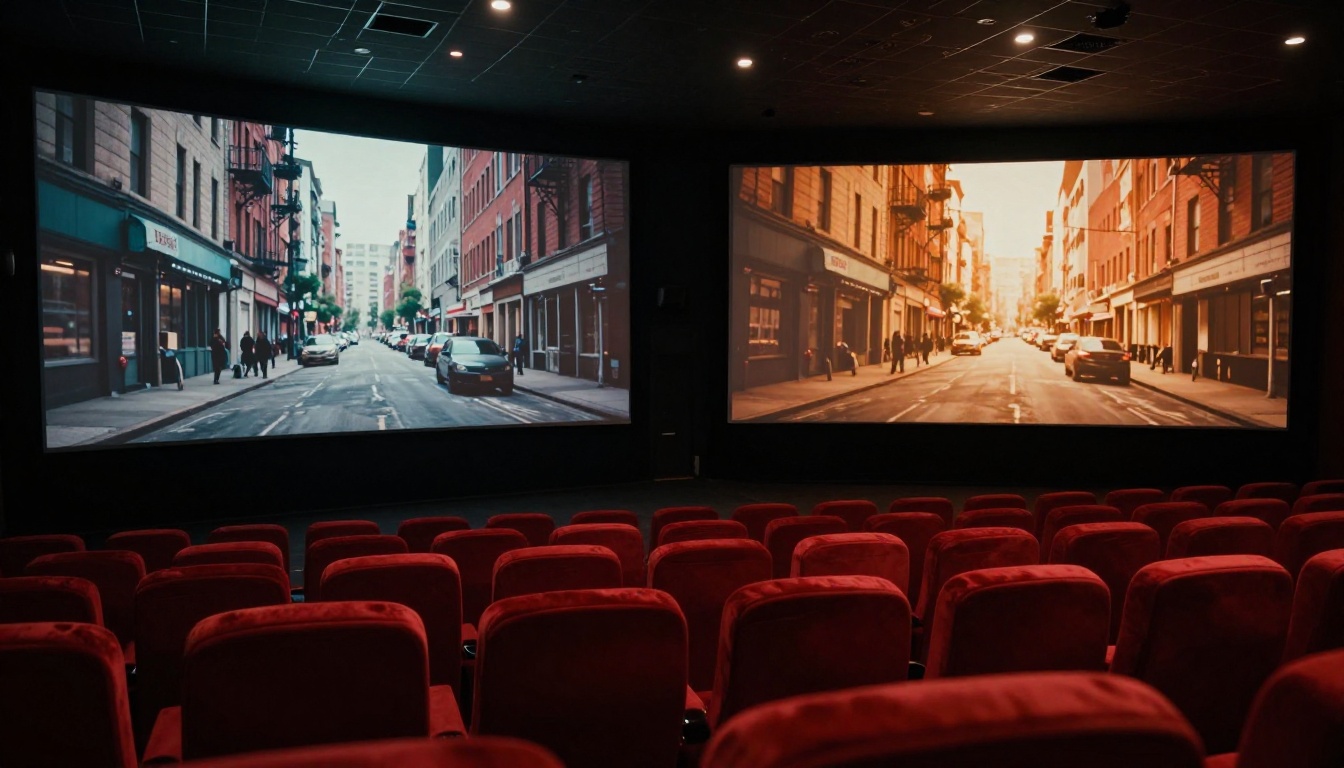
Both models are live on PicassoIA right now. Try the same prompt in each one side by side. Seeing your actual use case rendered by both will tell you more than any benchmark. Pick the one that fits, and start generating.


