The clip appeared in a group chat. No attribution, no context, just a short video of a woman speaking directly to camera in a sunlit apartment. Thirty seconds. Natural lighting, slight camera shake, the kind of footage you'd record on a phone. Sixteen people in that chat, including three working journalists and a documentary filmmaker. Not one of them flagged it as synthetic. Because it wasn't. Or was it?
That question is no longer rhetorical. The AI video that fooled even experts is not a hypothetical. It's happening at scale, right now, with consumer-accessible tools that require no technical training and cost less than a monthly streaming subscription. The perceptual line between real and synthetic video has been crossed, and most people never saw it happen.
When Nobody Could Tell
The inflection point didn't arrive with a single breakthrough. It happened gradually, then suddenly. As recently as 2022, AI-generated video had obvious tells: warped teeth, flickering backgrounds, the uncanny way eyes never quite tracked properly. By 2024, those artifacts were nearly gone. By 2025, the best models were producing footage that cleared every heuristic test professionals had relied on for years.
In documented studies, trained media forensics analysts correctly identified AI-generated video at rates barely above chance when viewing clips under 10 seconds. This is not incompetence on their part. This is a technology that has genuinely crossed a perceptual threshold. The signals humans evolved to detect deception, the microexpressions, the lighting inconsistencies, the physics errors, have been systematically learned and corrected by neural networks trained on billions of hours of real footage.
The Turing Line for Video
Alan Turing proposed that a machine would be considered intelligent when a human could not distinguish it from another human in conversation. Video has crossed its own version of that line. Multiple independent studies in 2024 and 2025 showed human detection accuracy for short AI video clips falling to 54%, essentially a coin flip. The machines won.
What Made 2025 Different
Three things converged:
- Training data scale: Models now train on footage measured in petabytes, not terabytes
- Temporal coherence: The single hardest problem in video AI, keeping subjects, light, and physics consistent across frames, was substantially solved
- Diffusion refinement: Iterative noise reduction applied to video frames eliminated the artifact signatures forensic tools had been tuned to detect
When these three developments overlapped in the same generation of models, the quality leap was discontinuous. Not incremental. A step change.
What the Models Are Actually Doing
To appreciate why this footage is so convincing, you need a basic picture of how these systems work. Text-to-video models do not record or sample real footage. They synthesize every pixel, every frame, from a learned statistical model of what reality looks like.
Models like Kling v3 Video and Veo 3 operate on what researchers call diffusion in latent space, a process where noise is systematically removed until a coherent, high-fidelity video emerges that matches the input prompt. The model does not retrieve footage. It constructs it from probability distributions learned during training.
Why Physics Now Works
Earlier models failed at physics because they learned correlations without causality. They knew that shadows generally appear below objects but didn't model light sources with directional consistency. Newer architectures, particularly those with explicit 3D-aware attention mechanisms, model scenes with implicit spatial representations. When the camera moves, the shadows move correctly. When an object passes behind another, occlusion is handled naturally.
This is why Sora 2 Pro can generate footage of a glass of water falling off a table with physically accurate liquid behavior. The model hasn't looked up "how water falls." It has internalized the physics from observing millions of instances of it happening.
The Resolution Leap
Resolution matters enormously for detection. At 480p, even well-trained eyes can sometimes catch texture compression artifacts. At 1080p with proper motion blur, the task becomes significantly harder. Hailuo 02 generates at 1080p natively. So does Seedance 1.5 Pro. When something is rendered at the resolution of broadcast television with correct color grading, the viewer's brain stops actively looking for problems and starts passively accepting what it sees.
The Viral Moment Nobody Expected
The videos that go viral are rarely the technically impressive ones. They're the emotionally resonant ones. A grandfather's voice reconstructed. A celebrity in a scenario that feels plausible. A news clip with just enough ambient noise to feel authentic.
What changed in 2025 is that the baseline quality of AI video crossed the "good enough to share" threshold for casual social media users. You don't need to generate photorealistic perfection to deceive someone scrolling at 1.5x speed. You need something that doesn't immediately trigger a something's wrong response. The models achieved that months ago. They've been improving ever since.
How Sharing Amplifies Everything
Every time a synthetic video is shared without scrutiny, it trains the humans around it to accept that type of content as real. Repeated exposure to AI video, even when it's eventually identified as synthetic, raises the baseline tolerance for artifacts. It's a ratchet, and it only moves in one direction.
The compounding effect: Studies on misinformation show that even when people learn a piece of content was false, a continued influence effect persists. Seeing and sharing matter more than the eventual correction.
The Speed Factor
A video can be generated, refined, and published in under three minutes with current tools. A thorough fact-check takes hours. That gap is the territory where synthetic media operates. It's not that verification is impossible. It's that verification cannot move at the speed of sharing.
Why Experts Got It Wrong
The experts who failed were not lacking expertise. They were using expertise calibrated for an older problem.
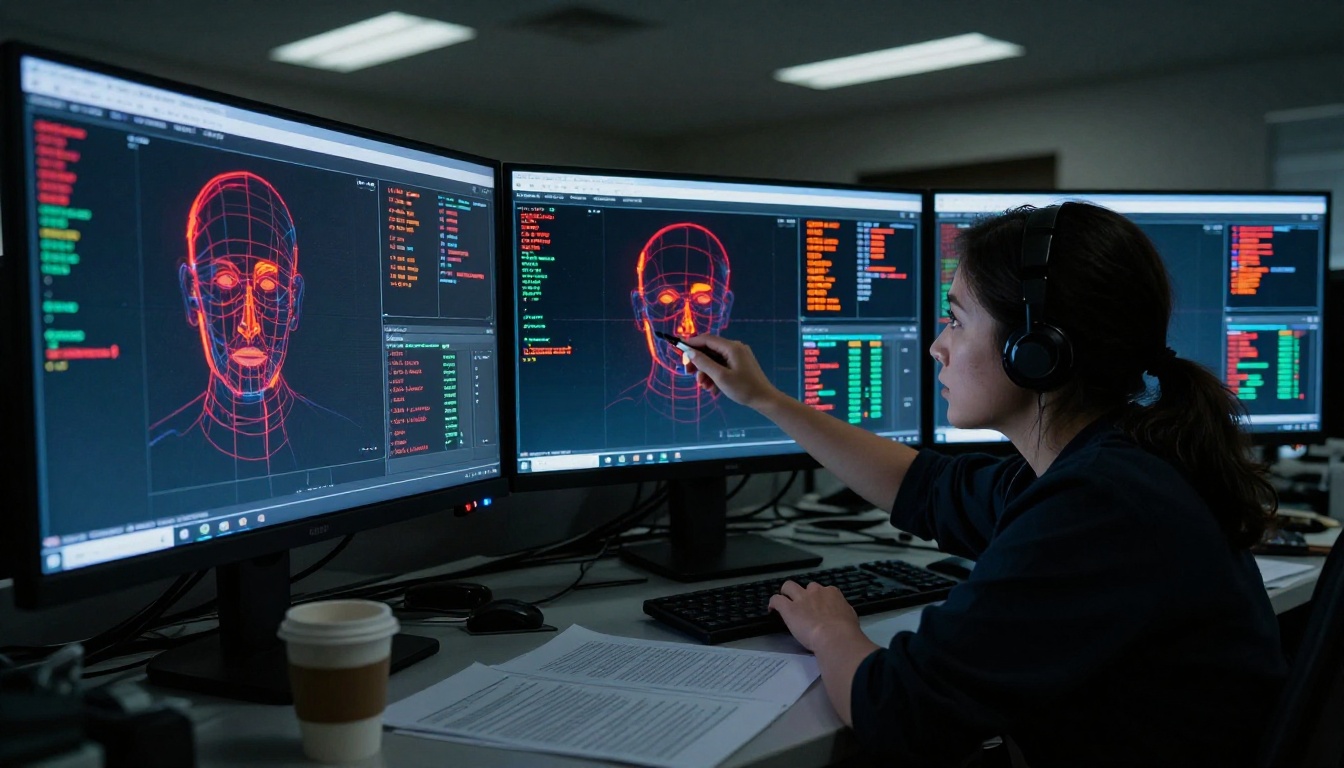
Most professional video forensics training focuses on compression artifacts, cloning signatures, and metadata inconsistencies, all signatures of traditional video editing and earlier GAN-based deepfakes. Diffusion-based video models leave fundamentally different signatures, or in some cases, almost none at all. The experts were looking for fingerprints from a different crime.
What They Were Checking
| Detection Method | Works Against Old Deepfakes | Works Against New Models |
|---|
| Metadata inspection | Yes | Partially |
| Compression artifact analysis | Yes | No |
| Eye blink pattern analysis | Yes | No |
| Facial boundary blending | Yes | No |
| Spectral frequency analysis | Partially | Partially |
| Temporal coherence testing | No | No |
The pattern is clear. The old toolkit is largely obsolete for current-generation models. New detection tools are being developed, but the best systems currently available still operate at accuracy rates that would not hold up in legal settings.
Calibration Failure
There's also a psychological dimension. Experts who have rarely seen AI video that actually fooled them tend to be overconfident. The mental model of "AI video looks a certain way" becomes a liability once the technology crosses certain thresholds. Calibration requires exposure to failure cases, and until recently, there weren't enough convincing failure cases to recalibrate the detectors.
How to Spot What Most People Miss
This is not a fully solved problem, but there are signals worth checking before you share.
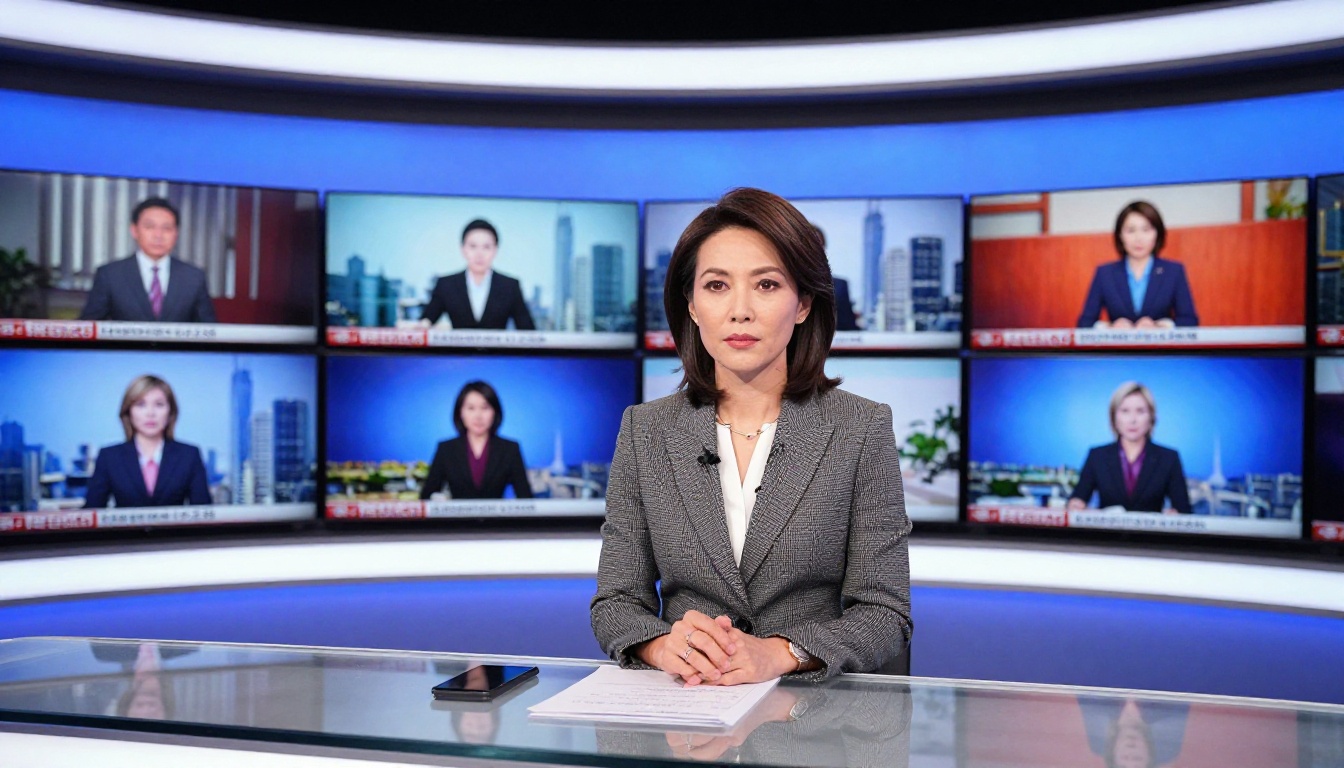
Check backgrounds first: AI models often generate convincing foreground subjects but lose spatial consistency in the background during rapid camera movement. Watch for walls that breathe or furniture that subtly shifts position.
Five Things to Watch For
- Jewelry and accessories: Earrings, rings, watches, and necklaces remain hard for AI to render consistently across motion. They often phase through skin or change shape subtly between frames.
- Hand geometry: Fingers are notoriously difficult. Count them when hands are clearly visible in frame.
- Text in the environment: Street signs, labels, text on clothing. AI models struggle with legible, consistent text rendering. It often morphs or blurs when examined closely.
- The 8-second rule: Most AI video artifacts accumulate over time. Watch for a full eight seconds before making a judgment on a clip.
- Context coherence: Does the location feel geographically consistent throughout the clip? Backgrounds in AI video sometimes incorporate elements from geographically impossible combinations.
What Software Can Do
Detection tools like Hive Moderation, Reality Defender, and Sensity AI are actively developing real-time detection pipelines. None are close to perfect. The most honest researchers in the field say detection accuracy at consumer-quality AI video hovers around 75-85%, which sounds high until you consider the volume of content being generated daily.
The Models Behind the Revolution
Understanding the specific models driving this change matters, both for context and for practical application.

The models now available represent capabilities that would have required a full Hollywood production budget as recently as 2022. The current landscape of accessible text-to-video generation is remarkable:
Each represents a distinct approach to video synthesis, with different strengths across prompt adherence, motion smoothness, and photorealism quality.
The Audio Problem Nobody Talks About
Vision got most of the public attention, but audio is equally important and equally solved. Models like Veo 3 and Seedance 1.5 Pro now generate ambient audio synchronized to the visual content. When a door opens, you hear a door. When someone speaks, the room acoustics match the visual space. Synchronized audio was one of the last reliable tells. It's no longer reliable.
What This Changes Right Now
The implications spread across industries faster than most organizations are prepared for.
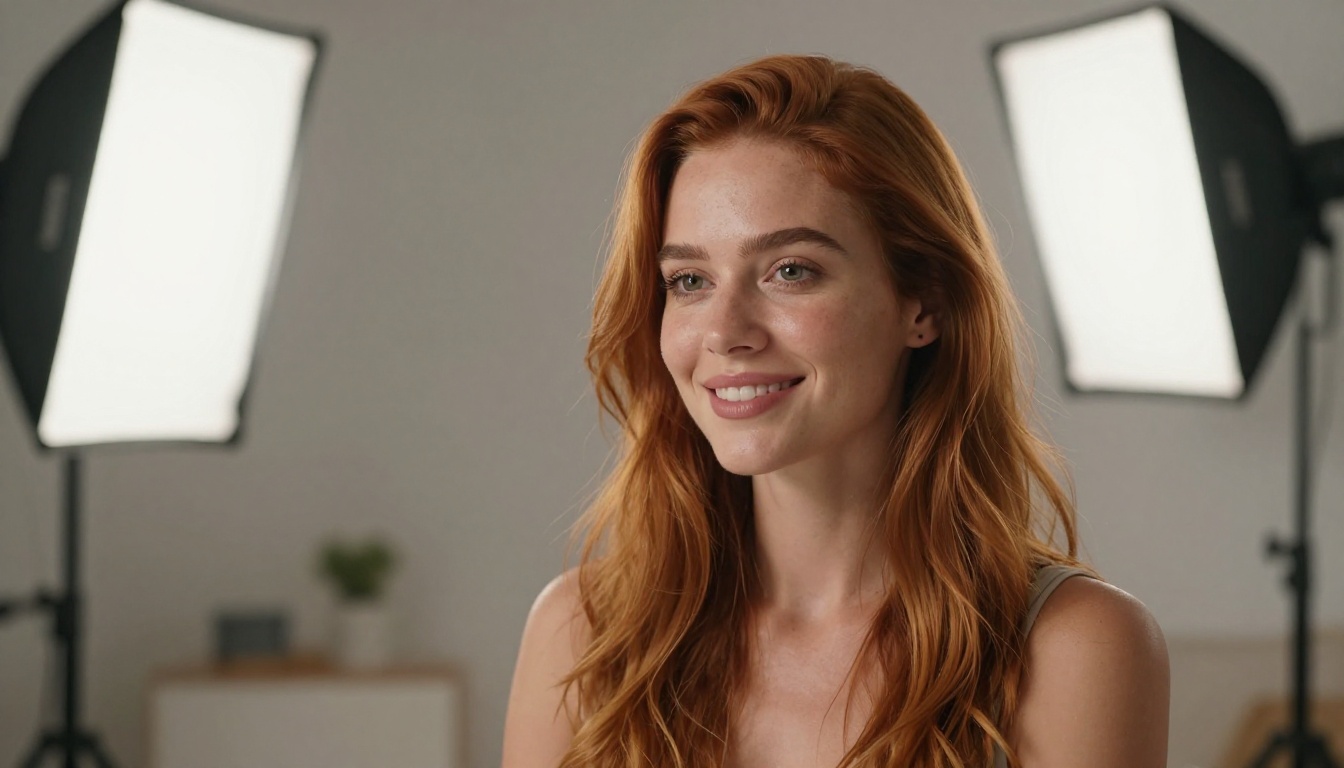
For journalism: Video is no longer inherently more credible than text. Every clip now requires provenance verification before publication. The professional standard is shifting toward requiring C2PA-certified footage or direct source verification for any video used as evidence of real-world events.
For legal proceedings: Courts are beginning to grapple with video evidence in ways they haven't had to since the widespread adoption of photography. A video showing a person committing an act cannot, on its own, be treated as conclusive evidence without corroborating provenance chain.
For content creation: The same models that produce synthetic misinformation also create legitimate art, entertainment, advertising, and education. Every production house with a video budget is actively evaluating how much of that budget can be redirected to AI generation.
The Social Contract Around Video
For decades, "seeing is believing" was a reasonable heuristic. It was wrong even before AI video, given the history of film editing and selective framing, but it was functional. People broadly trusted video more than text because it seemed harder to fabricate. That asymmetry has collapsed.
What this requires now: The responsibility for verification shifts from the viewer, who lacks the tools, to the publisher and platform. Platforms that continue serving unverified video without provenance signals are, at minimum, operating negligently.
Three Industries Already Affected
- Politics: Synthetic campaign footage has already appeared in multiple countries. Detection rates at time of initial publication are often near zero.
- Finance: Deepfake video calls impersonating executives have resulted in documented wire fraud cases, including widely reported incidents involving transfers above $20 million.
- Entertainment: Studios are in active negotiation about AI likeness rights as models can now credibly synthesize performances of real actors with minimal reference material.
Your Questions, Answered
Can you watermark AI video?
Yes, technically. Google's SynthID embeds imperceptible watermarks that survive most editing operations. The challenge is that watermarking is voluntary and not universally adopted. Open-weight models can be deployed without any watermarking infrastructure at all.
Will detection tools catch up?
Detection tools are improving, but the offense-defense dynamic in this space strongly favors the generators. Every time a detection signature becomes widely known, model training can be adjusted to avoid producing it. Detection is a reactive discipline in a world where generation is proactive and faster.
Is creating this content illegal?
Specific applications of non-consensual deepfake video are illegal in several jurisdictions, including the UK, parts of the US, and Australia. The creation of synthetic video itself is not broadly regulated. Legislation is consistently moving more slowly than the technology in every tracked jurisdiction.
What's the simplest thing a normal person can do?
Pause before sharing. One extra second of skepticism directed at surprising or emotionally provocative video has measurable impact on spread. Your threshold for sharing should be higher than your threshold for watching.
Now It's Your Turn
The same technology producing synthetic media at this quality level is accessible to anyone with a browser and a prompt. The difference between the people creating the content that shapes perception and the people only consuming it is smaller than it has ever been.
Whether you want to produce a short film, create visual content for a brand, or simply understand what these tools feel like from the inside, the catalog of text-to-video models on Picasso IA puts everything discussed in this article within reach. Kling v3 Video for cinematic motion quality. Veo 3 for audio-synchronized photorealism. LTX 2 Pro for 4K resolution on high-production projects.
The question is no longer whether AI video can fool experts. It already has. The question now is what you do with that information, and whether you use these tools to create something worth watching.
Start with a prompt. See what appears. The gap between what you imagine and what these models produce is smaller than you think.


