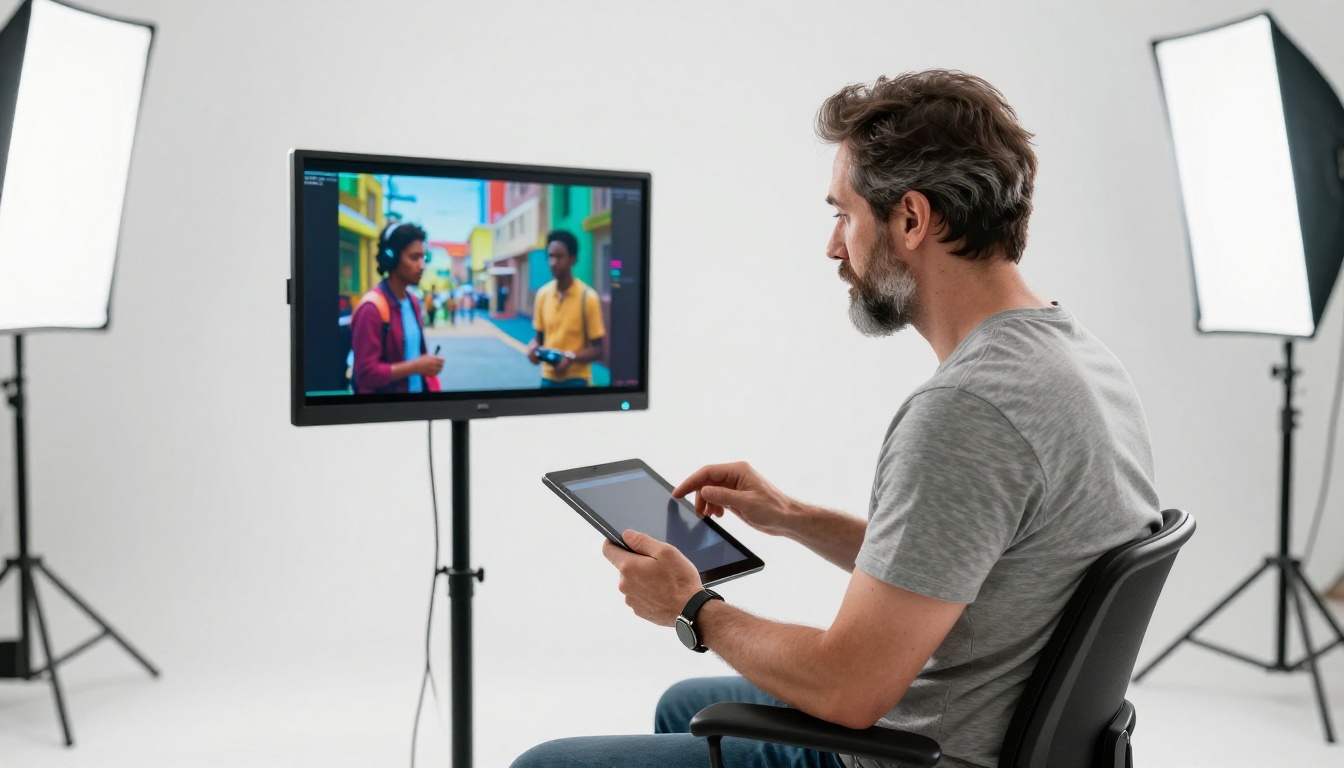
Seedance 2.0 is one of the most capable AI video models available right now. Built by ByteDance, it does something most video AI tools still struggle with: it generates cinematic motion and synchronized native audio in the same pass, without separate tools or workarounds. Whether you want to turn a text prompt into a short film clip or animate a still image with realistic movement, this model delivers results that would have taken a professional production team a full week to produce. This article walks you through exactly how to use Seedance 2.0 to create AI videos, from your first prompt to final output.
What Seedance 2.0 Actually Does
Before touching a single setting, it helps to understand what makes Seedance 2.0 different from other text-to-video models. Most AI video generators fall into one of two camps: they produce good motion with mediocre image quality, or they render sharp frames with stiff, unconvincing movement. Seedance 2.0 sits in a third category entirely.
It was trained on massive amounts of real video data with a strong emphasis on temporal consistency, which means objects and people move the way they actually move in real life. Faces do not morph mid-clip. Camera movements follow realistic physics. Hands remain proportional. Hair reacts to movement. These details are what separate it from earlier-generation models where AI artifacts quickly broke the illusion of realism.
The model also handles scene complexity better than most of its competitors. A crowd scene with multiple moving subjects, a flowing river with reflective light, a person walking through a market with background activity: all of these hold together in Seedance 2.0 where earlier models would collapse into visual chaos.
Text-to-Video vs. Image-to-Video
Seedance 2.0 supports two primary input modes, and choosing the right one for your project makes a significant difference in results.
Text-to-Video takes a written prompt and generates a scene from scratch. This mode gives you the most creative freedom but requires stronger prompt writing skills. You are essentially describing a scene to a director who has never been inside your imagination, so every detail you omit is a detail the model will fill in with its own interpretation.
Image-to-Video takes a static image and animates it with natural motion. This mode produces more predictable results because the model has a visual reference to work from. If you have a product photo, a portrait, or a specific scene composition you want animated, image-to-video is the faster path to a usable output.
| Mode | Best For | Creative Control | Predictability |
|---|
| Text-to-Video | Original scenes, narratives | High | Medium |
| Image-to-Video | Animating specific assets | Medium | High |
Both modes benefit from the same strong prompt writing practices, but image-to-video can compensate for weaker prompts because the visual input carries so much information on its own.
The Native Audio Difference
Most text-to-video models produce silent clips. You then export the video, open a separate audio tool, and attempt to sync sound effects manually with varying degrees of success. Seedance 2.0 generates audio natively, meaning ambient sounds, environmental textures, and even vocal elements appear already in sync with the visual content.
This is not a replacement for professional audio post-production. It does not give you fine-grained mixing controls or isolated audio tracks. But for content creators who need quick, distribution-ready clips, it removes an entire step from the workflow and produces results that feel cohesive in a way that manually layered audio often does not.
Setting Up Your First Seedance 2.0 Video
The technical setup is straightforward. The creative setup requires more thought, and that is where most first-time users struggle.
Writing Prompts That Actually Work
The single biggest factor in output quality is your prompt. Seedance 2.0 reads prompts differently than image generation models do. Because it needs to generate motion that unfolds over time, your prompt should describe what is happening, not just what things look like.
💡 Prompt Formula: Subject + Action + Environment + Camera Movement + Lighting + Mood
Weak prompt: "A woman in a forest"
Strong prompt: "A woman in her 30s walks slowly through a dense pine forest at golden hour, camera tracking her from behind at ground level, morning mist rising from the forest floor, warm amber light filtering through the trees, peaceful and contemplative atmosphere"
Notice the strong version includes a clear subject with specific detail, an action verb describing what is happening, environmental context that implies visual texture, a camera movement instruction, a specific lighting description, and a mood signal. The model uses all of these signals together to build motion that feels intentional rather than random.
A few additional rules that improve results consistently:
- Use verbs of motion: "walks," "pans," "rises," "drifts," "rotates" all give the model a temporal anchor
- Specify camera behavior: "slow dolly in," "static wide shot," "handheld follow cam" produce dramatically different results from the same scene
- Add lighting direction: "soft volumetric morning light from the left" consistently produces more cinematic output than generic brightness descriptions
- Avoid negations: Instead of "no motion blur," write "crisp, stable camera movement with sharp focus throughout"
Your prompt should sit between 50 and 150 words. Shorter prompts give the model too little direction. Prompts over 200 words often cause conflated or confused elements. The sweet spot is a dense, specific paragraph that reads like a cinematographer's brief.
Resolution and Duration Settings
Seedance 2.0 supports multiple output configurations. Here are the settings that matter most in practice:
| Setting | Options | Recommendation |
|---|
| Resolution | 720p, 1080p | 720p for testing, 1080p for final output |
| Duration | 5s, 10s | 5s for prompt iteration, 10s for publishing |
| Aspect Ratio | 16:9, 9:16, 1:1 | Match your target platform |
| Audio | On / Off | Keep on unless you have a specific reason to disable it |
Always test new prompts at 5 seconds and 720p. This keeps iteration fast and cost-efficient. Once you have a prompt producing consistently good results, switch to 10 seconds at 1080p for your final generation. Skipping the testing phase at full quality settings is the most expensive mistake beginners make.
How to Use Seedance 2.0 on PicassoIA
Seedance 2.0 is available directly on PicassoIA, giving you browser-based access with no local installation, no GPU hardware, and no API key management. The entire workflow runs in your browser.
Step 1: Access the Model
Navigate to Seedance 2.0 on PicassoIA. You will see the model interface with a text prompt field, an optional image upload area, and output configuration controls. If you need faster generation at slightly reduced quality, Seedance 2.0 Fast is also available on the platform and uses the same interface pattern.
Step 2: Choose Your Mode
Select between Text-to-Video and Image-to-Video. If you choose Image-to-Video, upload your source image before writing your prompt. The image should be clear, well-composed, and at least 512x512 pixels. Blurry or heavily compressed source images will produce degraded output regardless of prompt quality.
Step 3: Write Your Prompt
Apply the prompt formula: Subject, Action, Environment, Camera, Lighting, Mood. Keep it between 50 and 150 words. Write in present tense, use specific nouns, and describe what is happening dynamically rather than statically.
💡 Pro tip: End every prompt with a lighting description. Lighting is the single most powerful signal for cinematic quality in AI video generation. Models trained on real film and photography respond to cinematography language in ways that dramatically improve output.
Step 4: Configure Output Settings
Set your duration, resolution, and aspect ratio before generating. For social media content: 9:16, 720p, 5 seconds. For professional presentations or showreels: 16:9, 1080p, 10 seconds. If you plan to publish to multiple platforms, generate the same prompt in both aspect ratios separately rather than cropping. AI video loses compositionally critical content when cropped because the model designed the frame intentionally.
Step 5: Generate and Review
Click generate. Depending on resolution, duration, and current platform load, your clip will appear within 30 seconds to 3 minutes. When reviewing your output, check three things specifically:
- Motion quality: Does movement feel natural or mechanical?
- Audio coherence: Does the generated audio match the visual energy of the scene?
- Artifact presence: Are there visible issues with faces, hands, or text elements?
If the output misses what you intended, change one element of your prompt at a time. Changing multiple variables between generations makes it impossible to identify what caused the improvement or regression.
Seedance 2.0 vs. Seedance 2.0 Fast
PicassoIA offers both versions of the model. Understanding when to use each one prevents unnecessary credit spend and frustration.
| Feature | Seedance 2.0 | Seedance 2.0 Fast |
|---|
| Generation Speed | Slower | Significantly faster |
| Visual Fidelity | Highest quality | Excellent, slightly reduced |
| Motion Consistency | Exceptional | Very good |
| Native Audio | Yes | Yes |
| Best Use Case | Final deliverables | Rapid prototyping |
The Fast version is not a downgrade. It is a different tool for a different stage of your workflow. Use Fast when iterating through prompt variations. Use the full model when publishing.
3 Mistakes People Make With AI Video Prompts
Most poor outputs trace back to a small set of repeating errors. Avoid these and your results will improve immediately.
Mistake 1: Writing image prompts for a video model. Image prompts describe static composition. Video prompts describe events unfolding over time. If your prompt reads like a painting description, the model will render beautiful frames with awkward, aimless motion. Add verbs. Describe what is happening, not just what is there.
Mistake 2: Skipping camera movement instructions. Camera movement is one of the most underused variables in Seedance 2.0. "Slow dolly forward," "static wide shot," "handheld follow cam," and "aerial crane shot descending" all produce radically different outputs from identical scene descriptions. Always specify how the camera behaves in the scene.
Mistake 3: Generating at full quality before testing. Full resolution, maximum duration, with audio, for a prompt you have never tested before is a reliable path to wasted credits and disappointing results. Always test at 5 seconds and 720p. Finalize only when the prompt produces consistently good short-form output.
Real Use Cases That Actually Work
Seedance 2.0 is not a demonstration tool. It produces output that functions inside real creative pipelines.
Social Media Content
Short-form video for Instagram Reels, TikTok, and YouTube Shorts is where Seedance 2.0 delivers the most immediate value. A well-written prompt generates a 5-10 second clip that would otherwise require a location, talent, a camera operator, lighting setup, and post-production editing. The 9:16 aspect ratio output is ready to post with only caption work remaining. Total production time per clip can be under ten minutes once you have a working prompt template.
Product Demonstrations
Image-to-video mode produces reliable results for product animation. Upload a clean product photo, write a prompt that describes a slow camera orbit or a zoom-out reveal, and the model generates a clip that communicates the product visually without a physical shoot. Electronics, packaging, fashion items, food products, and abstract software concepts all perform well in this mode. The output tends to be brand-safe and visually clean when the source image quality is high.
Creative Storytelling and Concept Visualization
Writers, independent filmmakers, and creative directors use Seedance 2.0 to visualize scenes before committing to production resources. A detailed prompt can become a moving reference clip in under three minutes. This is particularly valuable when pitching concepts to clients or collaborators who struggle to interpret static storyboards. Moving reference, even AI-generated, communicates pacing, energy, and mood in ways that illustrations simply cannot.

The Seedance Model Family on PicassoIA
ByteDance has iterated quickly on this model family. Understanding the full progression helps you choose the right version for a given project's quality and speed requirements.
The jump from 1.5 Pro to 2.0 is substantial. Native audio alone changes the usability of the output significantly, removing an entire post-production step that previously required separate tools and manual synchronization work.
Other AI Video Models Worth Considering
Seedance 2.0 is among the best AI video models available, but other models on PicassoIA serve specific project types better.
For character animation from a single photo: DreamActor-M2.0 by ByteDance animates characters with impressive facial and body consistency, making it ideal for avatar content and spokesperson videos.
For precise motion control: Kling V3 Motion Control lets you transfer motion patterns from a reference video to any character, giving you a level of control that text prompts alone cannot replicate.
For the highest-end cinematic output: Veo 3 and Veo 3.1 by Google push realism further for projects where absolute quality is the priority over speed.
For ultra-fast iteration: LTX-2.3-Fast by Lightricks generates clips quickly and works well when cycling through many prompt variations in a short session.
Start Making Your Own AI Videos
Every concept you have been sitting on, every product you have wanted to animate, every story you have needed to visualize: none of it requires a production budget anymore. Seedance 2.0 on PicassoIA puts cinematic AI video within reach of any creator with a clear idea and a well-crafted prompt.
The platform also gives you access to over 87 video generation models alongside Seedance 2.0, including image-to-video tools, lipsync models for realistic voice synchronization, video enhancement with AI upscaling and stabilization, and audio-driven animation. Whether you are generating your first AI video or refining an existing content production workflow, there is a model on PicassoIA built for exactly what you are creating.
Write your first prompt today. Describe a scene you want to see move. Test it at 5 seconds. Refine it once. Then generate the final version and see what is now possible without a crew, a location, or a production budget.