The debate around AI image generators for adult content keeps heating up, and two names keep appearing in the same sentence: Nano Banana Pro and GPT Image 2.0. Both promise high-fidelity results, both support image prompting, and both have communities of dedicated users behind them. But for creators who specifically need NSFW or adult-themed output, the differences matter far more than the marketing copy suggests.
This breakdown covers what each model actually does for adult content, where they succeed, where they fail, and why a growing number of serious creators have quietly moved on to platforms that do not gate their tools behind restrictive content filters.
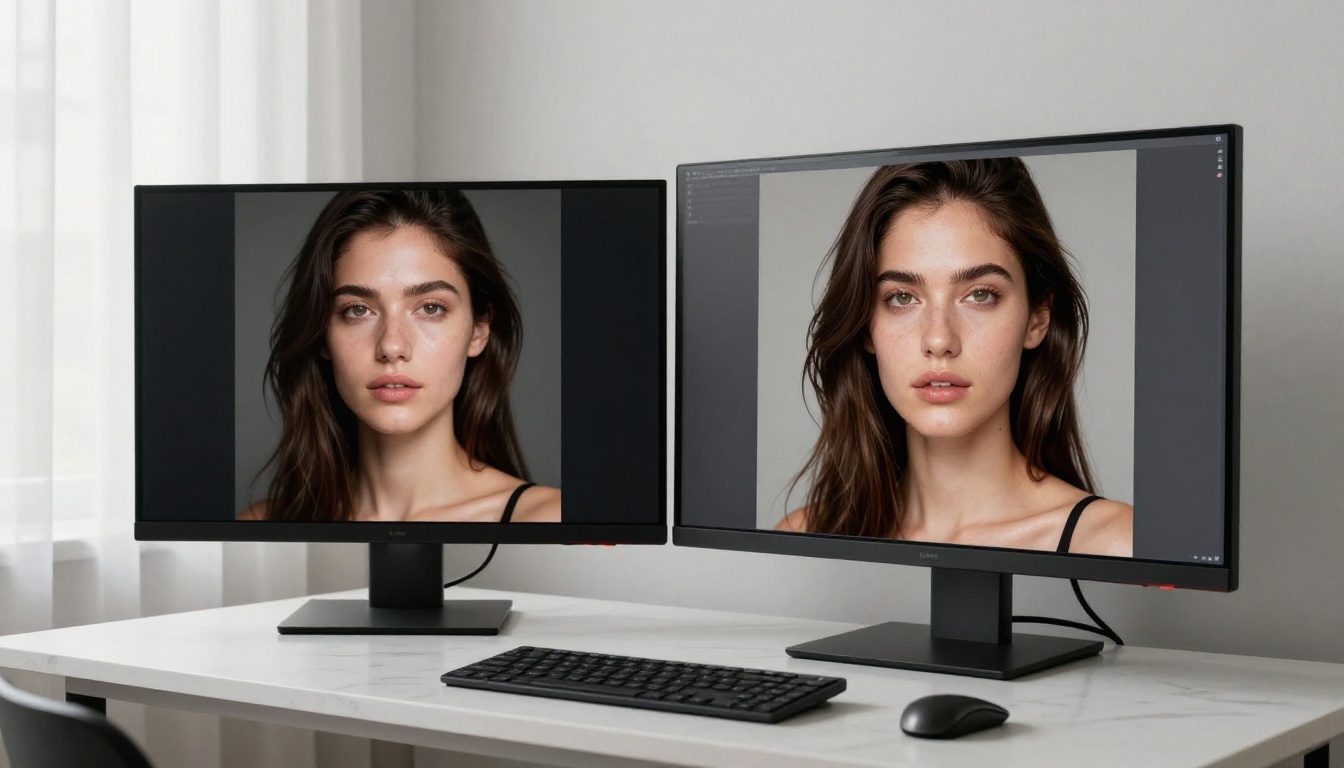
What Nano Banana Pro and GPT Image 2.0 Actually Offer
Before getting into direct comparisons, it helps to understand what each model is designed to do. These are not the same type of tool, and treating them as identical will skew your expectations in both directions.
Nano Banana Pro at a Glance
Nano Banana Pro is a text-to-image model built for creative image synthesis. It handles complex prompts reasonably well, can process reference images, and produces outputs that tend toward a stylized realism. The "Pro" tier removes some generation limits from the base model and unlocks a handful of additional style parameters for power users.
For adult content specifically, Nano Banana Pro operates in a grey area. Some categories of suggestive content pass through without issue, but explicit material triggers content blocks consistently. The model's training data appears weighted toward artistic and commercial photography, which shows in the output aesthetic. Skin rendering is competent but tends toward the overly smooth side, missing the natural texture variation that makes an image feel truly photorealistic.
Generation speed averages around 8 to 15 seconds per image depending on resolution, and the Pro tier caps most users at around 200 to 400 daily generations before throttling kicks in. For serious production work, that ceiling becomes a recurring obstacle.
GPT Image 2.0 at a Glance
GPT Image 2.0 is OpenAI's second-generation image synthesis model, built on the same large language model (LLM) infrastructure that powers their broader multimodal systems. This architectural choice, building image generation on top of a strong LLM backbone, gives GPT Image 2.0 a distinct advantage in prompt interpretation. Natural language understanding is exceptional: if you describe a complex scene with multiple subjects, specific lighting conditions, and precise spatial relationships, GPT Image 2.0 is one of the better models at actually interpreting that description correctly.
The adult content situation is more restrictive than Nano Banana Pro. GPT Image 2.0 applies OpenAI's usage policies, which block a wide range of adult-themed content by default. There is no API bypass for consumer accounts, and jailbreak attempts are identified and patched quickly. For a creator focused on suggestive or explicit imagery, GPT Image 2.0 will refuse a significant percentage of prompts that any serious NSFW workflow requires.
Worth noting: you can access LLM models with similar multimodal capabilities on PicassoIA. GPT-4o and GPT 4.1 are both available for text generation, reasoning, and multimodal tasks, without managing OpenAI's API directly or dealing with platform-level content restrictions.
Image Quality: The Real Comparison
Setting aside content policy for a moment, both models have genuine technical strengths and weaknesses that affect output quality regardless of what you are generating.
Realism and Skin Texture
This is where the comparison gets interesting. Nano Banana Pro handles skin rendering with a characteristic softness that looks appealing in beauty photography but reads as artificial under close scrutiny. Pores, fine hairs, micro-shadow in skin folds, the slight translucency where skin is thin over bone, these details are often missing or blended away. The result is a "smooth" look that does not hold up at large print sizes or high-resolution crops.
GPT Image 2.0 performs better on compositional realism but faces similar skin-texture challenges. Its strengths are in scene construction: how objects relate to each other spatially, how light falls across a room, how clothing drapes over a body. Individual subject detail, particularly skin and hair at close distances, remains a weak point compared to models purpose-built for portrait synthesis.
For adult content creators, skin texture is not an aesthetic preference. It is the primary indicator of photorealism. An image that looks slightly "plastic" or "filtered" immediately signals artificial generation. The models that solve this problem are the ones that dominate serious NSFW workflows.
Prompt Faithfulness
Prompt faithfulness measures how closely the output matches what the text described. GPT Image 2.0 wins this category. Its LLM backbone means it can interpret nuanced scene descriptions, specific lighting requests, and atmospheric cues with higher accuracy than most alternatives. Describe a subject in a specific pose, with a particular expression, in a defined lighting setup, and GPT Image 2.0 hits more of those details than Nano Banana Pro.
Nano Banana Pro shows more prompt drift, particularly with complex multi-element prompts. It performs best with simpler, direct descriptions and loses coherence when prompts exceed 100 to 150 words with multiple subjects. For adult content with specific compositional requirements, this drift becomes a consistent frustration.
💡 Tip: For either model, breaking a complex prompt into a base composition and a separate editing pass usually produces better results than trying to describe everything in a single text block.
Speed, Limits, and Consistency
How Fast They Actually Generate
Both models sit in a similar generation speed range. Nano Banana Pro averages 8 to 15 seconds per image at standard resolution. GPT Image 2.0 is slightly faster on simpler prompts, averaging 6 to 12 seconds, but slows noticeably on complex compositions. Neither model is in the sub-3-second range that top-tier platforms now routinely deliver.
For batch work, speed compounds significantly. If you need 50 images for a project, the difference between an 8-second model and a 2-second model is 400 seconds versus 100 seconds. At 200 images, that is over 26 minutes versus under 7 minutes. At 1,000 images, you are comparing roughly 2.2 hours to 33 minutes. Speed is not a vanity metric for production users.
Daily Limits and Rate Caps
Both models impose rate limits that become problematic for serious production workflows. Nano Banana Pro's Pro tier provides a daily generation budget that resets every 24 hours. Heavy users regularly hit that ceiling before their workday ends, leaving them either waiting or switching tools mid-project.
GPT Image 2.0 limits vary based on account tier and API access level, but the content policy restrictions effectively create a second, harder ceiling for adult content creators. Even when you have generation credits remaining, a refused prompt consumes your time and workflow momentum. Running a batch of 200 prompts overnight and returning to find 60 of them rejected is a common experience for anyone using these models for adult content.

Where Both Fall Short for Adult Content
This is the honest conversation that most tool comparisons skip. Neither Nano Banana Pro nor GPT Image 2.0 was built for adult content creation, and it shows in ways that go beyond occasional prompt refusals.
Filter Problems That Break Workflows
The content filters on both platforms are applied at the model level, which means there is no setting to adjust or disable them for adult use cases. The filters are also inconsistent, which is arguably worse than a hard block. A prompt that generates successfully on Monday may fail after a Tuesday filter update. A phrasing that passes in one context may fail in a slightly different context. Building a reliable, repeatable workflow on top of inconsistent moderation is genuinely difficult.
For adult content creators, inconsistency creates compounding problems. You cannot batch-generate images overnight and trust that your prompts will all process. You cannot build template-based workflows because the template may stop working after a filter update. Every session involves a percentage of failed prompts, retries, and workarounds that consume time without producing output.
Pricing Math at Scale
The per-image pricing on both models becomes significant at production volumes. Generating 1,000 images on Nano Banana Pro at standard resolution costs roughly $80 to $120 depending on tier and credit packages. At GPT Image 2.0's pricing, the same volume lands around $100 to $120. At that price point, you are paying meaningful sums for images that may not even fully match your requirements due to filter restrictions.
💡 The real math: If 15% of your prompts get blocked, your effective cost per successful image is 15% higher than the stated per-image price. On a 1,000-image project, that rejected content costs you both money and time with nothing to show for either.

Best NSFW Models on PicassoIA
The practical solution that serious creators have landed on is direct: stop using platforms that were not designed for adult content, and use platforms that were. PicassoIA offers over 90 text-to-image models, several of which are purpose-built for high-quality, uncensored image generation.
Seedream 4.5 Takes the Lead
Seedream 4.5 is the top recommendation for NSFW image generation on the platform. It accepts adult content across a wide range of categories, supports both text-to-image and image editing workflows, and generates results in under 3 seconds. That speed difference is not incremental: it fundamentally changes how you approach creative work.
The image quality from Seedream 4.5 is particularly strong on skin rendering. The model produces realistic skin texture with visible pore detail, natural light scattering, and the fine detail that makes images read as photographs rather than generated artwork. For portrait and figure work, this is the quality level that matters for adult content creators.
Prompt handling strikes a balance between faithfulness and creative interpretation. Detailed descriptions of lighting, pose, and composition tend to produce outputs that match the prompt without the drift that plagues both Nano Banana Pro and GPT Image 2.0 at higher complexity levels.
Important note: the newer Seedream 5 Lite does not support NSFW content. Stick with Seedream 4.5 for adult content workflows.
Unlimited Generations with Image Editor Pro
PicassoIA Image Editor Pro solves the pricing problem directly. It operates as an img2img model and is included in Elite and Infinite subscriptions with unlimited generations. The same 1,000 images that cost around $100 on Nano Banana Pro are included in your subscription fee here, no extra charge.
Generation time is under one second, faster than any model you will find on the platforms described above. The model accepts NSFW content, and a free trial of 3 generations is available with no credit card required.
For creators doing high-volume work, this changes the economics of the entire workflow. When generation has no per-image cost, your creative process shifts: you iterate more, experiment freely, and arrive at better results because you are not rationing attempts.
More Options Worth Trying
PicassoIA's catalog includes several other strong choices for adult content creation:

How to Use Seedream 4.5 on PicassoIA
The workflow is simpler than it might appear. Here is how to get from zero to a generated image.
Step-by-Step: Your First Generation
Step 1: Navigate to Seedream 4.5 on PicassoIA and open the model page.
Step 2: In the prompt field, describe your subject with specificity. Seedream 4.5 handles detailed prompts well. Include lighting direction ("natural window light from the left"), distance ("close-up portrait" or "full-body composition"), and setting details to guide the output accurately.
Step 3: Select your output resolution. For print-quality work, use the highest available option. For web or social platform use, standard resolution processes faster and still delivers strong detail.
Step 4: Click generate. Most outputs arrive in under 3 seconds.
Step 5: If the result is close but not exactly right, use the built-in image editing feature to refine specific areas. You can adjust lighting, alter clothing details, or modify the background without regenerating the entire image from scratch.
Parameters That Actually Matter
- Negative prompts: Specify what you want excluded. Adding "no illustration, no cartoon, no CGI, no smooth skin" to your negative prompt keeps results in the photorealistic range and avoids the plastic look common on other models.
- Seed values: When you get an output that works, save the seed number. Reusing it with slight prompt variations lets you iterate on a successful base composition without starting from zero each time.
- Image editing mode: For images that are mostly correct, the editing feature is faster and more precise than full regeneration. Describe only the element you want changed, and the model adjusts that element while preserving everything else.
💡 Pro tip: Prompts that include specific lighting descriptions like "volumetric morning light from upper left" or "golden hour backlight with rim separation" consistently outperform prompts with generic lighting references like "good lighting" or "studio light."
The Pricing Reality at Scale
The cost comparison becomes stark when you move from casual to production usage. Here is how the three main options compare at different volumes:
| Volume | Nano Banana Pro | GPT Image 2.0 | PicassoIA Unlimited |
|---|
| 50 images | ~$5 | ~$6 | Included |
| 200 images | ~$20 | ~$24 | Included |
| 1,000 images | ~$100 | ~$120 | Included |
| 5,000 images | ~$500 | ~$600 | Included |
| 10,000 images | ~$1,000 | ~$1,200 | Included |
At 1,000 images per month, Nano Banana Pro costs roughly $100 and GPT Image 2.0 costs roughly $120. Neither delivers unlimited. PicassoIA's flat subscription replaces all of that with a single monthly fee.
The content filter situation amplifies this further. If 15% of your prompts get blocked on Nano Banana Pro or GPT Image 2.0, you lose both the generation cost and the time spent on each failed attempt. On PicassoIA, with models that accept adult content natively, prompt rejection rates for standard adult workflows drop close to zero.
There is also a qualitative shift that the pricing table does not capture. When generation is unlimited, you stop being conservative with your prompts. You iterate freely. You run variations. You find the best output instead of settling for "good enough" because you have credits to protect. That creative freedom produces noticeably better results.
Start Creating Without Limits
The comparison between Nano Banana Pro and GPT Image 2.0 reveals a common pattern: both are capable general-purpose image models that were not designed for adult content, and both show that limitation in ways that create real friction for creators working in this space.
Seedream 4.5 removes the content policy friction and brings generation speed to under 3 seconds. PicassoIA Image Editor Pro removes the per-image cost entirely for Elite and Infinite subscribers. Qwen Image 2, Grok Imagine Image, and P-Image round out a catalog that covers every workflow from single-image generation to large-scale batch production.
The free trial on PicassoIA Image Editor Pro requires no credit card and gives you 3 generations to evaluate the quality firsthand. Seedream 4.5 is available immediately with no waitlist.
Every image model, video model, LLM, and audio tool available on the platform is listed at picassoia.com/en/all-models. If your workflow extends beyond image generation into video animation, super-resolution upscaling, or AI-assisted writing, the catalog covers all of it with models that share the same open content policy.
The tools are ready. The models are live. Your creative limits are entirely your own to set.


