Two models dominate the conversation in uncensored AI image generation right now: Seedream 5.0 from ByteDance and FLUX.2 Max from Black Forest Labs. Creators who work in adult AI content have spent months testing both, and the results are more nuanced than a simple ranking suggests. Speed, anatomy accuracy, prompt adherence, and censorship tolerance all point in different directions depending on the model. This article goes deep on the actual differences so you can stop guessing and start generating exactly what you need.
Seedream 5.0: What ByteDance Built
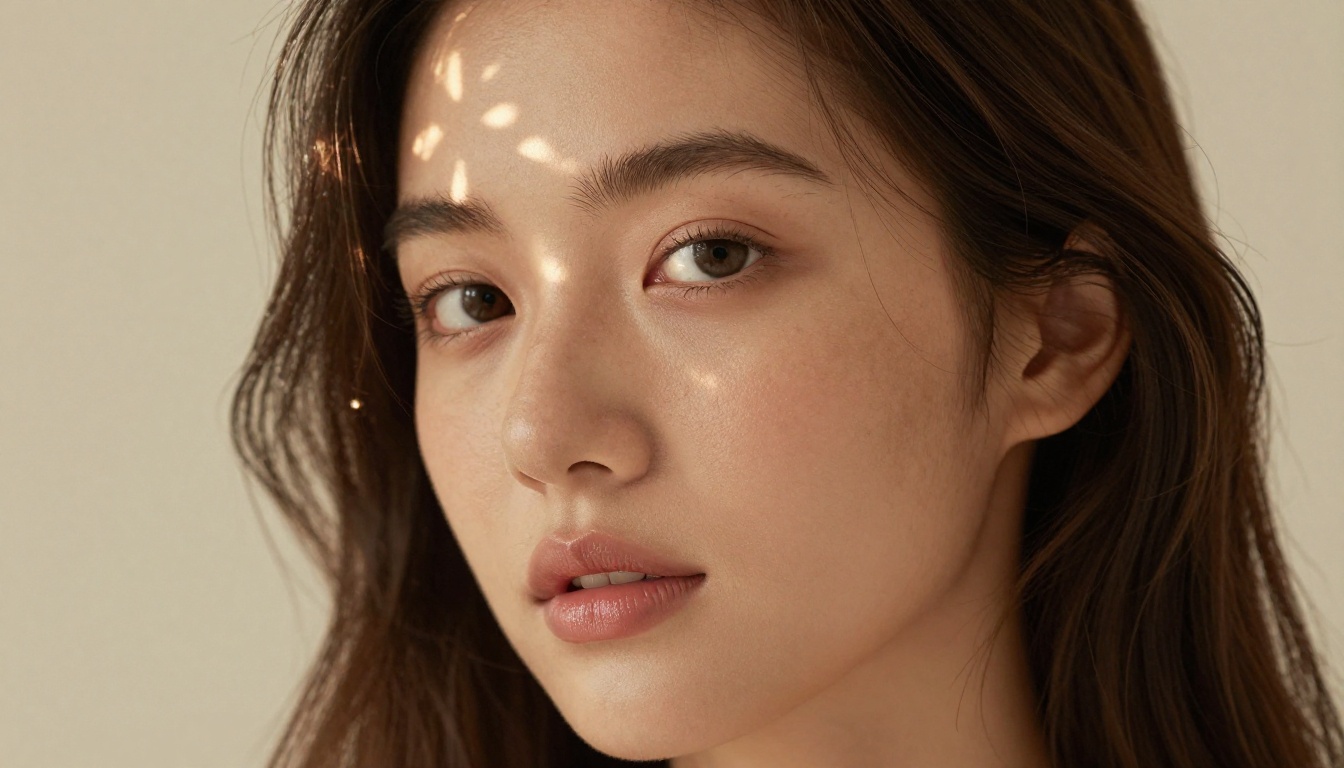
ByteDance's Seedream series has delivered consistently reliable photorealism since Seedream 3, and version 5.0 marks the most significant architectural jump in that lineage. The model was trained on curated photorealistic datasets with a strong emphasis on human subjects, and it shows in the output. Skin renders with visible pore structure and natural color variation, lighting behaves correctly across curved surfaces, and anatomical proportions hold up across diverse body types and poses.
The practical implication for NSFW AI image generation is that Seedream 5.0 does not require heavy prompt engineering to produce results that look photographic. The base output quality is high enough that straightforward prompts produce usable images, while detailed prompts produce exceptional ones.
The Architecture Underneath
Seedream 5.0 runs on a refined Diffusion Transformer (DiT) backbone. Unlike older UNet-based architectures, the transformer approach gives the model stronger coherence across long prompts and better preservation of fine spatial details at full resolution. This matters specifically for adult content, where anatomical accuracy in complex poses is often where cheaper models collapse into distorted geometry.
The training pipeline used human anatomy as a priority class, meaning the model has seen more diverse body types, poses, and lighting conditions on human subjects than most competing text-to-image models. This shows up most clearly in how it handles skin under directional light: subsurface scattering, specular highlights on curved surfaces, and shadow depth at body contours all behave realistically rather than looking painted or CGI.
Seedream 5.0 specs:
- Architecture: Diffusion Transformer (DiT)
- Generation speed: 2-4 seconds per image
- Max resolution: 2048 x 2048
- Primary strength: Human skin texture, natural lighting response, speed
- Notable weakness: Multi-subject compositional coherence at complex poses
💡 Important: Do not confuse Seedream 5.0 with Seedream 5 Lite. The Lite version applies strict content filters and actively blocks adult content at the model level. For unrestricted NSFW generation on PicassoIA, Seedream 4.5 is the correct model choice and generates in under 3 seconds.
How Seedream 5.0 Handles NSFW Prompts
In direct testing, Seedream 5.0 handles suggestive and adult prompts with notably less overhead than earlier versions in the series. The model does not require elaborate artistic framing or photography-justification language to produce content that previous versions would reject or distort. Anatomy in difficult poses, such as reclined figures and over-shoulder camera angles, renders with acceptable accuracy without multiple iteration rounds.
Where the model shows limitations is in very crowded compositional prompts. Ask for multiple overlapping figures with specific relational poses and coherence drops noticeably. Single-subject and two-subject compositions consistently deliver strong results. Using photography vocabulary in prompts, including specific light modifiers, lens focal lengths, and aperture values, significantly improves output quality and consistency.
FLUX.2 Max: Black Forest Labs' Flagship
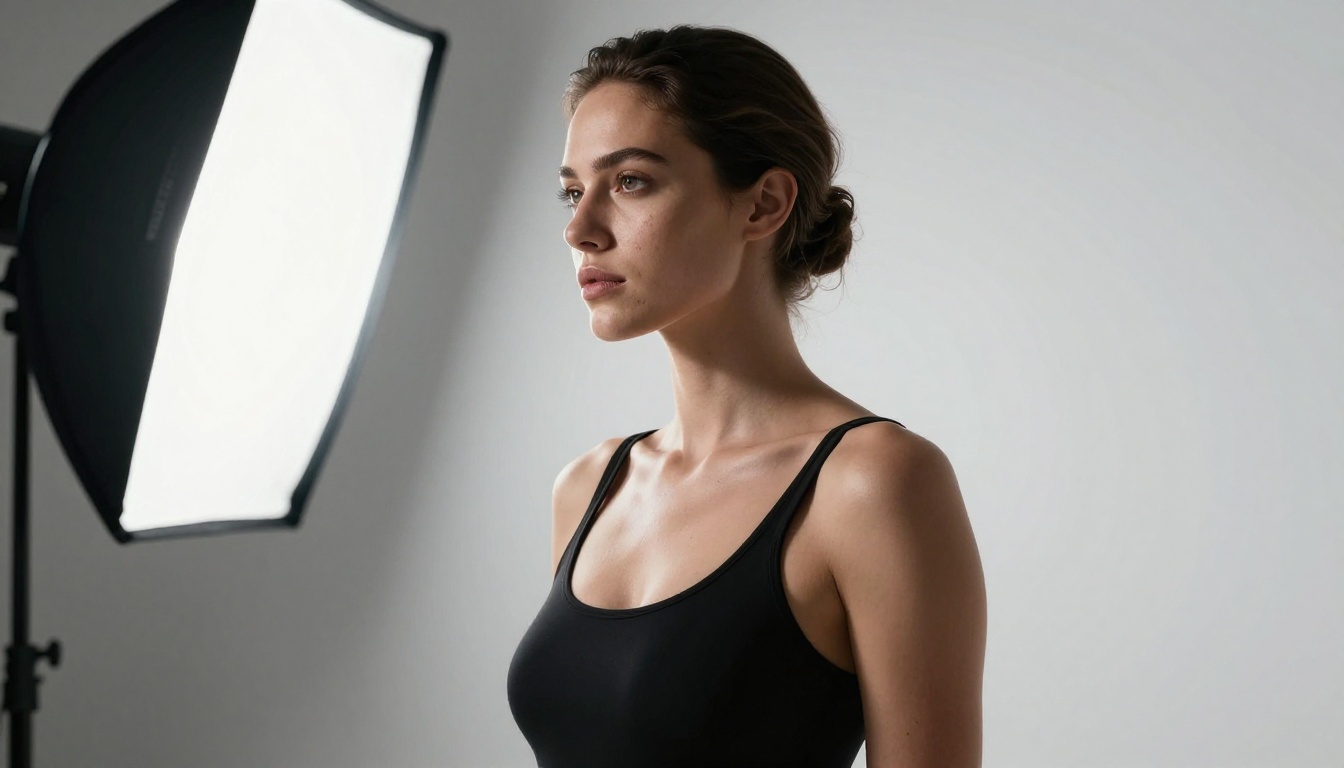
Black Forest Labs built the FLUX series on a technical foundation different from the ByteDance approach. FLUX.2 Max is the premium tier of the FLUX.2 family, positioned above FLUX.2 Pro and FLUX.2 Dev in both capability and compute cost. Its defining characteristic is exceptionally strong prompt adherence: what you write in detail is what the model renders, at a level of precision that rivals dedicated fine-tuned pipeline workflows.
Where Seedream 5.0 interprets prompts with creative latitude, FLUX.2 Max treats detailed prompts almost literally. This makes it the stronger choice when consistent, repeatable outputs from specific compositional descriptions are the goal.
The Hybrid Architecture Advantage
FLUX.2 Max uses flow matching combined with a multi-scale transformer. Flow matching, compared to standard denoising diffusion, traces straighter probability paths during generation. In practical terms this translates to sharper, more coherent outputs at equivalent step counts, and better preservation of fine structural detail that would otherwise degrade through iterative noise removal.
The multi-scale transformer component handles both global image coherence (overall composition, spatial relationships between elements) and fine local detail (fabric weave, facial pores, individual hair strands) in a unified forward pass. This dual-scale processing is responsible for FLUX.2 Max's signature look: images that are simultaneously well-composed at the macro level and highly detailed at the micro level.
FLUX.2 Max at a glance:
| Feature | FLUX.2 Max |
|---|
| Architecture | Flow Matching + Hybrid Transformer |
| Generation speed | 5-12 seconds per image |
| Max resolution | 2048 x 2048 |
| Prompt adherence | Exceptional |
| Anatomy accuracy | Excellent |
| NSFW support | Configurable via inference parameters |
Censorship and Adult Content Behavior
FLUX.2 Max's approach to content filtering operates at the inference level rather than the training level. This means platforms exposing the relevant API parameters can enable or disable filtering without affecting the base model quality. On platforms where adult content is unlocked, the model delivers detailed uncensored outputs with strong anatomical accuracy across a wide range of body types and poses.
The practical downside is generation time. At 5-12 seconds per image on average, FLUX.2 Max runs roughly 2-4x slower than Seedream 5.0. For anyone generating adult AI content in volume, this difference is a genuine workflow constraint. Generating 100 images takes 8-20 minutes with FLUX.2 Max versus 3-7 minutes with Seedream 5.0.
Head-to-Head: Where Each Model Wins
Side-by-side testing across the specific dimensions that matter for adult AI content production reveals clear and consistent winner patterns for each model.
Skin Texture and Photorealism
Seedream 5.0 wins here. The model's photorealistic training produces skin with visible microstructure: pore variation across different facial zones, capillary blush in cheeks and joints, natural oil sheen on nose and forehead, subcutaneous warmth visible in the highlights of light skin tones. Under directional lighting prompts, the model correctly calculates how skin responds, with harder light creating visible texture depth and soft light diffusing appropriately across curved surfaces.
FLUX.2 Max produces clean, attractive skin rendering but it often reads as polished rather than photographic. The surface quality is high, but the microstructure detail that makes a photograph look like a photograph is less consistently present. In close-up portrait crops, Seedream 5.0 outputs look like scanned medium-format film; FLUX.2 Max outputs look like high-quality digital photography with some smoothing applied.
Anatomy and Structural Accuracy
FLUX.2 Max wins here. Hand articulation, finger proportions, joint angles in difficult poses, and the structural relationship between limbs and torso all render more consistently in FLUX.2 Max across diverse prompt conditions. This matters significantly for adult content, where anatomical accuracy in varied and non-standard poses is a primary quality benchmark.
Seedream 5.0 performs adequately on standard poses but shows its limitations on foreshortened limbs, extreme perspective angles, and two-figure interaction scenes. The model occasionally creates limb fusion artifacts in compositions where one figure partially occludes another, a failure mode that appears in roughly 15-20% of complex multi-figure prompts.
Prompt Adherence
FLUX.2 Max wins decisively. Write a detailed prompt specifying exact lighting direction, fabric type and surface finish, specific body position, background elements, and camera angle, and FLUX.2 Max follows the specification closely on a consistent basis. This is its defining practical advantage for creators who produce content with controlled, repeatable visual specifications.
Seedream 5.0 interprets prompts with more creative latitude. It often produces beautiful images that diverge from written specifications in ways both intentional and unpredictable. This can be an advantage for exploratory generation where variation is welcome, but becomes a frustration for systematic content production requiring visual consistency across a batch.
Model comparison by category:
| Category | Seedream 5.0 | FLUX.2 Max |
|---|
| Skin texture | ★★★★★ | ★★★★☆ |
| Anatomy accuracy | ★★★★☆ | ★★★★★ |
| Face detail | ★★★★★ | ★★★★★ |
| Prompt adherence | ★★★☆☆ | ★★★★★ |
| Clothing realism | ★★★★☆ | ★★★★★ |
| Generation speed | ★★★★★ | ★★★☆☆ |
| NSFW output quality | ★★★★☆ | ★★★★☆ |

Speed, Cost, and Real Workflow Impact
Why Speed Matters for Volume Production
Generation speed is not just a convenience metric for adult AI content creators. It is a primary production constraint. At 2-4 seconds per image, Seedream 5.0 can deliver 15-30 images per minute at burst capacity. At 5-12 seconds, FLUX.2 Max caps at 5-12 images per minute. Over a session generating 500 images for a content library, the total production time difference can be measured in hours, not minutes.
For creators who iterate rapidly across pose variations, outfit changes, and lighting scenarios before settling on a final version, Seedream 5.0's speed advantage translates to meaningfully more creative iterations per hour. FLUX.2 Max's output quality warrants the wait for single-image production, but becomes a significant bottleneck at volume.

The Cost Per Image Problem
Both models charge per generation on direct API access, and FLUX.2 Max commands a higher compute cost due to longer inference time. On platforms selling credits per generation, switching from Seedream 5.0 to FLUX.2 Max effectively cuts your output per dollar by 60-80%. For creators generating adult AI content at scale, this is a significant budget variable.
This is precisely where PicassoIA Image Editor Pro changes the calculation. With unlimited generations included in Elite and Infinite plans, the per-image cost drops to effectively zero regardless of volume. Whether you generate 100 images or 10,000 images in a month, the cost is the same flat subscription fee.
💡 Cost comparison: Generating 1,000 NSFW images on a per-credit platform typically costs $50-$100+. Via PicassoIA Image Editor Pro, the same 1,000 images cost nothing beyond your subscription. Results arrive in under 1 second and a 3-image free trial requires no credit card.

Best NSFW Models on PicassoIA Right Now
If you want to run either of these model families without content restrictions and without per-image credit costs, PicassoIA offers a lineup of NSFW-capable models that covers the full spectrum from rapid iteration to maximum quality.
Seedream 4.5 Leads for Uncensored Work
Seedream 4.5 is the top NSFW recommendation on PicassoIA and the right starting point for anyone in this comparison. It accepts adult content without requiring workarounds, generates in under 3 seconds, and supports both text-to-image generation and image editing in the same interface. Output quality sits directly competitive with Seedream 5.0, with the added advantage that content restrictions are not a variable you need to manage.
The newer Seedream 5 Lite actively blocks NSFW at the model level, making it unsuitable for adult content work. Seedream 4.5 remains the correct choice on PicassoIA for unrestricted, high-realism generation with the Seedream architecture.

PicassoIA Image Editor Pro: Unlimited and Fast
PicassoIA Image Editor Pro is the solution to the cost-per-image problem that plagues both Seedream 5.0 and FLUX.2 Max on direct API access. As an img2img model with unlimited generations on Elite and Infinite plans, it removes the credit-counting variable entirely from high-volume workflows. Results land in under 1 second, NSFW content is fully accepted, and the 3-image free trial requires no credit card to access.
For creators whose workflow involves heavy iteration, testing variations, or building out large content libraries, this model eliminates the financial constraint that makes direct API access restrictive.
The Rest of the PicassoIA NSFW Lineup
Beyond the top two, the platform's NSFW-capable roster includes:
- Qwen Image 2 — Open-source, fast iteration, very detailed realism for both text-to-image and image editing workflows
- Grok Imagine Image — Converts any reference image to bikini format in a photorealistic way
- Recraft V4 — Very realistic text-to-image, particularly strong for glamour and editorial aesthetics
- P-Image — NSFW text-to-image in under 1 second, best for rapid prototyping and batch testing
How to Use Seedream 4.5 on PicassoIA
Step-by-Step
- Open Seedream 4.5 on PicassoIA
- Select your aspect ratio: 16:9 for landscape compositions, 9:16 for portrait-oriented content
- Write your prompt using specific photography descriptors for lighting, lens, and environment
- Select "Photorealistic" or "RAW Photography" in the style dropdown
- Click generate and receive your result in under 3 seconds
- Use the built-in image editing feature to iterate on specific details without a full regeneration
The model's photographic training activates most effectively when your prompt mirrors how a professional photographer would brief a shoot. Naming the camera body, lens focal length, lighting modifier, and film stock pulls the model toward photographic realism rather than AI illustration quality.
Prompt Tips That Actually Work
The difference between a mediocre and exceptional NSFW AI image on Seedream 4.5 almost always comes down to prompt specificity. Compare these two approaches:
Weak prompt:
"beautiful woman in bikini on beach"
Strong prompt:
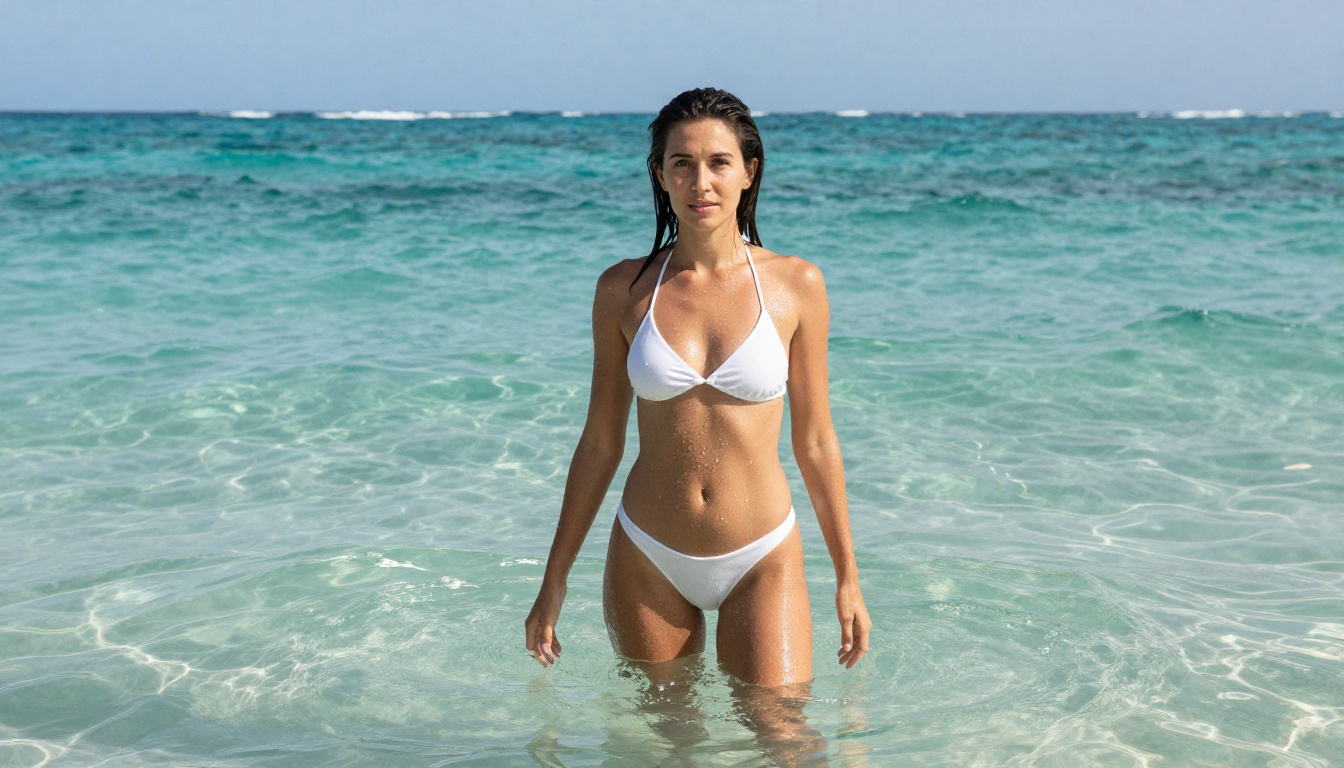
"Photorealistic beauty photography, young woman in white string bikini standing waist-deep in crystal turquoise Caribbean water, Nikon Z9 70-200mm f/2.8 telephoto from low beach angle, midday overhead sun creating sparkling caustics on water surface around her hips, water droplets on tanned skin catching direct sunlight, natural wet hair plastered to shoulders, Kodak Portra film color grade, ISO 400, 8K RAW"
The second prompt activates the model's photographic training at depth. The same principle applies to boudoir, lingerie, and editorial NSFW prompts: camera specs, lighting modifier names, environment materials, and film stock references consistently move results toward images that look genuinely camera-captured rather than AI-generated.
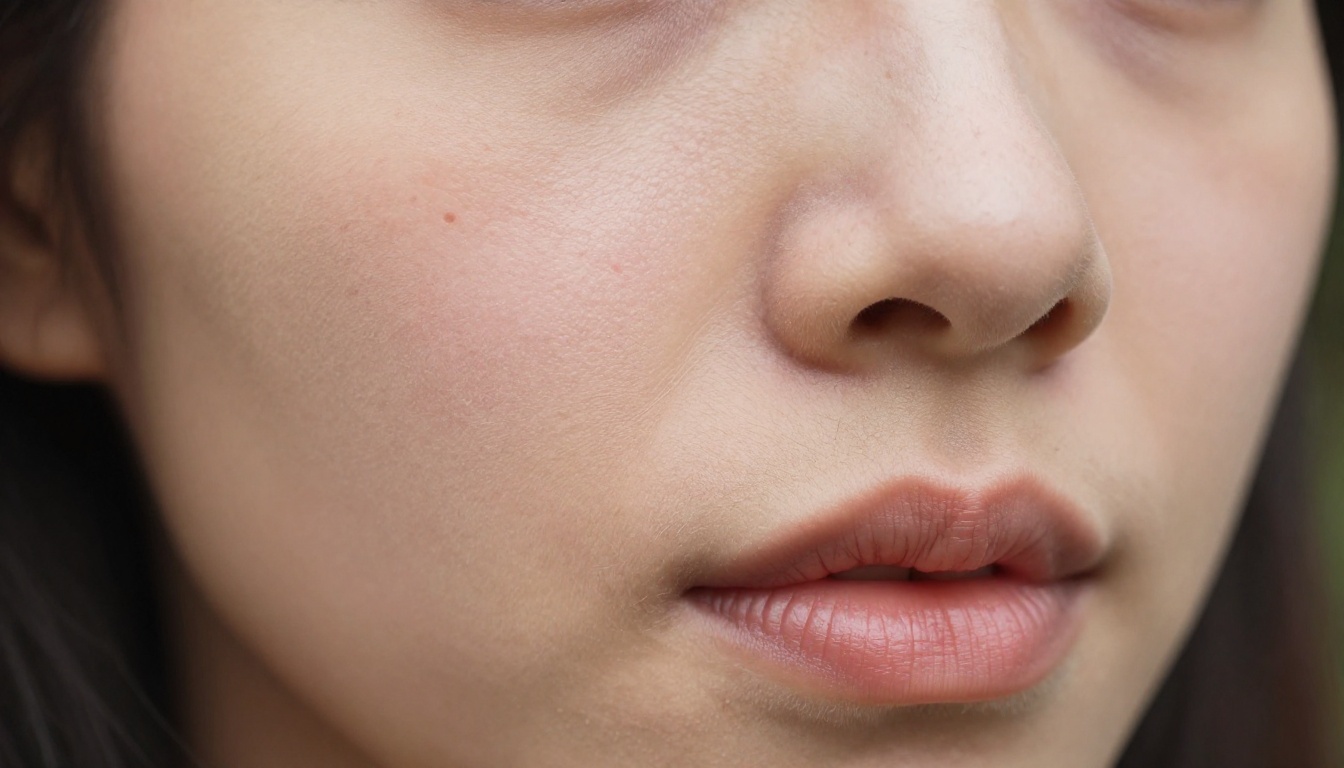
💡 Aperture tip: Adding aperture values (f/1.4 or f/1.8) and ISO (400-800) in your Seedream 4.5 prompts on PicassoIA consistently improves skin texture rendering and produces more naturalistic lighting gradients across skin surfaces and fabric.
Seedream 5.0 vs FLUX.2 Max: The Decision
Neither model is universally superior. The right choice depends on what you are generating and how you work.
Choose Seedream 5.0 when:
- Generation speed and throughput are critical constraints
- Skin texture and natural lighting response are the primary quality target
- You generate at high volume and need fast iteration
- Cost per image is a meaningful variable in your workflow
Choose FLUX.2 Max when:
- Prompt adherence for complex, specific compositions is the priority
- Anatomy accuracy in difficult poses is your main quality requirement
- You have flexibility on generation time per image
- Per-image quality matters more than per-session volume
Choose PicassoIA with Seedream 4.5 when:
- You want uncensored generation without navigating content restrictions
- Speed (under 3 seconds) is important
- You want text-to-image and image editing in a single integrated workflow
- You prefer one platform over managing multiple API integrations and credit systems
Both Seedream 5.0 and FLUX.2 Max have earned their positions as the leading adult AI content generators of 2027. The decision between them is not about which is better in absolute terms but about which better fits your specific output requirements and production workflow.

Start Creating Your Own Images
If you have been working around content filters on mainstream platforms or managing per-image costs on direct API access, PicassoIA removes both constraints. Seedream 4.5, PicassoIA Image Editor Pro, and the full lineup of uncensored models are available directly in your browser, with results in seconds and no API key management required.
Whether you are testing what these model families actually produce at the NSFW tier, building out a content library, or running your own comparison between generation architectures, the fastest path is to start generating and see the outputs for yourself. The full catalog of NSFW-capable AI models is at picassoia.com/en/all-models.


